
There's no shortage of great mystery movies, since the cinematic bench is deep with classics. Where the work of classic mystery writers like Arthur Conan Doyle and Agatha Christie ends, the work of great screenwriters and directors begins, adapting many of those classic works, along with the works of many other authors, and churning out seminal originals of the silver screen. The medium is well-suited to the genre, with an ability to visualize all the elements that make mysteries such potent entertainment.
Mysteries are meant to be intriguing — a good mystery movie should pique your interest and keep you enthralled until it resolves itself. It's what all the best classics and contemporary efforts of the genre do: they tickle our brains and keep our eyes glued to the screen. Whether it's a fun whodunit, a bleak noir or a blockbuster thriller, some mystery movies keep us hooked from start to finish, and these ten do exactly that.
'The Big Sleep' (1946)
 Image via Warner Bros.
Adapted from the classic hardboiled novel by Raymond Chandler and directed by Howard Hawks, The Big Sleep is an essential film noir with a plot so complex and confusing that even those involved in its production didn't fully understand it. It's a classic detective story featuring Chandler's iconic character of Philip Marlowe, brought to life by the inimitable Humphrey Bogart, who has white-hot chemistry with co-star and future wife Lauren Bacall, in the second of six films the two legendary actors appeared in together.
The Big Sleep is the perfect example of a mystery movie that keeps you hooked even if its plot doesn't exactly hold together. In it, private eye Marlowe is hired by the wealthy General Sternwood (Charles Waldron), who asks him to help settle the debts of one of his daughters, though the General's other daughter (Bacall) suspects he has other motives. So ensues a deadly game of double crosses, multiplying murders and steamy romance. It's perfect pulp with some of the punchiest dialogue you'll ever hear, from a script co-written by William Faulkner, Leigh Brackett and Jules Furthman. The script was unfinished when the film went into production, which contributed to its confusing convolution.
'Bad Day at Black Rock' (1955)
 Image via Metro-Goldwyn-Mayer
A neo-Western with a heavy dash of noir thrown into the mix, Bad Day at Black Rock is a blistering mystery that bakes under the sun of its desert location. Based on the short story Bad Time at Honda written by Howard Breslin, the movie is searing in its portrayal of small-town secrets and post-war pessimism and features a commanding cast of hard-faced professionals, including Spencer Tracy, Robert Ryan, Ernest Borgnine and Lee Marvin. Bad Day at Black Rock is a mystery masterpiece made with tightly wound suspense.
Tracy plays war veteran John Macreedy, who arrives in the titular California town by rail and has come looking for a man named Komoko. The townsfolk immediately treat Macreedy with apprehension, and his search for Komoko only inspires more hostility toward him. Macreedy's investigation uncovers the dark secrets of the small town that have been buried deep, along with all sorts of ugliness. Bad Day at Black Rock doesn't pull its punches and offers a revisionist Western mystery that will sink its teeth into you.
'Bunny Lake is Missing' (1965)
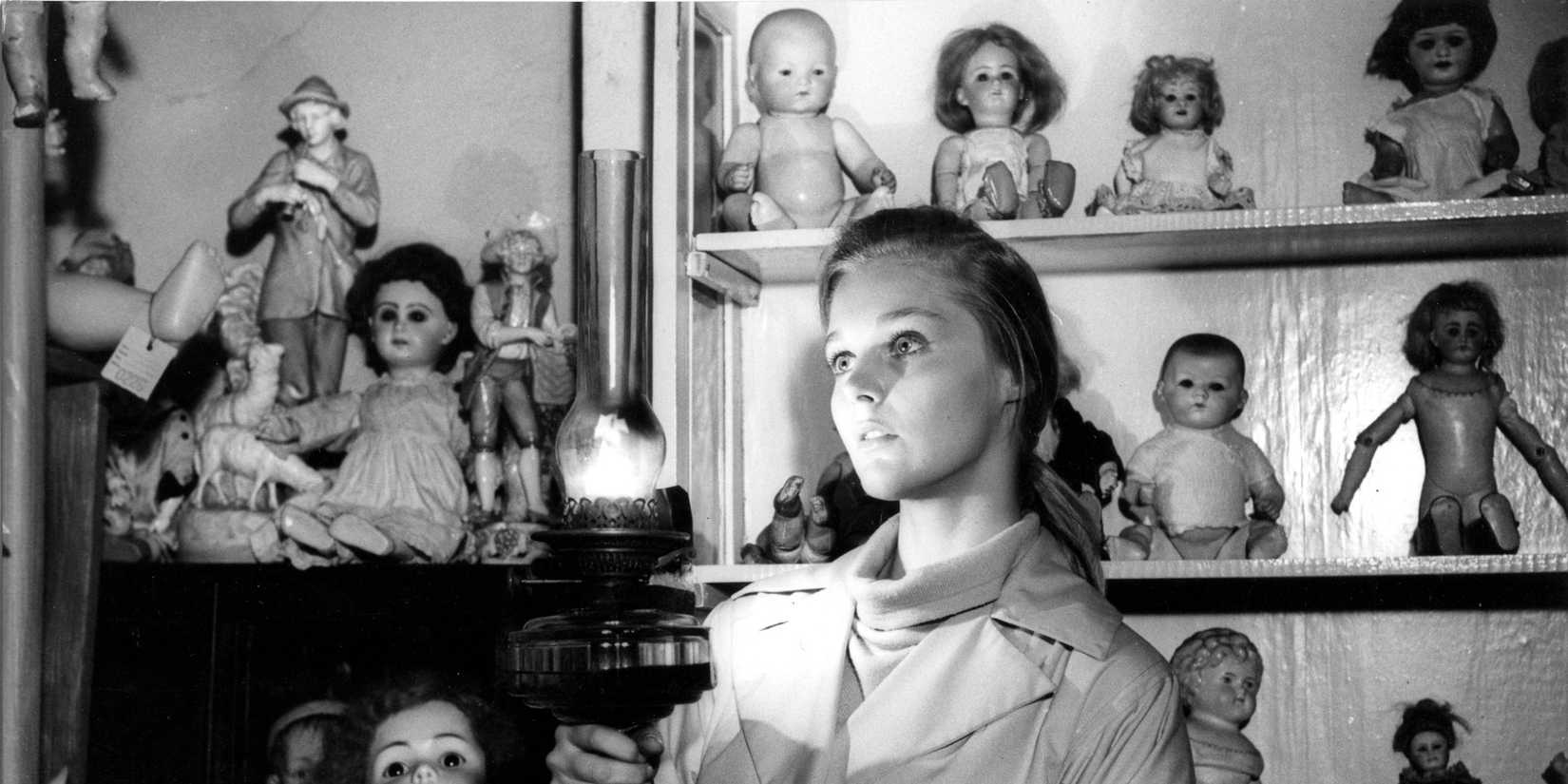 Image via Columbia Pictures
Otto Preminger's Bunny Lake is Missing is a twisted psychological thriller with a classic premise that's been dramatized in a number of films and television series, but never quite as luridly. The urban legend of the Vanishing Lady has inspired many works of mystery fiction, thanks to its inherent intrigue. The legend follows a woman traveling with her mother. After leaving her ill mother in their hotel room to retrieve some medicine. The woman returns to find that both the hotel room and her mother have vanished into thin air, with no one having any memory of her.
In the version of the story presented in Bunny Lake is Missing, based on the novel of the same name by Merriam Modell, an American woman living in London named Ann Lake (Carol Lynley) goes to pick up her daughter Bunny from preschool. The child has disappeared, of course, and Ann struggles to find any evidence to convince the police inspector Newhouse (Laurence Olivier) that she ever existed. The change of making the missing person a child instantly raises the stakes of the story, and the reveal is more unsettling than anyone might expect from a film over sixty years old.
'Murder on the Orient Express' (1974)
 Image via Anglo-EMI Film Distributors
Few mystery writers are more notable and influential than Agatha Christie, and her greatest protagonist is the mustachioed detective Hercule Poirot, who appeared in over 30 novels and has been adapted multiple times in film and television. The most effective of these adaptations is the Sidney Lumet-directed version of the most famous Poirot mystery, Murder on the Orient Express. With an all-star and stylish production design, the film is a vibrant adaptation of the Christie character and one of the most essential whodunits ever made.
Set on the titular train, the film brings Poirot, played here by Albert Finney, on board along with an international cast of characters, featuring stars like Lauren Bacall, Ingrid Bergman, Sean Connery, and Vanessa Redgrave. When one of the passengers is murdered in their sleep, it's up to Poirot to solve the mystery before the train reaches its destination. The film is sharply written and handsomely produced, sucking you in with its atmosphere and austere cast, and the effectiveness of Christie's mystery is preserved on screen.
'Blow Out' (1981)
 Image via Filmways Pictures
Brian De Palma's Blow Out reimagines the Michelangelo Antonioni classic Blowup through the director's sleazier sensibilities. Inspired by Alfred Hitchcock and Italian Giallo films, De Palma's political thriller is lurid and alluring in equal measure. It swaps out the original film's central medium of photography for sound recording that's beautifully obsessed with little details and the ways that a narrative can be constructed. It's a technical masterpiece from De Palma, who uses every cinematic trick up his sleeve to bring his meta thriller to life.
John Travolta plays sound technician Jack Terry, who works on low-budget horror movies in Philadelphia. One night, while recording ambient sounds for the film, Jack inadvertently captures the audio of a car crash that causes the death of a prominent presidential candidate. Jack's recording of the incident suggests foul play, which sets off a chain of violent and conspiratorial events. Blow Out is vintage De Palma and is considered by many film fanatics to be his finest film. It engages you with its stylish compositions and voyeuristic themes that want you to question the truths you are told.
'The Fugitive' (1993)
Airing on television for a full four seasons, The Fugitive was slow-burning in the investigation of its central mystery, focusing the majority of its episodes on individual stories where its protagonist would save someone new each week. The big-budget film adaptation streamlined the narrative of the series into a propulsive blockbuster plot befitting a summer release starring Harrison Ford. It's an action-packed chase film and mystery thriller all rolled into one, effectively made popcorn movie. It keeps you on the edge of your seat from beginning to end, and it's never boring for a single second of it.
Ford takes on the role of Dr. Richard Kimble, a man wrongly convicted of the murder of his wife. After a daring escape involving a prison bus crash and a speeding train, Kimble goes on the run and on the hunt for the actual murderer. Hot on his tail is Marshal Sam Gerard, played with gusto by Tommy Lee Jones in an Academy Award-winning performance. Director Andrew Davis keeps the film on its feet and constantly in motion, letting the mystery drive the narrative, and the characters color it in. The Fugitive was also famously nominated for Best Picture, a feat that proves not only an adventurous spirit in the voting body of the Academy, but the pure, perfect entertainment value on display.
'Memento' (2000)
 Image via Newmarket Films
Christopher Nolan finds mystery in almost every genre he works in, whether it's a high-tech spy thriller like Tenet or a superhero blockbuster like The Dark Knight. The director loves for his narratives to come apart like a puzzle box, and none is more engaging than that at the heart of his chronologically mixed-up mystery Memento. Nolan's sophomore effort is a neo-noir thriller noted for its unique plot structure. It put the filmmaker on the fast track to bigger films, which would eventually lead him to his current status as one of the biggest auteurs working in movies today.
Guy Pearce plays Leonard Shelby, a man haunted by the murder of his wife but struggling to solve it due to the amnesia he suffers from as a result of the same attack that killed her. His condition is mirrored in the film's nonlinear narrative, presented in parallel tracks of time that progress forwards and backwards toward each other. The complexity of the presentation is part of what makes the film so gripping, but it's more so about how it enhances the mystery and forces us to piece together the puzzle the same way that Leonard has to. Memento is a mystery neo-noir classic that's unforgettable.
'Gone Girl' (2014)
 Image via 20th Century Studios
Like Nolan, David Fincher loves a good mystery. Some of his best films involve cleverly twisted plots, like the serial killer thriller Se7en, the true crime masterpiece Zodiac and the frigid noir The Girl with the Dragon Tattoo. All of those movies are guaranteed to hook you into their plotlines of murder and mystery, but none are quite as wickedly entertaining as Gone Girl. Based on the best-selling novel by Gillian Flynn, Fincher elevates the material into a thoroughly modern mystery steeped in a media-driven culture. It's got a pitch-perfect and is unsurprisingly immaculate from a visual perspective.
Ben Affleck and an Oscar-nominated Rosamund Pike play an unhappy couple of New York yuppies transplanted to Missouri amid the recession. When Amy goes missing under suspicious circumstances, husband Nick is the immediate prime suspect, feeding a media frenzy that nearly consumes him. The truth is that neither Nick nor Amy is a saint, and there's a lot more to her disappearance than initially thought. Gone Girl is Fincher proving once again how he can take any level of thriller and turn it into high art. Much like Zodiac, the film presaged the true crime obsession that would build up in the next few years, but also keenly observes the way we try to make these kinds of crimes fit into a narrative mold.
'Parasite' (2019)
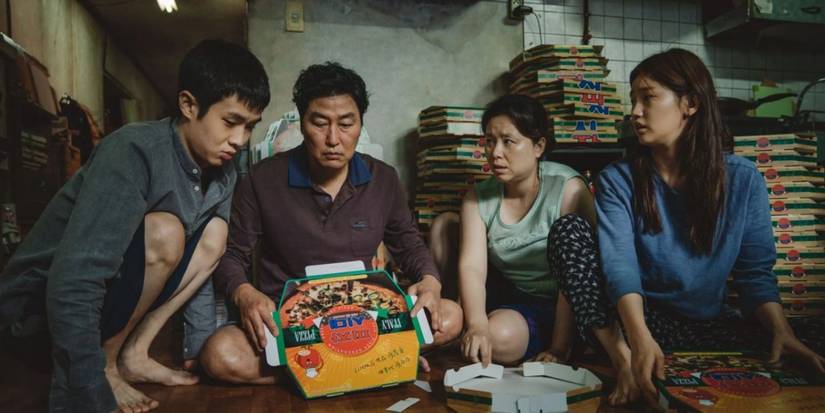 Image via NEON
Bong Joon Ho's Parasite defies expectations at every turn with a plot that zigs when you expect it to zag, arriving at a conclusion that seems almost inevitable. Bong is one of the greatest active filmmakers, and his films all show a consistent skill in mixing genres and balancing tones. Few filmmakers could produce one film as good as The Host or Memories of Murder, let alone the modern masterpiece that is Parasite. It's a black comedy thriller fueled by economic disparity that never ceases to surprise.
Set in Seoul, the film follows a family of few means who find a lucrative meal ticket in the wealthy clan whom the son cons into hiring as a tutor. Soon enough, the entire family has infiltrated the household as hired staff, and the film begins to twist its plot in ways wholly unexpected but which only enrich the themes of class divide and conflict. The film will have you holding your breath before letting it all out in an awkward laugh as it weaves together its disparate elements into one cohesive mystery masterwork.
'Wake Up Dead Man' (2025)
 Image via Netflix
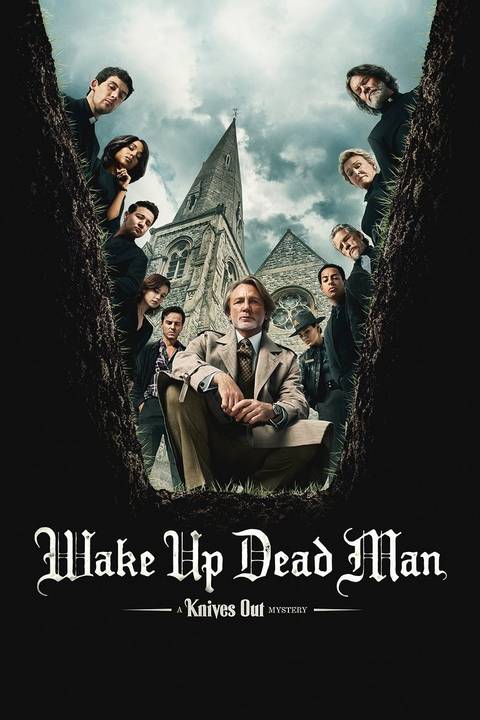
Rian Johnson's Knives Out films represent the most major revival of the old-fashioned mystery genre of the whodunit in the 21st century. The franchise has been an unexpected delight, giving Daniel Craig the colorful character of gentleman sleuth Benoit Blanc to have endless fun with, while each installment solves an individual mystery. Not only are the movies wonderful mysteries, but they each interrogate the very nature of the genre and pay homage to the greatest names in it. The most recent film in the franchise, Wake Up Dead Man, gives it a Gothic overhaul in a surprisingly emotional tale of faith.
The true protagonist of the film is Father Jud, a young priest with a checkered past played by Josh O' Connor. Father Jud is relocated to upstate New York to serve under Monsignor Wicks (Josh Brolin), who has a more extremist approach to his sermons. Father Jud quickly finds conflict with Wicks and his devoted followers, which is only exacerbated when Wicks is murdered in an impossible locked room scenario that necessitates the involvement of the southern-fried sleuth Blanc. The film has a whole cast of terrific actors to fill out its suspect list, keeping the tradition of the mystery film alive and well, even when it's killing people off.







 English (US) ·