
 Image via New Line Cinema

Published Feb 19, 2026, 3:29 PM EST
Luc Haasbroek is a writer and videographer from Durban, South Africa. He has been writing professionally about pop culture for eight years. Luc's areas of interest are broad: he's just as passionate about psychology and history as he is about movies and TV. He's especially drawn to the places where these topics overlap.
Luc is also an avid producer of video essays and looks forward to expanding his writing career. When not writing, he can be found hiking, playing Dungeons & Dragons, hanging out with his cats, and doing deep dives on whatever topic happens to have captured his interest that week.
Sign in to your Collider account
While cinema is a visual art form, dialogue is still one of its key components. Great writing moves the story along organically, while also giving us important information about the characters or simply keeping us entertained. Looking back at cinema's all-time great triumphs, each has at least a couple of quotes that have endured just as much as the film itself.
With this in mind, this list looks at some of the films with the greatest dialogue. The films ranked here span decades and genres, but they share a belief that speech is action. Deals are made, relationships destroyed, and truths buried through conversation alone. Language itself becomes the battlefield, proving that the pen really is mightier than the sword.
10 'Glengarry Glen Ross' (1992)
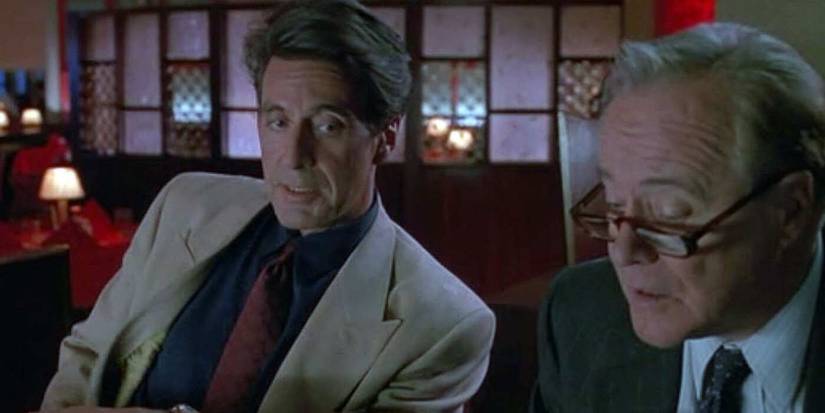 Image via New Line Cinema
"Always be closing." Glengarry Glen Ross takes place over two tense days at a struggling real estate office, where salesmen are informed that only the top performers will keep their jobs. Desperation is the animating idea here: failing men scrambling to survive in a system that rewards cruelty and punishes vulnerability. There are no action sequences, no external stakes beyond money and pride. Everything happens through speech. The dialogue (courtesy of David Mamet) is aggressive, circular, and relentlessly profane. Not for nothing, the play on which the movie was based took home the Pulitzer.
Characters interrupt, belittle, posture, and manipulate, each conversation becoming a power struggle. It helps that the actors delivering the lines are so great. Glengarry Glen Ross boasts one of the strongest ensembles of the 1990s: Al Pacino, Jack Lemmon, Alec Baldwin, Alan Arkin, Ed Harris, Kevin Spacey, and Jonathan Pryce. All of them deliver Mamet's barbed words with pitch-perfect energy.
9 'Annie Hall' (1977)
 Image via United Artists
"I’d never want to belong to any club that would have someone like me for a member." Annie Hall charts the rise and fall of the relationship between a neurotic comedian (Woody Allen) and an offbeat woman (Diane Keaton) trying to find her footing. The plot is loose and episodic, tracing their connection from infatuation to incompatibility through memories, arguments, and self-analysis. The dialogue is famously conversational, but deceptively precise. Characters speak in contradictions, jokes masking anxiety, intellectualization standing in for emotional risk.
Basically, the dialogue here is the sound of smart people thinking aloud. Unlike more theatrical dialogue showcases, Annie Hall feels improvised even when it isn’t. Conversations overlap, drift, and derail, capturing how people actually talk when they’re trying to connect and protect themselves at the same time. Insecurity intertwines with humor, affection coexists with resentment. Back in 1977, all this felt startlingly modern, and the writing continues to hold up today.
8 'Network' (1976)
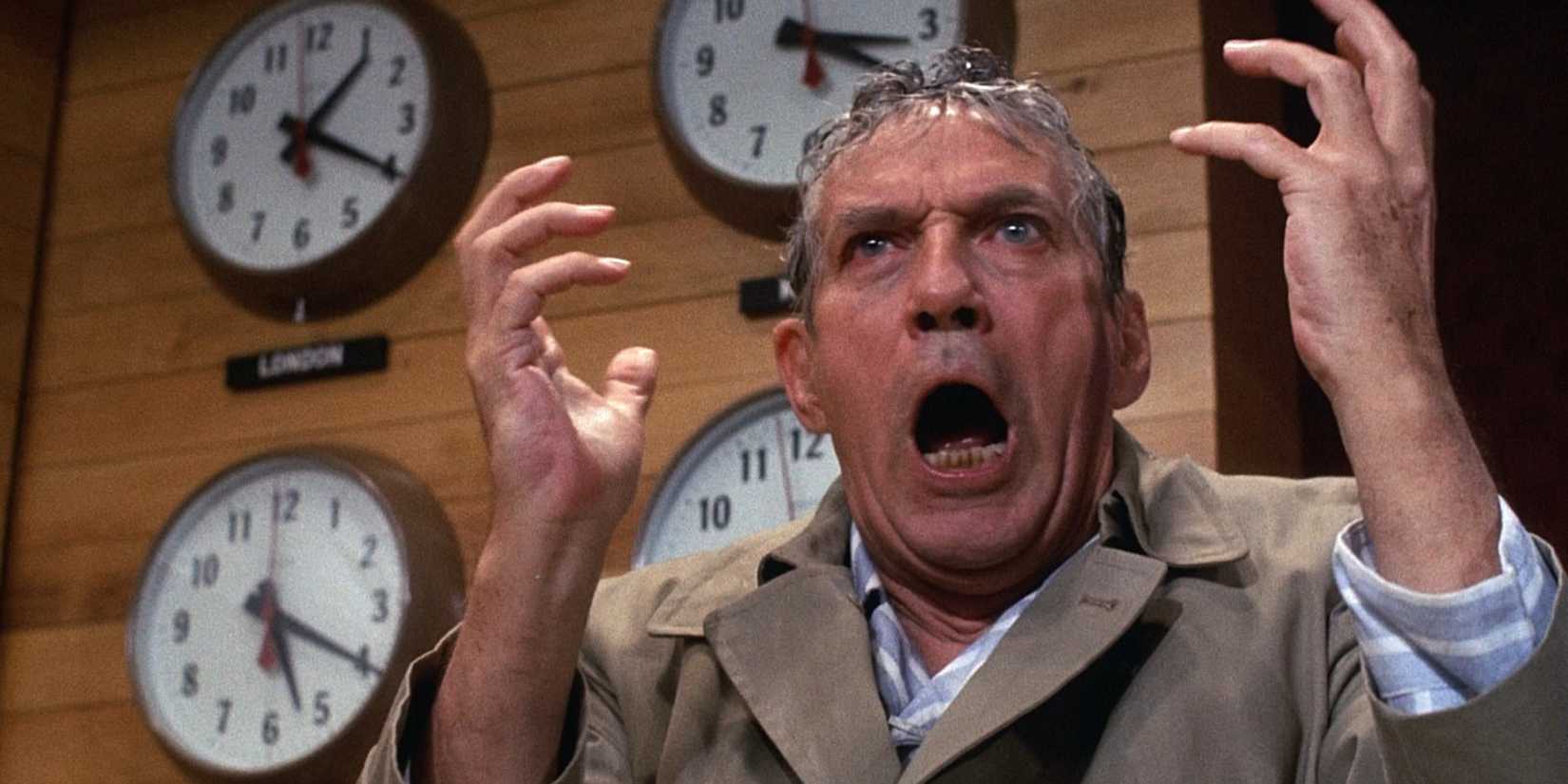 Image via Metro-Goldwyn-Mayer
"I'm mad as hell, and I’m not going to take this anymore!" Network centers on a failing television news anchor (Peter Finch) whose on-air breakdown turns him into a ratings phenomenon. Rather than getting him help, the executives exploit his unraveling for profit. The movie uses this premise for a savage satire of media, power, and moral vacancy. Characters don’t converse so much as declare. Monologues dominate, each one weaponized with conviction and certainty. The dialogue is theatrical, confrontational, and deliberately excessive.
Plus, rather than being uniform, the script gives each character a distinct voice, whether that's corporate jargon, evangelical fervor, or cynical detachment. Crucially, while madcap, the writing does hit on genuinely incisive ideas about media commodification, outrage-as-entertainment, and corporate amorality. If anything, these themes are even more relevant now than they were in 1976, given the rise of social media outrage, ideological news sites, and reality TV politics.
7 'Casablanca' (1942)
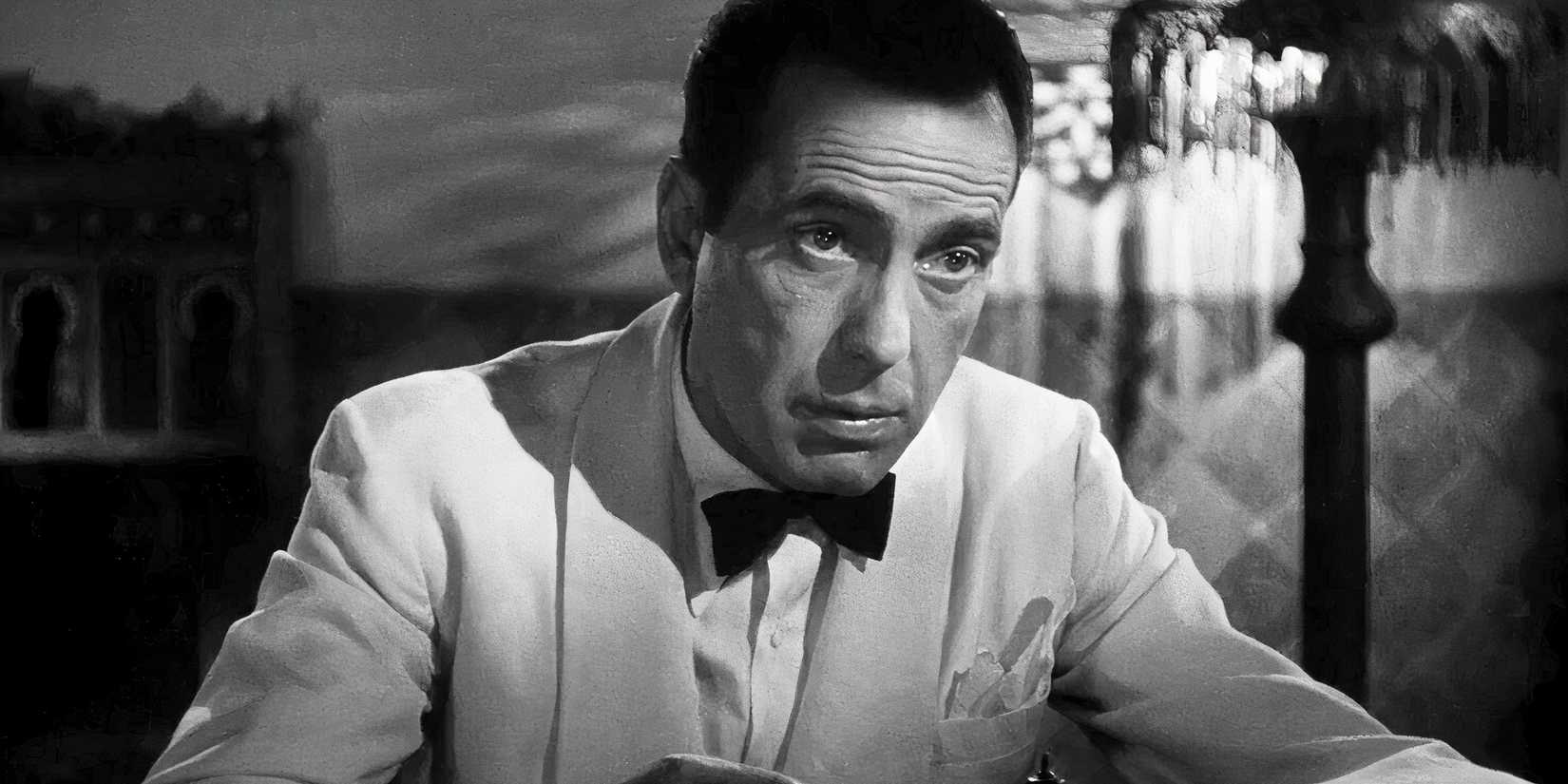 Image via Warner Bros. Pictures
"We’ll always have Paris." This classic is set in Nazi-occupied Morocco, where refugees, resistance figures, and opportunists converge in a nightclub owned by an American expat (Humphrey Bogart). The plot revolves around old lovers reunited under impossible circumstances, forced to choose between happiness and responsibility. The dialogue is famously elegant, balancing romance, irony, and sacrifice. The writing is incredibly economical, too: no sentence feels wasted, with wit and restraint doing most of the heavy lifting.
The script also strikes a perfect balance between individual emotion and political stakes, with the characters commenting on the war as much as their own lives and struggles. Lines are clean, memorable, and layered with double meaning. The best of them have become globally famous, like "Here’s looking at you, kid", "Of all the gin joints, in all the towns, in all the world, she walks into mine", and the much-parodied "Louis, I think this is the beginning of a beautiful friendship".
6 'His Girl Friday' (1940)
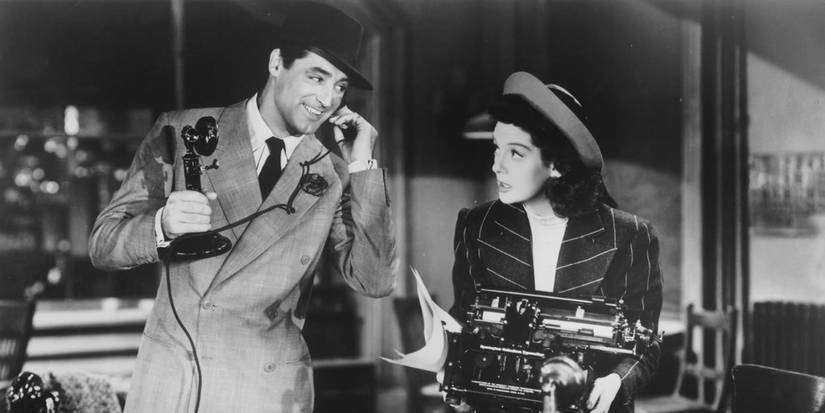 Image via Columbia Pictures
"Don’t you know the secret of life? Just one thing." His Girl Friday follows a newspaper editor (Cary Grant) trying to win back his ex-wife (Rosalind Russell), who also happens to be his best reporter, as she prepares to leave journalism for a quieter life. It's a tale of deadline pressure, political corruption, and romantic sabotage. The dialogue is famously rapid-fire, overlapping at breakneck speed. Characters interrupt each other constantly, turning conversation into verbal combat. Lexical dexterity is the name of the game.
The speed creates a fantastic rhythm, amplifying the screwball energy. This approach was ground-breaking at the time, a major departure from convention, and went on to influence countless screenwriters that followed, not least Quentin Tarantino. The dialogue is witty, as well, featuring some of the very best banter in movie history. Nevertheless, the writing isn't just for entertainment value: every line advances plot, character, or both.
5 'Chinatown' (1974)
 Image via Paramount Pictures
"Forget it, Jake. It’s Chinatown." Chinatown follows private investigator Jake Gittes (Jack Nicholson) as he becomes entangled in a web of corruption, water rights conspiracies, and buried family secrets in 1930s Los Angeles. What begins as a routine adultery case expands into a vast portrait of power, exploitation, and moral rot. While the acting and direction are strong, the foundation for everything is the darkly brilliant script by Robert Towne, frequently ranked among the greatest ever written.
The dialogue is deceptively restrained, thriving on understatement. Characters rarely say what they mean outright, preferring insinuation, deflection, and half-truths. Answers arrive late or not at all, and meaning often only becomes clear in retrospect. Every conversation feels like a negotiation over information. In terms of conveying character, Gittes’ wisecracks function as both armor and distraction, masking how little control he actually has. The cherry on top is the undercurrent of cutting wit, producing many bleakly funny lines.
4 'All About Eve' (1950)
"Fasten your seatbelts. It’s going to be a bumpy night." In All About Eve, an ambitious young woman (Anne Baxter) insinuates herself into the life of aging Broadway star Margo Channing (Bette Davis), gradually replacing her through charm, patience, and manipulation. The theater world serves as the backdrop, a place where ego and reputation are currency. The dialogue is razor-sharp, elegant, and merciless. Every line doubles as character revelation and social maneuvering. Margo Channing’s biting sophistication contrasts with Eve’s calculated softness. Compliments conceal threats, politeness disguises cruelty.
Characters perform not just on stage, but in every conversation, using language to assert dominance or mask insecurity. The dialogue is fittingly sophisticated, theatrical without being artificial. Although the lines are heightened and stylized, they reveal the characters' genuine fear: of aging, irrelevance, and replacement. The result is a movie chock-full of great lines, like "Everybody has a heart—except some people" and "It is just as false not to blow your horn at all as it is to blow it too loudly."
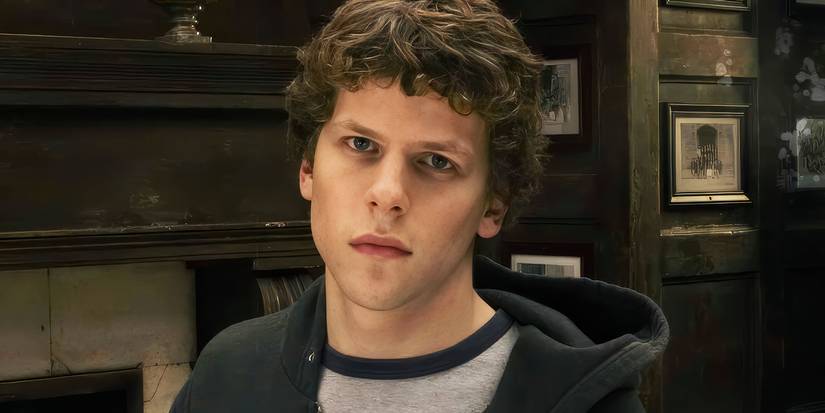 Image via Sony Pictures Releasing
"If you guys were the inventors of Facebook, you’d have invented Facebook." The Social Network boasts the smartest script of the 2010s, one that manages to be entertaining and incisive at the same time. The movie dramatizes the creation of Facebook through a series of depositions, flashbacks, and legal disputes. Aaron Sorkin's dialogue is fast, clipped, and relentlessly competitive: insults are framed as observations, and vulnerability is buried beneath sarcasm and speed.
What makes the film’s dialogue exceptional is how it mirrors its subject. For Mark Zuckerberg (Jesse Eisenberg), language becomes transactional, optimized for dominance rather than connection. It makes for a chilling portrait of the cold ambition and lack of empathy at the height of one of social media's most powerful empires. In the process, the movie perfectly foreshadowed our current moment, where the apps meant to bring people closer together have mostly left us angrier, more isolated, and more disinformed.
2 'Pulp Fiction' (1994)
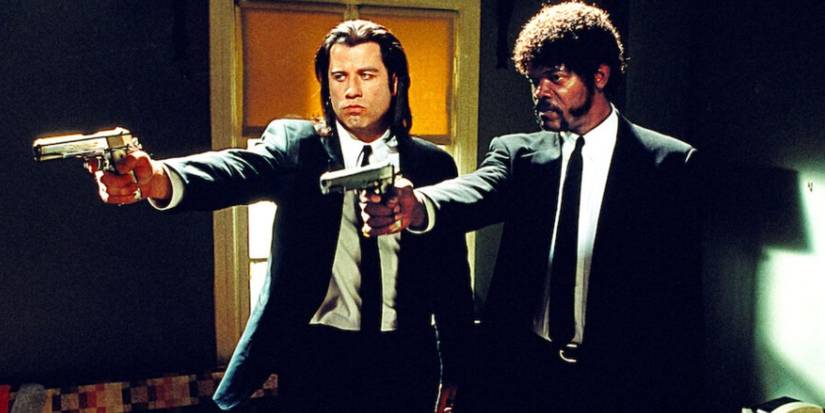 Image via Miramax Films
"They call it a Royale with cheese." Pulp Fiction had the most inventive script of the '90s, one that fused narrative intricacy with madcap violence and effortless cool. It interweaves multiple crime stories involving hitmen, boxers, gangsters, and criminals whose lives collide through chance. The plot is famously non-linear, allowing conversations to take precedence over narrative urgency. The dialogue is casual, digressive, and deeply stylized. Characters discuss hamburgers, television pilots, foot massages, and divine intervention with the same intensity they bring to murder.
This flattening of stakes makes the violence more shocking and the conversations more hypnotic. Practically every line is quotable. The writing is also jam-packed with references to other movies, making it a postmodern love letter to cinema itself. Ultimately, Pulp Fiction changed how movies could sound, proving that dialogue could be both artificial and authentic at the same time. Its influence on the medium has been profound.
1 '12 Angry Men' (1957)
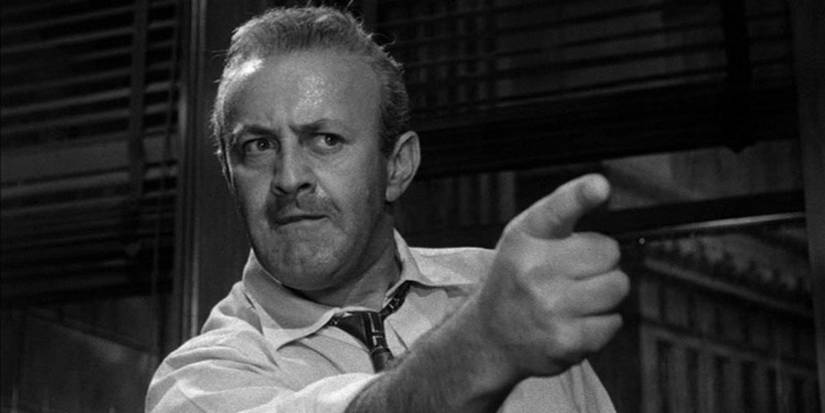 Image via United Artists
"It’s not easy to raise my hand and send a boy off to die." 12 Angry Men takes place almost entirely in a jury room, where twelve men must decide the fate of a teenage boy accused of murder. In this pressure cooker, a single dissenting juror gradually challenges the assumptions, prejudices, and certainties of the others. There is no action in the traditional sense; the entire film is dialogue. Arguments evolve, alliances shift, and facts are reinterpreted through conversation alone.
The dialogue moves in waves: tension builds, breaks, and rebuilds at a higher pitch. Key points are revisited from different angles, each return adding nuance or pressure. Every juror’s personality emerges in how he speaks: calm reasoning, emotional outbursts, sarcasm, or prejudice. We come to know them through the way they fight for their positions. Ultimately, the writing is smart, punchy, and heavy with moral weight, engaging with urgent ideas that continue to be relevant today.




![20 Years Later, One of the Best Sitcoms of the 21st Century Returns With Hilarious First Look [Exclusive]](https://static0.colliderimages.com/wordpress/wp-content/uploads/2026/02/malcolm-in-the-middle-life-s-still-unfair-feature.jpg?w=1600&h=900&fit=crop)

 English (US) ·