
 Image via 20th Century Fox

Published Feb 17, 2026, 5:55 PM EST
Luc Haasbroek is a writer and videographer from Durban, South Africa. He has been writing professionally about pop culture for eight years. Luc's areas of interest are broad: he's just as passionate about psychology and history as he is about movies and TV. He's especially drawn to the places where these topics overlap.
Luc is also an avid producer of video essays and looks forward to expanding his writing career. When not writing, he can be found hiking, playing Dungeons & Dragons, hanging out with his cats, and doing deep dives on whatever topic happens to have captured his interest that week.
Sign in to your Collider account
At the time, 2009 felt like a transitional moment: the last gasp of mid-budget adult dramas, the peak of studio comedies that could still dominate pop culture, and the dawn of a new era for franchise filmmaking as a permanent, industrial force. What’s striking in hindsight is how many films released that year have gone on to have endless rewatch value.
These are movies that survived shifting tastes, changing technologies, and a radically altered theatrical landscape. Some were immediate hits, others divisive on arrival, and a few initially misunderstood. But all of them now feel embedded in the cinematic conversation. They continue to be referenced, rewatched, reinterpreted, and even taught.
10 'The Hangover' (2009)
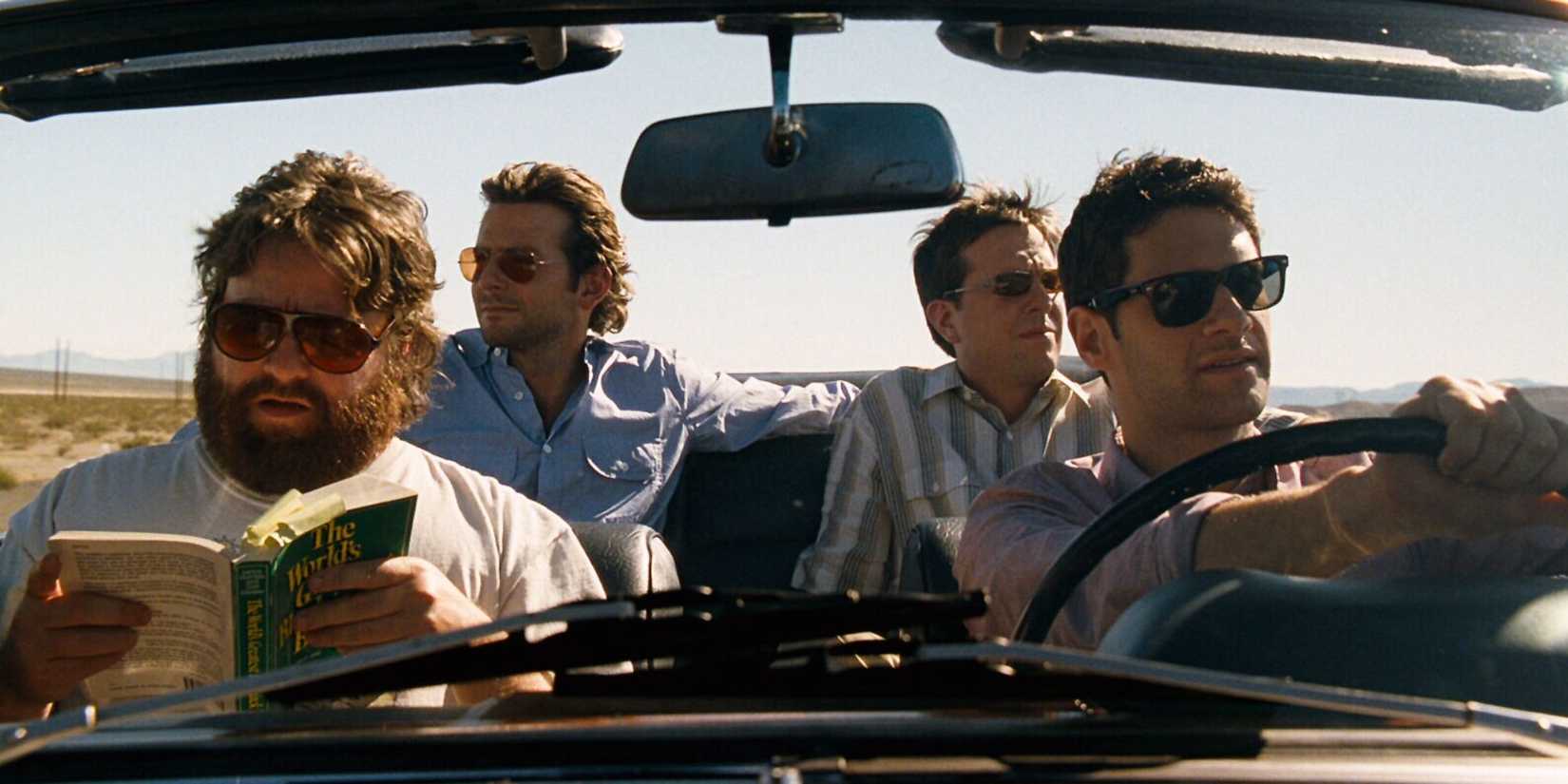 Image via Warner Bros. Pictures
"What happens in Vegas, stays in Vegas." Four friends travel to Las Vegas for a bachelor party, only to wake up the next morning with no memory of the previous night, a trashed hotel suite, a missing groom, and a growing sense of dread. The plot unfolds as a reverse mystery, with the characters retracing their steps and uncovering increasingly absurd consequences of their blackout. Every gag feeds the central puzzle, and every escalation feels earned rather than random.
Todd Phillips directs with surprising discipline, letting the humor emerge naturally from character reactions. It helps that the leads are great across the board. Bradley Cooper’s smug confidence, Ed Helms’ tightly wound panic, and Zach Galifianakis’ breakout turn as the anarchic Alan form a trio whose chemistry feels accidental in the best way. In retrospect, this movie marked the end of an era. It was one of the last truly massive R-rated studio comedies.
9 'The White Ribbon' (2009)
.jpg?q=49&fit=crop&w=825&dpr=2) Image via Sony Pictures Classics
Image via Sony Pictures Classics"I don't know whether the story I am about to tell you is entirely true." Set in a small German community just before World War I, The White Ribbon explores a series of unsettling incidents that ripple through a rigidly religious society. They include acts of cruelty, sabotage, and quiet violence. The story is framed through the memories of a schoolteacher (Christian Friedel) who watches suspicion spread while authority figures cling to punishment, obedience, and shame.
Michael Haneke’s direction here is deliberately austere. The black-and-white cinematography drains warmth from every frame, turning pastoral landscapes into sites of quiet menace. This bleak imagery is the perfect complement to the themes. In The White Ribbon, children are disciplined with symbolic severity, adults wield moral certainty like a weapon, and emotional repression becomes a form of inheritance. The story never resolves into a neat explanation, instead suggesting that the roots of later historical horrors lie in everyday authoritarianism.
8 'Coraline' (2009)
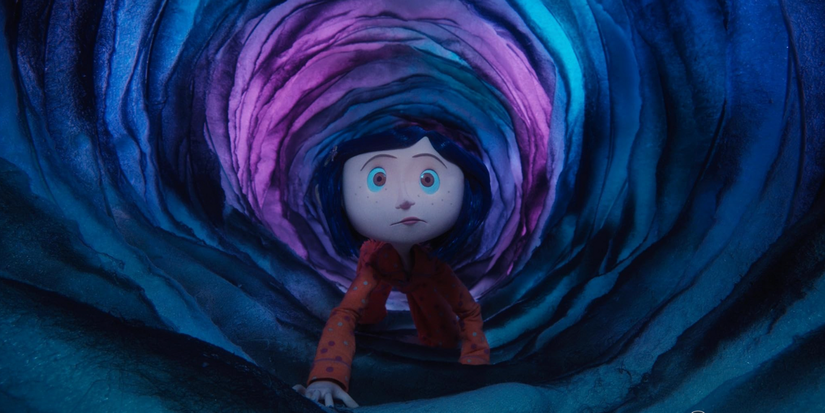 Image via Focus Features.
"When you're scared but you still do it anyway, that's brave." Coraline tells the story of a bored, neglected girl (voiced by Dakota Fanning) who discovers a hidden door in her new home leading to a parallel world, one that seems brighter, warmer, and more attentive than her real life. In this Other World, Coraline meets button-eyed versions of her parents who offer affection without limits, but beneath the charm lurks something predatory. Her adventure gradually transforms from whimsical fantasy into genuine horror.
Coraline received a lot of attention as a work of 'crossover' fiction, one that appealed equally to both kids and adults. That's because the story is uncompromising. It refuses to soften its scares or dilute its message, using its fantastical premise as a springboard to explore themes of fear, autonomy, and moral choice. The result is one of the darkest mainstream animated movies in decades. Aesthetically, the stop-motion animation gives the film a tactile unease that digital animation rarely achieves.
7 'A Serious Man' (2009)
 Image via Focus Features
"Accept the mystery." Set in 1960s suburban Minnesota, A Serious Man follows Larry Gopnik (Michael Stuhlbarg), a mild-mannered physics professor whose life begins to unravel in increasingly absurd ways. His wife (Sari Lennick) wants a divorce, his brother (Richard Kind) is arrested, his tenure is threatened, and his faith offers no clear answers. Each attempt Larry makes to understand his suffering only deepens the confusion. This loose narrative mirrors the biblical story of Job, substituting divine tests with bureaucratic indifference and cosmic irony.
In this sense, the plot resists conventional resolution, instead piling misfortune atop misfortune until Larry’s need for meaning becomes almost desperate. The humor is dry, philosophical, and deeply uncomfortable, asking whether suffering requires explanation at all. While this is challenging material, Stuhlbarg is great in the role, convincingly capturing the slow erosion of dignity that comes from trying to be good in an indifferent universe.
6 'Star Trek' (2009)
 Image via Paramount Pictures
"I dare you to do better." The 2009 reboot of Star Trek faced an impossible task: honoring decades of lore while making the franchise accessible to newcomers. The solution was a clever narrative reset that used time travel to preserve canon while reimagining its characters. The plot follows a young, reckless James T. Kirk (Chris Pine) as he rises through Starfleet alongside a disciplined, emotionally conflicted Spock, all while facing a revenge-driven Romulan threat.
J.J. Abrams injects the film with kinetic energy, leaning into spectacle without abandoning character. The core relationships, especially the friction between Kirk and Spock (Zachary Quinto), give emotional shape to the action. The two actors are great together, playing off one another well. All of this added up to a movie that was even better than most fans had hoped for. Ultimately, Star Trek proved that optimism and sincerity could still thrive in modern blockbuster sci-fi.
5 'Avatar' (2009)
 Image via 20th Century Studios
"I see you." Speaking of blockbuster sci-fi, James Cameron brought the whole genre (and, indeed, filmmaking itself) into a new world with this boundary-pushing epic. Using pioneering CGI, Avatar transports us to Pandora, a lush alien moon where human colonizers seek valuable resources at the expense of the native Na'vi. There, Jake Sully (Sam Worthington), a paraplegic former Marine who inhabits an avatar body, finds himself torn between his mission and a growing sense of belonging. What begins as a military operation becomes a personal and ethical reckoning.
The plot is simple by design, functioning as a mythic framework for themes of colonialism, environmental destruction, and identity. In many ways, it's secondary to the visuals, which, at the time, were the most technically ambitious of any movie ever made. Though the narrative is occasionally underwhelming, Avatar earned its place in film history by breaking pppen new possibilities for CGI and 3D storytelling.
4 'Up' (2009)
 Image via Pixar Animation Studios
"Thanks for the adventure. Now go have a new one." Up begins with one of the most emotionally efficient sequences in cinema: a wordless montage chronicling a lifetime of love and loss. From there, the story follows Carl Fredricksen (Ed Asner), a widowed elderly man who ties thousands of balloons to his house and flies to South America, accidentally accompanied by an earnest young scout named Russell (Jordan Nagai). The plot blends adventure and introspection, using fantastical elements to explore grief, regret, and unexpected companionship.
Carl’s journey isn’t about reaching a destination so much as releasing the emotional weight he’s been carrying. In telling this poignant story, Up balances humor and melancholy with remarkable precision, never undercutting its sadness, but never wallowing in it either. While its opening is iconic, the movie's true achievement lies in how it frames moving on: not as forgetting, but as continuing to live meaningfully.
3 'Fantastic Mr. Fox' (2009)
 Image via 20th Century Studios
"I used to be a wild animal." Fantastic Mr. Fox represented the brilliant creative fusion of Roald Dahl and Wes Anderson. George Clooney voices the title character, a charismatic fox who cannot resist his instincts, even when domestic life demands restraint. His daring raids on nearby farms endanger his family and community, forcing him to confront the cost of his identity. His tale consists of clever escapes, negotiations, and moral compromises.
The stop-motion aesthetic complements the story’s themes of performance and control. Every movement feels deliberate, every line delivered with deadpan precision. The dialogue is frequently hilarious, perfectly delivered by the all-star cast (Meryl Streep, Bill Murray, Michael Gambon, and Willem Dafoe all show up). Beneath the whimsy lies a surprisingly adult story about ego, responsibility, and the tension between who we are and who we need to be. Not for nothing, Fantastic Mr. Fox is now frequently ranked among the greatest animated films of the 21st century.
2 'The Hurt Locker' (2009)
 Image via Summit Entertainment
"The rush of battle is often a potent and lethal addiction." The Hurt Locker was one of the first major movies to wrestle with the Iraq War, and it remains one of the best. It's about an elite bomb disposal unit during the Iraq War, focusing on Sergeant William James (Jeremy Renner), a man uniquely suited to the chaos of combat. His tense missions highlight the psychological toll of war rather than strategic outcomes. Each bomb defused reveals something unsettling about James’s relationship to danger, and the challenges he eventually faces in trying to return to normal life.
The film avoids political grandstanding, instead examining war as a state of being that some individuals cannot escape. To this end, the storytelling is stripped-down and relentlessly tense. Kathryn Bigelow directs with visceral immediacy, placing the audience inside the stress and unpredictability of urban warfare. Finally, on the acting front, Renner’s performance is magnetic. He plays Sergeant James as someone both heroic and deeply broken.
1 'Inglourious Basterds' (2009)
 Image via The Weinstein Company
"I think this just might be my masterpiece." Inglourious Basterds reimagines World War II as a pulpy revenge fantasy, weaving together multiple storylines that converge in a Parisian cinema. The characters include Jewish-American soldiers hunting Nazis, a young woman (Mélanie Laurent) seeking vengeance for her murdered family, and a terrifying SS officer (Christoph Waltz) whose politeness masks sadism. Most directors would avoid this kind of provocative material. Fewer still would be able to turn it into a compelling movie.
Tarantino, however, dives into it all with glee. Here, he blends genre homage, dark humor, and historical revisionism into something audacious and strange. Dialogue drives the film as much as violence, with extended scenes that crackle with tension. He's assisted by a supremely talented cast. In particular, Waltz’s performance as Hans Landa became instantly iconic, now often cited as one of the greatest villain performances in movie history. All in all, Inglourious Basterds has cemented itself as a bold, endlessly rewatchable classic.




![20 Years Later, One of the Best Sitcoms of the 21st Century Returns With Hilarious First Look [Exclusive]](https://static0.colliderimages.com/wordpress/wp-content/uploads/2026/02/malcolm-in-the-middle-life-s-still-unfair-feature.jpg?w=1600&h=900&fit=crop)
 English (US) ·