
 Image via Univeral Pictures

Published Feb 5, 2026, 11:45 AM EST
Luc Haasbroek is a writer and videographer from Durban, South Africa. He has been writing professionally about pop culture for eight years. Luc's areas of interest are broad: he's just as passionate about psychology and history as he is about movies and TV. He's especially drawn to the places where these topics overlap.
Luc is also an avid producer of video essays and looks forward to expanding his writing career. When not writing, he can be found hiking, playing Dungeons & Dragons, hanging out with his cats, and doing deep dives on whatever topic happens to have captured his interest that week.
Sign in to your Collider account
1991 was an intense year at the movies. It was a time of blockbuster sequels, prestige serial killer stories, groundbreaking animation, and confident remakes. The Cold War was over, the digital effects revolution was just beginning, and audiences were hungry for new kinds of stories.
The result was a surprisingly varied slate of classics across a host of genres. Some are feel-good and optimistic, but most lean dark, grappling with violence, power, gender, race, paranoia, and myth-making, often refusing neat resolution in favor of moral unease. Here are the most notable of them.
10 'Cape Fear' (1991)
 Image via Universal Pictures
"Come out, come out, wherever you are." Scorsese's masterful remake of the 1962 classic features Robert De Niro as Max Cady, a convicted rapist who is released from prison after fourteen years and begins terrorizing the family of his former defense attorney (Nick Nolte). Cady believes the lawyer deliberately withheld evidence that could have reduced his sentence, and his campaign of revenge is slow, calculated, and deeply psychological. Rather than striking immediately, he dismantles the family’s sense of safety piece by piece.
This makes Cady one of the most menacing villains of the '90s. He operates just within the bounds of the law, exploiting loopholes and hesitation, while his target grows increasingly desperate. De Niro is great in the role, convincingly psychopathic, rightly earning an Oscar nomination for his efforts. On the directing side, Scorsese shows off his ability to craft mainstream blockbuster thrills of unusual psychological and thematic depth.
9 'Boyz n the Hood' (1991)
 Image via Columbia Pictures
 "Either they don’t know, don’t show, or don’t care about what’s going on in the hood." Boyz n the Hood follows a group of young Black men growing up in South Central Los Angeles, navigating friendship, violence, family, and systemic neglect. Cuba Gooding Jr. leads the cast as Tre Styles, whose father attempts to instill discipline and foresight, while his friends are pulled toward cycles of retaliation and despair. In the process, the movie contrasts different models of masculinity, raising sharp questions around how a person's environment limits their choices.
It's a portrait of grief, anger, and constrained futures. Refreshingly (and unlike many of the copycats it spawned), Boyz n the Hood refuses easy solutions or inspirational uplift. Instead, it's simply honest. The writing is strong, and the performances are fantastic across the board, making it feel like a snapshot of real people rather than a contrived "message" movie.
8 'Thelma & Louise' (1991)
 Image via MGM
"You get what you settle for." Two women (Geena Davis and Susan Sarandon) set out on a weekend road trip. It spirals into a life on the run after a violent encounter leaves one man dead. The plot functions both as a crime story and a liberation narrative. Each mile on the road strips away social expectations, allowing Thelma and Louise to redefine themselves outside the roles imposed on them. Their odyssey culminates in one of the most defiant endings in movie history. It declares that freedom is claimed, not granted.
Initially controversial, Thelma & Louise has since been recognized as a landmark feminist work. It's bold, funny, and inspiring, animated by Davis' and Sarandon's authentic, live-wired dynamic. Both of them are at their very best here, managing to be warm and likable and entertaining without softening their human edges. All this makes Thelma & Louise Ridley Scott's best '90s movie.
7 'JFK' (1991)
 Image via Warner Bros.
"Back and to the left." JFK dramatizes the investigation of New Orleans district attorney Jim Garrison (Kevin Costner) into the Kennedy assassination. Over a colossal three-hours (longer in the director's cut), Garrison digs into inconsistencies, suppressed evidence, and possible conspiracies involving intelligence agencies, military interests, and political power. The narrative is dense, rapidly edited, and deliberately overwhelming. Facts, theories, speculation, and archival footage blur together, mimicking the experience of confronting a historical trauma that resists closure.
Oliver Stone occasionally plays fast and loose with the facts here, meaning that JFK is ultimately flawed as a factual argument. However, as a cultural artifact about mistrust, it's fantastic, and still relevant today in our era of conspiracy theories that refuse to die. Indeed, JFK captures a uniquely American paranoia: the sense that truth has been buried beneath bureaucracy and spectacle. It speaks to an angry, anti-establishment mood.
6 'Barton Fink' (1991)
 Image via 20th Century Studios
"I’ll show you the life of the mind." This early Coen brothers gem follows a serious New York playwright (John Turturro) who moves to Hollywood to write wrestling pictures, only to find himself trapped in a decaying hotel, plagued by writer’s block, professional humiliation, and increasingly surreal encounters. This is creative impotence as exisential nightmare. As his sense of reality fractures, so does Barton's belief in artistic purity. His self-mythologizing begins to collapse under its own weight.
The whole thing is meta and self-referential, with stories within stories and characters based on characters. This approach made Barton Fink pretty baffling to many viewers back in 1991 (it made a loss at the box office). However, the film has a small but devoted subset of fans who appreciate its ambiguity, dark humor, and creeping sense of dread. It's the kind of movie that lends itself to endless interpretation and rewards multiple viewings.
5 'Beauty and the Beast' (1991)
 Image via Walt Disney Motion pictures
"Take it with you so you’ll always have a way to look back." Beauty and the Beast is one of the most important Disney movies ever, which is saying something. It broke ground on multiple fronts (not least its integration of computer-generated visuals and traditional animation) and brought the whole medium to new levels of critical respect. At its core, though, it's a classic and archetypal story of character transformation: the bookish young Belle (voiced by Paige O'Hara) slowly comes to see past his rage and isolation, while the Beast (Robby Benson) learns compassion, restraint, and vulnerability.
The movie simply delivers in every way, from the imagery and Oscar-winning music to the comedy, tension, voice-acting, and memorable collection of supporting characters. All this made Beauty and the Beast the first animated film to be nominated for Best Picture. Pretty much all of the animated classics since wouldn't have been possible without it.
4 'Point Break' (1991)
 Image via 20th Century Fox
"If you want the ultimate, you’ve got to be willing to pay the ultimate price." Point Break follows an undercover FBI agent (Keanu Reeves) who infiltrates a group of thrill-seeking surfers suspected of committing a series of bank robberies. As he grows closer to their charismatic leader (Patrick Swayze), his loyalty to law enforcement begins to erode under the pull of freedom, adrenaline, and belonging. In other words, this is an unusually philosophical action movie.
Each robbery and shootout doubles as an argument about risk, identity, and control. The surfers are not motivated by money alone, but by transcendence, while the agent becomes increasingly disillusioned with the institutional machine in which he is a cog. Kathryn Bigelow makes sure that the whole thing is stylish, but the style is very much in service to the themes. Not everybody appreciated this on release, but Point Break has since developed a cult following.
3 'A Brighter Summer Day' (1991)
 Image by Federico Napoli
"I don’t know who I am anymore." A Brighter Summer Day chronicles the life of a teenage boy (Chang Chen) in 1960s Taiwan. It's a truly epic character study, clocking in at almost four hours. The plot unfolds over several years, capturing school life, family tension, and the slow accumulation of choices that lead. The protagonist becomes entangled in gang violence, romantic obsession, and political uncertainty, his life building toward an irreversible tragedy.
This is a coming-of-age story, but one that is as much a reflection of the broader society as it is a statement on a single individual. Rather than focusing on a single incident, the film emphasizes context. Social pressure, generational trauma, and political repression shape every interaction. The narrative shifts midway through, almost seeming to become another genre entirely, but then the traumas from the first act return in the third. They were never really gone at all.
2 'The Silence of the Lambs' (1991)
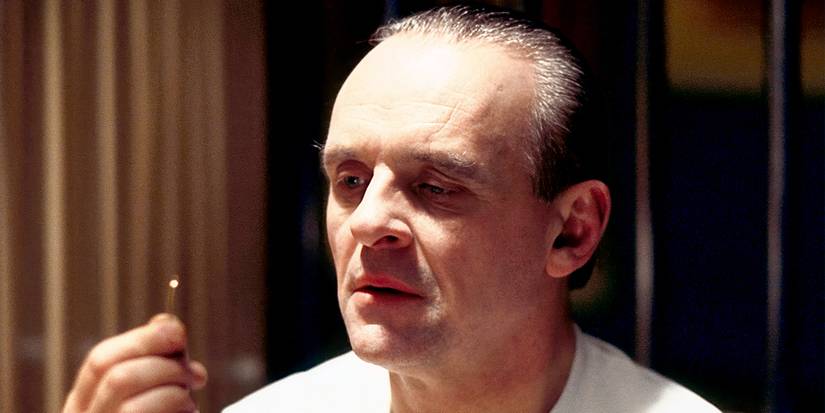 Image via Orion Pictures
"I ate his liver with some fava beans and a nice Chianti." If Beauty and the Beast made animation more critically respectable, The Silence of the Lambs did the same for horror, attaining a clean sweep at that year's Oscars, unprecedented for the genre. Here, Jodie Foster is FBI trainee Clarice Starling, who seeks the help of imprisoned serial killer Hannibal Lecter (Anthony Hopkins) to catch another murderer known as Buffalo Bill (Ted Levine). Rather than simply dealing in procedural tropes or serial killer thrills, the movie dives deep into trauma, power, and perception.
It works because all the characters are so layered and psychologically believable. Hopkins, in particular, deserves immense praise for taking a character who might have come across as cartoonish and instead making the perfect balance of charismatic, realistic, and terrifying. Simply put, his Lecter is one of the greatest villains in movie history, making Voldemort look practically chummy by comparison.
1 'Terminator 2: Judgment Day' (1991)
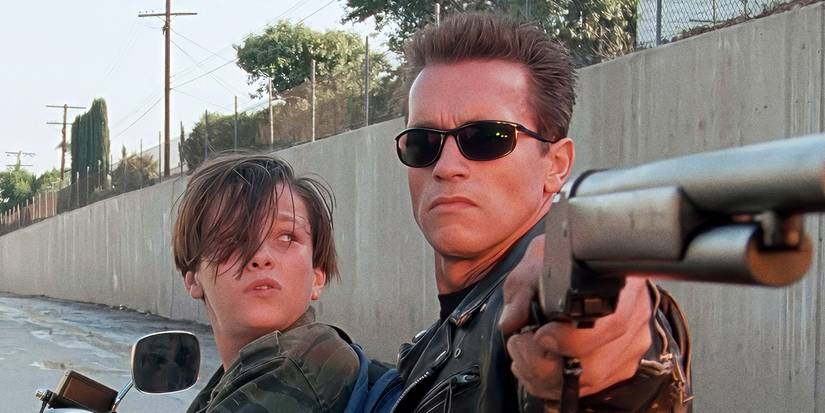 Image via Tri-Star Pictures
"No fate but what we make." Terminator 2: Judgment Day revisits a future ruled by machines, this time sending a reprogrammed Terminator (Arnold Schwarzenegger) back in time to protect a young John Connor from a more advanced killing machine. Having the antagonist from the first movie return as an ally was a narrative masterstroke. Indeed, character transformation is a key theme throughout the whole movie. The Terminator learns empathy (making for some genuinely touching scenes), and Sarah Connor (Linda Hamilton) evolves from victim to warrior.
In other words, the story has a real heart. On top of that, the action and special effects are simply awesome and radically ahead of their time. For all these reasons, T2 is frequently ranked among the greatest sequels ever made. It broke open a new world of possibilities, paving the way for many of the sci-fi masterpieces that followed. Decades later, it more than holds up.
.

 English (US) ·