
 Image via CGV Arthouse

Published Feb 25, 2026, 3:36 PM EST
Luc Haasbroek is a writer and videographer from Durban, South Africa. He has been writing professionally about pop culture for eight years. Luc's areas of interest are broad: he's just as passionate about psychology and history as he is about movies and TV. He's especially drawn to the places where these topics overlap.
Luc is also an avid producer of video essays and looks forward to expanding his writing career. When not writing, he can be found hiking, playing Dungeons & Dragons, hanging out with his cats, and doing deep dives on whatever topic happens to have captured his interest that week.
Sign in to your Collider account
Great writing in a thriller is almost invisible. When it works, you typically don’t notice it. Every choice seems organically motivated, every revelation feels earned, and every line of dialogue carries more weight than it first appears to. The greatest thrillers aren’t defined by twists alone, but by precision; careful balances of tension, character, and theme.
In other words, it's possible for the genre to be both entertaining and smart. Whether they explore obsession, moral ambiguity, paranoia, or the fragile boundary between order and chaos, the thrillers on this list linger because they engage both the nerves and the mind.
10 'Prisoners' (2012)
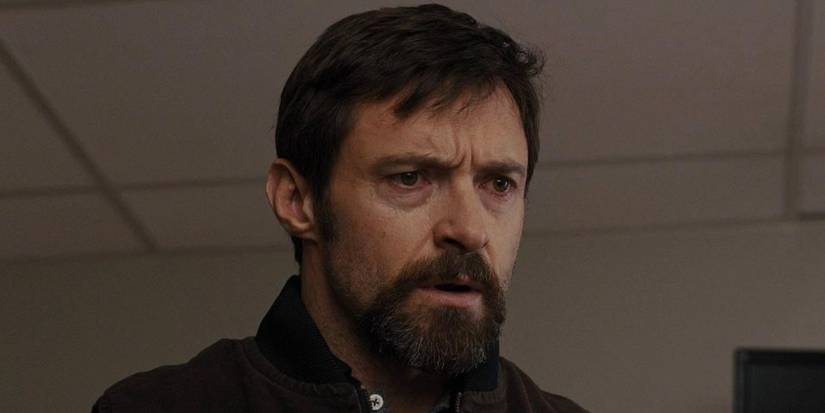 Image via Warner Bros.
"Why are you looking at me like that?" Prisoners follows two families whose lives are shattered when their young daughters go missing after a Thanksgiving gathering. As the police investigation stalls, one father (Hugh Jackman) takes matters into his own hands, abducting a suspect he believes is responsible. The script is morally complex: rather than offering a simple good-versus-evil narrative, the story forces us to wrestle with uncomfortable questions. What would you do to save your child? Where is the line between justice and cruelty?
Another hallmark of great writing here is character-driven suspense. Detective Loki (Jake Gyllenhaal) and Keller represent two different responses to crisis, and their parallel arcs create a constant push and pull. Finally, there's the layered storytelling. Clues are planted early (including subtle details, offhand lines, and visual motifs) that pay off later in ways that feel earned rather than contrived. The mystery unfolds organically, with each revelation recontextualizing what came before.
9 'Burning' (2018)
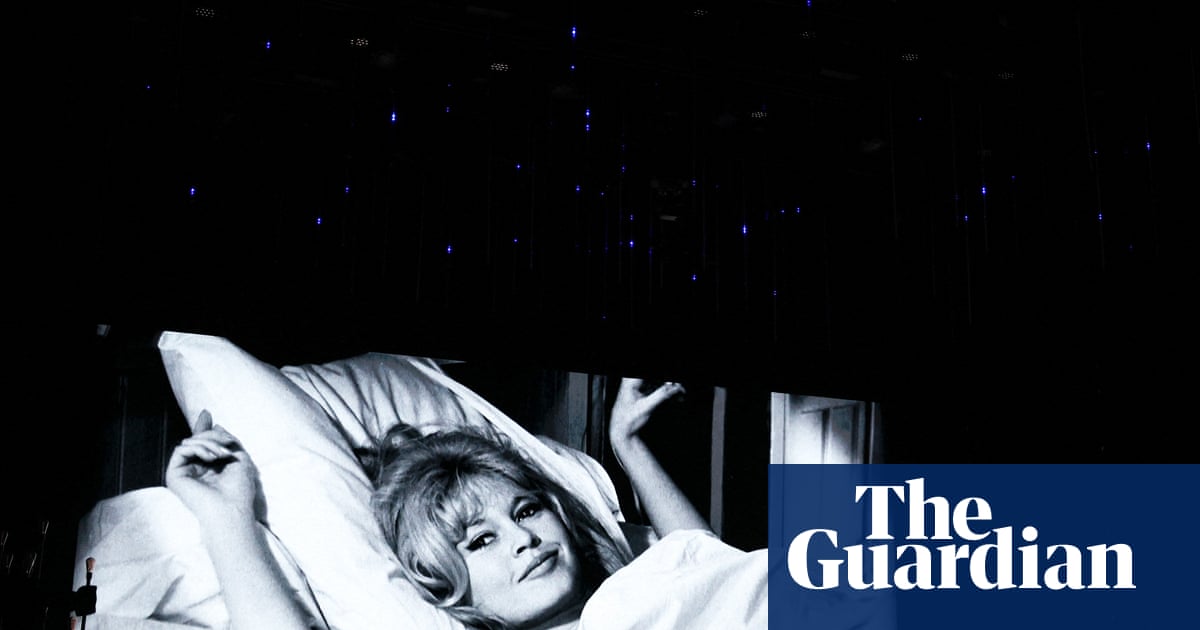
 Image via CGV Arthouse
"Do you know what a greenhouse is?" Burning centers on a drifting young man (Yoo Ah-in) who reconnects with a former acquaintance (Jeon Jong-seo) and becomes increasingly unsettled by her new, enigmatic companion (Steven Yeun). When the woman disappears, the film shifts into an ambiguous psychological investigation that never quite announces itself as one. The plot resists traditional thriller rhythms. Clues are suggested rather than confirmed, and motivation remains opaque. It's the ultimate slow-burn, where metaphor and subtext do most of the heavy lifting.
For most of Burning's two-and-a-half-hour runtime, not much happens; it's mostly just conversation and subtle character development. But these seemingly casual "filler" scenes actually reveal buried class tensions, gendered power dynamics, and hints of existential dread. It all then breaks wide open in the shocking final scene, one of the most powerful movie endings of the last decade, precisely because of all the quiet, necessary buildup.
8 'The Conversation' (1974)
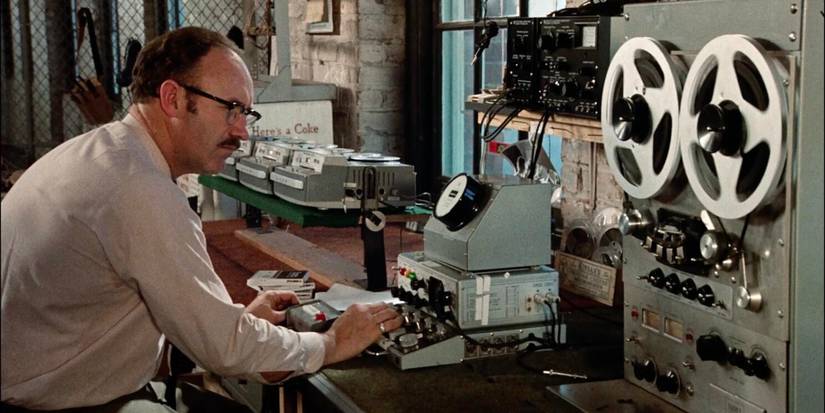 Image via Paramount Pictures
"I don’t care what they’re talking about. I just want a clear recording." Francis Ford Coppola cranked out this masterpiece between Godfather films. Gene Hackman leads the cast as a professional surveillance expert hired to record a couple’s private discussion in a crowded public space. As he reconstructs their conversation, he becomes convinced that his work may lead to murder. While this premise is deceptively simple, the writing is astonishingly precise. Dialogue fragments are repeated, recontextualized, and reinterpreted, demonstrating how meaning is shaped by emphasis and expectation.
In this sense, the thriller mechanics are entirely psychological. Harry Caul isn’t a typical thriller protagonist; he’s introverted, emotionally guarded, and haunted by past mistakes. His growing fear that his work may lead to violence casts a slow, suffocating dread over everything. Through him, the movie explores the cost of detachment, the illusion that one can observe without being implicated. The character's unraveling becomes a meditation on responsibility in a world of hidden watchers.
7 'Se7en' (1995)
 Image via New Line Cinema
"Wanting people to listen, you can’t just tap them on the shoulder anymore." Se7en follows two detectives (Brad Pitt and Morgan Freeman) tracking a serial killer (Kevin Spacey) whose murders are patterned after the seven deadly sins. The plot escalates methodically, each crime designed not just to punish victims, but to articulate a worldview. Exposition is minimal, backstory sparse. The killer’s philosophy emerges through action rather than speech, and the detectives’ contrasting temperaments create natural friction.
Indeed, Somerset’s weary cynicism and Mills’ impulsive idealism create a dynamic that grounds the narrative emotionally. Their conversations about faith, justice, and whether the world is worth fighting for elevate the film way beyond your typical thriller. Themes aside, the narrative structure is simply ingenious, too. Every scene is oriented toward the ending without telegraphing it. The entire story moves with grim purpose toward a conclusion that feels both shocking and, in retrospect, chillingly unavoidable.
6 'Vertigo' (1958)
 Image via Paramount Pictures
"It’s a strange thing to be in love with a woman who’s dead." Vertigo features James Stewart as a former detective hired to observe a woman (Kim Novak) exhibiting signs of psychological instability. His surveillance soon turns into an obsession, and the film morphs into a quintessential Hitchcockian study of control, desire, and identity. The plot unfolds in movements rather than conventional beats, each phase reconfiguring the audience’s understanding of what they’ve seen. The pacing is deliberate and hypnotic, allowing mood and atmosphere to build gradually.
The script is structurally bold, hinting at the radical storytelling subversion Hitchcock would later bring to bear on Psycho. Instead of saving the central revelation for the end, Vertigo reveals crucial information midway through, shifting the tension from "what happened?" to "what will he do with the truth?" This choice deepens the emotional stakes, turning the second half into a tragic psychological spiral rather than the expected whodunit.
5 'The Third Man' (1949)
 Image via StudioCanal
"I never feel comfortable on stairs." The Third Man is one of the last of the great noirs. In it, an American writer (Joseph Cotten) arrives in postwar Vienna to meet an old friend, only to discover that the man (Orson Welles) is supposedly dead under suspicious circumstances. As the protagonist investigates, the city itself becomes a maze of half-truths, shifting allegiances, and ethical rot. From here, the story unfolds with impressive narrative economy. Every conversation carries dual meaning, advancing the mystery while revealing character.
The dialogue is spare but loaded, steeped in cynicism yet shot through with emotional undercurrents. Information is always incomplete, and certainty is treated as a liability rather than a goal. The Third Man also stands out with the way it uses setting as story. The divided, shadowy Vienna, full of ruins, black markets, and uneasy alliances, isn’t just an interesting backdrop but a mirror for the themes of fragmentation and uncertainty.
4 'The Silence of the Lambs' (1991)
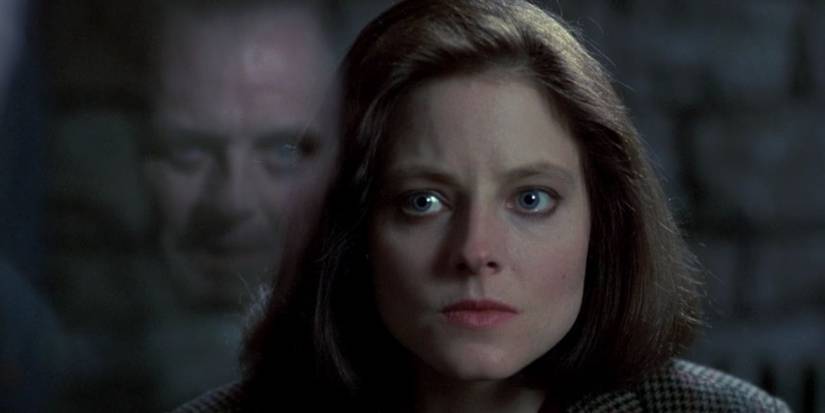 Image via Orion Pictures
"You use Evian skin cream, and sometimes you wear L’Air du Temps." Here, Jodie Foster turns in a strong performance as Clarice Starling, an FBI trainee on the hunt for a serial killer (Ted Levine), though she is overshadowed by Anthony Hopkins' legendary turn as imprisoned psychiatrist and cannibal Hannibal Lecter. The story hinges on the evolving relationship between these two characters, a dynamic built on mutual recognition, manipulation, and uneasy respect.
Their conversations function like verbal chess matches, where information is exchanged at emotional cost. The script hands both of them a ton of great lines, though Lecter naturally gets the lion's share of them ("I ate his liver with some fava beans and a nice Chianti," he famously informs us). At the same time, The Silence of the Lambs explores the vulnerability of both characters: Clarice navigating male-dominated institutions, Lecter probing psychological wounds. Character psychology drives the plot.
3 'No Country for Old Men' (2007)
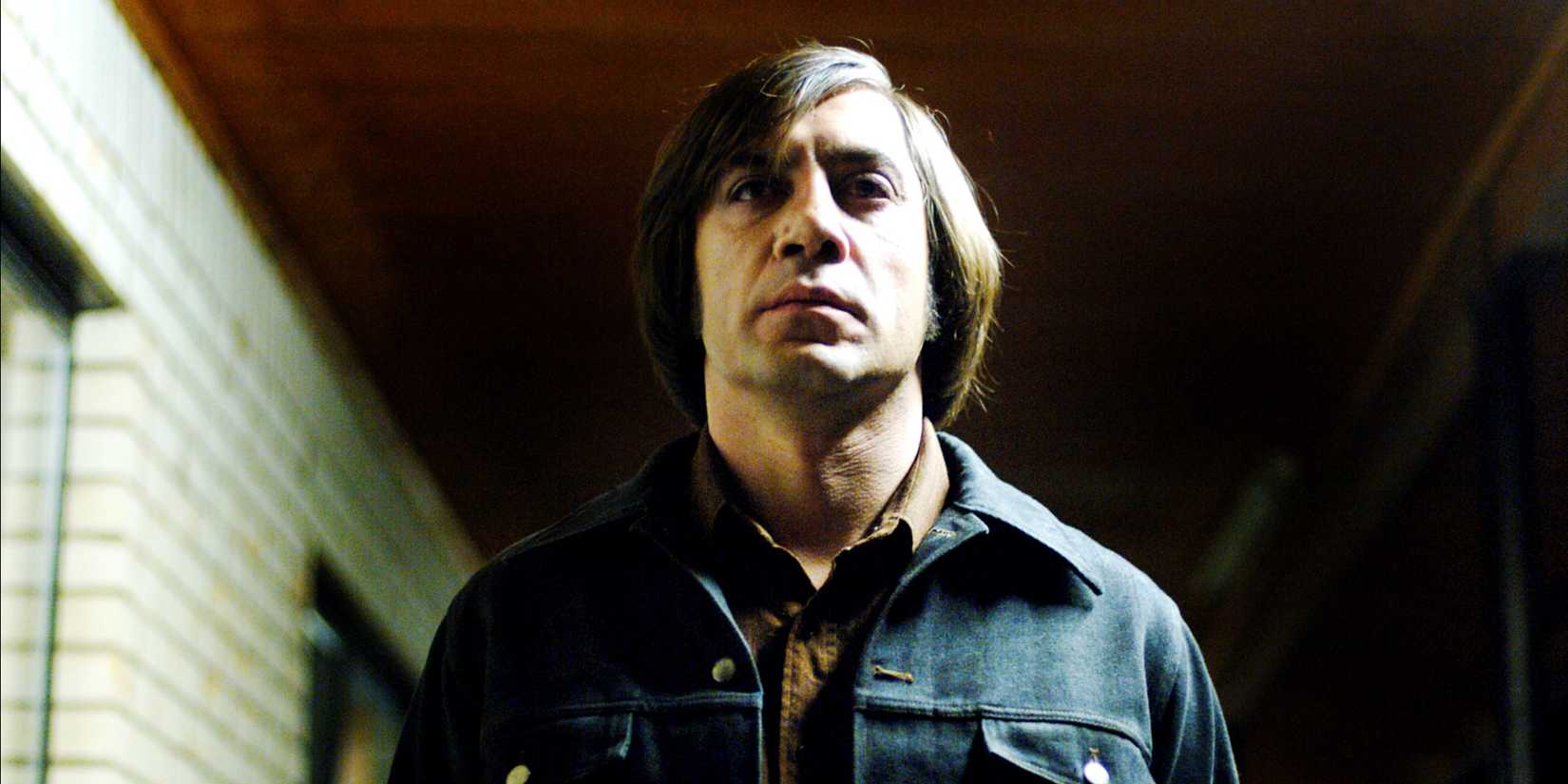 Image via Miramax Films
"Call it." No Country for Old Men follows a man (Josh Brolin) who stumbles upon the aftermath of a drug deal gone wrong and decides to take the money, triggering pursuit by a near-mythic hitman (Javier Bardem). The plot unfolds with ruthless simplicity, propelled by chance rather than intention. The writing stubbornly refuses to console. Dialogue is minimal, often elliptical, and charged with existential weight, while the narrative structure totally subverts all expectations.
This approach is most striking in the third act. Rather than ending in a heroic confrontation and shootout like most movies in this subgenre, No Country for Old Men gives us resignation and loose ends. The sheriff (Tommy Lee Jones) takes no action against the killer, feeling tired and outgunned by the dark forces stalking the world. Rather than grabbing his gun or rallying a posse, he simply recounts a dream about his father that raises more questions than it answers.
2 'Rear Window' (1954)
"I wonder if it’s ethical to watch a man with binoculars." Hitchcock strikes again. Rear Window centers on a photographer (James Stewart) confined to his apartment with a broken leg, who becomes convinced that a neighbor has committed murder. The movie unfolds entirely from this limited vantage point. Every character exists within the frame of what can be seen, overheard, or inferred, allowing the audience to share Jeff’s uncertainty. Are we seeing a real mystery, or projecting fantasies onto fragments?
While the movie is often praised for its visual storytelling, the script provides the sturdy foundation for Hitchcock's imagery. In particular, the screenplay is incredibly precise in the way it handles the suspense mechanics. Clues are planted with meticulous care, and each discovery raises the stakes organically. The script constantly balances curiosity with dread, letting tension build through what is seen and what remains just out of sight.
1 'Chinatown' (1974)
 Image via Paramount Pictures
"Politicians, ugly buildings, and wh—s all get respectable if they last long enough." In this one, Jack Nicholson is Jake Gittes, a private investigator whose seemingly routine new case leads him into a labyrinth of corruption involving water rights, political power, and family trauma in 1930s Los Angeles. From here, the plot expands outward relentlessly, getting more detailed with the world-building and more ambitious with the themes. The writing is a masterclass in controlled ambiguity: characters rarely state facts outright, preferring evasion and implication.
Dialogue conceals as much as it reveals, forcing the audience to assemble meaning from fragments. Every revelation arrives late and incomplete. At the same time, these conversations do show off dimensions to the characters, even if they are deceptive. Gittes’ mix of confidence, curiosity, and lingering guilt makes him both capable and vulnerable, while Evelyn Mulwray (Faye Dunaway) emerges as one of noir’s most tragic figures, someone trapped by forces beyond her control. Taken together, it all makes for a fiercely intelligent portrait of moral bleakness.



 English (US) ·