
 Image via Lions Gate Films
Published Apr 12, 2026, 10:33 AM EDT
William Smith is a flesh and blood writer who hasn't seen natural sunlight in months. He spends every waking hour at his laptop producing content to satisfy the cruel algorithm and to give those who spend their time in the comments section something to criticize.
Sign in to your Collider account
How do you end a horror movie? Shock? Mystery? The murder of all the children in the United States? All those and more feature in some of the best, most perfect horror movie endings. Unsurprisingly, these endings all mostly come at the end of some of the most beloved horror films ever made, or, at the very least, films that are undeniably cult favorites. Their endings aren’t what make them classics, but they definitely are a part of the alchemy that’s required.
There’s no one way to end a horror movie and these endings prove that. Even when some of them share similar apocalyptic outcomes, they approach them in vastly different ways. One ending will make you laugh, while the other will leave you stunned in silence. No matter how they leave you, though, you’re going to remember because of how perfectly they end their respective films. These are those ten most perfect horror movie endings, ranked.
10 'Saw' (2004)
 Image via Lions Gate Films
Regardless of how you feel about the Saw franchise as a whole and its influence on the rise of the so-called torture porn trend, there’s no denying that it’s a series that had audiences hooked for the better part of a decade. Part of that is definitely due to the gruesome death scenes that were a hallmark of the films, but equally responsible were the convoluted plots that always wrapped up with a twist ending. These reveals, set to composer Charlie Clouser’s iconic “Hello Zepp” music cue, are some of the most memorable in modern horror, and the first is still the best.
The original Saw’s plot is fairly straightforward in comparison to more complicated sequels. Two men awaken in a decrepit bathroom with their ankles shackled and a corpse between them. They’re captives of the infamous Jigsaw serial killer who subjects his victims to sadistic survival games. The plot is laid out as a non-linear procedural, revealing more about the two men and the reasons behind their captivity. By the end, one of them has made good on the film’s title by sawing through his ankle and crawling away to get help. The other is left to witness the twist ending; that the corpse in the room has been alive the entire time and is Jigsaw himself in the flesh, who leaves the man screaming as he locks him away. Even if the movie itself is derivative and doesn’t all hang together narratively, the ending is undeniably effective and helped launch the most successful horror franchise of the aughts.
9 'Halloween III: Season of the Witch' (1982)
 Image via Universal Pictures
Halloween III: Season of the Witch was highly divisive when it was first released. As a standalone installment in the Halloween franchise that doesn’t feature its iconic slasher Michael Myers, audiences were understandably a little perturbed, especially since the film’s marketing failed to effectively explain the change in direction. The movie has since undergone a reevaluation and is often listed as a fan favorite thanks to its bonkers plot and downright ballsy ending.
Halloween masks play a crucial part in the plot of the film as B-movie icon Tom Atkins plays Dr. Challis who, after witnessing a murder-suicide at his hospital, begins investigating the connections to the seemingly sinister Silver Shamrock novelty company. His investigation reveals connections to witchcraft, Stonehenge, Celtic folklore and the celebration of Samhain, which in the film’s plot involves the ritual sacrifice of children. The masks made by the company, which have been sold nationwide, are installed with a chip designed to kill their wearers and activated by a commercial. Challis tries to prevent this mass pedicide by calling the television affiliates to have them pull the commercial, but is unable to convince them all as it begins to play and the film cuts to black on Challis’ screams. Love or hate the film, you will never forget that ending.
8 'The Cabin in the Woods' (2009)
 Image via Lionsgate
A mass genocide event as an ending is generally going to elicit shock from an audience, as it did in Halloween III, but, if pitched right, it can also earn some hearty laughter. The Cabin in the Woods is one of those special kinds of horror films that walks a tightrope between self-referential humor and genuine horror. Its subversion and acknowledgment of the genre’s tropes makes its climax all the more entertaining as it collides all its influences into one big monster mash. Even better is the denouement, where it’s not just the coed protagonists whose lives are put on the line, but the entire population of Earth.
Presented first as a standard cabin in the woods horror movie, albeit one where some middle management types are paying close attention and affecting the outcome of events from a control room, the movie slowly reveals its true nature. The archetypal characters are all meant to be sacrifices to ancient gods who demand blood, lest they come unleash hell on earth. When the protagonists emerge triumphant over their would-be killers, they effectively select the nuclear option, as made clear by the god-sized hand that erupts from the ground and crushes the titular location. Meta movies like this can sometimes falter in their third act by failing to effectively pay off their clever set-ups, but The Cabin in the Woods sticks the landing by sticking it to humanity in the most cosmically hilarious way possible.
7 'The Mist' (2007)
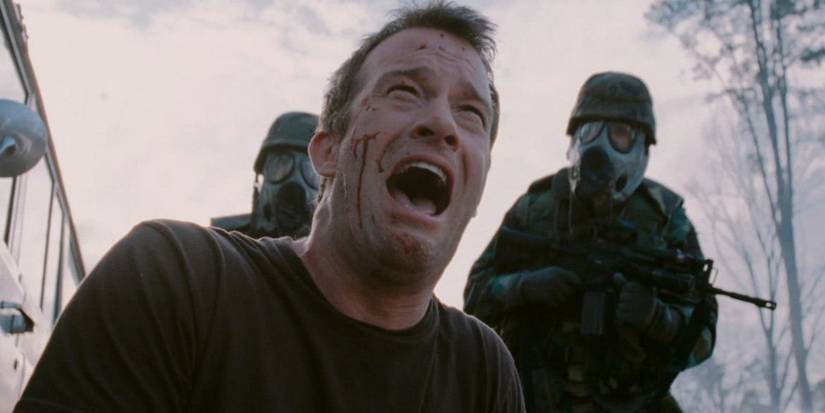 Image via Dimension Films
In comparison to the deaths wrought at the end of Halloween III or The Cabin in the Woods, the ending of The Mist is downright paltry in terms of sheer numbers. It’s far more affecting though, for how it arrives at its violent end and for those lives that meet it. Stephen King, on whose novella Frank Darabont’s film is based and which ends with a more open-ended note, famously declared that Darabont’s emotional gut punch of an ending was more effective than his text. That’s a bold statement, but who are we to disagree with the master of horror?
The majority of The Mist follows a group of survivors trapped in a supermarket after a seemingly supernatural event covers their town in the titular natural phenomenon, which happens to be filled with monsters. There are also some very human monsters inside the supermarket as well, which leads a small group to make their escape out into the mist. Driving aimlessly, they find nothing but carnage until they run out of gas and are left with little options as they hear the monsters approaching in the distance. Armed with a gun with four bullets, the leader of the group, played by Thomas Jane, executes his companions as mercy, including his own eight-year-old son. He gets out of the car to face the monsters, only to be met by a military force, clearing the way to safety. There’s nothing to add to that, except that it’s brutal, and Stephen King was right.
6 'The Wicker Man' (1973)

Most of these perfect endings also happen to be twist endings. A twist ending isn't inherently better or worse than a more straightforward ending, but when it's done right, it can feel like a magic trick. Like the dark magic at work at the end of The Wicker Man. This folk horror classic features slow-burning suspense and a rising tension over the course of its plot, which follows an English policeman Howie, played by Edward Woodward, investigating the disappearance of a young girl on a remote island populated by pagan worshipers. Their rituals rankle the devout Christian sergeant, and there's an immediate unease that sets in, particularly when he meets their leader, played by horror icon Christopher Lee. It isn't long before he determines that the missing girl is intended to be a sacrifice as part of their May Day celebration.
When the film does reach its May Day climax, Howie makes the horrifying discovery that the missing girl was never meant to be their sacrifice; he was. It pulls the rug out from under him just as it does the viewer, and leaves them nothing to do except watch in horror as Howie is placed in the titular statue, which is then set ablaze. The influence on films like Midsommar is obvious, but more than that, the ending is one of the most effective twists in horror history. The sounds of Howie saying a prayer as he burns, and the cultists sing a folk song will be burned forever into the brain of anyone who watches The Wicker Man.
5 'The Sixth Sense' (1999)
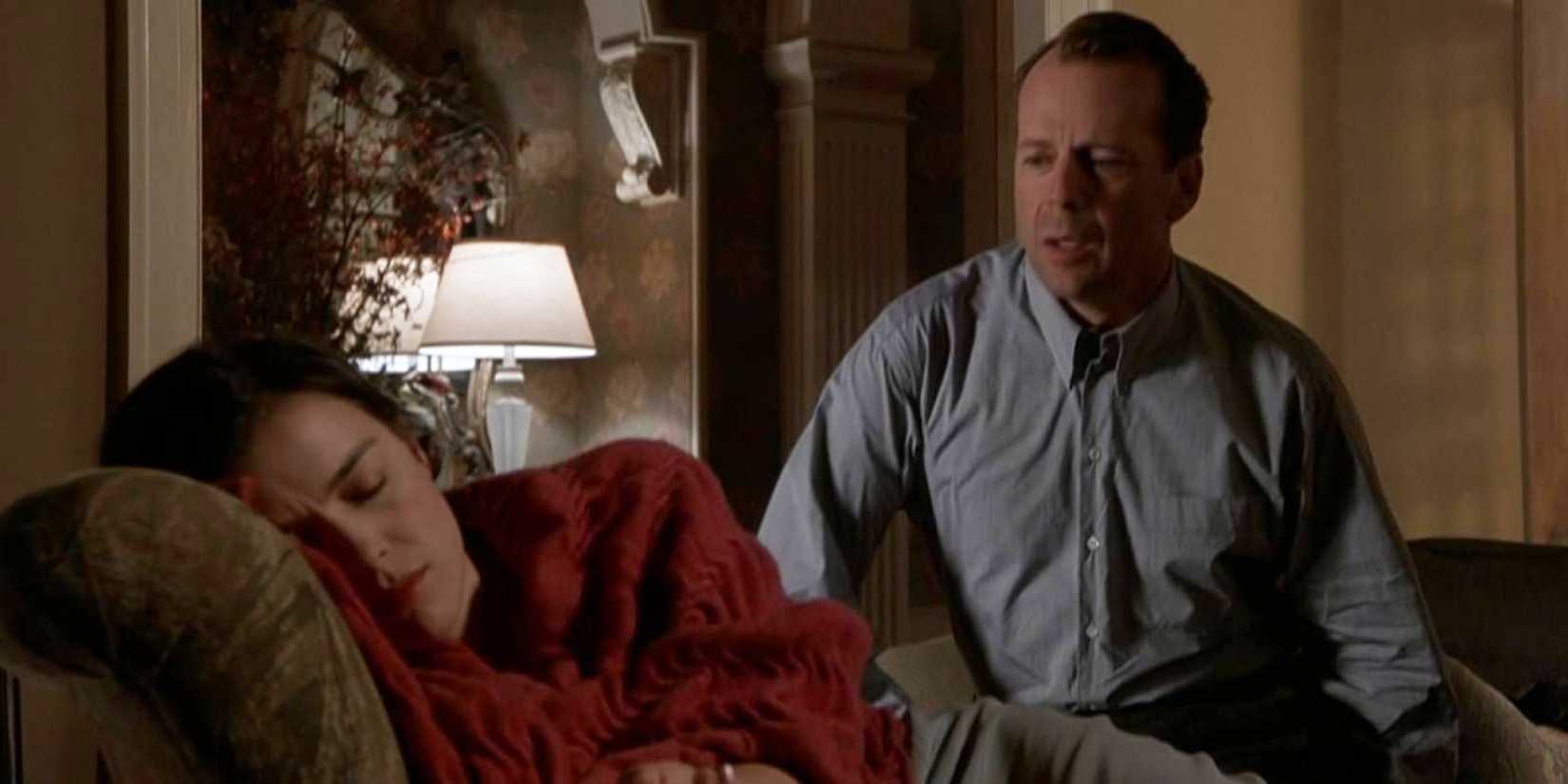 Image via Walt Disney Studios Motion Pictures
When it comes to twist endings, no filmmaker has inspired more acclaim or vitriol than M. Night Shymalan. The writer-director's penchant for third act plot revelations has retroactively ruined films like Signs or The Village for many of his fans, but when these twists work, they can pull his movies together like a magic trick. It worked in his best film, Unbreakable, and it worked in his modern horror classic The Sixth Sense. That was the twist that had audiences everywhere talking in 1999, and its success had many of them returning for repeat viewings, which made the film a bona fide blockbuster.
By now, everyone, even those who haven't seen a single frame of the film, knows the twist that Bruce Willis' character Dr. Malcolm Crowe has been dead for the entire movie. His interactions with the young Cole, played by Haley Joel Osment, are only possible because the young boy can see dead people. It's a twist that has presented itself in plain sight, but one which almost no one saw coming, and anyone who says they did was likely lying. It's a perfect resolution to the film, and it's one of the reasons why audiences kept coming back to every Shymalan movie for years to get the rug pulled out from under them again and again.
4 'The Birds' (1963)
 Image via Universal Pictures
Not all endings need to have a twist to be successful. Some of them can even end with simple, eerie silence, like Alfred Hitchcock's The Birds. It might seem like cinematic sacrilege to not put Hitchcock's horror masterpiece Psycho here, but while that film does have one of the greatest final moments in horror history with Anthony Perkins staring down the barrel of the camera right into the audience's soul, it's immediately proceeded by a lengthy unnecessary scene of exposition that somewhat deflates its effect. It's the one major flaw in that otherwise perfect horror film, whereas the unsettling ending of Hitchcock's follow-up film is one of the best parts of the movie.
Set in the sleepy seaside town of Bodega Bay, where Tippi Hedren's socialite Melanie has come to socialize with Rod Taylor's lawyer Mitch, the movie takes a turn into the horrific when the titular avians begin to attack with warning or reason. It becomes a fight for survival as the attacks become more aggressive and the lead characters eventually barricade themselves inside a house. With severe injuries and few options left, they decide to try and make a run for it in their car out of town. What follows isn't some spectacular attack, but a quiet, dread-filled moment where the survivors slowly get into their car and drive away, while hundreds of birds watch them in silence. It's a perfect ending filled with an ambiguity and uncertainty thats more powerful than any bloodletting could ever be.
3 'The Texas Chain Saw Massacre' (1974)
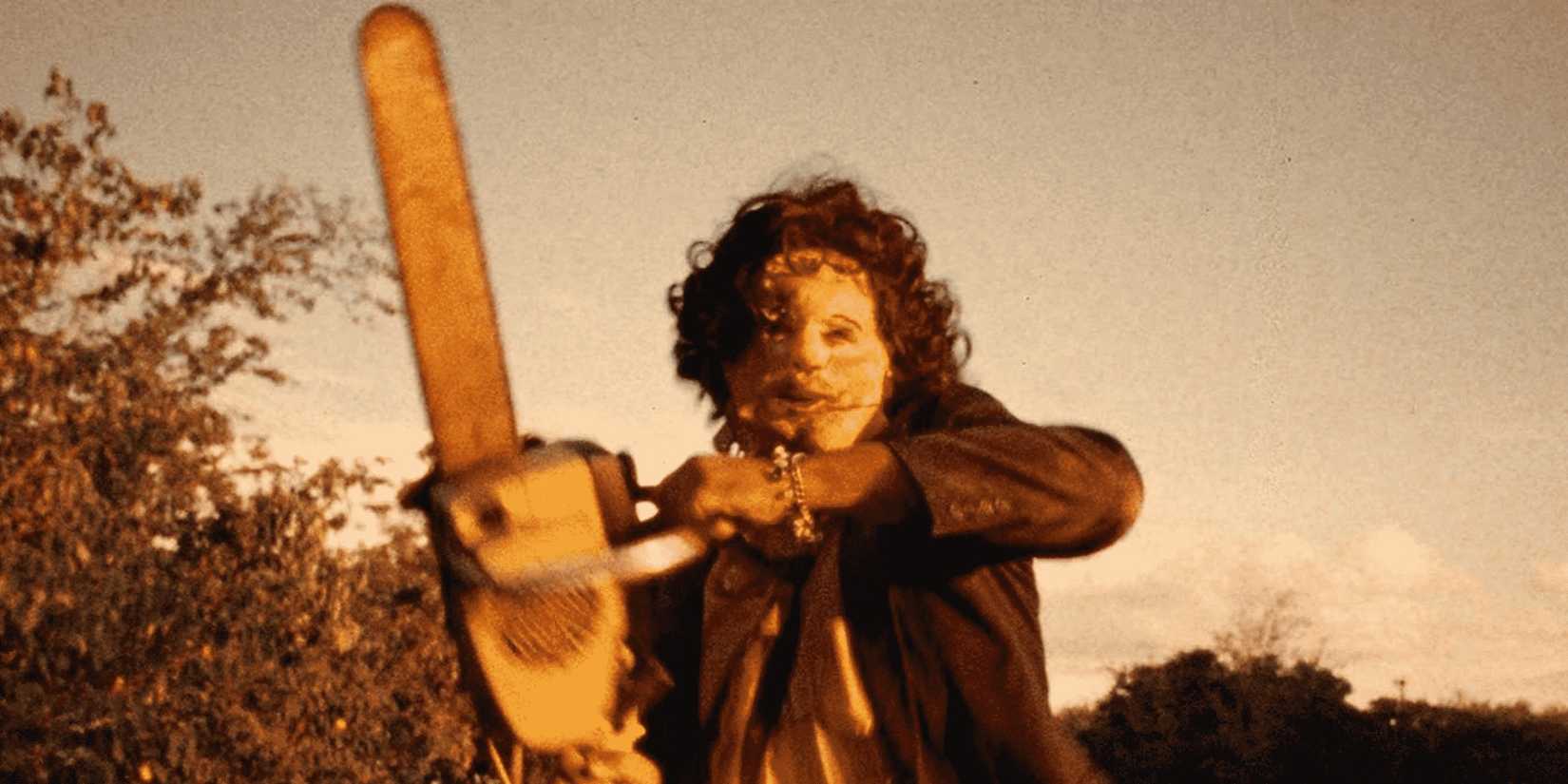 Image via Bryanston Distributing Company
Silence is certainly eerie, but how about a cacophony of madness and screaming? It wouldn't have worked for The Birds, but it feels right at home in Tobe Hooper's masterpiece The Texas Chain Saw Massacre. This backwoods horror classic is an endurance test, putting its characters through the wringer. It also keeps the audience constantly on edge. From the first moment we meet Gunnar Hansen's iconic Leatherface, swinging a hammer into an unsuspecting home invader's face, there isn't a moment of reprieve from the tension or horror. It's just a steady, sweaty ride into hell.
As the five Texas teens on a road trip each individually find their way to the decrepit farm house that Leatherface and the rest of the Sawyer clan call home, they endure unimaginable horror, but none more so than final girl Sally, played by Marilyn Burns. After the rest of her friends have been turned into barbecue, Sally is subjected to one of the worst dinners in cinematic history, tied to a chair while the Sawyer's play murder-house. She escapes, of course, and Leatherface gives chase. They reach the road where a blood-soaked Sally finally escapes in the back of a passing truck, laughing madly as she puts some distance between herself and the dancing Leatherface swinging his chainsaw wildly. The Texas Chain Saw Massacre is so unrelenting that it'll get you laughing in relief right alongside Sally, if you aren't glued to your seat in abject horror.
2 'The Thing' (1982)
 Image via Universal Pictures
Master of horror John Carpenter has more than a few perfect endings in his filmography, whether it's the sounds of Michael Myers breathing in the original Halloween, or Sam Neill laughing hysterically as he loses his mind In the Mouth of Madness. It's hard to pick just one perfect ending of Carpenter's, but there's something particularly perfect with how he ends his greatest film, The Thing. While it was initially met with outright hostility and disgust from critics, The Thing has been reclaimed as one of the greatest horror films ever made, thanks to its combination of gory, practical effects, and perfectly paced plot of paranoia. Based on the novella Who Goes There? by John W. Campbell Jr. as well as the first film version of it, The Thing from Another World, Carpenter's version is a vision of hell frozen over.
In Antarctica, an American research team discovers an alien lifeform that can imitate any living organism. It's already made mincemeat out of a Norwegian camp, and it's looking for a new place, and people, to hide inside. The men soon realize the apocalyptic scenario that would play out if this alien were to ever make it to civilization, so they systematically destroy its ability to escape and blow their entire research station sky-high. At the end, as everything burns around him, only Kurt Russell's MacCready is left, until he's approached by Keith David's Childs, who had disappeared during the fireworks. Neither man trusts the other, because neither man can be sure the other isn't a Thing. So they sit, freezing to death in the cold. That's as bone-chilling as horror movies get.
1 'The Shining' (1980)
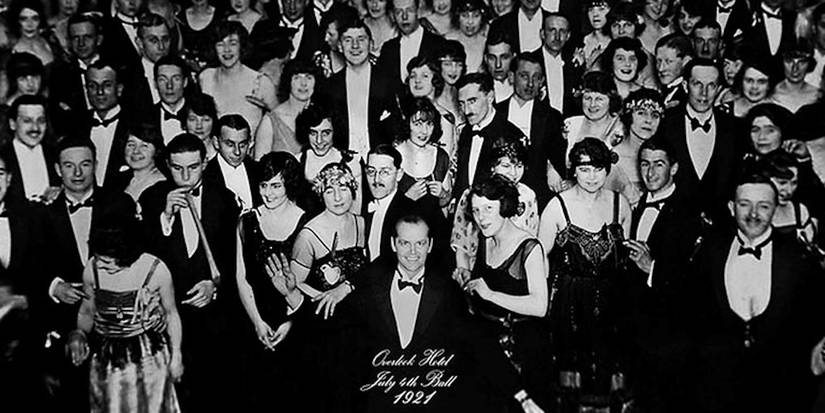 Image via Warner Bros. Pictures
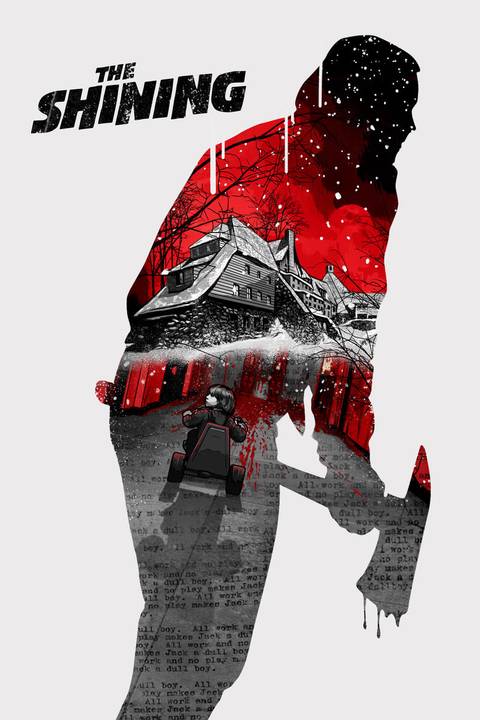
Cold, remote locations just lend themselves to horror so perfectly. The Shining is just as much in contention for the greatest horror movie ever made as The Thing. While its ending takes some liberties from the novel that upset author Stephen King, there's no doubting the haunting power of it. Stanley Kubrick isn't the sentimentalist that King is, and his film doesn't even rub shoulders with the redemption glimpsed in the novel, which was a more personal story to King. The story of Jack Torrance slowly going mad and attacking his wife and son, while serving as the caretaker of the Overlook Hotel, reflected King's own insecurities and struggles with alcoholism and success. It's only natural he'd want to end that story on a warm redemptive note instead of the cold-blooded one that Kubrick did.
In King's novel, Jack is momentarily able to overcome the supernatural influence of the Overlook to tell his family to run. The hotel explodes thanks to its neglected boiler. In Kubrick's movie, Jack, played with absolute malice by Jack Nicholson, never regains his humanity even for a second, and he freezes to death in the hedge maze chasing after his son Danny. There's a lot of backstory and character details that have been excised in mass from the novel, which makes the film a much colder and nastier piece of work, but it is a masterwork of atmosphere and sustained dread. The final shot shows Jack in a photograph, among the many that hang on the walls of the Overlook, taken decades before he had first stepped foot in the hotel. He's become a part of it, absorbed into its evil like all of its other victims, doomed to haunt its halls forever. That's a perfect horror ending.
Collider Exclusive · Oscar Best Picture Quiz
Which Oscar Best Picture
Is Your Perfect Movie?
Parasite · Everything Everywhere · Oppenheimer · Birdman · No Country
Five Oscar Best Picture winners. Five completely different visions of what cinema can be — and what it can do to you. One of them is the film that was made for the way your mind works. Ten questions will figure out which one.
🪜Parasite
🌀Everything Everywhere
☢️Oppenheimer
🐦Birdman
🪙No Country for Old Men
FIND YOUR FILM →
01
What kind of film experience do you actually want? The best movies don't just entertain — they leave something behind.
ASomething that pulls the rug out — that makes me think I'm watching one kind of film and then reveals I'm watching another entirely. BSomething overwhelming — funny, sad, absurd, and genuinely moving, all at once. CSomething grand and weighty — a film that makes me feel the full scale of what I'm watching. DSomething formally daring — a film that pushes what cinema can even do. ESomething lean and relentless — pure tension with no wasted frame.
NEXT QUESTION →
02
Which idea grabs you most in a film? Great films are driven by a central obsession. What's yours?
AClass, inequality, and what people are willing to do when desperation meets opportunity. BIdentity, family, and the chaos of trying to hold your life together when everything is falling apart. CGenius, moral responsibility, and the catastrophic weight of a decision you can never take back. DEgo, legacy, and the terror of becoming irrelevant while you're still alive to watch it happen. EEvil, chance, and whether moral order actually exists or if we just tell ourselves it does.
NEXT QUESTION →
03
How do you like your story told? Form is content. The way a story is shaped changes what it means.
AGenre-twisting — I want it to start in one lane and migrate into something completely different. BMaximalist and genre-blending — comedy, action, drama, sci-fi, all in one ride. CEpic and non-linear — cutting between timelines, building a mosaic of cause and consequence. DA single unbroken flow — I want to feel like I'm living it in real time, no cuts to safety. ESpare and precise — every scene doing exactly what it needs to do and nothing more.
NEXT QUESTION →
04
What makes a truly great antagonist? The opposition defines the protagonist. What kind of opposition fascinates you?
AA system — invisible, structural, and almost impossible to fight because it has no single face. BThe self — the ways we sabotage, abandon, and fail the people we love most. CHistory — the unstoppable momentum of events that no single person can stop or redirect. DThe industry — the machinery of culture that chews up talent and spits out irrelevance. EPure, implacable evil — a force so certain of itself it becomes almost philosophical.
NEXT QUESTION →
05
What do you want from a film's ending? The final note is the one that lingers. What do you want it to sound like?
AShock and inevitability — a conclusion that recontextualises everything that came before it. BEarned emotion — I want to cry, laugh, and feel genuinely hopeful, even if the world is a mess. CDevastation and grandeur — an ending that makes me sit in silence for a few minutes after. DAmbiguity — something that leaves enough open that I'm still thinking about it days later. EBleakness — an honest refusal to pretend the world is tidier than it actually is.
NEXT QUESTION →
06
Which setting pulls you in most? Where a film takes place shapes everything — mood, stakes, what's even possible.
AA gleaming modern city with a hidden underside — beauty masking rot, wealth masking desperation. BA collapsing suburban life that opens onto something infinite — the multiverse of a single ordinary person. CThe corridors of power and science at a world-historical turning point — where decisions echo for decades. DThe grimy, alive chaos of New York and Hollywood — fame as both destination and trap. EVast, indifferent landscape — desert and highway where violence arrives without warning or reason.
NEXT QUESTION →
07
What cinematic craft impresses you most? Every great film has a signature — a technical or artistic element that makes it unmistakable.
AProduction design and mise-en-scène — every frame composed to carry meaning beneath the surface. BEditing and tonal control — the ability to move between registers without losing the audience. CScore and sound design — music that becomes inseparable from the dread and awe of what you're watching. DCinematography as performance — the camera not recording events but participating in them. ESilence and restraint — what's left unsaid and unshown doing more work than any dialogue could.
NEXT QUESTION →
08
What kind of main character do you root for? The protagonist is the lens. Who you choose to follow says something about you.
ASomeone smart and resourceful who makes increasingly dangerous decisions under pressure. BSomeone overwhelmed and ordinary who turns out to be capable of something extraordinary. CA brilliant, tortured figure whose gifts and flaws are inseparable from each other. DA self-destructive artist whose ego is both their superpower and their undoing. EA quiet, principled person trying to make sense of a world that has stopped making sense.
NEXT QUESTION →
09
How do you feel about a film that takes its time? Pace is a choice. Some films sprint; others let tension accumulate slowly, deliberately.
AI love a slow build when I know the payoff is going to be seismic — patience for a devastating reveal. BGive me relentless momentum — I want to feel breathless and emotionally spent by the end. CEpic runtime doesn't scare me — if the material demands three hours, give me three hours. DI want it to feel propulsive even when nothing is technically happening — restless energy throughout. EDeliberate and unhurried — I want dread to accumulate in the spaces between the action.
NEXT QUESTION →
10
What do you want to feel walking out of the cinema? The best films leave a mark. What kind of mark do you want?
AUnsettled — like I've just seen something I can't fully explain but can't stop thinking about. BMoved and energised — like the film reminded me what actually matters and gave me something to hold onto. CHumbled — like I've been in the presence of something genuinely important and overwhelming. DExhilarated — like I've just seen cinema doing something it's never quite done before. EHaunted — like a cold, quiet dread that stays with me for days.
REVEAL MY FILM →
The Academy Has Decided Your Perfect Film Is…
Your answers have pointed to one Oscar Best Picture winner above all others. This is the film that was made for the way your mind works.
Parasite
You are drawn to films that operate on multiple levels simultaneously — that begin in one genre and quietly, brilliantly migrate into another. Bong Joon-ho's Parasite is a film about class, desire, and the architecture of inequality that manages to be darkly funny, deeply suspenseful, and genuinely shocking across a single extraordinary running time. Your instinct is for cinema that hides its true intentions until the moment it's ready to reveal them. Parasite is exactly that — a film that rewards close attention and punishes assumptions, right up to its devastating final image.
Everything Everywhere All at Once
You want it all — and this film gives you all of it. The Daniels' Everything Everywhere All at Once is one of the most maximalist films ever made: action comedy, multiverse sci-fi, family drama, existential crisis, and a genuinely earned emotional core that sneaks up on you amid the chaos. You are someone who responds to ambition, who doesn't want cinema to choose between being entertaining and being meaningful. This film refuses that choice entirely. It is overwhelming by design, and its overwhelming nature is precisely the point — because the feeling of being crushed by infinite possibility is exactly what it's about.
Oppenheimer
You are drawn to cinema on a grand scale — films that understand history not as a backdrop but as a force, and that place their characters inside that force and watch what happens. Christopher Nolan's Oppenheimer is a film about the terrifying gap between what we can do and what we should do, told with the full weight of one of the most consequential moments in human history behind it. You want your films to feel important without feeling self-important — to earn their ambition through sheer craft and the gravity of their subject. Oppenheimer does exactly that. It is enormous, complicated, and refuses easy comfort.
Birdman
You are drawn to films that foreground their own construction — that make the how of the filmmaking part of the what it's about. Alejandro González Iñárritu's Birdman, shot to appear as a single continuous take, is cinema examining itself through the cracked mirror of a fading actor's ego. You respond to formal daring, to the feeling that a film is doing something that probably shouldn't be possible. Michael Keaton's performance and Emmanuel Lubezki's restless camera create something genuinely unlike anything else — a film that is simultaneously about creativity, relevance, self-destruction, and the impossibility of ever truly knowing if your work means anything at all.
No Country for Old Men
You are drawn to cinema that trusts silence, that refuses to explain itself, and that treats dread as a form of meaning. The Coen Brothers' No Country for Old Men is a film about the arrival of a new kind of evil — implacable, arbitrary, and utterly indifferent to the moral frameworks we use to make sense of the world. It is one of the most formally controlled films ever made, and its controlled restraint is what makes it so terrifying. You want your films to haunt you, not comfort you. You are not interested in resolution if resolution would be dishonest. No Country for Old Men is honest in a way that most cinema never dares to be.
↻ RETAKE THE QUIZ
The Shining
Release Date June 13, 1980
Runtime 144 minutes
Director Stanley Kubrick
-

-

Shelley Duvall
Wendy Torrance





 English (US) ·