

Published Feb 3, 2026, 11:11 AM EST
Diego Pineda has been a devout storyteller his whole life. He has self-published a fantasy novel and a book of short stories, and is actively working on publishing his second novel.
A lifelong fan of watching movies and talking about them endlessly, he writes reviews and analyses on his Instagram page dedicated to cinema, and occasionally on his blog. His favorite filmmakers are Andrei Tarkovsky and Charlie Chaplin. He loves modern Mexican cinema and thinks it's tragically underappreciated.
Other interests of Diego's include reading, gaming, roller coasters, writing reviews on his Letterboxd account (username: DPP_reviews), and going down rabbit holes of whatever topic he's interested in at any given point.
If there's one genre that perfectly lends itself to aiming for the stars, it's science fiction. These stories about space exploration, hyper-advanced technology, and superpowered heroes are perfect for filmmakers feeling ambitious, and as such, there have been countless ambitious sci-fi films over the years whose intentions have all paid off wonderfully.
From gargantuan blockbusters like Avengers: Infinity War to arthouse films whose ambitions are far more philosophical, like Stalker, these sci-fi spectacles — some of them masterpieces, others not so much — are among the genre's most famous outings ever. Whatever it is that makes them ambitious, the point is that there's no denying that they reached for the sky. That alone, no matter the outcome, is worthy of kudos.
10 'Avengers: Infinity War' (2018)
Love it or hate it, it would be silly to deny that the Marvel Cinematic Universe is one of the most ambitious film franchises in history, if not #1 on the list. Building an interconnected universe of dozens of blockbusters was an unprecedented event in 2008, and back during that time, telling people that a film as humongous as Avengers: Infinity War would ever exist would have probably merited laughter.
The movie was touted as the single most ambitious crossover in film history, and frankly? It still might be. That's the reason this is one of the most universally loved superhero movies of all time: Bringing 10 years' worth of films together in such a way is still admirable nearly eight years later, and the way the movie packs so many glowing character moments and riveting story beats into two-and-a-half hours of runtime is stunning. That's without even mentioning the film's ending. Endgame might have cheapened it a bit by reversing its effect, but in a vacuum, it's the most ambitious ending in all of superhero cinema.
9 'The Abyss' (1989)
 Image via 20th Century Studios
Calling the Canadian cinematic adventurer James Cameron the single most ambitious science fiction filmmaker in history wouldn't be too crazy a statement. But while all of Cameron's genre work could very reasonably be tagged as ambitious, the only box office disappointment he has ever directed stands out among the rest of his high-reaching work.
With The Abyss, Cameron became a pioneer in photoreal CGI, but it was the way the director actually shot huge portions of the movie underwater (star Ed Harris nearly drowned) that makes this a notoriously difficult — and ambitious — shoot. Even still, the results are there. This is probably one of the worst movies for those with a fear of water, but for everyone else, it's a criminally underrated must-see.
8 'Mad Max: Fury Road' (2015)
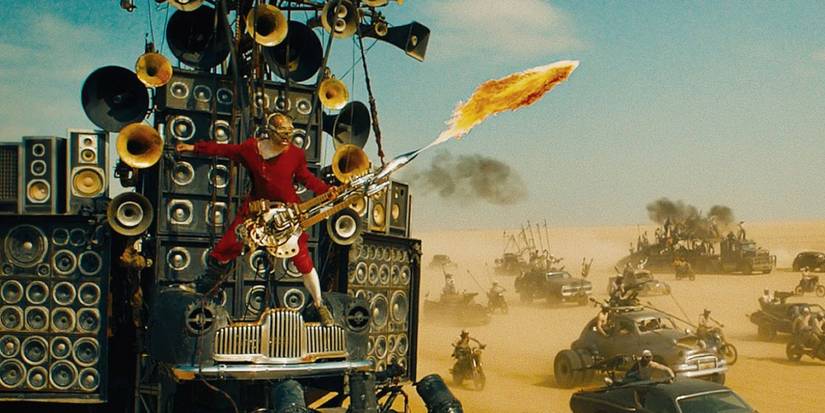 Image via Warner Bros. Pictures
With 1979's Mad Max, George Miller revolutionized both Australian cinema and low-budget action filmmaking. The franchise that the film spawned reached all the way to 1985's Beyond Thunderdome, but after that, it would take a whopping three decades (and two Happy Feet movies) for Miller to finally return to the high-octane wasteland that finds in Max Rockatansky its mysterious hero.
Mad Max: Fury Road is a masterclass in how to make a legacy sequel/soft reboot. It's one of the fastest-paced action movies ever, a non-stop ride primarily shot in the blisteringly hot Namibian desert using practical effects, death-defying stunts, and real cars. The Mad Max series has always been ambitious, but Miller amped it up to 11 with what's definitely the franchise's best installment.
7 'Megalopolis' (2024)
 Image via Lionsgate
Ambitious ≠ good. Not-so-fondly nicknamed "Megaflopolis," Francis Ford Coppola's passion project Megalopolis had been a dream of the director's since 1977. The project spent decades in development hell, with studios constantly refusing to finance it and Coppola constantly failing to garner enough funds elsewhere to bring his vision to life. Finally, in the 2020s, the director used the fortune he'd gathered from his winemaking business to make and release it.It's a tear-jerking tragedy that a director as legendary as Coppola, with an idea as long-in-the-making as Megalopolis, had to essentially go broke and alienate his lifelong fans to deliver what ended up being one of the worst epic movies of the last decade. Sure, Megalopolis may be terrible in almost every sense, but its ambition is undeniable, and Coppola's long journey to finally get it made is a testament to the power that artistic resiliency can have. If anything, that's enough to make one at least slightly fond of the film.
6 'Jurassic Park' (1993)
 Image via Universal Pictures
Dinosaur-centric creature features weren't exactly unprecedented by the time the '90s rolled in, but people had no idea what they were in for going into 1993. After Steven Spielberg's Jurassic Park came out and shattered expectations, the genre would never be the same again. To this day, this is still the greatest dinosaur movie of all time.
Sure, a lot of that comes from Spielberg's tense directing, the phenomenal performances, and the excellent script, but none of that would have worked nearly as well as it did (and still does) were it not for the fact that Jurassic Park is immensely ambitious in every other department as well. For one, the use of animatronics and CGI was unprecedented, revolutionizing the VFX industry entirely. On top of that, the sheer scale and pacing of this spectacle make for what has aged as one of the most entertaining blockbusters in movie history.
5 'Stalker' (1979)
 Image via Goskino
It's not just massive blockbusters that are worthy of being called ambitious — sometimes, far smaller, quieter, and slower-paced international arthouse films prove themselves worthy of the label as well. For a sci-example, one needn't look any further than the Soviet Union, whose Andrei Tarkovsky made in Stalker one of the most thought-provoking and intensely philosophical masterpieces the genre has ever seen.
Stalker is a film about faith and the nature of human desire executed with a flawless surrealist edge.
On the one hand, the film's ambition comes largely from the tremendous scope of the thematic concerns Tarkovsky captured here. Stalker is a film about faith and the nature of human desire executed with a flawless surrealist edge, and the way it so perfectly captures such potently existential topics is admirable. On the other hand, there's the technical side of things. Stalker's shoot was notoriously infernal, mostly stemming from the fact that it was shot in highly polluted locations that kept making things difficult for the cast and crew. It's believed that the toxicity of the environment was what eventually led Tarkovsky and several other members of the team to die from cancer shortly after.
4 'Waterworld' (1995)
 Image via Universal Pictures
Yet another example of ambition not necessarily being equal to quality, Waterworld is generally regarded as a failure all around, but that doesn't detract from the fact that its ambitiousness is still jaw-dropping over three decades later. This post-apocalyptic action flick is set in a distant future where the polar ice caps have completely melted, causing the sea level to rise over 7,000 meters and cover nearly all of Earth's land.
The writing and acting are ultimately Waterworld's downfall, but the setting and technical qualities? There's very little to reproach there. This was the most expensive film of all time when it was made, with shooting having taken place in a large artificial seawater enclosure off the coast of Hawaii. As a result, production was constantly hampered by difficulties related to poor weather and safety concerns. Sometimes, it's okay to aim a little lower for the benefit of actually being able to get your film made.
3 'Avatar' (2009)
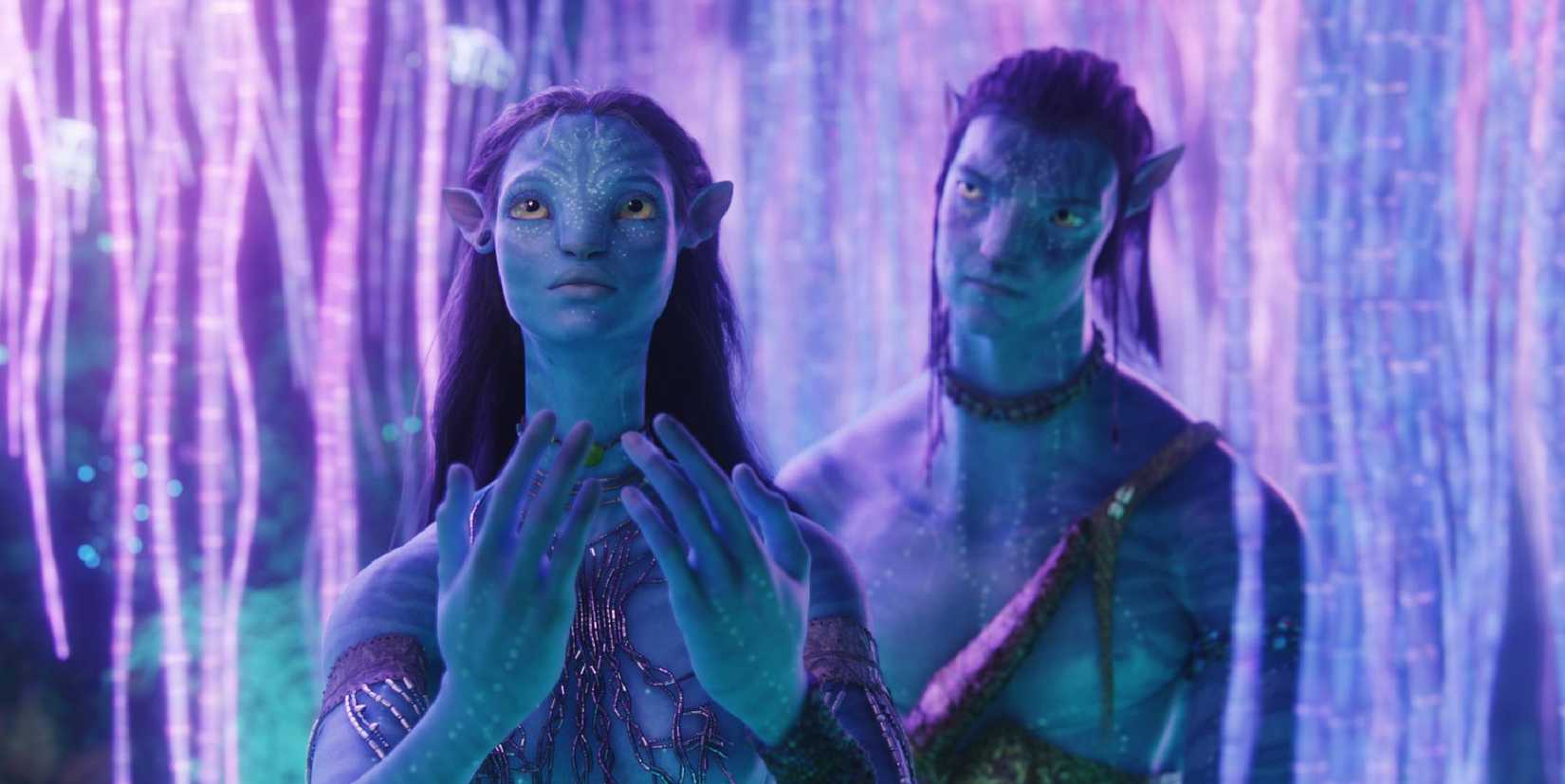 Image via 20th Century Studios
No conversation about the most ambitious science fiction films in history could ever possibly be complete without mentioning James Cameron at least twice. When it comes to talking about the director's most ambitious works, there's no real competition for the top spot: It would have to be Avatar, still the highest-grossing movie of all time worldwide.
The film may not be a masterpiece, and it sure is one of the least subtle movies of all time, but its reaching for the stars? Undeniable. For one, putting out a hyper-expensive blockbuster that was an entirely original story in an age where IP-based filmmaking was already starting to become the norm was bold enough in itself. On top of that, the reason Cameron waited decades to finally start working on the film was that he had to wait for technology to catch up to his vision. Avatar revolutionized visual effects and brought 3D back to life, and that makes it rather unsurprising that it was as commercially successful as it was.
2 '2001: A Space Odyssey' (1968)
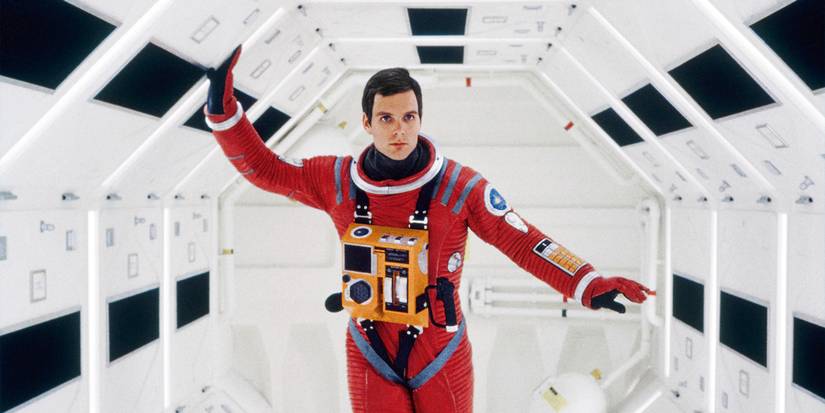 Image via MGM
Many would refer to Stanley Kubrick as the single greatest filmmaker in history (a well-earned label), and you don't get to that spot without being ambitious. Indeed, Kubrick constantly reached high for his projects, but there's an argument to be made that he never reached higher than for his sci-fi masterpiece, perhaps the genre's best-ever masterpiece: 2001: A Space Odyssey.
It's one of the most perfect and timeless sci-fi movies ever, an incredibly complex and philosophically profound study of human evolution and the human condition, unlike any other that has ever been made. But aside from aiming high thematically, 2001 was also technically unprecedented, practically creating a whole new visual language for depicting outer space on film. The genre would never be the same again.
1 'Metropolis' (1927)
 Image via Parufamet
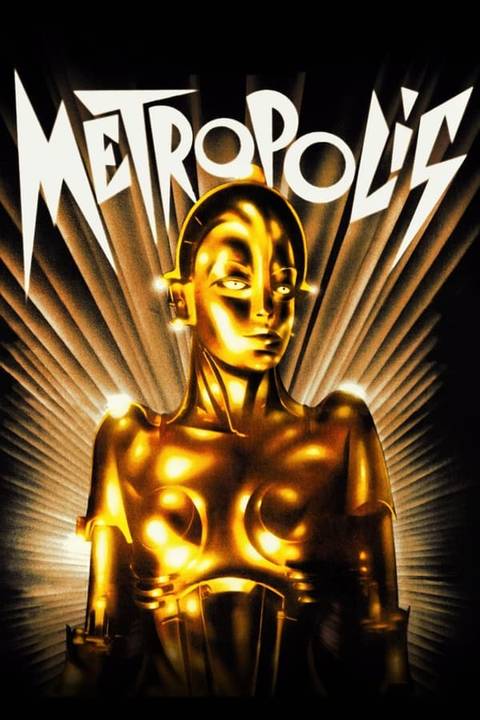
As proven by the countless movies that have been influenced by it over the years, Fritz Lang's silent German masterpiece Metropolis may well be the most influential science fiction film in history. This two-and-a-half-hour-long epic about class division may not be particularly subtle, but it still packs a hell of a punch both narratively and stylistically.
The technology used for the film was absurdly ahead of its time, creating sets, effects, and scenes that all still look absolutely jaw-dropping. When Lang made this highly operatic, sharply political gem, there was no safety net to fall back on. Cinema as a medium was still in its infancy, and the genre of sci-fi feature films was barely a little over a decade old. Saying that Lang defined cinematic sci-fi with Metropolis would somehow be both entirely accurate and even a bit of an understatement, and as such, it's entirely reasonable to call this the most ambitious sci-fi film of all time.
Metropolis
Release Date February 6, 1927
Runtime 114 minutes
Director Fritz Lang
Writers Thea von Harbou, Fritz Lang







 English (US) ·