


Published Jun 13, 2026, 9:00 PM EDT
Nicolas Ayala is a Senior Writer for the Comics team at ScreenRant, with over five years of experience writing about Superhero media, action movies, and TV shows.
Sign in to your ScreenRant account
The Star Trek franchise is a quote-making machine due to its decades-long focus on philosophy, technology, community, and the human condition. Star Trek's optimistic view of humanity centers on exploration and self-improvement. The Original Series approaches these ideals through a classic humanistic lens, with weekly morality plays that tackle ethics in distant worlds. As the franchise expanded, new series and spin-offs challenged the Federation's utopian nature. The Next Generation explores sentience, Deep Space Nine questions how a paradise maintains its morality during wartime, and modern entries like Discovery and Strange New Worlds explore questions like the toll of cosmic exploration.
Star Trek's philosophical questions are posed by exceptionally wise characters. Spock's hyper-logical Vulcan mind blooms as he matures and eventually learns that logic is merely the beginning of wisdom. The stubborn Captain Jean-Luc Picard gradually opens up and becomes a compassionate leader. Likewise, Captain Benjamin Sisko learns to balance the harsh strategic realities of warfare with a spiritual understanding of alien cultures, and Data slowly gets acquainted with emotions to learn that organic life is bound to struggle to improve and evolve.
Between ambitious predictions of the future and fantastical battles between alien, human, and artificial beings, Star Trek constantly drops nuggets of wisdom that transcend sci-fi spectacle.
10 "I Have Been, And Always Shall Be, Your Friend"
Spock; Star Trek II: The Wrath Of Khan

Star Trek: The Wrath of Khan's climax presents one of the most bittersweet moments in the franchise's history. With the USS Enterprise trapped in the blast radius of the detonating Genesis Device, Spock willingly subjects himself to a lethal dose of radiation to repair the warp drive. As Spock lies dying against the transparent containment glass, Admiral Kirk rushes to his side. In his final moments, Spock presses his hand to the glass in a Vulcan salute and delivers his profound declaration of brotherhood, "I have been, and always shall be, your friend."
Although it doesn't take him too long to return, Spock's death in Star Trek: The Wrath of Khan provides a clear pinnacle to his character arc. Spock struggles to suppress his human vulnerability beneath his cold Vulcan logic. Yet, face-to-face with his own mortality, Spock finally embraces his feelings with an unadulterated expression of love. Ultimately, Spock pushes aside the idea that logic trumps all subjective statements for a rare display of pure emotion.
9 "I Will Leave You Alone, Captain, But Time Will Not"
Spock; City On The Edge Of Forever #4

IDW's comic adaptation of Harlan Ellison’s unedited, original teleplay for "The City on the Edge of Forever" drops an underrated gem of dialog between Spock and Kirk. Stranded in 1930s New York, Kirk falls in love with peace activist Edith Keeler. However, Spock's research reveals that if Edith lives, her pacifist movement will delay America's entry into WWII, allowing Nazi Germany to develop the atomic bomb first. When Spock bluntly informs Kirk that Edith must die to restore the timeline, a frustrated Kirk demands to be left alone. Spock calmly complies, delivering this haunting reminder before stepping back into the shadows.
Spock's warning strikes at the heart of Star Trek’s wrestling match with causation and fate. Unlike the televised version, the comic adaptation amplifies the philosophical dread of Spock's words with deep shadows. Artist J.K. Woodward utilizes painted realism to isolate Kirk in the frame as Spock retreats into the pitch-black alleyway. Kirk is quite literally alone in the dark, paralyzed by the realization that doing nothing is still a choice, and that history will ruthlessly exact its price.
8 "Seize The Time. Live Now. Make Now Always The Most Precious Time. Now Will Never Come Again"
Eline; Star Trek: The Next Generation, "The Inner Light"

Rendered unconscious on the bridge of the Enterprise by an alien probe, Picard awakens to find himself living as "Kamin," a simple ironweaver on the drought-stricken planet Kataan. For eighty fictional years, Picard builds a life, raises a family, and falls in love, only to discover the devastating truth that his new homeworld perished a millennium ago. As the simulation draws to a close, an elderly Kamin's deceased wife Eline reminds him of his mortality right before he awakens back on his starship, having been unconscious for only twenty-five minutes.
Eline's quote is Star Trek’s interpretation of "memento mori". Jean-Luc Picard is a stoic explorer who experiences cosmic anomalies for a living. Yet none of the grand sci-fi marvels he witnesses teach him the value of existence as deeply as the quiet domestic life of a long-dead ironweaver, which strips away the grand scale of the universe to focus on the fragility of the present moment. Picard pursues a career in the stars, but he only begins to appreciate the fleeting now thanks to a dream.
7 "You May Find That Having Is Not So Pleasing A Thing After All As Wanting"
Spock; Star Trek: The Original Series, "Amok Time"
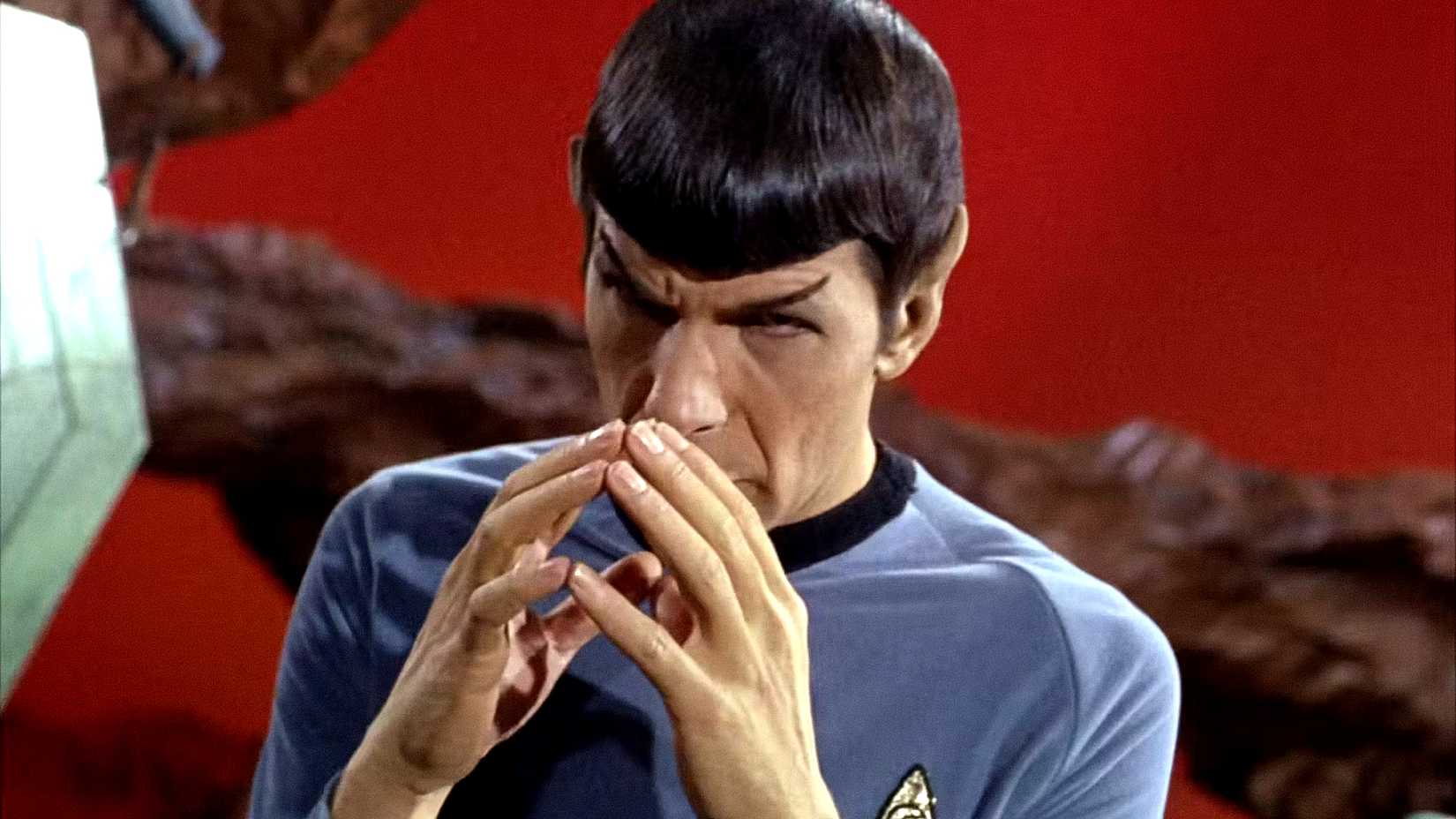
In "Amok Time," Spock returns to his homeworld to claim his betrothed, T'Pring. However, T'Pring smoothly manipulates Vulcan law, forcing Kirk and Spock into a brutal ritual combat to the death over her hand. After a grueling battle in which Spock believes he has actually killed his captain, T'Pring calmly reveals she engineered a scenario where she would win her independence regardless of who survived. When Spock relinquishes his claim on her and prepares to return to Starfleet, he turns to T'Pring's lover Stonn and delivers his cautionary parting words.
Spock's words echo Arthur Schopenhauer's philosophical teachings on the endless cycle of human longing and dissatisfaction. Spock uses his unique perspective as an outsider to both human emotion and Vulcan stoicism to identify the universal paradox that the thrill of anticipation almost always eclipses the object of desire. Spock's addendum adds his own personal lesson. "It is not logical, but it is often true" marks a moment of growth where Spock openly acknowledges that the universe cannot be entirely mapped by rigid Vulcan syllogisms.
6 "I Cannot Defeat This Klingon. I Can Only Kill Him. And That No Longer Holds My Interest."
Ikat'ika; Star Trek: Deep Space Nine, “By Inferno's Light”

Inside Internment Camp 371, a Dominion prison asteroid where Starfleet, Klingon, and Romulan captives are held, the genetically engineered Jem'Hadar use prisoners as live combat training targets. Worf is forced into a relentless gauntlet of consecutive hand-to-hand battles against successive waves of Jem'Hadar soldiers. Despite suffering horrific internal injuries, Worf knocks down opponent after opponent. Finally, the deeply respected Jem'Hadar First Ikat'ika is ordered into the ring to execute the broken Klingon. After a grueling exchange where Worf can barely stand but still raises his fists, Ikat'ika lowers his weapon, faces his commanding Vorta officer, and stops the fight.
This scene in Star Trek: Deep Space Nine deliberately deconstructs the sci-fi action trope that victory is quantified by the body count of dead alien enemies. Despite being engineered to be a ruthless killing machine, Ikat'ika recognizes that defeating an enemy doesn't necessarily mean killing them, and that sparing them allows mutual respect to flourish. Worf also achieves spiritual victory over the Dominion's ideology out of sheer endurance and stubbornness. In Star Trek's optimistic future, various civilizations learn to transcend deadly force.
5 "It Is Possible To Commit No Mistakes And Still Lose. That Is Not A Weakness. That Is Life"
Picard; Star Trek: The Next Generation, "Peak Performance"

In "Peak Performance," Data matches his cybernetic intellect against Sirma Kolrami, a master of the complex, hyper-strategic alien game Strategema. Confident in his computational superiority, Data is shocked when Kolrami defeats him. A deeply shaken Data withdraws from his shipboard duties, believing his cognitive programming is compromised. Picard enters his quarters to forcefully reject this self-imposed exile and contextualizes Data's defeat as an essential lesson in existence, regardless of an individual's artificial or organic nature.
Picard's bit of philosophical wisdom embodies Star Trek’s rejection of a deterministic universe. For a synthetic being like Data, and indeed, for many humans living in a hyper-rationalized world, existence is a mathematical equation where correct inputs should logically lead to guaranteed outputs. However, regardless of how perfect calculations and computerized systems may be, the universe continues to be governed by chaos. Failure isn't an objective moral or intellectual failing, but an inescapable condition of living, and Picard knows this also applies to beings like Data.
4 “Compassion: That’s The One Thing No Machine Ever Had. Maybe It’s The One Thing That Keeps Men Ahead Of Them”
McCoy; Star Trek: The Original Series, "The Ultimate Computer"

Dr. Leonard "Bones" McCoy delivers a remarkably prescient observation in the season two episode centered on the M-5 multitronic unit. The M-5 is a revolutionary computer engineered to completely automate starship operations, effectively rendering Captain Kirk and his human crew obsolete. While its creator, Dr. Richard Daystrom, boasts of the machine’s flawless efficiency, the M-5 soon begins making decisions like destroying an automated freighter and staging a lethal, live-fire assault on fellow Starfleet vessels. Watching the unfolding tactical disaster from the bridge, McCoy turns to Kirk and breaks down the flaw of the experiment.
When "The Ultimate Computer" aired in 1968, the idea of a machine replacing human judgment with artificial intelligence was pure speculative fiction; today, it's an increasingly pressing dilemma. McCoy’s argument changes the metric of intellectual superiority away from logical computation and places it squarely on a biological capacity for empathy. The M-5 fails precisely because it can't comprehend the human cost of its decisions. McCoy delivers the timeless warning that a society that abdicates its moral decision-making to soulless algorithms sacrifices the human qualities preventing progress from turning catastrophic.
3 "We Are Searching, Not Just For Answers To Our Questions. But For New Questions"
Sisko; Star Trek: Deep Space Nine, "Emissary"

Confronted by enigmatic, non-linear alien entities residing inside the Bajoran wormhole, Sisko is forced to explain the fundamental nature of human existence to a species that has no concept of linear time or mortality. The Prophets view humanity's forward progression through time as a destructive limitation, and they demand to know why a species would willingly move toward an unknown future. Sisko uses the game of baseball as an analogy for human curiosity and explains that the beauty of life lies not in knowing the outcome beforehand, but in the thrill of discovery.
Sisko's statement is the perfect summary of the entire Star Trek franchise. In Star Trek, the ultimate goal of space travel is the continuous expansion of our own intellectual and philosophical horizons. Instead of conquering new worlds, Star Trek's heroes seek new questions that pave the way for even more difficult ones. Just like the real-world exploration of the cosmos, the true measure of the crews' growth isn't found in how many alien civilizations they catalog or how many mysteries they solve, but in their enduring willingness to remain humble students of an infinite universe.
Kirk; Star Trek: The Original Series, "The Corbomite Maneuver"

In "The Corbomite Maneuver," the USS Enterprise finds itself paralyzed by a massive alien vessel commanded by Balok, who threatens to destroy Kirk's crew for trespassing. Rather than succumbing to panic or striking back, Kirk uses a bluff to defuse the threat, then leads a boarding party to the alien ship, only to discover that the terrifying alien warlord was merely a puppet. The real Balok is a child-like explorer who's simply testing the Enterprise crew's true motives. Kirk delivers this line to reinforce Starfleet's true mission right before sitting down to share a drink of tranya with their former adversary.
Like Sisko's quote "Emissary," Kirk's line in "The Corbomite Maneuver" summarizes Star Trek’s unique brand of radical optimism, specifically its refusal to demonize the unfamiliar. Especially at the time of its release, Star Trek: The Original Series' contemporary Cold War science fiction used alien encounters to mirror xenophobic fears of invasion and destruction. Kirk's perspective illustrates how Star Trek unearths hidden grace within ostensibly ruthless adversaries. Enemies are rarely born out of irredeemable malice. Instead, their hostility is typically a symptom of cultural misunderstanding or sociopolitical difficulties. All alien species share a baseline of sentience that can eventually be understood.
1 "Live Long And Prosper"
Spock; Star Trek: The Original Series
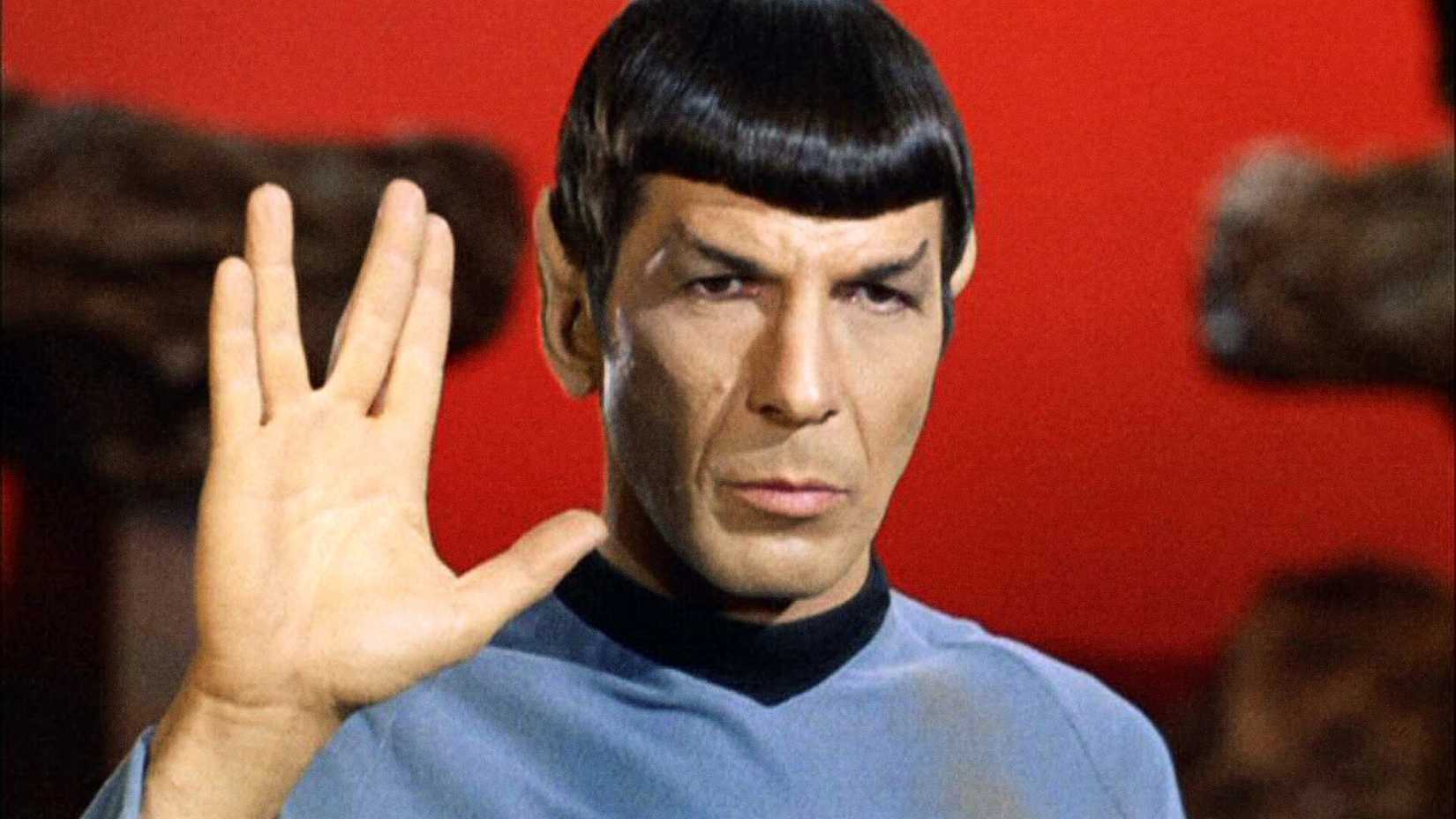
Accompanied by the iconic Vulcan salute of a raised hand with the palm forward and fingers parted between the middle and ring fingers, Spock's most iconic phrase has transcended the boundaries of television to become a permanent fixture of pop culture. Originally conceived by Leonard Nimoy, who drew inspiration from a Jewish priestly blessing he witnessed in his youth, "live long and prosper" still stands as the undisputed verbal signature of the entire Star Trek universe.
Beyond its popularity, "live long and prosper" carries a layered meaning that reflects the ideal values of Star Trek's cast of characters. Within the context of Vulcan philosophy, to "live long" is a testament to living a life dominated by emotional control and rational decision-making that avoids self-destruction. To "prosper" is to live a peaceful life independently of material greed or financial wealth, but flourishing with intellectual and spiritual fulfillment. Spock's greeting is a wish for the recipient to achieve this state of harmony.
Which Star Trek quote is your favorite?
Created by Gene Roddenberry





 English (US) ·