
More often than not, a film lives or dies by its screenplay. More than just words on the page, the script is the foundation of the entire movie. It's where its characters are born, where the rhythm of its story is defined, where the importance of its themes is outlined, and where the memorability of its dialogue starts. For instances of exceptional screenwriting, one needn't look much further than some of the best cinematic masterpieces of the 2000s.
When looking at these films, you get some of the best works of legends of the craft like David Lynch, the Coen brothers, and Charlie Kaufman. Some masterpieces are so surreal that you can barely tell the screenplay is even there, like Lynch's Mulholland Drive, as well as gems that are clearly primarily the product of a great script, like Synecdoche, New York. No matter the case, these instances prove that screenwriters were bringing their A-game throughout the 2000s.
10 'Mulholland Drive' (2001) - Written by David Lynch
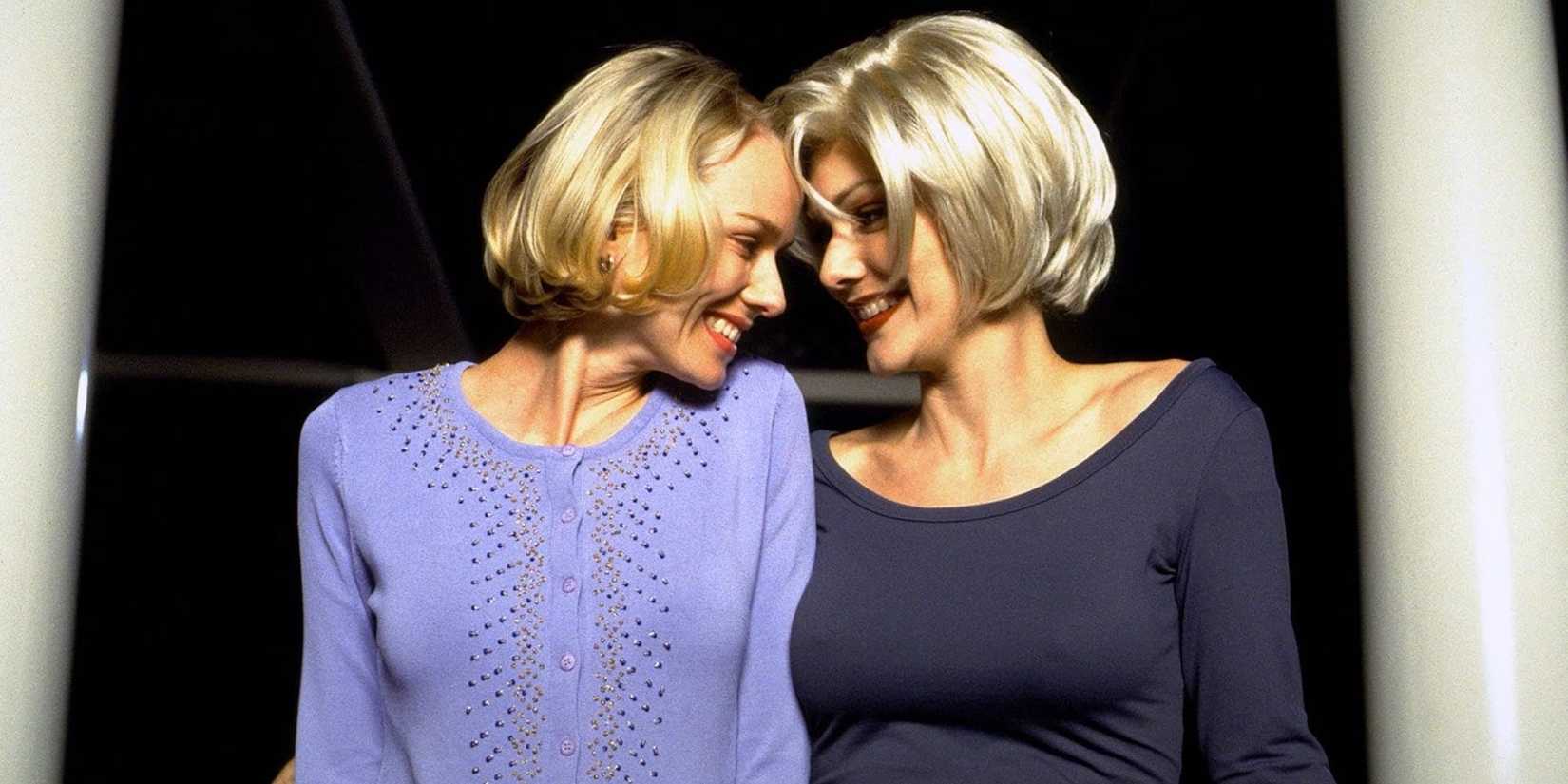 Image via Universal Pictures
The legendary David Lynch was as much the father of modern cinematic surrealism as Luis Buñuel was of classic cinematic surrealism. The screenplay is typically not one of the first things you think of when you watch a head-scratchingly bizarre David Lynch film, but Mulholland Drive's script is so masterful that you can't help but admire its intricacies throughout the entire runtime.
Mulholland Drive is one of the definitive masterpieces of the 2000s, a deconstruction of the Hollywood dream as complex, layered, and dreamlike as one would expect from any Lynch masterpiece. Most of its power, of course, comes from Lynch's surreal direction, but its nuanced thematic and character works, as well as its unpredictable story (which completely changes gears as it nears the third act), all make this the best script in Lynch's filmography.
9 'Brokeback Mountain' (2005) - Written by Larry McMurtry and Diana Ossana
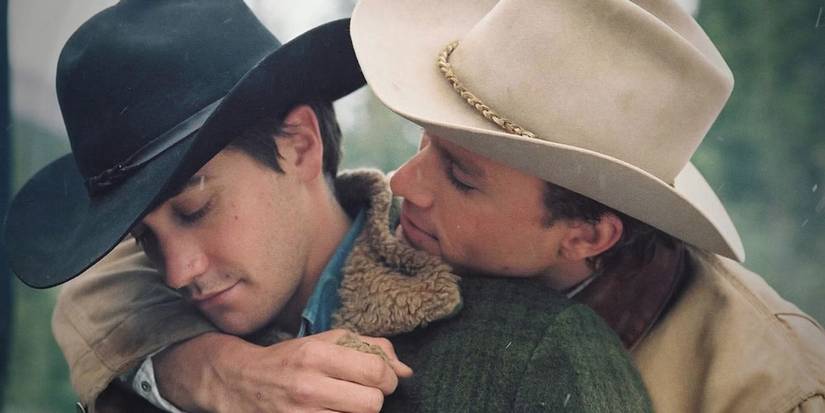 Image via Focus Features
Going into the 2005-06 awards race, Ang Lee's gorgeous neo-Western and romantic drama Brokeback Mountain was a clear frontrunner. However, its decades-spanning story about two shepherds who fall for each other was a bit taboo at the time, so the infamous Crash ended up taking home the Best Picture Oscar in 2006. Even so, many controversial movies have aged like fine wine, and this one is most definitely one.
For one, Heath Ledger and Jake Gyllenhaal's performances here are out of this world, and they elevate the material tremendously, but the screenplay is already great to begin with. Romantic, poignant, and epic in its own quiet way, Brokeback Mountain's screenplay is a beautiful and clever deconstruction of both traditional masculinity and the Western genre as a whole.
8 'Inglourious Basterds' (2009) - Written by Quentin Tarantino
 Image via The Weinstein Company
Quentin Tarantino is far and away one of the most celebrated filmmakers working today, but he's arguably even better as a writer than he is as a director. One of his best-written works is definitely Inglourious Basterds, one of the most suspenseful and entertaining war thrillers of the 21st century so far.
When talking about the film's script, it's easy to know where to begin: Hans Landa is easily one of the best movie characters of the last 50 years, a villain so perfectly written that Tarantino almost didn't make the movie because he thought the role was impossible to cast (until he found Christoph Waltz, who won an Oscar for his performance). But besides Landa, the script is phenomenal. Incredibly tense, flawlessly structured, endlessly quotable, and full of all other kinds of memorable characters, it's a testament to how great a war film can be when well-written.
7 'Pan's Labyrinth' (2006) - Written by Guillermo del Toro
 Image via New Line Cinema
Guillermo del Toro is the modern master of dark fantasy, a single man with a repertoire of monster movies that's already as iconic as many studios' entire filmographies of the genre. But when talking about his best film, the answer is always clear: It has to be Pan's Labyrinth, one of the best R-rated fantasy movie masterpieces of all time.
A considerable portion of the movie's power comes from del Toro's masterful visuals and sense of pacing, but the potency of what's on the page shouldn't be underestimated. Pan's Labyrinth is a beautifully creative and absolutely magical fairy tale full of fresh story elements. However, the darkness is always lurking, and the film is also a scathing critique of authoritarianism and fascism with brutal outbursts of morbid cruelty that has aged like fine wine.
6 'Adaptation.' (2002) - Written by Charlie Kaufman
 Image via Sony Pictures Releasing
Not only is Charlie Kaufman one of the best screenwriters of all time, but he may be the greatest screenwriter working today. The fact that one can say Adaptation isn't even one of his top three scripts, yet it's still one of the best of the 2000s (and quite frankly, the whole 21st century), is a testament to just how exceptional a writer he is.
Kaufman was tasked with writing a film adaptation of Susan Orlean's book The Orchid Thief, but was greatly struggling with both the material and writer's block. He instead decided to write a script about his experience trying to adapt the book, invented a twin brother named Donald, and called it a day. Under any other writer, Adaptation would have been a pretentious disaster. Under Kaufman, it's one of the most wildly creative screenplays of the decade, a riveting tale of creative stagnation and obsession with one of the most memorable endings of any 21st-century movie.
5 'Memento' (2000) - Written by Christopher Nolan
 Image via Newmarket Films
Today, Christopher Nolan is well-known as one of the leading blockbuster directors in the world, but back at the turn of the century, he was still an up-and-coming indie filmmaker. His sophomore feature was Memento, and to date, it still may be his very best work. It's no traditional character-driven thriller, but rather a heady drama told in reverse chronological order.
Such a challenging structure may sound like a guaranteed mess, but Nolan showed from the very beginning that he was born to write and direct movies that played with non-linearity. Memento's structure makes it one of the mystery movies that's hardest to predict, but that's part of its timeless appeal. In fact, it makes its story about a man going to the ends of the Earth to give his life some semblance of meaning all the more riveting.
4 'There Will Be Blood' (2007) - Written by Paul Thomas Anderson
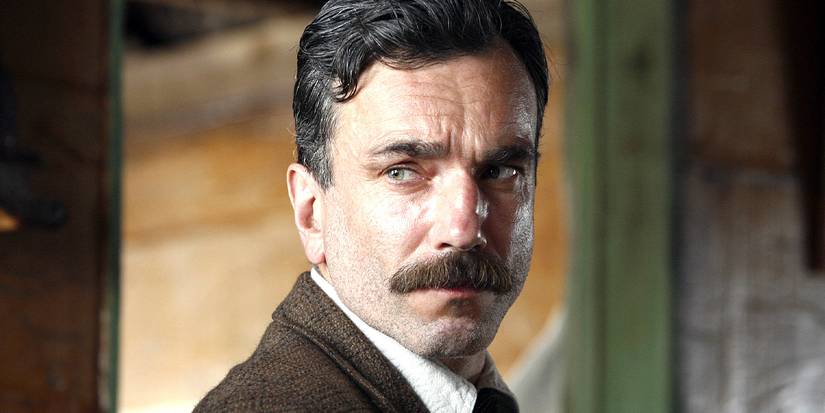 Image via Paramount Vantage
That may all change soon enough, but as of the time of writing this list, Paul Thomas Anderson is one of the artists with the most Oscar nominations who have never actually won any. He has a whopping 14 nods under his belt, and if ever he was worthy of an Oscar victory before One Battle After Another, it was for writing the masterpiece that is There Will Be Blood.
This screenplay is simultaneously successful at being a sweeping period piece and a psychologically intimate character study.
It's one of the most perfect movies of the last 20 years, and some would even count it among the greatest films ever made. The screenplay is simultaneously successful at being a sweeping period piece and a psychologically intimate character study, with Daniel Plainview (the role that earned Daniel Day-Lewis his second Oscar) being one of the most fascinating movie characters of all time. The dialogue is fantastic, yet the script is perhaps even better when characters are not speaking, and its exploration of the destructive nature of greed and power is engrossing.
3 'No Country for Old Men' (2007) - Written by Joel Coen and Ethan Coen
It's tricky to say that PTA was "worthy" of an Oscar victory for writing There Will Be Blood, because the movie that beat it out for the 2008 Best Adapted Screenplay Oscar was arguably even more deserving. It was the 21st-century magnum opus, No Country for Old Men, written by Joel and Ethan Coen, one of the most iconic and legendary screenwriting duos of all time.
No Country for Old Men is one of the best movie masterpieces of the 2000s, a film that mixes neo-Western and neo-noir iconography to brilliantly deliver a story about the randomness and chaos of fate, change, and evolution. But the movie's power is not all in its visuals. It also relies on a rather minimalist and entirely methodical script full of memorable characters, one that always trusts its audience to make inferences about its plot without needless exposition.
2 'Synecdoche, New York' (2008) - Written by Charlie Kaufman
 Image via Sony Pictures Classics
If any screenwriter is deserving of being mentioned in a list of this nature twice, it's Charlie Kaufman. For years, he had built up his reputation as one of the greatest and most original writers in Hollywood, but in 2008, after Spike Jonze dropped out of the project, he decided to direct his screenplay for Synecdoche, New York himself. It was his first effort in the director's chair, and the result was one of the most original movies of the last 25 years.
Kaufman's directorial skills were revelatory, which makes it unsurprising that he has directed two more features since then, but it's the screenplay that really allows Synecdoche, New York to work as well as it does. It isn't just a postmodernist masterpiece, but rather a masterpiece about postmodernism itself, a beautifully surreal and angstily existentialist treatise on mortality. It's an absolutely rousing masterclass in how to write a timeless script and how to transform it into an equally timeless final product.
1 'Eternal Sunshine of the Spotless Mind' (2004) - Written by Charlie Kaufman
 Image via Focus Features
If any screenwriter is deserving of being mentioned in a list of this nature, not just twice, but thrice, it's Charlie Kaufman. Despite his undeniable excellence, the writer has only ever won one Academy Award. Thankfully, it was for what most people consider his best-ever work: Eternal Sunshine of the Spotless Mind, one of the best sci-fi movie masterpieces of the last 100 years.
Part romantic comedy, part psychological drama, part surrealist sci-fi experiment, Eternal Sunshine is one of the most exceptional examples of each of its genres and subgenres. It's one of the saddest, yet most beautifully realistic depictions of romantic love ever committed to celluloid, with a pair of fascinating lead characters. The highlight, of course, is the melodic yet believable dialogue, including one of the best closing lines in film history, a simple "okay" that encapsulates the meaning of the entire film in a way that makes it clear why Kaufman is such a master of his craft.






 English (US) ·