
 Image via Jan Thijs/©Paramount Pictures/Courtesy Everett Collection
Published Jul 28, 2026, 5:55 PM EDT
Lisa Nordin is an actress, writer, and fan of all things performing arts. Her favorite genres are Sci-Fi and Fantasy. She is a self-published author and enjoys exploring how fictional stories help define and qualify the human experience.
Sign in to your Collider account
Science fiction continues to be one of the most dominant genres of feature-length films in the 21st Century. The industry has delivered not only box office smashes that have captured the imagination of the nation, but nuanced, artistic triumphs that swept the podium in awards season. From smaller, independent gems to big studio epics, sci-fi continues to be king.
The past decade has been an embarrassment of riches when it comes to sci-fi hits. From movies filled with action and excitement to slow burns with a growing sense of dread and tension, these movies crafted their stories and executed them with excellence. No two of these movies are exactly alike, highlighting the kaleidoscopic array of artistic expression available in this diverse and rewarding milieu.
10 'Annihilation' (2018)
 Image via Paramount Pictures
In a movie that Collider’s Lade Omotade aptly describes as “Arrival meets John Carpenter's The Thing,” Annihilation blends body horror with psychological suspense. Unlike other invasion movies where the takeover of the planet is overtly hostile and swift, Annihilation takes a more subtle and subverted approach. In the movie, a strange new structure known as the “shimmer” appears, and a team of biologists is sent in to investigate. What they find is a sort of experiment taking place by an unknown force. It is unmaking and remaking Earth’s flora and fauna like a maniacal child who has just found a dissection kit.
Annihilation is purposefully disturbing, and it is unlike the vast majority of extinction movies. Instead of using a shock and awe campaign to invoke terror, it begins on a very basic, biological level and explores what could happen if an outside force were to remake the planet and everything that lived on it to its own preferences. Annihilation gets under your skin and arouses morbid curiosity. Its impact is undeniable, easily making it one of the most memorable sci-fi movies of the decade.
9 'The Vast of Night' (2019)
 Image via Amazon Prime Video
Not every sci-fi movie has to have visible aliens or loud explosions to erupt with drama. The Vast of Night is a slow-burn movie that takes a while to ramp up the tension, but when it does, the audience is fully enthralled, having been invested since the very beginning. Set in the 1950s, The Vast of Night follows two people as they try to make sense of the odd phone calls and circumstances that start happening around their small town in New Mexico.
The Vast of Night is a must-watch for classic science fiction fans. It is simultaneously a love letter to the older sci-fi movies of the past while still feeling fresh and interesting for a new generation. The Vast of Night is unlike most science fiction films in that it does not spoon-feed information to the viewer and instead demands participation. As Collider’s Jasneet Singh writes, The Vast of Night is “[…] a film that refuses to invite the audience into its world and instead stands alone, forcing us to pay attention and close the distance to keep up with the surreal conversations.” It is a unique low-budget and independent triumph of the past decade and stands out among its peers.
8 'Spider-Man: Into the Spider-Verse' (2023)
 Image via Sony Pictures Releasing
One of the most groundbreaking animated films in recent history, Spider-Man: Into the Spider-Verse reinvented what an illustrated movie could be. The stunning visuals are fresh, captivating, and unlike anything seen on the screen before. They pay homage to the comic book artistry that birthed the character, while keeping the movement and dimensional rendering fluid and ambulatory.
Of course, having great graphics is only half of having a great movie. Luckily, Spider-Man: Into the Spider-Verse’s story is interesting, candid, and engaging. The movie focuses on young Miles Morales (Shameik Moore) as he becomes the Spider-Man of his universe. Miles is a fantastic protagonist to follow, and his vulnerability and relatable qualities embody everything that made the original Peter Parker and Spider-Man of the comics so endearing. He isn’t a billionaire, he isn’t influential, he doesn’t belong to any elite squad. He’s just a teenager trying to make the world a better place. Watching Miles team up with other Spider heroes from alternate dimensions is genius, and Spider-Man: Into the Spider-Verse executes a multiverse concept far better than several other movies in multiple genres.
7 'A Quiet Place' (2018)
 Image via Paramount Pictures
Written, directed, and starring John Krasinski, A Quiet Place was a family fight for survival like none other. Although the plot of A Quiet Place is fairly straightforward — blind aliens with super hearing invade Earth — the movie adds layers of relational drama and interesting circumstances that make the story captivating to follow. The main family that the movie focuses on has a daughter named Regan (Millicent Simmonds) who is deaf, giving them a unique advantage in that they already know how to communicate with each other using American Sign Language instead of talking.
A Quiet Place is a refreshing twist on the alien invasion trope. Most incursion movies have been about spectacle and out-maneuvering the foes. In A Quiet Place, the outsmarting of the enemy finds a new and interesting path, and the movie explores one of the other major human senses instead of everything being about visual grandiose. The creature design is creepy and menacing, and the interpersonal drama is moving, making A Quiet Place one of the more original sci-fi movies of the era. It has opened up an entirely new avenue for alien design and launched a successful film franchise.
6 'Arrival' (2016)
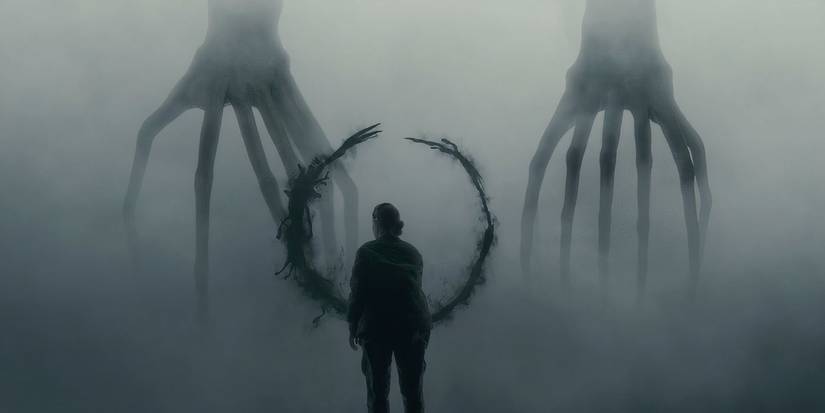 Image via Paramount Pictures
What would happen if aliens came in peace? That is the intriguing premise behind Arrival. Amy Adams stars as Louise Banks, a linguist who is tasked with developing a way to communicate with visitors from another planet. Arrival is a fascinating look into the importance of dialogue and the free exchange of thoughts and feelings. The story takes the outsider or “other” perspective and views it from a unique angle that resonates on several levels.
One of the greatest things science fiction can do is encourage humanity to explore its own self. Arrival achieves this goal through multiple tactics. There is the base layer of us versus them, and then there are the added layers of connection, time, understanding, and loss. Arrival is one of the best hard sci-fi movies of the century and is a boon to the already robust and introspective genre.
Collider Exclusive · Sci-Fi Survival Quiz Which Sci-Fi World Would You Survive? The Matrix · Mad Max · Blade Runner · Dune · Star Wars
Five universes. Five completely different ways the future went wrong — or sideways, or up in flames. Only one of them is the world your instincts were built for. Eight questions will figure out which dystopia, galaxy, or desert wasteland you'd actually make it out of alive.
💊The Matrix
🔥Mad Max
🌧️Blade Runner
🏜️Dune
🚀Star Wars
TEST YOUR SURVIVAL →
01
You sense something is deeply wrong with the world around you. What do you do? The first instinct is often the truest one.
APull on every thread until I understand the system — then figure out how to break it. BStop asking questions and start stockpiling — food, fuel, weapons. Questions don't keep you alive. CKeep my head down, observe carefully, and trust no one until I know who's pulling the strings. DStudy the patterns. Every system has a rhythm — learn it, and you learn how to survive it. EFind the people fighting back and join them. You can't fix a broken galaxy alone.
NEXT QUESTION →
02
In a world of scarcity, what resource do you guard most fiercely? What we protect reveals what we believe survival actually requires.
AKnowledge. If you understand the system, you don't need resources — you can generate them. BFuel. Everything else — movement, power, escape — runs on it. CTrust. In a world of fakes and informants, a truly reliable ally is rarer than any commodity. DWater. And after water, information — the two things empires are truly built on. EShips and credits. The galaxy is big — you survive it by being able to move through it freely.
NEXT QUESTION →
03
What kind of threat keeps you up at night? Fear is useful data — if you're honest about what you're actually afraid of.
AThat reality itself is a lie — that everything I experience has been constructed to keep me compliant. BA raid. No warning, no mercy — just the roar of engines and then nothing left. CBeing identified. Once someone with power decides you're a problem, you're already out of time. DBeing outmanoeuvred — losing a political game I didn't even know I was playing. EThe Empire tightening its grip until there's nowhere left to run.
NEXT QUESTION →
04
How do you deal with authority you don't trust? Every dystopia has a power structure. Your approach to it determines everything.
ASubvert it from the inside — learn its rules well enough to weaponise them against it. BIgnore it and stay out of its reach. The further from any power structure, the better. CAppear to comply while doing exactly what I need to do. Visibility is the enemy. DManoeuvre within it carefully. You can't beat a system you refuse to understand. EResist openly when I have to. Some things are worth the risk of being seen.
NEXT QUESTION →
05
Which environment could you actually endure long-term? Survival isn't just tactical — it's physical, psychological, and very much about where you are.
AUnderground bunkers and server rooms — cramped, artificial, but with access to everything that matters. BOpen wasteland — brutal sun, no shelter, constant movement. At least the threat is honest. CA dense, rain-soaked city where you can disappear into the crowd and nobody asks questions. DMerciless desert — extreme heat, no water, and something enormous living beneath the sand. EThe fringe — backwater planets and busy spaceports where the Empire's attention rarely reaches.
NEXT QUESTION →
06
Who do you want in your corner when things fall apart? The company you keep is the clearest signal of who you actually are.
AA tight crew of believers who've seen behind the curtain and have nothing left to lose. BOne or two people I'd trust with my life. Any more than that and someone talks. CNobody, ideally. Alliances are liabilities. I work alone unless I have no choice. DA community bound by shared hardship and mutual survival — people who need each other to last. EA ragtag team with wildly different skills and total commitment when it counts.
NEXT QUESTION →
07
Where do you draw the line — if you draw one at all? Every survivor eventually faces a moment that tests what they're actually made of.
AI won't harm the innocent — even the ones who'd report me without hesitation. BI do what I have to to protect the people I've chosen. Everything else is negotiable. CThe line shifts depending on who's asking and what's at stake. DI draw a long-term line — nothing that compromises my people's future, even if it'd help now. ESome lines, once crossed, can't be uncrossed. I know which ones they are.
NEXT QUESTION →
08
What would actually make survival worth it? Staying alive is one thing. Having a reason to is another.
AWaking others up — dismantling the illusion so no one else has to live inside it. BFinding somewhere — or someone — worth protecting. A reason to keep moving. CAnswers. Understanding what I am, what any of this means, before time runs out. DLegacy — shaping the future in a way that outlasts me by generations. EFreedom — for myself, for others, for every world still living under someone else's boot.
REVEAL MY WORLD →
Your Fate Has Been Calculated You'd Survive In…
Your answers point to the world your instincts were built for. This is the universe your temperament, your survival instincts, and your particular brand of stubbornness were made for.
The Matrix
You took the red pill a long time ago — probably before anyone offered it to you. You're a systems thinker who can't help but notice the seams in things.
- You're drawn to understanding how the system works before figuring out how to break it.
- You'd find the Resistance, or it would find you — your instinct for spotting constructed realities is the machines' worst nightmare.
- You function best when you have access to information and the freedom to act on it.
- The Matrix built an airtight prison. You'd be the one probing the walls for the door.
Mad Max
The wasteland doesn't reward the clever or the well-connected — it rewards those who are hard to kill and harder to break. That's you.
- You don't need comfort, community, or a cause larger than the next horizon.
- You need a vehicle, a clear threat, and enough fuel to outrun it — and you're good at all three.
- You are unsentimental enough to survive that world, and decent enough — just barely — to be something more than another raider.
- In the wasteland, that distinction is everything.
Blade Runner
You'd survive here because you know how to exist in moral grey areas without losing yourself completely.
- You read people accurately, keep your circle small, and ask the questions others prefer not to answer.
- In a city where humanity is a legal designation rather than a feeling, you hold onto something that keeps you functional.
- You're not a hero. But you're not lost, either.
- In Blade Runner's world, that distinction is everything.
Dune
Arrakis is the most hostile environment in the known universe — and you are precisely the kind of person it rewards.
- Patience, discipline, and political awareness are your core strengths — and on Arrakis, they're survival tools.
- You understand that the long game matters more than any single victory.
- Others come to Dune and are consumed by it. You'd learn its logic and earn its respect.
- In time, you wouldn't just survive Arrakis — you'd begin to reshape it.
Star Wars
The galaxy far, far away is vast, loud, and in a constant state of violent political upheaval — and you wouldn't have it any other way.
- You find meaning in being part of something larger than yourself — a cause, a crew, a rebellion.
- You'd gravitate toward the Rebellion, or the fringes, or whatever pocket of the galaxy still believes the Empire's grip can be broken.
- You fight — not because you have to, but because standing aside isn't something you're capable of.
- In Star Wars, that willingness is what makes all the difference.
↻ RETAKE THE QUIZ
5 'Bugonia' (2025)
 Image via Atsushi Nishijima/©Focus Features/Courtesy Everett Collection
Science fiction has always been the marriage of what is generally known and what could possibly be. This relationship has never been more volatile and fraught with tension than in Bugonia. Directed by the prescient Yorgos Lanthimos, Bugonia follows two young men who hold a highly influential female CEO hostage in their basement. Jesse Plemons gives a tour-de-force performance as Teddy, a person with a troubled past and intensely held belief about the future. Emma Stone is equally exemplary as Michelle, and it is one of the best roles of her career.
Bugonia is a brilliant, unsettling dissection of paranoia. It has vivid themes of truth versus perceived reality, power dynamics, delusional mindsets, and a balance of control. Stone was nominated for an Oscar for her role, and why Plemons was unfairly snubbed is still a hot topic of debate. Bugonia is one of the most interesting and thrilling sci-fi movies of the decade, and it keeps audiences guessing until the very end.
4 'Blade Runner 2049' (2017)
 Image via Warner Bros. Pictures
Making a sequel to an iconic 1980s sci-fi staple is daunting, but director Denis Villeneuve made it look easy. Blade Runner 2049 not only justified its existence, but enriched the worldbuilding of the original. In the sequel, Ryan Gosling is K, a cop who learns information he was never supposed to know, and he enlists the help of a retired Blade Runner named Rick Deckard (Harrison Ford) who has been hiding for decades.
Blade Runner 2049 takes its place among the esteemed ranks of movies like The Dark Knight and Aliens to be regarded as one of the best sequels of all time. It was nominated for five Oscars and took home trophies for visual effects and cinematography. Blade Runner 2049 revived classic debates from the original like free will, independent agency, and ethics. It endeavors to explore a not-so-unfathomable future where existence is traded like a commodity and life is treated like a commercial product.
3 'Dune: Part One' (2021)
 Image via Warner Bros.
Another movie on this list directed by Villeneuve, Dune: Part One translates a vast, multi-layered worldbuilding system from a novel series onto the screen. The celebrated books written by Frank Herbert have seen more than one adaptation already, and each iteration brings a new viewpoint to the lore. Villeneuve’s version of Dune has been hailed as one of the best, and the first installment of the trilogy won six Oscars.
Dune: Part One is full of intrigue, fantastic dialogue, and exciting action. It revived interest in Herbert’s work in the most wonderful of ways and delivered on every front. Dune: Part One is everything a sci-fi epic should be, and its cinematography and production value are bar-none.
2 'Everything Everywhere All At Once' (2022)
 Image via A24
A movie that upended the box office and multiple genres was 2022’s Everything Everywhere All At Once. Written and directed by Daniel Kwan and Daniel Scheinert, the cerebral sci-fi/fantasy mashup grossed $145 million against its $25 million budget. Everything Everywhere All At Once cleaned house at the Oscars. It was nominated a whopping 11 times and took home the Academy Award in seven categories. The story follows a wife and mother named Evelyn Wang (Michelle Yeoh) as she experiences multiple versions of reality.
Everything Everywhere All At Once represents not only what sci-fi is, but also what it could be. With its frantic felicity, nuanced performances, and eccentric concepts, it pushed the envelope of what would be accepted by general audiences as pop sci-fi. Everything Everywhere All At Once opened the doors for movies like Bugonia to thrive. By blending high sci-fi concepts with chaotic and unhinged foundations, it created a new presentation all its own that will undoubtedly be emulated for years to come.
1 'Project Hail Mary' (2026)
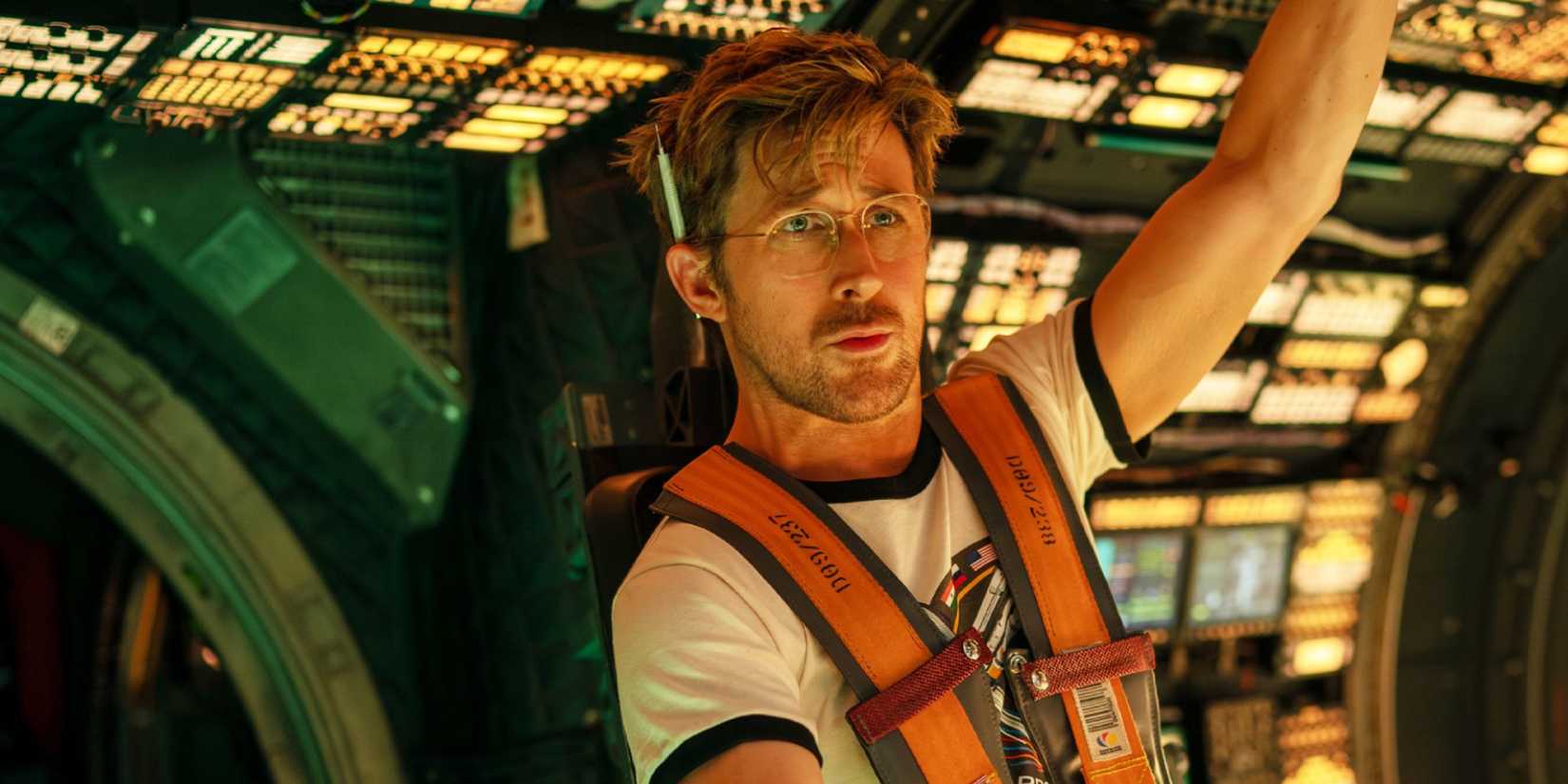 Image via Amazon MGM Studios
Certain movies stand out in history as becoming more than the sum of their parts. They are so accessible and communicative that they spill out of the boundaries of their given genre and find audiences across all spectrums. One such movie that has recently achieved this phenomenon is Project Hail Mary. A second movie on this list to feature Ryan Gosling in a lead role, Project Hail Mary is more than a stunt-filled spectacle; it is a universally appealing achievement that has resonated deeply with critics and fans.
While Earth is the main focus of the drama, and the attempt to save it is protagonist Ryland Grace’s (Gosling) main task, a lot of the action is set in space. Reminding audiences of the vastness of space and how very fragile and small this planet is remains one of the most profound themes of science fiction. Gosling is perfect in the role, and Project Hail Mary is one of the biggest crowd pleasers of the genre ever. Project Hail Mary is a movie that anyone can love, not just sci-fi aficionados. As it continues to dominate on streaming, there are ample new opportunities for even more viewers to check out this 10/10 winner. While the past decade has had a plethora of triumphs, Project Hail Mary plays a tune that almost every moviegoer can dance to, and it is undoubtedly the best of the best.
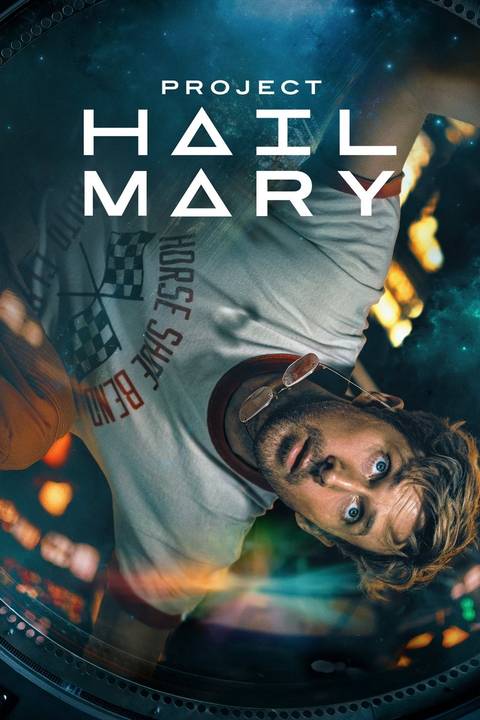
Project Hail Mary
Release Date March 15, 2026
Runtime 157 minutes
Director Christopher Miller, Phil Lord
Writers Drew Goddard, Andy Weir
-

-

James Ortiz
Rocky (voice)




 English (US) ·