
 Image via Searchlight Pictures

Published Feb 9, 2026, 3:39 PM EST
Luc Haasbroek is a writer and videographer from Durban, South Africa. He has been writing professionally about pop culture for eight years. Luc's areas of interest are broad: he's just as passionate about psychology and history as he is about movies and TV. He's especially drawn to the places where these topics overlap.
Luc is also an avid producer of video essays and looks forward to expanding his writing career. When not writing, he can be found hiking, playing Dungeons & Dragons, hanging out with his cats, and doing deep dives on whatever topic happens to have captured his interest that week.
Sign in to your Collider account
A lot of movies squander their R-ratings in cheap jokes, uninspired plots, or gratuitous violence. However, a few use the R-rating quite well, with their violence, harsh language, or explicit content serving a narrative purpose rather than being a gimmick or source of shock value. These films are the focus of this list.
In an era increasingly shaped by franchise safety nets and four-quadrant calculations, the titles below embrace discomfort, moral ambiguity, and emotional risk. Some are confrontational, others mournful, and a few unexpectedly tender, but all of them reject sanitization. They trust adult audiences to sit with violence, grief, cruelty, and contradiction without easy catharsis.
10 ‘The Northman’ (2022)
 Image via Focus Features
"I will avenge you, Father." The Northman is a savage, ritualistic revenge epic that uses its R-rating to get much meaner, dirtier, and more authentic than most Viking movies. It features Alexander Skarsgård as Prince Amleth, who witnesses his father’s (Ethan Hawke) murder as a child and grows into a Viking warrior consumed by the promise to avenge him. Robert Eggers specializes in dark period pieces (he has famously said he'd never make a movie with a cellphone in it), and The Northman is one of his most immersive.
Here, he refuses modern irony or moral distance, leaning into the harshness of a culture where violence, destiny, and spirituality are inseparable. The R rating allows the brutality to feel weighty rather than just thrilling, grounding the mythic narrative in blood, mud, and physical suffering. The result is a delectably dark and blood-soaked fantasy of a kind we don't see too often these days.
9 ‘Joker’ (2019)
 Image via Warner Bros. Pictures
"Is it just me, or is it getting crazier out there?" Joker was one of the most polarizing movies of the 2010s, in part because its views on its protagonists are deliberately opaque. Joaquin Phoenix delivers a fittingly raw and complex performance as Arthur Fleck, a marginalized man living in a decaying Gotham City, whose social isolation and untreated mental illness slowly push him toward violence. In other words, rather than functioning as a traditional comic-book origin story, Joker is a bleak character study rooted in neglect and abandonment.
In this sense, the movie very much channels Taxi Driver and The King of Comedy. It paints an uncomfortable picture of someone abused and rejected who eventually turns homicidal. Offbeat humor coexists here with deep darkness and startling psychological realism. After Heath Ledger's legendary turn as the Joker, it wasn't clear that anyone could find anything truly new and interesting to say with the character, but Phoenix and Todd Phillips did.
8 ‘The Banshees of Inisherin’ (2022)
 Image via Searchlight Pictures
"I just don’t like you no more." Martin McDonagh is one of the modern masters of dark comedy, and this picture is him at his bleakest. Set on a remote Irish island, The Banshees of Inisherin follows two lifelong friends (Colin Farrell and Brendan Gleeson) after one abruptly decides he no longer wishes to speak to the other, without explanation. What begins as mild confusion escalates into obsession, self-harm, and irreversible damage. By the end, the movie has become a parable about pride, loneliness, and the need to be acknowledged.
There may not be much violence or gore (though we see get wince-inducing shots of severed fingers), but there is a ton of emotional cruelty on offer here. The characters are torn by betrayal, rejection, indifference, suicide, alcoholism, and resignation, all while the sounds of war hang in the background. That the film manages to be grim and yet also deft and light is an impressive accomplishment.
7 ‘Parasite’ (2019)
 Image via NEON
"They’re nice because they’re rich." Parasite became an unexpected global phenomenon, its themes speaking to economic anxieties and resentments that crossed language barriers. It's a sharply observed class satire with a decidedly dark edge. The plot focuses on a poor South Korean family that gradually infiltrates the household of a wealthy one, posing as unrelated service workers. From here, the story pivots in surprising ways, pulling off masterful tonal shifts: comedy, then suspense, then outright horror. It's a tricky balance to get right, but Bong Joon Ho makes it look easy.
The R rating allows violence to erupt suddenly and without warning, reinforcing the film’s central thesis: that inequality creates pressure until catastrophe becomes unavoidable. Crucially, in making this point, Parasite embraces complexity and rejects caricature. There are one-dimensional villains and heroes to be found here. Instead, the movie sets its sights on the systems that reward exploitation while punishing empathy.
6 ‘Everything Everywhere All at Once’ (2022)
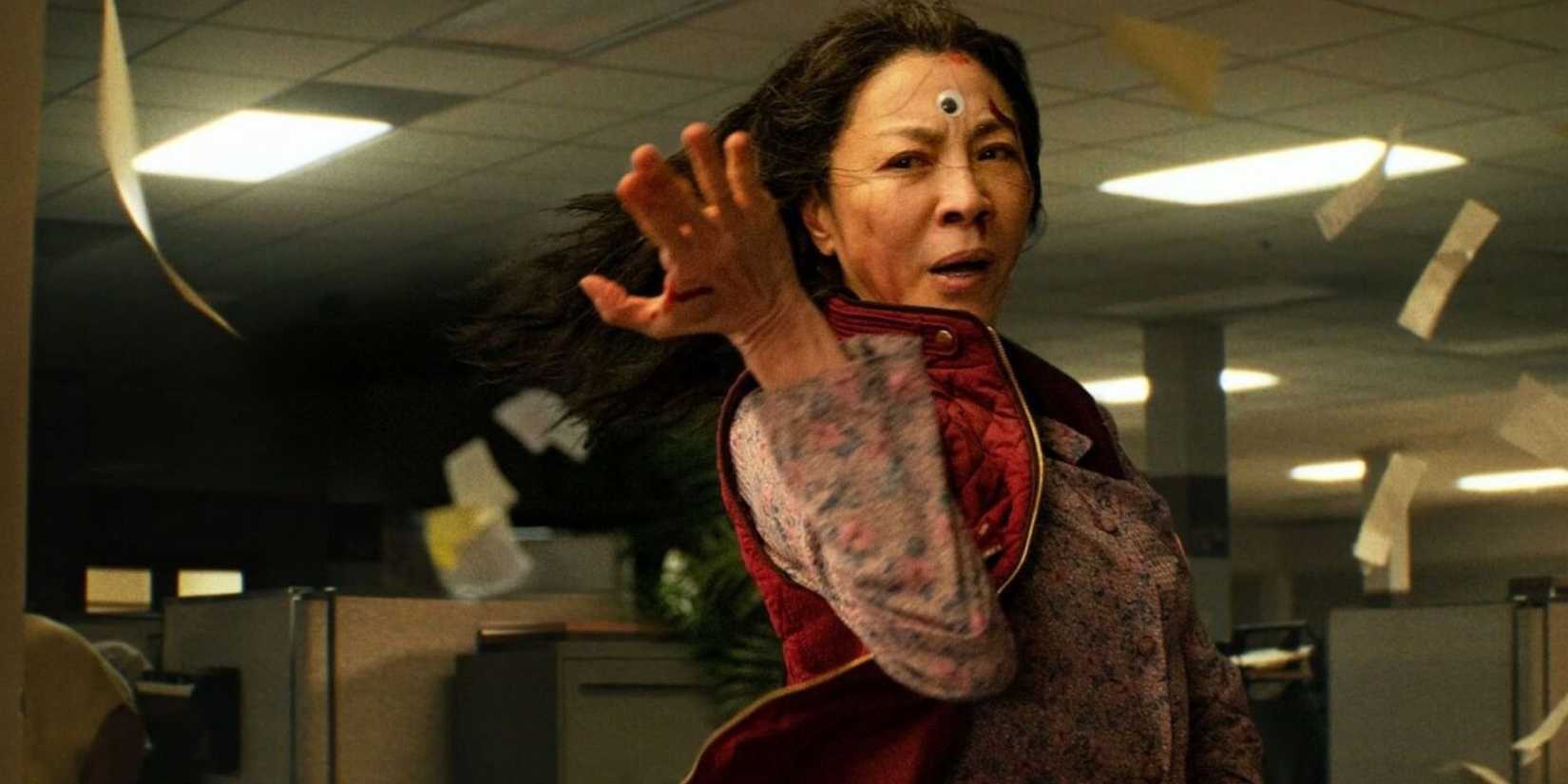 Image via A24
"In another life, I would have really liked just doing laundry and taxes with you." Everything Everywhere All at Once is one of the wackiest movies in a dog's age, a no-holds-barred explosion of creativity and storytelling energy. Sci-fi, fantasy, surreal comedy, family drama, martial arts, and philosophy meld together into an explosive genre hybrid. Michelle Yeoh anchors the multiversal mayhem as Evelyn, an overwhelmed immigrant mother who becomes entangled in infinite alternate realities, each reflecting paths not taken. Although the plot and aesthetic are pure chaos, the movie's real strength is its emotional core.
Indeed, beneath its visual frenzy is a deeply sincere meditation on regret, family, and choosing love in an indifferent universe. It argues that meaning is not found in grand destiny, but in small acts of kindness performed despite confusion and pain. EEAAO can be a little melodramatic and sentimental at times, but charming performances and stunning imagery keep the viewer invested throughout.
5 ‘The Zone of Interest’ (2023)
 Image via A24
"This is a very nice house." The Zone of Interest is one of the most profound Holocaust films precisely because of what it withholds. The movie centers on the domestic life of a Nazi commandant and his family living beside Auschwitz, where genocide is never shown but constantly heard. Unspeakable horrors occur just out of sight on the other side of the garden wall. Rather than focusing on victims or perpetrators directly, director Jonathan Glazer examines normalization, how atrocity becomes background noise.
The German family is focused on domestic issues, career setbacks, finances, and their children's education. The darkness of the camp project is simply not a focus of their attention. Through this, The Zone of Interest suggests that evil thrives not only through hatred, but through comfort and routine. The aesthetics convey this message well: the movie totally avoids sensationalized images, instead relying on subtle sound design to implicate the audience in passive complicity.
4 ‘Once Upon a Time in Hollywood’ (2019)
 Image via Sony Pictures Releasing
"I’m the devil, and I’m here to do the devil’s business." Once Upon a Time in Hollywood is a nostalgic daydream haunted by violence. Quentin Tarantino once again revised history, this time throwing a fictional television actor (Leonardo DiCaprio) and his stuntman (Brad Pitt) into the changing Hollywood in 1969, with real-world tragedy looming on the horizon. Rather than his usual violence and mayhem, most of the movie is reflective and character-focused, meaning that, when the violence finally does arrive, it hits even harder.
Although this movie is not as intense as most of QT's other projects, it still needs the R rating to properly function. This lack of constraints allows Tarantino to juxtapose warmth with brutality, fantasy with historical dread. All in all, Once Upon a Time in Hollywood is one of the director's greatest accomplishments, a fun, smart film about nostalgia and mythmaking. In its own way, it's almost as rich in food for thought as Pulp Fiction.
3 ‘The Irishman’ (2019)
"I heard you paint houses." The Irishman is a gangster film stripped of glamour and momentum. It might be the genre's last real epic, a sweeping character study that clocks in at a whopping 3 and a half hours. Robert De Niro leads the cast as Frank Sheeran, a mob hitman whose loyalty to power ultimately leaves him isolated and forgotten. Through the character, the film dismantles the romance of criminal life by stretching time until excitement gives way to emptiness. The storytelling is unbelievably patient, straining attention spans but rewarding those who stick with it.
That said, the stretches of meditative drama are punctuated by sudden bursts of vicious violence. There are mob executions and point-blank shooting, the climactic killing of Jimmy Hoffa (Al Pacino), and the infamous grocery store beating. Indeed, violence is a constant presence, even in the quieter scenes, adding up to a brilliant statement on organized crime, guilt, and the painful realization of a life misspent.
2 ‘Oppenheimer’ (2023)
 Image via Universal Pictures
"Now I am become Death, the destroyer of worlds." Oppenheimer saw Christopher Nolan getting even more ambitious with his themes and subject matter, crafting a structurally inventive biopic that doubles as an interrogation of responsibility, guilt, and historical consequence. The movie follows physicist J. Robert Oppenheimer (Cillian Murphy) from the creation of the atomic bomb to his political and psychological unraveling. Simply put, it is one of the most serious studio films of the decade, a blockbuster that treats intellectual achievement and moral failure as inseparable.
Oppenheimer fires on all cylinders, from the visual effects and music to the writing and performances. Murphy, in particular, outdoes himself, surpassing even his towering work in Peaky Blinders with a performance that resists hero worship or easy condemnation. He and Nolan ensure that the character's psychological torment remains unresolved. All in all, a brilliant character study, as well as piercing commentary on mankind's relationship with its most destructive, godlike technology.
1 ‘Hereditary’ (2018)
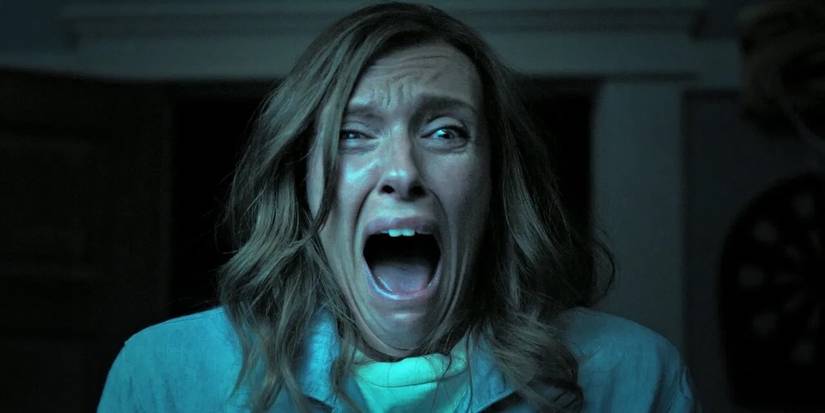 Image via A24
"I just want to die." Most horrors use their R-rating for gratuitous violence and nudity. Hereditary, by contrast, uses it to explore grief, inheritance, and inevitability, all while frightening the viewer out of their wits. It's emotionally honest in a way that's rare for the genre, following a family unraveling after a series of personal tragedies that blur the line between psychological breakdown and supernatural fate. Here, trauma feels suffocating rather than stylized, grounding the terror (and there is a lot of terror) in lived pain.
For most of the runtime, the film exposes us to guilt, anger, resentment, and generational trauma. Then, it totally shocks the audience with decapitations and demonic entities. These supernatural elements amplify rather than replace the core themes, culminating in one of the bleakest endings in 2010s horror. There's no victory, not even true survival, only submission to forces long in motion. Truly one of the most devastating films of the last decade.






 English (US) ·