
Ninety-nine percent of the time, character arcs are a central element of storytelling, particularly those undergone by the story's protagonist. After all, the emotional stakes of seeing a character change (either for better or for worse) throughout the narrative are a big part of what keeps audiences invested in the story to begin with. That other one percent of the time, however, is composed of films whose main characters don't have any significant kind of character development.
These are movies where our protagonist remains the same person from the start of the movie until the credits roll. Perhaps their environment changes, or the people around them do, but them? They remain static throughout the entire thing. That may sound like a bad thing, but several of the greatest films ever made have protagonists who don't meaningfully change over the course of their narratives.
'Ferris Bueller's Day Off' (1986)
 Image via Paramount Pictures
1980s Hollywood produced some of the best comedies of the 20th century, and as far as those go, it doesn't get much more iconic than the John Hughes cult classic Ferris Bueller's Day Off. This quintessential teen comedy is a love letter to both Chicago and the slacker comedy genre, and it follows three friends on a day that they decide to skip school.
At first glance, it does seem like Matthew Broderick's Ferris Bueller is the protagonist of the movie, but as the plot progresses, observant viewers may start to notice something: it is actually the story of Alan Ruck's Cameron. Ferris is more of a catalyst for Cameron's growth from a hypochondriac teen into a far more confident young man, to the point that many fans have come to theorize that Ferris is actually a figment of his best friend's imagination.
'Mary Poppins' (1964)
 Image via Walt Disney Studios Motion Pictures
Walt Disney first attempted to purchase the film rights for P. L. Travers' Mary Poppins book series all the way back in 1938. It wouldn't be until 1962 that Disney would finally succeed, and that ended up giving us one of the most universally beloved family movies of all time. Starring the wonderful Julie Andrews in her Oscar-winning big-screen debut, it has aged beautifully as one of the greatest family musicals ever made.
This is yet another instance of a film whose static protagonist serves as a driving force that causes the characters around her to change. Mary Poppins is the story of the titular magic nanny, one of the most iconic characters of the fantasy genre, helping the Banks family become closer. Accompanied by Dick Van Dyke's Bert, an equally development-less magical character, Mary Poppins serves as the film's face, while the Banks children serve as the story's heart.
'Goldfinger' (1964)
 Image via Amazon MGM Studios
There are plenty of things that happen in every James Bond movie. Up until Daniel Craig's tenure barged in and changed the franchise's formula, one of those things was 007 having virtually no character arc. For the longest time, that was an essential part of what kept the franchise consistently fresh, no matter how many times it changed stars and reinvented itself: Bond was the same man going into each story as he was coming out. Sort of by default, that makes Goldfinger, the best non-Craig Bond movie, the best 007 flick where its lead character doesn't change.
It isn't one of those instances where no one in the narrative has much of an arc, really—perfect proof that this type of story can work when done right. By keeping Sean Connery's Bond as a static hero, director Guy Hamilton can invest the time that he would have spent in establishing an arc for 007 into fully focusing on the narrative instead. The result is one of the most irresistibly entertaining spy movies of the 20th century, full of thrilling action sequences, iconic gadgets, and memorable old-school Bond moments.
'Paddington 2' (2017)
 Image via StudioCanal
Paddington 2 is the kind of feel-good movie that feels like eating a bowl of warm soup or receiving a loving hug after a sad, rainy day. Paddington was lovable and life-affirming enough, but its sequel was the one that really cemented this Peruvian bear as one of the most beloved fantasy movie characters of the 21st century. However, it's not Paddington who goes through an arc, but rather the people around him.
In one of the best adventure movies of the 21st century, Paddington's passion for spreading joy and hope in his neighborhood through his optimistic, kindhearted nature remains steadfast from opening to credits. It's the people around him—his fellow inmates after he's framed, his neighbors, and the Brown family—who learn a thing or two from this beloved bear along their journey.
'The Big Lebowski' (1998)
 Image via Gramercy Pictures
The Coen brothers' The Big Lebowski is one of the most universally beloved cult classics ever, a film so iconic that it spawned the creation of a whole mock religion called Dudeism. That's in honor of The Dude, the film's protagonist, a Los Angeles slacker and blowler played by Jeff Bridges at the very top of his comedic game.
The Dude leads his life through a set of rules that are best summarized by The Stranger at the very end of the film: "The Dude abides." The Big Lebowski is the rare kind of film where absolutely no one sees any kind of character development. No one changes, even when the Coens make you think that they might. From The Dude to John Goodman's Walter to Julianne Moore's Maude, everyone stays the same over the course of the story, reinforcing the message that life is best lived with serenity and full authenticity.
With Aaron Sorkin being one of the most acclaimed Hollywood screenwriters of modern times and David Fincher being one of the greatest American filmmakers of the '90s and 21st century, it's no surprise that The Social Network is one of the most celebrated dramas of the 21st century. It's a biopic about Mark Zuckerberg, and though it's more of a dramatization of the young entrepreneur's life and work than a faithful docudrama, it's nevertheless an absolutely enthralling movie.
The Social Network is a masterclass in screenwriting in virtually every way imaginable—one of the main reasons why it's one of the best movie masterpieces of the last 20 years—, and the brilliance with which Sorkin achieves an emotionally satisfying story without his protagonist having an arc is one of those ways. It's not Mark who changes here, but rather his environment, the people around him, and the situations he faces. But through it all, he remains the same isolated and self-centered genius that he was at the start of the film.
'Mad Max: Fury Road' (2015)
 Image via Warner Bros. Pictures
George Miller's Mad Max series is another movie franchise defined by the static nature of its lead character. Max Rockatansky is an almost mystical hero, and that's by design. All of his movies feel somewhat disconnected because they're meant to be experienced as mythic campfire stories, tales told from generation to generation in the wasteland that Max inhabits. The best of those campfire stories is easily Mad Max: Fury Road, one of the best climate-fiction movies of all time.
Charlize Theron's Imperator Furiosa here is every bit as much of a protagonist as Tom Hardy's Max, and it's her emotionally cathartic arc that the narrative focuses on. Max is presented as the same kind of mythical hero that he has always been, a mysterious figure who kicks ass, takes names, and then rides into the sunset until the world needs him again.
'The Good, the Bad and the Ugly' (1966)
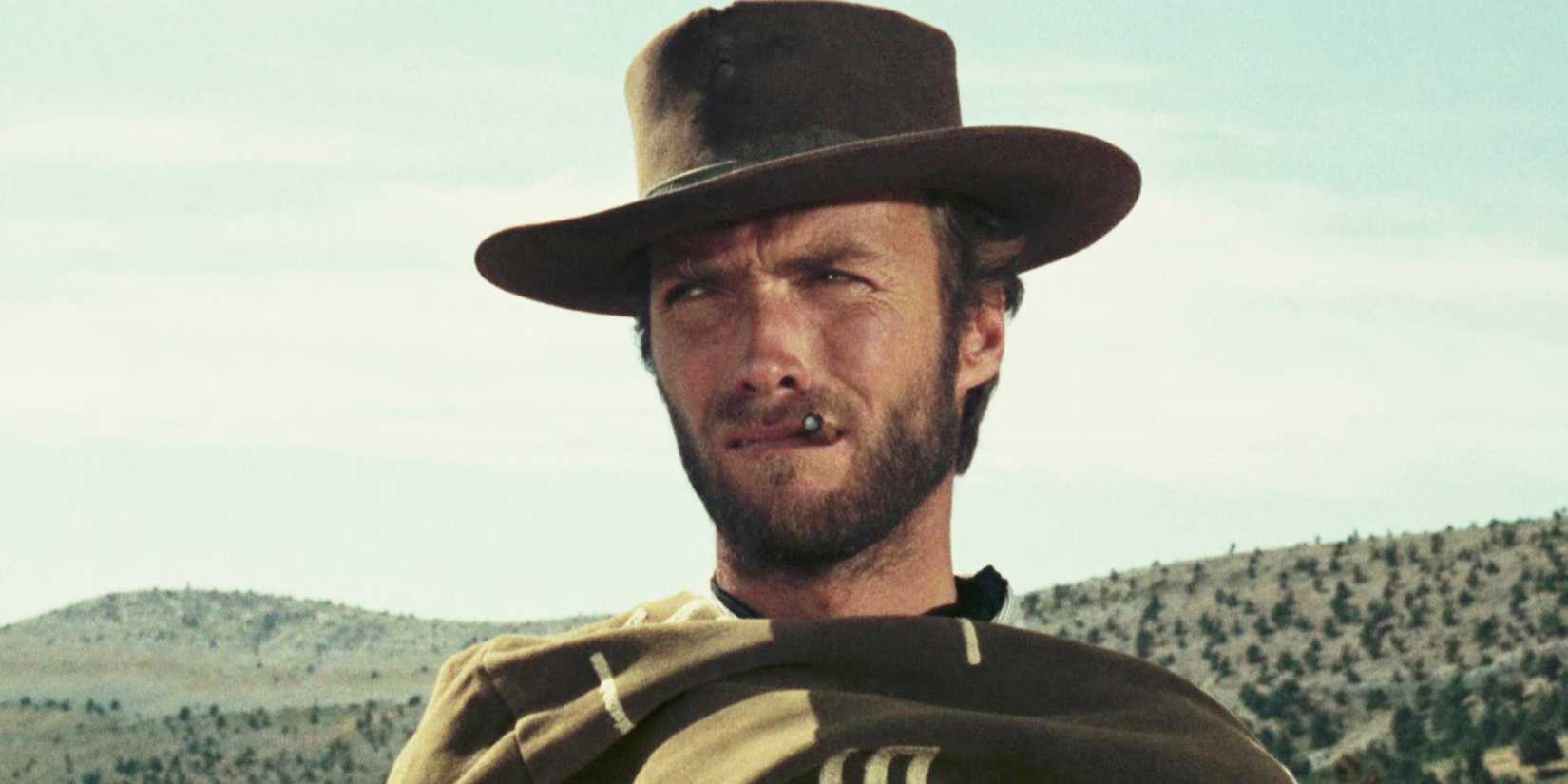 Image via Produzioni Europee Associati
If there's one genre that has static heroes more often than most others, it's Westerns, and there's no example of a static Western hero more perfect or iconic than Clint Eastwood's Man With No Name. He's the lead of Sergio Leone's Dollars Trilogy, three of the greatest Spaghetti Westerns in history, which culminate in what may just be the greatest Western of all time: The Good, the Bad and the Ugly.
It is, at the very least, the most universally acclaimed Western of all time. The protagonist is a quiet, cold-hearted, incredibly resourceful mercenary, as well as the quintessential Western antihero. The only thing about him that changes by the end of the movie is his outfit and his net worth, and that kind of badass stoicism is precisely the thing that makes him one of cinema's most beloved protagonists.
'Back to the Future' (1985)
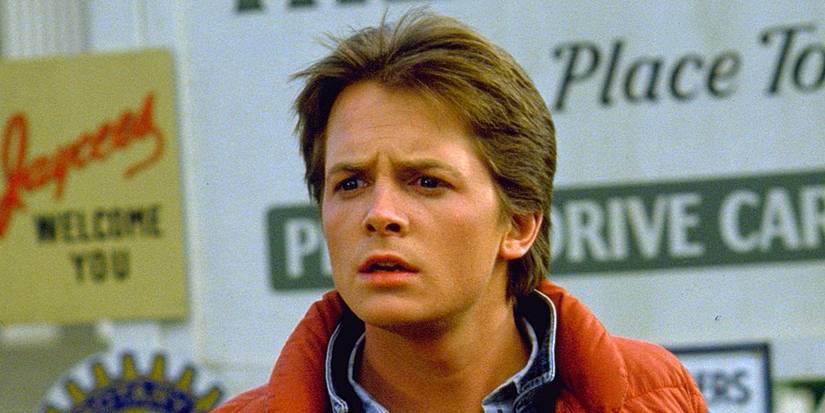 Image via Universal Pictures
Back to the Future is irrefutable proof that sci-fi films don't need to be super artsy in order to be absolutely flawless. It's one of the most perfect popcorn blockbusters in history, the starter of one of the most perfect movie trilogies for a weekend binge. It's a delightful time-travel story led by Michael J. Fox's Marty McFly, one of the most fun movie characters of the '80s, in spite of his lack of an arc.
By the time he makes it back to the future, Marty's the one who has directly helped to change his family for the better.
Over the film's two sequels, Marty does start to undergo a slow-burning arc, where he changes into someone far more confident who no longer reacts recklessly when he's called a "chicken." But in the original film, the same Marty that we see playing the electric guitar at the start of the film is the exact same Marty that flies off with Doc into the future at the end. It's his parents who change throughout the story, so by the time he makes it back to the future, Marty's the one who has directly helped to change his family for the better.
'12 Angry Men' (1957)
 Image via United Artists
It's almost hard to believe that 12 Angry Men was Sidney Lumet's debut as a filmmaker. It is, after all, one of the most immensely acclaimed and absolutely perfect films of all time, starring a faultless Henry Fonda as a juror trying to convince eleven other men of the potential innocence of a man being tried for murder. What ensues is the best crime movie of Hollywood's Golden Age.
Almost all of 12 Angry Men takes place in real time as a single conversation in a single room, so Juror #8 is in almost exactly as many scenes as his fellow jurors, but his status as a protagonist is undeniable. Aside from being the eyes through which the audience views the film, he's also the story's emotional and moral center. Indeed, what makes it so vibrantly human and irresistibly fascinating is how Juror #8's words cause everyone else to go through a transformative arc of their own.







 English (US) ·