
1979 marked the end of the greatest decade in Hollywood history, which laid the groundwork for the industry’s obsessions with blockbusters in the ‘80s. Many of the films released in 1979 were reflective in this changing of the time; while Moonraker, Rocky II, Star Trek: The Motion Picture, and The Black Hole were all respectable (even underrated) science fiction adventures, they were all clearly attempting to bank off the success of Star Wars, which had set the all-time box office record two years prior.
1979 nonetheless had a number of great films from a variety of different genres, and served as a rare instance in which some of the most acclaimed films of the year were also some of the most financially successful. Regardless if audiences were interested in drama, comedy, action, or sci-fi, there was something in the cinema of 1979 that spoke to them. Here are the ten greatest movie masterpieces of 1979, ranked.
10 ‘The China Syndrome’ (1979)
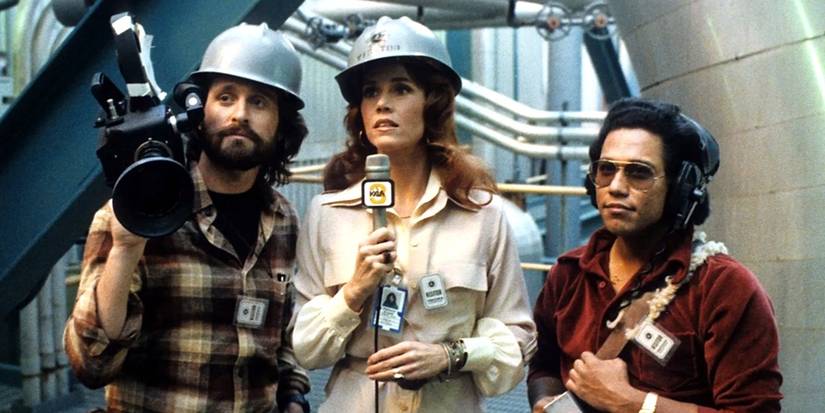 Image via Columbia Pictures
The China Syndrome was already a great film that dealt with corporate conspiracies and the dangers faced by environmental accidents, but it became an even greater subject of consideration and controversy due to a real-life incident that paralleled its story. The extent to which the film had researched what the realistic fallout would be of such a situation was beneficial, as it provided the audience with a more educated understanding of how they should react to the breaking news.
The China Syndrome is an exercise in musical filmmaking that also featured great performances, specifically from Jane Fonda, whose ability to play a whipsmart reporter mirrored her real-life interest in activist causes. While Michael Douglas had been best known at this point as a producer, The China Syndrome showed that he was a talented actor in his own right who lived up to the legacy of his father.
9 ‘Mad Max’ (1979)
 Image via Warner Bros.
Mad Max was the origin of one of the most quotable, coolest, and visually striking franchises of all-time, but it’s not quite as action-packed as some of the other films that were directed by the Australian mastermind George Miller. Although its direct sequel, Mad Max 2: The Road Warrior, tackled the madness of the post-apocalypse with all the aura and chaos involved, the original Mad Max is a more intimate, painful revenge story about a lone cop striking out at the vicious bikers that killed the love of his life.
Mad Max confirmed that Mel Gibson was one of the most important movie stars of his era, and previewed what he would do in both the sequels and his collaborations with directors like Richard Donner and Peter Weir. Although it’s ironically one of the least seen Mad Max films, it’s also one of the best.
8 ‘Kramer vs. Kramer’ (1979)
 Image via Columbia Pictures
Kramer vs. Kramer is a true phenomenon because it was the rare Best Picture winner that also became the year’s biggest domestic film at the box office. That sort of performance might be expected for a massive, spectacle-driven film like Titanic or Forrest Gump, but it was unheard of for a bitter, intimate divorce drama like Kramer vs. Kramer.
Kramer vs. Kramer was ahead of its time because it was sympathetic to both parties of a divorce, and showed how the indignities of the current justice system made it nearly impossible for co-parents to spend an equal amount of time with their child without significant ramifications. Dustin Hoffman and Meryl Streep both won their first Academy Awards, solidifying their places among the select group of movie stars who would continue to be just as relevant within the next five decades.
7 ‘Breaking Away’ (1979)
 Image Via 20th Century Fox
Breaking Away is more than a standard sports drama because it explored the unique pressures, enthusiasm, and existentialism felt by young men of a certain age when they feel as if their life has endless opportunities, some of which are exciting, and others that are completely terrifying.
Breaking Away featured a phenomenal cast of young actors who were able to look, sound, and interact like real teenagers, which is something that was rare at the time. However, the film’s breakout was definitely Dennis Quaid, whose deeply soulful performance should have earned him an Oscar nomination, especially when considering that Breaking Away was a top contender in so many other categories at the Academy Awards. It’s a film that aged gracefully because it beautifully reflects a specific era, and still feels as if it could be an aspirational story for today’s youth.
6 ‘The Jerk’ (1979)
 Image via Universal Pictures
The Jerk is quite simply one of the funniest movies of the 1970s, which given what a great decade it was for comedy, means that it's also one of the funniest films ever made. It’s often just one film that’s needed for a comedy legend to turn themselves into a movie star, and Steve Martin’s ridiculously silly, if surprisingly sincere performance in The Jerk lead him to become a dominant actor within the next several decades (and one who is still relevant today thanks to Only Murders in the Building).
Martin was able to take the absurdity and self-aware stupidity of his stand up set and apply it to a film that somehow made low humor look like high art. While there’s a surprising degree of social satire and class commentary in The Jerk, those things don’t need to be picked on by those who simply want to laugh themselves silly.
5 ‘Being There’ (1979)
 Image via United Artists
Being There is an odd, whimsical, and deeply emotional exploration of the full extent of the human experience that feels like a modernist take on the satire of William Shakespeare and the class commentary of Charles Dickens. Although Hal Ashby was already one of the most exciting directors of the New Hollywood era, Being There is a far softer and more intimate film that he had ever made, and it also happened to be one of his funniest.
Peter Sellers gives a truly remarkable performance in Being There because he’s able to shed the persona of The Pink Panther franchise entirely to become the character that had appeared in Ashby’s script. It’s common now for actors best known for comedy to try their hand at “serious” acting, but Sellers gives an immensely enjoyable performance without cutting out the aptitude for humor that he has been gifted with.
4 ‘Stalker’ (1979)
 Image via Goskino
Stalker is a truly different type of science fiction thriller because it is about as different than the post-Star Wars space opera craze as could be imagined. Writer/director Andrei Tarkovsky has many films that utilize gradual pacing and stylized imagery to create hallucinogenic, probing works of existentialism, but Stalker is the most complete, iconic, and thematically dense work of his entire career.
It’s become an overstated phrase to claim that “every frame looks like a painting,” but that’s literally the case in a film like Stalker that is directed with such precision and intentionality. Although it is certainly a film that has been subjected to rigorous analysis and interpretations by many generations of cinephiles over the years, Stalker is also ambiguous in a way that makes it more inviting to subsequent viewings, especially for those lucky enough to see it on the big screen.
3 ‘Alien’ (1979)
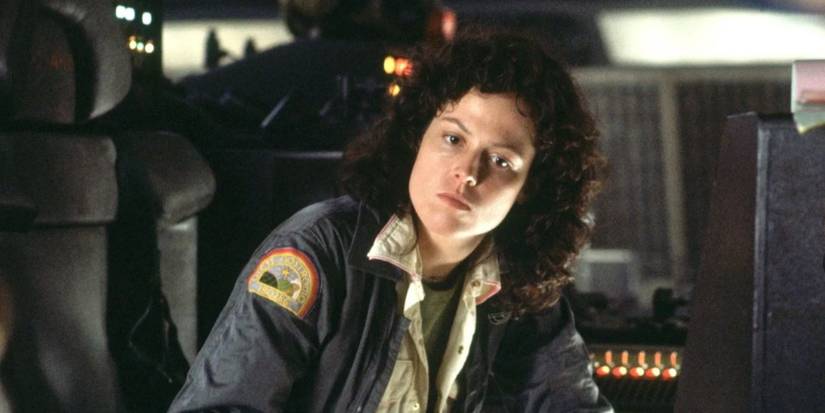 Image via 20th Century Studios
Alien had one of the most effective loglines and taglines in cinematic history, because Ridley Scott’s franchise-starting masterpiece was pitched as “Jaws in space” and marketed with the disconcerting phrase “in space, no one can hear you scream.”
Alien merged the interest in space travel promoted by Star Wars with the rise of slasher films led by Halloween and Black Christmas, creating a body horror classic that featured some of the most groundbreaking works of practical effects and makeup ever committed to the screen. The simplicity of Alien is why it is so perfect, as Scott was able to create a feeling of dread by slowly showing that the crew of the Nostromo were being preyed upon by a much more powerful creature. Sigourney Weaver was groundbreaking as one of the most famous female heroes in the history of science fiction.
2 ‘Apocalypse Now’ (1979)
 Image via United Artists
Apocalypse Now wrestled with the legacy of the Vietnam War in a way that was unprecedented, as while the ramifications of the war were seen in post-traumatic stress disorder dramas like The Deer Hunter and Coming Home, it was Francis Ford Coppola’s masterpiece that headed to the heart of the jungle to show just how destructive mankind could be when left to their most primal and violent urges.
The chaotic process of making Apocalypse Now became just as infamous as the film itself, but Coppola’s ambition resulted in a film of Earth-shattering power that realized the sins of war in the most visceral of ways. The late great Robert Duvall gave one of his best performances of all-time, and was given the unparalleled opportunity to make one of cinema’s greatest quotes with “I love the smell of napalm in the morning.”
1 ‘All That Jazz’ (1979)
 Image via 20th Century Fox
All That Jazz is unlike any other musical because it served as a confession and semi-autobiographical story for Bob Fosse, the legendary Broadway director, choreographer, and storyteller. Fosse was already wrestling with his own mortality at the time that he made All That Jazz, which saw the great Roy Scheider taking on the role of an obsessive Broadway director who loses himself whilst making what he believes will be his masterpiece.
All That Jazz was admired by those within both Broadway and Hollywood, and even earned a glowing recommendation from the great Stanley Kubrick. The film isn’t just irreplicable because of the unique collection of talents who were willing to sign on to such an ambitious project in 1979, but because no one but Fosse would be able to turn their darkest anxieties into the basis of an intensely moving, immersive odyssey of music and magic.

Release Date December 20, 1979
Runtime 123 Minutes





 English (US) ·