
The rise in popularity of the miniseries format marks one of the most interesting innovations in modern entertainment. Effectively filling the void between the extended drama of television series and the succinct immediacy of films, the form strikes a perfect middle ground, delivering stories endowed with the runtime to indulge in deeper, more complex ideas than most movies can, while still presenting a cohesive and conclusive narrative that can be watched through in a relatively short span of time.
Given its episodic nature, the limited series model has been classed as an extension of television entertainment, but there have been a ton of series that feel more closely connected to feature films than they do to TV drama. Whether it is because of their rich cinematic visuals, interest in telling a faster-paced story, or simply by the unfurling of the narrative, feeling less serialized and more like one holistic piece, these miniseries feel more like 10-hour movies than television shows.
10 'The Haunting of Hill House' (2018)
 Image via Netflix
It is often the case that series that hop between different timelines, characters, and/or narrative arcs feel less formatted and episodic when reflected upon. The episodic nature of television storytelling isn’t as pronounced or grating in such series. The Haunting of Hill House embodies this, with its story of horror split across two different yet entwined timelines, eschewing self-contained, in-episode arcs in favor of a long-form narrative structure that delivers the miniseries as one continuous, unbroken story.
Also complemented by Mike Flanagan’s use of static, controlled shots, wide angles, and creeping zooms—as well as a 17-minute long-take in the episode “Two Storms”—The Haunting of Hill House exhibits a technical mastery that goes well beyond what most television series have the time, financing, or resources to achieve. The end result is not only a masterpiece of small-screen horror, but one of the finest displays the genre has seen in any visual format over the past decade.
9 'True Detective' (Season 1) (2014)
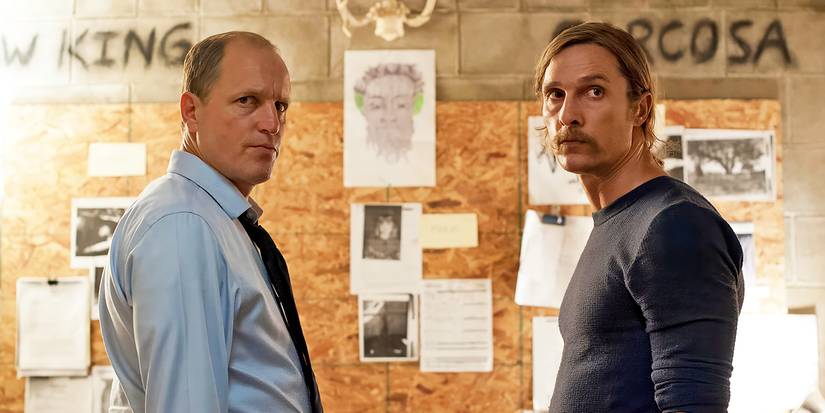 Image via HBO
Restrained, methodical, and meticulous, the first season of True Detective was a groundbreaking phenomenon to crime television, an astonishing illustration of how cinematic techniques and a slow-burning mystery could create a new standard for the small screen. While ensuing seasons have been of mixed quality, Season 1 of True Detective is a masterpiece of eerie suspense and Southern Gothic atmospheric intensity as it follows two detectives over the course of 17 years as they investigate an occult serial killer in Louisiana.
Every element of its presentation feels richly cinematic, from the patient build-up of tension to the non-linear narrative, the pedigree of the performances, and even the gritty yet gorgeous look, which was achieved by shooting on 35mm film. Even over 10 years on from its release, True Detective Season 1 remains an unsurpassed highlight of mystery television, a haunting immersion into a chilling case and the toll it takes on the men investigating it that defies TV rules at every turn, enabling it to exude a filmic quality.
8 'Generation Kill' (2007)
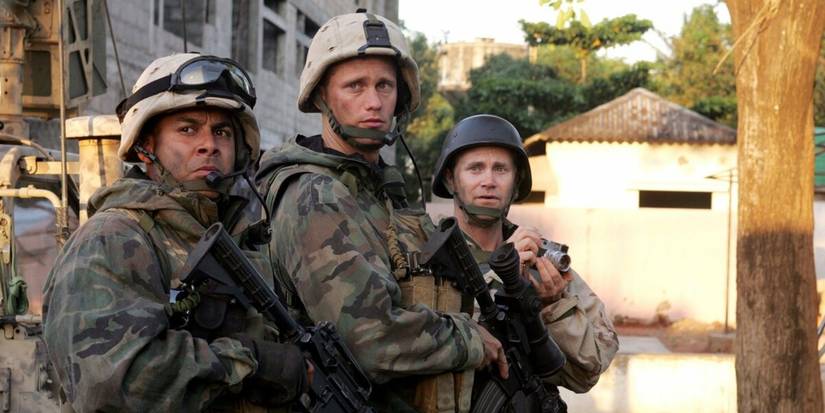 Image via HBO
From the creators of The Wire and based on Rolling Stone journalist Evan Wright’s nonfiction book covering his time as an embedded reporter with the US Marine Corps’ 1st Reconnaissance Battalion during the invasion of Iraq in 2003, Generation Kill is as revealing and immersive a depiction of modern war as has been seen in film and television. With the entire miniseries focusing on just a couple of weeks of the unit’s progress, it delivers a contained and tightly-focused illustration of war, one where soldiers are forced to deal with long-winded bureaucratic processes and communications breakdowns in addition to the ever-present threat of combat.
Its immersion in the authenticity of the war is captivating, with the series employing a fly-on-the-wall approach to its cinematography and storytelling that imbues it with a piercing realism, a quality that makes the gaps between episodes feel non-existent. It is remarkably comfortable in treating the soldiers as human beings—men who share jokes and bond over absurd conversations to handle the monotony and nerve-rattling tension of war—rather than glorified heroes. The handling of the gravitas of the invasion of Iraq is palpable, but the essential war miniseries revels in its slow-burn style, making the boredom, frustration, and anticipation the soldiers feel a key feature that engrosses viewers as a movie would rather than offering episodic segments of war drama.
7 'Devs' (2020)
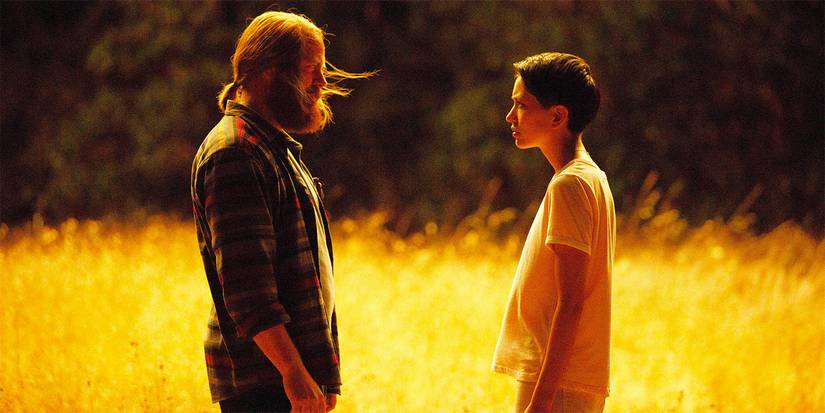 Image via FX
Devs marks one of the most interesting miniseries from the point of view of its tone and execution, with its incredible production value and cinematography making it feel richly cinematic, as does its winding story of corporate duplicity and mystery. Written and directed by Alex Garland, the eight-part miniseries follows computer programmer Lily (Sonoya Mizuno) as she investigates the computing firm her boyfriend worked for prior to his disappearance. As she strives to unearth the company’s dark secrets, she also faces difficulties in her efforts to talk with its elusive and enigmatic CEO, Forest (Nick Offerman).
The conviction and clarity in the structuring of its story are instrumental in making Devs feel more like a movie than a typical miniseries, with its sense of slow-burning, weighted momentum always progressing the narrative even as plot details become confounding. As a result of Garland’s singular vision of the series, tight narrative layout, and its audacious sense of sci-fi grandeur, Devs thrives as a mesmerizing mystery series of the 2020s, one that flaunts a striking cinematic edge through its story, style, and thematic substance.
6 'The Night Of' (2016)
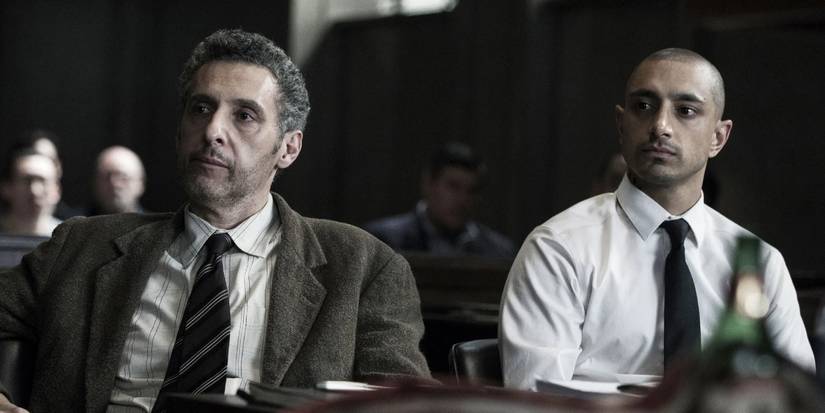 Image via HBO
One of the most underrated miniseries in recent decades, The Night Of thrives as a complex and richly mindful crime thriller as it follows Nasir Khan (Riz Ahmed), a Pakistan-American student standing trial for a murder with the evidence against him being damning. As public defender John Stone (John Turturro) launches his own investigation into the crime while representing Khan in court, Nasir experiences a bleak coming-of-age as he awaits persecution at Rikers Island.
Slow and meticulous, the miniseries emphasizes the development of atmospheric tension over fast-paced thrills, delivering a compelling character study and a measured critique of the legal system. Also defined by its high production value, stunning high-contrast cinematography, and the thematic might underlining its story, The Night Of wields the conviction and visual majesty of cinema throughout its eight-episode run, a point that is only strengthened by the outstanding performances of Ahmed and Turturro.
5 'Sharp Objects' (2018)
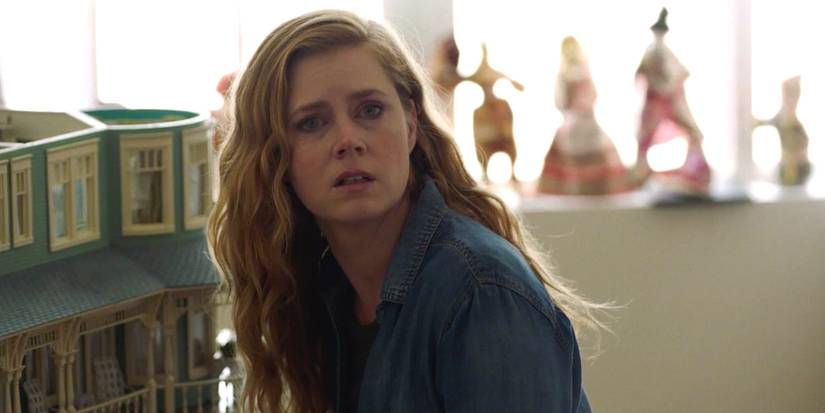 Image via HBO
In the wake of True Detective, there has been a plethora of crime shows that have invested more energy in atmospheric suspense and rich, character-centric storytelling than in simply plotting a winding mystery over the course of multiple episodes. Sharp Objects is one of the best examples of this. Based on Gillian Flynn’s novel, it follows crime reporter Camille Preaker (Amy Adams) as she returns to her small hometown to investigate the murder of two young girls following a stint in a psychiatric hospital. Confronted with ghosts from her past, Preaker struggles to overcome a litany of unresolved personal issues while delving into the disturbing nature of the case.
Under the vision of just one director, Jean-Marc Vallée, the eight-part miniseries maintains an engrossing tone and style throughout the entirety of its run. Its visual display is a medley of mesmerizing, cinematic shots punctuated by outbursts of rapid-fire editing and disorientating camerawork. Combined with an eerie soundscape, a pointed investment in character complexity and inner turmoil, and the screenplay’s deliberate pacing, Sharp Objects excels as a bleak, psychologically absorbing mystery thriller that ascends beyond the status quo for television drama and achieves a feeling of cinematic ferocity and patience.
4 'Godless' (2017)
 Image via Netflix
Originally conceived as a feature film before being molded as a miniseries, Godless flaunts many of the best aspects of Western cinema in its contained and captivating seven-part story. Following the women of the mining town of La Belle, who have been left to fend for themselves after an accident at the mine killed many of the men, it unfolds as outlaw Roy Goode (Jack O’Connor) seeks refuge in the town as he runs away from his gang, led by the vicious criminal Frank Griffin (Jeff Daniels). Fearing what will happen if Griffin arrives at the town and takes over, the women brace to defend themselves while Goode forms an unlikely bond with the coarse widowed rancher, Alice Fletcher (Michelle Dockery).
A major pitfall of many Western miniseries of late has been a lack of hands-on grime, a polished visual cleanliness that detracts from the genre’s innate callousness. Godless features none of that, instead delivering a display of enrapturing authenticity and grit that suits the genre’s sweeping landscapes perfectly. While that alone makes it feel more cinematic than many other Western series in recent years, Godless also thrives off the back of its taut storytelling and direction—both of which were completely handled by Scott Frank—and its continuous flow of intensity, cementing it as one of the best Western TV shows of all time and a defining triumph of Netflix-produced entertainment.
3 'Maid' (2021)
 Image via Netflix
The gulf between cinematic freedom and the restrictions imposed on television productions is often most apparent when dealing with straight drama. The luxuries of filmmaking—the litany of techniques, the time available to get the perfect take, even the resources at the disposal of producers and crew—may not be the most eye-catching aspects of a finished feature, but the absence of these assets is glaring in television. Maid offers stunning proof that such an idea may be a thing of the past.
Produced by Netflix, the 10-part series follows Alex (Margaret Qualley), a struggling young mother, as she leaves her abusive boyfriend, moves into a shelter with her toddler, and finds work as a maid. Anchored in the brilliance of Qualley’s performance, the story’s emphasis on day-to-day hardships, and the basis on Stephanie Land’s best-selling book, Maid enthralls as a uniquely piercing television drama, one that goes far beyond other small-screen ventures into the genre to present a deeply emotional yet ultimately hopeful tale of perseverance and love grounded in the complexity of real life.
2 'Station Eleven' (2021)
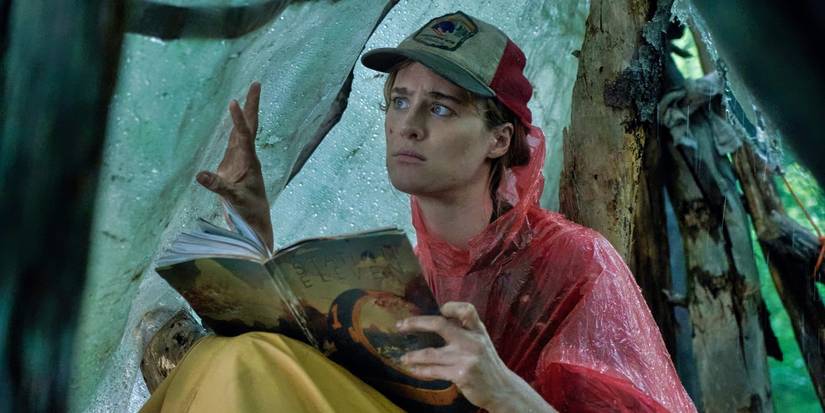 Image via HBO Max
One of HBO’s most underappreciated gems and a hidden treasure of 2020s television, Station Eleven excels with its mature and surprisingly uplifting perspective on the apocalypse. Based on Emily St. John Mandel’s novel of the same name, it takes place 20 years after a flu pandemic devastated humanity and brought on the collapse of civilization. In the ruins of the old world, a small group of survivors roams around as traveling performers, though their pleasant lifestyle of art and joy is threatened when they are targeted by a violent cult.
Despite its existential stakes and chaotic story world, Station Eleven thrives as a quiet character study, an introspective analysis of Kirsten Raymonde’s (Mackenzie Davis) emotional evolution that is supported by a visual display of rich natural colors that flaunts atmospheric majesty and interconnection over action violence. In this regard, the miniseries feels more attuned to indie cinema than television drama, a point further emphasized by its non-linear story that treats the past as a gentle, dreamy, almost nostalgic memory. The end result is a deft yet impressionable miniseries that is as striking for its departure from TV norms as it is for its unique viewpoint on the collapse of society.
1 'Band of Brothers' (2001)
 Image via HBO
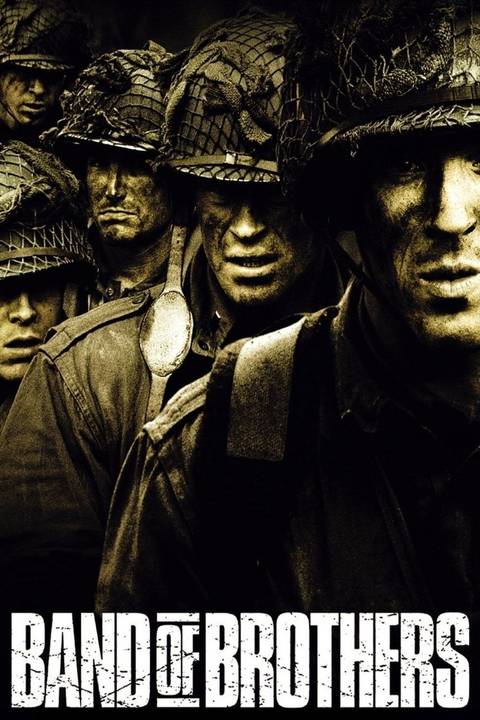
Marking what is still widely regarded to be the greatest miniseries of all time, Band of Brothers delivers ten devastating episodes as it follows Easy Company through their WWII campaign, starting with their training and eventual drop into France on the eve of D-Day, and ending with their presence in Germany at the end of the war. Even with each episode highlighting a different battleground, different challenges the soldiers face, and even different major characters as well, Band of Brothers still feels more like a movie than most TV shows.
Perhaps it is because its sense of momentum makes it feel like one long, arduous campaign rather than ten individual episodes, or it could be because creators Steven Spielberg and Tom Hanks imbue the miniseries with a sense of scale and production value that is richly cinematic. All that is certain is that Band of Brothers is a masterpiece of war television that is as impactful as it is enduring. Unbelievably, 2026 marks the show’s 25th anniversary, and it remains every bit as exceptional and uniquely cinematic today as it was back in 2001.
Band of Brothers
Release Date 2001 - 2001
Network HBO
-

-

Donnie Wahlberg
C. Carwood Lipton



 English (US) ·