
 Image via Netflix
Published Jun 28, 2026, 9:00 AM EDT
Anja Djuricic was born in Belgrade, Serbia, in 1992. Her first interest in film started very early, as she learned to speak English by watching Disney animated movies (and many, many reruns). Anja soon became inspired to learn more foreign languages to understand more movies, so she entered the Japanese language and literature Bachelor Studies at the University of Belgrade.
Anja is also one of the founders of the DJ duo Vazda Garant, specializing in underground electronic music influenced by various electronic genres.
Anja loves to do puzzles in her spare time, pet cats wherever she meets them, and play The Sims. Anja's Letterboxd four includes Memories of Murder, Parasite, Nope, and The Road to El Dorado.
Sign in to your Collider account
Ten years is not a very long time in the grand scheme of television history, but for K-dramas, it's almost an entire revolution. Since 2016, Korean dramas have exploded from a regional phenomenon into a truly global force. We've watched the Hallyu wave rise and fall across streaming platforms, watched actors become international superstars, and watched genres shift in ways no one saw coming.
But through all the noise of the past decade, some shows stood out more than the rest. They're not necessarily flawless but are perfectly executed within their own ambitions. The following ten dramas represent the very best of what Korean television has produced over the last decade. Some of them brought millions to tears; others rewrote genre rules or exposed uncomfortable truths about Korean society. Here are the ten greatest K-dramas of the last ten years.
 Image via Netflix
 Park Eun-bin's portrayal of Woo Young-woo, a young autistic lawyer navigating the brutal world of corporate litigation, remains one of the most vital performances of the past decade. Extraordinary Attorney Woo became a genuine sleeper hit, with its finale reaching 17.5% nationwide ratings, an astonishing figure for a show from a small cable network. Each episode follows Young-woo as she tackles a new case, all while confronting workplace prejudice and developing a tender romance with a coworker.
What makes this K-drama stand out among typical underdog stories is Attorney Woo's attention to autism representation, with showrunners consulting medical experts and advocacy groups to ensure authenticity. Park swept the acting awards that season, including the Grand Prize at the Baeksang Arts Awards, and the show earned critical praise for making complex legal arguments feel accessible without dumbing them down. It's warm, funny, and occasionally bittersweet, proving that the best legal dramas are always about the people inside the courtroom.
9 'Kingdom' (2019–2020)
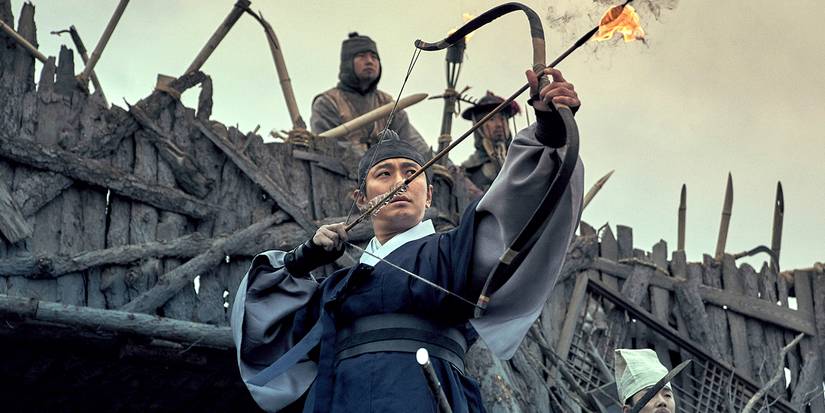 Image via Netflix
Kingdom is like if Game of Thrones met 28 Days Later, but set in Korea's Joseon Dynasty period. The first-ever Netflix original K-drama follows Crown Prince Lee Chang (Ju Ji-hoon) as he investigates a mysterious plague that turns the dead into flesh-eating monsters, only to discover that the real threat is the corrupt and scheming nobles who would rather let the kingdom burn than lose power. Across two seasons and a prequel special, Kingdom delivered some of the most breathtaking set pieces in television history.
Kingdom was an instant critical and commercial smash, earning a 100% Certified Fresh rating on Rotten Tomatoes for its second season and prequel (Season 1 has 94%). It's also a nuanced commentary on class, famine, and political negligence; the zombie plague spreads because the poor are starving, and the rich ignore them. Ju anchors the chaos with a prince who grows from naive to ruthless, and the supporting cast, including Bae Doona as a fierce physician and Ryu Seung-ryong as a ruthless enemy lord, is perfect. It's a great genre hybrid: period epic, political thriller, and horror masterpiece all in one.
8 'D.P.' (2021–2023)
 Image via Netflix
D.P. is one of the most compelling statements against institutional cruelty in the history of K-dramas. Short for Deserter Pursuit, D.P. follows Private Ahn Jun-ho (Jung Hae-in) and his senior partner, Corporal Han Ho-yeol (Koo Kyo-hwan), who are serving their mandatory military service by tracking down military deserters. The series unfolds as a series of episodic cases, each revealing the horrifying reasons why the young men leave their mandatory service, ranging from relentless bullying and sexual assault to psychological torture.
D.P. mainly observes, with a documentary-like detachment, the way violence becomes normalized when authority refuses to act. Based on Kim Bo-tong's webtoon D.P. Dog's Days (he also wrote the show), the series sparked real-world conversations about military reform in South Korea, even prompting the Ministry of National Defense to issue a public statement addressing the issues raised. Jung and Koo deliver exceptional performances and have great chemistry, while the ending is deliberately unresolved, mirroring the systemic failures it critiques (with some theorizing that it stayed open for a Season 3). It's brutal and occasionally very heavy, but it's a necessary show that remains one of the best.
7 'Mr. Queen' (2020–2021)
 Image via tvN
Mr. Queen is the K-drama with the craziest premise on this list by a wide margin, but somehow, it works perfectly. Choi Jin-hyuk stars as Jang Bong-hwan, a modern-day, womanizing, foul-mouthed chef who works at the Blue House. After being pursued by the police and falling into the community pool from his balcony, his soul gets transported into the body of Queen Kim So-yong (Shin Hye-sun) in the Joseon era. It's a fantastic historical body-swap comedy where Bong-hwan, as Queen, must navigate court politics, a suspicious King Cheoljong (Kim Jung-hyun), and the constant threat of execution, all while desperately trying to return to the 21st century.
Mr. Queen became a ratings juggernaut, though it started off with some national controversy; after overcoming the problems by correcting them as production went on, the show became more and more appealing, turning into a masterpiece of its own merit. Shin delivers a career-defining dual performance, switching between being in the body of a regal queen and having the mind of a modern, overconfident man with perfect physical comedy and bravado. It's rare for a show this hilarious to also be so smart and sophisticated, but Mr. Queen manages it effortlessly.
6 'Signal' (2016–Present)
 Image via tvN
Half police procedural, half science-fiction, and entirely gripping, Signal is the drama that proved Korean television could compete with the best of Western prestige crime thrillers. It follows a cold-case profiler in 2015, Park Hae-young (Lee Je-hoon), who discovers a walkie-talkie that connects him to a detective in 1989, Lee Jae-han (Cho Jin-woong). Together, across three decades, they attempt to solve various cases that include unsolved murders, altering the past, and risking the collapse of the timeline for the sake of justice for cold case victims.
Signal is a masterclass in tension, but it derives its thrills from the cases it presents, with each being based on real unsolved murders across Korean modern history; this prompted people to become more interested in justice for cold cases. It won Best Drama and Best Screenplay at the 52nd Baeksang Arts Awards and remains one of the most referenced K-dramas in film school programs. Some viewers found its ending frustratingly ambiguous but indicative of a second season of Signal, while others found it brilliantly faithful to the show's open-ended universe. Signal raised the bar for K-drama crime thrillers, and it still holds up greatly in its particular hybrid genre.
Collider Exclusive · TV Medicine Quiz Which Fictional Hospital Would You Work Best In? The Pitt · ER · Grey's Anatomy · House · Scrubs
Five hospitals. Five completely different ways medicine goes sideways on television — brutal, chaotic, romantic, brilliant, and ridiculous. Only one of them is the ward your instincts were built for. Eight questions will figure out exactly where you belong.
🚨The Pitt
🏥ER
💉Grey's
🔬House
🩺Scrubs
FIND YOUR HOSPITAL →
01
A critical patient comes through the door. What's your first instinct? Medicine under pressure reveals who you actually are.
AStay completely present — block everything else out and work through it step by step, right now. BTriage fast and delegate — get the right people on the right problems immediately. CTrust my gut and move — I work best when I stop overthinking and just act. DAsk the question everyone else is ignoring — what's the thing that doesn't fit? ETake a breath, make a joke to cut the tension, and then get to work — panic helps no one.
NEXT QUESTION →
02
Why did you go into medicine in the first place? The honest answer says more about you than the one you'd give in an interview.
ABecause I wanted to be where it matters most — right at the edge, when someone's life is actually on the line. BBecause I wanted to help people — genuinely, one patient at a time, in a system that makes it hard. CBecause I was drawn to the intensity of it — the stakes, the drama, the feeling of being fully alive. DBecause medicine is the most interesting puzzle there is — and I needed a problem worth solving. EBecause I wanted to make a difference — and also, honestly, I didn't know what else to do with my life.
NEXT QUESTION →
03
What do you actually want from the people you work with? Who you want beside you under pressure is who you are.
ACompetence and calm — I need people who don't fall apart when things get bad. BTrust and reliability — I want to know that when I pass something off, it's handled. CConnection — I want colleagues who become family, even if that gets complicated. DIntelligence and the willingness to be challenged — I have no interest in people who just agree with me. EFriendship — people I actually like spending twelve hours a day with, because those hours are going to happen either way.
NEXT QUESTION →
04
You lose a patient you fought hard to save. How do you carry it? Every doctor who's worked a long shift has had to answer this question.
AI carry it. All of it. I don't look for ways to put it down — that weight is part of doing this work honestly. BI process it and move — you have to, or the next patient suffers for the one you just lost. CI feel it deeply and lean on the people around me — I don't think you're supposed to handle that alone. DI go back over every decision — not to punish myself, but because I need to understand what I missed. EI grieve it genuinely, find some way to laugh about something unrelated, and try to be kind to myself — imperfectly.
NEXT QUESTION →
05
How would your colleagues describe the way you work? Your reputation on the floor is usually more accurate than your self-image.
AIntense and completely present — no small talk during a shift, but exactly who you want there. BSteady and dependable — not the flashiest in the room but never the one who drops something. CPassionate and occasionally chaotic — brilliant on the hard cases, prone to drama everywhere else. DBrilliant and difficult — right more often than anyone else, and everyone knows it, including me. EWarm and self-deprecating — not the most intimidating presence, but genuinely good at this and easy to like.
NEXT QUESTION →
06
How do you feel about hospital protocol and procedure? Every institution has rules. What you do with them is a choice.
AProtocol is the floor, not the ceiling — I follow it until the patient needs something it can't provide. BI respect it — the system is broken in places, but the structure is there for a reason and I work within it. CI follow it until my instincts tell me not to — and my instincts are usually right, even when they cause problems. DRules are for people who haven't thought hard enough about when to break them. EI try to follow it and mostly do — with a few memorable exceptions that still come up in meetings.
NEXT QUESTION →
07
What does this job cost you personally? Nobody works in medicine without paying a price. What's yours?
AEverything outside these walls — I've given this job my full attention and the rest of my life has gone around it. BMy idealism, mostly — I came in believing the system could be fixed and I've made a complicated peace with that. CStability — my personal life has been as chaotic as the OR, and that's not entirely a coincidence. DMy relationships — I am not easy to know, and the people who've tried to would probably agree. EMy sense of gravity — I use humour as a coping mechanism, which not everyone appreciates in a hospital.
NEXT QUESTION →
08
At the end of a long shift, what keeps you coming back? The answer to this question is the most honest thing about you.
AThe fact that it's real — that nothing else I could be doing would matter this much, right now, today. BThe patients — individual human beings who needed something and got it because I was there. CThe people I work with — I have walked through impossible things with these people and I'd do it again. DThe next unsolved case — there's always another puzzle, and I'm not done yet. EBecause despite everything — the exhaustion, the loss, the absurdity — I actually love this job.
REVEAL MY HOSPITAL →
Your Assignment Has Been Made You Belong In…
Your answers have pointed to one fictional hospital above all others. This is the ward your instincts, your temperament, and your particular brand of dysfunction were built for.
The Pitt
You are built for the most unsparing version of emergency medicine television has ever shown — one that puts you inside a single fifteen-hour shift and doesn't let you look away.
- You need your work to be real, not romanticised — meaning over drama, honesty over aesthetics.
- You find purpose inside the work itself, not in the chaos surrounding it.
- You've made peace with the fact that this job takes from you constantly, and gives back in ways that are harder to name.
- Pittsburgh Trauma Medical Center demands exactly that kind of person — and you would not want to be anywhere else.
ER
You are the person who keeps the whole floor running — not the most brilliant in the room, but possibly the most essential.
- You show up, do the work, absorb the losses, and come back the next day without needing the job to be anything other than what it is.
- You care about patients as individual human beings, not as cases to solve or dramas to live through.
- You believe in the system even when it fails you — and you understand that emergency medicine is about holding the line just long enough.
- ER is television about endurance. You have it.
Grey's Anatomy
You came to medicine with your whole self — your ambition, your emotions, your relationships, your history — and you have never quite managed to leave any of it at the door.
- You feel things fully and form deep attachments to the people you work with.
- Your personal and professional lives are permanently, chaotically entangled — and that entanglement drives both your greatest disasters and your most remarkable saves.
- You understand that extraordinary medicine often happens at the intersection of clinical skill and profound human connection.
- It's messy at Grey Sloan. You would not have it any other way.
House
You are drawn to the problem above everything else — the symptom that doesn't fit, the diagnosis hiding underneath the obvious one.
- You're not primarily motivated by the patient as a person — though you are capable of caring, even if you'd deny it.
- You work best when the stakes are highest and the standard answer is wrong.
- Princeton-Plainsboro exists to house one extraordinary, impossible mind — and everyone around that mind is there because they're smart enough to keep up.
- The only way forward here is to think harder than everyone else in the room. That is exactly what you do.
Scrubs
You understand that medicine is tragic and absurd in almost equal measure — and that the only sane response is to hold both of those things at the same time.
- You are warm, self-aware, and funnier than most people in your field.
- You use humour to get through terrible moments — and at Sacred Heart, that's not a flaw, it's a survival strategy.
- You lean on the people around you and let them lean back. The laughter and the grief are genuinely inseparable here.
- Scrubs is a show about learning to become someone worthy of the job. You are still very much in the middle of that process — which is exactly right.
↻ RETAKE THE QUIZ
5 'Crash Landing on You' (2019–2020)
 Image via tvN
No list of great K-dramas is complete without Crash Landing on You, and for good reason. The premise sounds absurd, but it was actually based on a real-life incident: a South Korean heiress, Yoon Se-ri (Son Ye-jin), goes paragliding during a storm and gets swept across the DMZ, crash-landing in North Korea. There, she's rescued by a quiet, principled North Korean captain, Ri Jeong-hyeok (Hyun Bin). Crash Landing on You was inspired by an event from 2008, when a Korean actress accidentally drifted into North Korean waters while boating. It's also a show that brought us one of the most gorgeous and electric on- and off-screen couples, Son Ye-jin and Hyun Bin.
Crash Landing on You is essentially a romance, but it beautifully balances slapstick comedy, geopolitical commentary, drama, and tragedy without ever feeling overstuffed. It was the third-highest-rated cable drama in Korean history at the time, winning the pair of Best Actor and Actress awards at the Baeksang Arts Awards. Beyond the romance, the show's secret weapon was the supporting cast, who provide warmth, humor, and incredible depth. Crash Landing on You was the gateway drama for millions of international viewers, and for many, it remains the gold standard for K-drama romance.
4 'Squid Game' (2021–2025)
 Image via Netflix
What is there left to say about Squid Game that hasn't already been said? Hwang Dong-hyuk's brutal survival thriller became Netflix's most-watched series of all time across its three seasons, amassing over 2.2 billion viewing hours. But cultural impact aside, the show is simply a masterclass in tension and social commentary. Lee Jung-jae plays Gi-hun, a divorced, debt-ridden gambler who accepts an invitation to play children's games for a life-changing cash prize against 455 other people, but they all soon find out that losing each game means death.
The genius of Squid Game lies in how it uses nostalgia against the viewers and protagonists; games like red light, green light, tug-of-war, and marbles are innocent playground memories that become death games ready to deliver unspeakable horrors. The show is a critique of late-stage capitalism, where the desperate are pitted against each other for the amusement of the ultra-wealthy. It won six Primetime Emmy Awards, including Outstanding Directing and Outstanding Lead Actor for Lee, the first time a non-English language show swept major categories. Squid Game is visceral, unforgettable, and absolutely essential.
3 'Goblin' (2016–2017)

Image via Hwa&Dam Pictures
Goblin feels like it came out much earlier than a decade ago, but the tenth anniversary of its premiere is coming up in December 2026. It's a fantasy epic about Kim Shin (Gong Yoo), a 939-year-old goblin cursed with immortality that can only be removed, setting him free, by a human bride. It's a romantic comedy, a drama, and even a horror show about fate and divine punishment, and somehow, against all odds, it works. Premiering on tvN in December 2016, Goblin popularized an aesthetic and kind of engagement in K-dramas that wasn't rare until then; the fashion and cosmetics industries blossomed, and dramas became more blatant brand ads.
Aside from its rewatchability, Goblin's legacy gems include Hollywood-level production values; Kim Go-eun's career-launching performance, in which she, at 25, held her own against Gong Yoo's veteran presence; and the soundtrack, which features songs by Ailee, Crush, and Chanyeol and became a phenomenon in its own right, charting across Korean music platforms for months. It's grandiose, messy, and occasionally ridiculous, but it's also one of the most popular Korean dramas of all time, and many consider it the definitive fantasy romance of the century.
2 'Queen of Tears' (2024)
 Image via Netflix
Sometimes a drama comes along that feels less like a show and more like a cultural event, and Queen of Tears was that drama in 2024. The premise sounds like a soap opera: Baek Hyun-woo (Kim Soo-hyun), a poor-but-proud lawyer, marries Hong Hae-in (Kim Ji-won), the icy heiress to a chaebol empire. Three miserable years later, they're on the verge of divorce, but she gets a terminal brain tumor diagnosis. Suddenly, Hyun-woo has to pretend to love Hae-in again to secure the inheritance in a wild tonal juggling 16-episode act. It's a screwball comedy, tearjerker, corporate thriller, and family saga all at once.
Queen of Tears became the highest-rated drama in TVN history, with its finale hitting 31% nationwide ratings, a number unheard of in the streaming era. Kim Soo-hyun and Kim Ji-won's chemistry is so electric that every look and every lingering glance feels like a language they have between themselves. It's often messy and over-the-top, but Queen of Tears is absolutely unmissable; it's a perfect example of how maximalist melodrama, when executed with so much craft and commitment, can transcend its own absurdity to become genuinely moving.
1 'My Mister' (2018)
 Image via Studio Dragon
There is no drama like My Mister, and there probably never will be again, though Park Hae-young has been writing amazing work since then (My Liberation Notes, We Are All Trying Here). This K-drama masterpiece follows Park Dong-hoon (Lee Sun-kyun), a middle-aged structural engineer trapped in a miserable marriage and a soul-crushing job, and Lee Ji-an (IU), a 20-something temp worker drowning in debt, caring for her deaf grandmother while moonlighting at a restaurant. They become entangled, but not through romance (the show pointedly, courageously avoids that), but rather through mutual recognition of the same kind of pain in each other and themselves.
Over 16 episodes, My Mister becomes a meditation on what it means to be good, to endure, to fail, and to keep going anyway. Lee Sun-kyun delivers a career-defining performance of reserved masculinity and suppressed rage, and IU is astonishing as a young woman who has learned to weaponize her desperation and disadvantages. The show won Best Drama at the 55th Baeksang Arts Awards, and it's one of the best ways to remember the greatness and talent of Lee Sun-kyun. My Mister is not feel-good or escapist or even remotely romantic. It is, however, the single greatest K-drama of the last ten years.

My Mister
Release Date 2018 - 2018-00-00
Network tvN
Directors Kim Won-suk
-

-

Lee Sun-kyun
Park Dong-hoon







 English (US) ·