
 Image via 20th Century Studios

Published Apr 15, 2026, 5:52 PM EDT
Chris Williams is a writer with more than 20 years of experience writing about film.
He began his career working as a reporter for the Advisor and Source Newspapers in Shelby Township, Michigan, where he also served as the resident film critic. He has also written for Patheos and CinemaNerdz. Since 2020, Chris has written the Chrisicisms newsletter, which features reviews of recent film releases and thoughts on a variety of subjects.
Chris holds a B.A. in communications and an emphasis in journalism and an M.A. in communications with an emphasis on media arts and studies, both from Wayne State University in Detroit.
He lives in the Detroit area with his wife and his son and daughter.
Sign in to your Collider account
Perhaps more than any other genre, a great tagline can make or break a horror movie. The best and most memorable find a way to convey the intensity factor of the film, and give audiences a sense of what to expect – or dread – when they enter the theater. Some of the most memorable horror movies ever made build off iconic marketing tags.
Following are the 10 best horror movie taglines. They set the tone for their films – from the campy and juvenile to the outright terrifying. In some cases, they’re even better and more well-remembered than the films they were trying to sell.
10 “They’ll get you in the end.” – ‘Ghoulies’ (1984)
 Image via Empire Pictures
Ghoulies had the misfortune to be released in the wake of Joe Dante’s Gremlins – another horror comedy about trouble-making green monsters. It lacked the careful straddling of tone and the Amblin sheen of Dante's horror-comedy, and is instead a campy creature feature centered around magic amulets, satanic rituals, evil creatures and magic dwarves.
The film’s most iconic moment – which also served as the film’s poster – features a green monster coming out of the toilet. The film’s tagline played off that image and the film’s middle-school sensibility, selling a movie that brought the grossness and gags but didn’t take itself too seriously. In the end, the marketing for the film is probably better than the movie itself – but Ghoulies was successful enough to lead to three sequels.
9 “Sleep all night. Party all day. Never grow old. It’s fun to be a vampire.” – ‘The Lost Boys’ (1987)
 Image via Warner Bros.
The Lost Boys took the stuffy and old-fashioned vampire movie and gave it a punk-rock sheen. Joel Schumacher’s horror-comedy boasted a cast of ‘80s teen favorites – including Jason Patric, Kiefer Sutherland, Corey Haim, Corey Feldman, and Jami Gertz – and was stylish and witty rejuvenation of the vampire formula. Without it, there likely would be no Buffy the Vampire Slayer or even Twilight.
The film’s marketing – which centers around one of the film’s most iconic lines of dialogue – leaned hard into the film’s youth appeal. Rather than depict vampirism as an encroaching threat, it leans into the monsters’ promise of eternal youth and a life with no responsibilities, rules, or obligations. It perfectly captures the film’s scary-cool vibe and sets The Lost Boys apart from any other vampire movie.
8 “Be afraid. Be very afraid.” – ‘The Fly’ (1986)
 Image via 20th Century Studios
Another tagline pulled from the film’s dialogue. In this case, the line is spoken by Geena Davis, terrified at the possibilities of her scientist boyfriend’s latest breakthrough. Starring Jeff Goldblum, David Cronenberg’s remake of the classic science fiction film is a heart-stopping work of body horror and a tragic romance, and one of the greatest horror movies of the 1980s.
The tagline immediately sets up a tone of dread. This isn’t going to be a campy sci-fi romp, like its predecessor. Rather, it steels audiences up for something disturbing and haunting, which the movie delivers via its gruesome special effects and the heartbreaking romance that forms between Goldblum and Davis. Where some horror movies want to deliver a laugh after the scream, The Fly promised terror that stuck with audiences after leaving the theater, and it delivered.
7 “Who will survive and what will be left of them?” – ‘The Texas Chain Saw Massacre’ (1974)
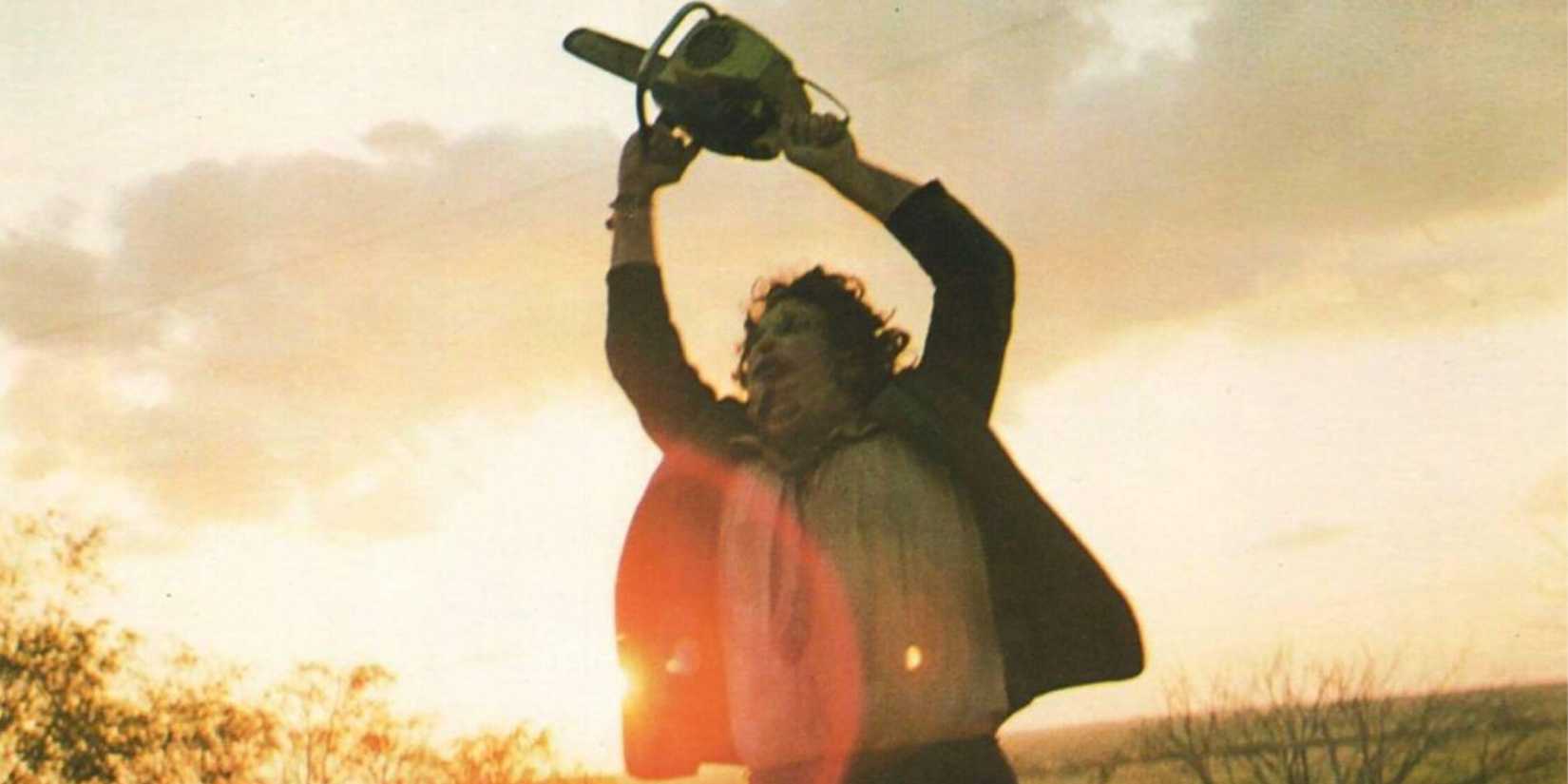 Image via Bryanston Distributing Company
With a title like The Texas Chain Saw Massacre, a tagline probably wasn’t even necessary. Just the name of Tobe Hooper’s slasher classic conveys a sweaty, gruesome experience. But the marketing line – coupled with the film’s iconic poster, which features villain Leatherface about to attack a victim with his iconic tool – pushes the dread even further, implying that its device of death is going to lead to a horrific end.
Those who’ve seen Hooper’s film know that what’s implied is much more gruesome than what’s actually shown. The movie has a fetid, rotten feel to it and its suspense is nearly unbearable; but the onscreen violence and gore is fairly minimal. But it doesn’t matter; audiences went in primed for something transgressive and terrifying, and the skillful filmmaking made them think they saw much more than what was actually onscreen. It’s why the film is still a genre masterpiece more than 50 years after its release.
6 “The night he came home!” – ‘Halloween’ (1978)
 Image via Compass International Pictures
John Carpenter’s film made an instant icon of Michael Myers and became one of the greatest horror movies ever made. The silent, masked killer embodied dread and evil as he slashed his way through the suburbs of Haddonfield, Illinois. Referred to by some characters as The Boogeyman and by the credits simply as The Shape, he became such an effective figure of terror that when the series tried to move away from him, audiences revolted.
The marketing team must have understood just how memorable Michael Myers would be. Rather than play off the idea of the holiday or make a general reference to terror, the poster sets audiences up for the sheer terror of an iconic slasher. Rarely have italics and an exclamation point been put to such good use – audiences were likely curious about who “he” might be, and terrified to find out. It’s such a memorable tagline that, nearly five decades and countless slashers later, whenever a film fan utters the line, even casual horror fans know who they’re talking about.
5 “If Nancy doesn’t wake up screaming, she won’t wake up at all.” – ‘A Nightmare on Elm Street’ (1984)
 Image via New Line Cinema
Wes Craven’s original nightmare took the relatively grounded world of the slasher movie, which traditionally featured masked men stalking suburbs, and infused it with fantasy and psychological dread. Where most horror victims could hope to run or hide from their monsters – at least until the sequel – Freddy Krueger could even find them in their sleep. There was no escape.
The film’s tagline spells out the premise in stark, horrifying brevity. It’s a rare slasher tag that centers itself on the Final Girl, not the villain – later sequels would base all the marketing around Freddy – and conveys its terrifying premise upfront. Audiences may not have known who Freddy Krueger was when they stopped into the theater; but if they were paying attention to the marketing, they already were prepared that this was a movie designed to deliver screams and that even the characters’ dreams wouldn’t provide a way out.
4 “To keep from fainting, just repeat to yourself, ‘It’s only a movie, it’s only a movie…”” – ‘The Last House on the Left’ (1972)
 Image Credit via American International Pictures (AIP) and Hallmark Releasing
Craven’s debut, The Last House on the Left, actually had three taglines on its original poster. Above a black-and-white photo of a woman dying in the woods was splashed “It rests on 13 acres of earth over the very center of hell.” Next to the photo were the words “Mari, seventeen, is dying. Even for her, the worst is yet to come.” Effective, yes. But even more was the tag in the bottom corner, which promised a traumatizing experience that viewers would not be able to escape.
The marketing ties up the mix of raw anger, visceral terror, and gruesome exploitation that fueled Craven’s grimy and enraging work. A remake of Ingmar Bergman’s The Virgin Spring, it follows two young women who are raped and murdered by a gang of troublemakers, who then find themselves seeking shelter at the home of one of the victim’s parents. Craven’s film was controversial, hated even by master of horror Steven King while beloved by others, and it is not for the faint of heart – its documentary aesthetic dares audiences to look away from the graphic and disturbing violence – and the film’s marketing taps into the idea that the film’s evil feels all too real.
3 “Man is the warmest place to hide. ” – ‘The Thing’ (1982)
 Image via Universal Pictures
John Carpenter’s sci-fi/horror hybrid is, like The Fly, another remake that might surpass its inspiration. Carpenter’s take on The Thing From Another World is a chilly, claustrophobic ride that ups the intensity and the gore as its shapeshifting alien eludes discovery by taking on the presence of its victims. Though a box office disappointment upon release, it’s now considered one of the best horror movies of the 1980s and a high mark for Rob Bottin’s special effects.
The tagline is a clever play on the film’s premise and, like the movie itself, it’s deeply unsettling. It leverages the disturbing image of an alien parasite burrowing deep inside a human, and it also evokes the frigid setting in which the carnage unfolds. It’s specific enough that even those who haven’t heard it might quickly be able to intuit which film it’s describing.
2 “Just when you thought it was safe to go back into the water.” – ‘Jaws 2’ (1978)
 Image by Federico Napoli
 There’s no question that Jaws is the superior movie, and the tagline of Steven Spielberg’s original (“It is as if God created the devil and gave him jaws”) is pretty good itself. But while Jaws 2 might be the lesser movie, its marketing tag is one of the greatest, and has become one of the most copied and parodied taglines in cinema history.
The marketing hook builds on the panic of the ocean that consumed many viewers after seeing Spielberg’s film. The dark, wry humor of the tag sets up a return to Amity Island and reminds viewers of the visceral reaction they had to the first movie. It also subtly plays into the “here we go again” element that would plague the sequels – although it’s worth noting that while the Jaws sequels are largely terrible, both Jaws 3-D (“The third dimension is terror”) and Jaws: The Revenge (“This time, it’s personal”) also have pretty fantastic tags. Maybe the marketers should have written the scripts.
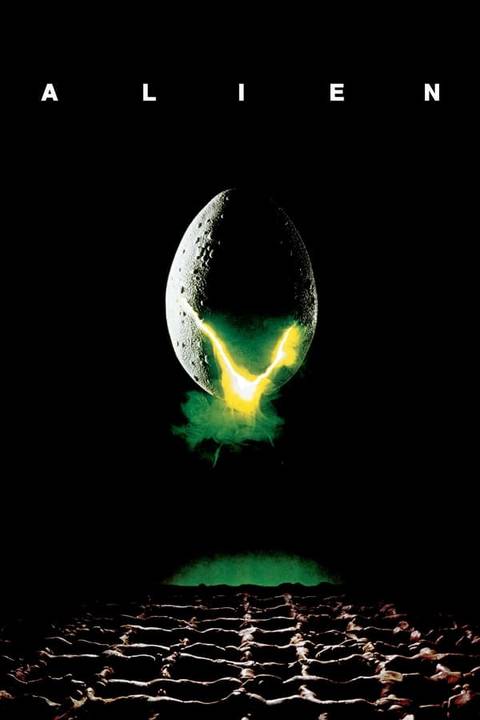
1 “In space no one can hear you scream.” – ‘Alien’ (1979)
Ridley Scott’s Alien is full of terrors. There’s the nightmarish design of the xenomorph. The body horror of the chest burster sequence. The tense searches down claustrophobic corridors. It’s one of the scariest movies ever made, with one of the most iconic creature designs and most memorable horror sequences of any film ever made.
And the horror all started with its marketing. The film’s legendary trailer is a nerve-wracking rush of fast-paced images and loud noises; just when it hits its peak, the sound drops out and the tagline appears over silence. The tag also appeared on the film’s posters. It’s effective, hinting at the terrors awaiting audiences and drawing on the existential horror of the horrors and isolation of outer space. It’s possibly the most memorable movie tag of all time.
Collider Exclusive · Sci-Fi Survival Quiz Which Sci-Fi World Would You Survive? The Matrix · Mad Max · Blade Runner · Dune · Star Wars
Five universes. Five completely different ways the future went wrong — or sideways, or up in flames. Only one of them is the world your instincts were built for. Eight questions will figure out which dystopia, galaxy, or desert wasteland you'd actually make it out of alive.
💊The Matrix
🔥Mad Max
🌧️Blade Runner
🏜️Dune
🚀Star Wars
TEST YOUR SURVIVAL →
01
You sense something is deeply wrong with the world around you. What do you do? The first instinct is often the truest one.
APull on every thread until I understand the system — then figure out how to break it. BStop asking questions and start stockpiling — food, fuel, weapons. Questions don't keep you alive. CKeep my head down, observe carefully, and trust no one until I know who's pulling the strings. DStudy the patterns. Every system has a rhythm — learn it, and you learn how to survive it. EFind the people fighting back and join them. You can't fix a broken galaxy alone.
NEXT QUESTION →
02
In a world of scarcity, what resource do you guard most fiercely? What we protect reveals what we believe survival actually requires.
AKnowledge. If you understand the system, you don't need resources — you can generate them. BFuel. Everything else — movement, power, escape — runs on it. CTrust. In a world of fakes and informants, a truly reliable ally is rarer than any commodity. DWater. And after water, information — the two things empires are truly built on. EShips and credits. The galaxy is big — you survive it by being able to move through it freely.
NEXT QUESTION →
03
What kind of threat keeps you up at night? Fear is useful data — if you're honest about what you're actually afraid of.
AThat reality itself is a lie — that everything I experience has been constructed to keep me compliant. BA raid. No warning, no mercy — just the roar of engines and then nothing left. CBeing identified. Once someone with power decides you're a problem, you're already out of time. DBeing outmanoeuvred — losing a political game I didn't even know I was playing. EThe Empire tightening its grip until there's nowhere left to run.
NEXT QUESTION →
04
How do you deal with authority you don't trust? Every dystopia has a power structure. Your approach to it determines everything.
ASubvert it from the inside — learn its rules well enough to weaponise them against it. BIgnore it and stay out of its reach. The further from any power structure, the better. CAppear to comply while doing exactly what I need to do. Visibility is the enemy. DManoeuvre within it carefully. You can't beat a system you refuse to understand. EResist openly when I have to. Some things are worth the risk of being seen.
NEXT QUESTION →
05
Which environment could you actually endure long-term? Survival isn't just tactical — it's physical, psychological, and very much about where you are.
AUnderground bunkers and server rooms — cramped, artificial, but with access to everything that matters. BOpen wasteland — brutal sun, no shelter, constant movement. At least the threat is honest. CA dense, rain-soaked city where you can disappear into the crowd and nobody asks questions. DMerciless desert — extreme heat, no water, and something enormous living beneath the sand. EThe fringe — backwater planets and busy spaceports where the Empire's attention rarely reaches.
NEXT QUESTION →
06
Who do you want in your corner when things fall apart? The company you keep is the clearest signal of who you actually are.
AA tight crew of believers who've seen behind the curtain and have nothing left to lose. BOne or two people I'd trust with my life. Any more than that and someone talks. CNobody, ideally. Alliances are liabilities. I work alone unless I have no choice. DA community bound by shared hardship and mutual survival — people who need each other to last. EA ragtag team with wildly different skills and total commitment when it counts.
NEXT QUESTION →
07
Where do you draw the line — if you draw one at all? Every survivor eventually faces a moment that tests what they're actually made of.
AI won't harm the innocent — even the ones who'd report me without hesitation. BI do what I have to to protect the people I've chosen. Everything else is negotiable. CThe line shifts depending on who's asking and what's at stake. DI draw a long-term line — nothing that compromises my people's future, even if it'd help now. ESome lines, once crossed, can't be uncrossed. I know which ones they are.
NEXT QUESTION →
08
What would actually make survival worth it? Staying alive is one thing. Having a reason to is another.
AWaking others up — dismantling the illusion so no one else has to live inside it. BFinding somewhere — or someone — worth protecting. A reason to keep moving. CAnswers. Understanding what I am, what any of this means, before time runs out. DLegacy — shaping the future in a way that outlasts me by generations. EFreedom — for myself, for others, for every world still living under someone else's boot.
REVEAL MY WORLD →
Your Fate Has Been Calculated You'd Survive In…
Your answers point to the world your instincts were built for. This is the universe your temperament, your survival instincts, and your particular brand of stubbornness were made for.
The Matrix
You took the red pill a long time ago — probably before anyone offered it to you. You're a systems thinker who can't help but notice the seams in things.
- You're drawn to understanding how the system works before figuring out how to break it.
- You'd find the Resistance, or it would find you — your instinct for spotting constructed realities is the machines' worst nightmare.
- You function best when you have access to information and the freedom to act on it.
- The Matrix built an airtight prison. You'd be the one probing the walls for the door.
Mad Max
The wasteland doesn't reward the clever or the well-connected — it rewards those who are hard to kill and harder to break. That's you.
- You don't need comfort, community, or a cause larger than the next horizon.
- You need a vehicle, a clear threat, and enough fuel to outrun it — and you're good at all three.
- You are unsentimental enough to survive that world, and decent enough — just barely — to be something more than another raider.
- In the wasteland, that distinction is everything.
Blade Runner
You'd survive here because you know how to exist in moral grey areas without losing yourself completely.
- You read people accurately, keep your circle small, and ask the questions others prefer not to answer.
- In a city where humanity is a legal designation rather than a feeling, you hold onto something that keeps you functional.
- You're not a hero. But you're not lost, either.
- In Blade Runner's world, that distinction is everything.
Dune
Arrakis is the most hostile environment in the known universe — and you are precisely the kind of person it rewards.
- Patience, discipline, and political awareness are your core strengths — and on Arrakis, they're survival tools.
- You understand that the long game matters more than any single victory.
- Others come to Dune and are consumed by it. You'd learn its logic and earn its respect.
- In time, you wouldn't just survive Arrakis — you'd begin to reshape it.
Star Wars
The galaxy far, far away is vast, loud, and in a constant state of violent political upheaval — and you wouldn't have it any other way.
- You find meaning in being part of something larger than yourself — a cause, a crew, a rebellion.
- You'd gravitate toward the Rebellion, or the fringes, or whatever pocket of the galaxy still believes the Empire's grip can be broken.
- You fight — not because you have to, but because standing aside isn't something you're capable of.
- In Star Wars, that willingness is what makes all the difference.
↻ RETAKE THE QUIZ
Alien
Release Date June 22, 1979
Runtime 117 Minutes
Writers Dan O'Bannon, Ronald Shusett





 English (US) ·