
 Image via Warner Bros.

Published Apr 13, 2026, 8:42 PM EDT
Luc Haasbroek is a writer and videographer from Durban, South Africa. He has been writing professionally about pop culture for eight years. Luc's areas of interest are broad: he's just as passionate about psychology and history as he is about movies and TV. He's especially drawn to the places where these topics overlap.
Luc is also an avid producer of video essays and looks forward to expanding his writing career. When not writing, he can be found hiking, playing Dungeons & Dragons, hanging out with his cats, and doing deep dives on whatever topic happens to have captured his interest that week.
Sign in to your Collider account
The 1980s were a solid decade for horror. It was a time when filmmakers pushed boundaries, experimented with tone, and redefined what the genre could be. Bold ideas and gory practical effects were the order of the day. Beneath the blood and spectacle, however, the best of these movies tapped into deeper themes or expanded the genre's stylistic possibilities.
What defines the true masterpieces of 1980s horror isn’t just their shock value, but their staying power. Whether absurd or restrained, comedic or dead-serious, the titles on this list are still chillingly effective all these decades later.
10 'The Beyond' (1981)
 Image via Medusa Distribuzione
“You’re going to die… and there’s nothing you can do about it." The Beyond is probably the best movie by madcap Italian maestro Lucio Fulci. It's about a woman (Catriona MacColl) who inherits a dilapidated hotel in Louisiana, only to discover that it sits atop one of the seven gateways to Hell. Soon, a series of increasingly grotesque and inexplicable events begins to unfold, pulling her into a nightmare that defies all logic.
The film operates less like a traditional narrative and more like a descent into pure horror imagery, where cause and effect become meaningless. The violence is graphic, almost confrontational, but it’s the atmosphere that lingers, a sense that reality itself is unraveling. Then there are the horror sequences themselves, which are among the most infamous in the genre. In particular, Fulci’s use of practical effects is unflinching, often pushing into grotesque territory that feels almost excessive, but perfectly matches the themes.
9 'Pet Sematary (1989)
 Image via Paramount Pictures
“Sometimes dead is better.” In Pet Sematary, a doctor named Louis Creed (Dale Midkiff) moves his family to a rural town where he discovers a mysterious burial ground that has the power to bring the dead back to life. What begins as a desperate act of grief soon reveals itself to be a terrible mistake. The premise is simple, but its implications are profound. While the plot is creepy and compelling, Stephen King uses it as a vehicle to explore loss and the dangers of refusing to accept reality.
In other words, the story packs real emotional weight. It forces the audience into an uncomfortable position, where you understand exactly why the wrong decision is made. That said, some of the imagery is fantastically grim, too. The resurrected figures are not simply monsters: they are wrong, distorted, hollow versions of what they once were.
8 'An American Werewolf in London' (1981)
 Image via Universal Pictures
“Stay on the road. Keep clear of the moors.” This banger from John Landis was a milestone for comedy-horror. It starts with two American backpackers (David Naughton and Griffin Dunne) traveling through England, where they are attacked by a mysterious creature. One is killed, while the other survives, only to begin experiencing disturbing visions and transformations that suggest something far worse.
From here, the film walks a tonal tightrope that few horror movies manage, shifting from humor to outright nightmare in a way that feels unpredictable and deeply unsettling. The dialogue pivots between lighthearted banter and existential dread, the protagonist's metamorphosis is both silly and horrifying. Indeed, the transformation sequence remains one of the most iconic in horror history, using practical effects to create something both visceral and believable. Decades later, this gem still holds up.
7 'Hellraiser' (1987)
 Image via Entertainment Film Distributors
"We have such sights to show you." Clive Barker's magnum opus, Hellraiser begins when a man (Sean Chapman) opens a mysterious puzzle box that summons the Cenobites, beings from another dimension who blur the line between pleasure and pain. As the consequences unfold, those around him are drawn into a world of unimaginable horror. Barker builds this grisly premise into a unique mythology, one that's as philosophical as it is grotesque.
Rather than just hitting us with blood and gore, Hellraiser delves deep into themes of desire, obsession, and the limits of human experience, presenting pain and pleasure as intertwined forces. In this regard, the Cenobites are not traditional villains, but entities governed by their own logic, making them all the more unsettling. All in all, this is a very intelligent horror movie that sacrifices neither style nor scariness.
6 'Poltergeist' (1982)
 Image via MGM
“They’re here.” Poltergeist represented the formidable creative team-up of Steven Spielberg and Texas Chainsaw Massacre's Tobe Hooper, and the results were terrific. In Poltergeist, a suburban family begins experiencing strange and increasingly violent paranormal activity in their home, culminating in the disappearance of their young daughter into another dimension. From here, the movie blends family drama with supernatural frights in a way that feels both accessible and deeply unsettling.
In other words, this is blockbuster horror done right. The film’s use of domestic space is key to its power. Bedrooms, kitchens, and closets, places associated with comfort and routine, become sites of terror. The image of Carol Anne (Heather O'Rourke) sitting in front of a flickering television, communicating with unseen forces, is iconic precisely because it feels so plausible. Likewise, the steady pacing allows the tension to build gradually, escalating from small disturbances to full-scale terror.
5 'Evil Dead II' (1987)
 Image via New Line Cinema
“Groovy.” The first Evil Dead was great, but Sam Raimi significantly upped the ante with the sequel, delivering one of the most creative and energetic horror movies of all time. Bruce Campbell turns in a legendary performance as the iconic Ash Williams, returning to the cursed cabin in the woods, where an ancient book unleashes demonic forces that possess the living and twist reality into something grotesque and absurd.
But what begins as a continuation of the original quickly becomes something far stranger. Evil Dead II blends slapstick comedy with relentless terror, creating a tone that feels completely unique. The camera itself seems possessed, swooping and crashing through the environment with chaotic energy. Yet it's Campbell's manic performance that shines the most. Ash’s descent into madness (fighting his own possessed hand, for instance) ensured his place in the pantheon of all-time great horror protagonists.
4 'A Nightmare on Elm Street' (1984)
 Image via New Line Cinema
“Whatever you do… don’t fall asleep.” One of the quintessential slashers, A Nightmare on Elm Street focuses on a group of teenagers being stalked in their dreams by Freddy Krueger (Robert Englund), a burned killer who can harm them in the dream world, with consequences that carry over into reality. As they try to stay awake, the boundary between dream and waking life begins to collapse.
The film’s dream sequences allow for surreal imagery and unpredictable logic, making each encounter feel unstable. These scenes are inventive and memorable, with killer use of practical effects, like Freddy’s elongated arms in the alley or the phantasmagoric bedroom sequences. More than a few of these moments have since become iconic. Freddy himself is a uniquely disturbing villain, ridiculously powerful and visually striking, but alloying all that menace with dark humor.
3 'Possession' (1981)
 Image via Gaumont Distribution
“I can’t live without you… and I can’t live with you.” Possession leans into more emotional, psychological territory, featuring Sam Neill as a man who returns home to Berlin to discover that his wife (Isabelle Adjani) wants a divorce. He begins investigating her behavior, only to uncover something far more disturbing than he feared. What follows is a descent into madness that blurs the line between mental breakdown and supernatural horror.
Here, director Andrzej Żuławski constructs a narrative that is as emotionally raw as it is surreal, with performances that push the boundaries of realism. Indeed, Adjani’s infamous subway scene remains one of the most unsettling moments in cinema, capturing a kind of emotional violence that is difficult to articulate. Ultimately, Possession suggests that the most terrifying things are not external monsters, but the forces within us that can grow beyond our control.
2 'The Thing' (1982)
 Image via Universal Pictures
“Nobody trusts anybody now… and we’re all very tired.” In The Thing, a group of researchers in Antarctica encounters a shape-shifting alien that can perfectly imitate any living being. Paranoia soon runs rampant, and they struggle to determine who is still human and who is not. The film’s isolated setting amplifies the sense of dread, turning the environment itself into an enemy.
Here, John Carpenter flexes his mastery of tension and atmosphere, conjuring up a palpable feeling of entrapment. There is nowhere to run, no outside help, no escape. In this, the director is assisted by brilliant practical effects courtesy of the legendary Rob Bottin. The creature doesn’t have a single form. Rather, it mutates, distorts, and reshapes itself in ways that feel chaotic and unnatural. Limbs stretch, faces split, bodies fuse together into grotesque hybrids. The lack of a stable form makes the creature feel truly alien, something that cannot be understood or contained.
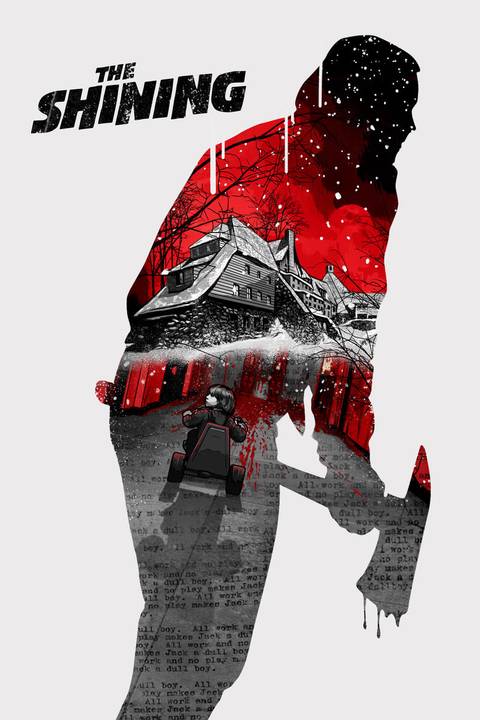
1 'The Shining' (1980)
 Image via Warner Bros.
“Here’s Johnny!” The Shining is the chilling product of a Stephen King/Stanley Kubrick mind meld. Jack Nicholson delivers one of his most iconic performances here as Jack Torrance, who takes a job as the winter caretaker of an isolated hotel, bringing his family with him. As the months pass, the hotel’s sinister presence begins to affect his mind, leading to a terrifying breakdown. The Overlook Hotel becomes a character in its own right: vast, symmetrical, and quietly oppressive.
Visually, Kubrick’s direction is precise and controlled. The use of long tracking shots, meticulous compositions, and stark lighting creates a sense of order that contrasts with the growing chaos of the story. Rather than relying on constant shocks, the film builds dread through repetition, silence, and subtle variations. All this adds up to a movie that feels endlessly interpretable, with much to say about cycles of violence and the weight of the past.
Collider Exclusive · Oscar Best Picture Quiz
Which Oscar Best Picture
Is Your Perfect Movie?
Parasite · Everything Everywhere · Oppenheimer · Birdman · No Country
Five Oscar Best Picture winners. Five completely different visions of what cinema can be — and what it can do to you. One of them is the film that was made for the way your mind works. Ten questions will figure out which one.
🪜Parasite
🌀Everything Everywhere
☢️Oppenheimer
🐦Birdman
🪙No Country for Old Men
FIND YOUR FILM →
01
What kind of film experience do you actually want? The best movies don't just entertain — they leave something behind.
ASomething that pulls the rug out — that makes me think I'm watching one kind of film and then reveals I'm watching another entirely. BSomething overwhelming — funny, sad, absurd, and genuinely moving, all at once. CSomething grand and weighty — a film that makes me feel the full scale of what I'm watching. DSomething formally daring — a film that pushes what cinema can even do. ESomething lean and relentless — pure tension with no wasted frame.
NEXT QUESTION →
02
Which idea grabs you most in a film? Great films are driven by a central obsession. What's yours?
AClass, inequality, and what people are willing to do when desperation meets opportunity. BIdentity, family, and the chaos of trying to hold your life together when everything is falling apart. CGenius, moral responsibility, and the catastrophic weight of a decision you can never take back. DEgo, legacy, and the terror of becoming irrelevant while you're still alive to watch it happen. EEvil, chance, and whether moral order actually exists or if we just tell ourselves it does.
NEXT QUESTION →
03
How do you like your story told? Form is content. The way a story is shaped changes what it means.
AGenre-twisting — I want it to start in one lane and migrate into something completely different. BMaximalist and genre-blending — comedy, action, drama, sci-fi, all in one ride. CEpic and non-linear — cutting between timelines, building a mosaic of cause and consequence. DA single unbroken flow — I want to feel like I'm living it in real time, no cuts to safety. ESpare and precise — every scene doing exactly what it needs to do and nothing more.
NEXT QUESTION →
04
What makes a truly great antagonist? The opposition defines the protagonist. What kind of opposition fascinates you?
AA system — invisible, structural, and almost impossible to fight because it has no single face. BThe self — the ways we sabotage, abandon, and fail the people we love most. CHistory — the unstoppable momentum of events that no single person can stop or redirect. DThe industry — the machinery of culture that chews up talent and spits out irrelevance. EPure, implacable evil — a force so certain of itself it becomes almost philosophical.
NEXT QUESTION →
05
What do you want from a film's ending? The final note is the one that lingers. What do you want it to sound like?
AShock and inevitability — a conclusion that recontextualises everything that came before it. BEarned emotion — I want to cry, laugh, and feel genuinely hopeful, even if the world is a mess. CDevastation and grandeur — an ending that makes me sit in silence for a few minutes after. DAmbiguity — something that leaves enough open that I'm still thinking about it days later. EBleakness — an honest refusal to pretend the world is tidier than it actually is.
NEXT QUESTION →
06
Which setting pulls you in most? Where a film takes place shapes everything — mood, stakes, what's even possible.
AA gleaming modern city with a hidden underside — beauty masking rot, wealth masking desperation. BA collapsing suburban life that opens onto something infinite — the multiverse of a single ordinary person. CThe corridors of power and science at a world-historical turning point — where decisions echo for decades. DThe grimy, alive chaos of New York and Hollywood — fame as both destination and trap. EVast, indifferent landscape — desert and highway where violence arrives without warning or reason.
NEXT QUESTION →
07
What cinematic craft impresses you most? Every great film has a signature — a technical or artistic element that makes it unmistakable.
AProduction design and mise-en-scène — every frame composed to carry meaning beneath the surface. BEditing and tonal control — the ability to move between registers without losing the audience. CScore and sound design — music that becomes inseparable from the dread and awe of what you're watching. DCinematography as performance — the camera not recording events but participating in them. ESilence and restraint — what's left unsaid and unshown doing more work than any dialogue could.
NEXT QUESTION →
08
What kind of main character do you root for? The protagonist is the lens. Who you choose to follow says something about you.
ASomeone smart and resourceful who makes increasingly dangerous decisions under pressure. BSomeone overwhelmed and ordinary who turns out to be capable of something extraordinary. CA brilliant, tortured figure whose gifts and flaws are inseparable from each other. DA self-destructive artist whose ego is both their superpower and their undoing. EA quiet, principled person trying to make sense of a world that has stopped making sense.
NEXT QUESTION →
09
How do you feel about a film that takes its time? Pace is a choice. Some films sprint; others let tension accumulate slowly, deliberately.
AI love a slow build when I know the payoff is going to be seismic — patience for a devastating reveal. BGive me relentless momentum — I want to feel breathless and emotionally spent by the end. CEpic runtime doesn't scare me — if the material demands three hours, give me three hours. DI want it to feel propulsive even when nothing is technically happening — restless energy throughout. EDeliberate and unhurried — I want dread to accumulate in the spaces between the action.
NEXT QUESTION →
10
What do you want to feel walking out of the cinema? The best films leave a mark. What kind of mark do you want?
AUnsettled — like I've just seen something I can't fully explain but can't stop thinking about. BMoved and energised — like the film reminded me what actually matters and gave me something to hold onto. CHumbled — like I've been in the presence of something genuinely important and overwhelming. DExhilarated — like I've just seen cinema doing something it's never quite done before. EHaunted — like a cold, quiet dread that stays with me for days.
REVEAL MY FILM →
The Academy Has Decided Your Perfect Film Is…
Your answers have pointed to one Oscar Best Picture winner above all others. This is the film that was made for the way your mind works.
Parasite
You are drawn to films that operate on multiple levels simultaneously — that begin in one genre and quietly, brilliantly migrate into another. Bong Joon-ho's Parasite is a film about class, desire, and the architecture of inequality that manages to be darkly funny, deeply suspenseful, and genuinely shocking across a single extraordinary running time. Your instinct is for cinema that hides its true intentions until the moment it's ready to reveal them. Parasite is exactly that — a film that rewards close attention and punishes assumptions, right up to its devastating final image.
Everything Everywhere All at Once
You want it all — and this film gives you all of it. The Daniels' Everything Everywhere All at Once is one of the most maximalist films ever made: action comedy, multiverse sci-fi, family drama, existential crisis, and a genuinely earned emotional core that sneaks up on you amid the chaos. You are someone who responds to ambition, who doesn't want cinema to choose between being entertaining and being meaningful. This film refuses that choice entirely. It is overwhelming by design, and its overwhelming nature is precisely the point — because the feeling of being crushed by infinite possibility is exactly what it's about.
Oppenheimer
You are drawn to cinema on a grand scale — films that understand history not as a backdrop but as a force, and that place their characters inside that force and watch what happens. Christopher Nolan's Oppenheimer is a film about the terrifying gap between what we can do and what we should do, told with the full weight of one of the most consequential moments in human history behind it. You want your films to feel important without feeling self-important — to earn their ambition through sheer craft and the gravity of their subject. Oppenheimer does exactly that. It is enormous, complicated, and refuses easy comfort.
Birdman
You are drawn to films that foreground their own construction — that make the how of the filmmaking part of the what it's about. Alejandro González Iñárritu's Birdman, shot to appear as a single continuous take, is cinema examining itself through the cracked mirror of a fading actor's ego. You respond to formal daring, to the feeling that a film is doing something that probably shouldn't be possible. Michael Keaton's performance and Emmanuel Lubezki's restless camera create something genuinely unlike anything else — a film that is simultaneously about creativity, relevance, self-destruction, and the impossibility of ever truly knowing if your work means anything at all.
No Country for Old Men
You are drawn to cinema that trusts silence, that refuses to explain itself, and that treats dread as a form of meaning. The Coen Brothers' No Country for Old Men is a film about the arrival of a new kind of evil — implacable, arbitrary, and utterly indifferent to the moral frameworks we use to make sense of the world. It is one of the most formally controlled films ever made, and its controlled restraint is what makes it so terrifying. You want your films to haunt you, not comfort you. You are not interested in resolution if resolution would be dishonest. No Country for Old Men is honest in a way that most cinema never dares to be.
↻ RETAKE THE QUIZ
The Shining
Release Date June 13, 1980
Runtime 144 minutes
Director Stanley Kubrick
-

-

Shelley Duvall
Wendy Torrance






 English (US) ·