
Gangster cinema has always been less about crime and more about identity: how power reshapes a person, how loyalty corrodes morality, and how ambition quietly hollows out the soul. The greatest gangster characters embody different answers to the same question: what does it cost to live by a code in a world built on violence and betrayal?
With this in mind, this list looks back at some of the most memorable gangsters in the last century of cinema. Some of these figures are tragic, others monstrous, and a few almost mythic, but all of them reveal something essential and have shaped how crime stories are understood throughout cinematic history.
10 Lefty Ruggiero (Al Pacino) - 'Donnie Brasco’ (1997)
 Image via TriStar Pictures
"Forget about it." After two legendary gangster performances in The Godfather movies and Scarface, Al Pacino put yet more intriguing spins on the archetype in the 1990s. One of them is his role as Lefty Ruggiero in Donnie Brasco. He's one of the most heartbreaking gangster characters ever put on screen because he is defined not by ambition, but by failure. The plot of the movie follows an undercover FBI agent who infiltrates the New York Mafia, slowly gaining the trust of the aging, low-level mobster who becomes his mentor.
What makes Lefty so compelling is his vulnerability. He's a man who has given his entire life to the mob and received almost nothing in return: no promotion, no protection, no respect. Yet he clings to the rituals of gangster life because they are all he has left. Unlike flashier mob figures, Lefty doesn’t crave power; he craves belonging. The tragedy is that Lefty’s faith is misplaced, and the system he defends is already finished with him.
9 Carlito Brigante (Al Pacino) - 'Carlito’s Way’ (1993)
 Image via Universal Pictures
"Every day above ground is a good day." Carlito's Way saw Al Pacino and Brian De Palma teaming up once again, but in a more muted, minor key compared to the incendiary mayhem of Scarface. Carlito (Pacino) is a former gangster released from prison who is determined to leave crime behind and start over. Unlike most gangster protagonists, Carlito doesn’t want the throne; he wants escape.
What makes him such a powerful character is the clarity of his self-awareness. He knows the rules, knows the traps, and understands that survival depends on walking away. Yet the world refuses to let him go. Friends pull him back in, enemies remember old debts, and the past refuses to stay buried. Carlito’s fatal flaw is that his redemption is only partial. He has changed internally, but not structurally. The system he belongs to does not allow clean exits. In this regard, his optimism is almost childlike, making his downfall feel especially cruel.
8 Tommy DeVito (Joe Pesci) - 'Goodfellas’ (1990)
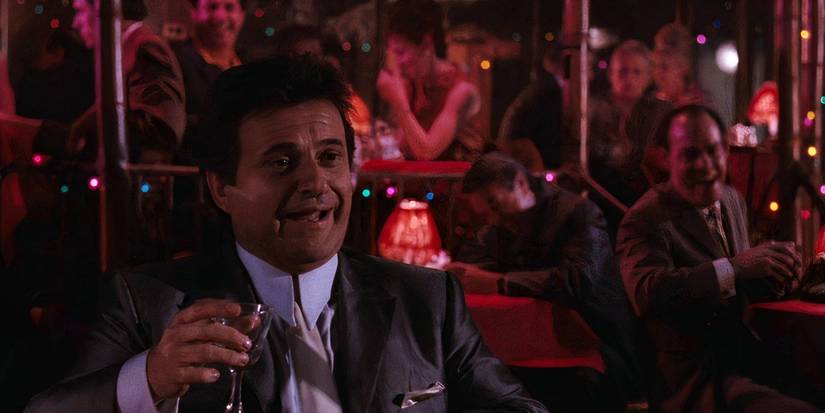 Image via Warner Bros.
"Funny how? Like I’m a clown? I amuse you?" Tommy DeVito (Joe Pesci) is pure volatility. Goodfellas charts the rise and fall of a group of mobsters through the eyes of an insider (Ray Liotta), and Tommy is the most dangerous presence in that world. What makes him memorable is unpredictability. Rather than operating by strategy or long-term ambition, Tommy acts on impulse, ego, and perceived disrespect. One moment he’s charming and hilarious, the next he’s lethal. Violence is simply a reflex for him, ingrained by years of living in a cutthroat world.
That instability turns every scene into a threat. Tommy's lack of restraint ultimately makes him a liability rather than an asset. He cannot adapt, cannot compromise, and cannot imagine consequences. In this, Tommy embodies a common character defect in gangster films: he equates respect with fear. In the end, his deep insecurity leads not to dominance, but to self-destruction.
7 Neil McCauley (Robert De Niro) - 'Heat’ (1995)
 Image via Warner Bros. Pictures
"Don’t let yourself get attached to anything you are not willing to walk out on in thirty seconds flat." Neil McCauley (Robert De Niro) is the archetype of the professional criminal. He's a master thief whose life is governed by discipline, routine, and a strict personal code. Unlike impulsive criminals, McCauley values control above all else. His defining rule (never become attached to anything you can’t abandon) shapes every decision he makes.
What makes him such a great character is the tension between that philosophy and his latent humanity. McCauley is calm, intelligent, and deeply lonely. He understands that intimacy is a liability in his profession, yet he still yearns for connection. When he finally breaks his rule, it costs him everything. Neil McCauley embodies a version of gangster masculinity built on isolation and self-control, and Heat shows how that version ultimately collapses under the weight of human desire.
6 Tony Montana (Al Pacino) - 'Scarface' (1983)
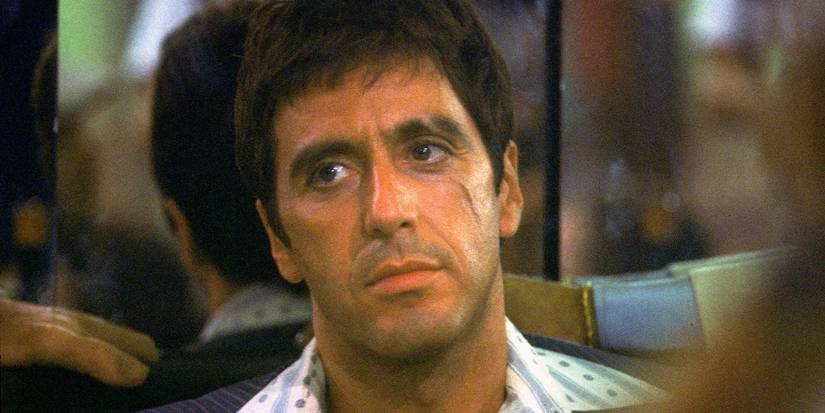 Image via Universal Studios
"Say hello to my little friend!" Tony Montana (Pacino) is gangster excess incarnate. Scarface tracks his rise from penniless immigrant to cocaine kingpin, fueled by ambition, rage, and an unshakable belief in destiny. Tony is not subtle, strategic, or patient but loud, reckless, and driven by appetite. His strengths and his flaws are inextricably linked, two sides of the same coin. While his hunger is limitless, so is his paranoia. Power does not stabilize him; it amplifies his worst instincts.
Tony confuses dominance with respect and wealth with fulfillment, leaving him isolated at the peak of his empire. Success here means hunkering down in an empty mansion armed with guns and cocaine, but bereft of allies and surrounded by armed men who want you dead. His fate makes for a searing indictment of self-mythology. He believes his own legend, and that belief destroys him. As a character, Tony endures because he represents ego, violence, and the dark side of capitalism fused into a single, volatile personality.
5 Keyser Söze (Kevin Spacey) - ‘The Usual Suspects’ (1995)
 Image via Gramercy Pictures
"The greatest trick the Devil ever pulled was convincing the world he didn’t exist." Keyser Söze is less a typical gangster character than a myth, but that myth reshaped how crime characters are written. In The Usual Suspects, the plot revolves around a group of criminals brought together for a mysterious job, framed through an interrogation that slowly constructs Söze’s legend. Kevin Spacey delivers a brilliant performance as Verbal Kint, the meek, anxious facade behind which the real Söze operates.
Söze is interesting because his power lies entirely in perception. He is terrifying not because of what he does onscreen, but because of what others believe he has done. Söze understands that fear is more effective than visibility, and anonymity is the ultimate shield. The movie's big final reveal is fantastic on first viewing, and it's only believable because Spacey's performance is so good. He sells the idea that Verbal has been misdirecting us this whole time.
4 Al Capone (Robert De Niro) - ‘The Untouchables’ (1987)
 Image via Paramount Pictures
"You got nothing!" As a whole, The Untouchables falls a little short of its potential, but De Niro's performance in it as Al Capone is great. He is gangster power writ large. His Capone is not a shadowy figure or a reluctant criminal; rather, he is brazen, theatrical, and openly corrupt. Capone treats violence as policy and intimidation as governance. His charisma is inseparable from his cruelty, and his public persona is as carefully curated as any politician’s.
In the process, the movie positions him not just as a criminal, but as a symbol of how systems fail when power becomes untouchable. Capone serves as a vessel for institutional rot. As a gangster character, Capone represents the moment where crime and power become indistinguishable. However, even this formidable edifice cannot last. Capone believes himself invincible, and for much of the film, he is. That arrogance makes his eventual downfall feel less like justice and more like inevitability.
3 Jules Winnfield (Samuel L. Jackson) - ‘Pulp Fiction’ (1994)
 Image via Miramax Films
"Ezekiel 25:17." Jules Winnfield (Samuel L. Jackson) stands apart from most gangster characters because he is defined by transformation rather than destruction. He's a hitman navigating the criminal underworld with confidence, humor, and ritualized violence. That is, until a near-death experience forces Jules to reevaluate his identity and his role in the world. Unlike most crime movie characters, Jules becomes self-aware and chooses change, in contrast to Vincent (John Travolta), who refuses to believe that they were spared by divine intervention, and finds himself gunned down a few scenes later.
Jules reframes the genre’s fatalism, suggesting that insight, not punishment, can end the cycle. Character development aside, Jules is simply a very unique and entertaining character, combining intimidation and effortless cool. Pulp Fiction gives him countless fantastic lines, and Jackson delivers them all with relish. Watching him in his standoff with Tim Roth's robber never gets old.
2 Michael Corleone (Al Pacino) - ‘The Godfather’ (1972)
 Image via Paramount Pictures
"It’s not personal, Sonny. It’s strictly business." Michael Corleone (Pacino) is the most complete gangster character ever written. Although The Godfather is a sprawling Shakespearean drama about an entire family, the heart of the story is Michael’s transformation from reluctant outsider to ruthless leader. His descent is gradual, almost imperceptible. He does not crave power at first; he accepts it out of duty. However, that power begins to corrode him until his old identity has vanished entirely.
Each choice feels logical, even necessary, until the accumulation reveals a man hollowed out by control. The genius of Pacino's performance in the role is its restraint. He is calm, strategic, and emotionally sealed. Violence becomes administrative, just something that has to be done whether the character likes it or not. By the end, Michael has achieved total dominance at the cost of his humanity. He thought he was taking control of the game when, in fact, it was taking control of him.
1 Vito Corleone (Marlon Brando) - ‘The Godfather’ (1972)
 Image via Paramount Pictures
"I’m gonna make him an offer he can’t refuse." While Michael Corleone's character development is great, his father Vito (Marlon Brando) remains the overall most compelling character in crime cinema. Vito is the ultimate gangster patriarch. In The Godfather, he presides over his criminal empire with patience, ritual, and a carefully managed sense of honor. What sets Vito apart is his belief in balance: he understands power as something that must be distributed and negotiated, not flaunted.
At the same time, Vito is a deeply contradictory figure. His warmth toward the Corleone family exists alongside his capacity for ruthless decision-making. He believes in legacy, not ego, and that belief shapes everything he builds. Yet the film quietly exposes the cost of that philosophy, too. Vito’s system creates successors who are more efficient and less humane. He is the calm before the storm, the version of gangsterdom that makes later brutality and soullessness possible. His "success" seals his son's fate from the start.




![20 Years Later, One of the Best Sitcoms of the 21st Century Returns With Hilarious First Look [Exclusive]](https://static0.colliderimages.com/wordpress/wp-content/uploads/2026/02/malcolm-in-the-middle-life-s-still-unfair-feature.jpg?w=1600&h=900&fit=crop)
 English (US) ·