
First impressions matter, but so do last impressions, and cinema is no exception. The final scene that a film leaves audiences with is crucial in what kind of perception of the movie audiences will walk out of the theater with, and the final shot of a movie is every bit as important. Whether it's scary, funny, symbolic, or simply visually beautiful, a final shot is easily one of the most important parts of any motion picture.
From legendary horror films like The Shining to classic Hollywood dramas like Citizen Kane, several cinematic masterpieces from the 20th century proved just how big of an effect a powerful final shot can have in a movie. These films are widely remembered as some of the best in the art form's history largely because of how they're able to leave the audience with an unforgettable last image.
There are spoilers ahead!
10 'The Shining' (1980)
 Image via Warner Bros. Pictures
There are those who would still confidently call Stanley Kubrick the greatest American filmmaker in history, and it would be hard to blame them. After all, who if not one of the all-time greats could possibly be capable of making a horror movie as legendary as The Shining? Though not particularly faithful to its Stephen King source material, this is nevertheless one of the scariest and most atmospheric horror movies in history.
The Shining is partly also great because it has one of the best final shots in all of horror. It's a slow, lingering zoom into an old photo from an Overlook Hotel party, dated 1921—the thing is, Jack Torrance is featured in it. It's a haunting, powerfully ambiguous way for Kubrick to suggest that Jack has always been tied to the Overlook, setting itself up for theories about some kind of reincarnation or time loop element.
9 'The 400 Blows' (1959)
 Image via Cocinor
It's impossible to talk about the best closing shots of the 20th century and not get into the topic of freeze frames, an editing effect where a single frame is held on screen for several seconds. It's a technique that became widely popular as an ending throughout the 20th century, but as legendary as the final shot of films like Rocky and Butch Cassidy and the Sundance Kid may be, the best freeze frame ending of the 20th century is the one that made the technique mainstream: The 400 Blows.
This ending is a big reason why this is one of the best classic movies from 1959. Ending the film on a freeze frame is a brilliantly thought-provoking decision on François Truffaut's part, trapping Antoine Doinel—and therefore, the audience's perception of him—inside the moment of his biggest uncertainty. Antoine's stare right at the camera ingrains this as one of the most hard-hitting final shots in the history of cinema.
8 'Stalker' (1979)
 Image via Goskino
Andrei Tarkovsky was a great poet with a camera, and it's a tragedy that Stalker's nightmarish production (which involved shooting in toxic areas) ended up causing the cancer that claimed his life at 54 years old. But even still, he left behind one of the most stunning legacies of any filmmaker in history, and constantly proved himself a master of closing shots that stay with the viewer for years after the credits roll. Stalker is perhaps the most notorious example.
This is one of the best sci-fi movies of the last 75 years, and its final shot only cements that status. Tarkovsky was also a master of long shots, and Stalker's final scene is a nine-minute-long, slow-burning, meditatively-paced shot of the Stalker's daughter sitting at a table, using what seems like telekinesis to move a glass while trains rumble by. Visually stunning and thematically powerful, this closing shot forces the viewer to sit with the film's core theme of the tensions between reality and faith.
7 'Planet of the Apes' (1968)
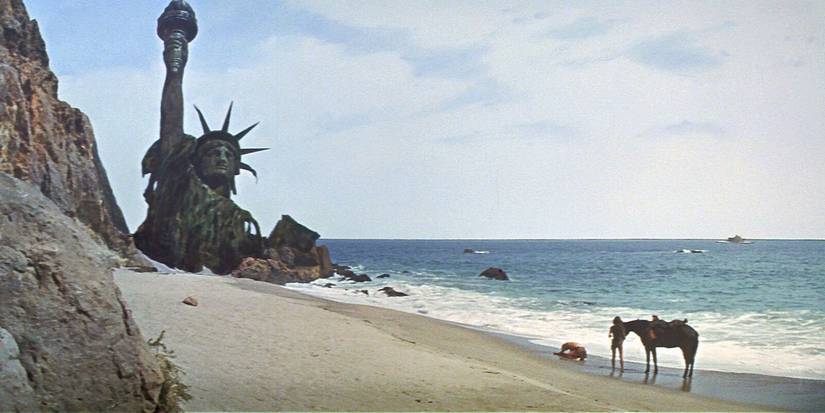 Image via 20th Century Studios
Mixing the prestige and huge budget of A-list Hollywood productions with the pulpy charm typical of B-pictures from its era, Planet of the Apes has aged wonderfully as one of the best sci-fi masterpieces of the 1960s. Even though its iconic final plot twist is nowadays so iconic that virtually no one watching the film for the same time should be as surprised by it as audiences surely were back in '68, it's still one of the greatest finales in the history of the genre.
The final shot that accompanies that ending, too, is the stuff of movie legend. The twist that what viewers had been led to believe was an alien planet is actually a futuristic Earth where apes took over is legendary, and the visual of Taylor falling to his knees at the sight of the destroyed Statue of Liberty by the ocean shore is one of the most unforgettable in genre cinema's history.
6 '2001: A Space Odyssey' (1968)
 Image via MGM
As if any more proof were needed that Stanley Kubrick was an undeniable master of unforgettable final shots, there's also 2001: A Space Odyssey, which may very well be the greatest sci-fi film in history. At the very least, it's one of the best movie masterpieces of the last 60 years, a space opera all about the evolution of human consciousness and humankind's endless friction with technological advancement.
The ending of the film is one of the most mind-bending in all of mainstream science fiction, where Dave travels through a colorful wormhole and is taken by multidimensional alien entities who put him as an exhibit in a sort of zoo. Dave rapidly ages and dies within a matter of what feels like minutes, and is then reborn as a godlike fetus floating through space toward Earth. It's an odd yet irresistibly thought-provoking image, one of the most powerfully surreal final shots in all of 20th-century cinema.
5 'The Searchers' (1956)
 Image via Warner Bros. Pictures
There is no movie genre more quintessentially American than the Western, and throughout all of Hollywood's Golden Age, the genre went through one of the most fascinating transformations that any movie genre has ever undergone. From this transformation came The Searchers, a deconstruction of the genre that explores the darker sides of Manifest Destiny, the American frontier, and the mythical Western hero.
He waits alone on the porch and walks out, unable to find peace in the "civilized world" he helped protect.
Nowhere are The Searchers' core themes clearer or more potently thought-provoking than in its final scene, one of the best Western endings of all time, which is accompanied by a fittingly compelling final shot. Ethan returns his rescued niece to the safety of the Jorgensen homestead, but instead of joining the family, he waits alone on the porch and walks out, unable to find peace in the "civilized world" he helped protect. It's a legendary final shot that perfectly encapsulates the tragedy of the archetype of the Western protagonist, a lonely and violent man who protects civilization but is inherently unfit to live in it.
4 'Sunset Boulevard' (1950)
 Image via Paramount Pictures
The great Billy Wilder, one of the greatest and most immensely influential filmmakers that ever worked during Hollywood's Golden Age, made several of the most important and genre-defining noir films ever. Sunset Boulevard stands tall above most of the genre's best outings, functioning equally well as a gripping noir drama and an intelligent deconstruction of the destructive nature of fame and obsession.
But the thing that the movie is perhaps most famous for is its final shot, and that's for good reason. Having killed Joe and mistaking the arriving police and reporters for a Hollywood film crew, Norma Desmond walks down the stairs and delivers one of the most iconic final lines in film history: "All right, Mr. DeMille, I'm ready for my close-up." This is accompanied by one of the best-acted final shots in all of Classical Hollywood cinema, Gloria Swanson's face of triumphant elasion clashing starkly with the grotesque chaos around her.
3 'Citizen Kane' (1941)
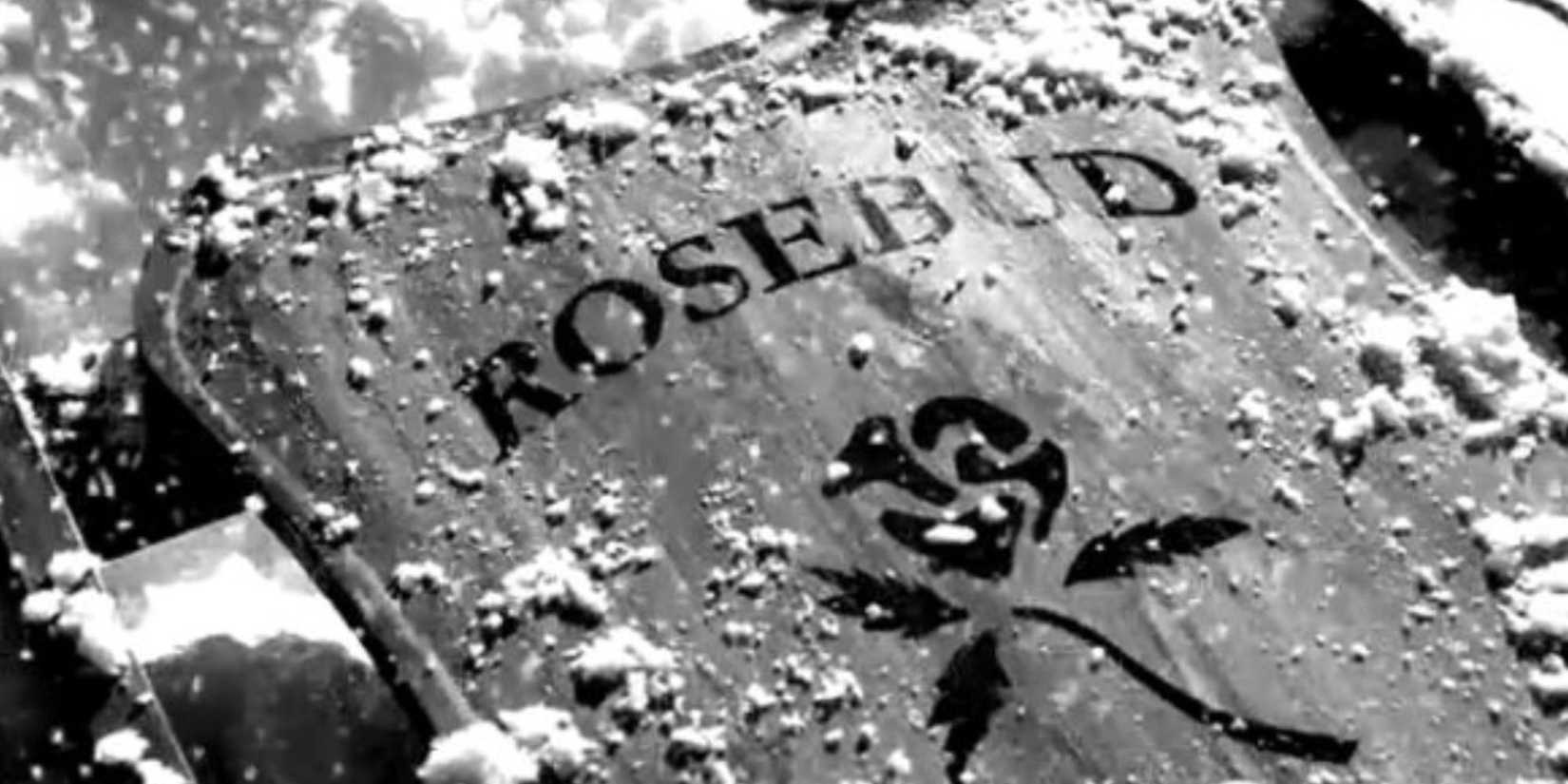 Image via RKO Radio Pictures
There are many who say that Citizen Kane, Orson Welles' powerhouse feature film debut, is still the greatest American film of all time. At the very least, it could very well be the greatest film from Hollywood's Golden Age. But regardless of superlatives, there's no denying that it's an absolute masterpiece, the work of a master filmmaker in full control of his craft.
The final scene and shot of Citizen Kane are a masterclass in how to make a hard-hitting ending that powerfully mirrors the very beginning of the film. It's one of the best final movie shots of all time, finally revealing the central mystery of Rosebud to the audience while keeping it hidden from the characters. It's 100% visual storytelling at its very best, and a poignant encapsulation of the tragedy of Kane's lost childhood.
Collider Exclusive · Oscar Best Picture Quiz
Which Oscar Best Picture
Is Your Perfect Movie?
Parasite · Everything Everywhere · Oppenheimer · Birdman · No Country
Five Oscar Best Picture winners. Five completely different visions of what cinema can be — and what it can do to you. One of them is the film that was made for the way your mind works. Ten questions will figure out which one.
🪜Parasite
🌀Everything Everywhere
☢️Oppenheimer
🐦Birdman
🪙No Country for Old Men
FIND YOUR FILM →
01
What kind of film experience do you actually want? The best movies don't just entertain — they leave something behind.
ASomething that pulls the rug out — that makes me think I'm watching one kind of film and then reveals I'm watching another entirely. BSomething overwhelming — funny, sad, absurd, and genuinely moving, all at once. CSomething grand and weighty — a film that makes me feel the full scale of what I'm watching. DSomething formally daring — a film that pushes what cinema can even do. ESomething lean and relentless — pure tension with no wasted frame.
NEXT QUESTION →
02
Which idea grabs you most in a film? Great films are driven by a central obsession. What's yours?
AClass, inequality, and what people are willing to do when desperation meets opportunity. BIdentity, family, and the chaos of trying to hold your life together when everything is falling apart. CGenius, moral responsibility, and the catastrophic weight of a decision you can never take back. DEgo, legacy, and the terror of becoming irrelevant while you're still alive to watch it happen. EEvil, chance, and whether moral order actually exists or if we just tell ourselves it does.
NEXT QUESTION →
03
How do you like your story told? Form is content. The way a story is shaped changes what it means.
AGenre-twisting — I want it to start in one lane and migrate into something completely different. BMaximalist and genre-blending — comedy, action, drama, sci-fi, all in one ride. CEpic and non-linear — cutting between timelines, building a mosaic of cause and consequence. DA single unbroken flow — I want to feel like I'm living it in real time, no cuts to safety. ESpare and precise — every scene doing exactly what it needs to do and nothing more.
NEXT QUESTION →
04
What makes a truly great antagonist? The opposition defines the protagonist. What kind of opposition fascinates you?
AA system — invisible, structural, and almost impossible to fight because it has no single face. BThe self — the ways we sabotage, abandon, and fail the people we love most. CHistory — the unstoppable momentum of events that no single person can stop or redirect. DThe industry — the machinery of culture that chews up talent and spits out irrelevance. EPure, implacable evil — a force so certain of itself it becomes almost philosophical.
NEXT QUESTION →
05
What do you want from a film's ending? The final note is the one that lingers. What do you want it to sound like?
AShock and inevitability — a conclusion that recontextualises everything that came before it. BEarned emotion — I want to cry, laugh, and feel genuinely hopeful, even if the world is a mess. CDevastation and grandeur — an ending that makes me sit in silence for a few minutes after. DAmbiguity — something that leaves enough open that I'm still thinking about it days later. EBleakness — an honest refusal to pretend the world is tidier than it actually is.
NEXT QUESTION →
06
Which setting pulls you in most? Where a film takes place shapes everything — mood, stakes, what's even possible.
AA gleaming modern city with a hidden underside — beauty masking rot, wealth masking desperation. BA collapsing suburban life that opens onto something infinite — the multiverse of a single ordinary person. CThe corridors of power and science at a world-historical turning point — where decisions echo for decades. DThe grimy, alive chaos of New York and Hollywood — fame as both destination and trap. EVast, indifferent landscape — desert and highway where violence arrives without warning or reason.
NEXT QUESTION →
07
What cinematic craft impresses you most? Every great film has a signature — a technical or artistic element that makes it unmistakable.
AProduction design and mise-en-scène — every frame composed to carry meaning beneath the surface. BEditing and tonal control — the ability to move between registers without losing the audience. CScore and sound design — music that becomes inseparable from the dread and awe of what you're watching. DCinematography as performance — the camera not recording events but participating in them. ESilence and restraint — what's left unsaid and unshown doing more work than any dialogue could.
NEXT QUESTION →
08
What kind of main character do you root for? The protagonist is the lens. Who you choose to follow says something about you.
ASomeone smart and resourceful who makes increasingly dangerous decisions under pressure. BSomeone overwhelmed and ordinary who turns out to be capable of something extraordinary. CA brilliant, tortured figure whose gifts and flaws are inseparable from each other. DA self-destructive artist whose ego is both their superpower and their undoing. EA quiet, principled person trying to make sense of a world that has stopped making sense.
NEXT QUESTION →
09
How do you feel about a film that takes its time? Pace is a choice. Some films sprint; others let tension accumulate slowly, deliberately.
AI love a slow build when I know the payoff is going to be seismic — patience for a devastating reveal. BGive me relentless momentum — I want to feel breathless and emotionally spent by the end. CEpic runtime doesn't scare me — if the material demands three hours, give me three hours. DI want it to feel propulsive even when nothing is technically happening — restless energy throughout. EDeliberate and unhurried — I want dread to accumulate in the spaces between the action.
NEXT QUESTION →
10
What do you want to feel walking out of the cinema? The best films leave a mark. What kind of mark do you want?
AUnsettled — like I've just seen something I can't fully explain but can't stop thinking about. BMoved and energised — like the film reminded me what actually matters and gave me something to hold onto. CHumbled — like I've been in the presence of something genuinely important and overwhelming. DExhilarated — like I've just seen cinema doing something it's never quite done before. EHaunted — like a cold, quiet dread that stays with me for days.
REVEAL MY FILM →
The Academy Has Decided Your Perfect Film Is…
Your answers have pointed to one Oscar Best Picture winner above all others. This is the film that was made for the way your mind works.
Parasite
You are drawn to films that operate on multiple levels simultaneously — that begin in one genre and quietly, brilliantly migrate into another. Bong Joon-ho's Parasite is a film about class, desire, and the architecture of inequality that manages to be darkly funny, deeply suspenseful, and genuinely shocking across a single extraordinary running time. Your instinct is for cinema that hides its true intentions until the moment it's ready to reveal them. Parasite is exactly that — a film that rewards close attention and punishes assumptions, right up to its devastating final image.
Everything Everywhere All at Once
You want it all — and this film gives you all of it. The Daniels' Everything Everywhere All at Once is one of the most maximalist films ever made: action comedy, multiverse sci-fi, family drama, existential crisis, and a genuinely earned emotional core that sneaks up on you amid the chaos. You are someone who responds to ambition, who doesn't want cinema to choose between being entertaining and being meaningful. This film refuses that choice entirely. It is overwhelming by design, and its overwhelming nature is precisely the point — because the feeling of being crushed by infinite possibility is exactly what it's about.
Oppenheimer
You are drawn to cinema on a grand scale — films that understand history not as a backdrop but as a force, and that place their characters inside that force and watch what happens. Christopher Nolan's Oppenheimer is a film about the terrifying gap between what we can do and what we should do, told with the full weight of one of the most consequential moments in human history behind it. You want your films to feel important without feeling self-important — to earn their ambition through sheer craft and the gravity of their subject. Oppenheimer does exactly that. It is enormous, complicated, and refuses easy comfort.
Birdman
You are drawn to films that foreground their own construction — that make the how of the filmmaking part of the what it's about. Alejandro González Iñárritu's Birdman, shot to appear as a single continuous take, is cinema examining itself through the cracked mirror of a fading actor's ego. You respond to formal daring, to the feeling that a film is doing something that probably shouldn't be possible. Michael Keaton's performance and Emmanuel Lubezki's restless camera create something genuinely unlike anything else — a film that is simultaneously about creativity, relevance, self-destruction, and the impossibility of ever truly knowing if your work means anything at all.
No Country for Old Men
You are drawn to cinema that trusts silence, that refuses to explain itself, and that treats dread as a form of meaning. The Coen Brothers' No Country for Old Men is a film about the arrival of a new kind of evil — implacable, arbitrary, and utterly indifferent to the moral frameworks we use to make sense of the world. It is one of the most formally controlled films ever made, and its controlled restraint is what makes it so terrifying. You want your films to haunt you, not comfort you. You are not interested in resolution if resolution would be dishonest. No Country for Old Men is honest in a way that most cinema never dares to be.
↻ RETAKE THE QUIZ
2 'The Godfather' (1972)
 Image via Paramount Pictures
Saying that The Godfather is not just one of the greatest crime films ever made, but even a strong contender for the title of best movie in history, is a take as cold as the South Pole. The 1970s were arguably the best decade in cinema's history, and that's in no small measure thanks to the mere presence of Francis Ford Coppola's masterful saga about the Corleone family—namely Vito's downfall and Michael's reluctant rise to power.
Michael's transformation into a Godfather far more ruthless, cold-hearted, and violent than his father ever was, however, is framed as an all-American tragedy rather than a triumph. Nowhere is this clearer than in the final shot, Kay's POV of Michael being visited by associates who kiss his hand, call him "Don Corleone," and then shut the door on both Kay and the audience. It's a perfect visual representation of Michael shutting out not only his wife, but the last bits of his decency and humanity.
1 'Casablanca' (1942)
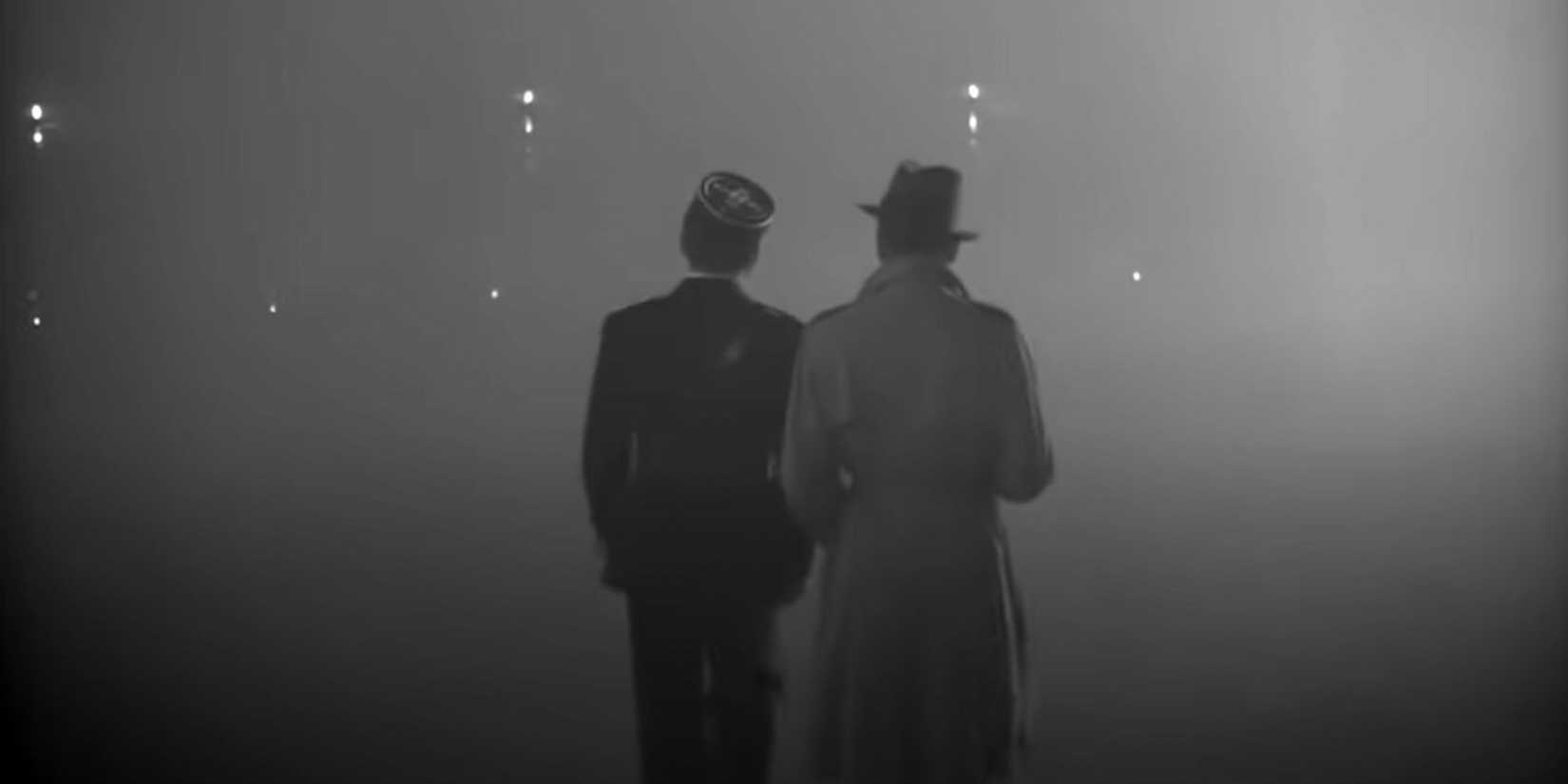 Image via Warner Bros. Pictures
Never has Hollywood produced a film more romantic than Casablanca, one of the greatest movies that the United States produced during World War II. Far from being nothing but hyper-patriotic propaganda, it's a legitimately perfect and timeless drama about the political value of sacrifice and selflessness, the inescapability of the past, and the dangers of neutrality.
It's also a film with one of the greatest, most iconic, and most profoundly meaningful third acts in movie history. Rick sacrifices his love for Ilsa, putting her on the plane to Lisbon with her husband as he stays behind with Captain Renault to join the Free French forces. Accompanied by one of the best final lines in movie history, Casablanca's final shot is the most iconic in all of cinema, a brilliant subversion of the traditional romantic ending with some of the most gorgeous visuals in all of Golden-Age Hollywood.

Casablanca
Release Date January 15, 1943
Runtime 102 minutes
Director Michael Curtiz
Writers Howard Koch, Julius J. Epstein, Philip G. Epstein
-

Humphrey Bogart
Rick Blaine
-




 English (US) ·