


Published Oct 15, 2026, 5:50 PM EDT
Richard Craig is a Senior Author at Screen Rant covering film and TV. Richard has also written extensively about horror and film soundtracks, contributing a chapter to the first major academic collection on the folk horror genre, The Routledge Companion to Folk Horror. Richard is also a performing musician and holds an MA in Music and Sound Art.
Sign in to your ScreenRant account
The best thrillers keep audiences guessing, but some leave such a devastating impression that revisiting them feels less like entertainment and more like an endurance test. Whether they expose the cruelty of ordinary people, subject their characters to unimaginable suffering, or conclude with revelations that fundamentally change everything that came before, these films make it particularly difficult to return to.
The reason these movies are particularly difficult to watch twice is because of how effectively they exploit the audience's emotional investment. A first viewing offers uncertainty: perhaps the protagonist will escape, the mystery will resolve mercifully, or the apparent nightmare will prove less terrible than it seems. Subsequent viewings remove that fragile hope.
Knowing precisely where the story leads can make every warning sign, moment of hesitation, and seemingly insignificant detail considerably more painful. Ranging from psychological warfare and sadistic violence to existential despair and revelations that redefine entire relationships, these classic thrillers demonstrate that a film does not need to rely on constant action to leave audiences emotionally battered.
Funny Games (1997)

Michael Haneke's Funny Games (and it’s American remake) turns the familiar home-invasion thriller into an exercise in sustained psychological cruelty. It depicts a wealthy family whose holiday is interrupted by two impeccably polite young men, Peter and Paul, who gradually reveal that their apparent courtesy conceals a capacity for extraordinary sadism.
Funny Games is a critique of on-screen violence and deliberately toys with its audience throughout. Every chance at escape is cruelly revealed to be a fake-out – such as the infamous rewind scene – and the villains even break the fourth wall to explicitly confront the viewers with the depicted cruelty.
This effectively turns the audience into unwilling participants in the film's sadistic game, exposing their desire for suspense and their expectation that fictional suffering should eventually become entertaining. Relentlessly bleak and without even a slither of hope, Funny Games is intentionally difficult viewing.
Seven (1995)

David Fincher's Seven culminates in one of thriller cinema's most devastating revelations. Serial killer John Doe leads detectives William Somerset and David Mills into the desert, where a delivery driver arrives with a package containing the severed head of Mills' pregnant wife, Tracy. Doe explains that he killed her out of envy, having coveted Mills' ordinary family life.
The revelation is horrifying, partly because Tracy has largely existed outside the investigation's grim world, making it wholly unexpected. Doe then provokes Mills into shooting him, completing his symbolic design: Doe represents envy, and Mills becomes wrath.
Brad Pitt's furious performance makes the final decision understandable without any semblance of triumph – with John Doe ultimately succeeding in his plan. A second Seven viewing makes the ordinary happiness Mills takes for granted almost unbearable – not to mention the slew of unpleasant murders also seen throughout.
Pacific Heights (1990)

John Schlesinger's Pacific Heights follows San Francisco homeowners Patty Palmer and Drake Goodman, whose new tenant, Carter Hayes, exploits tenancy laws to turn their property into a nightmare. Hayes withholds rent, damages the house, and manipulates legal procedures to prevent his eviction, steadily threatening the couple's finances and relationship.
Michael Keaton makes Hayes frightening precisely because he rarely behaves like a conventional movie villain. His polite manner provides cover for calculated intimidation, exposing how easily apparent respectability can conceal cruelty.
That premise makes Pacific Heights uncomfortably plausible. Unlike a masked killer, Hayes attacks the structures that ordinarily provide security, turning contracts and financial obligations into instruments of control. Patty and Drake's increasingly desperate responses also reveal how quickly fear can undermine a relationship. It’s an extremely stressful watch, and one that doesn’t relent on the second viewing.
The Cell (2000)

Tarsem Singh's The Cell follows psychologist Catherine Deane, played by Jennifer Lopez, as she enters the mind of comatose serial killer Carl Stargher to locate his latest victim before she drowns. Inside his subconscious, Catherine encounters a grotesque landscape of mutilated bodies, religious imagery, and elaborate fantasies of domination.
The Cell takes great care to explore the childhood trauma that shaped Stargher’s disturbing deeds. This elicits some sympathy for the young Stargher seen in the dream world, before Catherine ultimately decides the only way to stop the killer is destroy both the young and old Stargher.
Catherine drowns the young boy, in an act presented as merciful, while drawing explicit parallels with Stargher’s killing method. There are plenty of reasons not to revisit The Cell, but the blurred morality and unsettling violent imagery are perhaps the most pertinent.
Requiem For A Dream (2000)

Darren Aronofsky's Requiem for a Dream might be the most depressing movie ever made. It follows four people whose ambitions collapse under addiction. Harry Goldfarb loses an arm; his girlfriend, Marion, resorts to degrading sexual encounters to obtain drugs; his friend Tyrone ends up imprisoned.
Harry's mother, Sara, meanwhile, becomes dependent on amphetamines after taking diet pills. Sara's deterioration is especially devastating because her original ambition is so modest. Her eventual electroconvulsive therapy subsequently becomes yet further torture rather than any possible treatment.
Aronofsky's rapid montages initially make drug use seem compulsive and exhilarating, but the repetition becomes oppressive as the characters lose control. In the final montage, all four curl into fetal positions, visually reduced to helplessness. Rewatching Requiem for a Dream means revisiting some of the bleakest character arcs ever made.
Jacob's Ladder (1990)

Adrian Lyne's psychological thriller Jacob’s Ladder follows Vietnam veteran Jacob Singer, played by Tim Robbins, as grotesque hallucinations convince him that reality is breaking apart. The final revelation transforms the entire film. Jacob's memories establish that he was mortally wounded by an American soldier during the chaos in Vietnam.
Jacob’s terrifying experiences are reframed as part of his dying consciousness, culminating in a vision of his deceased son, Gabe, leading him upstairs towards the light. This revelation makes the preceding horror unexpectedly poignant.
The distorted faces and threatening apparitions initially suggest an external force tormenting Jacob, but the ending connects his nightmare to his struggle to accept death. His reunion with Gabe offers peace, but only after the film has subjected him to an agonising journey towards letting go. A second viewing carries the knowledge that Jacob's search for an explanation cannot save him.
The Vanishing (1988)

George Sluizer's Dutch thriller The Vanishing follows Rex Hofman, whose girlfriend, Saskia, disappears from a motorway service station. Years later, Rex remains obsessed with discovering what happened. The audience knows more than he does: Raymond Lemorne, an outwardly respectable family man, abducted Saskia to test whether he could commit an atrocity and continue living normally.
Raymond eventually offers Rex the truth if he agrees to experience what Saskia experienced. Rex accepts a drugged coffee and wakes buried alive, trapped in darkness with no means of escape. Rex's determination to uncover the truth therefore becomes the mechanism of his destruction.
Raymond's return to ordinary life makes the conclusion even more disturbing. He faces no immediate punishment, while Rex disappears just as Saskia did. Knowing The Vanishing’s ending turns every apparently mundane interaction with Raymond into bleak foreshadowing.
Prisoners (2013)
 Warner Bros. Pictures
Denis Villeneuve's Prisoners begins with the disappearance of Anna Dover and Joy Birch. Convinced that the police have released someone responsible, Anna's father, Keller, abducts and tortures Alex Jones. Keller believes Alex knows where the girls are, but Alex is himself a victim who cannot provide the answers Keller demands.
The revelation that Holly Jones orchestrated the kidnappings makes Keller's actions especially uncomfortable in retrospect. Holly and her late husband abducted children as revenge against God after their son died of cancer. Alex was one of their earliest victims, while another suspect's disturbing maze drawings prove misleading.
Keller's desperation initially appears understandable, but his torture of an innocent victim exposes how grief can destroy moral judgment. Prisoner's ending offers hope without certainty, leaving both Keller's fate and the consequences of his actions painfully unresolved.
Oldboy (2003)
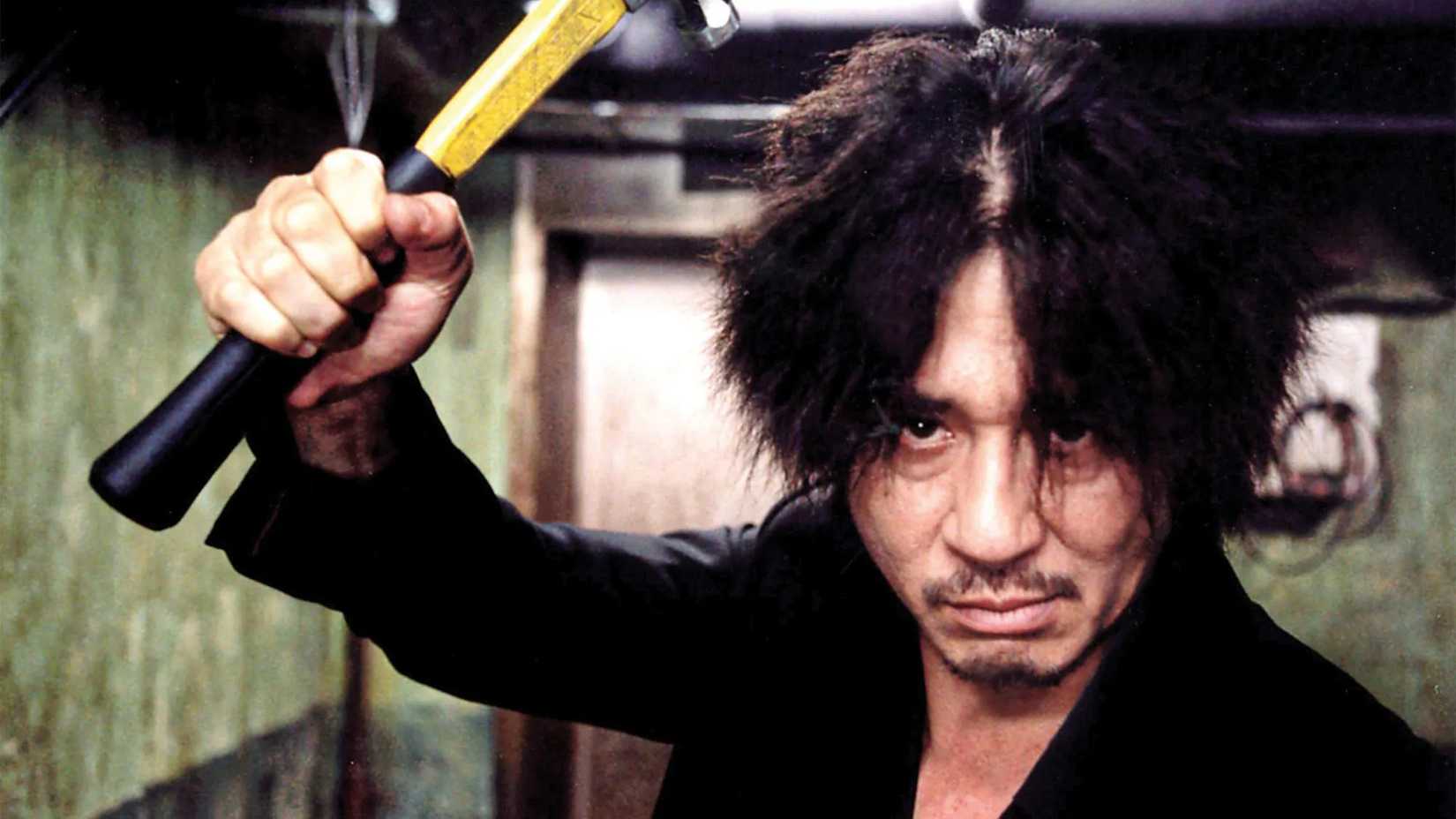
Park Chan-wook's Oldboy follows Oh Dae-su, who is imprisoned for 15 years without explanation before being released to discover his captor's identity. His investigation leads to Lee Woo-jin, who reveals that Dae-su once spread a rumor about Woo-jin's incestuous relationship with his sister, contributing to her suicide.
Woo-jin's revenge is even more horrifying than Dae-su's imprisonment. He reveals that Mi-do, the woman Dae-su has fallen in love with, is his daughter. Their relationship was engineered through hypnosis, making their apparent romance the final instrument of Woo-jin's revenge.
The revelation permanently changes the meaning of their relationship. Scenes that initially offered Dae-su companionship after years of isolation become unbearable once the audience understands the manipulation behind them. Oldboy's final uncertainty provides no clean escape. Even if Dae-su forgets, viewers cannot.
Antichrist (2009)

Lars von Trier's Antichrist follows an unnamed couple after their young son falls from a window while they are having sex. The mother, played by Charlotte Gainsbourg, becomes consumed by grief, and her therapist husband, played by Willem Dafoe, takes her to their isolated woodland cabin in an attempt to treat her fears.
Their relationship deteriorates into graphic sexual violence and self-mutilation. The violence is particularly confronting because it emerges from an already devastating family tragedy rather than a conventional struggle against an external villain.
The husband eventually kills his wife and burns her body. This final image offers no clear moral resolution or indication that the cycle of violence has ended. A second viewing of Antichrist means returning to a thriller in which grief produces neither healing nor understanding, only escalating cruelty and an ending that refuses comfort.

Release Date May 20, 2009
Runtime 109 Minutes
Director Lars von Trier
Writers Lars von Trier








 English (US) ·