
 Image via SBS TV

Published May 17, 2026, 10:22 PM EDT
Anja Djuricic was born in Belgrade, Serbia, in 1992. Her first interest in film started very early, as she learned to speak English by watching Disney animated movies (and many, many reruns). Anja soon became inspired to learn more foreign languages to understand more movies, so she entered the Japanese language and literature Bachelor Studies at the University of Belgrade.
Anja is also one of the founders of the DJ duo Vazda Garant, specializing in underground electronic music influenced by various electronic genres.
Anja loves to do puzzles in her spare time, pet cats wherever she meets them, and play The Sims. Anja's Letterboxd four includes Memories of Murder, Parasite, Nope, and The Road to El Dorado.
Sign in to your Collider account
So many K-dramas have shifted to streaming in search of greater immediate success, so the industry is moving quickly these days. But some K-dramas will never go away, even if they are considered classics, out of date, or simply foundational; despite their age, they are still important in understanding the evolution of the industry.
Not every K-drama ever produced feels relevant, but these ten dramas, all at least a decade old, have aged beautifully and remain relevant in the grand scheme of things. Although they lack the polished gloss of modern productions, their emotional depth, groundbreaking plots, and unforgettable characters make them as binge-worthy today as they were when they first aired. These are the ten classic K-dramas still worth binge-watching today.
10 'Winter Sonata' (2002)
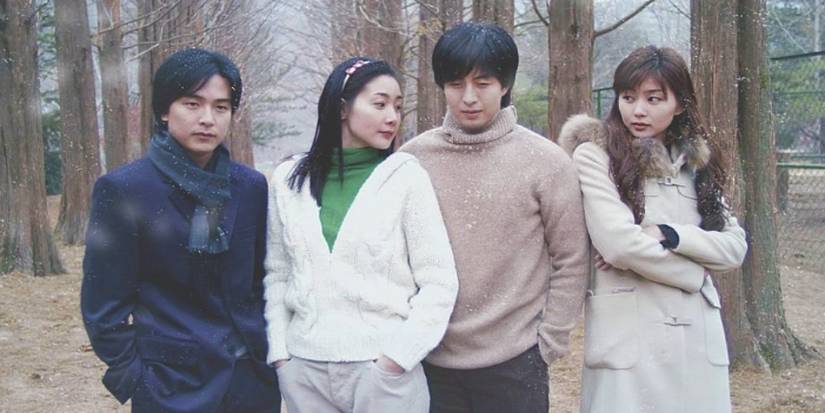 Image via Pan Entertainment
Winter Sonata, the drama that started the Korean Wave, sparked an explosion of K-drama fandoms in Japan, China, and beyond. It established the "melodrama of fate" template, helping tragic pasts, noble sacrifices, and tearful reunions to define romance for the next decade. The show is slower and more atmospheric than most modern dramas, but its emotional depth remains unmatched. The drama's male lead, Bae Yong-joon, became a cultural sensation in Japan, where he was once greeted by over 3,000 women at the airport during one of his visits to the country.
Winter Sonata is about a high school romance between the gentle, music-loving Joon-sang (Bae) and the cheerful Yoo-jin (Choi Ji-woo), which is cut short by Joon-sang's apparent death in a car accident. A decade later, Yoo-jin is engaged to her childhood friend but still haunted by her first love; then she meets a mysterious man who looks exactly like Joon-sang—but he claims not to remember her. With each new episode, viewers discover heartbreaking secrets involving mistaken identities, amnesia, and a long-lost love. Winter Sonata is a must-see for any fan interested in understanding how the Korean Wave actually began.
9 'Full House' (2004)
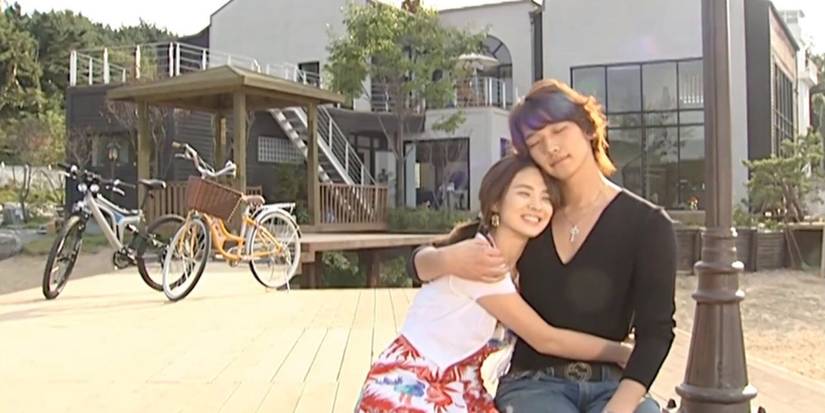
Full House pioneered the "contract romance" trope, which has since become a staple of Korean dramas. Rain and Song Hye-kyo's chemistry is electric, and their bickering is genuinely funny. The show also includes iconic early 2000s fashion (remember the chunky sweaters and weird layering of shirts?) and a soundtrack that is still referred to with nostalgia on variety shows. The drama was a huge success throughout Asia, and Rain and Song won the KBS Drama Popularity Awards, Best Actress and Actor Awards, and the Best Couple Award.
Full House follows a naive young writer, Han Ji-eun (Song), who is tricked into believing she has won a free vacation, only to return home and discover her friends have sold her beloved house. The new owner is Lee Young-jae (Rain), a famous and arrogant actor who values his privacy and dislikes reporters. To reclaim her home, Ji-eun agrees to a contract marriage with Young-jae, which leads to a hilarious battle of wills. However, as they bicker over cleaning and meal duties, genuine feelings develop. Full House is light, silly, and endlessly rewatchable; if you like Rain, you'll enjoy this show.
8 'My Lovely Sam‑soon' (2005)
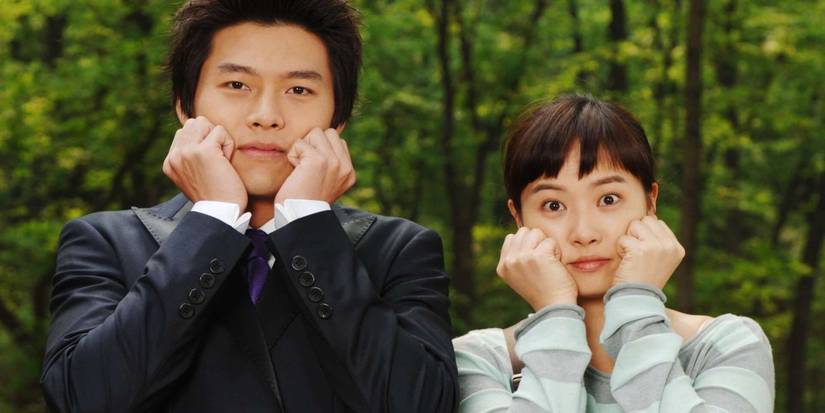 Image via MBC
My Lovely Sam‑soon, aka My Name is Kim Sam‑soon, defied the "perfect princess" stereotype of romantic comedies. The heroine is not a Cinderella waiting to be rescued but a spirited, messy, and refreshingly authentic character. The show's candid discussions about body image, aging, and career goals were groundbreaking in 2005, and they still feel relevant today. At the time, it was the highest-rated Korean drama ever (50.5% for the finale) and is still regarded as a classic. At the MBC Drama Awards, My Lovely Sam-soon won the Grand Prize (Daesang) Award, and the majority of the nominated cast received acting and popularity awards.
My Lovely Sam-soon follows Kim Sam-soon (Kim Sun-a), a 29‑year‑old, strong‑willed pastry chef who is outspoken and insecure about her weight; she's also broke, single, and recently dumped. Hyun Jin-heon (Hyun Bin), the owner of a high-end French restaurant, witnesses Sun-a's public breakup and offers Sam-soon a job after discovering her baking talent. When he needs a fake girlfriend to appease his controlling mother, Sam-soon agrees; their contract relationship quickly becomes messy, and Sam-soon's refusal to be a doormat makes her an unforgettable heroine. The show was dubbed the Korean version of Bridget Jones' Diary, with the only difference being that My Lovely Sam-soon is a tried-and-true K-drama with all the tropes that made the genre an instant fan favorite.
7 'Coffee Prince' (2007)
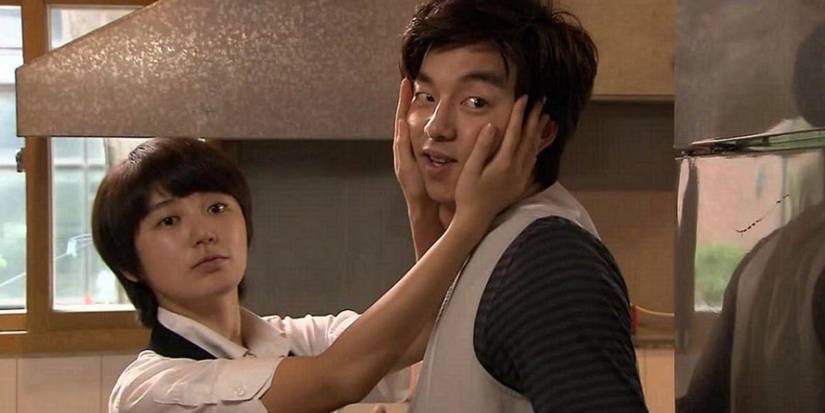 Image via MBC
Way ahead of its time, Coffee Prince tackled gender identity and same‑sex attraction with surprising sensitivity for a mainstream K‑drama in 2007. It is still a beloved classic nearly two decades later, celebrated not only for Gong Yoo's iconic performance but also for its daring to push boundaries. The show's central message—that love is about the person, not the label—is just as relevant today as it was then. The chemistry, rainy kisses, and soulful soundtrack make it a timeless favorite among rewatchers. Gong has stated that this role was a defining moment in his career, reigniting his interest in acting after he became discouraged. We're glad he changed his mind; Coffee Prince earned him the Best Actor award at the MBC Drama Awards.
Coffee Prince follows Go Eun-chan (Yoon Eun-hye), a tomboyish young woman who is often mistaken for a man. To support her family, she accepts a position at Coffee Prince, a sleek new café that only hires handsome male baristas. The eccentric heir Choi Han-gyul (Gong), who runs the café on a dare from his grandmother, hires Eun-chan, believing she is a guy. As they work together, Han-gyul's growing attraction to Eun-chan causes him to question his own identity, resulting in a heartfelt exploration of love without labels. Coffee Prince is a refreshing classic of the K-drama world that you'll enjoy binge-watching.
6 'Boys Over Flowers' (2009)
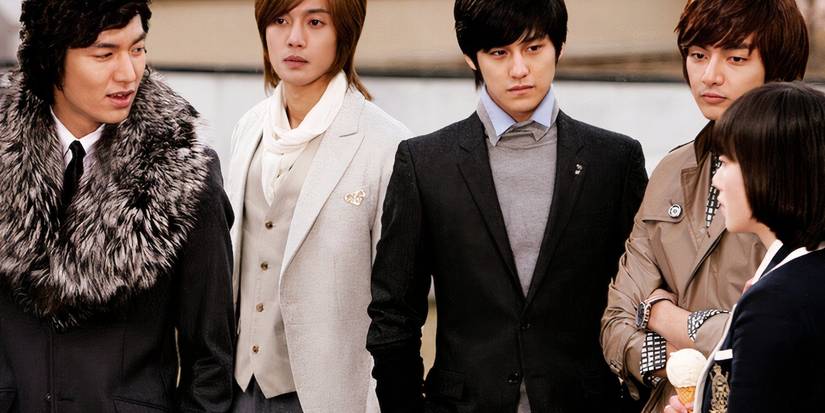
Love it or hate it, Boys Over Flowers is arguably the single most influential drama in the Korean Wave. This is the ultimate guilty pleasure viewing, with iconic over-the-top moments such as an unnecessary kidnapping, intense love triangles, trauma bonding, and a sudden amnesia arc. The series introduced a generation of international fans to Korean dramas, and its tropes—the mean rich boy, the spirited poor girl, and the second lead syndrome—have been endlessly reproduced. Boys Over Flowers inspired South Korean men to adopt the "pretty boy image" in order to look like the drama's lead actors.
Boys Over Flowers follows Geum Jan-di (Koo Hye-sun), a working-class girl who earns a scholarship to attend the prestigious Shinhwa High School. The school is ruled by a ruthless group of four rich and powerful boys known as F4. Jan-di becomes the target of bullying after standing up to their ringleader, the arrogant heir Gu Jun-pyo (Lee Min-ho). However, as she continues to defy him, Jun-pyo falls for her unbreakable spirit, sparking a messy, dramatic love triangle that captivates the entire school. The simple, addictive nostalgia of watching this classic is a compelling reason to binge-watch Boys Over Flowers (again).
Collider Exclusive · TV Medicine Quiz Which Fictional Hospital Would You Work Best In? The Pitt · ER · Grey's Anatomy · House · Scrubs
Five hospitals. Five completely different ways medicine goes sideways on television — brutal, chaotic, romantic, brilliant, and ridiculous. Only one of them is the ward your instincts were built for. Eight questions will figure out exactly where you belong.
🚨The Pitt
🏥ER
💉Grey's
🔬House
🩺Scrubs
FIND YOUR HOSPITAL →
01
A critical patient comes through the door. What's your first instinct? Medicine under pressure reveals who you actually are.
AStay completely present — block everything else out and work through it step by step, right now. BTriage fast and delegate — get the right people on the right problems immediately. CTrust my gut and move — I work best when I stop overthinking and just act. DAsk the question everyone else is ignoring — what's the thing that doesn't fit? ETake a breath, make a joke to cut the tension, and then get to work — panic helps no one.
NEXT QUESTION →
02
Why did you go into medicine in the first place? The honest answer says more about you than the one you'd give in an interview.
ABecause I wanted to be where it matters most — right at the edge, when someone's life is actually on the line. BBecause I wanted to help people — genuinely, one patient at a time, in a system that makes it hard. CBecause I was drawn to the intensity of it — the stakes, the drama, the feeling of being fully alive. DBecause medicine is the most interesting puzzle there is — and I needed a problem worth solving. EBecause I wanted to make a difference — and also, honestly, I didn't know what else to do with my life.
NEXT QUESTION →
03
What do you actually want from the people you work with? Who you want beside you under pressure is who you are.
ACompetence and calm — I need people who don't fall apart when things get bad. BTrust and reliability — I want to know that when I pass something off, it's handled. CConnection — I want colleagues who become family, even if that gets complicated. DIntelligence and the willingness to be challenged — I have no interest in people who just agree with me. EFriendship — people I actually like spending twelve hours a day with, because those hours are going to happen either way.
NEXT QUESTION →
04
You lose a patient you fought hard to save. How do you carry it? Every doctor who's worked a long shift has had to answer this question.
AI carry it. All of it. I don't look for ways to put it down — that weight is part of doing this work honestly. BI process it and move — you have to, or the next patient suffers for the one you just lost. CI feel it deeply and lean on the people around me — I don't think you're supposed to handle that alone. DI go back over every decision — not to punish myself, but because I need to understand what I missed. EI grieve it genuinely, find some way to laugh about something unrelated, and try to be kind to myself — imperfectly.
NEXT QUESTION →
05
How would your colleagues describe the way you work? Your reputation on the floor is usually more accurate than your self-image.
AIntense and completely present — no small talk during a shift, but exactly who you want there. BSteady and dependable — not the flashiest in the room but never the one who drops something. CPassionate and occasionally chaotic — brilliant on the hard cases, prone to drama everywhere else. DBrilliant and difficult — right more often than anyone else, and everyone knows it, including me. EWarm and self-deprecating — not the most intimidating presence, but genuinely good at this and easy to like.
NEXT QUESTION →
06
How do you feel about hospital protocol and procedure? Every institution has rules. What you do with them is a choice.
AProtocol is the floor, not the ceiling — I follow it until the patient needs something it can't provide. BI respect it — the system is broken in places, but the structure is there for a reason and I work within it. CI follow it until my instincts tell me not to — and my instincts are usually right, even when they cause problems. DRules are for people who haven't thought hard enough about when to break them. EI try to follow it and mostly do — with a few memorable exceptions that still come up in meetings.
NEXT QUESTION →
07
What does this job cost you personally? Nobody works in medicine without paying a price. What's yours?
AEverything outside these walls — I've given this job my full attention and the rest of my life has gone around it. BMy idealism, mostly — I came in believing the system could be fixed and I've made a complicated peace with that. CStability — my personal life has been as chaotic as the OR, and that's not entirely a coincidence. DMy relationships — I am not easy to know, and the people who've tried to would probably agree. EMy sense of gravity — I use humour as a coping mechanism, which not everyone appreciates in a hospital.
NEXT QUESTION →
08
At the end of a long shift, what keeps you coming back? The answer to this question is the most honest thing about you.
AThe fact that it's real — that nothing else I could be doing would matter this much, right now, today. BThe patients — individual human beings who needed something and got it because I was there. CThe people I work with — I have walked through impossible things with these people and I'd do it again. DThe next unsolved case — there's always another puzzle, and I'm not done yet. EBecause despite everything — the exhaustion, the loss, the absurdity — I actually love this job.
REVEAL MY HOSPITAL →
Your Assignment Has Been Made You Belong In…
Your answers have pointed to one fictional hospital above all others. This is the ward your instincts, your temperament, and your particular brand of dysfunction were built for.
The Pitt
You are built for the most unsparing version of emergency medicine television has ever shown — one that puts you inside a single fifteen-hour shift and doesn't let you look away.
- You need your work to be real, not romanticised — meaning over drama, honesty over aesthetics.
- You find purpose inside the work itself, not in the chaos surrounding it.
- You've made peace with the fact that this job takes from you constantly, and gives back in ways that are harder to name.
- Pittsburgh Trauma Medical Center demands exactly that kind of person — and you would not want to be anywhere else.
ER
You are the person who keeps the whole floor running — not the most brilliant in the room, but possibly the most essential.
- You show up, do the work, absorb the losses, and come back the next day without needing the job to be anything other than what it is.
- You care about patients as individual human beings, not as cases to solve or dramas to live through.
- You believe in the system even when it fails you — and you understand that emergency medicine is about holding the line just long enough.
- ER is television about endurance. You have it.
Grey's Anatomy
You came to medicine with your whole self — your ambition, your emotions, your relationships, your history — and you have never quite managed to leave any of it at the door.
- You feel things fully and form deep attachments to the people you work with.
- Your personal and professional lives are permanently, chaotically entangled — and that entanglement drives both your greatest disasters and your most remarkable saves.
- You understand that extraordinary medicine often happens at the intersection of clinical skill and profound human connection.
- It's messy at Grey Sloan. You would not have it any other way.
House
You are drawn to the problem above everything else — the symptom that doesn't fit, the diagnosis hiding underneath the obvious one.
- You're not primarily motivated by the patient as a person — though you are capable of caring, even if you'd deny it.
- You work best when the stakes are highest and the standard answer is wrong.
- Princeton-Plainsboro exists to house one extraordinary, impossible mind — and everyone around that mind is there because they're smart enough to keep up.
- The only way forward here is to think harder than everyone else in the room. That is exactly what you do.
Scrubs
You understand that medicine is tragic and absurd in almost equal measure — and that the only sane response is to hold both of those things at the same time.
- You are warm, self-aware, and funnier than most people in your field.
- You use humour to get through terrible moments — and at Sacred Heart, that's not a flaw, it's a survival strategy.
- You lean on the people around you and let them lean back. The laughter and the grief are genuinely inseparable here.
- Scrubs is a show about learning to become someone worthy of the job. You are still very much in the middle of that process — which is exactly right.
↻ RETAKE THE QUIZ
5 'Secret Garden' (2010)
 Image via SBS TV
Secret Garden is the drama that made body‑swap comedy a genre staple. It also introduced one of the most iconic fashion items in K‑drama history: the glittering tracksuit that the lead obsessively wears. Beyond the laughs, the show has genuine emotional weight, exploring class differences, trauma, and the nature of love. Hyun Bin's portrayal of the snobby but secretly vulnerable CEO is legendary, as is his wild chemistry with Ha Ji-won. Interestingly, the Grand Prize (Daesang) at the Baeksang Arts Awards is usually awarded to a series or film, but in 2011, it was given to Hyun Bin himself, who was the most visible face on TV and, well, literally any screen in South Korea after Secret Garden.
Secret Garden follows Gil Ra-im (Ha), a poor stuntperson who dreams of becoming a film director, and Kim Joo-won (Hyun), a wealthy and arrogant department store CEO who is afraid of anything physical. After a series of chance encounters, Ra-im and Joo-won find themselves magically swapping bodies whenever they come into contact; forced to live each other's lives, they discover each other's pain, insecurities, and hidden wounds. This brings them closer together and helps them start a relationship, but the story also includes a number of external complications—as if body swapping weren't complicated enough. Secret Garden is a guilty pleasure and a very funny classic, ideal for a binge.
4 'The Heirs' (2013)
 Image by SBS TV
The Heirs is another guilty pleasure drama with a star-studded cast, including Lee Min-ho, Park Shin-hye, and Kim Woo-bin. It's often described as a "time capsule" of early 2010s K-drama excess: lavish sets, dramatic confrontations, and a love triangle that defined the genre, including extra dramatic scenes like crying in the rain, walking away slowly, and making wild assumptions without context. The Heirs does not shy away from melodrama, and its portrayal of class conflict and young love is both flawed and completely addictive.
The Heirs follows a group of spoiled, wealthy high school students as they deal with the pressures of love, jealousy, and the expectations of their powerful families. Kim Tan (Lee), the heir to a massive conglomerate, is sent to study abroad in the US. He meets Cha Eun-sang (Park), a penniless girl looking for her older sister. When he returns to Korea, their worlds collide, forcing him to choose between family duty and a love that society believes is impossible. The Heirs is a must-see for new fans who want to understand the origins of modern Korean drama tropes.
3 'My Love from the Star' (2013–2014)
 Image via HB Entertainment
My Love from the Star was a massive hit in Asia and America, sparking a new wave of Hallyu exports. The central plot of a cynical, immortal alien falling for a volatile celebrity paved the way for countless fantasy romances over time. The contrast between Kim Soo-hyun's reserved extraterrestrial and Jun Ji-hyun's over-the-top actress created an iconic on-screen dynamic, while the high-quality cinematography and sharp celebrity satire remain fresh and enjoyable. Jun's wardrobe in the drama was so coveted that the outfits, cosmetics, and makeup she wore in the show sold out while it aired. Jun also won the Grand Prize at the Baeksang Arts Awards for her role.
My Love from the Star follows Do Min-joon (Kim), an alien who crash-landed on Earth during the Joseon Dynasty. He has spent 400 years hiding his supernatural abilities and waiting to return home; as he prepares to leave, he meets his new neighbor, Cheon Song-yi (Jun), a beautiful but narcissistic top actress. He saves her life, and the cynical alien and the shameless star soon become entangled in an unexpected and dangerous romance that transcends time. Several outlets named the show the most popular series of 2013 and 2014, popularizing the use of fried chicken and beer as a form of bonding in K-dramas. Another interesting fact is that it was based on true stories of Joseon-era locals who reported seeing UFOs in the sky.
2 'Misaeng: Incomplete Life' (2014)
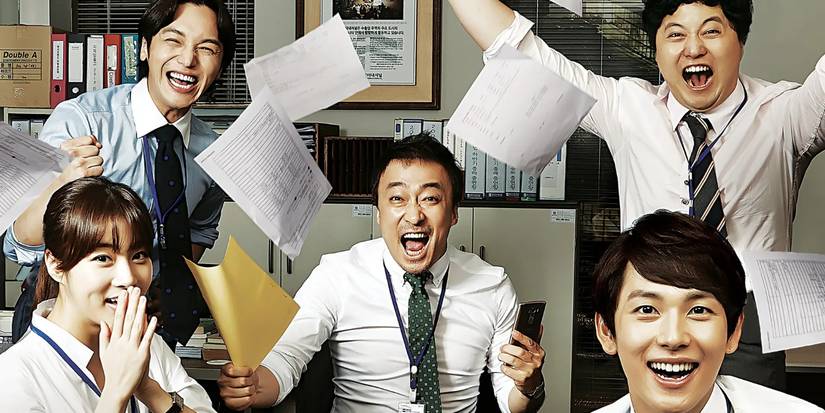 Image via Number 3 Pictures
Misaeng: Incomplete Life is a groundbreaking office drama that depicts the struggles of entry-level employees with unwavering realism. The series speaks to anyone who has felt like an outsider in a high-pressure corporate environment, while the authentic depiction of corporate dynamics and their mundane yet soul-crushing challenges set a new standard for realistic storytelling in Korean dramas. The drama was adapted from the same-named webtoon, and its success legitimized webtoon-to-drama adaptations. Many people also stated that they rushed home from work to watch this show, feeling seen by its premise, character arcs, and relatable storytelling.
Misaeng follows Jang Geu-rae (Im Si-wan), a former Go prodigy who gives up his dreams of competing professionally to become an intern at a large trading company. With no college degree or work experience, he is thrust into a world of office politics, long hours, and oppressive hierarchies. With the help of a small group of fellow interns (Kang So-ra, Kang Ha-neul, and Byun Yo-han), he fights to demonstrate that determination and natural intelligence can overcome a lack of credentials and that a person is more than their resume. The subtitle, Incomplete Life, roughly translates the main word, "Misaeng," perfectly capturing the theme that all the main characters are still in the process of discovering their true selves.
1 'Healer' (2014)
 Image via KBS2
Healer is a unique blend of thrilling action and heartwarming romance, and you'll be emotionally engaged until the very end thanks to the tightly woven plot, which skillfully connects several generations of backstory. Fans have praised Healer for its fast pace, compelling mystery, and perfect balance of genres, anchored by Ji Chang-wook's charismatic performance. The show's cult following is fiercely loyal, especially to Ji, who rose to international fame and cult celebrity status through his portrayal of the eponymous character, the mysterious and protective Healer.
Healer follows an enigmatic "night courier" who goes by the code name Healer and takes on risky jobs for clients but draws the line at murder and declines jobs that entail it in any way. When he accepts a task, he unexpectedly falls in love with the passionate reporter Chae Young-shin (Park Min-young) and gets involved in a case that reveals a painful secret from his past. Their improbable partnership reveals a web of hidden truths and political corruption that jeopardizes everything they value—but their love is incredible to watch unfold. Healer is entertaining and very simple to binge-watch; it blends romance and action in a way that no K-drama (or many other shows) could at the time.

Healer
Release Date 2014 - 2015-00-00





 English (US) ·