
When we watch a movie, we love being immersed in the action as if we're a part of the narrative. So when it comes to crime stories, we're either placed alongside the crusaders attempting to stop the crime from happening or joining the criminals on their mission. Sometimes, we get both perspectives, allowing us the chance to see how morally gray a situation can truly be.
Quite a few crime films are so good that they've inspired the trajectory of the genre and deserve to be watched today, in 2026. The ten films on this list portray a wonderful spectrum within the genre. Some have inspired new television remakes or a Broadway production, and others have themes that still resonate today. If you're new to the titles or eager to watch again, these crime movies deserve to be added to your 2026 queue.
'Cape Fear' (1962)
 Image via Universal Pictures
Though the story may be different than the 1962 film, the Apple TV series remake of Cape Fear has the same DNA. If you loved the Amy Adams and Javier Bardem thriller, the J. Lee Thompson-directed Southern Gothic psychological thriller is a must-watch. Based on The Executioners by John D. MacDonald, the film follows vengeful, menacing ex-convict Max Cady (Robert Mitchum), who tracks down and terrorizes the family of the upright attorney (Gregory Peck) who originally put him behind bars. Sam must protect his wife, Peggy (Polly Bergen), and daughter, Nancy (Lori Martin), from Max's relentless psychological campaign.
Cape Fear reshaped the '60s noir tone, proving fear comes from what is implied rather than what's seen. What makes it timeless is the psychological warfare Max instills, and the battle between Peck and Mitchum is tantalizing. Thompson brings a Hitchcockian style to the thriller, making everyday scenes feel unsafe and claustrophobic. Obviously, if you're coming to this film from the series, the plot is very different. Either way, the thriller is all about how the monster that is Max Cady remains transcendent. If you loved the new series, you must watch the original.
'Chinatown' (1974)
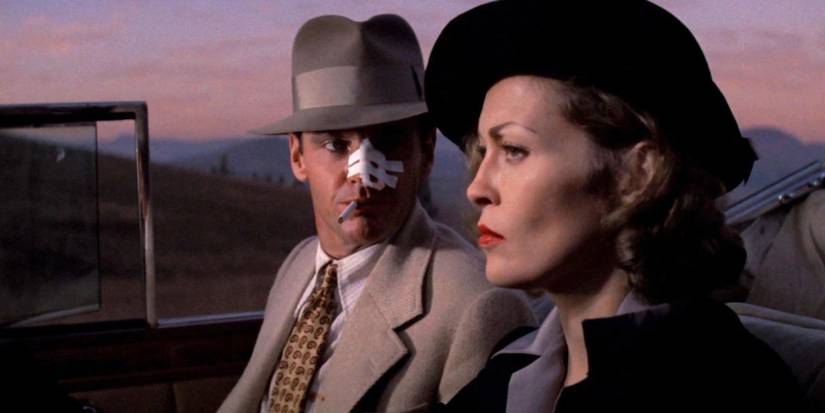 Image via Paramount Pictures
The neo-noir mystery was resurrected thanks to the chilling masterpiece Chinatown. Directed by Roman Polanski and written by Robert Towne, the film follows private detective Jake Gittes (Jack Nicholson) in 1930s Los Angeles, who is initially hired by Evelyn Mulwray (Faye Dunaway) to expose Hollis I. Mulwray's (Darrell Zwerling) infidelity. As Gittes gets deeper into the mystery, he uncovers a dark web of municipal corruption, land grabbing, and personal depravity centered around the city's water supply and Evelyn's father, Noah Cross (John Huston).
Chinatown explores how powerful, corrupt men control the system and escape justice, rendering good intentions tragic and helpless. Featuring a flawless script and an iconic performance from Nicholson, the film remains a classic thanks to its influence on the genre. The themes resonate, as government cover-ups still run rampant in the country. By tackling the dark idea that good intentions are futile and that powerful, deceitful individuals win, Chinatown proves that the good guys not succeeding is more realistic than a Hollywood happy ending. The famous final line, "Forget it, Jake, it's Chinatown," highlights total helplessness against institutional evils. If that doesn't sound like today's news headlines, I don't know what will.
Collider Exclusive · Oscar Best Picture Quiz
Which Oscar Best Picture
Is Your Perfect Movie?
Parasite · Everything Everywhere · Oppenheimer · Birdman · No Country
Five Oscar Best Picture winners. Five completely different visions of what cinema can be — and what it can do to you. One of them is the film that was made for the way your mind works. Ten questions will figure out which one.
🪜Parasite
🌀Everything Everywhere
☢️Oppenheimer
🐦Birdman
🪙No Country for Old Men
FIND YOUR FILM →
01
What kind of film experience do you actually want? The best movies don't just entertain — they leave something behind.
ASomething that pulls the rug out — that makes me think I'm watching one kind of film and then reveals I'm watching another entirely. BSomething overwhelming — funny, sad, absurd, and genuinely moving, all at once. CSomething grand and weighty — a film that makes me feel the full scale of what I'm watching. DSomething formally daring — a film that pushes what cinema can even do. ESomething lean and relentless — pure tension with no wasted frame.
NEXT QUESTION →
02
Which idea grabs you most in a film? Great films are driven by a central obsession. What's yours?
AClass, inequality, and what people are willing to do when desperation meets opportunity. BIdentity, family, and the chaos of trying to hold your life together when everything is falling apart. CGenius, moral responsibility, and the catastrophic weight of a decision you can never take back. DEgo, legacy, and the terror of becoming irrelevant while you're still alive to watch it happen. EEvil, chance, and whether moral order actually exists or if we just tell ourselves it does.
NEXT QUESTION →
03
How do you like your story told? Form is content. The way a story is shaped changes what it means.
AGenre-twisting — I want it to start in one lane and migrate into something completely different. BMaximalist and genre-blending — comedy, action, drama, sci-fi, all in one ride. CEpic and non-linear — cutting between timelines, building a mosaic of cause and consequence. DA single unbroken flow — I want to feel like I'm living it in real time, no cuts to safety. ESpare and precise — every scene doing exactly what it needs to do and nothing more.
NEXT QUESTION →
04
What makes a truly great antagonist? The opposition defines the protagonist. What kind of opposition fascinates you?
AA system — invisible, structural, and almost impossible to fight because it has no single face. BThe self — the ways we sabotage, abandon, and fail the people we love most. CHistory — the unstoppable momentum of events that no single person can stop or redirect. DThe industry — the machinery of culture that chews up talent and spits out irrelevance. EPure, implacable evil — a force so certain of itself it becomes almost philosophical.
NEXT QUESTION →
05
What do you want from a film's ending? The final note is the one that lingers. What do you want it to sound like?
AShock and inevitability — a conclusion that recontextualises everything that came before it. BEarned emotion — I want to cry, laugh, and feel genuinely hopeful, even if the world is a mess. CDevastation and grandeur — an ending that makes me sit in silence for a few minutes after. DAmbiguity — something that leaves enough open that I'm still thinking about it days later. EBleakness — an honest refusal to pretend the world is tidier than it actually is.
NEXT QUESTION →
06
Which setting pulls you in most? Where a film takes place shapes everything — mood, stakes, what's even possible.
AA gleaming modern city with a hidden underside — beauty masking rot, wealth masking desperation. BA collapsing suburban life that opens onto something infinite — the multiverse of a single ordinary person. CThe corridors of power and science at a world-historical turning point — where decisions echo for decades. DThe grimy, alive chaos of New York and Hollywood — fame as both destination and trap. EVast, indifferent landscape — desert and highway where violence arrives without warning or reason.
NEXT QUESTION →
07
What cinematic craft impresses you most? Every great film has a signature — a technical or artistic element that makes it unmistakable.
AProduction design and mise-en-scène — every frame composed to carry meaning beneath the surface. BEditing and tonal control — the ability to move between registers without losing the audience. CScore and sound design — music that becomes inseparable from the dread and awe of what you're watching. DCinematography as performance — the camera not recording events but participating in them. ESilence and restraint — what's left unsaid and unshown doing more work than any dialogue could.
NEXT QUESTION →
08
What kind of main character do you root for? The protagonist is the lens. Who you choose to follow says something about you.
ASomeone smart and resourceful who makes increasingly dangerous decisions under pressure. BSomeone overwhelmed and ordinary who turns out to be capable of something extraordinary. CA brilliant, tortured figure whose gifts and flaws are inseparable from each other. DA self-destructive artist whose ego is both their superpower and their undoing. EA quiet, principled person trying to make sense of a world that has stopped making sense.
NEXT QUESTION →
09
How do you feel about a film that takes its time? Pace is a choice. Some films sprint; others let tension accumulate slowly, deliberately.
AI love a slow build when I know the payoff is going to be seismic — patience for a devastating reveal. BGive me relentless momentum — I want to feel breathless and emotionally spent by the end. CEpic runtime doesn't scare me — if the material demands three hours, give me three hours. DI want it to feel propulsive even when nothing is technically happening — restless energy throughout. EDeliberate and unhurried — I want dread to accumulate in the spaces between the action.
NEXT QUESTION →
10
What do you want to feel walking out of the cinema? The best films leave a mark. What kind of mark do you want?
AUnsettled — like I've just seen something I can't fully explain but can't stop thinking about. BMoved and energised — like the film reminded me what actually matters and gave me something to hold onto. CHumbled — like I've been in the presence of something genuinely important and overwhelming. DExhilarated — like I've just seen cinema doing something it's never quite done before. EHaunted — like a cold, quiet dread that stays with me for days.
REVEAL MY FILM →
The Academy Has Decided Your Perfect Film Is…
Your answers have pointed to one Oscar Best Picture winner above all others. This is the film that was made for the way your mind works.
Parasite
You are drawn to films that operate on multiple levels simultaneously — that begin in one genre and quietly, brilliantly migrate into another. Bong Joon-ho's Parasite is a film about class, desire, and the architecture of inequality that manages to be darkly funny, deeply suspenseful, and genuinely shocking across a single extraordinary running time. Your instinct is for cinema that hides its true intentions until the moment it's ready to reveal them. Parasite is exactly that — a film that rewards close attention and punishes assumptions, right up to its devastating final image.
Everything Everywhere All at Once
You want it all — and this film gives you all of it. The Daniels' Everything Everywhere All at Once is one of the most maximalist films ever made: action comedy, multiverse sci-fi, family drama, existential crisis, and a genuinely earned emotional core that sneaks up on you amid the chaos. You are someone who responds to ambition, who doesn't want cinema to choose between being entertaining and being meaningful. This film refuses that choice entirely. It is overwhelming by design, and its overwhelming nature is precisely the point — because the feeling of being crushed by infinite possibility is exactly what it's about.
Oppenheimer
You are drawn to cinema on a grand scale — films that understand history not as a backdrop but as a force, and that place their characters inside that force and watch what happens. Christopher Nolan's Oppenheimer is a film about the terrifying gap between what we can do and what we should do, told with the full weight of one of the most consequential moments in human history behind it. You want your films to feel important without feeling self-important — to earn their ambition through sheer craft and the gravity of their subject. Oppenheimer does exactly that. It is enormous, complicated, and refuses easy comfort.
Birdman
You are drawn to films that foreground their own construction — that make the how of the filmmaking part of the what it's about. Alejandro González Iñárritu's Birdman, shot to appear as a single continuous take, is cinema examining itself through the cracked mirror of a fading actor's ego. You respond to formal daring, to the feeling that a film is doing something that probably shouldn't be possible. Michael Keaton's performance and Emmanuel Lubezki's restless camera create something genuinely unlike anything else — a film that is simultaneously about creativity, relevance, self-destruction, and the impossibility of ever truly knowing if your work means anything at all.
No Country for Old Men
You are drawn to cinema that trusts silence, that refuses to explain itself, and that treats dread as a form of meaning. The Coen Brothers' No Country for Old Men is a film about the arrival of a new kind of evil — implacable, arbitrary, and utterly indifferent to the moral frameworks we use to make sense of the world. It is one of the most formally controlled films ever made, and its controlled restraint is what makes it so terrifying. You want your films to haunt you, not comfort you. You are not interested in resolution if resolution would be dishonest. No Country for Old Men is honest in a way that most cinema never dares to be.
↻ RETAKE THE QUIZ
'Dog Day Afternoon' (1975)
 Image via Warner Bros.
This past Broadway season saw the stage debut of Dog Day Afternoon, written by playwright Stephen Adly Guirgis. The play is based on the Life magazine article "The Boys in the Bank" by P. F. Kluge and Thomas Moore, which is about the real-life 1972 Brooklyn bank robbery by John Wojtowicz and Salvatore Naturile. Of course, if you’re familiar with the name, it’s thanks to the 1975 crime drama. Directed by Sidney Lumet, the film adaptation tells the story of a botched 1972 Brooklyn bank robbery that turns into a 14-hour hostage standoff and media circus.
Dog Day Afternoon is a brilliantly immersive and lived-in drama. Lumet captures the noisy, authentic rhythms, heat, and street life of 1970s Brooklyn and lets them become the present soundscape. The film omits a traditional background score, making the sweaty, claustrophobic bank standoff feel immediate and real. Al Pacino dominates as a wickedly complex anti-hero: Sonny is not a smooth criminal, but a flawed, stressed outsider trying to fund his partner's gender-confirmation surgery while juggling his family. Through that narrative, the film treats its LGBTQ+ themes with empathy and normalcy rather than as cheap stereotypes.
'Fargo' (1996)
 Image via Gramercy Pictures
If there’s one film that defined Joel and Ethan Coen in the ‘90s, it’s the brilliant crime thriller Fargo. Celebrating 30 years since its release, the film has remained an influential masterpiece. It follows Jerry Lundegaard (William H. Macy), a desperate, down-on-his-luck car salesman who hires two criminals, Carl Showalter (Steve Buscemi) and Gaear Grimsrud (Peter Stormare), to kidnap his wife, planning to collect a large ransom from his wealthy father-in-law. The botched plot quickly leads to a mounting trail of murders tracked by a pregnant local police chief, Marge Gunderson (Frances McDormand).
Fargo brilliantly flips the traditional crime thriller upside down by pairing absurd dark humor with deeply human characters. The Coens brilliantly subvert typical crime tropes for something fascinating and unique. Fargo is an excellent example of how extraordinary character work can reap everlasting rewards, as evidenced by McDormand's brilliant, Oscar-winning portrayal of Marge. The script is infused with sharp, regional dialogue, deadpan humor, and a unique "Minnesota Nice" polite stoicism. 30 years later, Fargo remains perfect.
'King of New York' (1990)
 Image via Carolco Pictures
Directed by Abel Ferrara and written by Nicholas St. John, the Neo-noir crime thriller tells the story of Frank White (Christopher Walken), a ruthless drug kingpin released from prison who reunites with his loyal, violent crew, led by James "Jimmy Jump" Colt (Laurence Fishburne), to take back the New York City drug trade from rival Italian, Latino, and Asian gangs. As he tries to reclaim his criminal empire with extreme violence, he claims his bizarre ultimate goal is using his illicit millions to rebuild a rundown Bronx hospital for the poor.
King of New York blends a gritty, neon-soaked aesthetic with a magnetic, career-defining performance by Walken alongside a stacked ensemble of soon-to-be stars. Ferrara uses shadows, warm neon lights, and raw city locations to capture a dangerous, decaying pre-Giuliani New York City, where moral ambiguity toes the line as the narrative blurs the lines between law enforcement and criminality. Walken’s iconic, chillingly calm portrayal of a criminal trying to balance ruthless violence with Robin Hood-style community philanthropy remains one of his very best.
'Serpico' (1973)
 Image via Paramount Pictures
Before Pacino and Lumet collaborated on Dog Day Afternoon, the duo brought another real-life story to the big screen: Serpico. The screenplay was adapted by Waldo Salt and Norman Wexler from the book written by Peter Maas about Frank Serpico. Pacino stars as Serpico throughout his 11-year career as he tries to be an honest cop in a police department riddled with systemic bribery, extortion, and corruption. Serpico strictly refuses to take bribes, is shunned, viewed as a threat, and deliberately left without backup in life-threatening situations.
A successful biographical crime drama, Serpico offers an unflinching, unglamorized look at systemic police corruption and personal alienation. A truly raw film, Lumet utilizes a documentary-style, on-location New York shoot to capture the raw, decaying urban atmosphere of the era. Unlike standard crime thrillers of the time, Serpico refused to offer a clean, triumphant resolution where the righteous hero cleans up the system and is rewarded. The film dives deep into the psychological, emotional, and physical cost of standing alone against a broken institution. The struggle against systemic corruption and the isolation faced by whistleblowers remain as culturally urgent today as they were in the 1970s.
'Thelma & Louise' (1991)
 Image via MGM-Pathé Communications
We look at films that were set in the present as period pieces today, yet when the themes of the film resonate today, it makes the period piece hold more weight: such is the case with Thelma & Louise, which focused on bodily autonomy, systemic injustice, and female liberation. Directed by Ridley Scott, it follows two best friends, Thelma Dickinson (Geena Davis), a timid housewife, and Louise Sawyer (Susan Sarandon), a sharp-tongued diner waitress, who embark on a weekend fishing trip that turns into a desperate flight from the law after Louise shoots a man who attempts to rape Thelma.
Celebrating 35 years since its release, the American road trip film remains strikingly relevant as a blueprint for refusing to settle and taking control of one's destiny, twisting traditional buddy-movie tropes for a female-focused story about growth and transformation. The film's heart and soul is David and Sarandon, their shared rebellion feeling earned and emotional, establishing their characters as one of the greatest cinematic duos of all time. Screenwriter Callie Khouri won an Academy Award for Best Original Screenplay, launching a landmark shift in Hollywood. The film helped redefine female roles by letting women drive the narrative, make mistakes, and claim their own power.
'The French Connection' (1971)
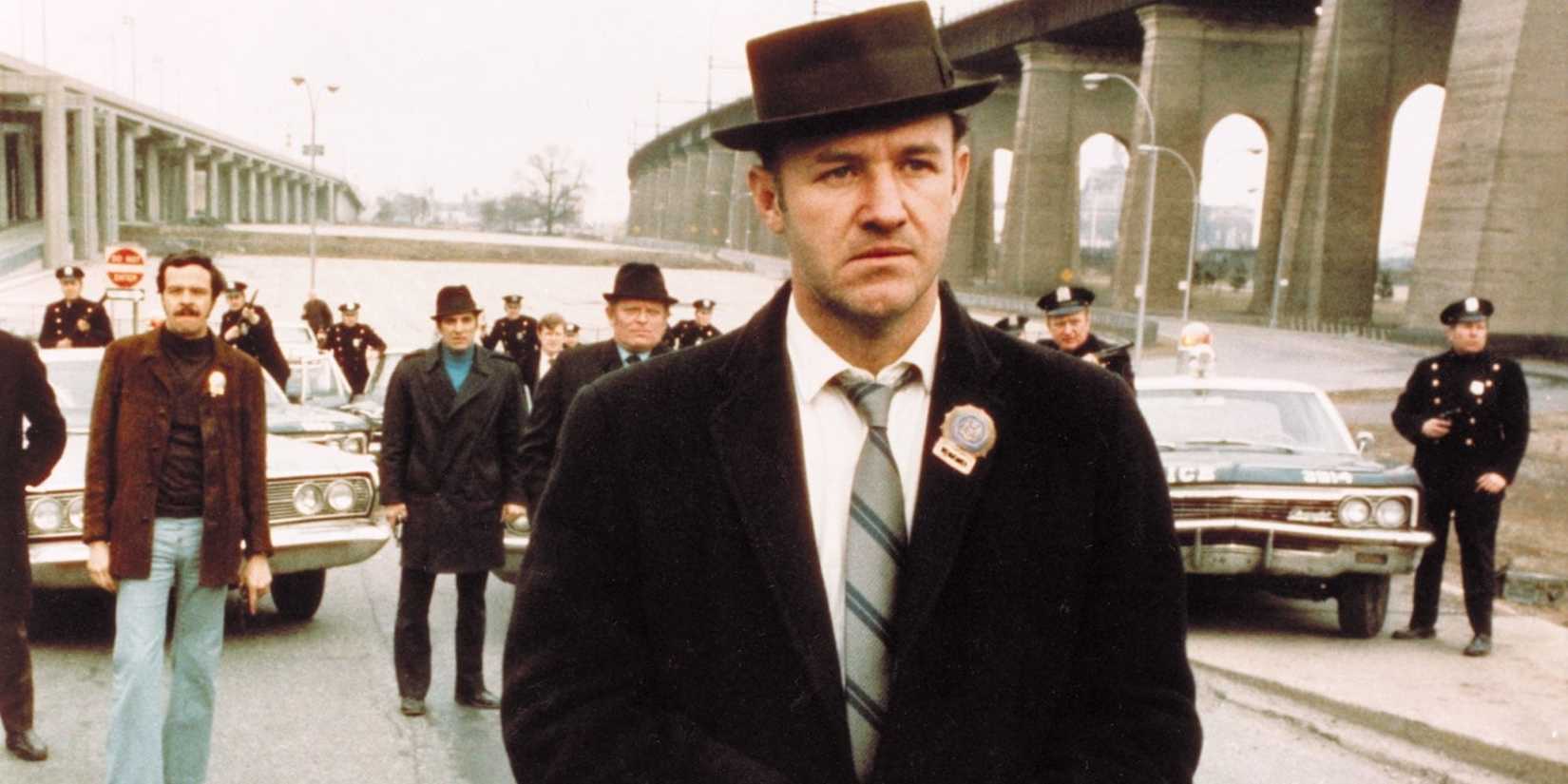 Image via 20th Century Studios
Director William Friedkin is known for many incredible projects, but when it comes to the world of crime, The French Connection stands above the rest. Based on Robin Moore's 1969 book of the same name, the gritty Neo-noir action thriller follows suave French criminal mastermind Alain Charnier (Fernando Rey) as he plans to smuggle a multi-million-dollar shipment of pure heroin into the US. Meanwhile, two rough New York City narcotics detectives, Jimmy "Popeye" Doyle (Gene Hackman) and Buddy "Cloudy" Russo (Roy Scheider), track an international heroin-smuggling ring operating between Marseille, France, and New York.
The French Connection blends documentary-style realism with raw, high-octane suspense that revolutionized the police thriller. It uses handheld cameras and natural locations to give the gritty streets an authentic, raw feel. Friedkin keeps the narrative moving with relentless pacing, focusing on the cold mechanics of police work and urban decay. The heart-pounding sequence where Doyle chases an elevated train remains one of the greatest and most influential action stunts in cinema history. Hackman plays Popeye Doyle not as a noble hero, but as an obsessed, flawed, and frantic cop consumed by his job.
'The Hound of the Baskervilles' (1939)
 Image via 20th Century Studios
Very few literary figures are more beloved and notorious than Sherlock Holmes. The creation of Sir Arthur Conan Doyle, Sherlock is a constant presence on the big and small screen, but one of the early depictions of the character came in the iconic 1939 adaptation of The Hound of the Baskervilles. Directed by Sidney Lanfield, the gothic mystery follows Sherlock Holmes (Basil Rathbone) and Dr. John Watson (Nigel Bruce) as they investigate the mysterious death of Sir Charles Baskerville (Ian Maclaren) on the dangerous Devonshire moors and try to protect his sole heir, Sir Henry Baskerville (Richard Greene), from a legendary demonic hound.
The first of fourteen films with Rathbone and Bruce as the iconic duo, The Hound of the Baskervilles honors the source material thanks to a higher budget and richly gothic atmosphere. The mystery is well-paced and suspenseful, using fog-shrouded sets, eerie lighting, and a spooky moor backdrop to build genuine tension and a dark, haunting mood. Rathbone brings sharp intellect and authority to Holmes, while Nigel Bruce plays a capable, loyal Dr. Watson rather than the purely bumbling sidekick seen in later sequels. The Hound of the Baskervilles provides a masterclass in classic Hollywood suspense, setting the gold standard for every detective adaptation that followed.
'They Live By Night' (1948)
 Image via RKO Radio Pictures
Perhaps one of the most influential film noir thrillers in the golden age of Hollywood is They Live By Night, the directorial debut of Nicholas Ray. Based on Edward Anderson's Depression-era novel Thieves Like Us, the film follows Arthur "Bowie" Bowers (Farley Granger), a wrongly imprisoned young man who escapes with two hardened criminals, Chickamaw "One-Eye" Mobley (Howard Da Silva) and Henry "T-Dub" Mansfield (Jay C Flippen). While hiding out at a service station run by Chickamaw's family, Bowie falls in love with Catherine "Keechie" Mobley (Cathy O’Donnell), Chickamaw’s niece. The doomed couple tries to run away for a fresh start, but past crimes and old associates relentlessly close in on them as he joins his former partners in crime for more robberies.
Blending a tender romance with gritty film noir, They Live By Night stands out for its deep empathy, stark realism, and influence on future outlaw couple movies. The opening aerial shot captures a getaway car speeding recklessly across a dusty rural landscape, paired with the memorable text. Viewers feel the heavy weight of a tragic fate closing in on them. From there, action scenes like robberies are shot from inside the getaway car, giving the audience an intimate perspective. Ray uses real-feeling locations, clever ambient sound, and rich visual shadows to build a world of dread where love tries its best to prevail.



 English (US) ·