
Workplace sitcoms make the monotony and madness of work feel not just relatable, but genuinely funny, letting us laugh cathartically at the daily grind most people know all too well. There’s plenty of humor in watching wildly different personalities forced to work side by side, although the best workplace sitcom casts often become a kind of found family.
Modern sitcoms updated the formula with new formats, sharper satire, and more specific environments. The Office popularized the mockumentary style, using awkward realism to mine comedy from everyday office life. Beyond the biggest hits, however, there’s a deep bench of niche workplace sitcoms that fans of the genre shouldn’t overlook. For viewers who already love a workplace sitcom, these under-the-radar series can be just as rewarding and sometimes even more distinctive than the mainstream favorites.
NewsRadio
Number of Seasons: 5 | 1995-1999

NewsRadio takes the workplace comedy blueprint established by WKRP in Cincinnati and filters it through a distinctly offbeat '90s sensibility. Set inside the chaotic offices of a New York radio station, the series thrives on rapid-fire dialogue, eccentric personalities, and an increasingly absurd comedic rhythm.
Despite its sharp writing, NewsRadio never reached the ratings heights of NBC’s defining sitcom hits like Friends or Seinfeld. Its humor was often too fast, too dry, and just strange enough to fall outside the mainstream.
Still, the show ran for five seasons, an impressive feat for a quirky ensemble without a high-concept hook, and built a loyal audience along with strong critical support. The cast of NewsRadio also showcased standout performances by Phil Hartman and Dave Foley, whose work helped cement the series' enduring reputation as an underappreciated cult favorite workplace sitcom.
Not Dead Yet
Number of Seasons: 2 | 2023-2024

Not Dead Yet was sometimes unfairly compared to CBS’s Ghosts, but aside from the supernatural characters, the shows aim for very different tones and storytelling styles. Not Dead Yet hinges on a strong hook: an obituary writer trying to rebuild her life discovers she can see and speak to the people she’s writing about.
The series finds smart, character-driven comedy in a contemporary newsroom, using the instability of modern journalism as both a backdrop and a source of humor. Budget cuts, shifting priorities, and career uncertainty all play into its grounded stakes, giving the show a relatable edge with charming performances by Jane the Virgin’s Gina Rodriguez and New Girl’s Hannah Simone.
Still, Not Dead Yet struggled to break out. Its concept sits in an awkward tonal middle ground: high-concept on paper, but executed in a light, episodic way that doesn’t fully satisfy fans of supernatural or more traditional comedy. The result is a show that’s consistently entertaining, but ultimately overlooked.
American Auto
Number of Seasons: 2 | 2021-2023

American Auto saw creator Justin Spitzer pivot from the retail world of Superstore to the corporate chaos of the auto industry. Set at Detroit-based Payne Motors, the series follows a struggling company thrown further off course when an inexperienced CEO, played by Ana Gasteyer, is hired from the pharmaceutical industry despite knowing little about cars.
The show mines humor from boardroom spin, PR disasters, and the gap between how companies talk about innovation and what they actually produce. Much of the comedy lives in that space between jargon-heavy confidence and obvious failure.
Still, American Auto season 2 never quite broke out, in part because the auto industry is a somewhat more niche backdrop than many other workplace sitcom settings, and the humor leans heavily on corporate speak rather than emotional stakes. Its tone is dry and satirical rather than warm or character-driven, which limits broad appeal, making it a unique but funny workplace sitcom that was canceled after two seasons.
Loot
Number of Seasons: 3 | 2022-Present

Loot is a quietly released Apple TV workplace comedy starring Maya Rudolph as Molly Wells, a billionaire who, after a very public divorce, attempts to re-engage with the charitable foundation she and her ex-husband largely ignored. In the process, she’s forced to reconnect with a world far outside the billionaire class and learn how her wealth actually operates in practice.
The humor comes from that disconnect — absurd privilege colliding with real-world social issues — as well as the workplace dynamics inside a foundation trying to define its purpose. It blends fish-out-of-water comedy with light satire of billionaire culture, gradually shifting toward a more character-driven story as Molly starts to understand life beyond her bubble.
Loot is a gentle, optimistic workplace satire about wealth and philanthropy, though it doesn't push far enough into sharp social critique or big emotional storytelling to become a breakout hit like Ted Lasso. It is a perfect Apple TV binge.
Black Monday
Number of Seasons: 3 | 2019-2021

Black Monday is a dark workplace comedy set in the high-stakes world of Wall Street, leading up to and following the infamous “Black Monday” stock market crash on October 19, 1987. The series follows a scrappy outsider trader and his colleagues as they claw their way into the elite financial world, embracing excess, manipulation, and increasingly reckless behavior.
At its core, the show satirizes greed, ambition, and the chaotic culture of ’80s finance, showing how ego and corruption can spiral into systemic disaster. It’s a very stylized, zippy series anchored by a strong ensemble cast featuring Don Cheadle, Andrew Rannells, and Regina Hall, which gave it real comedic credibility and energy.
It earned critical attention for its bold tonal mix of period satire and absurd workplace comedy, but it never became a breakout phenomenon for Showtime. There is no sitcom quite like Black Monday with its ambition to reframe a real-world event.
Better Off Ted
Number of Seasons: 2 | 2009-2010

Better Off Ted is a workplace satire set inside the gleefully unethical mega-corporation Veridian Dynamics, where employees regularly juggle absurd, science-driven directives that blur the line between innovation and moral collapse. The series follows a well-meaning manager trying to do the right thing while navigating a company culture that treats ethics as a flexible suggestion.
Its humor comes from the contrast between corporate polish and outright dystopian logic, with each episode escalating the extent to which “normal office behavior” can be stretched. The show earned strong critical praise for its sharp writing, deadpan tone, and inventive premise, but it struggled to find a broad audience on ABC and was ultimately canceled after two seasons.
Despite its short lifespan, Better Off Ted has developed a strong cult following. Fans of Apple TV's Severance will appreciate the show as an earlier, more comedic take on corporate dehumanization.
Animal Control
Number of Seasons: 4 | 2023-Present

Animal Control is a rare example of a modern network workplace sitcom that has quietly built longevity without ever becoming a major cultural talking point. Starring Community's Joel McHale, the series follows the employees of an animal control precinct in Seattle as they deal with both the chaos of unpredictable wildlife and their own equally unpredictable personal lives.
In tone, it feels like a loose cousin to Parks and Recreation (without the mockumentary element), character-driven, optimistic, and built around an ensemble that becomes stronger as it settles into itself over time. Each episode centers on a different animal-related incident, giving the series an endless supply of built-in story engines and comedic scenarios.
Animal Control has steadily improved with each season and developed a dependable rhythm. It feels like a classic network workplace sitcom, complete with multiple slow-burning will-they-won't-they pairings that play out across the precinct. There are also always new animals — every episode is named after a different species.
Sirens
Number of Seasons: 2 | 2014-2015
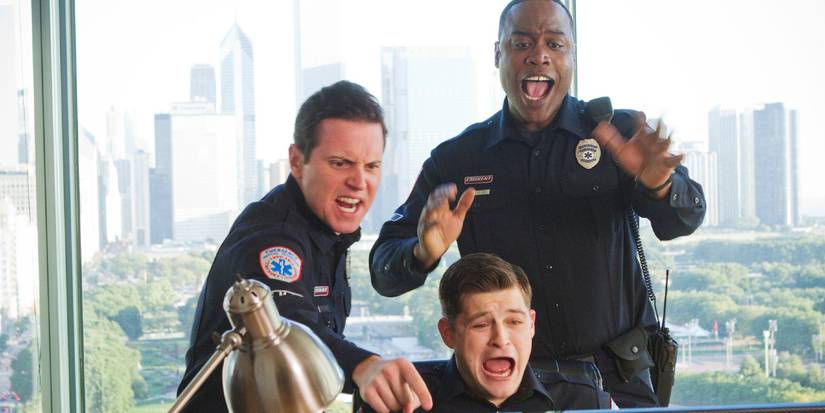
Sirens is a spiritual cousin to Brooklyn Nine-Nine. It is a workplace sitcom centered on a group of EMTs in Chicago who navigate emergency calls and their own chaotic personal dynamics. It finds its comedy in the specific rhythms of emergency medical work, balancing high-stress situations with immature office banter and interpersonal friction.
Sirens is light, episodic, and easy to drop into at any point, with self-contained stories that prioritize character chemistry over long-running arcs. That makes it a comfortable watch, but also contributes to why it didn’t build a larger, more invested audience over time.
One of the best shows on USA Network, Sirens competed with other great sitcoms in the 2010s and ultimately didn’t break out in a meaningful way. While it had a likable ensemble and an easygoing tone, it never developed a strong cultural footprint or signature identity that distinguished it from other workplace comedies of the era.
St. Denis Medical
Number of seasons: 2 | 2024-Present

St. Denis Medical is a mockumentary-style workplace comedy set in a struggling Oregon hospital, where an overworked staff tries to deliver competent care despite limited resources and constant chaos. St. Denis is the best medical sitcom since Scrubs, but it updates the formula with a more self-aware, mockumentary lens.
Its tone can shift quickly from sharp jokes to unexpectedly emotional beats, giving it a balance of humor and heart that rewards regular viewing. The cast of St. Denis Medical is filled with faces sitcom fans will recognize, even if they aren’t household names.
It is quietly building a loyal audience and enough internal momentum at NBC to earn a season 3 renewal, and St. Denis Medical's first season is streaming on Netflix. The series hasn’t fully broken into mainstream cultural conversation yet, but it’s steadily gaining a reputation as one of the more consistent new workplace comedies on television.
Going Dutch
Number of Seasons: 2 | 2025-Present

Going Dutch is a military sitcom following a U.S. Army colonel who is reassigned to a quiet military base in the Netherlands. He struggles to impose order on a posting that turns out to be far more relaxed, unconventional, and chaotic than he expected, especially since the base’s commanding officer is his estranged daughter.
The comedy comes from cultural clashes, generational tension, and the gap between rigid American military expectations and a more laid-back European approach to authority and structure. It also gently satirizes American attitudes toward military hierarchy, turning discipline and protocol into running jokes rather than sacred rules.
While the show has a strong comedic premise and consistent execution, it remains fairly under the radar. Going Dutch season 2 just ended, but it hasn’t generated significant cultural buzz, and unless momentum changes, a potential third season looks uncertain. Going Dutch seems likely to become yet another quality workplace sitcom destined to be retired and forgotten.








 English (US) ·