
Psychological horror is one of the most enduring subgenres because everyone knows that the human mind can be far more terrifying than any monster. These stories create fear through uncertainty, paranoia, obsession, guilt, isolation, and the slow unraveling of reality itself.
The finest psychological horror novels also tend to resist simple explanations. Ghosts may be real, or they may be projections of damaged minds. Haunted houses can become metaphors for grief or trauma. Even when supernatural elements are undeniably present, the emotional core usually lies within the characters themselves. Here are some of the books that do it best.
10 'The Yellow Wallpaper' (1892)

"I've got out at last." This story hugely influenced psychological horror, and it's all now widely considered a landmark of feminist literature. The Yellow Wallpaper is told through the journal of a woman confined to a bedroom as part of a "rest cure" prescribed for her supposed nervous condition. It chronicles her gradual obsession with the room's grotesque yellow wallpaper. As weeks pass, she becomes convinced that figures are trapped behind its disturbing patterns and that only she can set them free.
The big innovation here was creating horror through the narrator's deteriorating mental state rather than overt supernatural events. We basically watch a mind collapse in real-time. At the same time, the novella also functions as a powerful critique of the medical treatment and social oppression of women during the late 19th century.
9 'We Have Always Lived in the Castle' (1962)

"I like my sister Constance." We Have Always Lived in the Castle is one of the classics by horror legend Shirley Jackson. In it, eighteen-year-old Merricat Blackwood lives with her older sister Constance and their elderly uncle. The rest of their family died years earlier under mysterious circumstances years earlier. Shunned by the surrounding village and fiercely protective of her secluded existence, Merricat begins to fear that their fragile peace is about to collapse.
The setup is fairly simple, but it becomes a vehicle for a surprisingly deep exploration of isolation, "otherness", and everyday evil. Another one of the key themes in the book is agoraphobia, something that the author herself struggled with at times. Through it all, Merricat's narration keeps us engaged. Her perspective is very odd and compelling: simultaneously innocent, manipulative, and profoundly disturbing.
8 'The Silence of the Lambs' (1988)
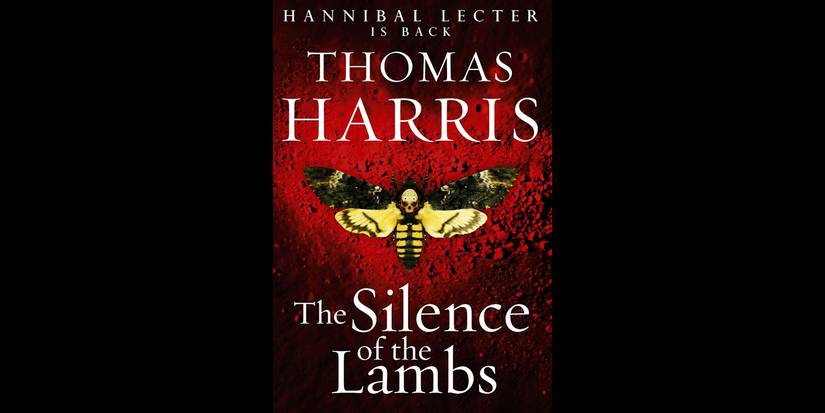
"A census taker once tried to test me." While everyone is familiar with Jonathan Demme's film adaptation (it's still the only horror to have won Best Picture), Thomas Harris' original Silence of the Lambs novel is also great and worth checking out on its own terms. FBI trainee Clarice Starling seeks the assistance of imprisoned psychiatrist and serial killer Hannibal Lecter in order to track another murderer known as Buffalo Bill. Every meeting between Clarice and Lecter becomes a psychological duel.
Although the book obviously lacks the talented presence of Jodie Foster and Anthony Hopkins, it compensates with vivid prose and an immersive atmosphere. It's a fantastic thriller, one that pioneered many tropes that we now take for granted in the genre. The Silence of the Lambs is also psychologically perceptive, with a lot to of sharp things to say about manipulation, fear, and vulnerability.
Collider Exclusive · Horror Survival Quiz Which Horror Villain Do You Have the Best Chance of Surviving? Jason Voorhees · Michael Myers · Freddy Krueger · Pennywise · Chucky
Five killers. Five completely different ways to die — if you're not smart enough, fast enough, or self-aware enough to avoid it. Only one of them is the villain your particular set of instincts gives you a fighting chance against. Eight questions will figure out which one.
🏕️Jason
🔪Michael
💤Freddy
🎈Pennywise
🪆Chucky
TEST YOUR SURVIVAL →
01
Something feels wrong. You can't explain it — you just know. What do you do? First instincts are the difference between the survivor and the first act casualty.
ALeave immediately. I don't need to understand a threat to respect it. BStay quiet and observe. If I can see it, I can understand it. If I can understand it, I can avoid it. CStay awake. Whatever this is, I am not going to sleep until I feel safe again. DConfront it directly. Fear grows in the dark — I'd rather know what I'm dealing with. ECheck everything, trust nothing. The threat might be closer than I think — and smaller.
NEXT QUESTION →
02
Where are you most likely to find yourself when things go wrong? Setting is everything in horror. Where you are determines which rules apply.
ASomewhere remote — a cabin, a campsite, off the grid and away from people. BA quiet suburban neighbourhood where nothing ever happens. Except tonight. CIn my own head — the most dangerous place of all, depending on what's already in there. DWherever children are — because something about this place attracts the worst things. ESomewhere ordinary — a house, a toy store, a place where the last thing you'd expect is a threat.
NEXT QUESTION →
03
What is your most reliable survival asset? Every survivor has a quality the villain didn't account for. What's yours?
APhysical fitness — I can run, I can swim, I can outlast something that relies on brute persistence. BSpatial awareness — I always know the exits, the hiding spots, the fastest route out. CPsychological resilience — I've faced my worst fears before. They don't have the same power over me. DEmotional steadiness — I don't panic. Panic is what gets you caught. EScepticism — I don't underestimate threats because of how they look. Size is irrelevant.
NEXT QUESTION →
04
What kind of fear is hardest for you to fight through? Knowing your weakness is the first step to not dying because of it.
AThe unstoppable — something that will not stop, cannot be reasoned with, and is always getting closer. BThe invisible — a threat I can feel but can't locate, watching from somewhere I can't see. CThe psychological — something that uses my own mind and memories against me. DThe unknowable — something ancient, shapeless, that feeds on the fear itself. EThe mundane — a threat so ordinary-looking that no one will believe me until it's too late.
NEXT QUESTION →
05
You're with a group when things start going wrong. What's your role? Horror movies are brutally clear about who survives group situations and who doesn't.
AThe one who says "we need to leave" first — and means it, even when no one listens. BThe one who stays quiet, watches the others, and figures out the pattern before anyone else does. CThe one who holds the group together when panic sets in — because someone has to. DThe one who asks the questions nobody wants to ask — because ignoring them gets people killed. EThe one who takes the threat seriously when everyone else is laughing it off.
NEXT QUESTION →
06
What's the horror movie mistake you're most likely to make? Honest self-assessment is a survival skill. Denial is not.
AGoing back for someone — I know I shouldn't, but I can't leave them behind. BAssuming I'm safe once I've found a hiding spot. That's when it finds me. CFalling asleep when I absolutely cannot afford to. Exhaustion is its own enemy. DLetting my curiosity override my instincts — I always need to understand what I'm dealing with. EDismissing the threat because of how it looks. That's exactly what it wants.
NEXT QUESTION →
07
What's your best weapon against something that can't be stopped by conventional means? Every horror villain has a weakness. The survivors are always the ones who find it.
AThe environment itself — I use the terrain, the water, the geography against it. BPatience — I wait, I watch, and I strike at the one moment it doesn't expect. CLucidity — if I can stay in control of my own mind, it loses its primary weapon. DCourage — facing it directly, refusing to run, taking away the fear it feeds on. EImprovisation — I use whatever's at hand, however unconventional. Creativity over brute force.
NEXT QUESTION →
08
It's the final scene. You're the last one standing. How did you make it? The final survivor always has a reason. What's yours?
AI kept moving. I never stopped, never hid for too long, never let it corner me. BI figured out the pattern before anyone else did — and I used it against the thing following it. CI stayed awake, stayed lucid, and refused to give it the one thing it needed most. DI stopped being afraid of it. And the moment I did, everything changed. EI took it seriously from the start — and I never once made the mistake of underestimating it.
REVEAL MY VILLAIN →
Your Survival Odds Have Been Calculated Your Best Chance Is Against…
Your instincts, your strengths, and your particular way of thinking under pressure point to one villain you actually have a fighting chance against. Everyone else — good luck.
Jason Voorhees
Jason is relentless, but he is also predictable — and that is the gap you would exploit.
- He moves in straight lines toward his target. He doesn't strategise, doesn't adapt, doesn't outsmart. He simply pursues.
- Your ability to keep moving, use the environment, and resist the panic that freezes most victims gives you a genuine edge.
- The Crystal Lake survivors were always the ones who stopped running in circles and started thinking about terrain, water, and distance.
- You think like that. Which means Jason, for all his indestructibility, would face someone who simply refused to be where he expected.
Michael Myers
Michael watches before he moves. He is patient, methodical, and almost impossible to detect — until it's too late for anyone who isn't paying close enough attention.
- But you are paying attention. You notice the shape in the window, the car parked slightly wrong, the silence where there should be sound.
- Michael's power lies in the invisibility of ordinary suburbia — the fact that nothing ever looks wrong until it already is.
- Your spatial awareness and instinct to map every room, every exit, and every shadow before you need them is precisely the quality Laurie Strode had.
- You are not a victim waiting to happen. You are someone who already suspects something is wrong — and acts on it.
Freddy Krueger
Freddy wins by getting inside your head — using your own fears, your own memories, your own subconscious as weapons against you. That strategy requires a target who can be destabilised.
- You are harder to destabilise than most. You've faced uncomfortable truths about yourself and you haven't looked away.
- The survivors on Elm Street were always the ones who understood what was happening and chose to face it rather than flee from it.
- Freddy's greatest weakness is that his power evaporates in the presence of someone who refuses to give him the fear he feeds on.
- Your psychological resilience — the ability to stay grounded when reality itself becomes unreliable — is exactly the quality that keeps you alive here.
Pennywise
Pennywise is ancient, shapeshifting, and feeds on terror — but it has one critical vulnerability: it cannot function against someone who genuinely stops being afraid of it.
- The Losers Club didn't survive because they were braver than everyone else. They survived because they faced their fears together, and faced them honestly.
- You ask the questions others avoid. You look directly at what frightens you rather than turning away.
- That directness — the refusal to let fear fester in the dark — is Pennywise's worst nightmare.
- It chose the wrong target when it chose you. You are exactly the kind of person whose fear tastes like nothing at all.
Chucky
Chucky's greatest advantage is that nobody takes him seriously until it's already too late. He exploits the gap between how something looks and what it actually is.
- You don't have that gap. You take threats seriously regardless of how they present — and you never make the mistake of underestimating something because of its size or appearance.
- Chucky relies on surprise, on the delay between recognition and response. You close that delay faster than almost anyone.
- Your instinct to treat every unfamiliar thing with appropriate scepticism — rather than dismissing it because it seems absurd — is the exact quality that keeps you breathing.
- Against Chucky, not laughing is already winning. You are very good at not laughing.
↻ RETAKE THE QUIZ
7 'Misery' (1987)
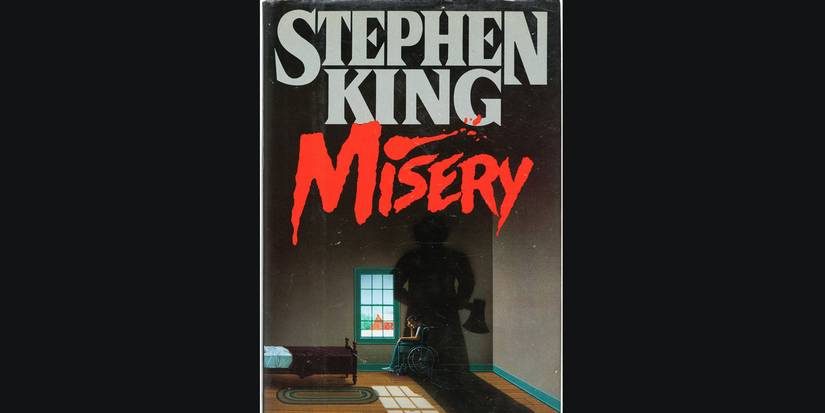 Image via Viking
"I'm your number-one fan." After bestselling novelist Paul Sheldon survives a devastating car accident, he is rescued by Annie Wilkes, his self-proclaimed "number-one fan." But what initially appears to be remarkable good fortune quickly becomes a nightmare when Paul realizes Annie intends to keep him imprisoned until he rewrites the latest novel in her favorite series according to her demands. So begins one of the finest novels ever about imprisonment.
Misery is incredibly tense from start to finish, mostly thanks to Annie's sheer unpredictability. One moment she appears caring and affectionate; the next she erupts into terrifying violence over the slightest perceived betrayal. She's a truly loathsome creation, one fo the most compelling villains in all of horror. Because Annie is so vile, we root desperately for Paul to succeed, which makes every one of his failed escape attempts utterly devastating.
6 'The School of Night' (2025)

"Our days are open and transparent, but enveloped too by the faintest membrane of time." The School of Night is the latest book by Norwegian author Karl Ove Knausgård, most famous for the autobiographical novel series My Struggle. This one gets a little spookier and more supernatural while staying just as philosophically ambitious. It's about a young photography student who accidentally kills a homeless man but avoids accountability, only for the incident to come back to haunt him decades later.
This novel is a darkly brilliant character study of a terrible man. The protagonist is selfish and uncaring in ways that are subtle and believable, yet still deeply destructive. He totally lacks empathy, and yet fundamentally considers himself a decent person. The book's final scenes get especially grim and freaky, involving fated deaths and a chilling scene where the main character sees the ghost of a child on the other side of a mirror.
5 'The Turn of the Screw' (1898)
 Image via Penguin
"I was giving pleasure, if he had his way." The Turn of the Screw by Henry James is one of the archetypal ghost stories, even though it remains ambiguous as to whether it contains ghosts at all. In the story, a young governess arrives at an isolated country estate to care for two orphaned children, Miles and Flora. Soon she becomes convinced that the estate is haunted by the spirits of two former servants who seek to corrupt the children, but no one else appears to share her certainty.
Every supernatural encounter can be interpreted in multiple ways, leaving readers to decide whether the governess is heroically protecting the children from malevolent spirits or slowly descending into paranoia and delusion. This basic idea has since been imitated and riffed on by countless horror writers that followed. It also served as the basis for the classic 1961 horror movie The Innocents.
4 'House of Leaves' (2000)
 Image via
"This is not for you." House of the Leaves is an ingenious and unconventional horror novel whose form is intrinsic to its impact. Ostensibly, the book concerns a documentary about a family's new home, where impossible architectural changes begin to occur. Hallways grow longer than the house should physically allow, rooms appear where none existed before, and an endless black labyrinth gradually expands beneath the building. Yet this central story is layered within multiple narrators, editorial notes, footnotes, and competing interpretations that constantly undermine one another.
Author Mark Z. Danielewski uses the medium itself to hammer home the themes and mood. Unusual typography, fragmented layouts, and pages containing only a handful of words mirror the characters' psychological disintegration. In the process, the house ultimately becomes a metaphor for trauma, obsession, grief, and the limits of our understanding. Understandably, this became a cult favorite.
3 'The Exorcist' (1971)
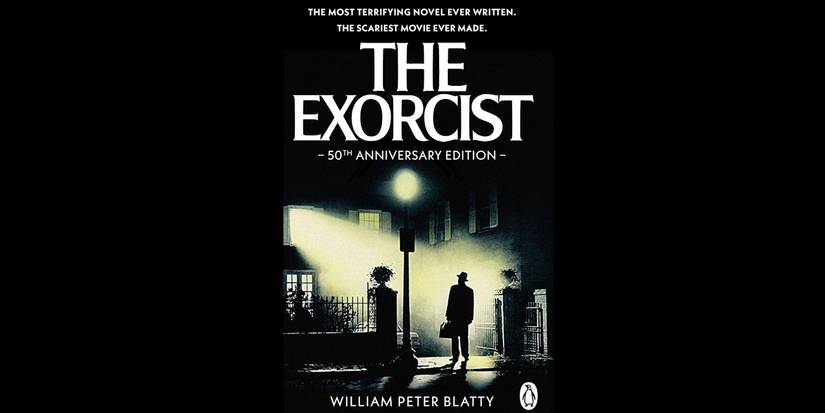
"The power of Christ compels you." Before becoming one of the greatest horror movies ever, The Exorcist started out as a chilling book. When twelve-year-old Regan MacNeil begins exhibiting increasingly disturbing behavior, her desperate mother exhausts every medical and psychiatric explanation before turning to two Catholic priests who suspect demonic possession. The horro escalates slowly, making the supernatural feel disturbingly plausible.
Crucially, author William Peter Blatty (who also wrote the movie's screenplay) keeps the frights grounded in emotional realism. In this regard, Father Damien Karras serves as the story's anchor. A priest struggling with grief and guilt, he confronts not only the apparent demon possessing Regan but also his own doubts about belief, suffering, and evil. His internal conflict gives The Exorcist much more psychological depth than most horrors of its time, opening up new possibilities for the genre.
2 'The Shining' (1977)
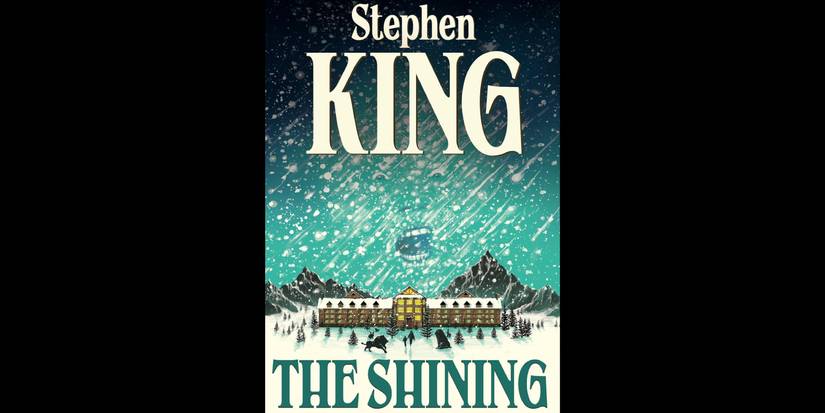 Image via Vintage
"Monsters are real, and ghosts are real too. They live inside us." The Shining elevates the haunted-house story into a devastating portrait of addiction and inherited violence. Hoping for a fresh start, aspiring writer Jack Torrance accepts a position as winter caretaker of the isolated Overlook Hotel. But after a snow cuts him and his family off from the outside world, the hotel's sinister influence steadily begins eroding Jack's fragile sanity.
Meanwhile, Jack's son Danny has psychic abilities that let him see and communicate with the dead. This adds another unsettling dimension to the story. Danny understands far more than he should about the Hotel, and yet he's powerless to stop it. All in all, this book is one of the most well-rounded achievements from the peak of Stephen King's career. It's engrossing, intelligent, and very, very creepy.
1 'The Haunting of Hill House' (1959)
 Image via Penguin
"Whatever walked there, walked alone." The Shining is great, but The Haunting of Hill House by Shirley Jackson is the best haunted-house novel ever written. Here, Dr. John Montague invites a small group of people with paranormal experiences to spend time investigating Hill House, an isolated mansion long associated with tragedy and the supernatural. Among them is Eleanor Vance, a lonely woman whose vulnerability makes her especially susceptible to the house's influence.
Eleanor's yearning for belonging transforms the novel into something way more powerful than a traditional ghost story. Hill House seems to recognize and exploit her deepest desires, blurring the line between external haunting and internal psychological collapse. Although there aren't that many openly ghostly scenes, they all hit hard, and Jackson describes them in chilling, believable prose, as if describing things she herself had seen. What a masterpiece.



 English (US) ·