
 Image via Warner Bros./ Courtesy: Everett Collection
Published Aug 16, 2026, 5:42 PM EDT
Jessica is a young writer from Brisbane, Australia. An avid consumer and lover of all things Film and TV, you will never tear her away from a screen. A tendency rooted from childhood, she once had dreams of becoming a member of the famed kids-band 'Hi-5'. Perhaps that's what pushed her to secure an education with a theater background. But now, as dreams evolved, her passions have turned to admiring performances from afar. Frankly, she's just grateful that she can put her binging skills to good use. Outside of work, Jessica recently completed her undergraduate double degree in Arts/Communications. Other than that, she spends most of her free time with family and friends, probably never forgetting to talk about the new movie or show she watched the day prior.
Sign in to your Collider account
Period movies have a particularly difficult balancing act to pull off. They need to transport audiences to another time without becoming stuffy historical lessons, while also convincing us that the worlds on screen actually existed long before the cameras arrived. Plus, the best ones do more than simply recreate the past: they make it feel tangible, immersive, and surprisingly relevant to the present.
Thankfully, the Academy has recognized plenty of period films over the years, rewarding everything from their spectacular costumes to their masterful performances. So, whether they're set in ancient Rome or the battlefields of World War II, these Oscar-winning movies prove that when Hollywood gets the past right, the results can be absolutely timeless.
10 'Barry Lyndon' (1975)
 Image via Warner Bros.
In 18th century Europe, ambitious Irishman Redmond Barry (Ryan O'Neal) reinvents himself as the aristocratic Barry Lyndon. Unfortunately for him, after a series of adventures and deceptions that help secure his place among the upper class, Barry's hunger for wealth and status gradually catches up to him.
With Stanley Kubrick famously shooting much of the film using natural and candlelight, it's hard to argue that any other period movie has ever looked as breathtakingly authentic—especially when coupled with the lavish costumes and compositions that made almost every frame resemble an 18th century painting. Naturally, Barry Lyndon went on to win four Oscars, including Best Cinematography. Add in the dry sense of humor, as well as the intriguing pacing, and you've got an unusually hypnotic historical epic that's impossible to forget.
9 'Gladiator' (2000)
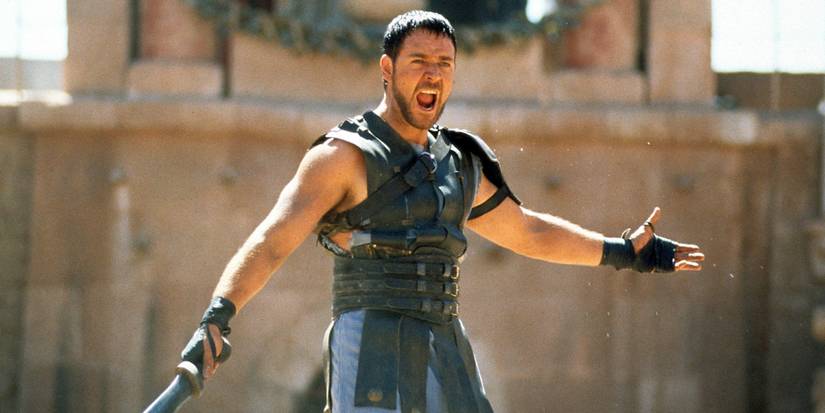 Image via Universal Pictures
The life of Roman general Maximus Decimus Meridius (Russell Crowe) is destroyed when the ambitious Commodus (Joaquin Phoenix) murders his father and seizes the throne. Now, reduced to slavery, Maximus is forced into the gladiatorial arena, where his extraordinary fighting ability eventually gives him the opportunity to confront the emperor who betrayed him.
Ridley Scott revitalized the historical epic genre, combining enormous battle sequences with a surprisingly intimate tale of revenge. Spearheading this was the glorious writing, as well as the cast's phenomenal talent, such as Crowe's stoic intensity and Phoenix's terrifyingly loathsome ways. Gladiator won five Oscars in total, including Best Picture and Best Actor, but its greatest achievement may just be how perfect of a blockbuster it remains to be.
8 'The Grand Budapest Hotel' (2014)
 Image via Searchlight Pictures
In a luxe hotel, legendary concierge Gustave H. (Ralph Fiennes) forms an unlikely friendship with young lobby boy Zero (Tony Revolori). But when one of Gustave's wealthy lovers (and hotel resident) dies and leaves him a priceless painting, he becomes embroiled in a family inheritance dispute, murder investigation, and increasingly absurd European adventure.
Blending the visual language of pre-war cinema with extreme whimsical precision, The Grand Budapest Hotel masterfully constructs a pastel-colored historical world filled with elaborate costumes, intriguing compositions, and meticulous production design. It's thus not surprising that it won four Oscars, naturally, including Best Production and Costume design. It truly remains as one of Wes Anderson's best.
7 'There Will Be Blood' (2007)
 Image via Paramount Vantage
Daniel Plainview (Daniel Day-Lewis) is a ruthless silver miner turned oil tycoon, who moves to California at the turn of the 20th century to build a massive petroleum empire. But his journey grows more complicated as he becomes increasingly consumed by greed, resentment, and his rivalry with charismatic preacher Eli Sunday (Paul Dano).
Paul Thomas Anderson's period drama is less interested in romanticizing America's past than exposing the ugliness beneath its mythology of progress. Day-Lewis gives an astonishing Oscar-winning performance, creating a character whose ambition is both mesmerizing and horrifying. There WIll Be Blood also went on to win Best Cinematography, with Robert Elswit capturing the vast California landscape in all its beautiful and haunting ways.
6 'Saving Private Ryan' (1998)
 Image via Dreamworks Pictures
Set in 1944 during World War II, Captain John Miller (Tom Hanks) and his squad of soldiers travel through war-torn France to locate Private James Francis Ryan (Matt Damon), whose three brothers have already been killed in combat. Their mission is to bring Ryan home alive, even as the soldiers question why their lives should be risked for one singular man.
Immediately establishing its unflinching approach to war in its extraordinary opening sequence, Saving Private Ryan's power continues to shine through the quieter moments. Steven Spielberg won the Oscar for Best Director, while the film also took home four other awards—though shockingly not Best Picture. Regardless, Hanks anchors the story with an understated humanity, turning what could've been a conventional epic into a devastating mediation on sacrifice, brotherhood, and the terrible cost of survival.
Collider Exclusive · Oscar Best Picture Quiz
Which Oscar Best Picture
Is Your Perfect Movie?
Parasite · Everything Everywhere · Oppenheimer · Birdman · No Country
Five Oscar Best Picture winners. Five completely different visions of what cinema can be — and what it can do to you. One of them is the film that was made for the way your mind works. Ten questions will figure out which one.
🪜Parasite
🌀Everything Everywhere
☢️Oppenheimer
🐦Birdman
🪙No Country for Old Men
FIND YOUR FILM →
01
What kind of film experience do you actually want? The best movies don't just entertain — they leave something behind.
ASomething that pulls the rug out — that makes me think I'm watching one kind of film and then reveals I'm watching another entirely. BSomething overwhelming — funny, sad, absurd, and genuinely moving, all at once. CSomething grand and weighty — a film that makes me feel the full scale of what I'm watching. DSomething formally daring — a film that pushes what cinema can even do. ESomething lean and relentless — pure tension with no wasted frame.
NEXT QUESTION →
02
Which idea grabs you most in a film? Great films are driven by a central obsession. What's yours?
AClass, inequality, and what people are willing to do when desperation meets opportunity. BIdentity, family, and the chaos of trying to hold your life together when everything is falling apart. CGenius, moral responsibility, and the catastrophic weight of a decision you can never take back. DEgo, legacy, and the terror of becoming irrelevant while you're still alive to watch it happen. EEvil, chance, and whether moral order actually exists or if we just tell ourselves it does.
NEXT QUESTION →
03
How do you like your story told? Form is content. The way a story is shaped changes what it means.
AGenre-twisting — I want it to start in one lane and migrate into something completely different. BMaximalist and genre-blending — comedy, action, drama, sci-fi, all in one ride. CEpic and non-linear — cutting between timelines, building a mosaic of cause and consequence. DA single unbroken flow — I want to feel like I'm living it in real time, no cuts to safety. ESpare and precise — every scene doing exactly what it needs to do and nothing more.
NEXT QUESTION →
04
What makes a truly great antagonist? The opposition defines the protagonist. What kind of opposition fascinates you?
AA system — invisible, structural, and almost impossible to fight because it has no single face. BThe self — the ways we sabotage, abandon, and fail the people we love most. CHistory — the unstoppable momentum of events that no single person can stop or redirect. DThe industry — the machinery of culture that chews up talent and spits out irrelevance. EPure, implacable evil — a force so certain of itself it becomes almost philosophical.
NEXT QUESTION →
05
What do you want from a film's ending? The final note is the one that lingers. What do you want it to sound like?
AShock and inevitability — a conclusion that recontextualises everything that came before it. BEarned emotion — I want to cry, laugh, and feel genuinely hopeful, even if the world is a mess. CDevastation and grandeur — an ending that makes me sit in silence for a few minutes after. DAmbiguity — something that leaves enough open that I'm still thinking about it days later. EBleakness — an honest refusal to pretend the world is tidier than it actually is.
NEXT QUESTION →
06
Which setting pulls you in most? Where a film takes place shapes everything — mood, stakes, what's even possible.
AA gleaming modern city with a hidden underside — beauty masking rot, wealth masking desperation. BA collapsing suburban life that opens onto something infinite — the multiverse of a single ordinary person. CThe corridors of power and science at a world-historical turning point — where decisions echo for decades. DThe grimy, alive chaos of New York and Hollywood — fame as both destination and trap. EVast, indifferent landscape — desert and highway where violence arrives without warning or reason.
NEXT QUESTION →
07
What cinematic craft impresses you most? Every great film has a signature — a technical or artistic element that makes it unmistakable.
AProduction design and mise-en-scène — every frame composed to carry meaning beneath the surface. BEditing and tonal control — the ability to move between registers without losing the audience. CScore and sound design — music that becomes inseparable from the dread and awe of what you're watching. DCinematography as performance — the camera not recording events but participating in them. ESilence and restraint — what's left unsaid and unshown doing more work than any dialogue could.
NEXT QUESTION →
08
What kind of main character do you root for? The protagonist is the lens. Who you choose to follow says something about you.
ASomeone smart and resourceful who makes increasingly dangerous decisions under pressure. BSomeone overwhelmed and ordinary who turns out to be capable of something extraordinary. CA brilliant, tortured figure whose gifts and flaws are inseparable from each other. DA self-destructive artist whose ego is both their superpower and their undoing. EA quiet, principled person trying to make sense of a world that has stopped making sense.
NEXT QUESTION →
09
How do you feel about a film that takes its time? Pace is a choice. Some films sprint; others let tension accumulate slowly, deliberately.
AI love a slow build when I know the payoff is going to be seismic — patience for a devastating reveal. BGive me relentless momentum — I want to feel breathless and emotionally spent by the end. CEpic runtime doesn't scare me — if the material demands three hours, give me three hours. DI want it to feel propulsive even when nothing is technically happening — restless energy throughout. EDeliberate and unhurried — I want dread to accumulate in the spaces between the action.
NEXT QUESTION →
10
What do you want to feel walking out of the cinema? The best films leave a mark. What kind of mark do you want?
AUnsettled — like I've just seen something I can't fully explain but can't stop thinking about. BMoved and energised — like the film reminded me what actually matters and gave me something to hold onto. CHumbled — like I've been in the presence of something genuinely important and overwhelming. DExhilarated — like I've just seen cinema doing something it's never quite done before. EHaunted — like a cold, quiet dread that stays with me for days.
REVEAL MY FILM →
The Academy Has Decided Your Perfect Film Is…
Your answers have pointed to one Oscar Best Picture winner above all others. This is the film that was made for the way your mind works.
Parasite
You are drawn to films that operate on multiple levels simultaneously — that begin in one genre and quietly, brilliantly migrate into another. Bong Joon-ho's Parasite is a film about class, desire, and the architecture of inequality that manages to be darkly funny, deeply suspenseful, and genuinely shocking across a single extraordinary running time. Your instinct is for cinema that hides its true intentions until the moment it's ready to reveal them. Parasite is exactly that — a film that rewards close attention and punishes assumptions, right up to its devastating final image.
Everything Everywhere All at Once
You want it all — and this film gives you all of it. The Daniels' Everything Everywhere All at Once is one of the most maximalist films ever made: action comedy, multiverse sci-fi, family drama, existential crisis, and a genuinely earned emotional core that sneaks up on you amid the chaos. You are someone who responds to ambition, who doesn't want cinema to choose between being entertaining and being meaningful. This film refuses that choice entirely. It is overwhelming by design, and its overwhelming nature is precisely the point — because the feeling of being crushed by infinite possibility is exactly what it's about.
Oppenheimer
You are drawn to cinema on a grand scale — films that understand history not as a backdrop but as a force, and that place their characters inside that force and watch what happens. Christopher Nolan's Oppenheimer is a film about the terrifying gap between what we can do and what we should do, told with the full weight of one of the most consequential moments in human history behind it. You want your films to feel important without feeling self-important — to earn their ambition through sheer craft and the gravity of their subject. Oppenheimer does exactly that. It is enormous, complicated, and refuses easy comfort.
Birdman
You are drawn to films that foreground their own construction — that make the how of the filmmaking part of the what it's about. Alejandro González Iñárritu's Birdman, shot to appear as a single continuous take, is cinema examining itself through the cracked mirror of a fading actor's ego. You respond to formal daring, to the feeling that a film is doing something that probably shouldn't be possible. Michael Keaton's performance and Emmanuel Lubezki's restless camera create something genuinely unlike anything else — a film that is simultaneously about creativity, relevance, self-destruction, and the impossibility of ever truly knowing if your work means anything at all.
No Country for Old Men
You are drawn to cinema that trusts silence, that refuses to explain itself, and that treats dread as a form of meaning. The Coen Brothers' No Country for Old Men is a film about the arrival of a new kind of evil — implacable, arbitrary, and utterly indifferent to the moral frameworks we use to make sense of the world. It is one of the most formally controlled films ever made, and its controlled restraint is what makes it so terrifying. You want your films to haunt you, not comfort you. You are not interested in resolution if resolution would be dishonest. No Country for Old Men is honest in a way that most cinema never dares to be.
↻ RETAKE THE QUIZ
.jpeg?q=49&fit=crop&w=825&dpr=2)
In 18th-century Qing Dynasty China, master warrior Li Mu Bai (Chow Yun-fat) decides to give up his legendary sword and entrust it to his greatest confidant and fellow warrior Yu Shu Lien (Michelle Yeoh). But when the sword is suddenly stolen, the two embark on an intense pursuit that leads them to an impetuous, but highly-skilled daughter of a nobleman.
While the film's period setting provided the foundation for some of the most breathtaking action sequences ever filmed, its greatest strength is how gracefully the physical and emotional storytelling intertwine. Ang Lee combines elegant production design with stellar choreography, creating a world that feels simultaneously grounded and dreamlike. Crouching Tiger, Hidden Dragon ultimately won four Oscars, including Best Foreign Language Film and Best Cinematography, making it a landmark for both martial-arts cinema and international filmmaking.
4 'Titanic' (1997)
 Image via Paramount Pictures
In 1996, a treasure hunter and his team explore the wreck of the RMS Titanic in hopes to find a necklace known as the Heart of the Ocean. Eventually, their investigation leads them to Rose DeWitt Bukater (Kate Winslet), who recounts her experience on the ship as a young aristocratic woman. There, she meets and quickly falls in love with Jack Dawson (Leonardo DiCaprio), a penniless artist who gives her a glimpse of freedom.
James Cameron's enormous production could've easily become a hollow spectacle, but Titanic works because its technical achievements are matched by genuine emotional investment. The meticulous recreation of the ship, elaborate costumes, and unforgettable score all contributed to its record-breaking 11 Oscar wins. More than just a period romance (or disaster flick), it remains a staggering feat of filmmaking that manages to make one of history's greatest tragedies feel intimate and personal.
3 'Schindler's List' (1993)
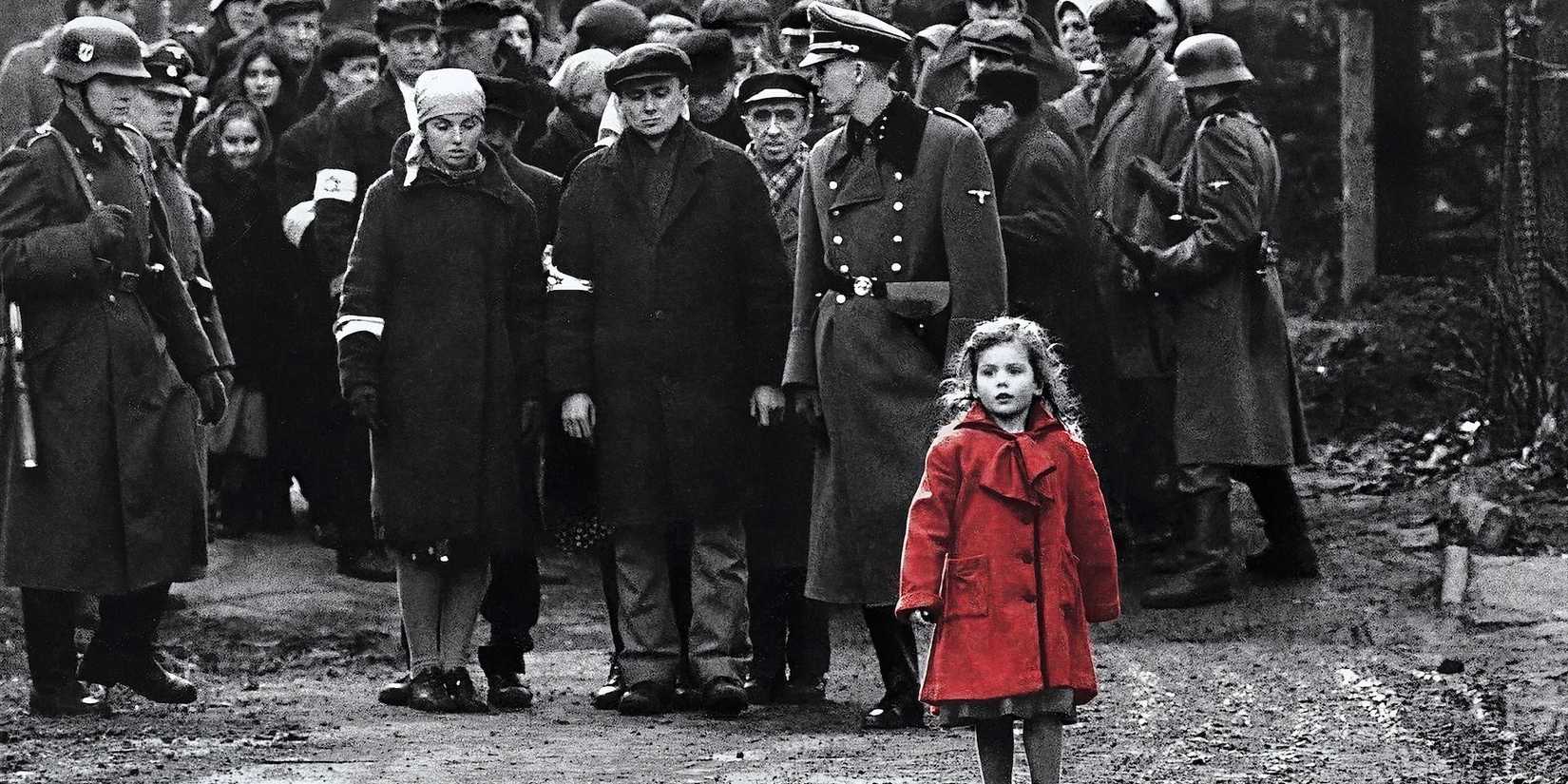 Image via Universal Pictures
In World War II, Oskar Schindler (Liam Neeson) is a German businessman who initially uses Jewish forced labor as an opportunity to increase the profits of his enamelware factory. But as the Nazis begin their brutal extermination, Schindler risks his fortune and reputation to save the lives of those workers.
Few period movies have used historical detail so powerfully as Schindler's List. The stark black-and-white cinematography amplifies its haunting quality, while Neeson gives Schindler humanity without ever turning him into a simplistic hero. The film won seven Oscars, including Best Picture, Best Director, and Best Cinematography, but its greatest achievement arguably stems from its refusal to ever make the Holocaust feel comfortably distant.
2 'Lawrence of Arabia' (1962)
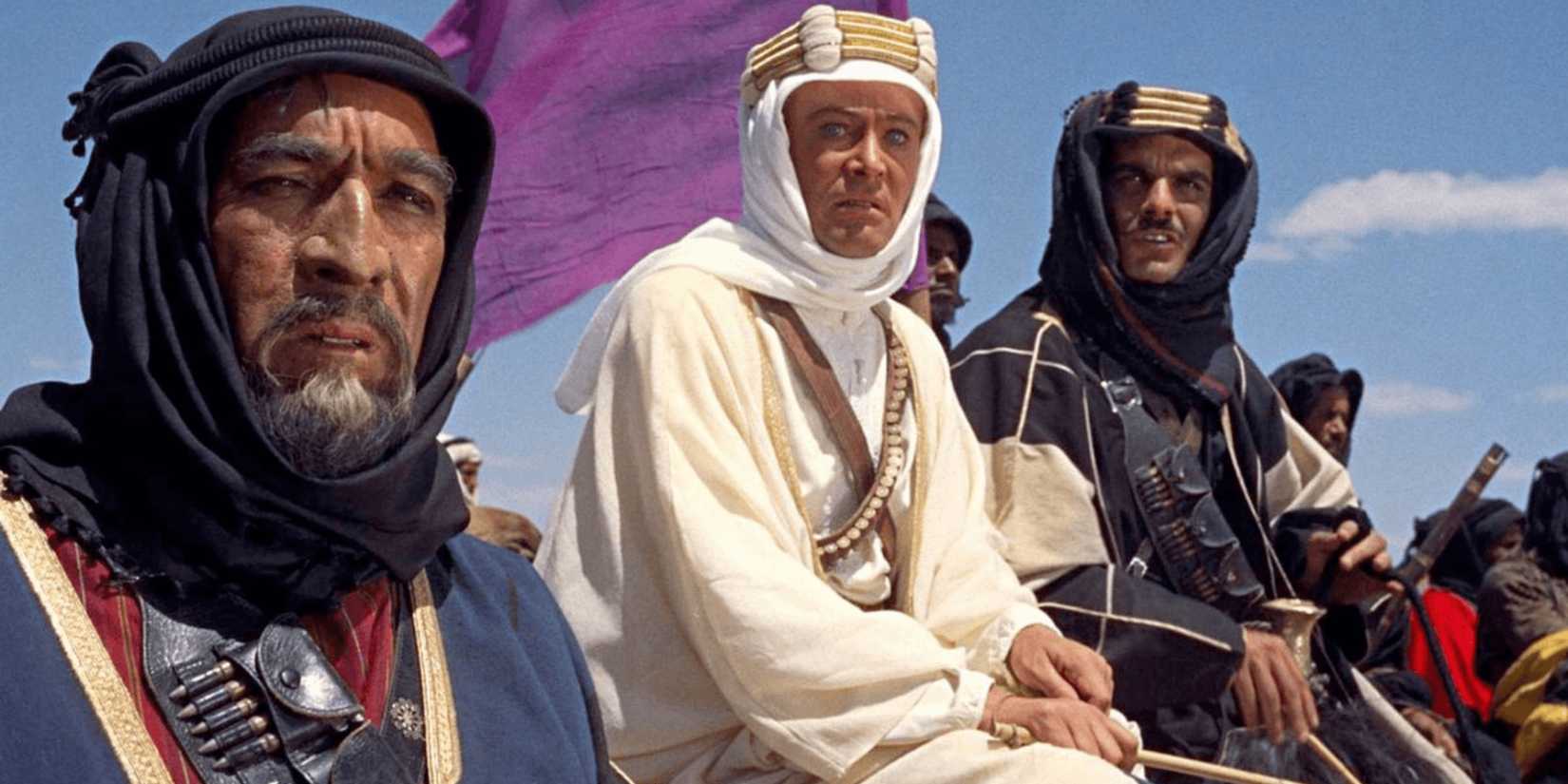 Image via Columbia Pictures
The sweeping epic chronicles the remarkable true story of British officer T.E. Lawrence (Peter O'Toole), whose leadership during the Arab Revolt transformed him into an international legend of World War I. But, as Lawrence becomes increasingly consumed by war and his own mythology, the line between heroism and obsession begins to blur.
Lawrence of Arabia is period filmmaking on an almost absurdly grand scale. David Lean turns the desolate deserts into some of the most iconic landscapes in cinema, while O'Toole gives the film its magnetic center as a man who's simultaneously fascinated and disturbed by his own transformation. It went on to win seven Oscars, including Best Picture and Best Director, and its influence can still be seen in virtually every epic that's followed.
1 'Amadeus' (1984)
 Image via Orion Pictures
The life of Wolfgang Amedeus Mozart (Tom Hulce) is reimagined through the eyes of court composer Antonio Salieri (F. Murray Abraham). But as the latter witnesses Mozart's extraordinary musical genius and effortless rise to fame, Salieri's admiration slowly grows into all-consuming envy—especially given the young composer's childish demeanor.
The historical liberties are considerable in this biopic, but Amadeus isn't really trying to function as a documentary—and that's part of its brilliance. The lavish costumes, ornate production design, and wild cinematography make 18th-century Vienna feel alive, while Abraham's Oscar-winning performance gives Salieri an extremely complicated intensity. The film won eight Oscars, including the big three (Best Picture, Director, and Actor), making it one of the most accomplished historical dramas of its era.

Amadeus
Release Date September 19, 1984
Runtime 160 minutes
Director Miloš Forman
Writers Peter Shaffer
-

-

Tom Hulce
Wolfgang Amadeus Mozart


 English (US) ·