
 Image via Donald M. Grant, Publisher

Published Feb 8, 2026, 12:06 PM EST
Jeremy has more than 2300 published articles on Collider to his name, and has been writing for the site since February 2022. He's an omnivore when it comes to his movie-watching diet, so will gladly watch and write about almost anything, from old Godzilla films to gangster flicks to samurai movies to classic musicals to the French New Wave to the MCU... well, maybe not the Disney+ shows.
His favorite directors include Martin Scorsese, Sergio Leone, Akira Kurosawa, Quentin Tarantino, Werner Herzog, John Woo, Bob Fosse, Fritz Lang, Guillermo del Toro, and Yoji Yamada. He's also very proud of the fact that he's seen every single Nicolas Cage movie released before 2022, even though doing so often felt like a tremendous waste of time. He's plagued by the question of whether or not The Room is genuinely terrible or some kind of accidental masterpiece, and has been for more than 12 years (and a similar number of viewings).
When he's not writing lists - and the occasional feature article - for Collider, he also likes to upload film reviews to his Letterboxd profile (username: Jeremy Urquhart) and Instagram account.
He has achieved his 2025 goal of reading all 13,467 novels written by Stephen King, and plans to spend the next year or two getting through the author's 82,756 short stories and 105,433 novellas.
Sign in to your Collider account
He might not be the literal record holder, when it comes to declaring which author has written the most words across their entire career, but you'd have to think Stephen King would be a contender. His quantity of work has something to do with this, undoubtedly, as since 1974, he’s put out at least one novel a year, on average. Close to 70, all up. And then that’s before taking into account the short stories, novellas, and pieces of non-fiction he’s done, too.
Further, his word count is ultimately upped because King likes to write very long stories. Some of these end up being epics, too. What follows isn't a rundown of his longest books, necessarily, but those that feel the most epic. And they do have to be long as well. So, there won’t be anything like Lisey’s Story or Christine here, even if they're pretty sizable page count-wise (they're not quite epic enough in scope to fit here).
10 'Desperation' (1996)
 Image via Viking Press
Was he desperate (heh) to make this one 700 pages long or something? Maybe. Okay, it’s only that long in certain editions, and it depends on the formatting, but Desperation has a lot of words in it, either way, with at least one edition being about 700 pages long. Of those pages, maybe about 400 or so are quite good, with an expanding cast of characters all brought together by an intriguing antagonist.
The build-up is so much better than the payoff, though, because the ultimate conflict Desperation is about feels a little lackluster. All these great pieces are put together in initially intriguing ways, but without a sufficient oomph to close out all the threads going on. It’s just what happens with King, sometimes, but Desperation is efficiently ambitious, long, and (for a while, at least) good enough to just sneak in on this here ranking.
9 'Insomnia' (1994)
 Image via Viking
A novel that King himself isn't too fond of, Insomnia has many ties to other books of his, especially those within a certain long-running series King wrote that will be mentioned and elaborated on in a bit. For the basics, there’s an old man who is indeed struggling to sleep, and while grappling with insomnia, he starts seeing increasingly strange things, and then ends up involved in a conflict that’s also quite strange.
As a whole, Insomnia is a bit much, or maybe just a bit long. But the way it builds into an epic is somewhat impressive, and the ties it has to other/bigger Stephen King stories is probably the most interesting thing about it. It’s also the thing that makes it less approachable than your average Stephen King novel; indeed, less approachable than his other books that might look, on the surface, long and hard to approach.
8 'Needful Things' (1991)
 Image via Viking
While it’s technically just got the one relatively small town as its setting, that town, Castle Rock, ends up being expansive enough, and also, Needful Things doesn’t need to cover a lot of ground beyond Castle Rock to feel epic. It really brings to life the entire town in a way that previous King stories set there didn’t necessarily, and ultimately, it’s all done in service of dismantling pretty much the entirety of said town.
It was marked as “The Last Castle Rock Story,” after all, though that didn’t quite end up being true. Still, it’s pretty much apocalyptic with the chaos that goes on, so long as you make a note of the fact that the apocalypse is confined to just one town. Seeing everything go to hell, and for such a long time, is weirdly compelling, and Needful Things is, as a result, certainly one of the better Stephen King books from the 1990s.
7 'The Talisman' (1984)
 Image via Viking Press/Stephen King/Peter Straub
Years on from The Talisman, Stephen King would sort of write the same kind of story again, this time called Fairy Tale, and it wasn’t quite as good. It wasn’t as long, either, though it’s right on the line of being something of an epic. Anyway, with The Talisman, King technically co-wrote it, with the other writer being Peter Straub, and then both authors collaborated again for its 2001 sequel, Black House.
The Talisman came out in a strong and prolific decade for King, so it sometimes gets buried under all the other stuff, but it shouldn’t be forgotten about, because it’s a pretty great adventure/dark fantasy sort of story. There’s another epic series of King’s that scratches the same itch, about a certain Dark Tower, but more on that a little later.
6 'Under the Dome' (2009)
 Image via Charles Scribner's Sons
Pairing well with Needful Things, Under the Dome is even longer, but even more confined setting-wise. Chester’s Mill, like Castle Rock, is also a small town, but Under the Dome is about the people living there getting trapped there, thanks to that pesky titular dome. Things were already tense in Chester’s Mill before, but everything gets inevitably worse after the dome comes down.
There is so much death here, and you do genuinely feel the danger of the situation right from the start, and the escalation is admirably done over the course of many pages, much as was the case with Needful Things. Under the Dome isn't an absolutely flawless read, but it stays compelling for most of its 1000+ pages, and so you can’t really look past it if you're talking about impressive King-written epics.
5 'Salem's Lot' (1975)
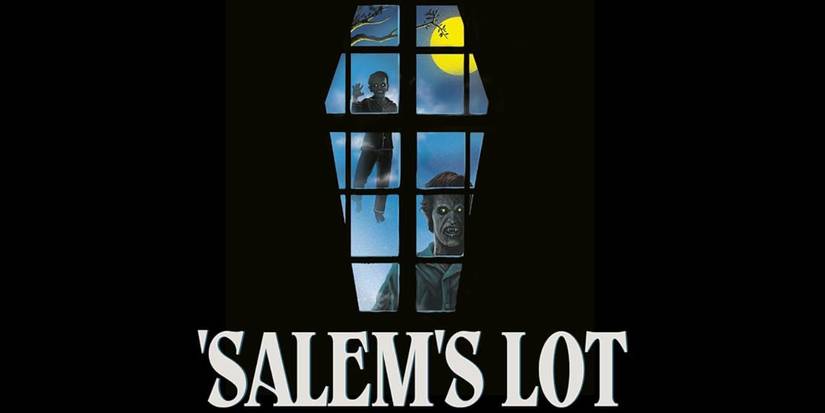 Image via Doubleday
'Salem's Lot was just the second novel Stephen King had published, but it did represent a significant step forward for him, when it came to the size of the stories he was willing to tell. Carrie, his first novel, is also one of his slimmest if you're looking purely at the page count, while ‘Salem’s Lot is a decent amount chunkier, and it has a more complex story alongside many more characters.
It takes place inside a town, a bit like Needful Things and Under the Dome, with a problem that ultimately takes over the town in question, leading to increasingly frightening and deadly things happening. It’s almost treated as a twist, what the supernatural threat is, so best to keep it vague on the off chance you’ve really not heard – or seen – anything about ‘Salem’s Lot in the 50+ years since it was first published.
4 '11/22/63' (2011)
 Image via Charles Scribner's Sons
There was a ton of effort clearly put into 11/22/63, and it’s probably his most successful sci-fi-heavy book, too, so it’s a bit surprising that Stephen King hasn’t specifically mentioned it as a personal favorite of his. Maybe it is. There’s a lot here that an author would be proud of, including the fact that a story about going back in time to stop the John F. Kennedy assassination was actually pulled off here, and done in a way that was exciting and not too silly.
11/22/63 is character-focused, and doesn’t have too many prominent characters either, which dials down the epic factor somewhat, but still, it’s about traveling through time, and the novel takes place over many years, too. Also, it’s very long. So, it’s enough of an epic to be here. The main thing, though, is that you should read it, if you haven’t already, because it’s a great Stephen King novel.
3 'It' (1986)
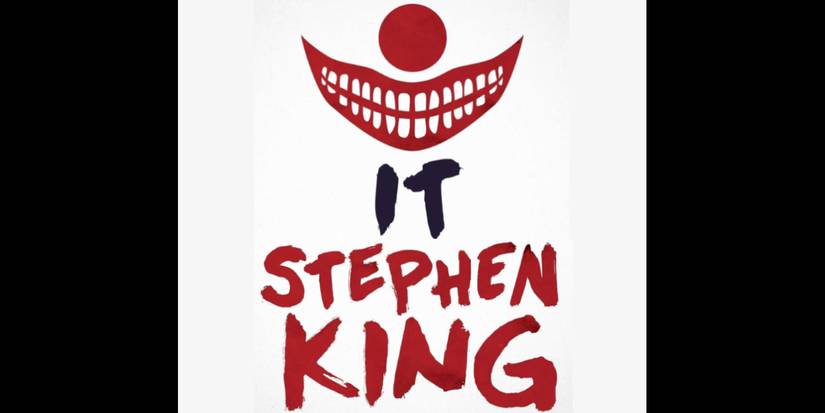 Image via Viking
Easily one of the most controversial Stephen King books, It is also right up there among the longest. The thing’s kind of two stories in one, and they parallel each other, having the same characters and setting in each, but placed 27 years apart. Unlike in the more recent two-part movie adaptation, the structure of the novel allows both timelines to play out alongside each other.
The ambition here is honestly out of this world, and trying to wrap one’s head around how Stephen King wrote something this mad, compelling, and oddly coherent is dizzying. Well, it’s oddly coherent according to its own rules, but what other rules are needed when your story is more than 1000 pages long and ultimately this good? And this heavy-going at times, too, because King really doesn’t hold back in any way, at any point, with It.
2 'The Stand' (1978/1990)
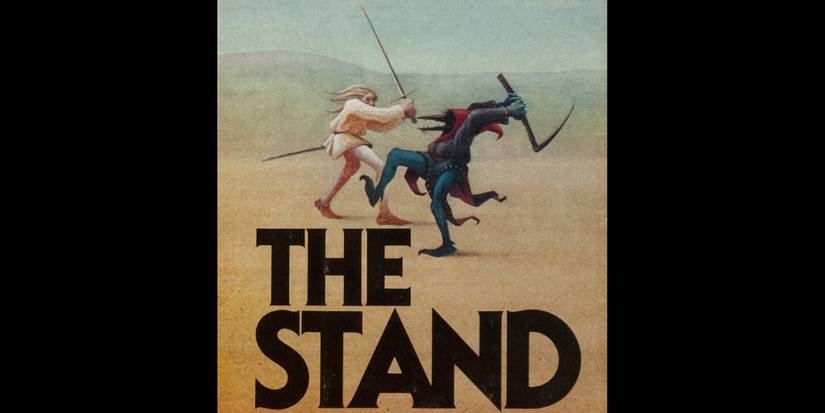 Image via Doubleday
Within Stephen King’s bibliography, you'll sometimes find a book so massive that it appears twice: The Stand. Well, it doesn’t appear twice because it’s two books, but the massiveness plays a part. See, it was originally published as a very long book in 1978 that had quite a lot cut from it, and then in 1990, it was re-released in an uncut form, and so that version was an incredibly long book (and it had some dates and references changed, taking the setting from the 1980s and placing it in the 1990s).
In both cases, though, The Stand is about the end of the world, and a war waged between those who've survived the deadly flu that killed everyone else, with that war being over the fate of the planet going forward. It spans so much of the U.S., has what feels like an endless number of characters, and certainly finds other ways to be ambitious, too (especially near the book’s conclusion). As such, calling The Stand an epic feels like quite the understatement.
1 'The Dark Tower' (1982–2004)
It’s a bit cheeky to put a series in the top spot here, but The Dark Tower really is a single epic that just happens to have been written and released in seven parts. Or eight parts, if you count 2012’s The Wind Through the Keyhole. There’s also a novella and other stories that play into The Dark Tower, but the minimum number of books you can count in the series is seven, and they came out between 1982 and 2004.
The whole story involves a man, plus some allies, going to great lengths to find the titular Dark Tower, not knowing why exactly, but being undeniably drawn there regardless. There’s so much more that happens along the way, obviously, with the narrative also going into the past with flashbacks, and into various different worlds. It makes sense by the time you get to the end of it all, but you really do need to have read it all to appreciate The Dark Tower properly. That makes singling out one book difficult (most are epics in their own right), so here they all are, counted as one. The ultimate Stephen King epic.
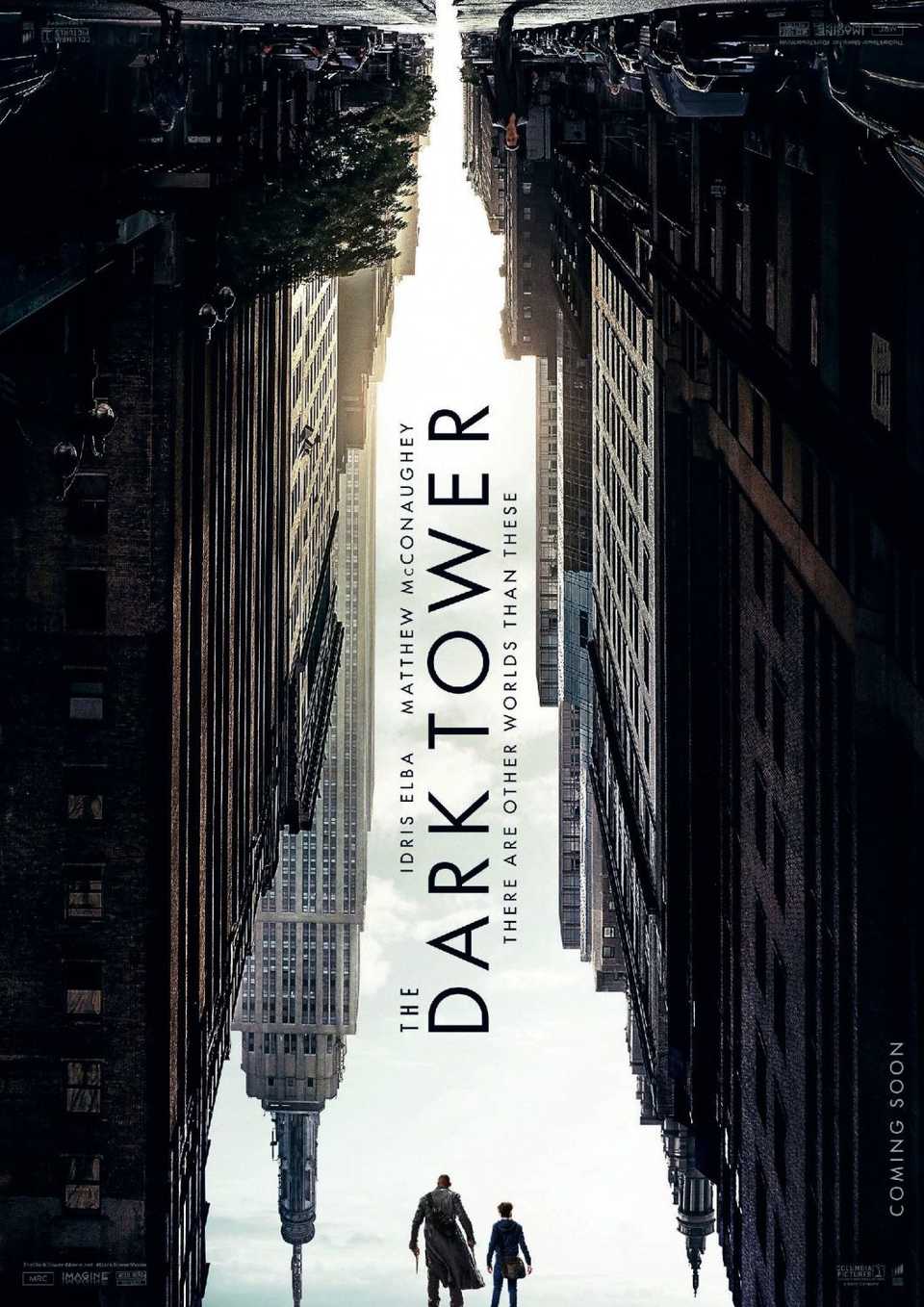
The Dark Tower
Release Date August 4, 2017
Runtime 95 Minutes





 English (US) ·