
Sure, the 2000s might've been a tumultuous decade, and not the best of starts to a new century or millennium, but if you just focus on the books that came out between 2000 and 2009, things look mostly pretty good. The decade’s now far enough back in time for many of the best books of the 2000s to feel like genuine classics, or at least you can now start to say that a few have stood the test of time. Well, the test of some time.
The 2000s weren’t ages ago, admittedly, and so a definitive ranking of the decade’s best books might feel a little harder to do than tackling the same task for the 1990s, or 1980s, or any preceding decade. Still, that’s what is attempted below, with a range of genres and authors represented, and some works of non-fiction included alongside the more traditional/expected novels, too.
10 'The Curious Incident of the Dog in the Night-Time' (2003)
 Image via Doubleday
The Curious Incident of the Dog in the Night-Time is one of the more approachable works of postmodernism out there, and it’s also a pretty great mystery novel, if you don’t want to get too analytical while reading it. The book’s about a dead dog, which is morbid, but more specifically, about a teenage boy with what’s assumed to be Asperger syndrome trying to solve the murder of that dog, so to speak.
He has a unique way of looking at and navigating the world, which goes a long way toward making The Curious Incident of the Dog in the Night-Time feel distinctive and quite moving, in a way, and eventually. It’s not a tear-jerker, but there is sincerity and a good deal of emotion behind what happens, and how it happens, with the novel being simultaneously clever, fast-paced, and unique.
9 'Against the Day' (2006)
 Image via Penguin Press
Generally, people regard Thomas Pynchon’s earlier novels as his best, with The Crying of Lot 49 (1967) being undoubtedly influential, and then Gravity’s Rainbow (1973) being the kind of thing that, once read, isn't really forgotten. But if you find anything compelling in those earlier novels, you're missing out if you don’t read any of the later Pynchon works, with Against the Day being arguably his greatest release of the 21st century.
Owing to its length and density, it’s hard to summarize, not helped by the fact that the events covered here take place over a period of 25 years, involving countless characters who drift in and out of the overall novel.
Gravity’s Rainbow was long, as was Mason & Dixon (1997), but Against the Day proves even more epic, and is the only Pynchon novel to exceed 1000 pages. Owing to its length and density, it’s hard to summarize, not helped by the fact that the events covered here take place over a period of 25 years, involving countless characters who drift in and out of the overall novel. Thomas Pynchon’s the kind of author, though, where even if you only latch onto 10% of what he’s writing, it’s still worth reading said writing just for that 10% (and, obviously, if you can get on board with more than that, or understand further parts of the novel on a re-read, then that’s all the better).
8 'A World Undone: The Story of the Great War, 1914 to 1918' (2006)
 Image via Delacorte Press
A World Undone: The Story of the Great War, 1914 to 1918 is about just that: the First World War. Some might scoff at the idea of condensing such a long and complex conflict into a single book, and sure, if you want more detail about specific battles or countries that were involved in the conflict, you're probably better off digging into other books that are a little narrower in scope.
In terms of something that's an overview, though, it’s hard to imagine a work of nonfiction about World War I being much better than A World Undone. There is a lot of information conveyed here, and it’s written well throughout, being more than understandable if you're not well-versed in the conflict (and, naturally, if a book about the war that’s wider in scope and overall broader is something you're okay with).
7 'The Dark Tower VII: The Dark Tower' (2004)
Concluding The Dark Tower series in relative style, The Dark Tower VII: The Dark Tower is about a lot of things, owing to how grand the series has gotten after six books (most of them decently lengthy), but it’s mostly about reaching that titular tower. Stephen King’s series, which was published over a span of more than 20 years, was always about a man named Roland wanting to reach the Dark Tower, and he does.
That’s not a spoiler, but saying what happens upon reaching the tower would be, as would mentioning certain things that happen as the journey toward the tower reaches its final stages. Not everyone loves where this series ended up, yet it’s hard not to feel some admiration at the ambition of it all, and feel wowed, to some extent, at the places King was willing to go. You do need to read the other six books to fully appreciate this seventh one, though it is, without a doubt, a journey worth taking (a few thousand pages honestly pass by rather fast).
6 'Columbine' (2009)
 Image via Hachette Book Group
Since it was published only a decade on from the event it covers, there was a particular amount of delicacy required, on the part of Dave Cullen, to cover the events of the Columbine High School massacre in Columbine (2009). Care should be taken in anything that’s true crime-related, of course, but that’s not always what happens, and there’s something uniquely rotten feeling about reading or watching something focused on a real-life crime/tragedy that doesn’t feel respectful.
Columbine, the book, tackles things in a way that gives time to all parties involved, and tries to unpack what likely motivated – and led to – the event in the first place. Structurally, it places everything in what feels like the ideal order, and remains engaging and never too convoluted, even if it wants to be broad and quite detailed, somehow, at the same time. It might not be perfect, nor the kind of thing everyone would want to read, but it’s easy to identify a lot of things it does right, as an inevitably difficult/challenging work of nonfiction.
5 'The Road' (2006)
 Image via Picador
There is a certain amount of horror to The Road, though arguably not to the same extent as Blood Meridian, which was an earlier novel written by Cormac McCarthy. Still, for the fact that it was written by McCarthy, some degree of intensity and/or horror is pretty much inevitable, with the style and overall sparseness of The Road making what would ordinarily be an intense post-apocalyptic book all the more despairing.
That style is worth honing in on, since The Road is minimalist with its lack of character names, the relative simplicity of its narrative (or overall lack thereof), and its dialogue being there without quotation marks (which is a staple of McCarthy’s writing, to be fair). There is still a lot to feel and appreciate when it comes to this novel, and it might well be the “easiest” to tackle first, out of all Cormac McCarthy’s books. That’s not the same as it being easy to tackle, but comparatively… yeah. Maybe.
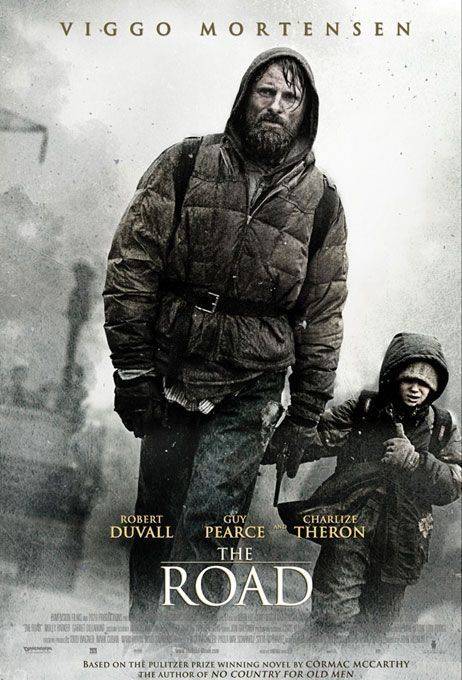
The Road
Release Date November 25, 2009
Runtime 111 minutes
Writers Joe Penhall
4 'Mistborn: The Final Empire' (2006)
 Image via Tor Books
There’s a lot left hanging at the end of Mistborn: The Final Empire, since it’s the first book in a trilogy by Brandon Sanderson. Even then, it’s the best of the trilogy, and it still contains a rather immense final act that proves surprising and subversive without being frustrating. Sanderson uses this trilogy to deconstruct certain fantasy tropes and conventions, but then plays others a little straighter, so you're kind of kept on your toes throughout the whole thing.
And, honestly, Mistborn: The Final Empire does so much to elevate and make more exciting the next two books in the trilogy, 2007’s The Well of Ascension and 2008’s The Hero of Ages. Also, Mistborn: The Final Empire has something of a heist narrative, but within a fantasy world, and the contrast there (like the contrast between subversive and conventional things, narratively speaking) goes a long way toward making the overall novel feel special.
3 'House of Leaves' (2000)
 Image via Doubleday
If there is an opportunity to talk about House of Leaves, it must be seized, because this is one of the best books ever. Or, if not one of the best, then one of the most distinctive, and the least likely to ever be adapted into some kind of movie, TV show, or something else. The horror it deals with is a little reminiscent of what you find in Backrooms, but House of Leaves does go deeper, and aims to be something quite different, all to the point that you couldn’t really digest this story as even an audiobook or an ebook.
House of Leaves wants to drive you a bit mad, and you have to pick up a physical copy of it to really feel the story it tells. It’s a book about one man’s analysis (and psychological unraveling) of another man’s analysis (and his psychological unraveling) of a documentary – that might not actually exist – about a particularly strange haunted house. Plus a lot of other things. It’s funny, frightening, frustrating, and endlessly rewarding, and might well have been instrumental in inspiring the person writing these words to get back into reading after avoiding books for, like, a little over a decade. Yeah, it’s that good.
2 'A Storm of Swords' (2000)
 Image via Bantam Spectra
If you're more familiar with the Game of Thrones TV series than the A Song of Ice and Fire book series the show was based on, book #3, A Storm of Swords, had its events adapted in seasons 3 and 4 of the HBO series. And if you're familiar with that series, you'll probably remember seasons 3 and 4 being pretty great, and certainly packed with drama, since season 3 has “The Rains of Castamere,” and then season 4 has something jaw-dropping happening, like, almost every episode? Or at least in more than half the episodes.
So, it’s safe to say that A Storm of Swords is immense, alongside being incredibly thrilling to read. At this stage, George R.R. Martin has written five books out of a planned seven, and for now, A Storm of Swords is probably the best of them. If books #6 and #7 do ever come out, they might well struggle to top the drama and excitement found in this particular book, but maybe that’s okay, when said drama and excitement are at such a high level. Hell, Game of Thrones didn’t really find a way to exceed seasons 3 and 4 in terms of quality after they'd aired, either.
1 'On Writing: A Memoir of the Craft' (2000)
 Image via Scribner
It’s easily one of the least scary Stephen King books, but On Writing: A Memoir of the Craft is also the one that’s furthest removed from the genre he’s best known for tackling. True to the title, this is a memoir, and it does a lot to showcase why writing was always appealing to King, and covers the earliest stages of his writing career, with quite a bit of time spent on the process of finally getting noticed and, subsequently, published.
Stephen King also discusses addiction, the 1999 accident that almost took his life, and various pieces of advice he has for people who are aspiring writers. It’s a strong autobiography, a love letter to creativity, and something of a self-help book for people who want to write, for a living. It does all that while being incredibly engaging, not to mention strangely entertaining to read. As odd as it might sound, this is probably the best book published post-1990 with Stephen King’s name on the cover.





 English (US) ·