
 Image via Universal Pictures
Published Feb 18, 2026, 5:34 AM EST
Ryan Heffernan is a Senior Writer at Collider. Storytelling has been one of his interests since an early age, with his appreciation for film and television becoming a particular interest of his during his teenage years.
This passion saw Ryan graduate from the University of Canberra in 2020 with an Honours Degree in Film Production. In the years since, he has found freelance work as a videographer and editor in the Canberra region while also becoming entrenched in the city's film-making community.
In addition to cinema and writing, Ryan's other major interest is sport, with him having a particular love for Australian Rules football, Formula 1, and cricket. He also has casual interests in reading, gaming, and history.
Sign in to your Collider account
The 1980s mark a fascinating era for cinema. In Hollywood, particularly, it wasn’t so much the soaring and sweeping dramas that took center stage and enshrined themselves as the defining releases of the time, but the impact of genre purity. While everything from awesome action blockbusters to inspired indie horrors became the essential icons of the decade, it is the hits of science-fiction cinema that stand among the most timeless and triumphant masterpieces of the '80s.
Even within the sci-fi genre, though, there is a noteworthy dichotomy, an obvious split between feel-good family adventure and hard-hitting dystopian nightmares, between the genre at its most optimistic and gleeful, and the genre at its most downtrodden and dour. The greatest and most ageless '80s sci-fi movies come from both sides of this rift, with everything from masterpieces of storytelling to prescient thematic explorations, and even marvelous technical achievements represented among the movies included on this list.
10 'Star Wars: Episode V – The Empire Strikes Back' (1980)
 Image via 20th Century Studios
The Star Wars saga at large marks the single most iconic title in cinematic history, and the most renowned and universally admired movie of the franchise is undoubtedly Star Wars: Episode V – The Empire Strikes Back. It is one of the most significant pictures regarding pop-culture impact of all time, a masterpiece of epic adventure that finds a timelessness not only in its enduring popularity, but in its detailed practical effects, storytelling and thematic boldness, and its exceptional technical brilliance, headlined by John Williams’s universally adored score.
The film’s qualities have only shone brighter as the years have gone on and, especially in recent times, as new entries have been added to the Star Wars cinematic universe. Its balance of exuberant, imaginative adventure and mature storytelling is particularly noticeable today. The Empire Strikes Back has always been cherished for its biggest moments — the reveal of Luke Skywalker’s (Mark Hamill) true father, the training sequences on Dagobah, and the opening battle on Hoth all spring to mind immediately — but its inflections of darkness and technical artistry have become far more prominent as the years have elapsed.
 Image via Universal Pictures
An instant classic, E.T. the Extra-Terrestrial is many things. It’s a record-breaking box office hit that, upon release, became the highest-grossing movie of all time. It’s a defining masterpiece of Steven Spielberg's warmth and wonder. It’s a breathtaking achievement in practical effects and cinematic storytelling. And it’s a marvelous realization of the adventure and imagination of childhood. Even today, 44 years after it was first released, it remains one of the most magical and mesmerizing sci-fi adventure movies ever made.
Following the bond that blooms between a little alien left stranded on Earth and the young boy that offers him shelter, E.T. the Extra-Terrestrial thrives as a timeless tale of friendship, a modern fairy tale of decency and camaraderie standing defiant against an unsympathetic government. Triumphant, heartwarming, and ceaselessly spellbinding with its technical prowess, E.T. stands as one of the most iconic movies of the '80s, a barnstorming blockbuster success defined by its tenderness and charm that has been replicated many times but never once surpassed.
8 'Back to the Future' (1985)
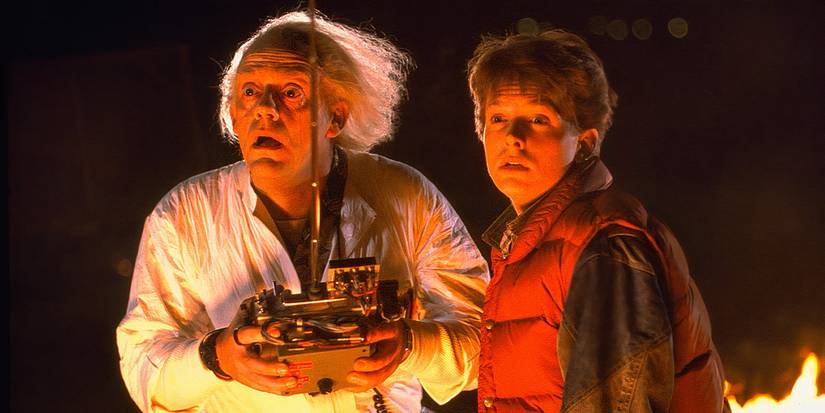 Image via Universal Pictures
With its faultless screenplay, iconic performances, and genre-blending story of time travel, adventure, and romance, Back to the Future is every bit as enjoyable today as it was upon release back in 1985. It follows 17-year-old Marty McFly (Michael J. Fox) as he finds himself stranded in the year 1955. As he works with “Doc” Brown (Christopher Lloyd) to figure out how he can get back to his own time, he also struggles to ensure his nervous and apprehensive father-to-be takes the girl that will become his mother to the school dance to ensure his own existence.
Infusing its story of time-travel matchmaking with outstanding character dynamics and plenty of comedic outbursts, Back to the Future is a rollicking viewing experience, one that is now enhanced by its air of nostalgic glee and enduring originality. With its satisfying and rewarding story of impact and consequence remaining just as sharp today as it was decades ago, Back to the Future — and its two sequels, for that matter — have aged flawlessly.
7 'Mad Max 2: The Road Warrior' (1981)
 Image via Warner Bros.
1979’s Mad Max may be the more renowned and iconic film of the franchise’s original films in the '70s and '80s, but it is Mad Max 2: The Road Warrior that has aged the best of the lot. Imbued with a significantly larger budget than its predecessor, the iconic though somewhat underrated sequel flaunts an added excess and extravagance that was perfect for the '80s and has aged beautifully over the years.
It exudes a similar propulsive intensity as the instant classic reboot Mad Max: Fury Road, with its story of Max Rockatansky (Mel Gibson) standing with a small settlement as they try to defend their home from a savage band of raiders realized with an energy and grit that is just as infectious today as it was in 1981. In a modern age where so many action blockbusters are inundated with CGI, Mad Max 2: The Road Warrior endures as a treat of practical ferocity, a marvelously executed tale of carnage and chaos set amid an absorbing dystopian hellscape.
6 'Akira' (1988)
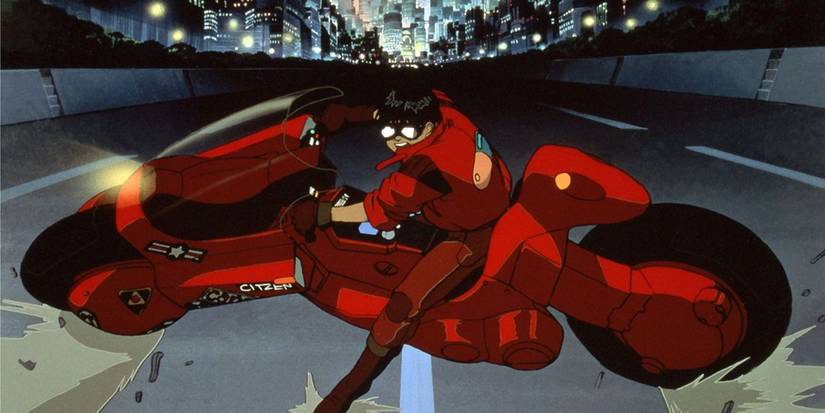 Image via Toho Co., Ltd.
Not at all dissimilar to the lasting impact of the practical effects in Mad Max 2: The Road Warrior, a significant aspect of Akira’s enduring appeal is rooted in the artistry it achieves in an era before computer animation took over. Comprised of over 160,000 hand-drawn animation cels featuring an unprecedented 327 colors, including over 50 custom ones, the Japanese cyberpunk anime was commended as an astonishing accomplishment upon release, but its craftsmanship and quality are even more striking in the modern age of animated filmmaking.
A gorgeous marriage of sci-fi and action, Akira transpires in the bleak future of 2019, following the leader of a biker gang as he sets out to save his friend from a shady government project, battling against activists, politicians, and an imposing military leader along the way. Every single frame of Akira is a work of art, a spellbinding and impressionable realization of a stunning dystopian cityscape. Excelling as a visual masterpiece, an engrossing action sci-fi story, and a thematically loaded journey of social power, technology, and the dangers of unregulated progress, Akira is a timeless marvel of animation that is arguably even more impressive today than it was in 1988.
5 'They Live' (1988)
 Image via Universal Pictures
The '80s were an era of exuberant excess, but even within such a period of extravagance and exaggeration, movies like They Live stood out as daring departures from the norm — commanding, genre-blending masterpieces that use their radiant stories and spectacles to deliver powerful thematic critiques of Western culture. The plot of They Live is rather simple, albeit outrageous. Nada (Roddy Piper) is a purposeless drifter who finds his cause when he discovers a pair of sunglasses that show him the truth: that humanity is subdued by subliminal messages and that the elites in charge are skull-faced aliens hiding in plain sight. Taking up his shotgun, Nada decides to do something about it.
From the mind of John Carpenter, They Live soars as an outlandishly entertaining mixture of sci-fi, horror, and action-comedy. However, it has also proven to be enduring for its scathing criticism of rampant consumerism, unfiltered capitalism, and the control of society through mass media messaging. Given that these thematic ideas are only more pronounced today, They Live has aged magnificently as an absorbing and fun-loving action sci-fi that has something important to say.
4 'Aliens' (1986)
 Image via 20th Century Studios
Marking yet another great and ageless sequel of the 1980s, Aliens serves as the astonishing follow-up to the 1979 horror sci-fi masterpiece Alien. Injecting a blitzing dose of action awe to the spectacle, Aliens unfolds 57 years after the events of the first movie, with Ellen Ripley (Sigourney Weaver) being awoken from cryosleep and sent on a mission with a squad of marines to investigate why the colony on LV-426 has stopped responding to contact. Besieged by hordes of xenomorphs, Ripley and the soldiers must fight for survival.
Visceral and ferocious, where the first film was more suspenseful, Aliens excels with James Cameron’s bombastic approach to the story world. It made for an instant hit in 1986, but its quality has proven itself to be timeless, standing as another outstanding example of practical effects and tangible realism in action sci-fi cinema, where many modern iterations of the genre are shambolic cacophonies of CGI carnage. Furthermore, the presentation of Ripley as a commanding yet vulnerable heroine remains one of the greatest examples of a female lead in action cinema of all time, a point that is truly fascinating, as many more recent movies have struggled to find as faultless and powerful a balance in their own heroine characters.
3 'Brazil' (1985)
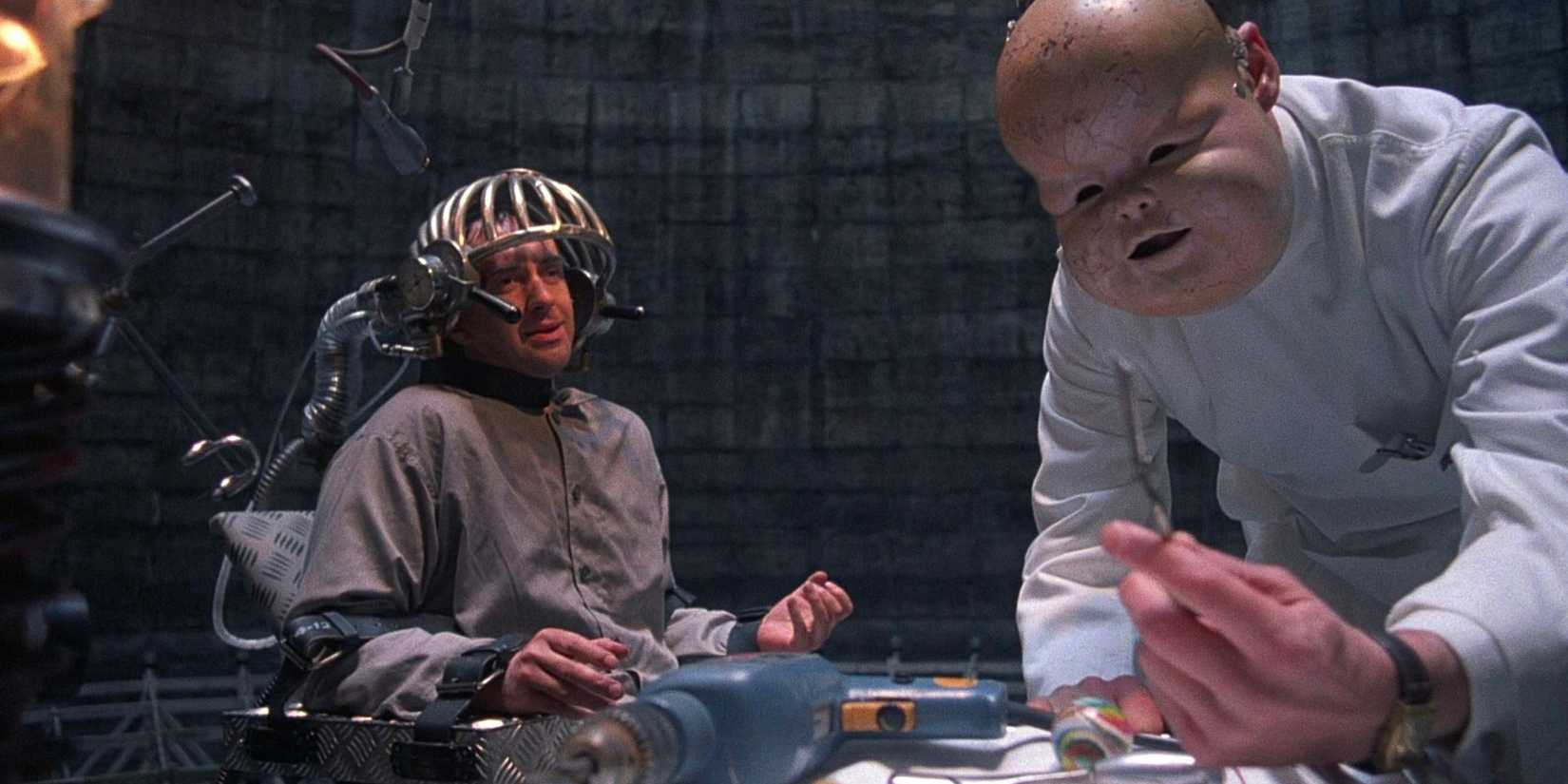 Image via Universal Pictures
While it slumped as a box office flop upon release, it is easy to argue that Brazil is the movie that has aged the best within the pantheon of '80s sci-fi. Not only maintaining its quality, but its integral message of individualism and love being crushed by the soul-crushing monotony and bureaucratic process of worklife is even more pointed in today’s world than it was in 1985. Further enhanced by Terry Gilliam’s delightfully manic visual display and outbursts of absurdist comedy that complement the satire, Brazil feels decisively modern when many of its contemporaries — even some of the ageless movies on this list — still have a feel that is distinctly '80s.
Starring Jonathan Pryce as low-level ministry clerk Sam Lowry, it unfolds as he is tasked to rectify an administrative error in the field. However, when he sees the woman of his dreams and pursues his desire for love, he becomes an enemy of the state. Delivering an utterly bonkers retro-futuristic world rife with hilarious lunacy while still soaring as a fierce and timeless indictment of surveillance, control, consumerism, and the arduous nature of bureaucracy, Brazil dazzles as a satirical spectacle of sci-fi cynicism that has truly gotten better and more resolute with age.
2 'The Thing' (1982)
 Image via Universal Pictures
The Thing is today considered one of the defining titles in both sci-fi and horror cinema, a visceral and enrapturing cosmic terror that explores such themes as paranoia, isolation, and the dismantling of trust. Set in Antarctica, it unfolds as an American research team finds their base infiltrated by an assimilating alien that is killing off the crew one by one, then taking the form of its victims. Torn between the necessity for teamwork and the impossibility of trust, the men are left with no choice but to fight the vicious creature before it kills the lot of them.
Even though the contemporary social anxieties like the Cold War and the AIDS pandemic have long since passed, The Thing’s message of division and distrust, of the fear of a threat being present in every person around, remains relevant, conjuring a sense of psychological dread that is just as palpable today as it was in 1982. Also benefitting from Rob Bottin’s astonishing practical effects that endow the movie with frightful and elaborate body horror, The Thing has overcome its poor box office and critical release to stand as one of the most beloved and ageless sci-fi movies ever made, as well as a defining horror classic.
1 'Blade Runner' (1982)
 Image via Warner Bros.
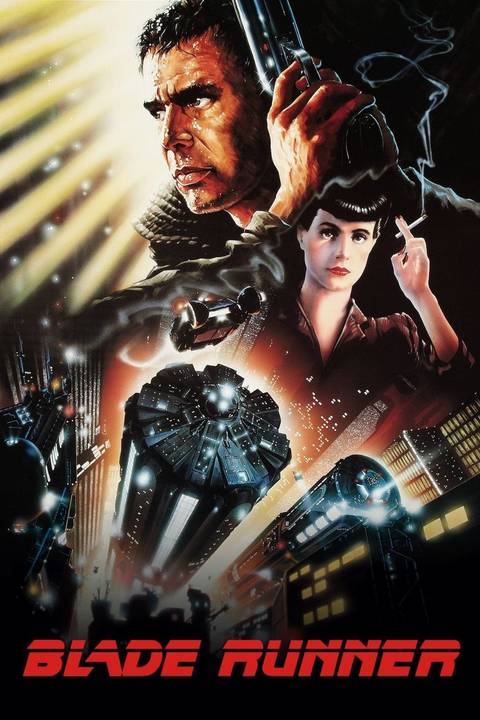
While a point could be made that the definitive director’s cut of the film wasn’t released until many years later, Blade Runner still stands as an astonishing classic of '80s science fiction. Following former cop Rick Deckard (Harrison Ford) as he is tasked with hunting down a small group of off-world replicants that have returned to Earth, hoping to meet their creator and be granted longer life spans, it masters the thematic gravitas of the genre while also delivering a breathtaking display that has come to define it.
Through the use of smoke, rain, and the darkness of night — all being pierced by streams of neon light — Blade Runner is timeless as a visual spectacle alone, a pioneer of the grimy cyberpunk aesthetic that has become a staple of science-fiction storytelling. Its exploration of sci-fi’s most profound question — what does it mean to be human? — has aged phenomenally as well, with Roy Batty’s (Rutger Hauer) quest for life and understanding becoming one of the defining aspects of the film. A timeless masterpiece, Blade Runner has overcome its weak initial reception to stand alongside films like 2001: A Space Odyssey and Metropolis as the greatest and most influential science-fiction movies of all time.
Blade Runner
Release Date June 25, 1982
Runtime 118 minutes
Writers David Webb Peoples, Hampton Fancher, Philip K. Dick





![20 Years Later, One of the Best Sitcoms of the 21st Century Returns With Hilarious First Look [Exclusive]](https://static0.colliderimages.com/wordpress/wp-content/uploads/2026/02/malcolm-in-the-middle-life-s-still-unfair-feature.jpg?w=1600&h=900&fit=crop)
 English (US) ·