
 1 hour ago
27

Published Nov 5, 2026, 12:00 AM EST
Nintendo's top Legend of Zelda producers talk the remake, the future, and more
 Image: Nintendo EPD/Nintendo
In 1998, Nintendo made history with The Legend of Zelda: Ocarina of Time. The Zelda series’ first foray into 3D was an immediate sensation upon release, instantly revolutionizing adventure games at a pivotal juncture for video game technology. But it was a big moment for the Zelda series itself, too. Ocarina of Time was the game that helped position The Legend of Zelda as the top dog of gaming, and established design titans at Nintendo, including director Eiji Aonuma.
Nearly 30 years later, history has repeated itself. A modern remake of The Legend of Zelda: Ocarina of Time is out now on Nintendo Switch 2, and it’s already receiving the kind of rave reviews that lifted up its predecessor in 1998. It may not represent a turning point for the series in terms of design, but it is a crucial success given that many new faces, including a first-time director, worked on the project. In some ways it feels like a passing of the creative torch to a new generation of both developers and players.
Maybe that’s why producers Eiji Aonuma and Hidemaro Fujibayashi seemed so joyful when I sat down to interview them hours after Ocarina of Time’s review embargo lifted on Thursday. Basking in the glow of universal praise once again (as of this writing, the Switch 2 version of Ocarina is the best-reviewed game of 2026), the duo was eager to break down all of the creative choices behind a hit remake, and how it fits into Zelda’s 40-year winning streak.
But while the developers were happy to reminisce about past games, they were even more excited to talk about the future. In a 45-minute interview with Polygon, the pair emphasized how much a new generation of developers helped reinterpret a classic video game that once felt sacrilegious to alter. (The young team even helped Aonuma find secrets he had never discovered previously in his own masterpiece.) While Ocarina of Time is a remake, there’s a sense that the brains behind it see it as a project that looks forward, paving the road for The Legend of Zelda travels as it marches towards its next anniversary milestone. After a decade spent exploring the open-world of Hyrule in Breath of the Wild and Tears of the Kingdom, the sky feels wide open for Zelda once again.
This interview was conducted through a translator. It has been edited and condensed for clarity.
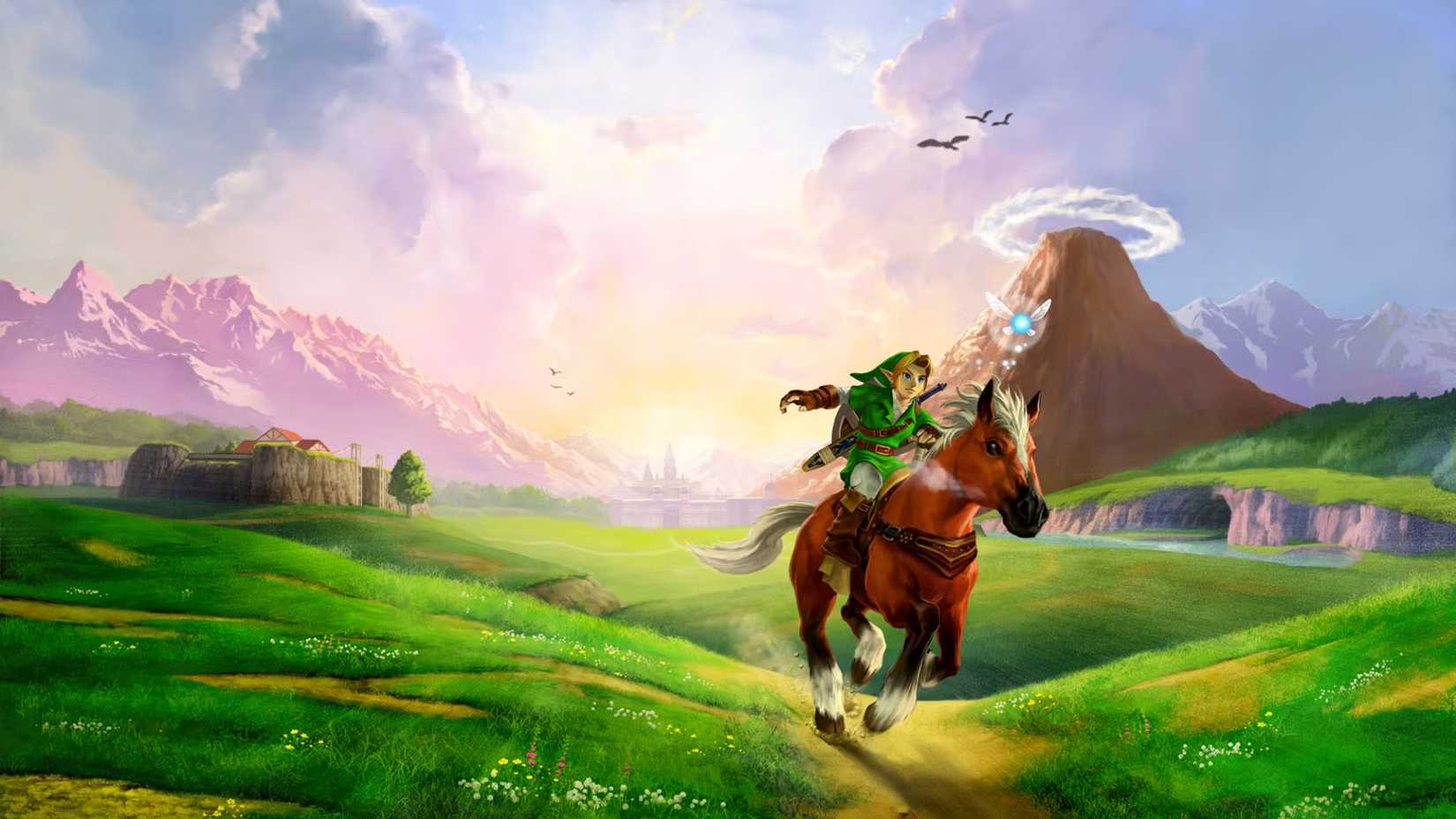 Image: Nintendo
Polygon: It's the 40th anniversary of Zelda. I am so curious from your perspective, why do you think this series has continued to remain relevant and connect with people for 40 years? Because it's kind of a feat that it has!
Hidemaro Fujibayashi: So first I'll start off by saying it's really, at the bottom baseline, thanks to the support that all of the fans have shown for the series. With that understanding, though, from the perspective of the creator, I think it boils down to the fact that the root of the enjoyment of what Zelda is has not changed, and has remained unchanged from the original Zelda. Which is to say, to me, the cycle of exploration and discovery is really what that root is. Take graphics, for example. You look at the screen and you kind of gather information and you find a spot that seems slightly suspicious. You go over there and you find something. That cycle of exploration and discovery is really the core of Zelda. And I think that's what has held true for every director that has directed every Zelda game, and something that every staff has kind of held true and held dear as a guiding light in terms of when they're developing the title.
Eiji Aonuma: I agree completely. What's most important for me is that although you have several different kinds of styles for Zelda games… You can have the open-air style of games where you have a higher degree of freedom. You can have games that are a bit more like Ocarina, where the focus is on a different kind of narrative pace and the growth of the player. Or you can have the top-down view like the 2D Zelda games. And each one has its own strengths and its own charms, but they all come back to that cycle of exploration and discovery. And the goal for us as developers is, every time we are approaching one of these, we have to think about, “Okay, how are we going to make this a fun, enjoyable experience for the player?”
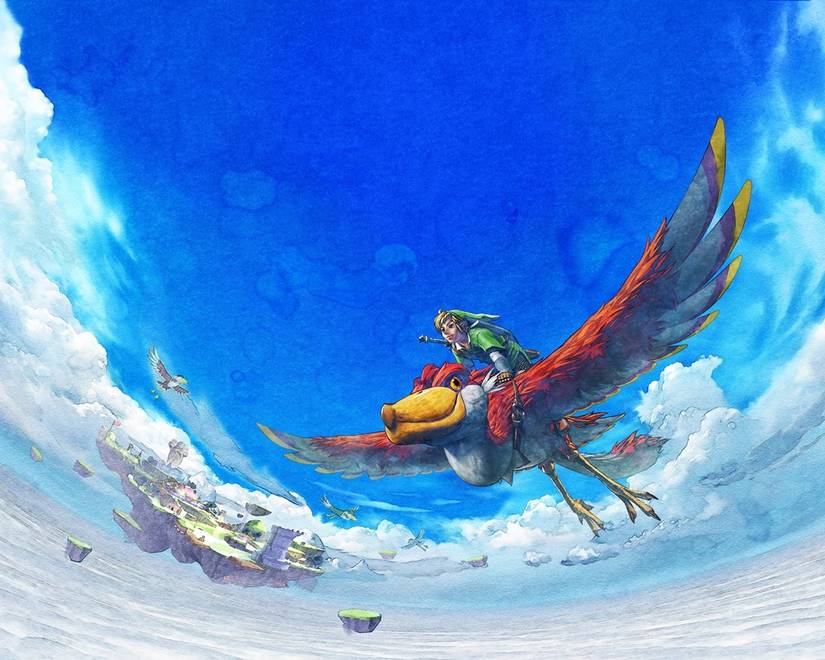 Image: Nintendo
As people who have been with the series for so long, is there a particular game, or maybe era of games, that you connect with the most?
Fujibayashi: You know, usually when I'm asked a similar question, I usually answer that my kind of origin or my prying point with Zelda is always the original Legend of Zelda. But when it comes to something that left an impression on me or is special to me, I think it might be Skyward Sword. Partially because it was the first time that I was a director on a title, but it was also the title that really helped me kind of bring into clearer view the things that I want to accomplish in a game. There were also some hardware limitations so I wasn't able to do some of that stuff, which then fed to some of the things that you've seen in Breath of the Wild, like being able to climb around, using the parasail, or in Tears of the Kingdom where you can dive from the sky all the way down to the bottom [of the Depths]. Those are things that kind of started to develop at that time. So again, I think that title left a very big impression and a special title for me.
Aonuma: This may be the most expected answer perhaps, but for me it is, of course, Ocarina of Time. For me, it was the beginning of my professional involvement with the Zelda series. And from that project, I took away so many things that I thought, like, "Oh, this worked really well. I like how that came out." Or, "There was more I wanted to do here." And I think that both of those ideas drove the further directions in future projects for me. So Ocarina of Time has been a thread throughout in terms of motivating that work. But being able to work with Mr. Fujibayashi here on the remake, I can revisit some of those.
I certainly am aware that we've returned to this game a number of times. And each time we have a new opportunity to address something that maybe we didn't in the previous. So if there is a different gameplay experience for the Water Temple, for example, that we could try to implement here, those many returns have each given us a chance to take another swing at it. And that shared experience of those development moments throughout are what resonates for me in terms of Ocarina of Time being a particularly special memory.
 Image: Nintendo
You know Ocarina of Time so inside and out at this point, but when you revisited this game again for this remake, did anything surprise you about going back to it? Did you learn anything new when returning to this game?
Aonuma: So, when I worked on the original Ocarina of Time, my focus then was on dungeons, the enemies, and the dungeon cutscenes. So in a nutshell, it was all of the inside stuff, I would say. But you have this vast Hyrule Field with all of these hidden secrets throughout, and some of those I just didn't know about! So, there are opportunities even for me to find out about some of those. And I got to explore that alongside our younger staff, who in some cases were completely new players. We were discovering things together. For example, if we're trying to collect all 100 of the Gold Skulltulas, we might share a moment together where we say, "Oh, that last one was here!?" You know, moments like that. It can be a real feeling of accomplishment for me to know that I finally have been able to experience all of the game, its different aspects, feels really good.
One thing that actually strikes me about the remake is Hyrule Field because it still feels gigantic and grand. As grand as it felt as a kid, even though you've made such bigger Zelda worlds since. What's the secret? What is the magic that keeps that space feeling so big?
Aonuma: I think one thing that stands out for me is because the game experience begins in this small village in a forest, you are in a tightly bounded, enclosed area. And it's only when you first make it out to Hyrule Field that suddenly this vast, open space is in front of you. And with the enhanced graphics capability, now the player can see much further. And so you have the excitement of, "What is that over there? Maybe I can go to that!" The opportunity to be able to present those things to the player to get them excited has been a really exciting part of working on this project.
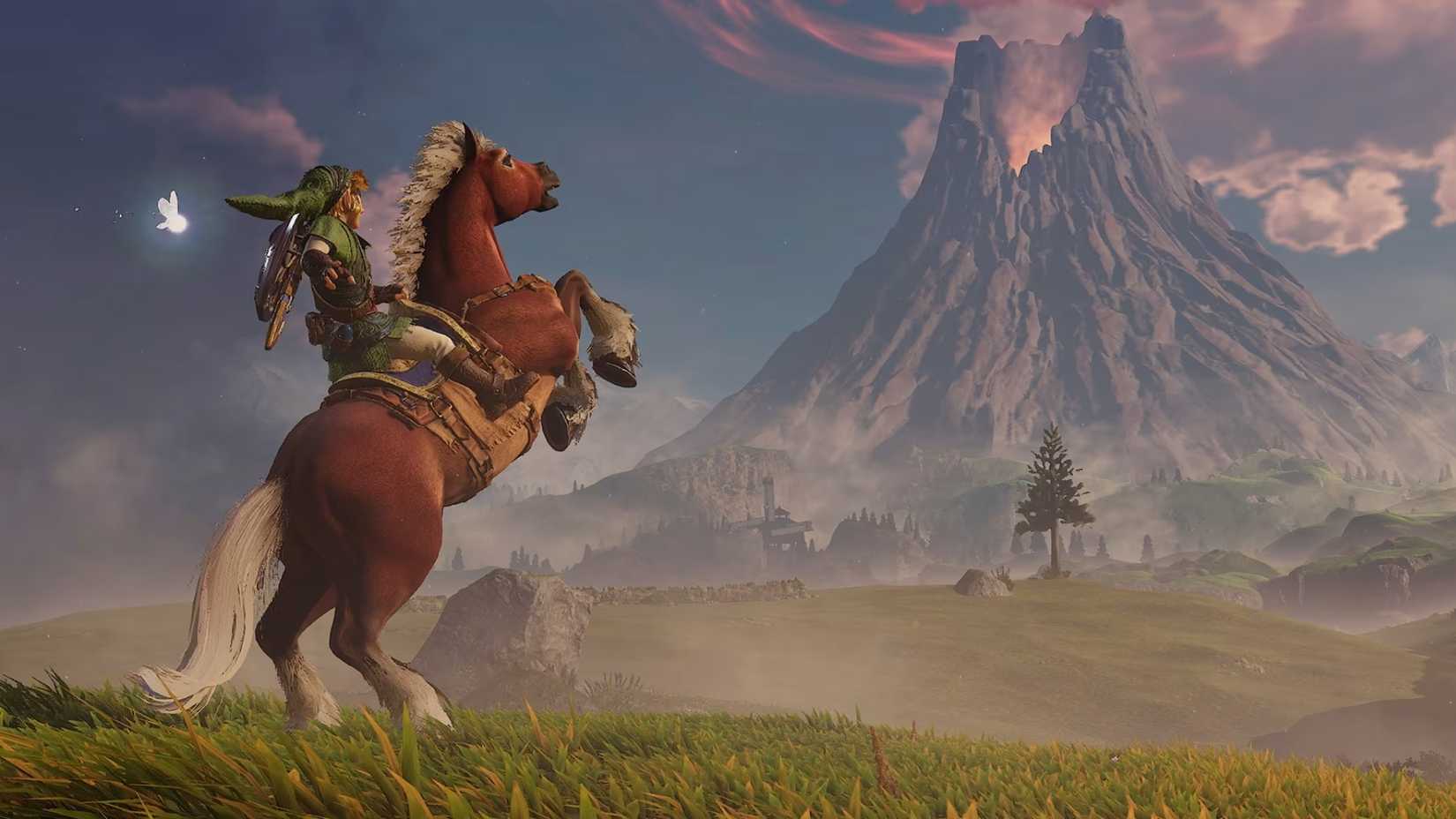 Image: Nintendo EPD/Nintendo
In addition, the inclusion of the 5.1 surround sound means that when going from the forest to the field, suddenly in the field, you get the sound of wind that you didn't have in the forest. You're expressing in a completely different way what it feels like to be in this much larger area as opposed to the small one. So there have been a lot of great chances for us to find new expressions to bring the player into these immersive environments.
I want to talk about the art. One thing that I think about a lot with Zelda is that moment when Wind Waker was announced and there was some mixed reaction to the art style of it, right? But over time, people came to love that art style and now consider it one of the best-looking Zelda games. And I've noticed a similar cycle with this remake, where maybe people weren't sure about it at first, but now have already grown to kind of love this art style. As developers who have seen this cycle close up with Zelda before, how do you feel when people initially aren't sure what to think about an art style as?
Aonuma: I think something that's kind of interesting about Zelda is you often have a very big graphical shift of art style from one title to the next. But for us, it's all about finding the best fit, like what works well with the game and what we're trying to do here. It's not just change for change's sake, of course. Now you will have some similarities in games that are connected. So Breath of the Wild and Tears of the Kingdom have a connected story, so you would understand why they share a similar art style. But if you don't have that connection, then it's really about finding the expression that works best for what you're trying to do there. And that art direction has to have its own unique feel. If it's something that is expected, I think you're losing a bit of an opportunity in terms of having an impact on the player.
For example, even ourselves, when we see a new art style for the very first time, sometimes we have that direct reaction of like, "What!?" And so we go through the same kind of cycle that you mentioned. First there's a surprise moment, and then you get used to it. You really like it and you understand why it's a good fit for this game's unique qualities. So, if we can have other people experience that cycle as well, then I think surprise can be a good start for all of that. It's all about finding the best fit and sometimes that's a long road to finish that task.
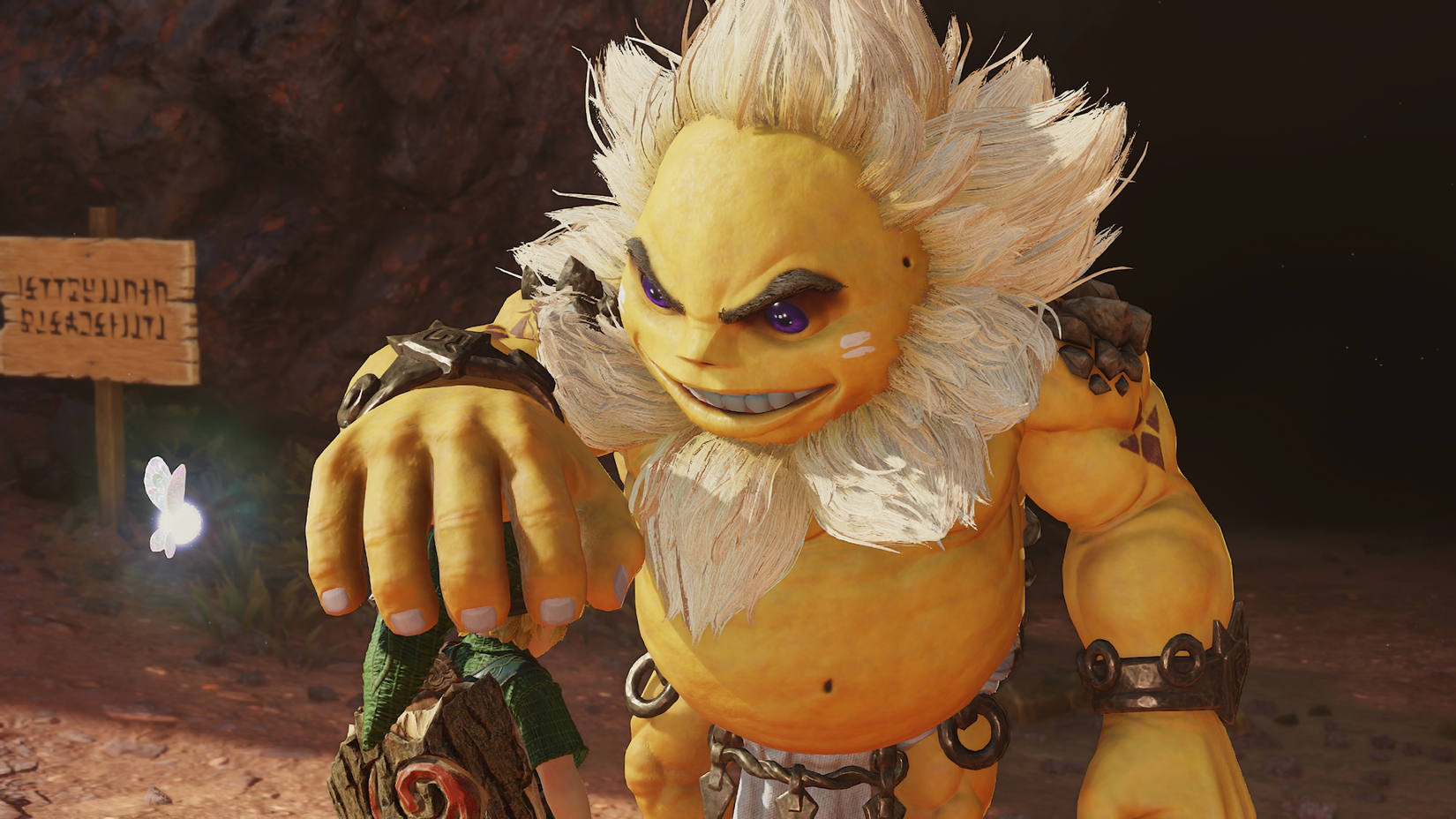 Image: Nintendo EPD/Nintendo
People have speculated that this art style was inspired by puppetry, by dolls. In your own words, can you tell me why you chose the art style you did for this game? Were those things you were thinking about?
Aonuma: The inspiration for having a puppet show feel actually came from one of our younger staff members, the lead artist. She had not played the original game, but she wanted to express a feeling of nostalgia in the art style here. So she asked herself what would convey that? And for her, it was this puppet feel and sort of the analog vibe of practical effects that you used to find in films. I remember she showed me some sketches, and the nostalgia that she felt, interestingly, I could feel it as well, even though we were from different generations. Having decided on that art style, then the work became, you know, “We can't let this end at the puppet show concept because then it's just a puppet. We need to bring it to life and brush up those details so that it feels more real.”
You mentioned that art director, but there's also a new director on the project as well (HokWai Ng). This is a first time director for the series, I believe a first time director for Nintendo. How was Ng chosen for this? And is this someone that maybe we might see lead more Zelda projects going forward?
Aonuma: He was involved with the planning on Tears of the Kingdom, and he was someone on that project that I saw find and solve problems very aggressively, very proactively. And so I knew that would be a great opportunity to see him do more. I thought it'd be really interesting to use him on this project. In fact, at the end of Tears of the Kingdom, he started to present some ideas for future projects that made me think, "Okay, yeah, you're interested in something like a remake. I think you've got your own ideas here. Perhaps you should work on this as a director." And this has been a really good experience. I think [it was] a good decision.
 Image: Nintendo EPD/Nintendo
You've obviously for the last decade been working on Tears of the Kingdom, Breath of the Wild, these games that have a very specific open format. Did returning to this kind of traditional Zelda game — with these kinds of dungeon designs that are more traditional, with this more compact structure — did it reinvigorate you and make you interested in going back to that kind of Zelda design at some point?
Fujibayashi: Yeah, I think you can say that, you always try to go back to the roots of what Zelda was and really try to leverage all of the experience that we've had working on those open-air titles. And now with the new hardware, Nintendo Switch 2, we're able to leverage all of the capabilities and try to do things that we weren't able to do with Ocarina of Time. So I think this gave us an opportunity to really explore thoroughly what that kind of gameplay and game design is.
I think a lot of artists don't get to revisit their work in the way that you are able to with this remake. Looking back at it, what was your reaction to people’s reactions to the game at the time when it came out in 1998, and what your reaction is sitting here today seeing reviews for it come in, seeing people still love it? Do you feel like you're having the same reaction? Do you feel different this time?
Aonuma: It's interesting to consider how we might contrast reactions. Earlier when we talked about the way that people might not expect a change in graphics, that was something that occurred on the original as well. So I remember the feeling of anticipation I had it as we knew the trailer was going to be released. You had the chance to see people go through that same cycle of being surprised, and getting used to and starting to accept a new art style, a new direction like that. And that's something that we saw in the reviews of the time.
But this time around, it's a little bit different. We're thinking about how do we bring to people a fresh experience to, for some, what might be a remembered game. How do we update the emotional experiences that they might have had when they were playing the original? And how do we provide the best experience to completely new players who never had the chance to play the original? So there's a different set of feelings I have around this release as opposed to 1998, but in both cases, I hope that it creates interest in people in both what comes next in the franchise for Zelda, as well as past Zelda games. If people are able to make connections in both directions, then I'm really happy.
 Image: Nintendo EPD/Nintendo
How did you want to find a balance between creating something that maybe felt faithful to the original, like people would remember, but also something that felt like a reinterpretation, perhaps? What is the balance that you wanted to strike there?
Fujibayashi: That's a very good question. Obviously the directors that were working on the project are younger staff at Nintendo, and when we started discussing this project, one thing we wanted to start off with was really clarifying this concept, which is: What are we going to change and what are we going to not change? Because we felt that that's gonna be our guiding principle whenever we meet, we need to make those judgment calls as these things come up during development.
So in terms of what we were going to change, because we have the latest hardware, we can increase the graphics, we can improve on the sound. The things we can express through the game, we can do a lot more. And so that then kind of equates to improved controls or the amount of visual information we can provide. All of that feeds into the types of clues and information that we can provide the player as they're embarking on their puzzle-solving. And also, those are the things that we decided we're going to actively try to change and update.
But when it comes to the things that we're not going to change, we really thought about what is the experience that the original development team wanted to convey through this game? And that's the one thing we wanted to preserve. That became the guiding light in terms of what we're going to change and what we're not going to change. So every time that kind of question comes up, we are faced with a position: does it fall into this category or that category?
 Image: Nintendo
You talked about young staff that are coming up on this, and it kind of makes me think that it feels like you're almost starting to find a new generation, and pass the torch of Zelda a little bit to a new development team. As you're kind of in that state, I wonder, what is the mark that you hope to leave on Zelda once the day comes when you finally step away from the series?
Aonuma: So, something I think you'll see across all Zelda titles is that continuing cycle of exploration and discovery. Also that the player can naturally find the answer to a puzzle. We may, as designers, occasionally surprise them or misdirect them just a little bit, but we still want them to be able to find that solution. That is part of the gameplay experience here. And in order for them to be able to do so, we can't have the game world rules stray too far from the real world, even though it is a fantasy world. We want the player to have the opportunity to do some unique thinking that leads to problem-solving. That's what makes it fun, but it has to be something they can connect intuitively to their own understanding of how the world works for that to be possible.
Another element I think that's important here is for the game devs themselves to similarly take experiences from their own life that might serve as hints in terms of game development. So overall, those elements together, I think that style of game making is something that I would love to leave as a legacy in the franchise.
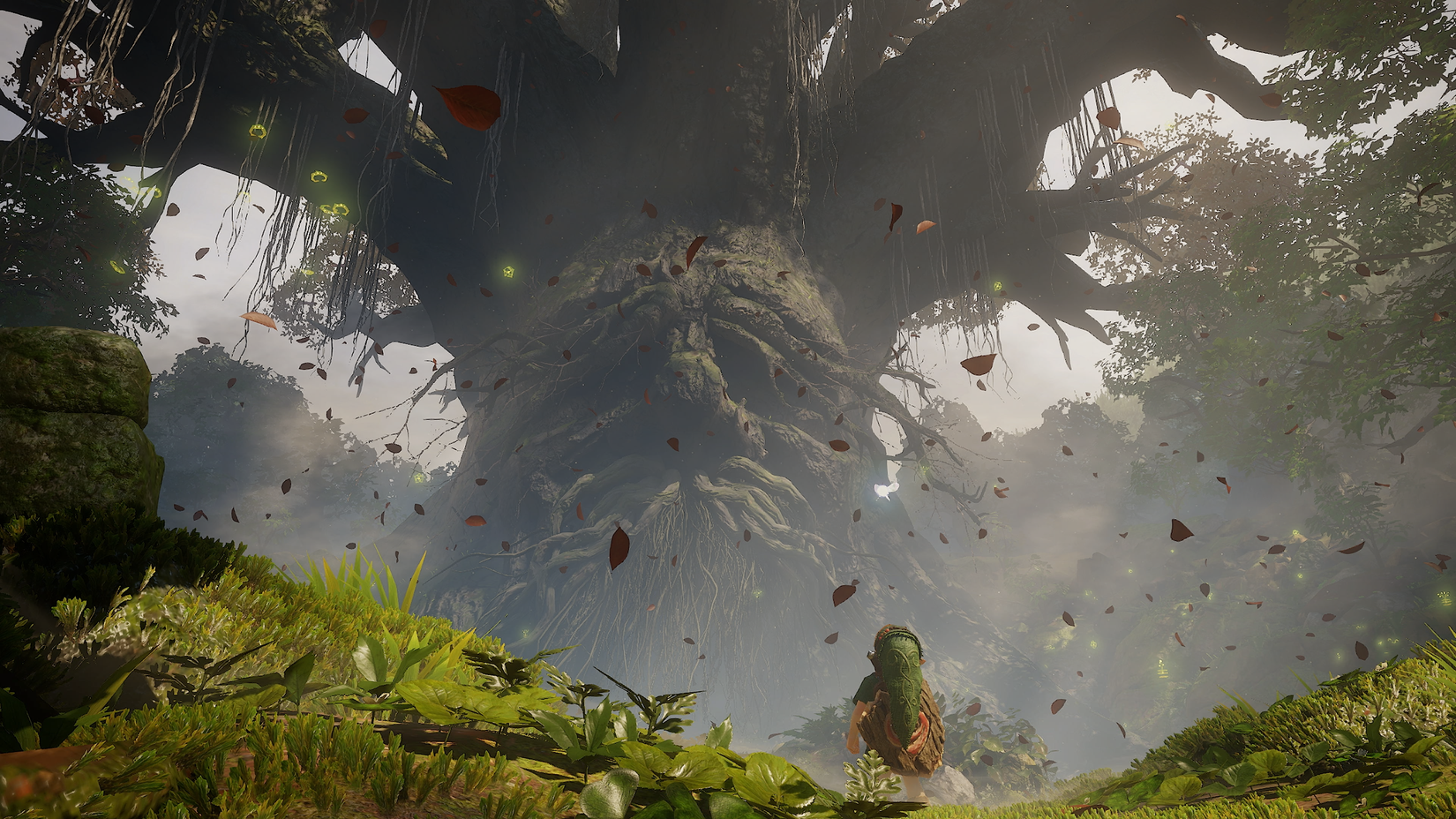 Image: Nintendo EPD/Nintendo
Fujibayashi: I feel like the Zelda series has evolved with every hardware or with the era that it's released in. So from that perspective, I think the series has this kind of wide receptacle. It's almost like a flexibility, it's a malleability. Take, for example, on the Nintendo 64, the game went from 2D to 3D or the addition of a control stick to really be able to navigate a 3D world. When it came to the Wii with Skyward Sword, you were able to use gesture controls to swing the sword. And when it came to titles like Breath of the Wild or Tears of the Kingdom, you have this vast freedom that really breaks away from traditional course-charted paths. All of that to say that these are all ideas or nuggets of ideas that developers at that time feel like, okay, this is going to be fun. This has potential.
And I feel like Zelda creates this foundation, this arena where developers can bring those ideas and actually bring them to life and realize that. And so a lot of times, the question I have when I talk to younger staff is like, "Is that going to be fun?" Or I would say sometimes, "Well, I think we did that in Breath of the Wild. I think we touched that on Tears of Kingdom. I feel like I saw it in Ocarina of Time." These are just examples, I don't actually directly say that. But this is the kind of probing and discussion that we do with the team such that they don't feel like they need to pull from an already existing pool of ideas that Zelda has plotted.
I want to really open it up to their imagination and their ideas. And I feel like Zelda as a franchise is big enough, is malleable enough, that it can support all of that. As Mr. Aonuma was saying before, it's not like we give very specific orders, like “This needs to be done that way” or “That needs to be done this way,” but it's really taking a step back and watching the team as they embark on their journey to freely tap into the uniqueness to really be able to create something that's original.


 English (US) ·