
 Image via FOX
Published Jun 22, 2026, 11:17 PM EDT
Jen Vestuto is a TV Features Writer for Collider. A born and raised New Yorker, she started her career on set as a production assistant for shows like Law & Order: SVU and Person of Interest. In LA, she worked in the writers' rooms for The Vampire Diaries and Nancy Drew. Along with her writing partner, she joined the writing staff of Nancy Drew in Season 2 and stayed on the run of the show, which ended in 2022 with Season 4.
Jen grew up on Long Island in a loud Italian family. She's been writing creatively since she was in elementary school and would often make her younger sister act out scenes from her favorite movies with her. Jen is also a massive sports fan and was an athlete herself growing up.
Writing features for Collider gives her the opportunity to share her passion for great storytelling and compelling characters.
Sign in to your Collider account
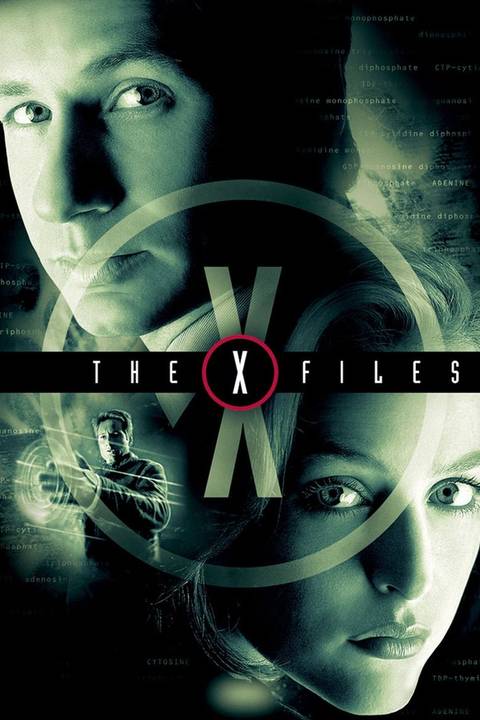
It’s been three decades since The X-Files premiered and changed the television landscape forever, blending serialized sci-fi with chilling case-of-the-week horror. While aliens and government conspiracies would come to define the series, it was Season 1, Episode 3 — “Squeeze” — that truly cemented the show’s potential. Airing in 1993, the episode introduced audiences to the show’s first true “monster of the week”: Eugene Victor Tooms (Doug Hutchison), a terrifying mutant capable of contorting his body to slip through air vents and chimneys to stalk his victims and steal their livers. It also marked the debut of writers Glen Morgan and James Wong, who would go on to shape the series’ signature tone. More than just a standout early episode, “Squeeze” proved that The X-Files could be about more than alien abductions. It introduced audiences to grounded, procedural horror and delivered one of television’s most unforgettable monsters.
"Squeeze" Was 'X-Files' First Ever Monster of the Week Episode
By the time “Squeeze” aired, The X-Files had only delivered two episodes, both centered on alien abductions. But creator Chris Carter knew the series couldn’t rely solely on extraterrestrials. “Squeeze” was the first episode to introduce a true standalone procedural case, establishing the show’s “monster of the week” format. It also leaned into horror more than sci-fi, helping solidify the dynamic between Fox Mulder (David Duchovny) and Dana Scully (Gillian Anderson). The case begins with the baffling murder of a Baltimore businessman whose liver has been removed, without any sign of forced entry.
Collider Exclusive · Horror Survival Quiz Which Horror Villain Do You Have the Best Chance of Surviving? Jason Voorhees · Michael Myers · Freddy Krueger · Pennywise · Chucky
Five killers. Five completely different ways to die — if you're not smart enough, fast enough, or self-aware enough to avoid it. Only one of them is the villain your particular set of instincts gives you a fighting chance against. Eight questions will figure out which one.
🏕️Jason
🔪Michael
💤Freddy
🎈Pennywise
🪆Chucky
TEST YOUR SURVIVAL →
01
Something feels wrong. You can't explain it — you just know. What do you do? First instincts are the difference between the survivor and the first act casualty.
ALeave immediately. I don't need to understand a threat to respect it. BStay quiet and observe. If I can see it, I can understand it. If I can understand it, I can avoid it. CStay awake. Whatever this is, I am not going to sleep until I feel safe again. DConfront it directly. Fear grows in the dark — I'd rather know what I'm dealing with. ECheck everything, trust nothing. The threat might be closer than I think — and smaller.
NEXT QUESTION →
02
Where are you most likely to find yourself when things go wrong? Setting is everything in horror. Where you are determines which rules apply.
ASomewhere remote — a cabin, a campsite, off the grid and away from people. BA quiet suburban neighbourhood where nothing ever happens. Except tonight. CIn my own head — the most dangerous place of all, depending on what's already in there. DWherever children are — because something about this place attracts the worst things. ESomewhere ordinary — a house, a toy store, a place where the last thing you'd expect is a threat.
NEXT QUESTION →
03
What is your most reliable survival asset? Every survivor has a quality the villain didn't account for. What's yours?
APhysical fitness — I can run, I can swim, I can outlast something that relies on brute persistence. BSpatial awareness — I always know the exits, the hiding spots, the fastest route out. CPsychological resilience — I've faced my worst fears before. They don't have the same power over me. DEmotional steadiness — I don't panic. Panic is what gets you caught. EScepticism — I don't underestimate threats because of how they look. Size is irrelevant.
NEXT QUESTION →
04
What kind of fear is hardest for you to fight through? Knowing your weakness is the first step to not dying because of it.
AThe unstoppable — something that will not stop, cannot be reasoned with, and is always getting closer. BThe invisible — a threat I can feel but can't locate, watching from somewhere I can't see. CThe psychological — something that uses my own mind and memories against me. DThe unknowable — something ancient, shapeless, that feeds on the fear itself. EThe mundane — a threat so ordinary-looking that no one will believe me until it's too late.
NEXT QUESTION →
05
You're with a group when things start going wrong. What's your role? Horror movies are brutally clear about who survives group situations and who doesn't.
AThe one who says "we need to leave" first — and means it, even when no one listens. BThe one who stays quiet, watches the others, and figures out the pattern before anyone else does. CThe one who holds the group together when panic sets in — because someone has to. DThe one who asks the questions nobody wants to ask — because ignoring them gets people killed. EThe one who takes the threat seriously when everyone else is laughing it off.
NEXT QUESTION →
06
What's the horror movie mistake you're most likely to make? Honest self-assessment is a survival skill. Denial is not.
AGoing back for someone — I know I shouldn't, but I can't leave them behind. BAssuming I'm safe once I've found a hiding spot. That's when it finds me. CFalling asleep when I absolutely cannot afford to. Exhaustion is its own enemy. DLetting my curiosity override my instincts — I always need to understand what I'm dealing with. EDismissing the threat because of how it looks. That's exactly what it wants.
NEXT QUESTION →
07
What's your best weapon against something that can't be stopped by conventional means? Every horror villain has a weakness. The survivors are always the ones who find it.
AThe environment itself — I use the terrain, the water, the geography against it. BPatience — I wait, I watch, and I strike at the one moment it doesn't expect. CLucidity — if I can stay in control of my own mind, it loses its primary weapon. DCourage — facing it directly, refusing to run, taking away the fear it feeds on. EImprovisation — I use whatever's at hand, however unconventional. Creativity over brute force.
NEXT QUESTION →
08
It's the final scene. You're the last one standing. How did you make it? The final survivor always has a reason. What's yours?
AI kept moving. I never stopped, never hid for too long, never let it corner me. BI figured out the pattern before anyone else did — and I used it against the thing following it. CI stayed awake, stayed lucid, and refused to give it the one thing it needed most. DI stopped being afraid of it. And the moment I did, everything changed. EI took it seriously from the start — and I never once made the mistake of underestimating it.
REVEAL MY VILLAIN →
Your Survival Odds Have Been Calculated Your Best Chance Is Against…
Your instincts, your strengths, and your particular way of thinking under pressure point to one villain you actually have a fighting chance against. Everyone else — good luck.
Jason Voorhees
Jason is relentless, but he is also predictable — and that is the gap you would exploit.
- He moves in straight lines toward his target. He doesn't strategise, doesn't adapt, doesn't outsmart. He simply pursues.
- Your ability to keep moving, use the environment, and resist the panic that freezes most victims gives you a genuine edge.
- The Crystal Lake survivors were always the ones who stopped running in circles and started thinking about terrain, water, and distance.
- You think like that. Which means Jason, for all his indestructibility, would face someone who simply refused to be where he expected.
Michael Myers
Michael watches before he moves. He is patient, methodical, and almost impossible to detect — until it's too late for anyone who isn't paying close enough attention.
- But you are paying attention. You notice the shape in the window, the car parked slightly wrong, the silence where there should be sound.
- Michael's power lies in the invisibility of ordinary suburbia — the fact that nothing ever looks wrong until it already is.
- Your spatial awareness and instinct to map every room, every exit, and every shadow before you need them is precisely the quality Laurie Strode had.
- You are not a victim waiting to happen. You are someone who already suspects something is wrong — and acts on it.
Freddy Krueger
Freddy wins by getting inside your head — using your own fears, your own memories, your own subconscious as weapons against you. That strategy requires a target who can be destabilised.
- You are harder to destabilise than most. You've faced uncomfortable truths about yourself and you haven't looked away.
- The survivors on Elm Street were always the ones who understood what was happening and chose to face it rather than flee from it.
- Freddy's greatest weakness is that his power evaporates in the presence of someone who refuses to give him the fear he feeds on.
- Your psychological resilience — the ability to stay grounded when reality itself becomes unreliable — is exactly the quality that keeps you alive here.
Pennywise
Pennywise is ancient, shapeshifting, and feeds on terror — but it has one critical vulnerability: it cannot function against someone who genuinely stops being afraid of it.
- The Losers Club didn't survive because they were braver than everyone else. They survived because they faced their fears together, and faced them honestly.
- You ask the questions others avoid. You look directly at what frightens you rather than turning away.
- That directness — the refusal to let fear fester in the dark — is Pennywise's worst nightmare.
- It chose the wrong target when it chose you. You are exactly the kind of person whose fear tastes like nothing at all.
Chucky
Chucky's greatest advantage is that nobody takes him seriously until it's already too late. He exploits the gap between how something looks and what it actually is.
- You don't have that gap. You take threats seriously regardless of how they present — and you never make the mistake of underestimating something because of its size or appearance.
- Chucky relies on surprise, on the delay between recognition and response. You close that delay faster than almost anyone.
- Your instinct to treat every unfamiliar thing with appropriate scepticism — rather than dismissing it because it seems absurd — is the exact quality that keeps you breathing.
- Against Chucky, not laughing is already winning. You are very good at not laughing.
↻ RETAKE THE QUIZ
The case is handed to FBI agent Tom Colton (Donal Logue), who asks for Scully’s help. As she and Mulder investigate, he connects the murder to similar killings in 1933 and 1963, all marked by strange fingerprints and the same gruesome organ removal. They eventually arrest Eugene Tooms (Hutchison), a quiet, unsettling man with the terrifying ability to contort his body and squeeze through air vents and chimneys. Mulder and Scully uncover that Tooms hibernates for 30 years at a time, emerging only to harvest five human livers in order to survive. It’s a disturbing premise, grounded in just enough eerie realism to crawl under your skin.
What makes “Squeeze” so effective is the way it taps into primal fears. Hutchison’s eerie, restrained performance as Tooms is quietly terrifying, reminiscent of Anthony Hopkins’ chilling stillness in The Silence of the Lambs. The episode masterfully blends procedural beats with psychological terror, complete with unnerving music and shadowy cinematography that make it feel more like a horror movie than a sci-fi network TV show. One of the tensest moments comes when Tooms nearly attacks Scully in her apartment, only to be stopped by Mulder at the last second. It’s a pivotal scene, not just for the suspense, but because it marks the beginning of Scully’s loyalty, both to her partner and to the strange cases that defy explanation. Her FBI colleagues may scoff at Mulder’s outlandish theories, but this case forces her to confront the reality that some of them might be true. That tension between skepticism and belief would go on to define the character dynamics in The X-Files, and it all began with "Squeeze".
Eugene Tooms and "Squeeze" Will Always Be Iconic
Eugene Tooms, played to eerie perfection by Hutchison, isn’t your typical TV villain. While his actions make him a serial killer, Tooms is portrayed as a genetic anomaly, someone who kills not out of malice but out of a biological need to survive. That alone makes him a uniquely complex monster. Hutchison’s performance captures an unsettling range, shifting from quiet and soft-spoken to jarringly aggressive. That quiet menace, paired with the character’s chilling abilities, made Tooms one of The X-Files’ most memorable villains. No matter how secure you think you are, you’re never safe from him.
“Squeeze” also marked the first episode written by Morgan and Wong, a duo who would go on to define much of the show’s tone and style. Drawing inspiration from real-life serial killers, their writing balanced grounded procedural storytelling with deeply unsettling horror. They later co-created Final Destination, and their gift for crafting fear out of the everyday makes its first appearance here. Even though Tooms is a supernatural mutant who doesn’t age and survives by consuming human livers, the horror in “Squeeze” feels disturbingly real. The episode’s success proved that The X-Files didn’t need to rely solely on its alien mythology, proving its “monster of the week” stories could be just as terrifying.
 Related
Tooms left such a lasting impression that he became one of the few villains to return in a later episode. Season 1’s follow-up, Episode 21, “Tooms,” also written by Morgan and Wong, expanded his backstory as he’s released from prison and begins stalking new victims. Hutchison returns with the same eerie presence, adding new layers to the character as Mulder and Scully race to stop him. With his glowing yellow eyes, grotesque bile-soaked nest, and ability to contort through impossibly small spaces, Tooms proved nearly impossible to contain, and remains one of the most terrifying monsters in X-Files history.
33 years later, the impact of “Squeeze” still echoes across television. It remains one of The X-Files’ most iconic episodes, not just for how it helped solidify the dynamic between Mulder and Scully, but for proving that a monster-of-the-week format could be just as compelling as serialized storytelling. Shows like Buffy the Vampire Slayer, Fringe, and Evil have all followed in its footsteps, blending procedural structure with horror and the supernatural. With just one unforgettable villain, Morgan and Wong helped redefine what horror could look like on network TV. And thanks to Doug Hutchison’s eerie performance, “Squeeze” still stands as one of the most chilling and enduring episodes in X-Files history.
All episodes of The X-Files are available to stream on Hulu.
Release Date 1993 - 2018-00-00
Network FOX





 English (US) ·