
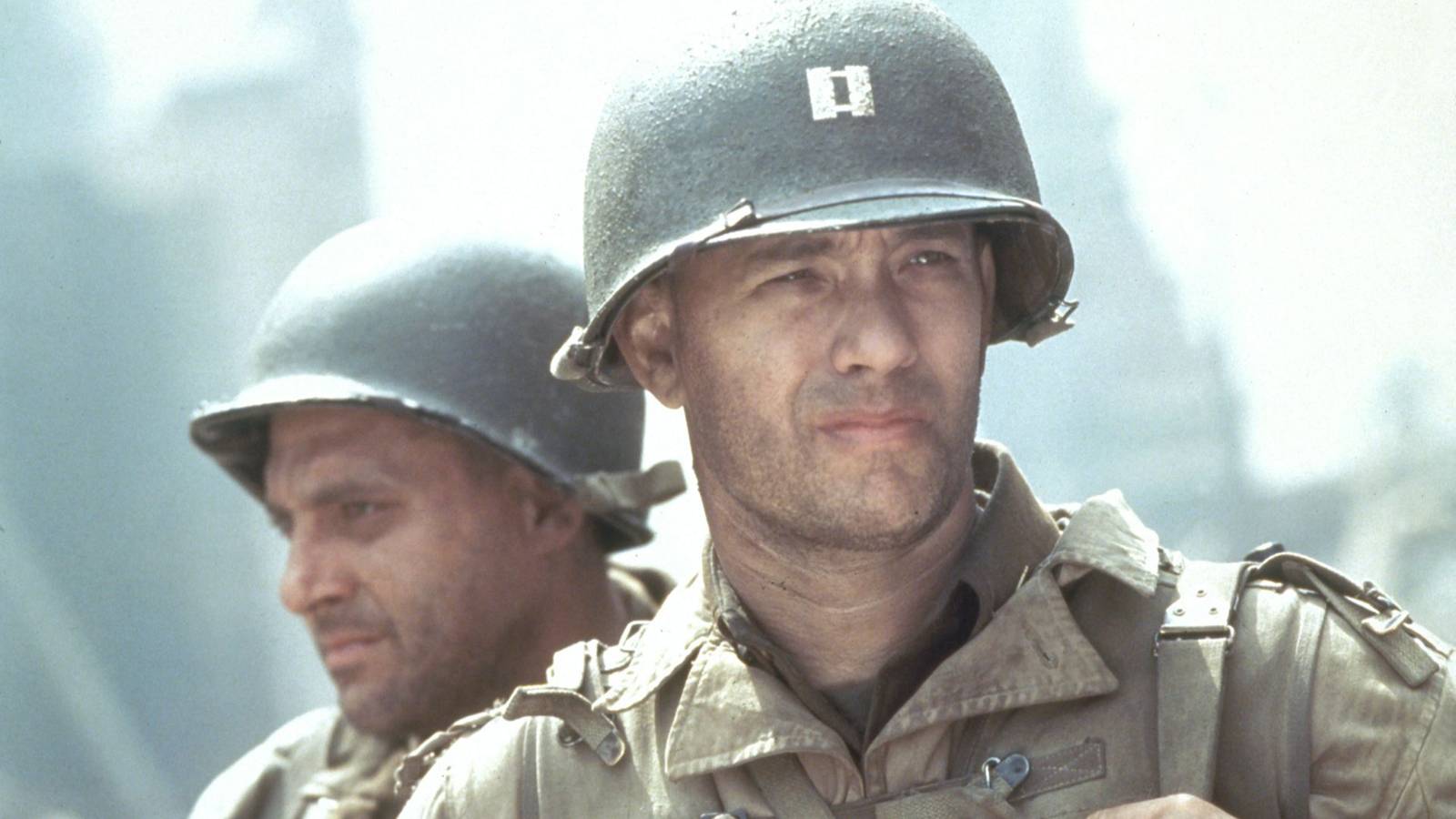
 Image via Paramount Pictures
Published Jul 10, 2026, 5:41 AM EDT
Anthony Crislip has always loved movies and television, and has been published in outlets such as SlashFilm and Ultimate Classic Rock. While working as a film programmer or judge at a film festival, he has striven to develop interest in underseen films. He is a particular fan of digging deep into forgotten corners of film history.
2013’s World War Z may have been a summer blockbuster starring Brad Pitt, but it began as a 2006 horror novel written by Max Brooks. The book was neither a simple story of protagonists attempting to survive hordes of brain-eaters, nor a Walking Dead-esque look at what surviving even means; instead, the novel, which has the full title World War Z: An Oral History of the Zombie War, is styled as a UN report on the zombie apocalypse, with expansive storytelling that detailed the outbreak's catastrophic effects not just on individuals, but industry and international politics, as well.
Director Marc Forster largely dispensed with the book's panoramic, multi-narrator style, choosing to make the film version more focused on a single hero. Combining his more traditional style with Brooks' broad view gave us a new kind of zombie movie — one that doubles as a globe-trotting disaster movie. But getting there was a difficult task for the film’s production; in fact, it necessitated some last-minute reshoots and a full rewrite of the movie’s last act after it had already been filmed.
While reshoots are not uncommon with massive blockbusters, they usually don’t encompass such a large chunk of the movie. An expansive 2013 Vanity Fair article on the movie's production troubles revealed that, according to someone involved with the film, “Brad was saying, ‘You have to figure out the third act" even after shooting had begun.
Nobody involved with the film was pleased with the initial cut; they felt that the movie had wandered so far from its initial inspiration, it would need somebody new and unencumbered by the production history to really examine it and rewrite it. The writer Pitt believed could best come up with a solution to these problems was none other than Damon Lindelof, the Lost co-creator who became one of the most sought-after scribes of Hollywood blockbusters in the 2010s — as well as one of the most divisive.
Turning 'World War Z' into an Action Spectacle Was Tougher Than Anticipated
 Image via Paramount Pictures
Prior to making World War Z, Marc Forster’s career had covered a lot of ground, from directing Halle Berry’s Oscar-winning turn in 2001’s Monster’s Ball to crafting one of the weaker James Bond entries with Quantum of Solace. But World War Z, with its massive scope (which included filming in England, Hungary, and Malta), was different.
And, as original screenwriter (and Babylon 5 creator) J. Michael Straczynski told Comic Book Resources, it would be difficult putting together a movie that “reads as a UN report on the zombie wars.” So instead, Straczynski continued, the solution for the screenplay would be to “Create the guy who wrote that report. Follow his process.” Over years of development and various drafts, that guy became Gerry (Pitt), a former UN investigator caught in a zombie apocalypse.
Turning a mockumentary-style novel into a character-focused action movie was a stroke of genius from Straczynski and the next writer on the project, Matthew Michael Carnahan. It meant that audiences could see the effects of the zombie wars all over the globe while giving them a protagonist to root for, all while giving the movie something unique to help it stand out at the height of the zombie craze of the early 2010s.
But when the movie wrapped production in 2011 — a process that, according to the Vanity Fair article, included scandals such as the movie allegedly going over-budget and a shipment of improperly stored weapons that were sent to Budapest for a climactic battle scene — it had lost its footing. A number of producers — including Pitt, whose production company, Plan B, had originally purchased the rights to Brooks’ novel — were concerned about whether the movie even worked. Pitt contacted Lindelof directly.
Damon Lindelof Suggested Huge Changes...And Was Shocked When They Were Accepted
Damon Lindelof’s history in film is complicated. While his television work includes some of the most thematically rich and original genre storytelling in the medium, his work on movies feels much more mercenary. Whether it was working with fellow Lost co-creator J.J. Abrams on the director’s Star Trek movies, or bringing Ridley Scott’s divisive 2012 Alien prequel Prometheus to life, his name became synonymous with sci-fi movies that were slick and careless Hollywood entertainment (even though Prometheus still has many classic thrills). And that’s not even bringing up Cowboys and Aliens.
But for Pitt, seeking out Lindelof was key to identifying the heart of a massive, lumbering spectacle and developing it further. For Pitt, the “geopolitical aspect” of the book had fallen away. Per Vanity Fair, Lindelof pitched a few suggestions — including one option that involved cutting 12 minutes of the finished film and shooting 30 to 40 additional minutes. "I didn’t think anyone was going to say, ‘Let’s throw it out and try something else,’” Lindelof told the magazine. So he was shocked when they said yes.
Lindelof’s contribution involved retooling the climax of the film. Gerry, having traveled from Philadelphia to several different countries around the globe, was originally set to enter Moscow and join in a brawl between thousands of zombies and enslaved civilians. After several weeks of shooting, the sequence was complete, but Pitt felt it failed at carrying the spirit of the film — the character, the global consequences, the cure. Bringing Lindelof (who got his Lost co-writer Drew Goddard to come aboard) in to rewrite the third act meant that the film could end on a much more suspenseful note, as Gerry learns what makes the zombies tick and crawls deep into the bowels of a zombie-infested World Health Organization laboratory. For a movie loaded with giant action sequences, this is the moment that stands out above the rest, even recapturing the lost spirit of Max Brooks’ novel, and much of it came from Damon Lindelof.




 English (US) ·