
 1 day ago
10
1 day ago
10
Fujifilm has built an empire on it. Nikon proved it works at full frame. Canon is openly entertaining the idea, with an AE-1 tribute rumored for this year. And Sony, the company that defined modern mirrorless photography, is nowhere to be found.
This is not an oversight. Sony is among the most analytically driven camera manufacturers in the industry. They see the same Map Camera sales rankings that everyone else sees. They know the Fujifilm X100VI topped that major Japanese retailer's charts last year. They know the Nikon Zf landed at number four overall and outsold every other Nikon on that list. They have watched Fujifilm issue public statements about production shortages because demand so dramatically exceeded supply.
Sony has the data to see the demand. And so far, they have chosen not to respond with a true retro body.
The question is why. And the answer might have less to do with market analysis than with something deeper: what Sony believes it means to be Sony.
The Inheritance Sony Ignores
Here is a fact that should matter more than it apparently does: Sony is Minolta.
Well, not exactly. Sony acquired Konica Minolta's camera division in 2006, inheriting the A-mount system, the engineering team, the patents, and the institutional knowledge of a company that had been making cameras since 1928. The first Sony Alpha, the a100, was essentially a rebadged Minolta with a Sony logo. The DNA runs deep.
But Sony also inherited something else: a design legacy that includes some of the most beloved film cameras ever made.
The Minolta XD-11, released in 1977, was developed in collaboration with Leica and is often credited with influencing the design of the Leica R4. It was among the last Minolta SLRs built with substantial metal construction before the company shifted toward more plastic-intensive designs, and it remains one of the most respected manual focus cameras in the history of the medium. Compact, elegant, beautifully machined. The kind of camera people still seek out nearly 50 years later.
The Minolta X-700, released in 1981, won European Camera of the Year and became the best-selling Minolta since the SRT series. It was the camera that competed directly with Canon's AE-1 and helped define what an accessible, capable SLR should look like.
These are not footnotes. These are cameras with genuine heritage, genuine collector appeal, and genuine design language that Sony could draw from if they wanted to enter the retro market. Nikon is mining the FM2 for the Zf. Canon appears to be eyeing the AE-1 for their rumored entry. Sony has the XD-11 and X-700 sitting in their back pocket, and they have shown zero interest in using them.
This is a choice. A deliberate one.
The a7C Proves Sony Knows
Sony clearly understands there is an appetite for something other than the standard black brick. The Sony a7C line is proof.
When Sony launched the original a7C in 2020, they made a series of deliberate design decisions that broke from their usual approach. They moved the electronic viewfinder to the corner of the body, creating a rangefinder-style profile rather than the traditional SLR hump. They made the body significantly smaller and lighter than the standard a7 series. They offered it in silver as well as black, a nod to classic camera aesthetics that Sony rarely makes.
The Sony a7C II continued this direction. Smaller body. Corner EVF. Compact proportions that pair well with Sony's more diminutive prime lenses. It is, by Sony standards, a different kind of camera. But it is not a retro camera. It is a small camera.
The distinction matters. The a7C has no dedicated shutter speed dial on top of the body. No ISO dial with physical detents. The controls are still menu-driven, still dependent on function buttons and command wheels. The shooting experience is a shrunken version of the standard Sony experience, not a fundamentally different one.
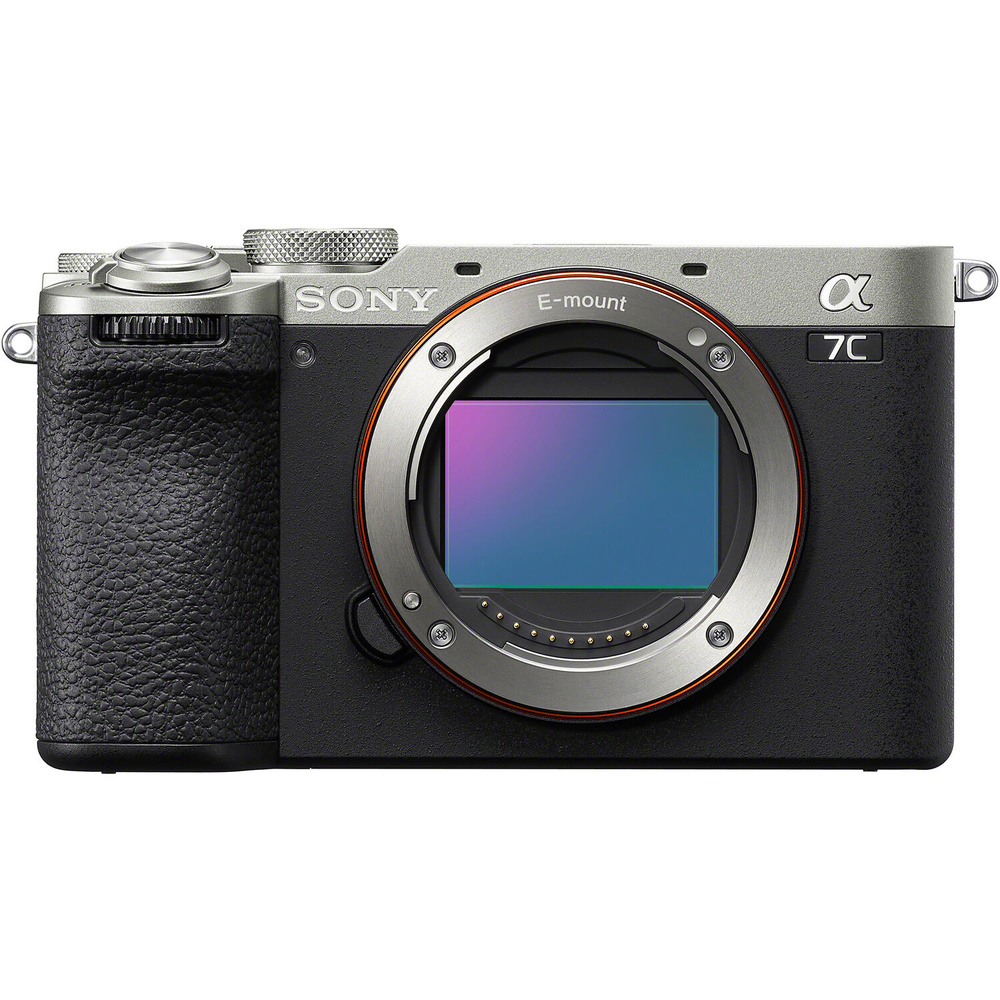 Compare this to the Nikon Zf, which has brass-topped dials for shutter speed, ISO, and exposure compensation that click into place with mechanical precision. Compare it to the Fujifilm X-T5, which puts aperture rings on nearly every lens in the system. The a7C looks different from other Sonys, but it does not feel different to use. The interface philosophy is identical.
Sony knows there is a market for compact, stylish cameras. The a7C proves that. What Sony has not done is commit to the full vision of what a retro camera actually means: physical controls, tactile feedback, and an experience that prioritizes the act of photography over the technology enabling it.
Sony Has the Lenses
Here is where Sony's reluctance becomes genuinely baffling: they already have much of the lens ecosystem to support a retro body.
Many of Sony's recent G Master primes and several GM zooms feature physical aperture rings with de-clickable stops. The Sony FE 50mm f/1.2 GM, the FE 24-70mm f/2.8 GM II, the 35mm f/1.4 GM, the 85mm f/1.4 GM II: all of them let you control aperture directly on the lens barrel, just like vintage glass. Even their compact G-series primes, the 24mm f/2.8 G, 40mm f/2.5 G, and 50mm f/2.5 G, include aperture rings.
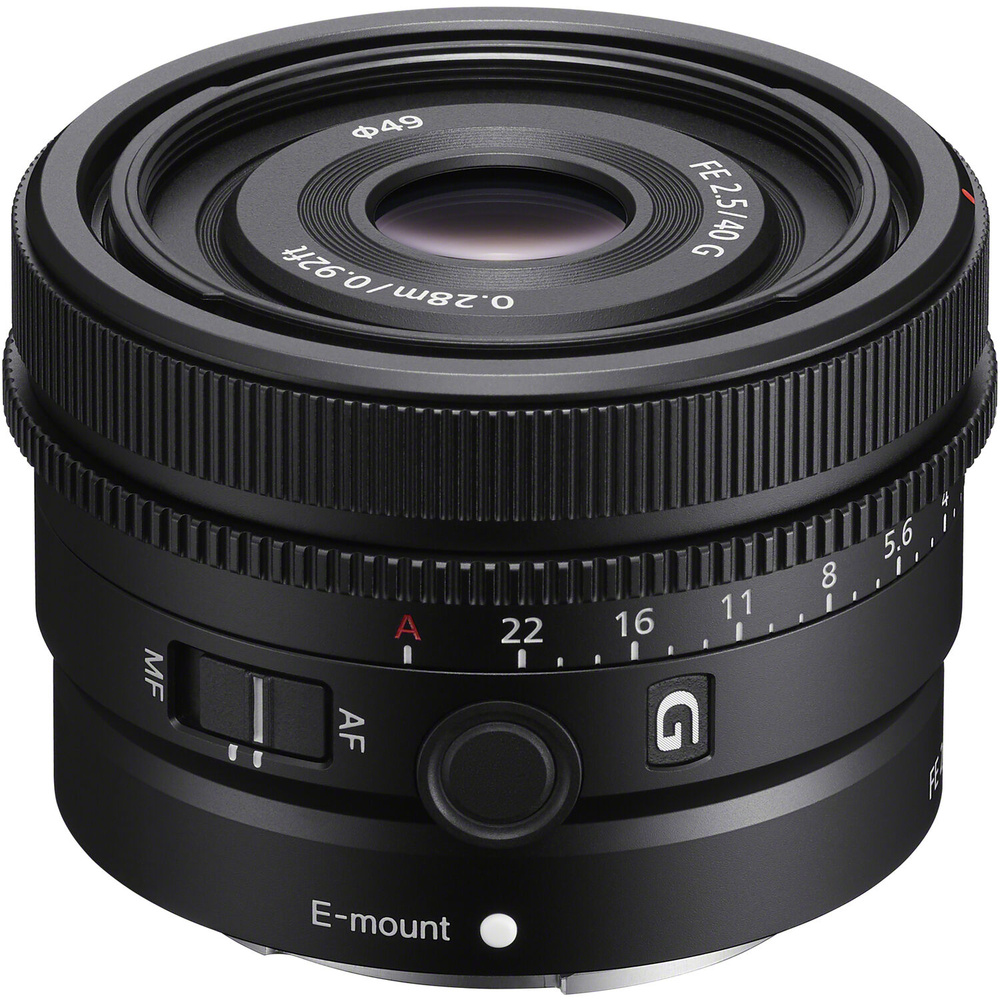 This is not a minor detail. A common critique of the Nikon Zf is that when you mount a modern Z-mount lens without an aperture ring, the vintage aesthetic falls apart. You end up with a retro body attached to a thoroughly modern lens, and the tactile experience becomes inconsistent. Nikon shooters who want the full retro experience are limited to adapted vintage glass or the handful of manual focus options available.
Sony does not have this problem to the same degree. A large share of their modern lens lineup already supports manual aperture control across a range of focal lengths and price points. The compact G primes would pair beautifully with a heritage-styled body. Much of the ecosystem is ready. And yet Sony refuses to build the body to match.
This makes their absence from the retro market even more puzzling. Sony could ship a largely complete tactile system relatively quickly. They are sitting on a goldmine and choosing not to dig.
The Brand Identity Problem
To understand why Sony might be reluctant, you have to understand what Sony thinks Sony is.
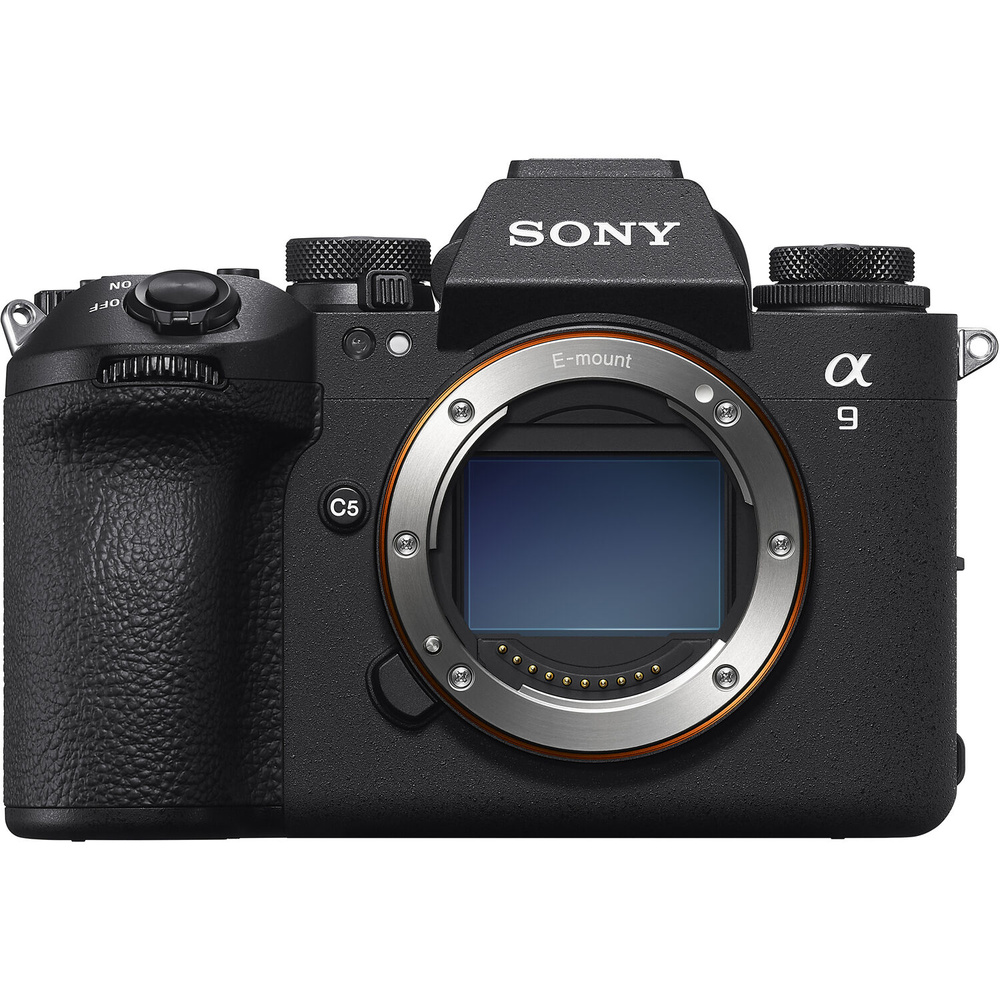
Sony's camera marketing is relentlessly forward-looking. They helped define the modern full frame mirrorless category with the original a7 in 2013. They developed the first full frame global shutter sensor for an interchangeable-lens camera with the Sony a9 III. They push AI-driven autofocus, computational photography, and video features that blur the line between still cameras and cinema tools. The message, consistently, is that Sony represents the future.
This is not just marketing. It reflects a genuine corporate philosophy. Sony's design language across all their products emphasizes technology, precision, and modernity. Their cameras look like the instruments they are: dense with capability, optimized for performance, styled to suggest sophistication rather than nostalgia.
A retro camera would cut against all of this. It would be a product that says the past had something right, that there is value in old approaches, that the relentless march of technology is not always the point. For a company whose entire identity is built on being ahead of the curve, this might feel like an uncomfortable admission.
The counterargument is obvious: brands can contain multitudes. Porsche makes the 911 and the Taycan. Leica makes the M11 and the SL3. Apple makes products that reference their own design history all the time. There is no reason Sony could not make an a1 II for professionals who need bleeding-edge performance and a Minolta-inspired body for photographers who want a different kind of experience.
But Sony has shown no indication that they see it this way. Their product lineup is remarkably coherent in its design philosophy. Every Alpha camera, from the entry-level a6000 series to the flagship Sony a1, shares the same basic approach to controls, menus, and ergonomics. A retro body would be the first time Sony deliberately broke from that consistency in service of a different vision.
Maybe they have decided the brand coherence is worth more than the incremental revenue a retro camera would bring. Maybe they believe their customers genuinely prefer menu-driven interfaces and do not care about physical dials. Maybe the brand coherence is worth protecting at the cost of leaving money on the table.
What Would It Even Look Like?
If Sony did decide to enter this market, they would have several options.
The most dramatic would be to resurrect the Minolta brand itself. Release a line of heritage-inspired cameras under the Minolta name, clearly differentiated from the Alpha lineup, aimed at photographers who want something with genuine historical continuity. The problem is that the Minolta mark has since passed to a third party and is currently licensed for budget electronics. Untangling that would be complicated and expensive, and the brand recognition among younger photographers is limited anyway.
A more practical approach would be to create a new sub-line within the Alpha system. Something like the a7R for resolution or the a7S for sensitivity, but focused on design and experience rather than specifications. An a7H for heritage, perhaps. Same sensor and autofocus system as the standard a7 V, but with a body inspired by the XD-11, complete with top-mounted dials for shutter speed and ISO.
The engineering would not be trivial. Even if Sony can reuse sensors and autofocus systems, a retro body with new mechanical controls, revised ergonomics, different weather-sealing considerations, and a differentiated user experience requires real development work. But it is well within Sony's capabilities. They have the technology. They have many of the lenses. They have the money. What they lack is the apparent desire.
The Silence Speaks Volumes
Canon's executives have talked publicly about retro camera design. At CP+ 2025, Manabu Kato discussed the AE-1 anniversary, acknowledged the demand for vintage-styled bodies, and described the design challenges involved in blending old aesthetics with modern ergonomics. It was not a product announcement, but it was a clear signal that Canon is thinking seriously about this market. (Whether the rumored 2026 timing tied to the AE-1's 50th anniversary proves accurate remains to be seen.)
 Sony, by contrast, has been notably quiet. Few executive interviews touching on heritage designs. Nothing prominent about the Minolta legacy at trade shows. No sustained signaling from the usual rumor channels. In an industry where information leaks constantly and companies love to tease future directions, Sony's apparent disinterest in this segment stands out.
This seems meaningful. Sony is not a company that stays quiet when they are working on something exciting. They are happy to discuss their technology roadmap, their sensor development, their autofocus innovations. The lack of any prominent public signals about a retro camera suggests it may simply not be a priority for them.
The Real Question
Sony could make a retro camera. They have the heritage to draw from. They have the sensor technology to make it genuinely excellent. They have the manufacturing capability to produce it at scale. They already have many of the lenses with aperture rings ready to go.
The question is not whether Sony can. The question is whether Sony wants to.
And based on everything we can observe, the answer appears to be no. Sony has watched Fujifilm build a devoted following around cameras that prioritize experience over specifications. They have watched Nikon's Zf become a genuine hit. They have watched Canon prepare to potentially enter a market that barely existed five years ago. And they have chosen to sit it out.
Maybe they are right. Maybe the retro trend is a niche that will fade, and Sony's focus on technological leadership will prove more durable. Maybe their customers genuinely prefer menu-driven interfaces and do not care about physical dials. Maybe the brand coherence is worth protecting at the cost of leaving money on the table.
Or maybe Sony has simply decided they do not want to make a camera that admits the future is not everything. They built their reputation on being ahead. Looking backward, even in service of making something beautiful, might feel like a betrayal of that identity.
Either way, the Minolta XD-11 sits in Sony's archives, elegant and unused. The X-700's Camera of the Year legacy gathers dust. The G Master lenses with their beautiful aperture rings wait for a body worthy of them. And photographers who want a full frame retro camera with Sony's legendary sensors and autofocus will have to keep waiting.
Based on Sony's apparent disinterest, they should not hold their breath.
Lead image by Camerafiend at en.wikipedia, CC BY-SA 3.0, via Wikimedia Commons.








 English (US) ·