
 © Black Bear /Courtesy Everett Collection

Published Oct 28, 2026, 1:00 PM EDT
George is a film critic and journalist with over nine years of experience in the entertainment industry. Beginning as the Co-Creator and Co-Editor of Star Wars Holocron, the most followed Star Wars fan account on Twitter/X, George went on to develop The HoloFiles, a movie and television-focused website with his brother and writing partner Josh.
A member of the Hollywood Creative Alliance, Chicago Indie Critics, Online Film and Television Association, and the Internet Film Critic Society, George has covered major industry events as credentialed media, including D23, CinemaCon, SXSW, Fantastic Fest, Star Wars Celebration, Tribeca Festival, and more. He also regularly writes reviews and contributes articles to ScreenAnarchy, BRWC, Film Obsessive, TV Obsessive, and Under the Radar. George's work has been featured in various esteemed publications, including the BBC, Associated Press, Forbes, and The New York Times.
Warning: Spoilers ahead for Wicker
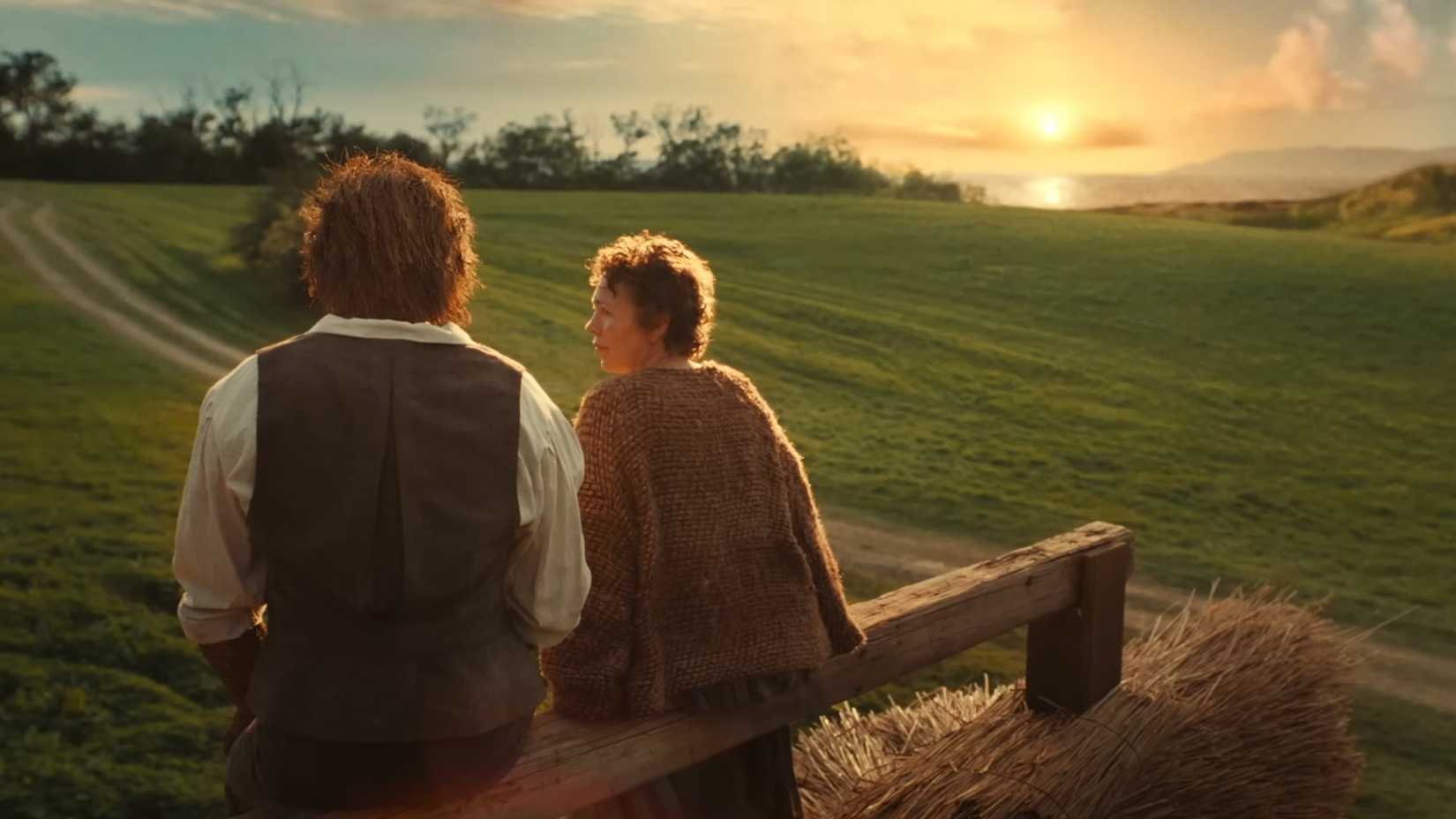
Wicker has attracted plenty of attention for its unusual premise, star-studded cast, and offbeat blend of romance, fantasy, and dark comedy. Starring Olivia Colman as a lonely Fisherwoman and Alexander Skarsgård as her unwaveringly dedicated husband made of wood, the film transforms an unconventional folk tale into an absurdly funny and deeply romantic story about love, jealousy, and the absurd expectations society places on relationships.
The film follows a Fisherwoman who, tired of loneliness and the judgment of the townsfolk in her small village, commissions a basket-maker (Peter Dinklage) to create a husband from wicker. What begins as an extraordinary solution to an ordinary problem develops into an unlikely romance, with the Wicker Husband becoming an object of fascination, envy, and resentment. As the couple’s pure and undeniably passionate relationship challenges the village’s established social order, the townspeople become increasingly determined to interfere.
Wicker is not simply an adaptation of a full-length novel. Rather, its source material is actually a short story published less than two decades ago.
Wicker Began As An Acclaimed Short Fable

Before becoming a feature film, Wicker had its origins in Ursula Wills-Jones’s short story, The Wicker Husband. Rather than building an elaborate fantasy world, the 14-page fable published online examines loneliness, social conformity, envy, and the cruelty that can emerge when a community encounters someone who refuses to follow its expectations. Its compact storytelling and folkloric structure give it the feeling of an old tale passed down through generations.
The story subsequently made its way to the stage, where its unusual premise could be developed through theatrical performance and physical storytelling. Wicker takes that established material and expands it into a more elaborate cinematic experience, giving its characters greater emotional complexity and its village a much more prominent role. Interestingly, the movie’s romantic entanglements, social satire, and heightened comedy build on a foundation that is far less interested in delivering a conventional happily-ever-after for its protagonist than in exposing the ugliness lurking beneath communal respectability and patriarchy.
The Wicker Husband Is More Of A Fairy Tale Than Wicker
The original The Wicker Husband is a sparse, traditional folk fable. Its characters are defined largely by their roles in the story, and its central relationship serves a broader purpose (i.e., to demonstrate how jealousy and conformity can turn ordinary people into instruments of cruelty). The unconventional marriage at the heart of the story disrupts the village’s assumptions about what a husband should be and what makes a relationship legitimate. The villagers’ response reveals the fragility of their supposedly respectable social order, particularly when someone finds happiness outside its approved rules.
The film, by contrast, significantly amplifies the physical, sensual, and romantic connection between the Fisherwoman, played by Olivia Colman, and her wicker creation, played by Alexander Skarsgård. Their relationship becomes a sexually charged romance rather than simply an unusual marriage used to illustrate a moral lesson. The Wicker Husband is not merely an object that fulfills the Fisherwoman’s desire for companionship. Instead, he becomes a romantic partner whose utility and dedication to his wife unsettles the villagers and intensifies their jealousy and resentment. This emphasis on attraction and emotional intimacy gives the film a more contemporary sensibility.
The romantic expansion in the film also creates room for darkly absurdist comedy. The film ridicules male-dominated social norms, patriarchy, and the relentless gossip through which small communities enforce their preferred hierarchies. Village wives, local tradespeople such as the Tailor and Baker, and meddling figures like the Tailor’s Wife (Elizabeth Debicki) contribute to an increasingly tangled web of jealousy and social upheaval. Minor elements of the original premise are expanded to render the movie a village soap opera of sorts, with romantic rivalries and petty grievances aplenty.
The Wicker Husband Is Darker And Grislier Than Its Film Counterpart

The sharpest difference between the short story and the movie emerges when the villagers’ jealousy turns violent. In the original fable, the townspeople manipulate the Fisherwoman into believing that her wicker husband has been unfaithful by fabricating a wicker baby. The deception triggers a devastating confrontation, and the Wicker Husband is ultimately set on fire and destroyed.
The episode is considerably more disturbing than the film’s treatment of the couple’s troubles. Wicker instead steers its climax toward the collapse of the village’s social order and the couple’s eventual escape. Although the villagers’ hostility remains central to the conflict, the film favors a more upbeat resolution that aligns with the film's greater focus on romance and humor.
The original story becomes even more vicious after the fire. With the Wicker Husband destroyed, the basket-maker meticulously repairs him before hatching a scheme of his own. He constructs a wicker woman from sharp, thorny blackthorn wood and presents her to the village’s wealthy tradesmen. In an elaborate retirement scam, the greedy butcher, tailor, and baker are persuaded to surrender valuable gifts, including gold, oxen, and livestock, for a bride they cannot simply return.
The arrangement culminates in a particularly grisly act of poetic justice when the blackthorn woman mutilates the butcher who wins her, slicing his lips and unleashing chaos throughout the village. Rather than settling for exposing the townspeople’s hypocrisy, the fable makes their greed and cruelty physically punishable.
This is where the source material departs most dramatically from the film’s eccentric romantic-comedy sensibility. The fable’s weaponized wicker woman is a product of folk horror logic as the villagers who exploit others are themselves ensnared by a seemingly desirable creation and their punishment is as brutal as their own behavior. The basket-maker’s elaborate scam also transforms the conclusion into a wider reckoning with greed, entitlement, and the social systems that allow powerful men to manipulate those around them.
The movie reworks this revenge subplot, preferring a less gruesome confrontation and a resolution that more so focuses on the central couple’s romantic future. The events themselves, on paper, are very similar across mediums, but the fable takes a much darker, folk horror-like approach to its tone.
Wicker demonstrates how markedly an adaptation can both expand and transform its source material, while still adhering to all the central beats of the original. The film takes a strange, morally charged fable with shades of folk horror and expands it into a sensual romance filled with gossip, social satire, and absurdist humor.

Release Date October 23, 2026
Runtime 105 minutes
Director Eleanor Wilson, Alex Huston Fischer







 English (US) ·