
 2 weeks ago
21
2 weeks ago
21

Wi-Fi 7 is currently the state-of-the-art wireless networking standard for consumers and businesses, following in the footsteps of Wi-Fi 6 and Wi-Fi 6E. The Wi-Fi Alliance made grand promises about performance and reliability compared to earlier versions. Still, full support for some of Wi-Fi 7’s headline features is scarce to nonexistent in consumer wireless routers you’ll find from brick-and-mortar or online retailers.
We’ve tested some of the best Wi-Fi 7 routers in recent years, and the segment has exploded with options. You can now buy standard and gaming-focused routers, mesh routers, portable routers (which can be powered by battery packs), and even cellular Wi-Fi 7 hotspots. And with this wide range of devices come varying capabilities that may or may not adhere to standards set by the Wi-Fi Alliance.
Swipe to scroll horizontally
IEEE Standard | 802.11be | 802.11ax | 802.11ax |
Wireless Bands | 2.4 GHz, 5 GHz, 6 GHz | 2.4 GHz, 5 GHz, 6 GHz | 2.4 GHz, 5 GHz |
Max Channel Bandwidth | 320 Hz | 160 Hz | 160 Hz |
Maximum Spatial Streams | 16 | 8 | 8 |
Maximum Bandwidth per Stream | 2400 Mbps | 1200 Mbps | 1200 Mbps |
Theoretical Maximum Data Rate | 46 Gbps | 9.6 Gbps | 9.6 Gbps |
Advanced Modulation | 4K QAM | 1024 QAM | 1024 QAM |
Confused yet? Well, it gets even more confusing. Wi-Fi 7 supports 2.4 GHz, 5 GHz, and 6 GHz bands. However, not all global regions have licensed airways for consumer use of the 6 GHz band. So, while you can use 6 GHz consumer wireless devices in the United States, other regions, like China, don’t license that band for Wi-Fi devices.
This disparity has led router manufacturers to develop dual-band Wi-Fi 7 routers that support just the 2.4 GHz and 5 GHz bands. The benefit is that manufacturers can still use the Wi-Fi 7 branding to sell their latest networking gear, but it leaves customers even more confused. Consumers must look past the Wi-Fi 7 branding to ensure they’re purchasing a tri-band Wi-Fi 7 router rather than a dual-band one. In addition, dual-band Wi-Fi 7 routers don’t support the full 320 Hz maximum channel bandwidth and would technically only support MLO over two bands instead of three.
Multi-Link Operation
Multi-link Operation (MLO) has been billed as one of the key pillars of the Wi-Fi 7 experience, offering a reason to upgrade from Wi-Fi 6E to Wi-Fi 7. But first, a little background. With a traditional Wi-Fi router, a wireless client will connect to one band at a time. If you have a Wi-Fi 6E router that supports the 2.4 GHz, 5 GHz, and 6 GHz bands, the wireless client will connect to one of those bands at a time.
However, MLO theoretically allows the router to bond two or more bands all within a single SSID. With properly-spec’d hardware, a client could connect to all three bands simultaneously and transmit/receive data as needed. The thing to remember here is that maximum throughput still cannot be greater than the fastest band available (6 GHz); instead, the wireless client can switch between bands while operating under the same SSID to account for the current wireless environment in real-time (i.e., traffic, radio interference, distance from the router, etc.).
There are two basic types of MLO that Wi-Fi 7 routers are capable of supporting:
Multi-Link Single Radio (MLSR/eMLSR): In this operating mode, a single link to a wireless band is possible, while the other bands remain in a lower power state until called upon. For example, the wireless client can dynamically hop between the 5 GHz and 6 GHz bands to maximize throughput and reliability. Enhanced Multi-Link Single Radio (eMLSR) is similar but adds link monitoring/listening to enable more rapid band switching, as it listens to multiple links simultaneously (but can still transmit and receive data on only one active link).
Multi-Link Single Radio (MLMR): This operating mode aggregates data across the 2.4 GHz, 5 GHz, and 6 GHz bands to improve throughput. This real-time monitoring can reduce latency and improve network reliability, especially in highly congested environments.
The purpose of MLO is to ensure that the Wi-Fi 7 client has the fastest possible connection to the router, given the current conditions. For example, connecting to the 6 GHz band on your router might give you great performance at close range but taper off dramatically the farther away you are, especially if there are walls between you. While the performance might drop, the signal is still strong enough to keep you connected to the 6 GHz SSID.
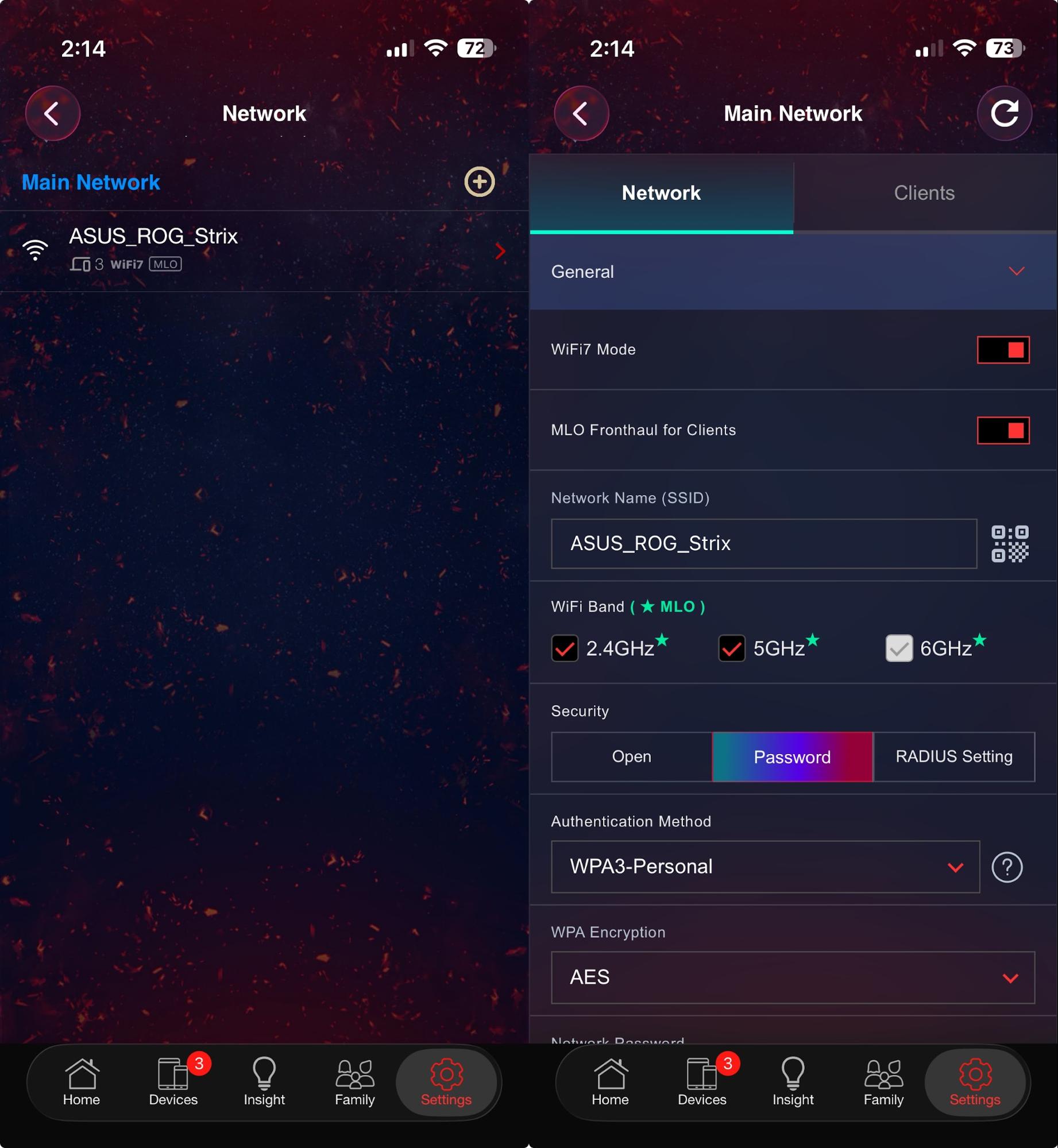
With MLO, the wireless client can automatically determine whether and when to switch to another band to maintain performance and signal strength. So, if you’re moving farther from the router and the 5 GHz band is a better fit for data throughput, your Wi-Fi 7 client will switch on the fly.
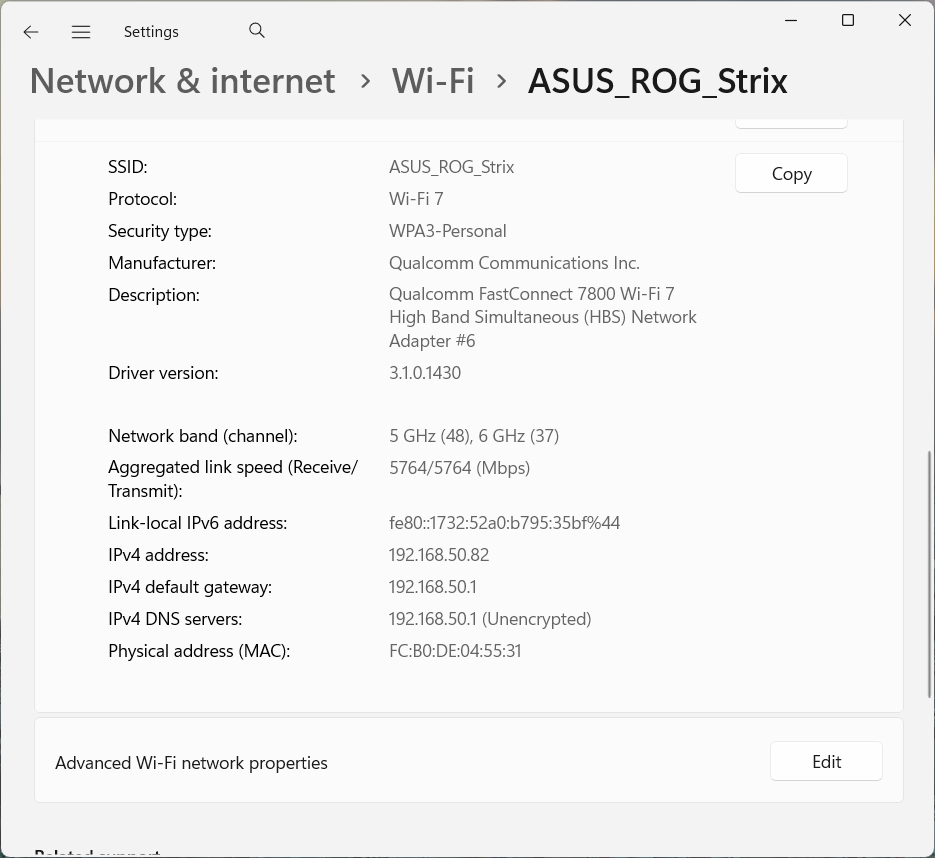
In real-world testing, I have found little to no benefit to enabling an MLO SSID on Wi-Fi 7 routers (which is why I also don’t run individual tests with MLO). At most, I’ve seen a 1-2 percent difference compared to not having MLO enabled. In most cases, the non-MLO SSID provides better performance.
Further complicating matters, most routers don’t even implement MLO properly in firmware, so compliance is spotty at best. Further complicating matters, you need to enable WPA3 authentication to set up an MLO network, and only Wi-Fi 7 devices are supported. That severely limits the usefulness of MLO if you don’t have many Wi-Fi 7 devices in your home (here’s a hint: most people have far more Wi-Fi 5 or Wi-Fi 6 devices).
Automated Frequency Coordination
Automated Frequency Coordination (AFC) is even harder to find on Wi-Fi 7 routers, as it enables a power-hungry, higher-performance operating mode for the 6 GHz radio. Although AFC was previously available with Wi-Fi 6E, it’s more prevalent (though still underutilized) with Wi-Fi 7 routers.
Think of AFC as a turbocharger for your router, boosting performance on the 6 GHz band. In the default Low Power Indoor (LPI) mode, the 6 GHz band can deliver higher performance than the 5 GHz band on Wi-Fi 7 routers, but at the expense of range. LPI is used to minimize local interference in the 6 GHz band. With AFC, the router is switched to Standard Power (SP), which improves signal strength and enables wireless connections beyond 50 feet.
However, you don’t automatically get free range to use AFC on your Wi-Fi 7 router. First, your country has to support the use of the 6 GHz band for consumer devices. And even if it does, there are still further local restrictions that could prevent you from using AFC.
Let’s take the Asus ROG Strix GS-BE18000, for example. This gaming router supports AFC; however, you must use the Asus Router smartphone app to set up the features. That’s because the Asus Router app uses your smartphone’s location data to check local databases and ensure SP mode can be enabled.
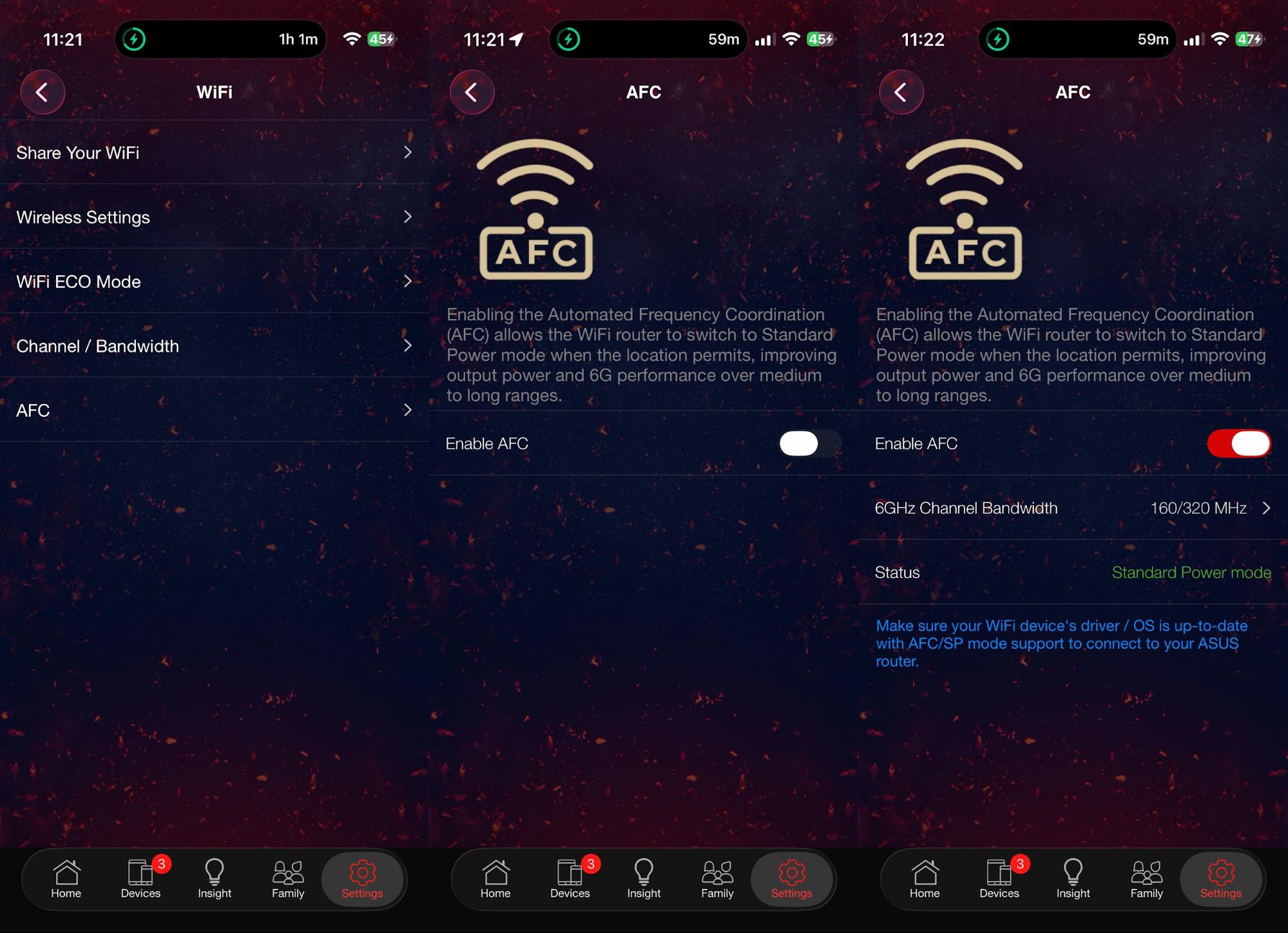
With AFC, broadcasting power can be boosted, bringing the 6 GHz band's maximum range on par with that of the 5 GHz band. But to take advantage of AFC, both your Wi-Fi 7 router and Wi-Fi 7 client have to support the feature.
Wi-Fi 8 is on the horizon, and the confusion still stands
The first Wi-Fi 8 routers are expected to launch globally in late 2027, with companies like Asus having already showcased prototype devices. If you were hoping that some of the confusion surrounding tri-band, dual-band, MLO, and AFC would subside with Wi-Fi 8, we have some bad news. The bifurcation in the market between tri-band routers (which include the 6 GHz band) and dual-band Wi-Fi 8 will continue.
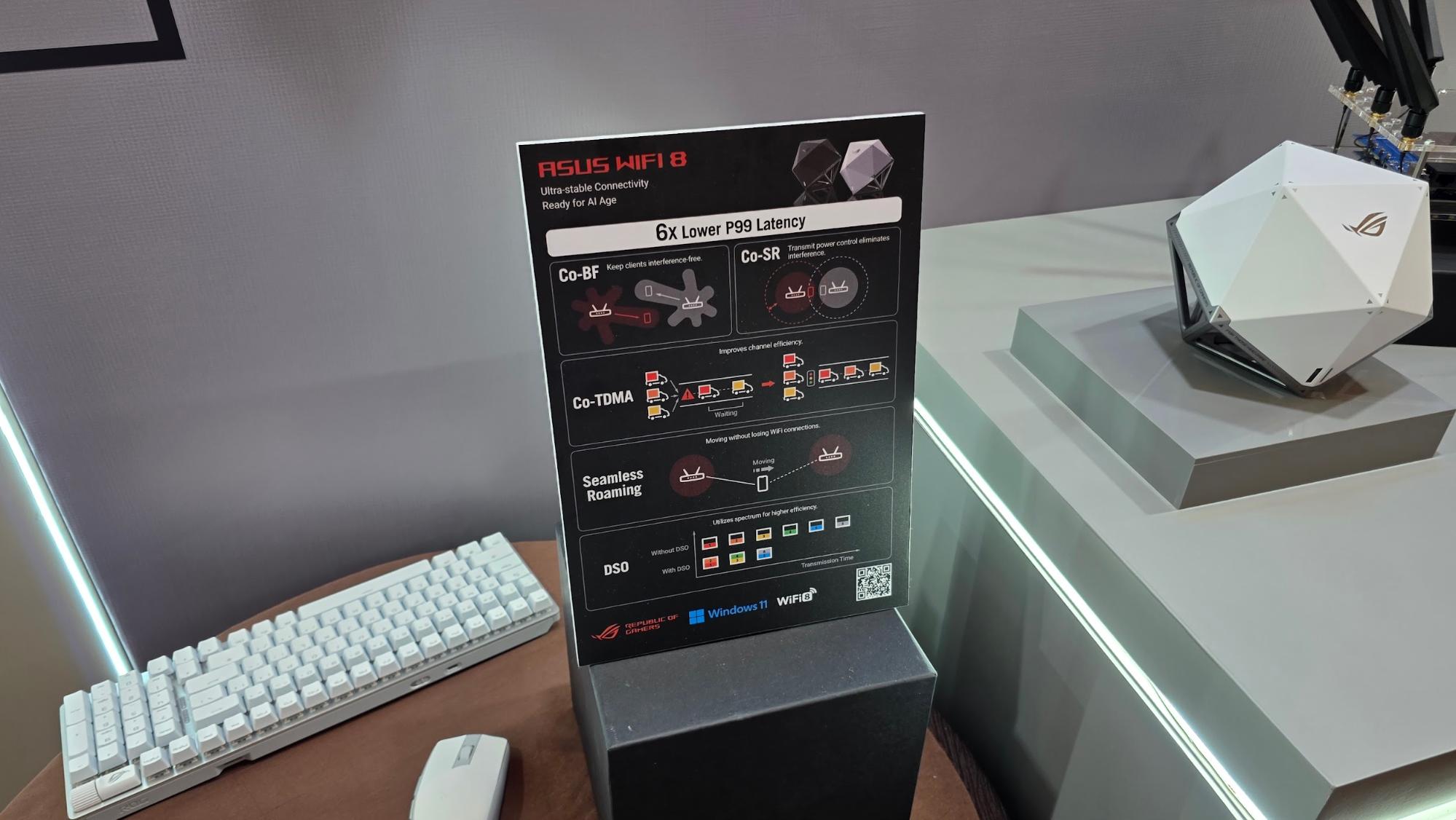
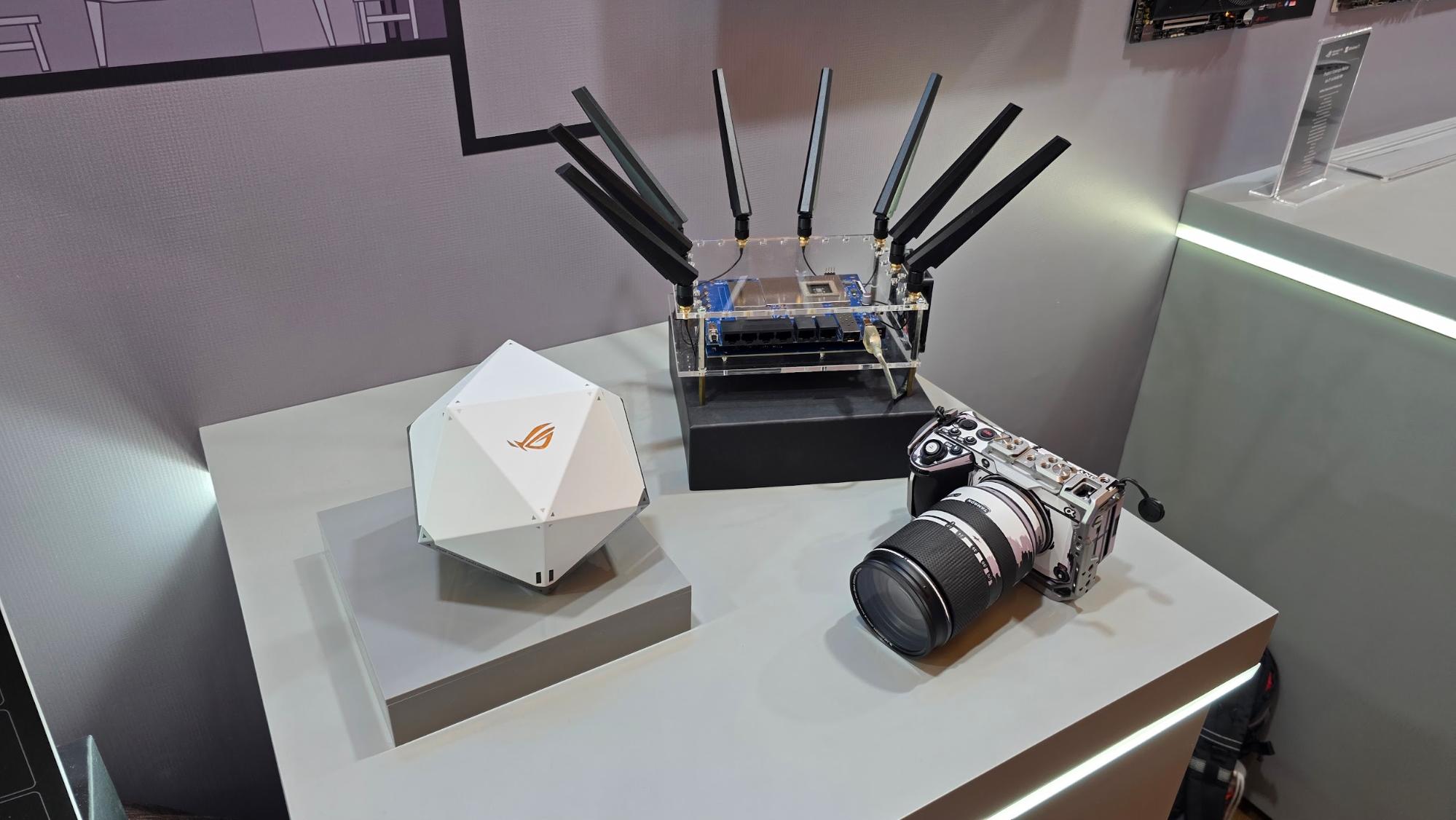
In addition, hardware support for MLO and AFC will remain with the router OEMs, so you will need to do your research before purchase if those technologies are important to you. Perhaps more importantly, Wi-Fi 8 won’t offer a huge generational leap in wireless performance compared to Wi-Fi 7. Each generation of Wi-Fi has placed a strong emphasis on performance to spur consumer upgrades, but we’d consider Wi-Fi 8 more of a “maintenance” release.
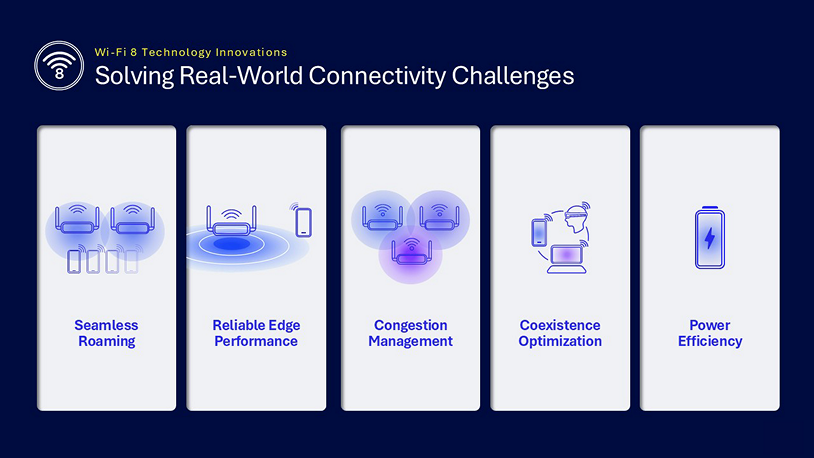
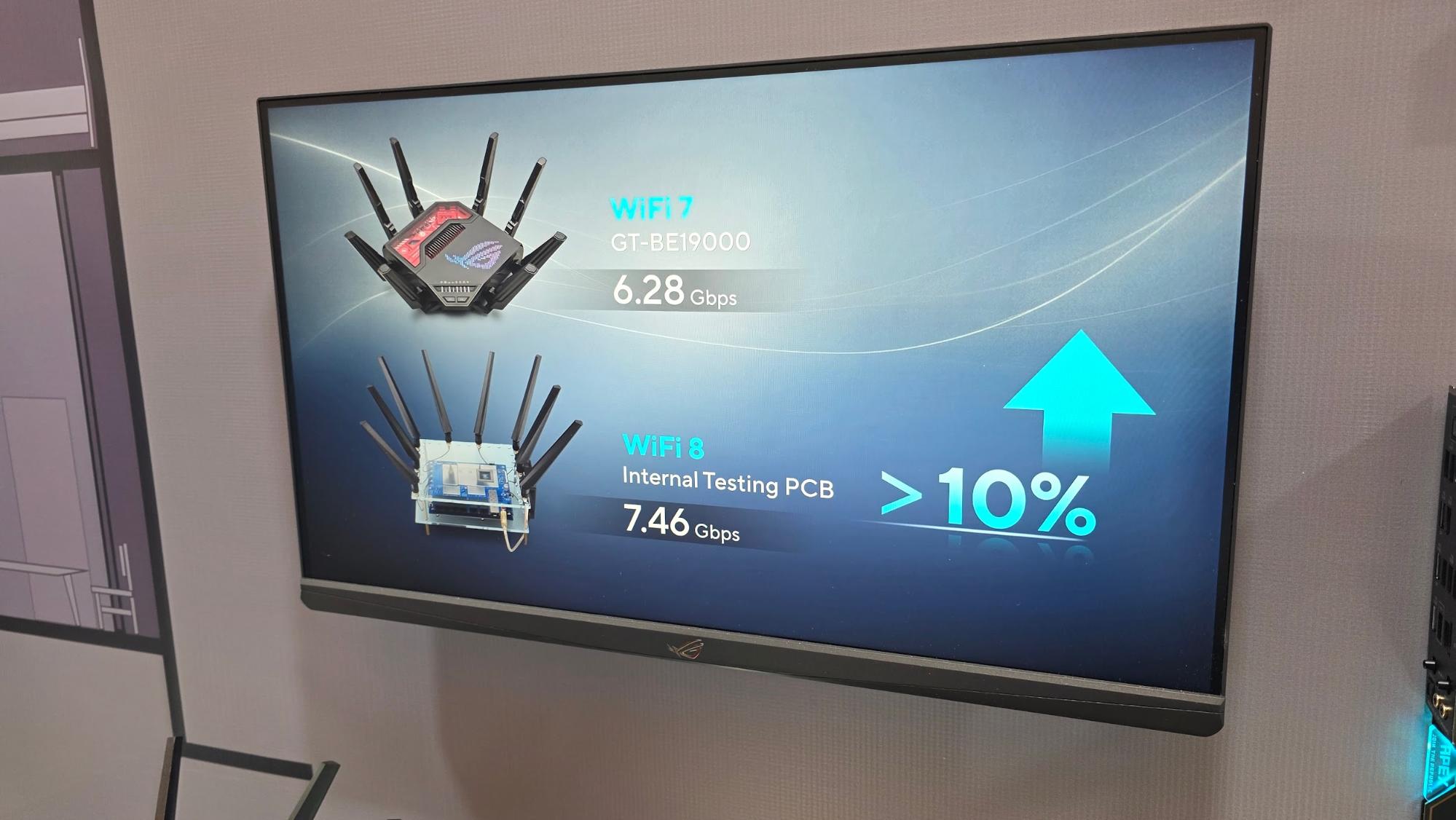
Full-spec Wi-Fi 8 hardware will still use three bands (2.4 GHz, 5 GHz, and 6 GHz), along with 4096 QAM and a maximum channel bandwidth of 320 MHz. In fact, the maximum data rate remains at 46 Gbps. Instead, Wi-Fi 8’s tentpole feature is Ultra High Reliability (UHR), to improve real-world data rates by 25 percent. At CES 2026, Asus was already showing a 10 percent improvement in mid-range throughput with prototype Wi-Fi 8 hardware.
The IEEE claims that the up to 25 percent increase in real-world speeds isn’t the only benefit; you should also notice reduced latency across your network. Several new technologies are tasked with achieving these goals.
Coordinated Spatial Reuse (Co-SR): Dynamically regulates signal strength between wireless clients and the access point in heavily congested network environments (dependent on the distance between client and access point). This feature alone could improve network efficiency by up to 25 percent.
Coordinated Beamforming (Co-BF): Allows access points to direct their wireless signals only to areas where active devices are present, helping reduce interference with other devices. Up to a 50 percent improvement in throughput was seen by MediaTek in early testing using Co-BF.
Dynamic Sub-Channel Operation (DSO): Allows devices to tap unused portions of the wideband spectrum (which is often underutilized by 6 GHz devices) to maximize utilization (especially in mixed device networks).
Enhanced Modulation Coding Scheme (MCS): Offers fine-grain coding rate adaptation when the signal-to-noise ratio is unstable. This results in smoother transitions, particularly in networks with high device utilization.
Extended Long Range: Provides a more stable wireless link for devices that typically sit at the edge of your router/access point's coverage range (think wireless security cameras, doorbells, outdoor lighting, garage door openers, etc.).
It remains to be seen whether all, or even some, of these features will be implemented across the full range of Wi-Fi 8 hardware that becomes available over the next several years. However, it looks like Wi-Fi 8 will help devices better realize the performance potential originally promised with Wi-Fi 7.





 English (US) ·