
 4 weeks ago
21
4 weeks ago
21
Some ideas take years to resolve in photography—not because the location changes, but because your ability to translate what you see into an image takes time, experience, and sometimes the right tool.
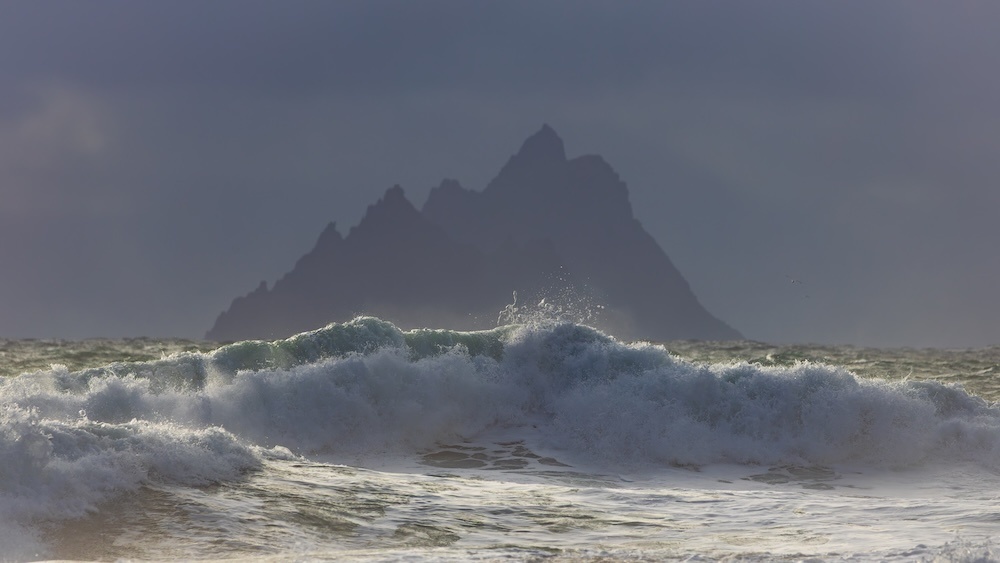
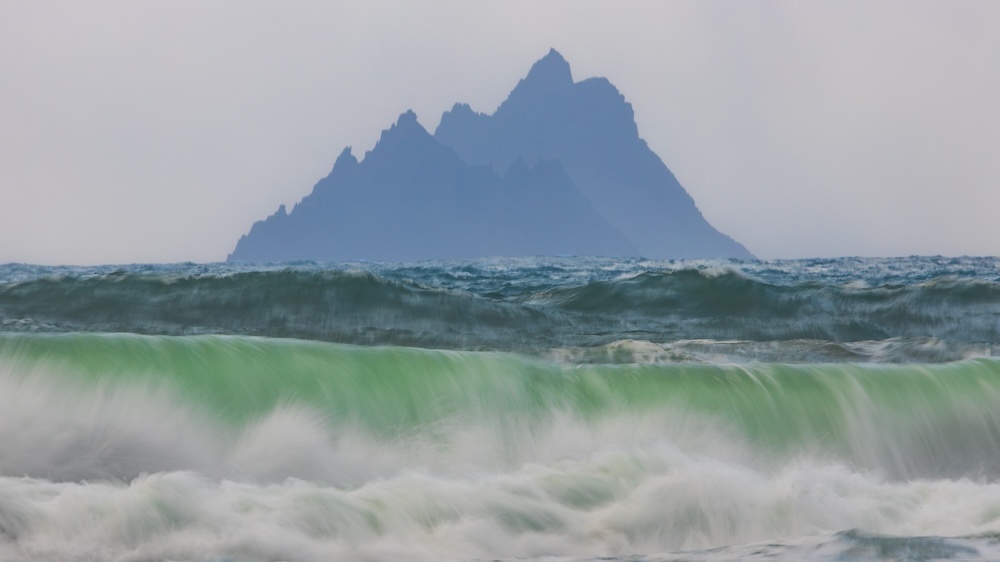
Photographing the Skellig Islands from the mainland has been one of those ideas for me. I first stood on that stretch of coastline many years ago with a clear vision in mind: large Atlantic waves rising and breaking in front of the islands, compressed together into a single frame. The problem wasn’t the conditions or the timing. It was reach.
Early Attempts and Missed Opportunities
My first attempt was with a 70–200mm. At the time, it felt like the sensible choice: sharp, fast, and familiar. But once I reviewed the images, it was clear the lens simply couldn’t do what I needed it to do. The islands sat too far back in the frame. The waves lacked scale. Everything felt disconnected.
Eight years ago, I tried again, this time with a borrowed 300mm. It was an improvement, but still not enough. I could isolate moments in the waves, but I couldn’t compress the scene in the way I’d imagined. The Skelligs still felt distant, more like a backdrop than an active part of the frame. The idea stayed unresolved.
That experience stayed with me. I knew the shot was possible, but I also knew it would require more reach and a different approach.
Returning With a Clear Purpose
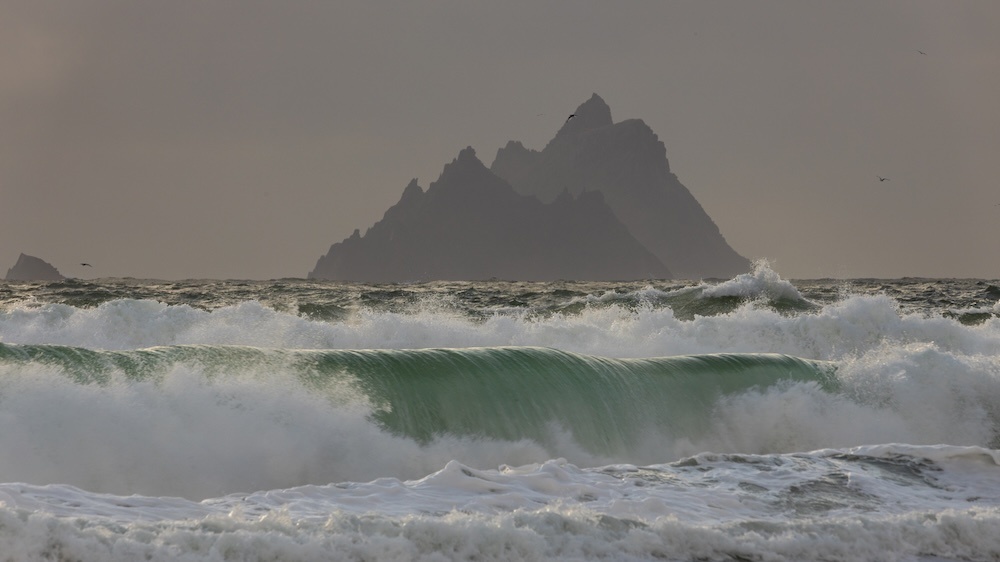
This winter, under a yellow rain warning, I returned with the Sigma 150–600mm. The conditions were far from comfortable. Heavy showers moved through quickly, the wind was unpredictable, and the sea was in constant motion. But this time, I had the reach to work with what was in front of me rather than compromise around it.
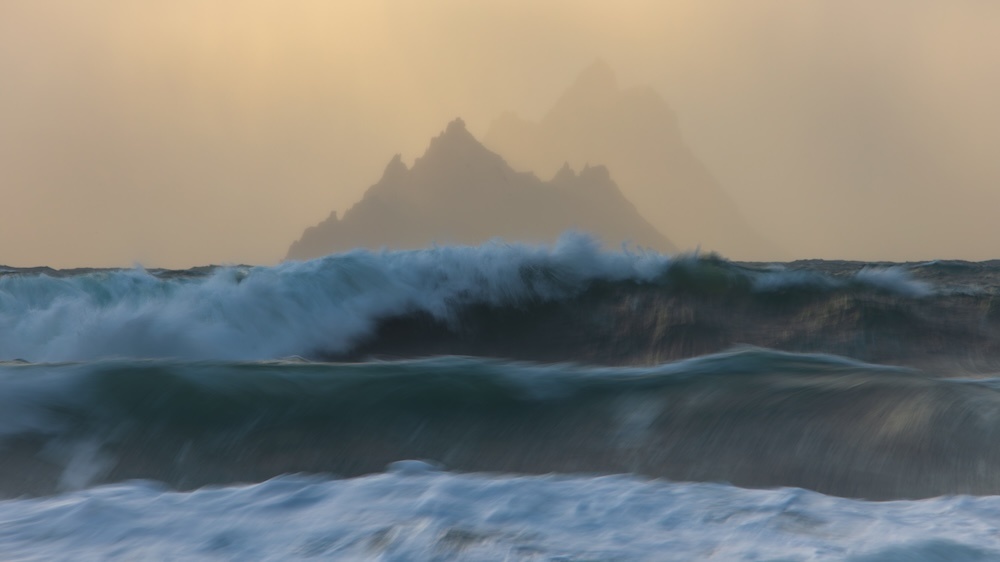
At the long end, the lens allowed me to pull the waves right into the Skelligs. The distance between subject and background collapsed. Suddenly, timing mattered more than ever. Instead of waiting for general conditions, I was waiting for specific moments: a single wave lifting, breaking, and aligning with the islands behind it.
That compression was exactly what I had been missing on every previous visit.
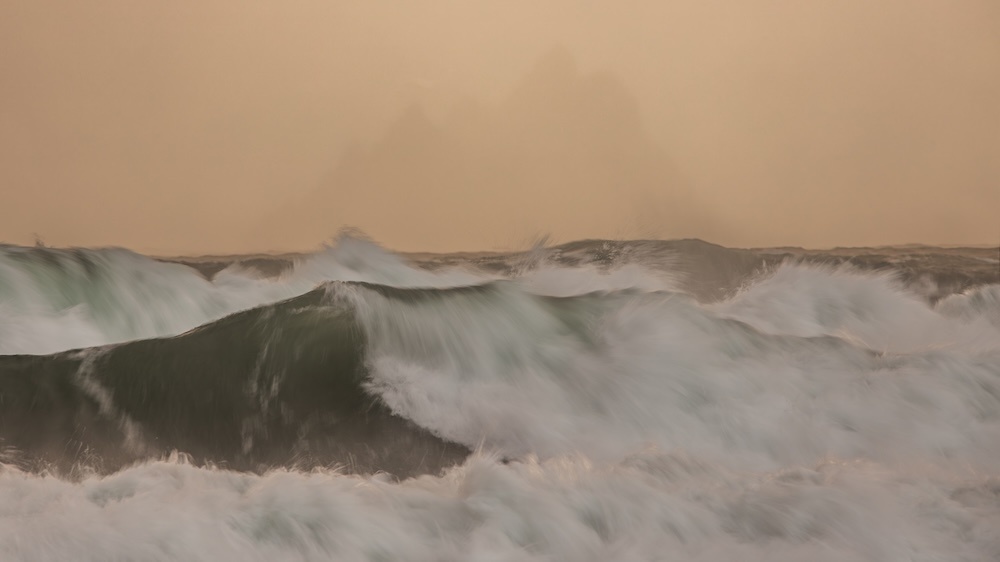
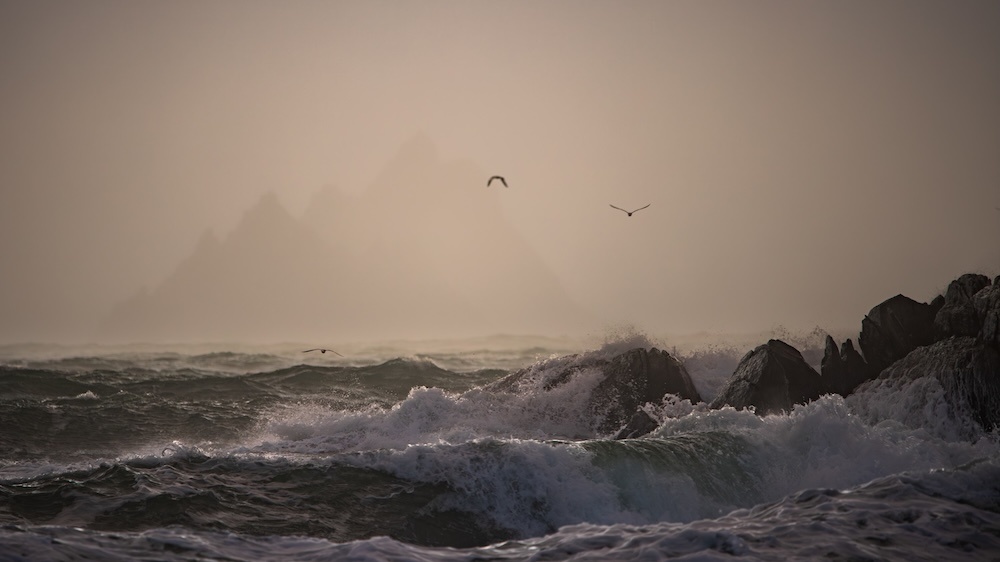
Now, despite the “poor” weather warning, I knew I’d be able to get some shots at least; all I needed were the waves to capture “moody” images. What I wanted was light, and on this day, the light would be changing quickly, meaning I’d need to be responsive in my approach. My composition didn’t change much; the main adjustment was my focus point. Focusing on the islands meant they’d be sharp; however, even though I was focused at infinity, I still wasn’t able to keep the waves in front of me as sharp in my shots. I watched as the waves broke and tried to predict where I should focus to catch them as sharply as possible. I changed my shutter speeds to freeze the water in motion, right as the waves curled between me and the islands. All in all, I missed some shots, of course, but the ones I got right are some of my favorite shots I’ve ever taken—and they were only possible because of the reach of this lens.
Working With Waves at Long Focal Lengths
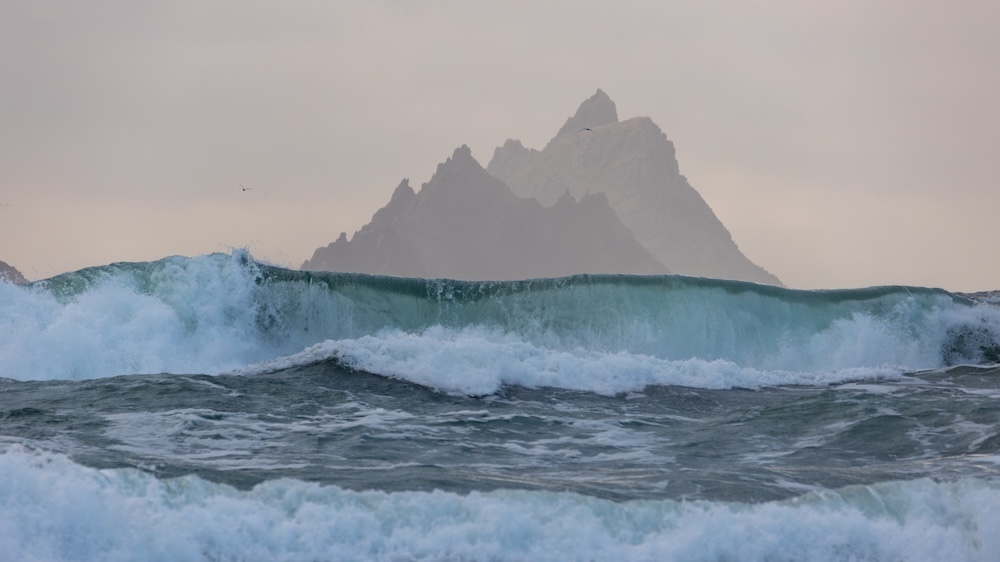
Photographing waves at 600mm is unforgiving. Everything moves. Everything shifts. Small errors are obvious. I found myself constantly switching between focusing on the Skelligs and reacting to the waves, and there were moments when I missed focus entirely because I prioritized the islands and the wave surged forward faster than expected.
Those misses were part of the learning process. They forced me to slow down, observe patterns, and anticipate rather than react. Watching how sets formed, how often larger waves followed, and where they peaked made a noticeable difference as the session went on.
The lens rewarded patience. When timing and focus came together, the results were images I had been trying to make for well over a decade.
Aperture and Depth of Field Considerations
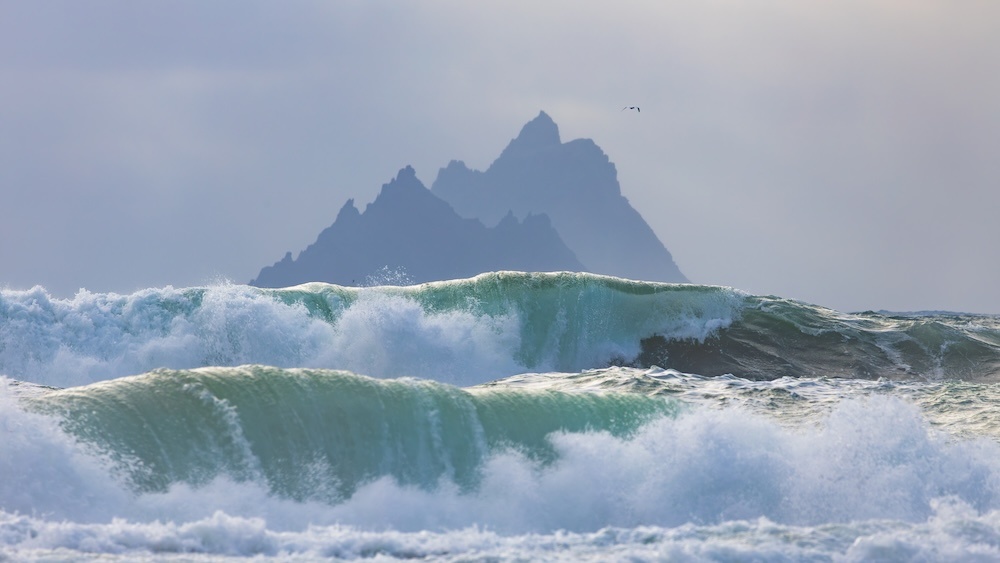
At 600mm, the maximum aperture of f/6.3 presents its own challenges. Depth of field is shallow, even when stopping down slightly. With a distant subject like the Skelligs and fast-moving waves in the foreground, small focus errors are amplified.
Rather than fighting that limitation, I leaned into it. I accepted that not every wave would be sharp front to back and focused on clarity where it mattered most. In many cases, a slightly softer wave with strong shape and timing worked better than a technically perfect frame with less impact.
The key was understanding the trade-offs and making deliberate decisions in the field.
Playing with different shutter speeds as the light changed was also fun, and it yielded some incredibly pleasing shots from one outing.
If you want a deeper dive into landscape technique and post-processing, Photographing the World: Landscape Photography and Post-Processing is a strong, structured walkthrough.
Versatility Beyond Wildlife
The Sigma 150–600mm is often associated with wildlife, but this trip reinforced how valuable it is for coastal landscape work. The ability to shift quickly from mid-range compositions to extreme compression opens up creative options that simply don’t exist with shorter lenses.
It’s not a lens you casually throw on the camera. It demands intention, stability, and an understanding of how distance, movement, and timing interact. But when used with purpose, it allows you to photograph scenes that would otherwise remain ideas rather than images.
Closing Thoughts
This shoot wasn’t about testing a lens. It was about finally resolving an idea that had followed me for years. The Sigma 150–600mm didn’t just make the shot possible—it allowed me to see the coastline differently.
Sometimes progress in photography isn’t about finding new locations. It’s about returning to familiar ones with better understanding, better tools, and a clearer sense of what you’re trying to say.
This time, the pieces finally lined up, thanks to the versatility of this Sigma lens.
You can see how I took the shots above in the linked video, and I’d love to know your thoughts on this lens in the comments below.







 English (US) ·