

Published Nov 11, 2026, 11:59 PM EST
Kolt Day is a tenured freelancer who has brought invigorating and provocative takes to Screen Rant and ComicBook, alongside loads of writing experience in other realms. Outside of media journalism, Kolt loves music production and philosophy (particularly Nietzsche, Derrida, and Foucault).
For decades, the late Stan Lee served as the face of Marvel Comics, but one of his collaborators has a major grievance—and that collaborator isn't alone. As Marvel's editor from the early '40s up to the early '70s, then serving in various roles like publisher, president, ambassador, and public figurehead until his death in 2018, Stan Lee's influence on Marvel (and comics generally) is irreplaceable.
However, Stan Lee's tenure also saw him collaborating with several important creators who would play a role in several major Marvel properties, like The Avengers, co-created with Jack Kirby. That legacy is unshakable: today, Avengers: Endgame has gone on to become not just the highest-grossing superhero film ever, but the highest-grossing movie ever.
The reality is that for nearly all of Marvel's most impactful and memorable pop culture cornerstones—Spider-Man, The Avengers, Incredible Hulk, X-Men, and more—Stan Lee tends to receive the credit. In fact, that's the exact problem: for as long as these characters have existed, there's always been a contingent of creators who are less than happy with Stan Lee's treatment of credit and Marvel's treatment of creator's rights to those IPs. Jack Kirby is only the tip of the iceberg, but also one of the most important.
Why Jack Kirby Started To Hate Stan Lee
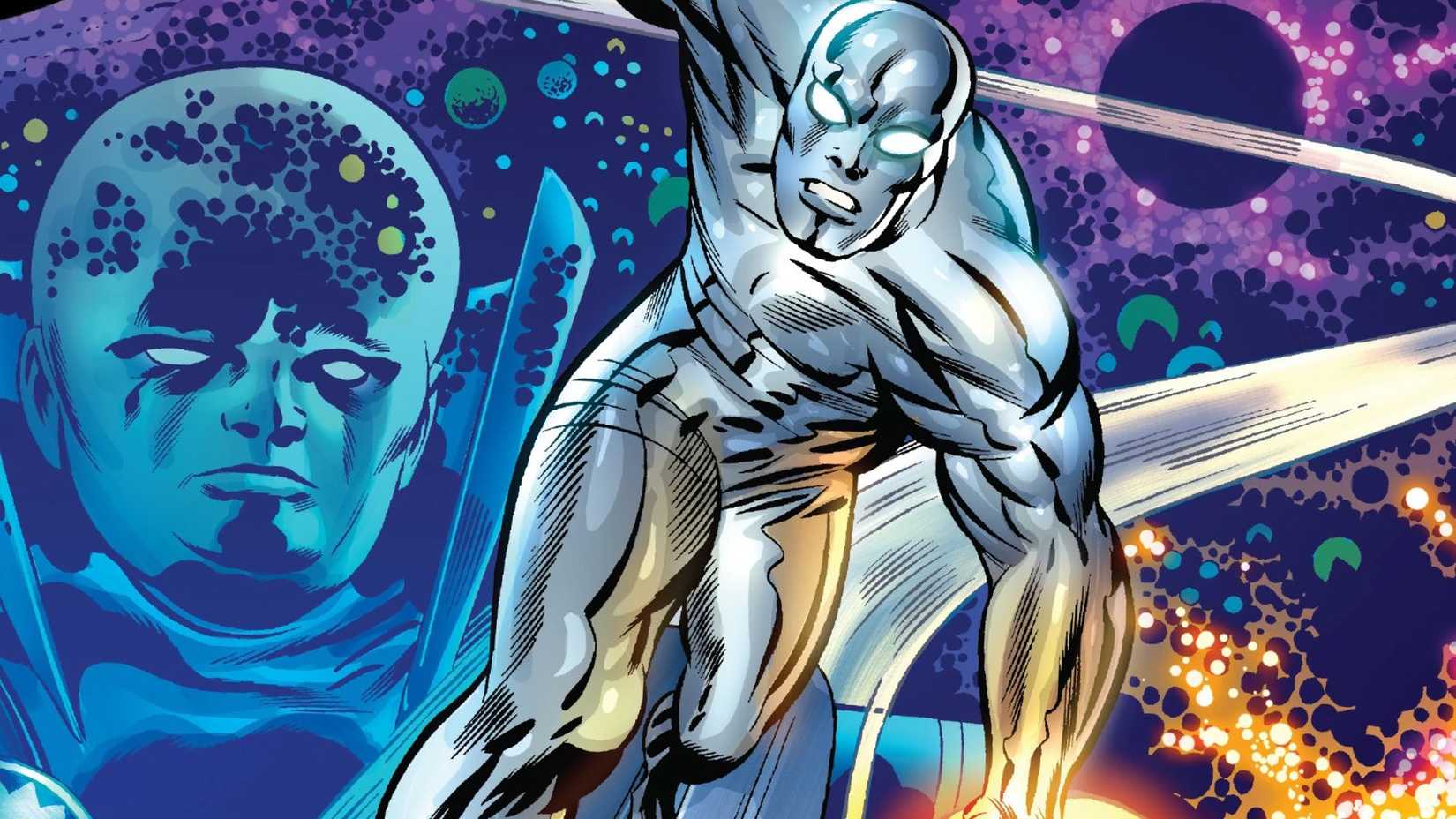
Jack Kirby's and Stan Lee's relationship is often called a feud, but that's not exactly true. It was a lifelong entanglement, often one-sided, and it starts much earlier than anyone would expect: at Martin Goodman's Timely Comics in late 1940, with the hiring of established duo Kirby and Joe Simon. Also employed at Timely was an editorial assistant five years Kirby's junior: Stan Lee, cousin of Goodman's wife. At the time, Kirby already found Lee annoying.
Immediately, Simon and Kirby struck gold with the creation of Captain America, a runaway success for the company. After Goodman started to renege on royalties for their work, Simon and Kirby plotted to leave for National Comics (later to become DC). Somehow, Goodman would discover these plans—Kirby would be certain for the rest of his life that Lee had in fact been the source. Goodman dismissed Simon and Kirby after Captain America Comics #10.
Years later, after stints at National and service in World War II, Kirby would find himself freelancing again for Timely (which at the time was under the name Atlas before rebranding to Marvel in 1961) under Lee, who now served as the publisher's editor-in-chief. In 1961, Lee and Kirby would co-create The Fantastic Four; the first issue, The Fantastic Four #1 was a smash hit and would practically revolutionize the industry, ushering in the Marvel Age of comics history. The comic is also notable for another reason: it used a process called the Marvel Method.
This is one of two main ways of writing comics: there's the full-script method (or "DC Method"), where the writer gives an extensively detailed script for the artist to reproduce, and there's the "Marvel Method", where the writer gives a general synopsis, the artist handles the bulk of the plotting, and the writer simply goes back in to fill out dialogue.
The Marvel Method became an institution in the early '60s for the company, with Lee often providing artists like Kirby and Steve Ditko (co-creator of Spider-Man and Doctor Strange) with general ideas for how stories might go and leaving the artists to fill in the rest. Under this workflow, Lee and Kirby would co-create several iconic Marvel characters in addition to the Fantastic Four: Thor, the Hulk, the X-Men, Black Panther, Silver Surfer, and countless more.
This workflow wasn't the problem; as Brian Cronin at sister site CBR notes about the Marvel Method, it had already implicitly been Kirby's workflow for ages, including in his work with Simon. The problems arose with Lee's—and Marvel's—perspective on authorship and credit. Lee was under the impression that the person who wrote the dialogue should be billed as the sole writer, and Kirby's role was generally only credited as that of an artist. Lee, as the company's public face and hype man, attracted all the attention, leaving Kirby in the background.
Things become murkier here with the fact that in several interview snippets cataloged by the Jack Kirby Museum, Kirby attests to writing dialogue in the margins of his drawings or giving extensive story details. In a 1970 interview with Bruce Hamilton, he goes so far as to say that he would lose all association with his creations:
If I did come up with an idea at Marvel, they’d take it away from me and I lost all association with it. I was never given credit for the writing which I did. Most of the writing at Marvel is done by the artist from the script.
As things went on, I began to work at home and I no longer came up to the office. I developed all the stuff at home and just sent it in. I had to come up with new ideas to help the strip sell. I was faced with the frustration of having to come up with new ideas and then having them taken from me.
In the context of Marvel's growing popularity, resentment began to build for Kirby as Lee was being hailed in the public eye as the main creative genius behind the company's work. By 1970, Kirby's dissatisfaction had clearly already started to bubble over, and Marvel struck him with an unfavorable contract. Negotiations would fall through after Marvel's management credited the brand's success entirely to Stan Lee, and Kirby would leave for a few years at DC.
The Jack Kirby And Stan Lee Feud Ignites

During his time at DC, Kirby would get right to work opening the floodgates of criticism towards Marvel and Lee, including the quote above. One of the best pieces of evidence would be the exploitative and conniving entrepreneur Funky Flashman in Mister Miracle #6, an obvious satire of Lee. Kirby's antipathy was notable; for Lee's part, his role as marketer, manager, and showman for Marvel continued to grow in the public eye.
Kirby would briefly return to Marvel in 1976, and in his column "Stan Lee's Soapbox", Lee would enthusiastically call Kirby "the co-creator of most of Marvel's greatest strips." The seeming rapport wouldn't last long; a dispute over rights to his original artwork led to a massive public and legal battle that would last for the next decade as Marvel attempted to withhold thousands of pages of his artwork. Kirby would also file a lawsuit over character ownership in 1978. These two factors would become a cause célèbre for the comics world: a watershed of the growing creators' rights movement.
Several major names in comics, such as Alan Moore, would come out in support of Kirby in this battle with Marvel; naturally, the question of ownership would come up, as well, as would the question of Kirby and Lee's respective roles in creating their characters. It was in the late 1980s when a series of interviews with Kirby really started to elucidate his feelings about Lee in a setting of extremely heightened visibility. In one particularly poignant interview between Kirby, wife Roz Kirby, and Leonard Pitts, Jr., Kirby explicitly sets limits on Lee's creative role:
KIRBY: What I’m trying to do is give the atmosphere up at Marvel. I’m not trying to attack Stan Lee. I’m not trying to put any onus on Stan Lee. All I’m saying is; Stan Lee was a busy man with other duties who couldn’t possibly have the time to suddenly create all these ideas that he’s said he created. And I can tell you that he never wrote the stories– although he wouldn’t allow us to write the dialogue in the balloons. He didn’t write my stories.
PITTS: You plotted and he did the dialogue?
KIRBY: You can call it plotted. I call it script. I wrote the script and I drew the story. I mean, there was nothing on the first or second page that Stan Lee ever knew would go there. But I knew what would go there. I knew how to begin the story. I wrote it in my house. Nobody was there around to tell me. I worked strictly in my house; I always did. I worked in a small basement in Long Island.
This interview is also important because it brings into question artists like the aforementioned Ditko, who left Marvel for similar reasons to Kirby and also felt resentment toward Lee; it brings into the fold the whole of the independent comics movement, which gained particular mainstream exposure with the Image Comics exodus, born out of creators' rights disputes at Marvel.
Although the dispute never fizzled out, it did briefly die down. It would return after Kirby's death, when his family attempted to reclaim copyrights to his creations; Marvel then sued the Kirbys, and in the process, a deposition from Lee would state the following:
I tried to write them to make it look as if he and I were just doing everything together, to make him feel good. I created Spider-Man, the Hulk, Iron Man, Thor, Daredevil, the X-Men, Nick Fury, the Avengers, Ant-Man/Giant Man, and the Rawhide Kid.
The Kirbys would end up losing the lawsuit. Although the ultimate truth of the matter can only be known by those who were there, it's clear that the feud runs far deeper than simple credit. Today, Ditko and Kirby's respective works chart as the highest selling superhero movies of all time, and Marvel has generated billions in revenue. When it's remembered that Kirby first left Marvel when it was still Timely Comics due to unpaid royalties, the question of who created what becomes far more severe.





 English (US) ·