

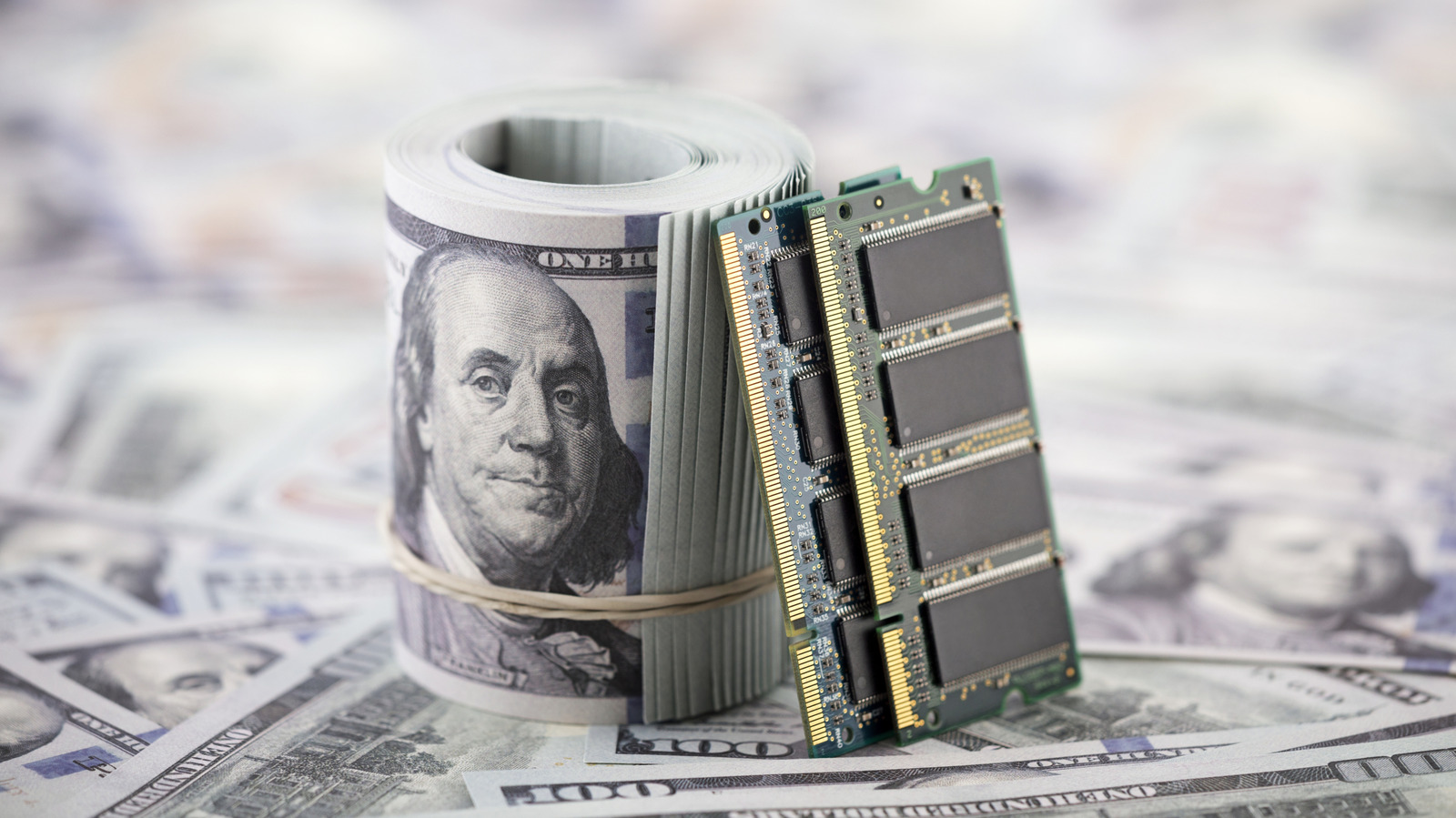
Sam Altman has been making headlines for his claims that consumers don’t deserve DRAM because it is only utilized “5% of the time.” In his opinion, DRAM supplies should be prioritized for data centers where its utility can be maximized powering cloud environments.
Altman’s perspective is like a utilitarian's fantasy. Humanity’s endurance of short-term pain - by handing over every bit of DRAM we have - will lead to a morally right outcome in the form of a world powered by time-saving, efficiency-increasing, productivity-boosting AI.
Sounds great if you’re the head of an AI company, but less so if you just want memory to be affordable again.
But what the OpenAI head seems to forget is that the DRAM shortage is part of a crisis he had a hand in creating. When OpenAI’s Stargate datacenter buildout was announced in early 2025, it was predicted that the project would require 40% of the world’s global supply. Supply issues were compounded as leading producers of memory entered a production turndown just a few years before to help stabilize pricing.
Will Sam Altman break into your house to steal your RAM?
The good news is that there is little Sam Altman himself can do to take your RAM off you. One reddit user asked Google AI the question we’ve all been thinking: “Is Sam Altman going to break into my house and steal my RAM?”
Google reassured the user with, “No, Sam Altman is not going to break into your house to physically steal your RAM.” So at least there's that.
But given how constrained the current memory supply is, there are a few ways that AI and other future tech could make the whole situation worse.
The worst could still be yet to come
One of the world’s leading memory manufacturers, SK Hynix, has predicted that the supply shortage could “persist through 2030,” making any hopes of a return to affordable pricing in the next few years a distant dream.
With OpenAI and Anthropic both set to hit the public market within that window, there is a lot of uncertainty over how the memory giants that control around 90% of the world’s supply will shift production.
Given the difference in revenue between the consumer memory market and the AI market, it wouldn’t be surprising to see a significant production swing towards the high-bandwidth memory required for AI inference and training.
This could be compounded by AI’s effect on the job market, with numerous firms enacting hiring freezes as AI strategies help cut out repetitive rote work. Higher unemployment and a lack of open positions could further reduce the demand for consumer memory, swinging production further in favor of AI.
But other emerging industries are also looking to take a bite out of the memory market.
Robots and autonomous vehicles are coming for your RAM
There has been a recent explosion in the robotics industry: from humanoid bots competing in their very own Olympics, to warehouses staffed by fleets of micro-bots. As AI improves and converges with the robotics industry to produce bots with near-human fine motor control, numerous industries spanning manufacturing, hospitality and logistics could buy robots in place of humans.
After all, a robot can work around the clock, doesn’t need to rest, and doesn’t have any rights to be violated with unsafe working conditions or excessive hours. The same goes for an autonomous taxi or cargo truck.
But they will need memory to run their little AI brains. And serving the corporate overlords is much more important (and much more profitable) than expanding memory production for the consumer market, so don’t expect things to improve any time soon.

Follow TechRadar on Google News and add us as a preferred source to get our expert news, reviews, and opinion in your feeds.







 English (US) ·