
 3 weeks ago
19
3 weeks ago
19
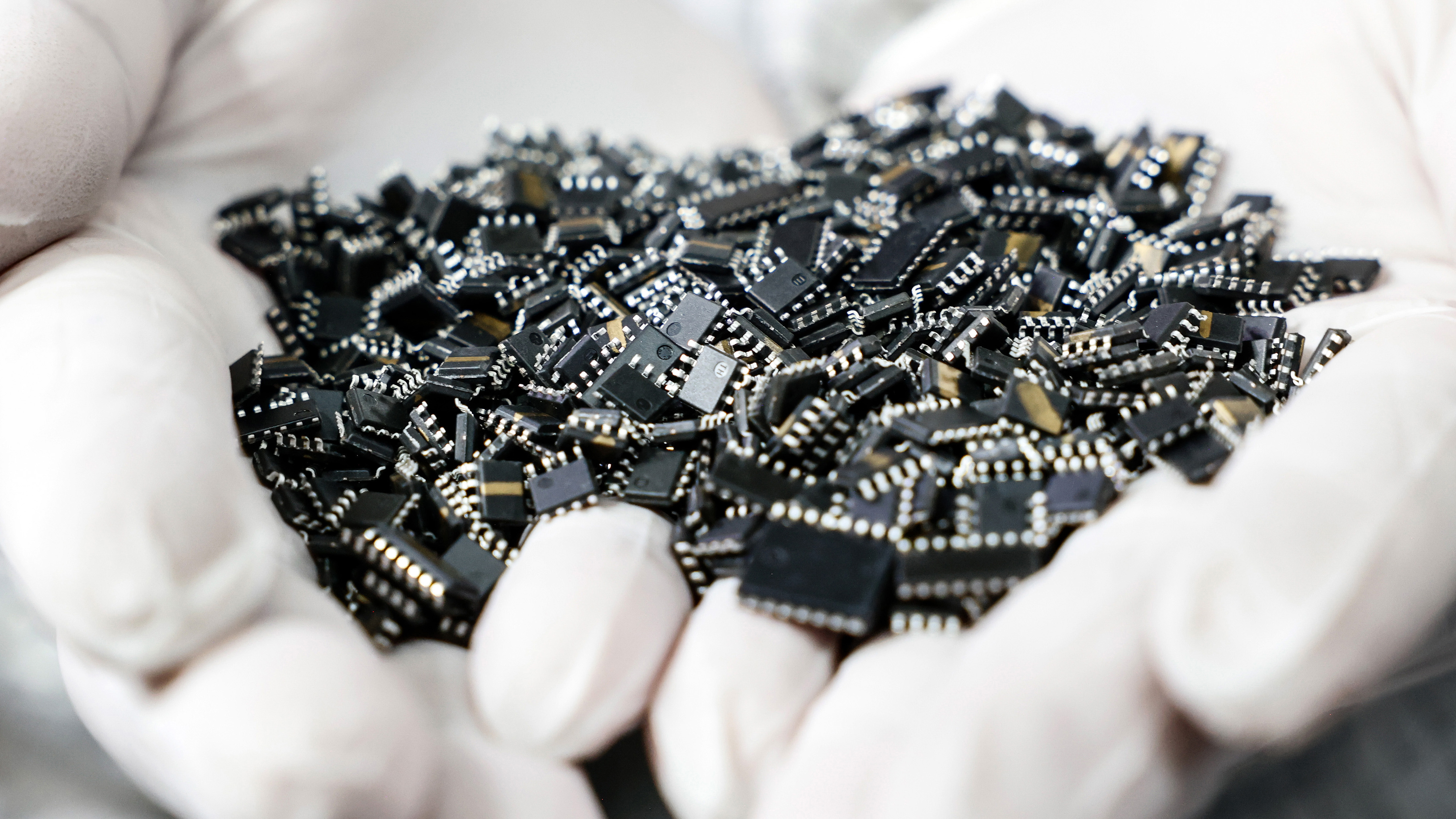
When you’re out shopping for the best motherboards on the market, you probably look at various factors, like the chipset, form factor, connectivity, and expansion options. The size of the BIOS chip may sound trivial and likely won't be on your list. However, this small detail can significantly impact your upgrade options in the future, especially if you’re investing in an AMD platform known for its longevity.
Go deeper with TH Premium: CPU
Without the BIOS chip or with a corrupted BIOS chip, your system will not even start. The reason is that the chip contains mission-critical instructions that initialize and test key hardware in your computer, ensuring it boots successfully every time you push the power button.
Article continues below
Back in the old days, the capacity of BIOS chips was around 8KB to 64KB. Just as technology has evolved tremendously over the years, the capacity of these tiny chips has grown exponentially as hardware has become more sophisticated. A few years ago, it was normal to see consumer motherboards with 16MB or 32MB BIOS chips, and until recently, 64MB chips started appearing on the latest AMD motherboards. However, that doesn't mean that every AMD motherboard features a 64MB BIOS chip.
The primary reason motherboard manufacturers used smaller BIOS chips comes down to cost. Higher-capacity BIOS chips are more expensive and can impact the company's expenses. As a result, many brands have tried to minimize costs by using lower-capacity chips. However, they have transitioned to higher-capacity models due to various factors, including more complex firmware, improved GUI aesthetics, support for more processors, and additional features, such as integrated wireless drivers, so users don't have to struggle to get an Internet connection when they're doing a fresh Windows install.
Although the X870 and X870 chipsets are the premium offerings from AMD's 800 series, not every motherboard that leverages one of the aforementioned chipsets is guaranteed to feature high-capacity BIOS chips. There's a lot in play here, such as the manufacturer's design decisions and profit margins.
Likewise, 64MB chips aren’t just exclusive to the X870 or X870E chipset. Motherboards that leverage the more affordable B850 chipset can also come with 64MB chips if they're on the higher end of the pricing spectrum.
The variation between brands means buyers need to look beyond just the chipset and price when evaluating motherboards. That means going to the product's website and checking the capacity. Do note that many vendors use megabits rather than megabytes as the metric, so you'll need to convert to the latter. For example, 512Mb and 256Mb are equivalent to 64MB and 32MB, respectively.
Processor Support On AM5 Platform
Swipe to scroll horizontally
Ryzen 9000 | Zen 5 | Granite Ridge | AM5 | 2024 |
Ryzen 8000G | Zen 4 | Phoenix | AM5 | 2024 |
Ryzen 7000 | Zen 4 | Raphael | AM5 | 2022 |
Ryzen 5000G | Zen 3 | Cezanne | AM4 | 2021 |
Ryzen 5000 | Zen 3 | Vermeer | AM4 | 2020 |
Ryzen 4000G | Zen 2 | Renoir | AM4 | 2020 |
Ryzen 3000 | Zen 2 | Matisse | AM4 | 2019 |
Ryzen 3000G | Zen+ | Picasso | AM4 | 2019 |
Ryzen 2000 | Zen+ | Pinnacle Ridge | AM4 | 2018 |
Ryzen 2000G | Zen | Raven Ridge | AM4 | 2018 |
Ryzen 1000 | Zen | Summit Ridge | AM4 | 2017 |
The BIOS chip stores critical microcode (for Intel systems) and AGESA code (for AMD systems), which are essential for the motherboard to communicate with these processors. As chipmakers release new chips, motherboard vendors have to add the corresponding microcode or AGESA to the BIOS to ensure processors run properly on existing motherboards. The issue arises when the number of processors surpasses the capacity of the BIOS chip, and the motherboard manufacturers have to start making compromises.
With a larger BIOS chip, motherboard manufacturers don’t have to remove support for older processors to make room for new ones. This has been an issue specifically on AMD platforms, such as AM4, that support multiple processor generations on a single chipset. It was the case with the 400-series chipset when Zen 3 came out.
Due to limited BIOS chip capacity, which was predominantly 16MB at the time, motherboard vendors had to drop support for older Zen and Zen+ chips to embrace Zen 3. Some even had to remove the eye candy from the BIOS, reverting from flashy GUI back to old-school text menus. The case shows the importance of a BIOS chip and how its capacity can directly impact a motherboard's features and processor compatibility.
The AM4 platform supported eight AMD processor lineups, ranging from mainstream Ryzen parts to APUs from Zen to Zen 4. So far, AM5 has embraced three families from Zen 4 to Zen 5, not even half as many as AM4. AMD has committed to supporting the AM5 platform, which launched in 2022, through 2027 and beyond. It's hard to predict how many more processors AMD will launch on AM5, but if the chipmaker stays true to the previous cadence, AM5 should at least get Zen 6.
Only time will tell whether the AM5 platform will see a large number of Ryzen processors to fill up the 32MB BIOS chip. For the normal user who regularly upgrades to the newest CPUs and doesn’t mind losing backward compatibility with older chips, this capacity should be more than adequate.

Follow Tom's Hardware on Google News, or add us as a preferred source, to get our latest news, analysis, & reviews in your feeds.








 English (US) ·