
 Image via MovieStillsDB
Published Jul 28, 2026, 5:45 PM EDT
Adrienne Tyler is a movies & TV features writer, with a focus on horror. She has written for Netflix, FanSided, & more. She was a regular guest on the Netfreaks podcast and was a YouTuber at some point. Guillermo del Toro said “hi” to her once.
Sign in to your ScreenRant account
Many elements from Doctor Who have become part of pop culture, most notably the TARDIS, which is a lot more than the Doctor’s trusted time-and-space transport. One of the best sci-fi TV shows of all time, as well as one of the longest-running ones, is Doctor Who, created by Sydney Newman, C.E. Webber, and Donald Wilson. Doctor Who debuted in 1963 on BBC One and has since had different showrunners, eras, and lead actors playing the Doctor and his companions.
Doctor Who follows a Time Lord from the planet Gallifrey who is simply known as “the Doctor.” When the Doctor suffers severe physical damage or is weakened from old age, he regenerates into a new body. The Doctor travels through time and space often with one or more human companions, and together they go on different adventures in different places, planets, and points in time. Of course, the Doctor and company come across a variety of threats throughout their journeys, some of them recurring menaces, such as the Daleks and the Master.
Doctor Who is one of the most successful and beloved sci-fi TV shows of all time, and as mentioned above, many elements have become part of pop culture. The Doctor’s always-useful sonic screwdriver, the Daleks, and more are some images from the show that even those who have never watched it can easily identify, as is the TARDIS, the Doctor’s time machine, which stands for “Time And Relative Dimension(s) In Space”, and it’s more than just a unique type of vehicle.
Doctor Who's TARDIS Is A Time Machine & Spacecraft
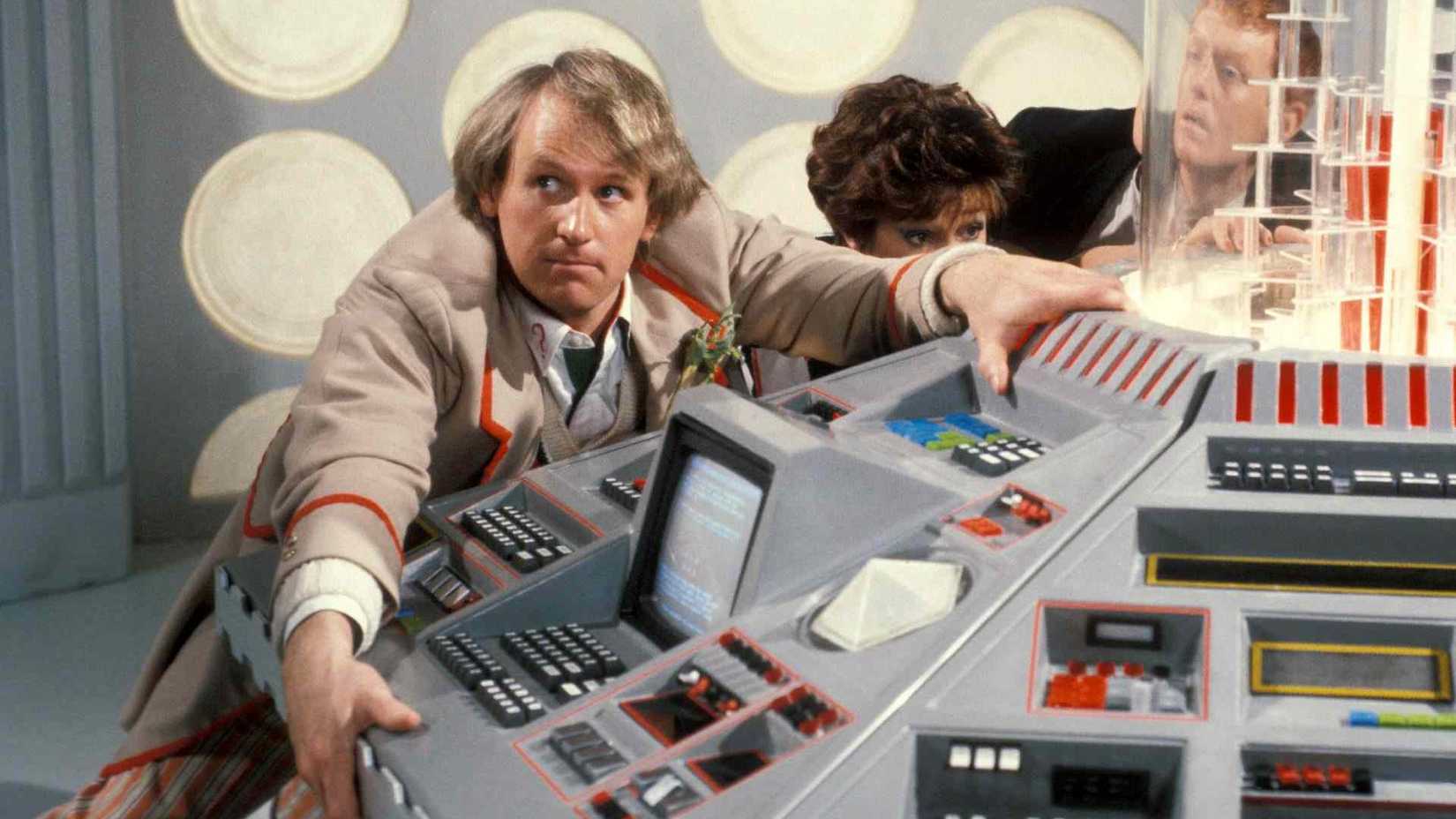
The TARDIS made its debut on Doctor Who in 1963 alongside the Doctor, as it’s thanks to it that the Doctor can go on all those adventures. The TARDIS the Doctor travels in is a stolen one from Gallifrey, as the Doctor fled his home planet for a variety of reasons, but mostly to explore the rest of the universe. The TARDIS is more than just the Doctor’s transportation, as it’s also a complex time machine, allowing him to travel through time and space.
The TARDIS does a lot more than just take the Doctor and company to different parts of the universe and moments in time. The TARDIS has a telepathic feature and translation circuit that makes it possible for the Doctor and his companions to communicate with other beings that speak different languages, translating them to English. As an advanced alien spacecraft and time machine, the TARDIS also has a chameleon circuit that allows it to change its exterior appearance to blend with its environment.
In addition to this camouflage feature, the TARDIS can generate a “perception filter” thanks to which people can ignore it and even believe its presence is normal. This is especially important as the Doctor’s TARDIS has one unique particularity: it looks like an old London police box from the 1960s, and this is its exterior form at all times. The TARDIS is considered a living organism, and it often rebels against the Doctor and can be quite unpredictable, though that usually results in some exciting adventures.
Why The TARDIS Is Designed To Look Like A Police Box In Doctor Who

As mentioned above, a TARDIS can take any shape to blend in and keep itself safe in a strange environment, but the one that accompanies the Doctor can’t do that anymore. Due to a malfunction in its chameleon circuit, which, according to the official Doctor Who website, happened when the Doctor landed on Earth, the TARDIS is now stuck looking like an old police box. Although the Doctor has tried to fix it and briefly succeeded once, the TARDIS still navigates time and space in its police box disguise.
However, despite its exterior form, the inside of the TARDIS is the same, although, like the Doctor, it also regenerates. The TARDIS is famously a lot bigger on the inside, a line that has become a classic, and this is due to complex dimensional engineering that perhaps only Time Lords can fully comprehend. Exactly how big the TARDIS is on the inside is unknown, but it has many rooms and corridors, as well as a control room designed to be operated by six people, though in the Doctor’s case, it’s a one-man crew.
Although an old police box can spark some curiosity from humans, the TARDIS’ perception filter is of great use to keep it safe and hidden, and even if it doesn’t work, the TARDIS can only be accessed with a key. This is especially important as the TARDIS falling into the wrong hands could be catastrophic, so the Doctor needs to be extra careful. As strange as a police box disguise might be, it has worked for the Doctor and the TARDIS, and it has become the show’s most distinctive element.
How The TARDIS Became Synonymous With The Doctor Who Franchise
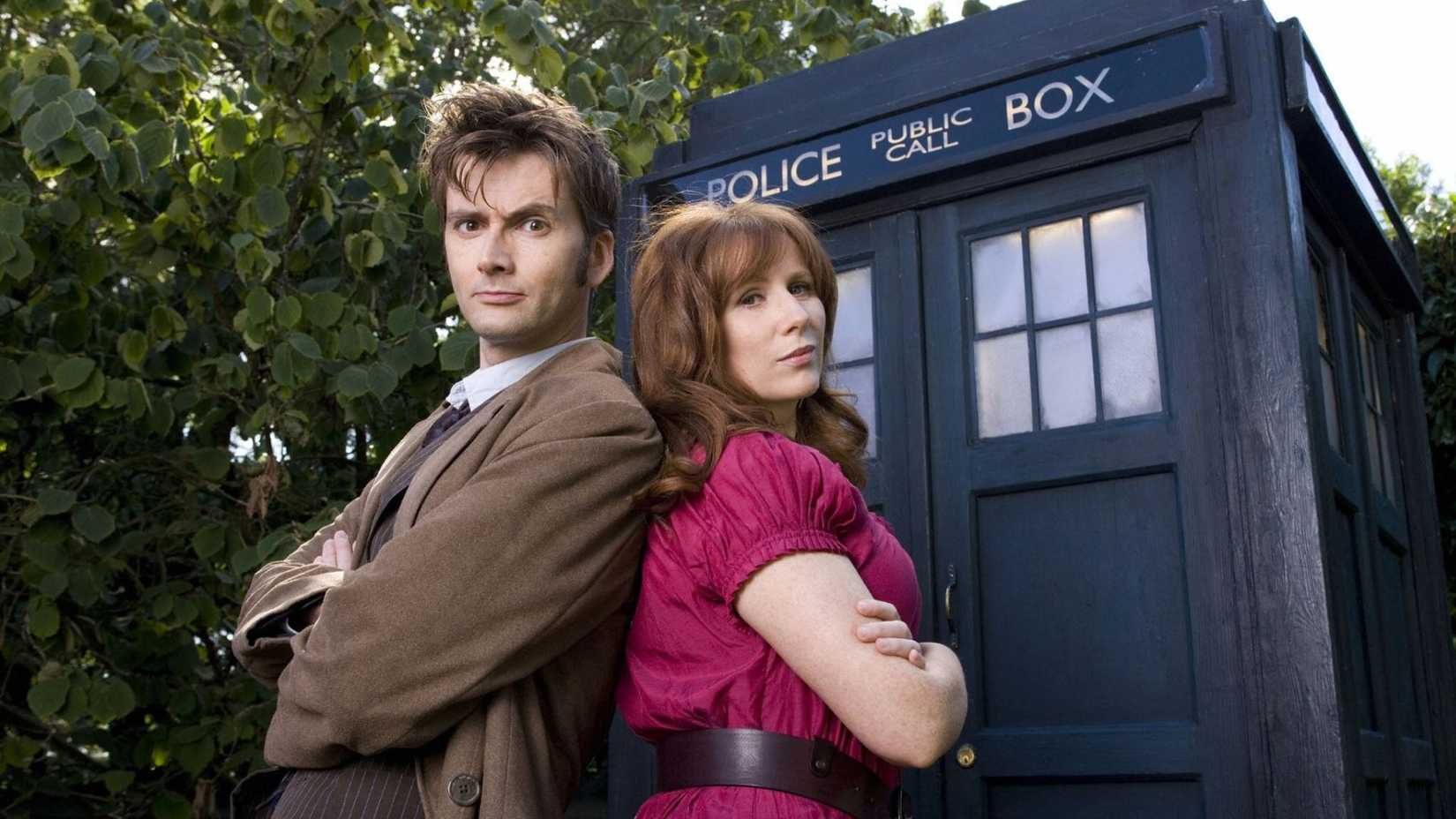
If there’s one constant throughout all eras of Doctor Who it’s the TARDIS and its exterior form, because even the sonic screwdriver has gone through some changes. The TARDIS has remained as an old police box while the Doctor has gone through different regenerations, met various companions, and faced all types of villains and threats. Thanks to this, the TARDIS is the image mostly associated with Doctor Who.
Blue police boxes are real, and they were used in the 20th century, starting in the 1920s. Just like the TARDIS itself, a police box can only be accessed with a key and served as a small police station, but it had a telephone behind a hinged door on the exterior that anyone could use without entering the box. However, thanks to Doctor Who, a police box is now associated with the show and the Doctor rather than with its real-life history.
The TARDIS became so popular that the BBC applied for a trademark to use its design on Doctor Who merchandise in 1996, but it wasn’t until 2002 that the Patent Office ruled in favor of the BBC. Police boxes eventually vanished from British streets, so now anytime one shows up, it’s immediately assumed it's related to Doctor Who.
Doctor Who has gone through many changes in its characters, production, style, and more, but the TARDIS will always be the Doctor’s one-of-a-kind spacecraft with one of the most famous designs in TV history.
Source: Doctor Who.
Release Date 1963 - 1989-00-00
Network BBC One, BBC Television
Directors Douglas Camfield, David Maloney, Christopher Barry, Michael E. Briant, Barry Letts, Michael Ferguson, Peter Moffatt, Richard Martin, Chris Clough, Lennie Mayne, Pennant Roberts, Ron Jones, Paddy Russell, Paul Bernard, Michael Hayes, Timothy Combe, Morris Barry, Graeme Harper, Gerald Blake, Hugh David, Mervyn Pinfield, Rodney Bennett, Waris Hussein, John Gorrie
Writers Robert Holmes, Bob Baker, Malcolm Hulke, Dave Martin, David Whitaker, Brian Hayles, Robert Sloman, David Fisher, Dennis Spooner, Terrance Dicks, Eric Saward, John Lucarotti, Don Houghton, Chris Boucher, Ian Stuart Black, Louis Marks, Peter Grimwade, Henry Lincoln, Johnny Byrne, Mervyn Haisman, Jane Baker, Pip Baker, Robert Banks Stewart, Anthony Read
-

Barry Jackson
Gordon Lowery
-
![Die-Hard Harry Potter Fan Alan Ritchson Questions Timing of HBO’s Reboot Series [Exclusive]](https://static0.colliderimages.com/wordpress/wp-content/uploads/2026/06/alan.jpg?w=1600&h=900&fit=crop)






 English (US) ·