
 1 hour ago
1
Microsoft, the FAA, Chase, United, the NSA, and Apple all went down within one week. Officials say none of the outages were cyberattacks, but the internet isn’t buying it. This week on Uncanny Valley, WIRED senior business editor Sophie Kleeman joins Brian Barrett and Leah Feiger to discuss what actually went wrong and why people jumped straight to blaming hackers and AI. Plus, Anthropic’s historic IPO at a reported $1.5 trillion, Nvidia’s first earnings report since Jensen Huang resigned, and the administration’s new rule to stop Chinese companies from renting AI chips just before Trump meets Xi.
Articles mentioned in this episode:
- Anthropic’s Record-Breaking IPO Highlights the AI Giant’s Worst Enemy—Itself
- FAA Grounds All US Flights Until Further Notice
- The Microsoft Outage Is a Warning for the World
- The Bank Outage May Have Nothing to Do With Your Bank
- How to Tell If It’s a Cyberattack or Just an Outage
- Inside Nvidia’s First Post-Jensen All-Hands: Pay Raises and More Equity
- Even His Own Officials Don’t Think Trump’s China Trip Will Lead to Progress on AI
You can follow Brian Barrett on Bluesky at @brbarrett, Sophie Kleeman on X/Twitter at @sophiekleeman, and Leah Feiger on Bluesky at @leahfeiger. Write to us at [email protected].
How to Listen
You can always listen to this week's podcast through the audio player on this page, but if you want to subscribe for free to get every episode, here's how:
If you're on an iPhone or iPad, open the app called Podcasts, or just tap this link. You can also download an app like Overcast or Pocket Casts and search for “uncanny valley.” We’re on Spotify too.
Transcript
Note: This is an automated transcript, which may contain errors.
Brian Barrett: Hey, this is Brian. If you've been listening for a while and you haven't rated or reviewed the podcast yet, this is your sign. Give us a rating, tell us what you think. Five stars is nice, but we'll take the feedback too. It really helps more people find the show. OK, onto the show. So hey everybody, I want to say first of all, we've got a very special guest today in the studio with Leah. It's Sophie Kleeman.
Leah Feiger: Woo-hoo. Sophie's here.
Sophie Kleeman: I'm here.
Brian Barrett: Sophie is our senior editor on the business desk and we're so glad to have her. And I've heard that she is going to do a lot of yelling and pointing and just anger I think is her vibe, is what I've been told, coming in.
Sophie Kleeman: Yes. Let's get started.
Brian Barrett: Welcome to WIRED's Uncanny Valley. I'm Brian Barrett, executive editor.
Leah Feiger: I'm Leah Feiger, director of politics and science.
Sophie Kleeman: And I am Sophie Kleeman, senior business editor.
Brian Barrett: This week we're discussing why everything seems to be breaking down all the time. First, it was Microsoft, then the FAA and air traffic control. Then Chase Bank, United Airlines, the NSA, Apple, the tech outages have been piling up and raising questions around what caused them, and why they're happening all at the same time seemingly. Secretary of State Marco Rubio says that we are not under attack. He's right, but the internet is not convinced. We'll get into what actually went wrong, and why a lot of people's first instinct is to blame hackers and AI in some combination.
Sophie Kleeman: And I am one of those people, so can't wait to get into that. We will also take a look at Anthropic officially going public this week. It will be one of the biggest IPOs ever, but the timing is a little bit complicated. So we will talk about who's about to get very, very rich and whether the recent midterm results could impact the company's grand ambitions.
Brian Barrett: And in other AI news, we're going to have a quick NVIDIA update as the company just released the first earnings report without Jensen Huang at the helm and had their first all hands led by interim CEO Colette Kress.
Leah Feiger: We're also going to be checking in on President Donald Trump's visit to Asia, specifically China, which comes just days after his administration has moved to close a loophole that lets Chinese companies access AI chips. We're going to talk about what the NVIDIA scandal has had to do with all of this and the fight inside the administration over how to handle everything.
Brian Barrett: All right look, if you picked up your phone at any point in last week to look at the news, if you went to wired.com at any point last week or anywhere on social media, you were hit with news that something somewhere had an outage.
Leah Feiger: Brian, everything is broken.
Brian Barrett: Everything's broken.
Leah Feiger: Every single thing is broken.
Brian Barrett: Everything's broken and breaking, increasingly fixed. I want to walk through this really quickly. I know people are tired of it, the so many things. We're going to list off some of the biggest ones, OK? Last Thursday, Microsoft had an outage in Outlook and Teams that was about 24 hours, which is incredibly long for those services to be out when the whole world basically depends on them to communicate. The next day, Friday, the FAA had a ground stop for the entire country, only the second time that has happened since 9/11, and it was the longest one since then. It was for more than four hours. Then on Monday, everyone said that their banks no longer worked. It turns out to be JP Morgan Chase specifically had a problem, but because banks are all counterparties to each other, every bank had an issue. If one bank had an issue, that same day, United delayed more than a hundred flights for a separate issue. Then on Tuesday, the NSA's classified internal network went down and just for good measure, an internal update also knocked out iCloud and Apple Pay for not quite as long, not quite as dramatically, but throw it on the pile. Now I want to be clear, every single one of these companies and agencies and organizations has said the incidents were not cyberattacks. It was not some combination of a ruthless AI agent and Iranian hackers. There's no evidence that any of these clustered tech failures were even related aside from the bank thing, which is self-contained in the banking industry, but that hasn't stopped people from being suspicious, trying to find a through line, and I think getting on their conspiracy horses. And Sophie, you've been riding one at the front of the battle.
Sophie Kleeman: Yes, I sure have.
Brian Barrett: Yeah. How are you taking all of this in so I can debunk it?
Sophie Kleeman: OK. So I would like to say first off that I do think this has sort of trickled down into people who don't follow this super closely.
Leah Feiger: I mean, it had to. This was your emails, this was your banking, these were your flights.
Sophie Kleeman: Right. Everyone's talking about this.
Leah Feiger: This is it.
Sophie Kleeman: To give you two very, very, very distinct examples, yesterday my fantasy football group chat blew up because someone was like, "Hey guys who follow this, and who are paying attention, are we under attack?" And Brian, you'll be proud of me. I actually said you should read wired.com for the answer to that.
Brian Barrett: Good job, Sophie.
Leah Feiger: She did not say, "Yes, go to the bunkers." Which I know is what you wanted to say.
Sophie Kleeman: It is what I wanted to say.
Leah Feiger: Look, I will say though, I get that inclination. These are so many public services that everyone has really just taken for granted, not only to work, but to help us function in our day-to-day lives. I talked to friends who were like, "Oh yeah, I just had a day and a half off of work basically, and then could not pay my rent." It was everything.
Brian Barrett: And there are people who are doing doomsday prepping at Costco now. I've had multiple group chats where people, even when I've told them, "Hey, it's actually fine," they are still prepping their bunkers. I think it's instructive. I have covered outages for a long time at WIRED because I think they're fascinating because they affect so many people, and they have such mundane causes usually. So I want to talk through a couple of things and what happened. Just for any listeners who are still worried about it, they all have very distinct things. The Microsoft Outlook issue was actually ... I love this one. It was a fix that was deployed in July. They basically made an update in July, propagated it out, but was not triggered until last week. Something else happened.
Sophie Kleeman: Do we know what that something else is? I'm just asking questions.
Brian Barrett: Iranian hackers. No, they've done a shorter postmortem. They're going to do a longer postmortem. The gist of it was they pushed this thing out and then it propagated out through the whole network and then they had another update. They stepped on the landmine and everything went boom, and it took a while to correct. For the FAA, when air traffic control went down, and Aarian Marshall, who covers transportation mobility for us here at WIRED, was very early to say this doesn't seem like hackers. There was a lot of suspicion there because the FAA just the day before had rolled out an AI system to help with air traffic control. The difference is that system's more about data, and about where planes are going and what they're doing. The system that was affected, the problem on Friday, was that people couldn't talk to each other. It was a comms issue. And that tied back to old, old, old fiber equipment that a company called L3Harris maintains. They were trying to push an update on Friday afternoon, which you never do. That's the crazy part to me is that they were trying to push—
Leah Feiger: It's the perfect time.
Sophie Kleeman: Yeah.
Brian Barrett: Push an update to production on a Friday, a couple weeks before Thanksgiving? Crazy stuff.
Leah Feiger: And then I mean the rest was all the same too, right Brian? Chase blamed a software bug in their own hardware. United said it was a technology related issue. NSA blamed routine maintenance. Apple blamed an internal update. All of this was kind of the same. It was just all happening at the same time.
Sophie Kleeman: At the same time.
Leah Feiger: But I think I get it. I get the fears here. I also understand the timing in some ways. We're nearing the end of the year. People need to push all of these updates before holiday travel season or just holiday banking season, I guess, email season.
Sophie Kleeman: Email season.
Leah Feiger: But it is understandable that everyone went straight to the hackers, straight to AI overlords because we've actually been having a not small amount of those examples. If you had told me that this was another Hugging Face incident, I would've been like, yep. Alright. Sounds good.
Sophie Kleeman: You're like, yeah, that sounds right.
Brian Barrett: Well, and Leah too, I think what doesn't help, there's the political dimension here too, because Markwayne Mullin can tell me everything's fine, all he wants. I don't necessarily buy anything from him.
Sophie Kleeman: I don't believe him.
Brian Barrett: Right. I inherently, this administration has no credibility. So in these moments, what do we do?
Leah Feiger: I have to shout out our podcast producer right now. Obviously we are sitting here with a list of notes about all of this and I just quickly looked at it and one tab line was, also people don't trust the government.
Sophie Kleeman: Incredible.
Leah Feiger: Which is, yeah, that is the situation right now. That is perhaps the most succinct, accurate way to push this, which is there was just a massive referendum a few weeks ago. Dems are coming in, guns blazing, and everything is breaking right before that happens. I get it.
Sophie Kleeman: I'm the devil's advocate here, right? I was the person last week where I was like, we're all going to die. We're under attack. This is crazy. This is all happening at the same time. Obviously I don't think that that's really the case, but I will say that I do think two things. I think people are quick to blame AI for things because they don't like it, they don't understand it, they are scared of it, and the companies who are selling it are not doing a great job of selling their product in ways that make people want to sort of feel good about themselves. But the second point is that it was AI, right? It was just the flip side of it. It was like, these companies are deploying these incredibly advanced systems to find vulnerabilities, to find issues within their very complex and in some cases old systems and they're finding it and then they're patching it all at the same time. And that's what I think that reporting has suggested that's what we're seeing.
Brian Barrett: This goes back to Anthropic's Mythos model, which is very good at cybersecurity. You might remember it from such news headlines as Anthropic gets banned from the Pentagon and other stupid moments in AI history. Mythos is very, very good at cybersecurity. Anthropic gave access to a limited number, actually a decent number of people who control sensitive information, governments, organizations, companies, and those companies have since been using it to identify bugs that they couldn't find otherwise. Sending patches at a huge rate, and the more complicated the bug, the more patches trying to push out at the same time, the more likely something is going to break. And I think that's what we're seeing here. So yeah, AI plays a role, but in some ways you can think of this as companies trying to get ahead of the hacking version of this. They're doing this because otherwise, in a few months, someone's going to actually say, oh, we can break into the air traffic control system, shut it down ourselves.
Leah Feiger: Right.
Sophie Kleeman: Am I the only one who would love to see that? What if we just went offline forever? What if it all shut down? That would be great. We could all touch grass.
Brian Barrett: I think that'd be great.
Sophie Kleeman: Finally.
Leah Feiger: All right.
Brian Barrett: I think it'd be great.
Sophie Kleeman: Thank you Brian.
Brian Barrett: It would affect the podcast, but that's OK. We can mail each other letters.
Leah Feiger: I've been tickled though by all of these comments from our government officials. Secretary of State Marco Rubio has tried really hard to kind of deescalate this as well, claiming there's no foul play. He's traveling with Trump in Asia this week and he said in a press conference multiple times, "We are not under systemic attack."
Marco Rubio, archival audio: The first thing I want to make very clear is that we have zero evidence whatsoever. We have no indication, no evidence, and no reason to believe at all that any of these incidents are related to each other.
Leah Feiger: And Trump had a different take. I was slightly less reassured.
Archival audio: Are you concerned about all these outages? Microsoft, the FAA, United, Chase Bank?
Donald Trump, archival audio: No. It's life. When you're big and powerful and you have all the money, things like that happen. It's fine.
Leah Feiger: OK. The reason I had to pivot to that is that's perhaps like the Sophie model here. You're like, "Yeah, shut it down. This is it. This is what we've signed up for."
Sophie Kleeman: You know what? We're just going to roll with it.
Leah Feiger: Sophie and Trump, two peas in a pod.
Sophie Kleeman: We are such similar people in so many ways. In other news, it's been a crazy week, hasn't it? So Anthropic finally arrived on the stock market. The company's long-awaited IPO debut started trading under the ticker ANT, which I would just like to say is actually very cute. And it's valued at a reported one and a half trillion dollars, which is just a staggering, staggering number. It is among the biggest IPOs ever, but it is actually below the $2 trillion figure that was floating around several months ago. And since then, things have shifted even more. NVIDIA lost its CEO and about $2 trillion in market value. And in the midterms, voters overwhelmingly rejected provisions that supported data centers that AI companies need. So given this interesting, interesting timing, what are we looking for?
Brian Barrett: I am looking for a lot of people to become insanely wealthy, even if it's slightly less insanely wealthy than it would've been a couple of months ago.
Sophie Kleeman: Just slightly less.
Brian Barrett: Just slightly, just like a little tiny bit.
Sophie Kleeman: To be clear, $1.5 trillion is still ...
Brian Barrett: It's still generational wealth, but how many generations are we talking about? Trick question. Anthropic doesn't care because they all think we're going to die in the next 10 years or so because of AI. Sophie, I'm curious what you think, because when I think of the Anthropic IPO, which I do every day, every day I'm thinking Anthropic IPO.
Sophie Kleeman: You wake up in the morning and you think Anthropic IPO.
Brian Barrett: I think ANT, ANT, ANT. But it's the first, not the first, it's the biggest pure play AI IPO that we've had and maybe that we're going to have depending on what happens with OpenAI. SpaceX had an IPO recently, but that is a rocket company with an AI company stapled to it. So what do you look for when this company goes public and people can trade on it? How much do we look at it as a bellwether for the industry in general? Not on the first day of trading even, but just in general, how much can we look and say, oh, that's how the AI industry is going?
Sophie Kleeman: I mean, I think it is the bellwether, right? It is the first, it is enormous. It's such a leader in the space. And I think that the interesting thing to me is how much it is connected to the other sort of giants in the space, which is to say Amazon and Google, and a few other companies. I mean, those two firms are themselves going to make a shit ton of money from this IPO. They have, what is it? 15 percent. Amazon will own 15 percent. Google will own nearly 14 percent. Those are huge numbers. So I think just this idea that all the financing is tied together and all of these people are riding on the same rocket ship that may or may not crash onto the surface of the earth.
Brian Barrett: And not just that, but Anthropic, they're like a rent not own approach to data centers. So they've got nearly a trillion dollars of data center commitments that is all going to other companies. It is sort of fueling, whether that's SpaceX or Google. So they are such a symbol of the interdependency of this industry. And again, can't stress this enough, they are pretty sure that AI will destroy everything, and think that their best chance to make a trillion dollars is to build the kind of AI that will destroy everything as fast as they can. It's in their prospectus.
Sophie Kleeman: Only they can prevent mass AI destruction. The other thing I would like to sort of cite here, I feel like with these IPO stories, obviously everyone's sort of focused on the money, and the what does it mean and blah, blah, blah. But one kind of very weird fun fact that I would like to just highlight here is that Sam Bankman-Fried of all of this. He was supposed to make money on this because he was invested in Anthropic, but when he went through his bankruptcy, and all of his legal problems, the government clawed back that investment.
Leah Feiger: Wait, so where are his shares now? Love that.
Sophie Kleeman: They got sold to some people for a very little amount of money and now those people are going to be rich.
Leah Feiger: Oh, that's fun. That's a fun thing to follow.
Sophie Kleeman: Highly recommend checking that out.
Leah Feiger: Yeah. Look, you guys know me. I'm interested in this from a political standpoint. Voters voted against data centers. Politicians won their campaigns by promising that data centers were out across the board. This was bipartisan, this was Republican, this was Democrat. So as Anthropic is entering this space, as other companies, OpenAI, etc., are kind of watching how this goes for them, I'm really curious in the coming months what these investments in data centers is going to mean for them. I wonder if it's going to mean slowdowns. I wonder if any of these newly electeds will actually be able to hold these folks accountable. We're going to see, but there is very much a question mark for me there about what comes next.
Sophie Kleeman: I mean, I think one of the great things for us as journalists too about this IPO is Anthropic will now be a public company. So they are much more accountable and accountable in ways that we can actually dig into and go through their 10Ks and go through their 10Qs and all the rest of it. They're going to have to do earnings calls and all the rest of it, which is great for us because we will have such a better window into how they're actually doing.
Leah Feiger: Oh, it's amazing.
Sophie Kleeman: Such a better window into how they're actually doing.
Leah Feiger: Also, just because they're so tied up, sourcing inside Anthropic is hard. This is a company that is very much kept to themselves, which is why any kernel of information ... When Jacob Coxon, the Anthropic doomer who bounced out and said, "This really is going to all end the world," and he was on, I don't know, every single talk show or podcast available. One, because of what he was saying, but two, because getting information from inside of Anthropic is difficult. So to your point, a hundred percent. The fact that we're going to have more information there is a game change.
Brian Barrett: The one thing I would add, yes, it's great for us as journalists. We're going to get to see and know so much more information. I'm not as excited about Anthropic now being on this quarterly cycle of needing to demonstrate constant growth and earnings, which is a private company you're shielded from a little bit because the incentives that will make AI profitable are not necessarily the incentives that will make humanity more sustainable, but that's fine.
Sophie Kleeman: Who cares about sustainability? Yep.
Brian Barrett: Who cares? We're all going to be podcasting in caves. Speaking of giant AI companies that are having big moments, good or bad, we've got to talk a little bit about Nvidia. If you're sick of it, totally understand. It's been everywhere, but there are some important updates. Some things have happened just in the last day or two that we should touch on at least quickly. On Tuesday, the company reported its most recent earnings, not surprising that they had another big, big quarter, $115.8 billion in revenue. It's more than six billion ahead of expectations. It was Nvidia's first earnings report since Jensen Huang resigned last week after it became public that he had had affairs with a woman suspected of being an asset of Chinese intelligence, and also with at least one of his own direct reports within Nvidia. Over the last few days, we've had a number of Silicon Valley leaders, including, surprise, Elon Musk, campaigning to bring him back. Some have floated the theory that he was set up. Huang himself said in a statement, first statement that he released since this all happened, that he would be honored to return to Nvidia if the board would have him back. Sounds like the board is saying absolutely not. They said that in very clear terms during the earnings call. What do we make of Nvidia in this moment? I should say, too, that we are recording this just after Nvidia's first all hands after Jensen Huang left was led by interim CEO, former CFO, Colette Kress. It's a lot of information. She didn't say much other than, "Hey employees, we're going to give you a lot more money and a lot more stock equity to make you happier so that you don't leave."
Sophie Kleeman: And she kept saying, "We got this," right?
Brian Barrett: She kept saying, “We got this.”
Sophie Kleeman: That was her direct quote, that was her top line, "We're going to be fine. We got this. Do not worry."
Leah Feiger: But so many people just don't think that. I can't stop thinking about what Zoë told us last week, Brian, and the week before. She's been saying this for a while now, just about how Jensen was in such a particular place compared to all of his co-CEOs around Silicon Valley and that he was just not insulated. He was not insulated within his company. He's not the Mark Zuckerberg model at Meta where that guy's not going anywhere. There is just no world where he's getting stripped from his title or responsibilities, which then makes this entire Bring Back Jensen campaign all the more interesting to me, to see Elon Musk and all of these variety of CEOs, Y Combinator CEO Garry Tan, all of these different people who not even are just kind of quietly commenting on the sidelines, but signing literal petitions saying this. There's an interesting look, at least for me, of the accountability of it all, of is this possible? I guess this is possible. This shouldn't be possible.
Sophie Kleeman: I'm fascinated by this. And Brian, I would love to know what you think is going on here because I sort of though the sharks would be circling in a way, or I thought that they would not want to touch this with a 10-foot pole kind of thing. I mean, I understand that Jensen is just such a sort of crucial part of this ecosystem and Nvidia is such a crucial part of this ecosystem. They've sort of engineered it that way, but I'm curious what you think, what's the vibe? Why are they all coming out so strongly?
Brian Barrett: Oh, because I think that they all see a little bit of themselves in him.
Leah Feiger: He's one of their own.
Brian Barrett: A raconteur, a bad boy about town. And when you are a unique special genius, you should be able to get away with doing whatever else. We talked about this before, it's the idea of separating the art from the artist, but applied to real allegedly scummy behavior, like having sex with a direct report and lying to your board of directors about it. I don't think Jensen's coming back. I'm prepared to be wrong because this industry has done dumber things on shorter timelines, but I do think the board has been so resolute in it. I think Nvidia's going to be fine. This is not a popular take, I think. I think they're going to be fine in the long term. They've got such lock in. They've got customers that don't have anywhere else to turn, and it will be a long time before they do. They may not be as essential a pillar to the US economy and the industry in the long run. Maybe they don't grow quite as fast, but I think that's probably healthy overall. I think a smaller Nvidia with more competition is probably ... I mean, it makes less systemic risk for everybody else. So I think we're going to be OK.
Leah Feiger: One more piece of news before we go to break. President Donald Trump is in Asia this week. He stopped in the Philippines. He's heading to China. He's expected to meet with Chinese leader Xi Jinping on Thursday. Right before the trip, the administration said it was moving forward with a new rule that would clamp down on China's ability to access advanced AI chips through the use of data centers outside of China's borders. The rule aims to close what a lot of folks in Washington thought was a loophole, basically, which is that Chinese firms are banned from buying the most advanced AI chips made by companies like Nvidia, but they have continued to legally access the chips by renting them from data centers. And this issue became the entire issue this past week because of Nvidia, because Alice Huang was an executive at one of these companies, Megaspeed. WIRED senior correspondent Hugo Lowell has been reporting on what the administration's response has been throughout all of this. And it's been really interesting, honestly, which is for as much as Trump and co are like, "We have to be ahead of China. This is the whole thing. We can't slow down. We can't have guardrails. We have to beat China." There's also been this undercurrent of figuring out how you cooperate, how you're still making money without stifling innovation. This has played out into disputes within Trump's own cabinet. US Treasury Secretary Scott Bessent versus Commerce Secretary Howard Lutnick. I have loved the drama of it all.
Sophie Kleeman: The girls are fighting.
Leah Feiger: The girls are fighting. But frankly, for as much as Bessent spent the last week throwing Lutnick entirely under the rug, it kind of turns out, and Hugo found, that Trump has been really playing that middle and siding with Lutnick in a lot of this. So this new rule is going to be really interesting. I'm very curious about it getting enforced. I'm curious about how it's going to also be talked about and communicated this week on the ground actually in China. Hugo's newsletter that published Wednesday night gets into this, and basically what officials have told him quietly is that there probably isn't going to be a lot of movement on AI as Trump arrives, really because of the Nvidia scandal, because there has been so much consternation of quote, unquote Chinese spies everywhere. And this conversation is a little bit at a standstill. So new rule, conversations happening, maybe no results. I don't know. Is that politics as usual? Perhaps.
Brian Barrett: I have a couple questions. One, this is a dumb one, I'm sorry, but we just heard Donald Trump saying, when asked about outages, that if you're big, then people will go for you, even though that has nothing to do with what's going on. So my question, Leah, the eternal question with Donald Trump, how much do we think he actually knows or cares about any of this versus whoever was in the room with him last has told him a thing that sounds good?
Leah Feiger: Oh, I think that's a huge part of it. Ultimately, and I should have this tattooed on my forehead, which is that similar rules to these already existed. They existed in the Biden era. Trump rolled them back in 2025. Again, unclear how much of that context is memorable to the administration or to Trump himself. But I think the underlying current, really for him, for as far as we've been able to understand from his public statements and his private ones that people have been able to report out, is that he wants the US to be competitive. Fist on table, be competitive. Whether that means we're selling chips or not selling chips, they're not very complicated thoughts. I'm sorry to say. I don't know how else to put it other than I'm not sure that the minutia is that interesting to him. And frankly, the minutia is barely interesting to the rest of us.
Sophie Kleeman: It's deeply unsexy. It's deeply unsexy.
Leah Feiger: It's like every time that we're writing an article on this, and I'm sure that you struggle with this as well, Sophie, I'm like, "And here's our context paragraph where I spell out exactly what Megaspeed meant for chips."
Sophie Kleeman: It reads like a white paper. Yeah.
Leah Feiger: It's horrible. Whereas it's much easier to say, "No, we must be competitive with China. Also, we have to work with China." OK, what does that mean when you're spelling it out?
Sophie Kleeman: I mean, my question too, not to put on my conspiracy theory hat again, but I think-
Brian Barrett: Dit it.
Leah Feiger: This is when we unveil you as our ... This is why you're here.
Sophie Kleeman: Resident conspiracy theorist. I mean, so the reporting about this, it was a little bit hedged. It was like they are moving toward closing a loophole.
Leah Feiger: Yeah.
Sophie Kleeman: So my question is, are they just trying to get out ahead of, they were caught with their pants down in some respects with the Nvidia, the Megaspeed, all that stuff. And so now they're like, "OK, we need to sort of look like we're doing something. So we're just going to say that we're going to do this, and maybe we will or maybe we won't, but we're just going to be like, OK, look, look over here instead of over there."
Leah Feiger: I mean, 100 percent. Back in September, that's when we were told that this Cold War era-style hotline was going to be coming between China and the US, that this was going to be how we were going to address these issues. There was going to be an open dialogue. And look, that's still apparently, Hugo is learning, is still being discussed, is still on the table, but also to me just reads as to exactly what you're saying, which is here's an option, here's another option. I'm not defending anyone here, to be entirely clear, but there is a thin line. I mean, the US and Trump has gone for China hard with trade restrictions. China has not liked that. They've responded with restrictions of their own, rare earth exports et al. So there is this line that they have to draw of, yes, we are anti-China. They have to appease the anti-China hawks in the party while also having to work with the richest nation around. And so it's a very tricky balance.
Brian Barrett: One last politics thing to mention, just because it's significant. It has nothing to do with export controls. On Wednesday, the incoming head of the House Oversight Committee directed Donald Trump Jr. son of Donald Trump, to preserve all records related to his lavish wedding celebrations and his many business ventures. That's not the only records preservation, "Hey, we're going to investigate you" stuff going on this week. We had representative Robert Garcia, incoming head of the House Oversight Committee issuing a similar record preservation request to Eric Trump along with Donald Trump Jr. related to their wildly controversial crypto firm, World Liberty Financial, along with brother-in-law, Jared Kushner, who runs a Saudi backed investment firm while also serving as a presidential envoy to the Middle East. Leah, not a question so much as a statement, but sparks are flying. Or they're about to.
Leah Feiger: Sparks are flying.
Brian Barrett: Not the romantic kind, sorry. I mean more excitement and investigations coming.
Leah Feiger: Look, within hours of Democrats winning the midterms, they immediately started saying that investigations were coming. You're going to be seeing evidence of this really soon. The fact that the Trump family is going to be at the core of this already is expected, but they're coming in hard. Also listed in these record preservation requests was Stephen Miller, now White House chief of staff, for all of his activities regarding ICE invasions of American cities over this past year. We have Susie Wiles, the ex-chief of staff. We have Kristi Noem, we have Corey Lewandowski, former DHS officials. There's a lot here that [Robert] Garcia and the oversight committee are going to be digging into. And regardless of when all of these things kind of begin, at the very least, this is our first official indication that things are coming. They're going to drag people in front of Congress. I can't wait to see this play out. This is going to be huge. They're going for everyone. Everyone in the Trump orbit is going to be called in here.
Brian Barrett: Coming up after the break, we're going to share our WIRED/TIRED picks for the week. Stay with us.
Leah Feiger: It is time for our WIRED and TIRED segment. As usual, whatever is new and cool is WIRED and whatever passé thing we're over is TIRED. Brian, can you go first?
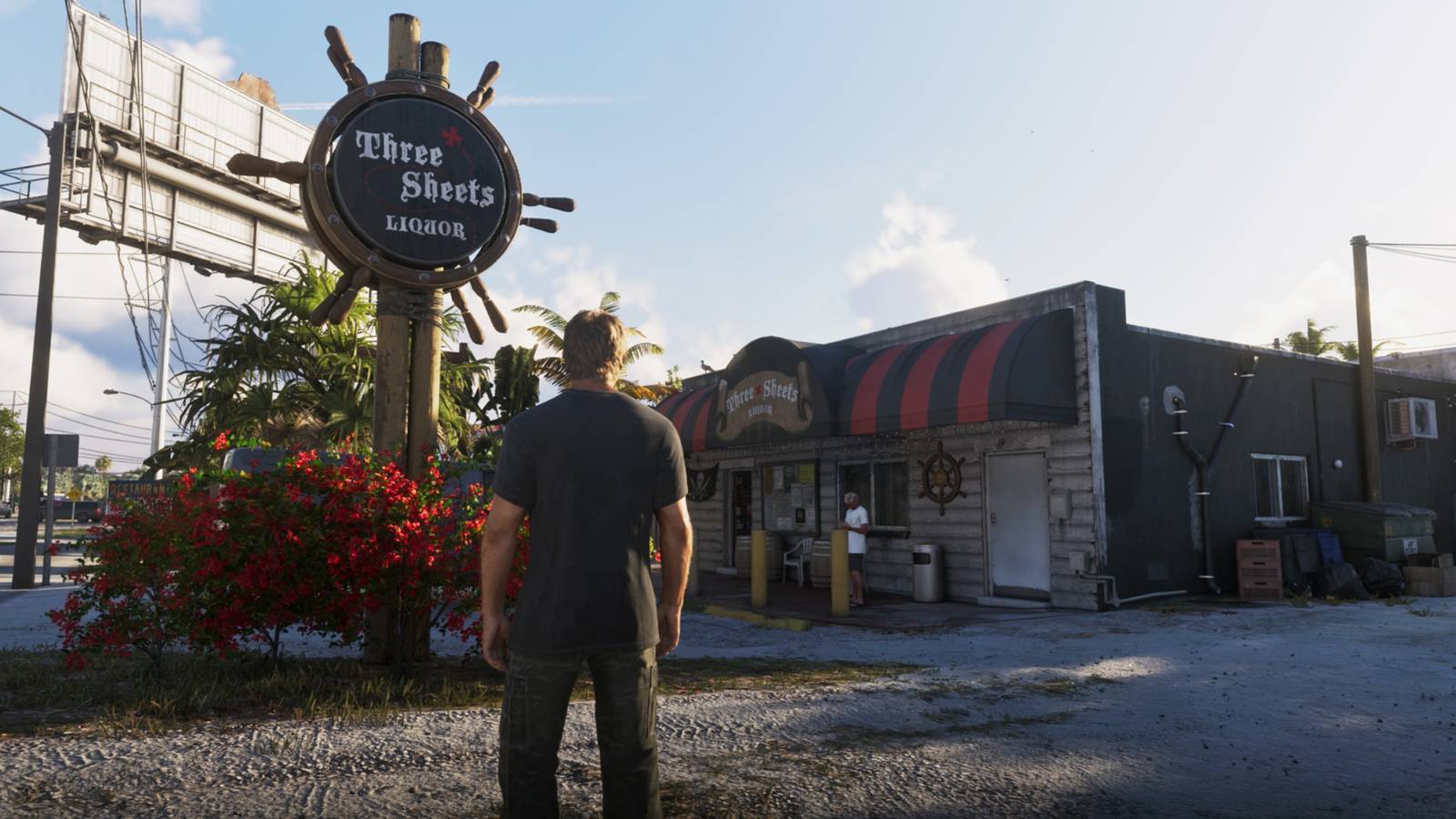
Brian Barrett: I'd love to go first. It would be an honor. My WIRED. So this episode is coming out on the same day that Grand Theft Auto 6 comes out, the most highly anticipated sequel for video games maybe ever.
Sophie Kleeman: Oh my god, Brian, are you a gamer?
Brian Barrett: No, I'm not. I'm not. But my WIRED is go ahead and take the day off of work. I support that. I think taking the day off of work—
Sophie Kleeman: I'm holding you to that. Absolutely.
Brian Barrett: ... to play Grand Theft Auto 6 is totally fine and normal. I'm supportive of this. Again, I don't have a console that can play it. I have a Switch in my house that nobody plays, but I recognize that it's a big cultural moment. So go ahead. Don't feel bad about it. And I'll do the same for March Madness when that comes around. So that's my WIRED. You've got my permission, America, to do that.
Sophie Kleeman: Thank you so much.
Brian Barrett: And my TIRED? I do just want to point out, Sophie brought this up earlier. I think the only people who say we got this multiple times in a couple of days are people who don't got it. I think if you've got it, you don't need to say that you've got it. So saying you've got it is TIRED because it really suggests to me that you probably don't got it.
Leah Feiger: Very sad. All right. Sophie, what do you think?
Sophie Kleeman: OK. I have two. Is that allowed? Am I allowed to have two?
Leah Feiger: Two WIREDs and two TIREDs?
Sophie Kleeman: I sure do. I'm an overachiever.
Brian Barrett: Two of each? Wow.
Sophie Kleeman: I'll make them quick. Don't worry. OK. Tired is Jensen Huang's leather jacket. That's TIRED.
Leah Feiger: Sure. OK.
Sophie Kleeman: WIRED is a jacket that I've seen all the fashion girlies on my Twitter feed talking about, which is a silk and fur trend.
Leah Feiger: Oh, I know exactly what you're talking about.
Sophie Kleeman: Do you know what I'm talking about.
Leah Feiger: Oh, yeah, yeah, yeah. It's everywhere.
Sophie Kleeman: OK. So that's my WIRED. My second WIRED and TIRED. TIRED, Chonkers, the sea lion. WIRED, Neil the seal.
Brian Barrett: Love that.
Sophie Kleeman: No further explanation.
Leah Feiger: No further explanation needed. Yeah. Google it, people. OK. My WIRED and TIRED is, I'm very saddened, which I guess is my TIRED, by everyone is doing their Black Friday sales right now and very early. And it's hard for me to understand if it's the end of the year, it's the big push, you got to really get these sales in. And is that because the US economy is just really struggling right now? I'm getting emails from everyone being like, "This is our Black Friday sale." And I'm looking at it and it's actually 40 percent off. These are real sales. So there's something a little bit like—
Sophie Kleeman: Recession indicator.
Leah Feiger: Yeah. There's something a little bit sad. This feels really, really early. My WIRED, however, is I'm loving Facebook Marketplace, you guys. My algorithm for it is so good. It's the best algorithm I have. I have no idea what they managed to do.
Sophie Kleeman: What are you looking for? What's the purchase?
Leah Feiger: Oh my god, everything. Just truly.
Sophie Kleeman: Like household wares? Fashion?
Leah Feiger: Household. We're looking. No, we're in the furniture mindset right now.
Sophie Kleeman: It is great for that.
Leah Feiger: It's so good. And they also so quickly and specifically figured out my exact taste, perhaps not my budget, but it's really, really great and nice to buy some reused stuff.
Sophie Kleeman: Also, great to sell stuff on. As someone who's been on the other side of that, people are on it, they're prompt, they come to your house.
Brian Barrett: Although are they too on it? I feel like whenever we've tried to sell something on Facebook Marketplace, it's like an inundation of messages and people getting really mad when you don't write back immediately.
Sophie Kleeman: Oh, I haven't experienced that. Brian, I don't know what you're doing.
Leah Feiger: Alabama versus New York.
Sophie Kleeman: Yeah. New Yorkers are actually nice.
Brian Barrett: They're vicious down here. They're vicious down here. Thanks so much for listening. We'll be back next week with more from WIRED. Uncanny Valley is produced by Adriana Tapia, mixed by Pran Bandi, fact-checking by Matt Giles. Our executive producer is Kate Osborn.


 English (US) ·