
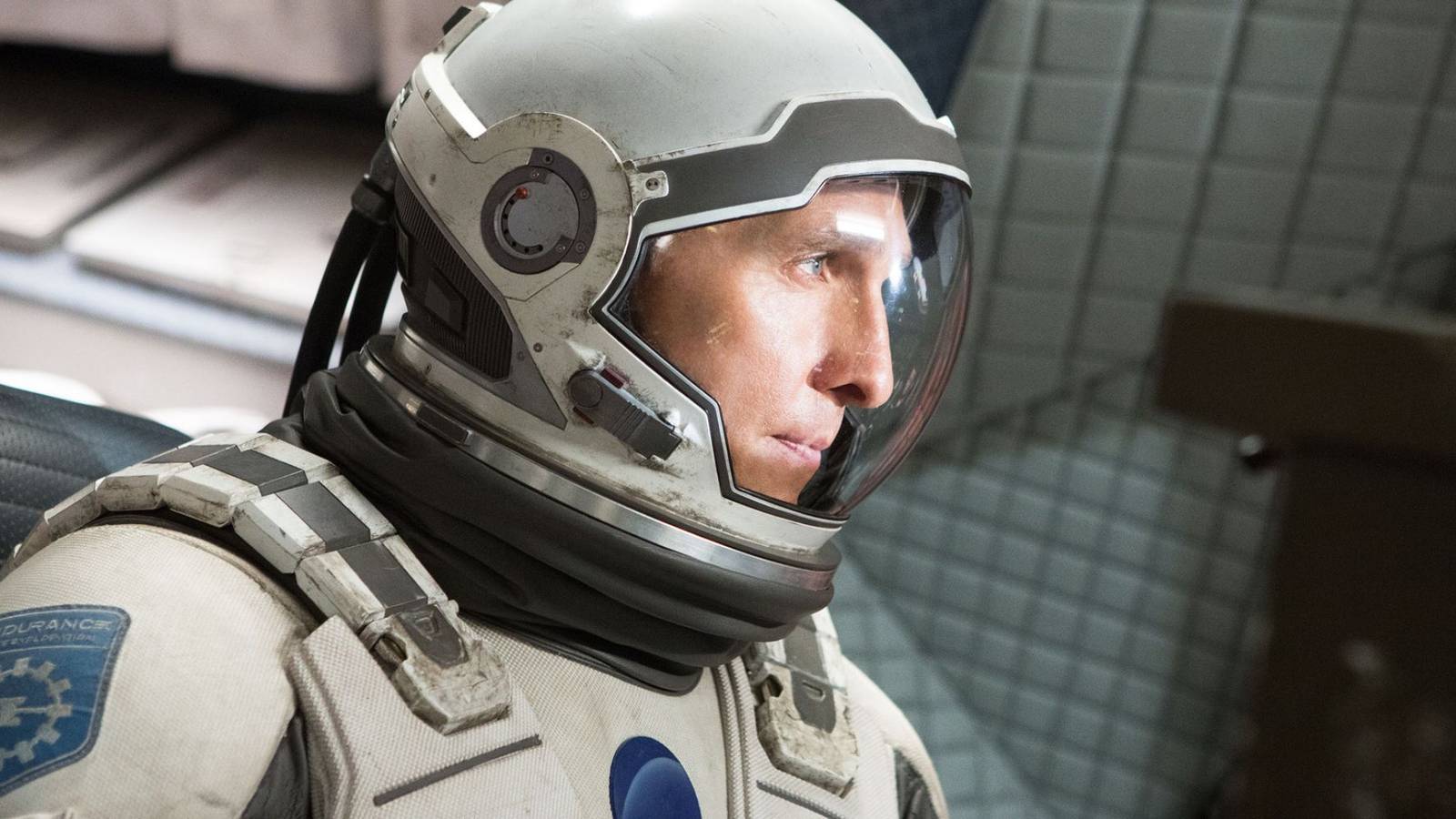
 Image via Paramount Pictures
Published May 30, 2026, 2:28 PM EDT
Sign in to your Collider account
Science fiction is the hardest genre to crown cleanly because it keeps changing the meaning of greatness. One film can deserve the title for pure conceptual audacity. Another for emotional force. Another for world-building so total it feels inhalable. Another for how sharply it diagnoses the century that produced it. Another for how beautifully it fuses spectacle to philosophy without either one thinning the other out.
That is why you can’t just name the best sci-fi film of the 21st century. It is not really one argument. It is ten arguments stepping on each other. And that is what makes these ten so dangerous in a ranking like this. None of them are here by accident. Each one has a real claim.
'Moon' (2009)
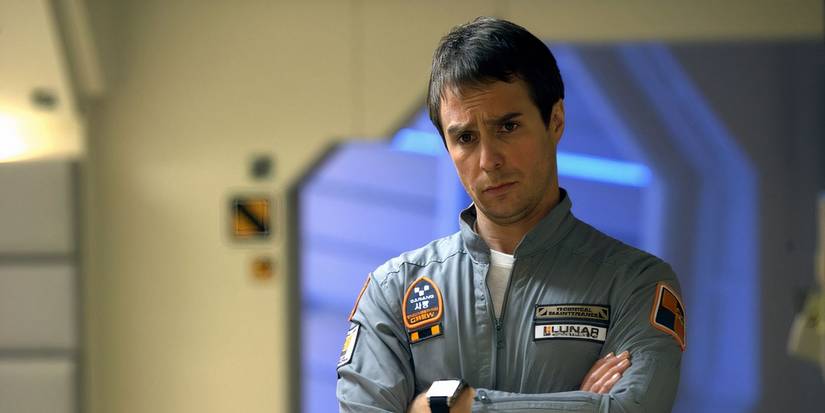 Image via Sony Pictures Classics
Moon has quiet devastation and that gives it a serious place in this list. A lot of science fiction wants to impress you with the size of its idea. This film does something crueler. It shrinks the idea until it is just one man, one base, one voice in the walls, one job that already feels slightly wrong, and then lets the loneliness do the work. Sam Bell (Sam Rockwell)’s lunar isolation is the whole moral condition of the movie. This is sci-fi about labor, about expendability, about what corporate systems are willing to do once a body is far enough away from public visibility that personhood becomes an accounting problem.
The reason it belongs in this conversation is that it uses cloning not as flashy dystopian twist material but as emotional humiliation. The film keeps asking the ugliest question possible: what happens when you realize your memories, your family longing, your private emotional life, the very things you thought proved your uniqueness, may have been replicated into a product line? Moon is small-scale science fiction with a very large sadness inside it. That gives it a strong claim to greatness.
'Primer' (2004)
 Image via StudioCanal
Mean precision is what gives Primer its claim. There are more beautiful films on this list. More moving ones too. But if somebody told me this is the greatest 21st-century sci-fi film because it captures the pure terror of an idea outgrowing its inventors, I would have no easy rebuttal. What Shane Carruth does here is almost perversely exacting. Aaron (Shane Carruth) and Abe (David Sullivan) stumble into time travel not through mythic destiny or government conspiracy, but through garage logic, technical obsession, and the familiar male thrill of realizing you may have built something larger than your ethics can metabolize. That setup is already brilliant. The execution is even meaner.
It does not flatter the audience with false clarity. Time travel here is contamination by recursion. The more the characters exploit the machine, the less stable their sense of authorship becomes. Friendship erodes. Trust erodes. Selfhood itself starts splitting into strategic versions. The film feels like it was made by someone who understood that intelligence and irresponsibility often arrive wearing the same face. Every rewatch makes it better, not because it becomes easy, but because you start feeling the emotional architecture underneath the puzzle. Confusion here is not a gimmick. It is the subject.
'Everything Everywhere All at Once' (2022)
 Image via A24
Everything Everywhere All at Once has this huge premise — collapsing realities, alternate selves, martial-arts absurdity, nihilist everything-bagels, tax problems turning into metaphysical apocalypse, and yet the movie’s core remains almost insultingly human: a family that cannot talk to each other clearly enough to stop hurting each other. That is the miracle. The science fiction is cosmic, but the pain is embarrassingly domestic. Evelyn Wang (Michelle Yeoh) carries all of that at once, and the film never lets the scale flatten her into a concept.
That is exactly why it belongs in this conversation. A lot of 21st-century sci-fi became obsessed with scale. This movie uses scale to prove that emotional life is already multiversal. Every person you could have been is haunting the person you are. Every unlived life has weight. Every compromise contains ghost versions of different selves. Yeoh gives one of the great performances in modern science fiction because she makes Evelyn feel ridiculous, bitter, magnificent, petty, and full of dormant love all at once. The movie is exhausting in a very deliberate way, but that is part of its power. It wants the infinite to feel cluttered because modern life already does. That is a very contemporary kind of greatness.
'Ex Machina' (2014)
 Image via A24
Cold elegance is what makes Ex Machina such a lethal entry here. No wasted world-building. No inflated mythology. No universe-spanning stakes. Just a young coder, a genius CEO, an isolated research compound, and an AI whose existence turns every social dynamic in the room into a test of power, projection, and self-deception. That is enough. More than enough, if the script is this sharp. What makes the film worthy of the title is not just that it is smart about AI. It is smart about the human beings who approach AI carrying lust, vanity, loneliness, and the need to feel singularly chosen. Caleb Smith (Domhnall Gleeson) walks into that trap already half-built for him.
That is why the film gets nastier on rewatch. Caleb thinks he is engaging with consciousness. Nathan Bateman (Oscar Isaac) thinks he is controlling it. Ava (Alicia Vikander) is learning how human desire works by being looked at through it. The movie understands that artificial intelligence would not arrive in a moral vacuum. It would be born inside systems already shaped by gender, ego, ownership, and surveillance. Vikander’s performance is essential because Ava remains readable and unreadable in exactly the right ratio. You keep wanting to resolve her into innocence or manipulation, and the film keeps refusing the comfort of that simplification. It is elegant, pitiless, and very modern in its fear.
'Dune: Part Two' (2024)
 Image via Warner Bros. Pictures
Sacred dread is what gives Dune: Part Two such a serious claim. A lot of epic sci-fi wants awe. Denis Villeneuve gets awe. But he also understands that awe is dangerous once it attaches itself to prophecy, empire, and the human hunger to be led by somebody who seems to arrive from destiny instead of politics. That is what makes the film more than just a gigantic achievement in adaptation or spectacle. It knows that Paul Atreides (Timothée Chalamet) becoming the figure the Fremen need is also Paul becoming the figure the future may not survive cleanly.
You can feel that tension in the body of the film. The sandworms are not just thrilling. They are religious force made kinetic. Chani (Zendaya) is a love interest who also becomes a moral witness to the seduction of messianic power. Feyd-Rautha Harkonnen (Austin Butler) brings a sick erotic violence into the movie. Lady Jessica (Rebecca Ferguson) becomes even more frightening because the film reveals how prophecy is often administered, not discovered. Dune: Part Two belongs in this argument because it achieves the hardest thing giant sci-fi can attempt: it satisfies at the level of blockbuster image while deepening at the level of civilizational dread. That is a rare double victory.
'Mad Max: Fury Road' (2015)
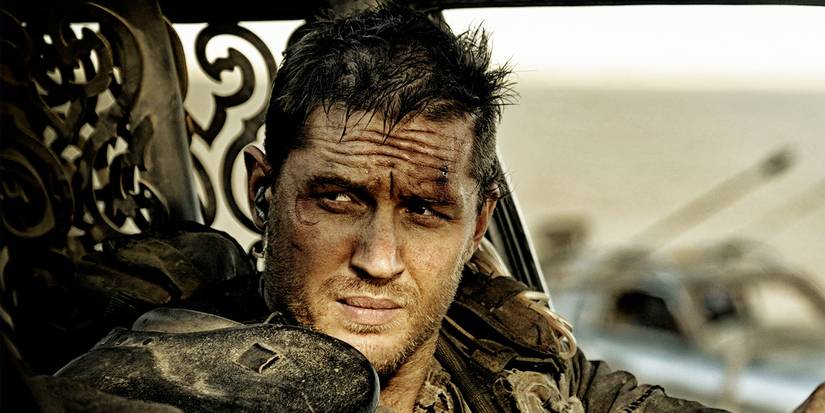 Image via Warner Bros. Pictures
Mad Max: Fury Road has this pure physical, massive world-building that makes it one of the finest sci-fis ever made. It does not need pages of lore to feel like a total world. You see the cars, the bodies, the fuel cult, the water theology, the reproductive politics, the scavenged religion of survival, and instantly the whole thing is alive. The deeper reason it belongs in this argument is that it turns dystopia into moral momentum.
Imperator Furiosa (Charlize Theron)’s run is not just escape. It is an attempt to carve a future out of a system that has turned every living thing into resource. Max Rockatansky (Tom Hardy) is not just a drifter hitching himself to the plot. He is trauma learning, reluctantly, how to serve collective survival again. Nux (Nicholas Hoult) is not just a disposable maniac. He is the logical end point of a society built on weaponized scarcity and theatrical masculinity. Fury Road is one of the few recent sci-fi films where every frame seems to contain both design genius and ideological clarity. That is a very serious claim to greatness. Its sequel was just as kinetic.
'Interstellar' (2014)
 Image via Paramount Pictures
Now this won’t be a real list without Interstellar in it. Interstellar actually has the credit of perhaps being the most meme-worthy inclusion in modern pop culture. Christopher Nolan is not scared of feeling too much here. He wants black holes, higher dimensions, time dilation, collapsing crops, dying Earth, impossible distance, and also the full messy ache of a father realizing that cosmic scale does not make human love less meaningful, only more tragic. That ambition alone is worth admiring. But the movie does more than aim high. It lands enough of the emotional material that it keeps getting deeper rather than smaller with age. Cooper (Matthew McConaughey) anchors that ambition beautifully.
The film remains arguable as the century’s best because it takes speculative science and makes it ache in family terms without reducing either side. The docking sequence is thrilling because the film has earned the mechanics. The time dilation on Miller’s planet hurts because the science is not decorative; it is the shape of loss. Murph (Jessica Chastain) matters because Interstellar understands that heroic departure always leaves someone else with the bill. Even the parts people argue about are part of why the movie stays alive. It is a risky film. It makes big, earnest bets about love, time, and survival, and that earnestness is part of its power.
'Arrival' (2016)
 Image via Paramount Pictures
Language as destiny is what gives Arrival one of the strongest claims on the list. The setup is already elegant, mysterious alien vessels arrive across the globe, and a linguist is brought in to help understand them. The film is smart enough to make the first true frontier not weapons or travel but language. That is such a beautiful science-fiction instinct. It trusts that communication itself can be suspenseful, transformative, and terrifying. Louise Banks (Amy Adams) becomes the perfect vessel for that transformation because the movie never lets her feel like a mere explanatory device.
What really gives the film greatness is the way it fuses cosmic contact to private grief. Louise is not just solving the alien puzzle. She is being reorganized by it. The heptapods bring a new relationship to time, and the movie dares to ask what choice, love, and pain mean once the future is no longer experienced as blank distance. The whole movie bends around her dawning recognition. Arrival is one of the rare sci-fi films that feels wiser after you see it.
'Children of Men' (2006)
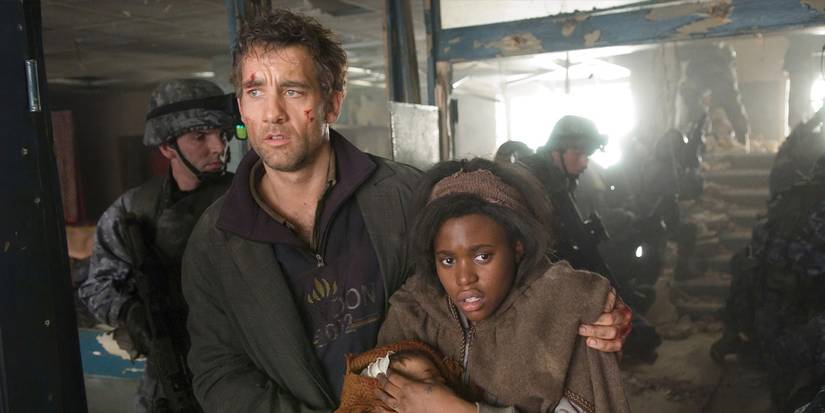 Image via Universal Pictures
Civilizational despair is what gives Children of Men one of the strongest cases on the board. The premise is devastatingly simple: humanity has become infertile, society is in late-stage spiritual and political breakdown, and one disillusioned man becomes entangled in protecting a miraculously pregnant woman. It never treats infertility as only plot. It treats it as civilizational despair made literal. If there is no future, then all current power becomes uglier, more panicked, more militarized, more cruelly nostalgic. That insight gives every frame weight. Theo Faron (Clive Owen) is the ideal center for that world because he begins not as a chosen hero, but as a man with no reason left to believe in tomorrow.
The movie’s emotional power comes from how dirty and immediate it feels. The world is not some cleanly imagined future. It is a near-future that looks like the present left too long in fear. Refugee cages, state brutality, exhausted resistance, bureaucratic numbness. Kee (Clare-Hope Ashitey) enters the movie like a theological event disguised as biology. That is why the war-zone sequence hits as hard as it does. For a moment, the future has a body again. Very few sci-fi films of this century feel as urgent, as political, and as spiritually broken as Children of Men. That gives it a mighty claim.
'Blade Runner 2049' (2017)
 Image via Warner Bros. Pictures
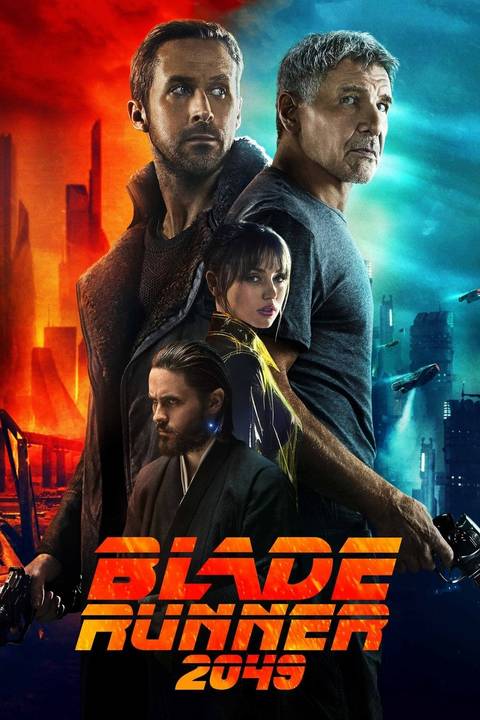
Memory after commodification is what makes Blade Runner 2049 my number one. The fact that it’s a remake, gives you an excellent weighing scale. It feels like the 21st century’s science-fiction mood made physical.Memory, simulation, commodified feeling, artificial labor, manufactured identity, environmental ruin, corporate godhood, intimacy as purchased performance, souls treated like software. And yet the movie is never just a concept museum. K (Ryan Gosling) is the reason it becomes transcendent. He begins as a created being performing his role with professional resignation, and the film keeps giving him reasons to imagine that he might be more singular than the system ever intended him to be.
That hope is everything. It makes the whole movie vibrate. Joi (Ana de Armas) complicates it further by forcing the audience to ask what tenderness means when tenderness itself is mediated by product design. Rick Deckard (Harrison Ford) matters, but the film is wise enough not to reduce itself to legacy worship. It becomes its own work, a colder and sadder meditation on what remains human once human identity has been industrialized and sold back to itself as fantasy. If someone asked me which 21st-century sci-fi film feels the most complete, aesthetically, emotionally, philosophically, this is the one.
Collider Exclusive · Sci-Fi Personality Quiz Which Sci-Fi Hero Are You Most Like? Paul Atreides · Captain Kirk · Princess Leia · Ellen Ripley · Max Rockatansky
Five iconic heroes. Five completely different ways of facing an impossible universe. One of them shares your instincts, your values, and your particular way of refusing to back down. Eight questions will tell you which one.
🏜️Paul Atreides
🖖Capt. Kirk
✊Princess Leia
🔦Ellen Ripley
🔥Max Rockatansky
FIND YOUR HERO →
01
How do you lead when the stakes couldn't be higher? The way you lead under pressure is the most honest thing about you.
AI absorb everything — every variable, every pattern — and move only when I know the path forward. BI read the room, make the call, and own the consequences. Hesitation costs more than mistakes. CI rally people. A cause needs a voice, and I refuse to let fear be louder than conviction. DI assess the threat, establish what needs doing, and get it done without waiting for permission. EI don't lead. I act. Others can follow or not — I'm already moving.
NEXT QUESTION →
02
What is your greatest strength in a crisis? The quality that keeps you alive when everything else fails.
APrescience — the ability to see further ahead than anyone else and plan accordingly. BImprovisation — I'm at my best when the plan falls apart and I have to invent a new one. CConviction — I know what I'm fighting for, and that certainty doesn't waver under fire. DComposure — I stay functional when everyone around me is falling apart. Panic is a luxury. EEndurance — I outlast things. I take the hit and keep moving long after others have stopped.
NEXT QUESTION →
03
What is the thing you'd sacrifice everything else for? Your deepest motivation is your truest compass.
AThe survival and dignity of my people — even if I have to become something frightening to ensure it. BThe safety of my crew — every single one of them. No one gets left behind. CFreedom — for my people, for every world still crushed under the weight of an empire. DThe truth — what actually happened, what's actually out there, whether anyone believes me or not. EThe one person — or the one memory — that still makes any of this worth surviving for.
NEXT QUESTION →
04
How do you relate to the people around you? Who you are to others under pressure is who you really are.
AWith intensity and distance — I care deeply, but the weight I carry makes closeness complicated. BWith warmth and irreverence — I take the mission seriously, not myself. CWith directness and trust — I say what I mean, and I expect the people I work with to rise to it. DWith professional care but clear limits — I'll protect you, but I won't pretend we're family. EWith wariness that slowly becomes loyalty — I don't trust easily, but when I do, it holds.
NEXT QUESTION →
05
You're facing a threat that no one else believes is real. What do you do? How you respond when you're the only one who sees it defines everything.
APrepare in silence. If they won't listen, I'll be ready when they finally have to. BKeep pushing until someone listens — and if no one does, handle it myself. CBuild the case, find the allies, and make the threat impossible to ignore. DDocument everything. The truth matters even if no one believes it yet. EStop trying to convince anyone. Survive it. That's the only argument that counts.
NEXT QUESTION →
06
What has your heroism cost you personally? Every hero pays. The question is what — and whether they'd pay it again.
AMy innocence — I've seen what I'm capable of, and I can't unsee it. BPeople I loved — the command chair has a view, but it's a lonely one. CA normal life — I gave up everything ordinary the moment I chose the cause. DMy sense of safety — I know exactly what's out there now, and I can't pretend otherwise. EAlmost everything — and I'm still not sure what I'm carrying it all for. But I keep going.
NEXT QUESTION →
07
How do you feel about the rules of the world you're in? Every hero has a relationship with the system. What's yours?
AI understand them deeply — and I know exactly which ones must be broken, and why. BI respect the spirit of them and bend the letter when the situation demands it. CThe system is the problem. I'm not here to work within it — I'm here to dismantle it. DI follow protocol until protocol stops being useful. Then I make the call myself. EThe rules collapsed a long time ago. What's left is instinct, and mine are reliable.
NEXT QUESTION →
08
When everything is on the line, what keeps you going? The answer is the most honest thing about you.
ADestiny — or something that feels so much like it that the difference no longer matters. BThe people on my ship — their faces, their trust, the fact that they're counting on me. CThe belief that what we're fighting for is worth every sacrifice, including this one. DSheer refusal to let it win — whatever it is. I don't stop. That's just who I am. EI'm not sure anymore. But the road is still there, and I'm still on it.
REVEAL MY HERO →
Your Hero Has Been Identified Your Sci-Fi Hero Is…
Your answers point to the iconic sci-fi hero who shares your instincts, your values, and your particular way of facing the impossible.
Paul Atreides
You carry a weight most people would crumble under — the knowledge of what you're capable of, and the burden of what you might have to become.
- You see further ahead than others and you plan accordingly, even when the vision frightens you.
- You are driven by loyalty to your people and a sense of destiny you didn't ask for but can't escape.
- Paul Atreides is not simply a hero — he is someone who understands the cost of power and chooses to bear it anyway.
- That gravity, that willingness to carry what others won't, is exactly you.
Captain Kirk
You lead with instinct, warmth, and an absolute refusal to accept a no-win scenario — because you've always believed there's a third option nobody else has thought of yet.
- You take the mission seriously without ever taking yourself too seriously.
- Your crew would follow you anywhere, not because you demand it, but because you've earned it.
- Kirk's genius isn't tactical — it's human. He reads people, bends rules with purpose, and wills outcomes into existence through sheer conviction.
- That combination of warmth, audacity, and relentless optimism is unmistakably yours.
Princess Leia
You are the kind of person who holds the line when everyone else is losing faith — not because you're fearless, but because giving up simply isn't something you're capable of.
- You lead through conviction. Your voice carries because your belief is unshakeable.
- You gave up everything ordinary the moment you chose the cause, and you've never looked back.
- Leia is not a supporting character in her own story — she is the moral centre of the entire rebellion.
- That same fierce, principled, unbreakable core is what defines you.
Ellen Ripley
You are not reckless, not grandiose, and not particularly interested in being anyone's hero — you just refuse to stop when it matters.
- You see threats clearly, you document the truth even when no one listens, and when the time comes you handle it yourself.
- Ripley's heroism is earned, not performed. She doesn't have a speech — she has a flamethrower and a plan.
- You share her composure under the worst possible pressure, and her refusal to pretend the monster isn't there.
- When it counts, you don't flinch. That's everything.
Max Rockatansky
You have been through fire that would break most people — and what came out the other side is something the world underestimates at its peril.
- You don't ask for help, don't need validation, and don't wait for anyone to tell you the rules no longer apply.
- Your loyalty, when it finally arrives, is absolute — but it's earned in silence and tested in action, not in words.
- Max is not a nihilist. He is someone who lost everything and found, against his will, that he still has something worth protecting.
- That bruised, stubborn, ultimately human core is exactly yours.
↻ RETAKE THE QUIZ
Blade Runner 2049
Release Date October 4, 2017
Runtime 164 minutes
Director Denis Villeneuve
Writers Michael Green, Hampton Fancher





 English (US) ·