
Martial arts cinema is one of the few genres where greatness hits before explanation does. It’s like Netflix’s One Piece Season 2 — you see Zoro going bonkers by killing a 100 men right as the season kicks off. That’s a chunk of martial arts in a fantasy show. It’s the same in movies. You feel it in the body first. In the stance, the pause, the read of distance, the second a fight stops being action and becomes expression. A kick can be rage. A block can be grief. A stance can be philosophy.
And these ten martial arts films all have a real claim. If one wins through discipline, the other matters because of its raw physical danger, and another through myth as its primary engine. That is why this list is alive. Lock in.
'Ip Man' (2008)
 Image via Mandarin Films
A lot of martial arts films sell skill. Ip Man sells bearing. That is its edge. Ip Man (Donnie Yen) is already knows exactly who he is, and the movie’s power comes from watching war, occupation, humiliation, and grief keep striking that composure until fighting stops being display and becomes moral expression. The ten-man fight is the obvious proof. It is thrilling because sorrow has finally decided to hit back.
Wing Chun in this film is so satisfying because it is not romanticized into mystical fog. It is compact, direct, punishing, and deeply tied to character. Even the way Ip stands there carries information: self-control, precision, no wasted movement. If someone wanted to argue that the greatest martial arts film should be the one where style and personality become inseparable, Ip Man has a real case.
'The 36th Chamber of Shaolin' (1978)
 Image via Shaw Brothers Studio
If your answer to this whole debate is that the best martial arts movie is the one that makes training feel holy and horrible, you are probably picking The 36th Chamber of Shaolin. What makes it special is how stubbornly it refuses shortcuts. San Te (Gordon Liu) absorbs his greatness by getting broken down, corrected, humiliated, tested, and rebuilt chamber by chamber. The movie understands something most imitators do not: training is compelling when it feels like philosophy entering the body through repetition and pain. That is why each chamber sticks in the mind.
And San Te’s character gives the whole thing spine. He is not just enduring tasks. You can feel the anger that sent him there slowly becoming discipline. That change is the movie. By the time he starts applying what he learned, the film has already won. It made self-transformation dramatic without faking the cost.
'Fist of Legend' (1994)
 Image via Golden Harvest
This is one of the cleanest fighting movies ever made. No fog. No mess pretending to be realism. No confusion mistaken for intensity. In Fist of Legend, Chen Zhen (Jet Li) and his opponents give you clarity, rhythm, distance, timing, adjustment. You can actually see thought happening inside the combat. That alone puts it in the conversation.
But the movie’s real strength is how it keeps changing what a fight means. The confrontation with Funakoshi (Yasuaki Kurata) stays respectful, almost educational. The fights with the Japanese fighters carry national insult and personal grief. The final duel with Fujita (Billy Chow) becomes pure escalation, a contest where force, technique, and emotional charge all sharpen each other. Chen Zhen, on the other hand, is carrying mourning and humiliation in every scene. The result is a film that feels technically immaculate without ever becoming emotionally blank.
'Ong-Bak: Muay Thai Warrior' (2003)
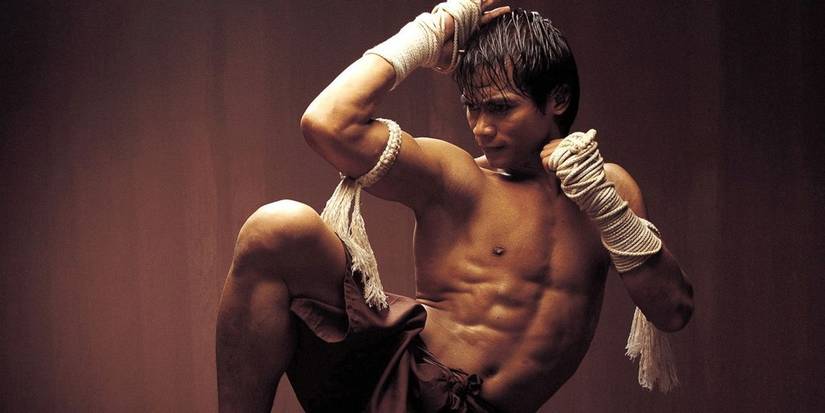 Image via EuropaCorp
This movie hit like a threat to the entire fake-action economy when it was released in 2003. Ong-Bak: Muay Thai Warrior did not arrive with any screen presence in the ordinary sense. Ting (Tony Jaa) arrived like somebody had broken into the genre and reminded everyone that a human body, filmed properly, is still one of cinema’s greatest special effects. Knees, elbows, vaults, impacts that look genuinely dangerous, chase sequences built on athletic insanity rather than digital padding, all of it gives the film the excitement of a movie discovering, in real time, how much it can get away with.
The story is bare-bones and that is fire. The stolen Buddha head gives the violence purpose and simplicity. Ting is not wandering through ornamental plot either — and is trying to restore something sacred. The film’s greatness is physical first, but not only physical. There is a kind of righteous directness to it that makes the whole experience feel refreshing. It is the sound of a genre kicking a door open.
'The Raid: Redemption' (2011)
 Image via PT Merantau Films
One building. One botched raid. One long descent into murder architecture. That is enough. The Raid: Redemption wins points for concentration. It strips martial arts cinema down until almost nothing remains except space, fatigue, terror, and impact. There are no decorative detours here. Every hallway matters. Every doorway matters. Every extra second of survival has to be purchased physically.
What makes the movie more than a brutality showcase is that exhaustion becomes part of the choreography. Rama (Iko Uwais) does not glide through danger like a stereotypical martial arts film and instead, barely keeps surviving it. That changes the feeling of every fight. You stop admiring from a distance and start flinching with the film. The machete sequence, the wall-gap tension, the final room confrontations, all of it works because Gareth Evans probably understood that action gets scarier when the body starts looking finite.
'Drunken Master II' (1994)
 Image via Golden Harvest
Some martial arts classics are dignified. Drunken Master II is drunk, rude, playful, ingenious, and better than half the serious ones. Wong Fei-hung (Jackie Chan) works because Chan’s genius here is not only athletic. It is structural. He turns instability into a creative engine. Drunken boxing in this film helps with comedy but it also changes rhythm, expectation, balance, visual logic. The body stops obeying the audience’s predictive instincts. That makes the action funny and dangerous at the same time.
And the movie never runs out of invention. Props become weapons. Stumbles become setups. Humiliation becomes momentum. Then the ending of the film goes berserk and reminds you that underneath all the comic looseness is a performer doing things that feel barely legal. There is a decent case that the greatest martial arts film should also be one of the most imaginative, and if that is your standard, Drunken Master II shoots way up the list.
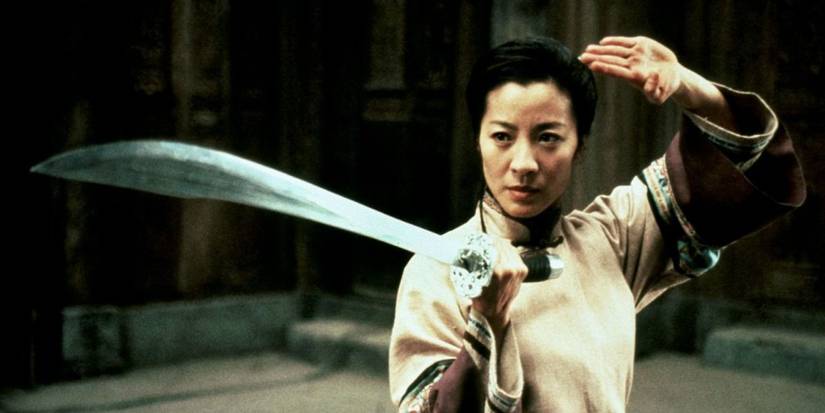 Image via Sony Pictures Classics/Columbia TriStar Film
This is the entry people sometimes try to separate from martial arts in their heads because it is too beautiful, too romantic, too sweeping, too awards-canon respectable. That is nonsense. Crouching Tiger, Hidden Dragon has a massive claim precisely because it expands what martial arts cinema can emotionally and visually be without weakening the martial arts at all. The rooftop chase, the bamboo forest duel, the tavern challenge, all of them tell you something different about longing, control, youth, mastery, and unspent feeling.
That is why the film can absolutely win this argument. Jen Yu (Zhang Ziyi) is talent poisoned by impatience, entitlement, and hunger for a freedom she cannot yet ethically hold. Li Mu Bai (Chow Yun-fat) and Yu Shu Lien (Michelle Yeoh) are embodiments of discipline made tragic by everything discipline forced them not to say. The Green Destiny becomes more than a weapon because everyone touching it is also touching a question about what life they chose, refused, or were denied. If the greatest martial arts film should be the one that makes the genre feel like poetry without losing the sharpness of steel, Crouching Tiger, Hidden Dragon is sitting near the throne.
'Police Story' (1985)
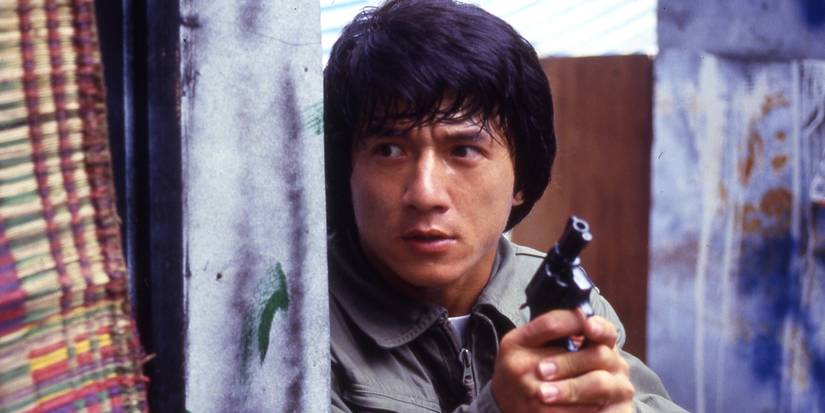 Image via Golden Harvest
Police Story grabs your collar. Ka-Kui (Jackie Chan) makes action here feel like controlled public disaster like he usually always did. Cars crash through shanties. Bodies slam through glass. Chases spill into buses, malls, offices, stairwells. Classic Jackie Chan. And still, somehow, the movie stays light on its feet. That is part of its greatness. It is not heavy in the grim-modern way. It is buoyant, funny, frantic, and then suddenly willing to risk death for your entertainment.
Ka-Kui is overwhelmed, annoyed, scrambling, sometimes half a second from catastrophe. That vulnerability gives the stunt madness its kick. The mall climax has become sacred for obvious reasons, but the whole film earns it by building a hero whose body always feels exposed to the world around him. If your number one criterion is “which martial arts film most fully captures cinema as stunt-risk ecstasy,” this might be your winner.
'Fist of Fury' (1972)
 Image via Golden Harvest
Bruce Lee made anger look cleaner than anybody else. That is the blunt truth at the center of Fist of Fury. The film matters because every scene seems to understand that humiliation has a physical afterlife. Chen Zhen (Bruce Lee) is grieving his master, yes, but the film’s true electricity comes from insult. National insult. Personal insult. Institutional insult. The sign at the park. The dojo confrontations. The constant demand that Chinese dignity accept degradation quietly. Lee does not play those moments as abstract patriotism. He plays them as a body refusing to cooperate with contempt.
That is why the film still crackles. The speed is there. The charisma is there. The kicks and screams and impossible attacks are there. But what makes it truly major is that the violence feels morally charged without becoming preachy. It feels like a man trying to restore the shape of himself and his people through force because the world around him has made every civil option ridiculous.
'Enter the Dragon' (1973)
 Image via Warner Bros.
This is number one because Enter the Dragon does everything. Not “almost everything.” Everything. It has Bruce Lee at full star command. It has a perfect premise for him: tournament structure, infiltration, criminal rot, personal revenge, philosophical cool. It has accessibility without dilution. It has spectacle without bloat. It has memorable enemies, iconic imagery, clean escalation, a global pulse, and the sense that the genre itself has stepped into a larger arena and knows it belongs there.
Most importantly, Lee feels complete in it. Funny. Watchful. Controlled. Furious when necessary. Physically exact in a way that still looks unreal. He is not being carried by the film. The film is reorganizing itself around the fact that he is in it. The mirror-room scene remains one of the greatest endings in martial arts cinema because it turns combat into strategy, image, and identity all at once. If someone asked for the one martial arts movie that could stand before a non-fan, a die-hard, a historian, a pure action junkie, and a movie-lover in general and still make a convincing claim to the throne, this is the safest answer. And the annoying thing is, it is also the right one.
Collider Exclusive · Action Hero Quiz
Which Action Hero Would Be
Your Perfect Partner?
Rambo · James Bond · Indiana Jones · John McClane · Ethan Hunt
Five legends. Five completely different ways of getting out alive — with style, with muscle, with charm, with luck, or with a plan so intricate it probably shouldn't work. Ten questions will reveal which action hero was built to have your back.
🎖️Rambo
🍸James Bond
🏺Indiana Jones
🔧John McClane
🎭Ethan Hunt
FIND YOUR PARTNER →
01
You're dropped into a dangerous situation with no warning. What do you need most from a partner? The first few seconds tell you everything about who belongs beside you.
ASomeone who already has three contingency plans running and is calmly working through all of them. BSomeone who reads the terrain instinctively and knows exactly how to use it against the enemy. CSomeone who keeps their nerve and their sense of humour when everything is falling apart. DSomeone who knows the history of wherever we are and what we're walking into. ESomeone with the right contact, the right cover identity, and the right exit already arranged.
NEXT QUESTION →
02
You have to get somewhere dangerous, fast. How do you travel? How you get there is half the mission.
AOn foot through terrain no one else would attempt — I move where vehicles can't follow. BOn a motorcycle, a cargo plane, or anything else that gets me there before I think too hard about it. CIn something that belongs to someone else — borrowed, stolen, or improvised under fire. DFirst class, with a cover identity and a gadget that does something I won't explain until it's needed. EBy whatever means are available — I've driven, flown, and once arrived by camel. The destination matters, not the method.
NEXT QUESTION →
03
You're pinned down and outnumbered. What does your ideal partner do? This is when you find out what someone is really made of.
ADisappears into the environment, flanks them silently, and ends it before I've reloaded. BCracks a one-liner, grabs a fire extinguisher or a chair, and improvises something that somehow works. CProduces a gadget specifically designed for this exact scenario and uses it with infuriating precision. DPulls out a whip, a pistol, and an archaeological insight that somehow gets us out alive. ENeutralises the threat with maximum efficiency and minimum words — they were already three moves ahead.
NEXT QUESTION →
04
The mission is paused. You have one evening to decompress. What does your partner suggest? Who someone is when the pressure drops is who they actually are.
AA bar with terrible lighting, cold beer, and absolutely no questions about feelings. BThe finest restaurant in the city, a bottle of something expensive, and a conversation that is equal parts brilliant and exhausting. CA local dig site, a museum after hours, or a long story about why that particular artefact matters to human civilisation. DPizza. Bad TV. Falling asleep halfway through a movie neither of you were watching anyway. EA debrief that turns into three hours of contingency planning that somehow becomes the most fun you've had all week.
NEXT QUESTION →
05
How do you prefer your partner to communicate mid-mission? Good communication is the difference between partners and a liability.
APrecise and minimal — tell me what I need to know and nothing else. Every word has a cost. BDeadpan and dry — keeping it light keeps me sharp, even when everything is on fire. CEnthusiastic and slightly chaotic — but always with useful information buried somewhere in the noise. DCalm and controlled through an earpiece, with a plan that covers every variable I haven't thought of yet. EBarely at all — silence is a language and they speak it fluently.
NEXT QUESTION →
06
Your enemy is powerful, well-resourced, and has the upper hand. How should your partner approach them? The approach to the enemy defines the partnership.
AInfiltrate their inner circle, learn everything, and dismantle them from inside out before they know we're there. BStudy the historical pattern — every villain of this type has a weakness written somewhere in the past. CGet them talking. The more they monologue, the more time I have to figure out how to beat them. DGo through them. Directly. With as much force as the terrain allows. EFind the one thing they haven't accounted for — there's always one thing — and make sure we're holding it.
NEXT QUESTION →
07
Things go badly wrong and you're captured. What do you trust your partner to do? Who someone is when you need them most is the only thing that matters.
ACome in alone, quietly, and get me out before anyone knows they were there. BHave already been working on the extraction since the moment I disappeared — the plan is already running. CCome in loud, come in fast, and worry about the collateral damage later — I'd do the same for them. DUse every resource, every contact, and bend every rule until I'm out — they don't leave people behind. ECharm their way in somehow, bluff through the hard part, and still manage to look good doing it.
NEXT QUESTION →
08
What does your ideal partner bring to the table that you couldn't replace? A great partner fills the gap you didn't know you had.
ATechnology that shouldn't exist yet and the training to use it under any conditions. BSurvival instinct so refined it borders on supernatural — and the scars to prove it's been tested. CKnowledge of history, language, and culture that makes them invaluable in places where force is useless. DThe ability to walk into any room in the world and immediately become the most trusted person in it. EStubbornness that refuses to accept a situation is hopeless — and the improvisational skill to back it up.
NEXT QUESTION →
09
Every partnership has a cost. Which of these can you live with? No one comes without baggage. The question is whether you can carry it together.
AA partner who never fully switches off — always watching exits, always calculating threats, even at dinner. BA partner who gets the job done brilliantly but has the emotional availability of a locked filing cabinet. CA partner who makes everything ten times more complicated than it needs to be — but who always comes through. DA partner who gets personally attached to every relic, ruin, and artefact we encounter, which slows everything down. EA partner who was not built for this and knows it — but shows up anyway, every time, without being asked.
NEXT QUESTION →
10
It's the final moment. Everything is on the line. What do you need from your partner right now? The last question is the most honest one.
AOne line. Absolutely dry. Delivered like the world isn't ending. Then we move. BNothing said at all — just a look that means we both already know what has to happen. CA plan I don't fully understand that somehow accounts for everything, delivered in thirty seconds flat. DA piece of historical context that reframes the entire situation and tells us exactly what to do next. ESomeone who steps forward instead of back — because that's who they've always been.
REVEAL MY PARTNER →
Your Partner Has Been Assigned Your Perfect Partner Is…
Your answers have pointed to one action hero above all others. This is the person built to have your back — for better or considerably, spectacularly worse.
Rambo
Your partner doesn't talk much, doesn't need to, and will have assessed every threat in your immediate environment before you've finished your first sentence. John Rambo is not a man of plans or politics — he is a force of nature shaped by survival, loyalty, and a capacity for endurance that goes beyond anything training can produce. He will not leave you behind. He has never left anyone behind who deserved to come home. What you get with Rambo is the most capable, most quietly ferocious partner imaginable — one who has been through things that would have broken anyone else, and who chose to keep going anyway. You'll never need to ask if he has your back. You'll just know.
James Bond
Your partner will arrive perfectly dressed, perfectly briefed, and with a cover story so convincing it'll take you a moment to remember what's actually true. James Bond is the most professionally dangerous person in any room he enters — and the most disarmingly charming, which is the point. He operates in a world of layers, where nothing is what it appears and every advantage is used without apology. You'll never be bored. You'll occasionally be furious. But when it matters — when the mission is genuinely on the line and the margin for error has collapsed to nothing — Bond is exactly the partner you want. He has survived things that have no business being survivable. He does it with style. That is not nothing.
Indiana Jones
Your partner will know the history, the language, the cultural context, and exactly why the thing everyone else is ignoring is actually the most important thing in the room. Indiana Jones is brilliant, reckless, and occasionally impossible — but he is also one of the most resourceful, most genuinely knowledgeable partners you could find yourself beside. He approaches every situation with a scholar's eye and a brawler's instinct, which is an unusual combination and a remarkably effective one. He hates snakes and gets personally attached to objects of historical significance, both of which will slow you down at least once. It doesn't matter. What Indy brings is irreplaceable — and the adventures you'll have together will be the kind people write books about. Assuming you survive them.
John McClane
Your partner was not supposed to be here. He does not have the right equipment, the right information, or anything approaching the right odds. He has a sarcastic remark and an absolute refusal to accept that the situation is as bad as it looks. John McClane is the greatest accidental hero in the history of action cinema — a man whose superpower is stubbornness, whose contingency plan is improvisation, and whose capacity to absorb punishment and keep moving would be alarming if it weren't so useful. He will complain the entire time. He will make it significantly more chaotic than it needed to be. And he will absolutely, unconditionally, without question come through when it counts. Yippee-ki-yay.
Ethan Hunt
Your partner has already run seventeen scenarios by the time you've finished reading the briefing, and the plan he's settled on involves at least two things that should be physically impossible. Ethan Hunt operates at the absolute edge of human capability — technically, physically, and intellectually — and he brings the same relentless precision to protecting his partners that he brings to dismantling organisations that shouldn't exist. He is not easy to know and he will never fully tell you everything. But he will carry the weight of the mission so completely, so absolutely, that your job is simply to trust him — and the remarkable thing is that trusting him always turns out to be the right call. The mission will be impossible. He will complete it anyway.
↻ RETAKE THE QUIZ

Enter the Dragon
Release Date August 17, 1973
Runtime 102 minutes
Director Robert Clouse
Writers Michael Allin


 English (US) ·