
I have gone back and forth on this question more times than I can count. Every few years, a new superhero movie comes along and reminds people why the genre still matters, and then the debate starts all over again. What makes it tricky is that these films are not all trying to do the same thing. Some are built around character, others lean into spectacle, and a few manage to balance both.
This list is about how well each film understands its own story and follows it through without losing focus. The movies here take their characters seriously and let consequences sit instead of brushing them away in the next scene. Let’s have a look at some of the best superhero movies.
10 ‘X2: X-Men United’ (2003)
 Image via 20th Century Studios
The film begins with an attack on the White House, where Nightcrawler suddenly appears and nearly kills the president, which immediately shifts the X-Men into a public crisis they can no longer avoid. Professor Charles Xavier (Patrick Stewart) and his team are forced to work with Magneto (Ian McKellen) after William Stryker (Brian Cox) launches a coordinated strike on the school and kidnaps mutant children. From that point on, the story follows a series of uneasy alliances.
What makes X2 hold up is how much time it spends on distrust. Wolverine (Hugh Jackman) returns to the military facility tied to his past, only to learn that answers do not bring relief. Meanwhile, the X-Men are constantly reacting instead of leading, which gives the film a tense and defensive rhythm.
9 ‘Spider-Man 2’ (2004)
 Image via Sony
This film focuses on exhaustion. Peter Parker (Tobey Maguire) is struggling to keep up with work, friendships, and his responsibility as Spider-Man, and every part of his life starts to slip at the same time. His powers weaken because he no longer knows which version of himself he wants to be. That inner conflict runs parallel to Otto Octavius (Alfred Molina), whose scientific ambition collapses into obsession after a failed experiment.
As the story moves forward, Peter makes the choice to walk away from being Spider-Man, and the city briefly feels the absence. Crime increases, people suffer, and Peter realizes that relief comes with guilt. When he returns, it is not because he feels heroic again, but because he understands the cost of quitting.
8 ‘The Batman’ (2022)
 Image via Warner Bros.
The film follows Bruce Wayne (Robert Pattinson) during his second year as Batman, when he is still figuring out what his presence in the city actually means. A series of murders targeting Gotham’s political leaders pulls him into an investigation tied to corruption that reaches far beyond street crime. Each clue forces Bruce to rely on the police, especially Jim Gordon (Jeffrey Wright), which keeps the story grounded in procedure rather than spectacle.
As the case unfolds, Batman realizes that his methods mirror the anger driving the killer, Edward Nashton (Paul Dano), more closely than he wants to admit. The city does not see him as a symbol yet, only as another violent figure moving through the dark. By the end, Bruce begins to understand that fear alone cannot hold Gotham together, and that realization becomes the real turning point of the film.
7 ‘Iron Man’ (2008)
 Image via Marvel Studios
The story begins with Tony Stark (Robert Downey Jr.) as a weapons manufacturer who treats war as a business until he is captured and injured during a trip overseas. Forced to build a weapon for his captors, Tony instead creates a crude suit to escape, which becomes the foundation for everything that follows. When he returns home, the experience forces him to confront the damage his work has caused.
As Tony develops the Iron Man armor, the film stays focused on his need to control the narrative around himself and his company. His conflict with Obadiah Stane (Jeff Bridges) grows out of that same need for control. What makes the film last is its restraint. It lets Tony fail, improvise, and learn in public, which gives the character weight before the larger universe even begins.
6 ‘Logan’ (2017)
 Image via 20th Century Studios
The film is set in a future where mutants are almost gone, and Logan (Hugh Jackman) is no longer a symbol or a leader. He works as a driver near the Mexican border, drinks heavily, and struggles to care for an aging Charles Xavier (Patrick Stewart), whose seizures now pose more danger than protection. His body is failing, his healing has slowed, and the violence he once absorbed now leaves marks that stay.
When Laura (Dafne Keen) enters his life, she does not inspire him or redeem him in any clean way. Instead, she forces him back into motion when all he wants is to stop. The journey they take is rough, ugly, and often quiet, and it treats survival as something temporary. What makes Logan linger is that it allows its lead character to feel tired in a way superhero films usually avoid, and it accepts that endings do not arrive with relief.
5 ‘Avengers: Infinity War’ (2018)
 Image via Marvel Studios
The film opens with Thanos (Josh Brolin) actively hunting the Infinity Stones. His goal is to collect all six to reshape the universe, and he moves with purpose while the Avengers scramble to stop him. The heroes are split into different groups across space. One group faces Thanos’s forces on Titan, another defends Earth, and each group reacts differently to the attacks.
The battles often go wrong even when the Avengers appear to succeed. Characters fail plans because of timing, disagreements, or sudden surprises. Spider-Man (Tom Holland) is injured during a fight, Doctor Strange (Benedict Cumberbatch) must make difficult choices, and the Guardians of the Galaxy struggle to coordinate. By the end, Thanos succeeds in completing the gauntlet, and the movie closes with a shocking outcome that leaves many heroes missing or turned to dust. The story is tense because the heroes cannot control everything, and every decision has immediate consequences.
4 ‘Captain America: The Winter Soldier’ (2014)
 Image via Marvel Studios
Steve Rogers (Chris Evans) has adjusted to modern life but still struggles with the fast pace and the expectations around him. He works for S.H.I.E.L.D., but the organization begins to collapse from within. Nick Fury (Samuel L. Jackson) is attacked, and Steve starts noticing that S.H.I.E.L.D. has been hiding secrets and covering up dangerous plans.
The Winter Soldier arrives as a violent and unpredictable threat. Bucky Barnes (Sebastian Stan) is revealed to be Steve’s old friend, but brainwashed and acting without awareness of his own past. Steve tries to stop him while uncovering a larger conspiracy tied to Hydra. He cannot trust the systems around him, and he must rely on his instincts and small team members to survive. The movie balances action with Steve confronting what loyalty and responsibility mean in a corrupt organization.
3 ‘Superman’ (1978)
 Image via Warner Bros.
The film starts in Smallville, showing Clark Kent (Christopher Reeve) learning control and restraint from his father, Jonathan Kent (Glenn Ford). These lessons shape how he later uses his powers responsibly. When Clark moves to Metropolis, he begins working at the Daily Planet and meets Lois Lane (Margot Kidder), developing a professional and personal connection with her.
As Superman, Clark acts to help people rather than dominate them. He prevents accidents, stops robberies, and protects the city without making every scene about spectacle. Lex Luthor (Gene Hackman) launches a plan to destabilize the city, which tests Clark’s abilities and judgment. Clark must make decisions that affect many lives at once, balancing caution with action. The story is built around how a hero learns to use power thoughtfully rather than showing raw strength constantly.
2 ‘Spider-Man: Into the Spider-Verse’ (2018)
 Image via Sony Pictures Releasing
Miles Morales (Shameik Moore) is a teenager struggling at a new school while adjusting to his family life. After being bitten by a radioactive spider, he gains powers but has no idea how to control them. His first attempts to act as Spider-Man fail, causing accidents and frustration.
Other Spider-People from parallel dimensions appear, including Peter B. Parker (Jake Johnson) and Gwen Stacy (Hailee Steinfeld). They show Miles what it means to be a hero and offer guidance, but he must still figure out how to make his own choices. Miles practices, fails, and slowly gains confidence. The movie focuses on his learning process, showing that becoming a hero is messy, full of trial and error, and requires understanding consequences for both himself and the people around him.
1 ‘The Dark Knight’ (2008)
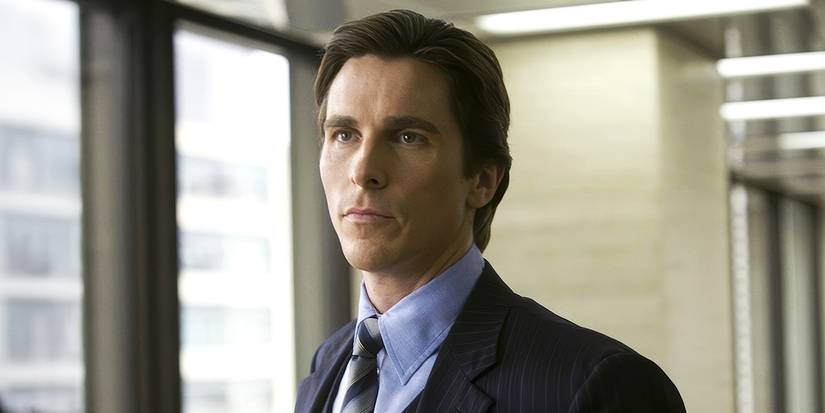 Image via Warner Bros.
The story begins with Gotham already relying on Batman. Yet, that dependence creates new pressure instead of relief. Bruce Wayne (Christian Bale) wants to believe his work has an endpoint, especially as Harvey Dent (Aaron Eckhart) emerges as a public figure who can challenge crime through the law. That hope feels fragile from the start, because the city’s systems are already stretched thin. Batman’s presence raises the stakes.
When the Joker (Heath Ledger) enters the story, he does not chase control in a traditional sense. He tests people instead. His actions force characters to make choices in moments where there is no clean outcome. Rachel Dawes (Maggie Gyllenhaal) becomes part of that pressure, as personal loss and public responsibility collide without warning. By the end, Batman accepts a role that isolates him further, because someone has to carry the cost of those choices. That willingness to absorb damage without reassurance is what keeps the film resonant years later.




 English (US) ·