
 12 hours ago
10
12 hours ago
10
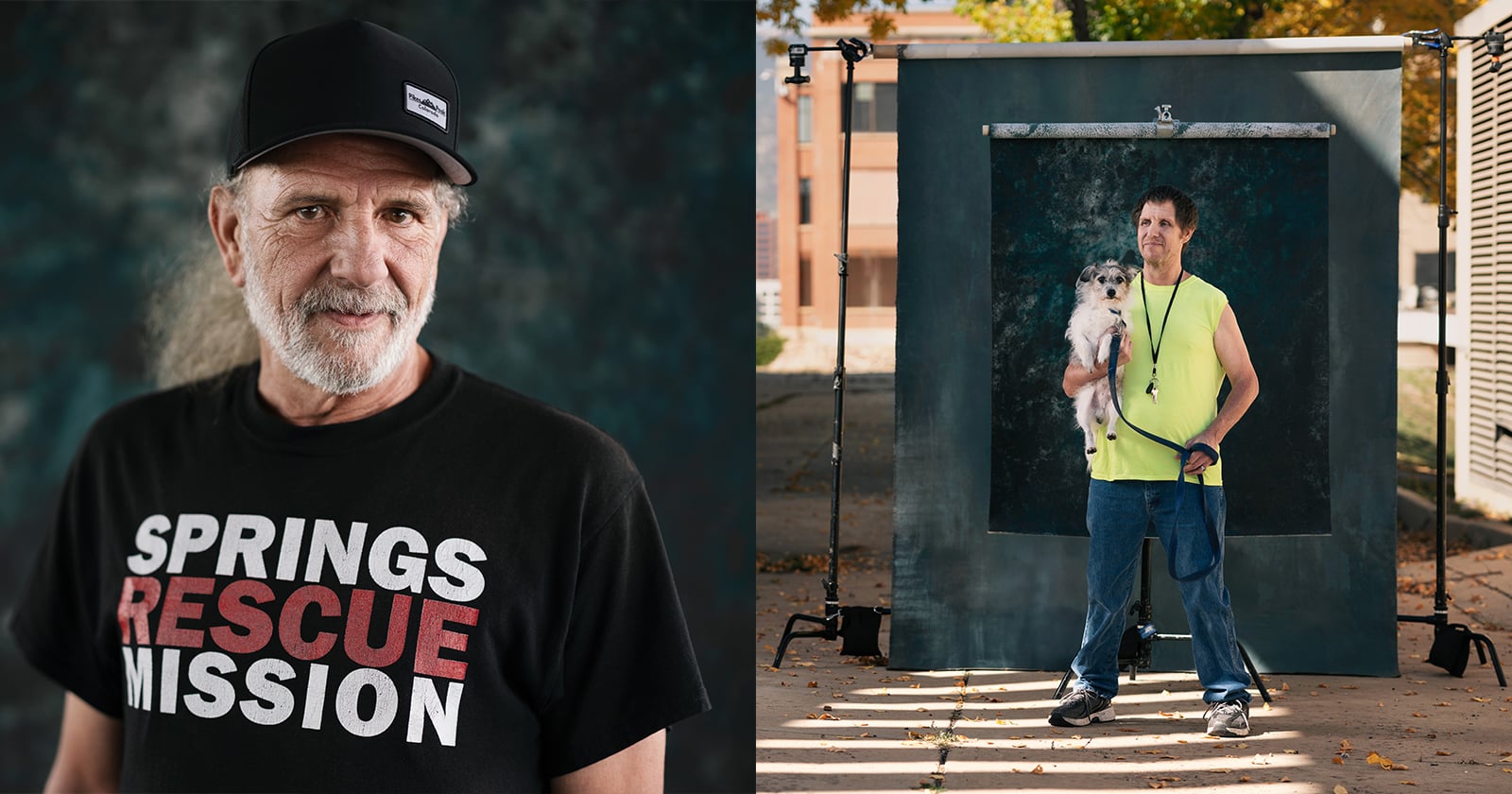
Most people dread receiving their monthly electric bill. For a Colorado Springs man named Thomas, however, receiving his first utility statement in his own name was cause for celebration. After six years living in a tent on the streets, Thomas now has an apartment, a job, and a piece of mail worth framing. Through a decade of work with Springs Rescue Mission, Thomas’ is just one of the many stories of transformation that photographer Aaron Anderson has documented in an ongoing project capturing hope and recovery.
Full disclosure: This article was brought to you by Tether Tools.
Tether Tools, whose gear Anderson relies on for his tethered workflow, saw the mission behind Anderson’s project and stepped in to help make it happen. The company provided the gear support needed for the on-location shoots and has used their social media accounts to share the stories of Anderson and Thomas with the photography community.
“That bill is proof Thomas exists in the system again,” Anderson says. “He has an address. His name is on something official. It represents independence, identity, and a life rebuilt from nothing.”
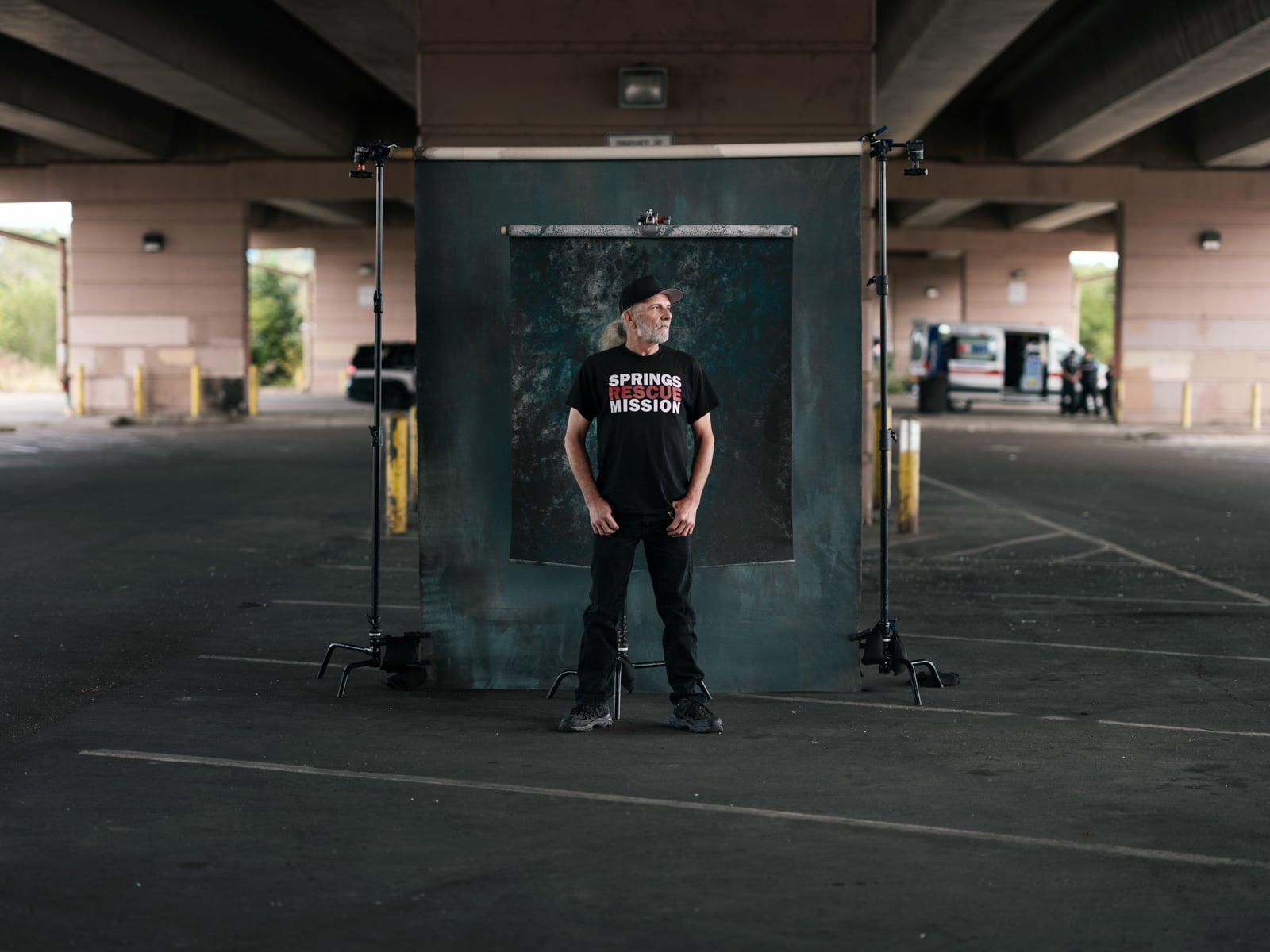
As a commercial photographer, Anderson was eager to tell that story visually. “I had Thomas stand before a painted backdrop that I had positioned under an overpass he once walked through daily when he was homeless,” he explains. “The separation between him and the environment is intentional. It’s a way of showing someone pulling themselves away from hard circumstances and into something new. I didn’t want to just capture a portrait. I wanted to capture Thomas’ transformation.”
From 24 Jobs to One Calling
Anderson’s path to photography was anything but conventional. Before picking up a camera in his late 20s, he cycled through over 20 different jobs: car washes, fast food, scuba diving instructor. He recalls that the common thread was always people.
“Every job I’ve ever had, I was really just looking for a way to spend time with people and get paid for it,” Anderson recalls. “Photography wound up being the perfect career for my passions and personality. I sit down with subjects for hours before we ever take a picture. I love hearing their story, and trying to honor it through my photos.”
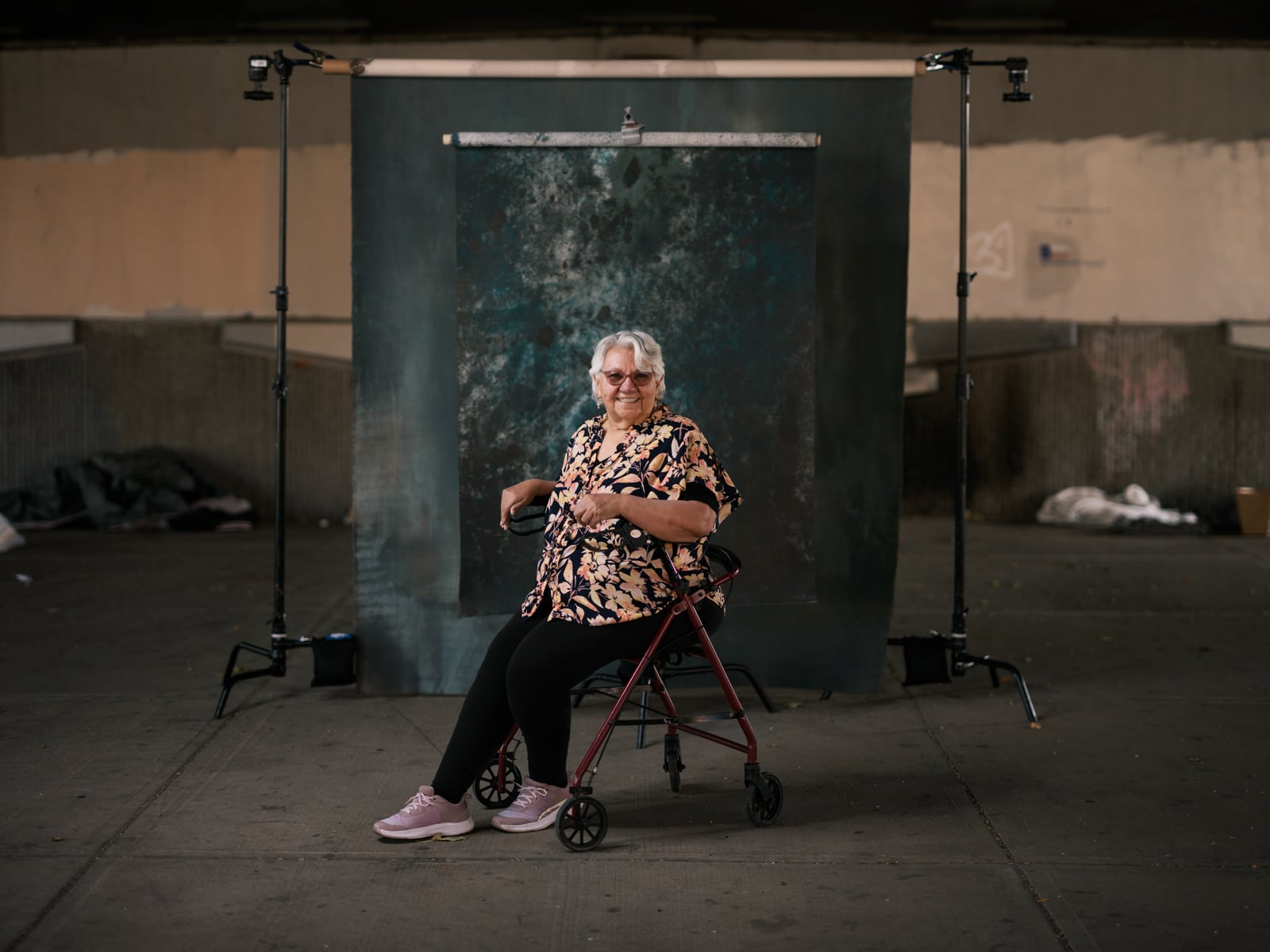
Over his 12-year freelance career, Anderson has worked with companies like Sony PlayStation, Monster Energy, Sports Research, and Bosch, but passion projects like Springs Rescue Mission carry a deeper weight. Anderson comes from a family that has lived through addiction firsthand.
“My dad dealt with addiction for most of his life, though he’s been sober for a long time now,” Anderson shares. “I watched one of my uncles recover from heroin at our property. So when I photograph people coming out of addiction and homelessness, it’s personal. I’ve seen what these situations can do to families, and I have also seen the pride that comes with recovery.”
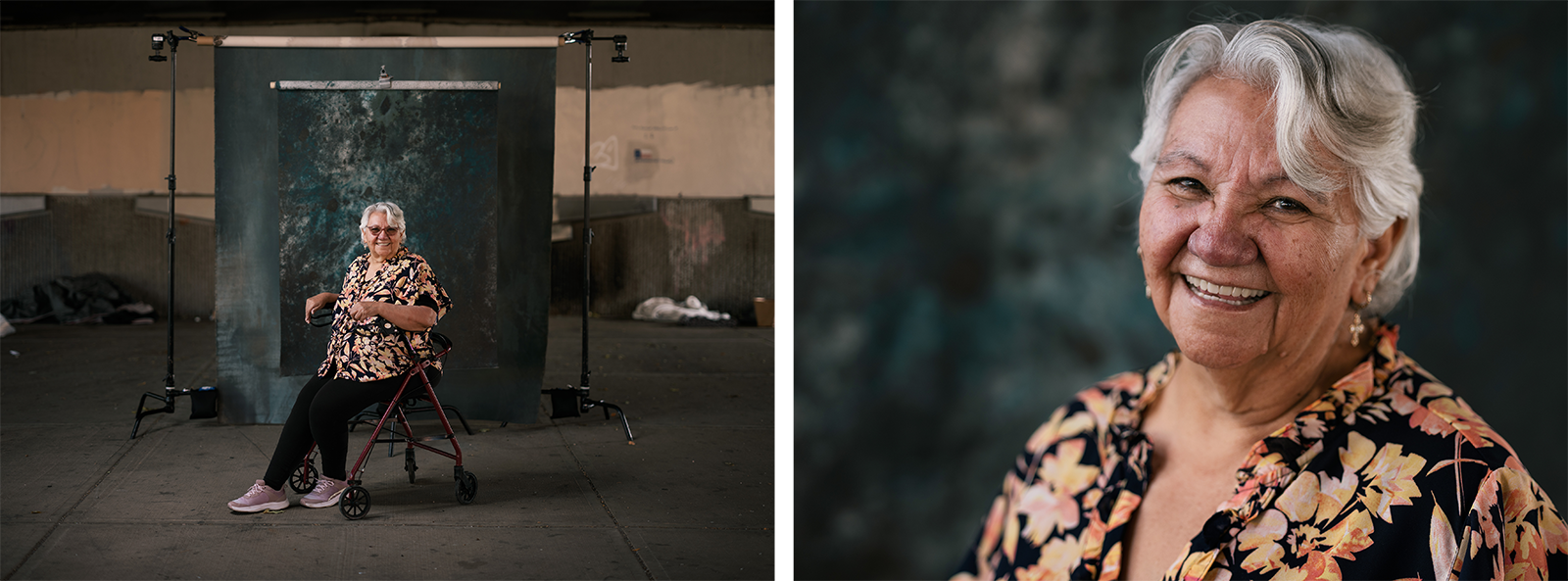
For Anderson, it’s the personal connection that draws him back to passion projects in the middle of an often chaotic work schedule. “There’s a heroism in people’s stories that we don’t often get to see,” he notes. “So many inspiring stories just aren’t being told, but photography is a tool to change that.”
“A camera opens doors you’d never have access to otherwise,” Anderson reflects. “It allows you to walk into places, talk to people, and experience things most people never see. However, with that access comes responsibility. It’s not really about the photography itself. It’s about turning those stories into something other people can experience and learn from.”
Periphery: Humanizing the Invisible
This isn’t Anderson’s first time working with Springs Rescue Mission. In 2016, he launched a project called Periphery, photographing people who were in the middle of experiencing homelessness. “The goal was humanization,” Anderson says. “I set up a simple studio at the Mission with a single light and backdrop. I spent about 30 minutes with each subject, the first 25 of which were just us talking over coffee and snacks. After I learned their stories and they felt comfortable, they would spend only roughly five minutes in front of the camera. I knew that, any more time than that, the discomfort of being the center of attention might creep in, so I learned that the 25 minutes of casual chat was critical to capturing their stories in a photograph.”
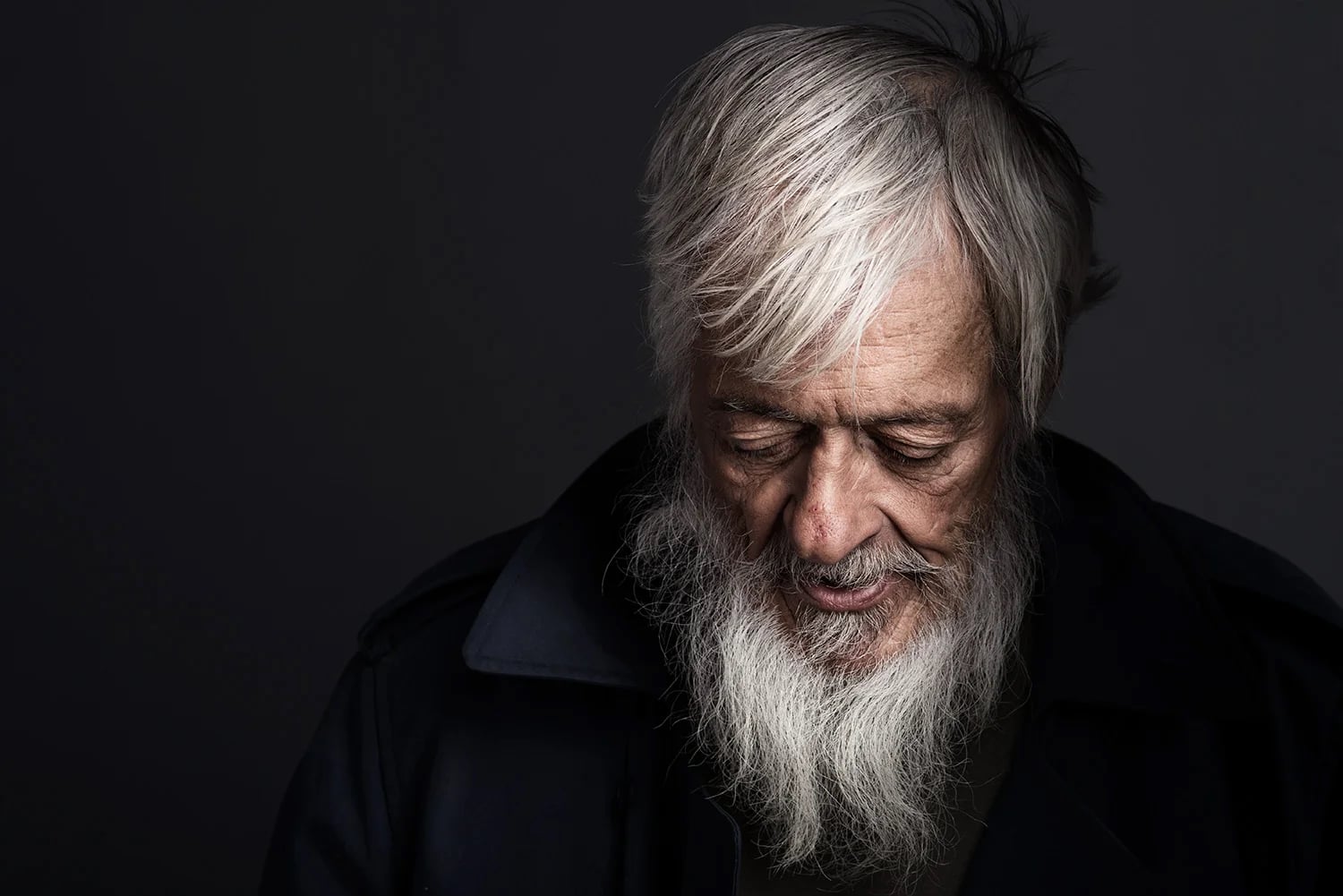
The resulting portraits were printed at 4-by-6 feet and displayed in a three-month exhibition at the Colorado Springs Fine Arts Center. A decade later, those images still appear on billboards across the city.
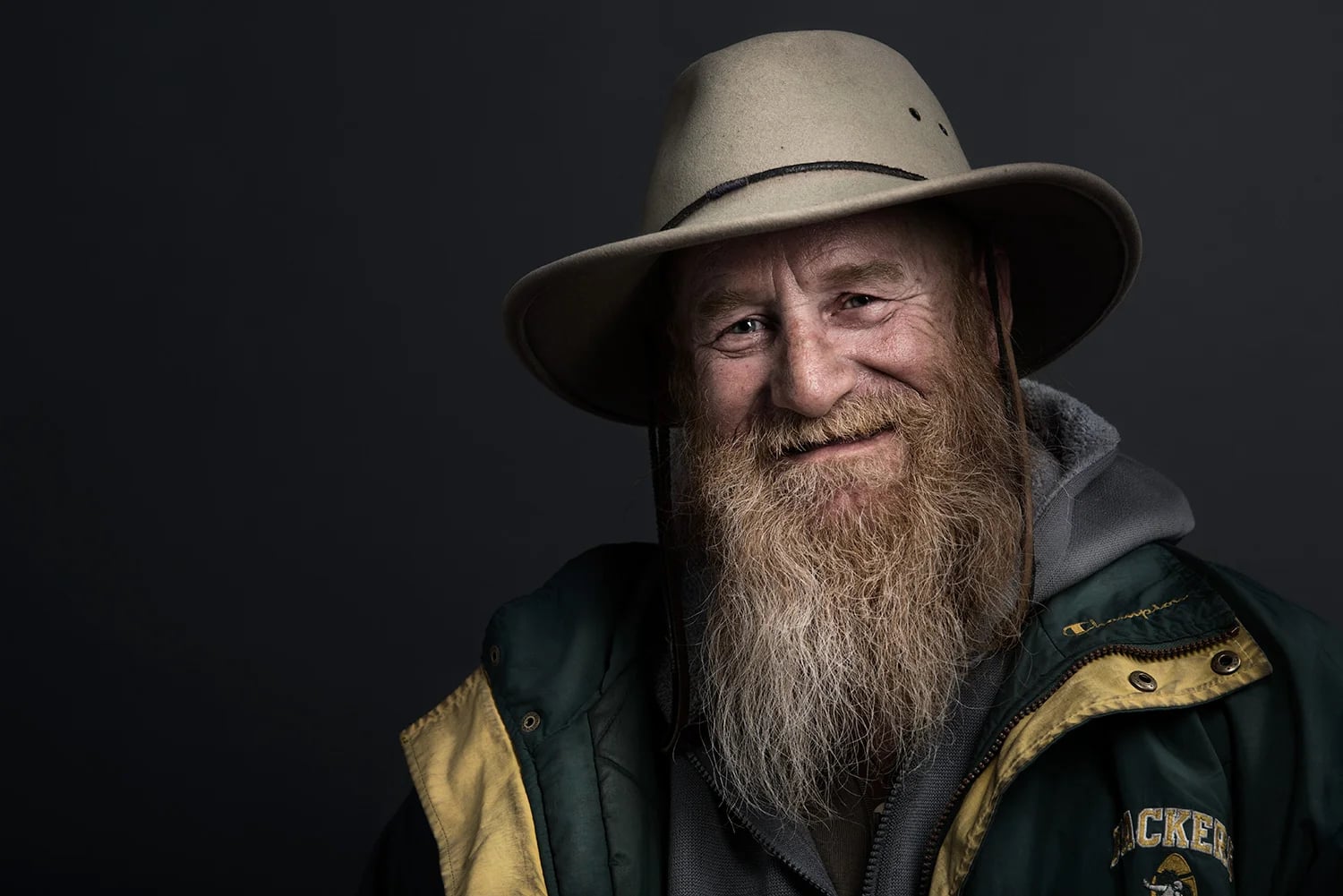
“I was tired of seeing the same images: soup kitchens, people on the street,” Anderson recalls. “I wanted to create portraits that made people stop and notice. I wanted my subjects to feel like human beings, not just another face in the soup kitchen. Not someone you can look away from. A face. A person.”
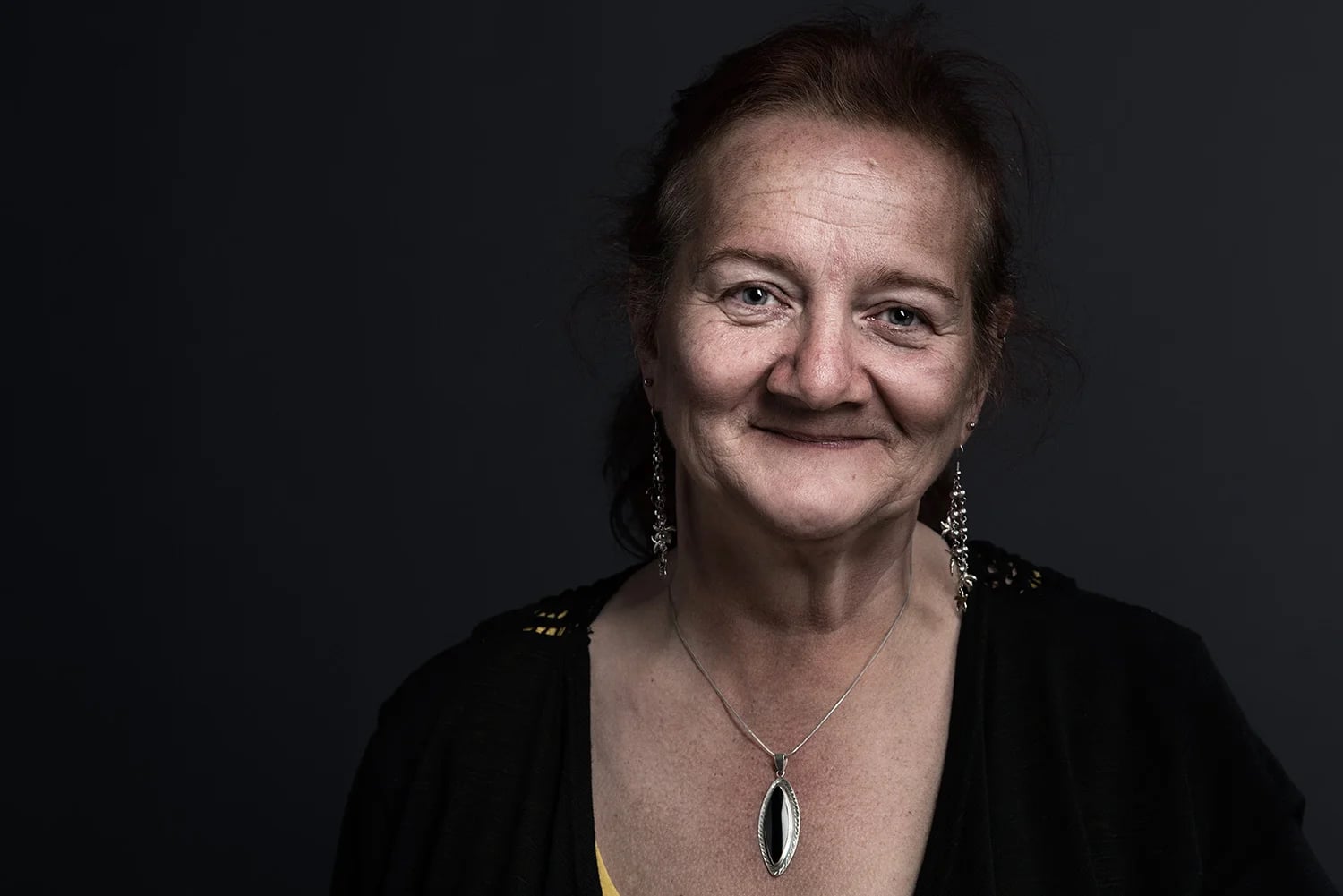
But while Periphery focused on humanizing people in the midst of homelessness, Anderson’s new project tells a different story. “The subjects aren’t currently on the streets,” he states. “They’ve completed Springs Rescue Mission’s year-long Addiction Recovery Services program. They have housing and jobs. They’re rebuilding relationships. The theme isn’t humanization. It’s hope and perseverance.”
Photographing Transformation
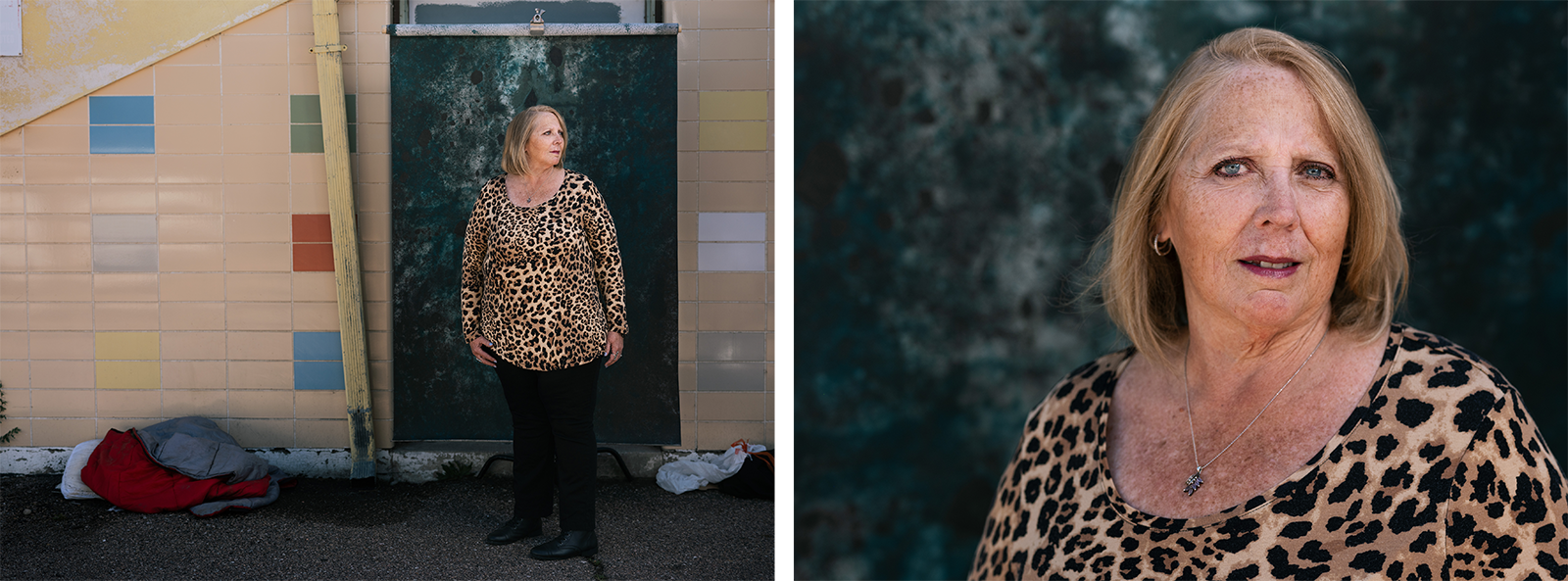
For the new project, Anderson and the Springs Rescue Mission team shot at six locations across Colorado Springs, such as highway underpasses, abandoned lots, and areas frequented by the homeless community. “These weren’t random backdrops,” Anderson emphasizes. “They were places my subjects knew intimately.”
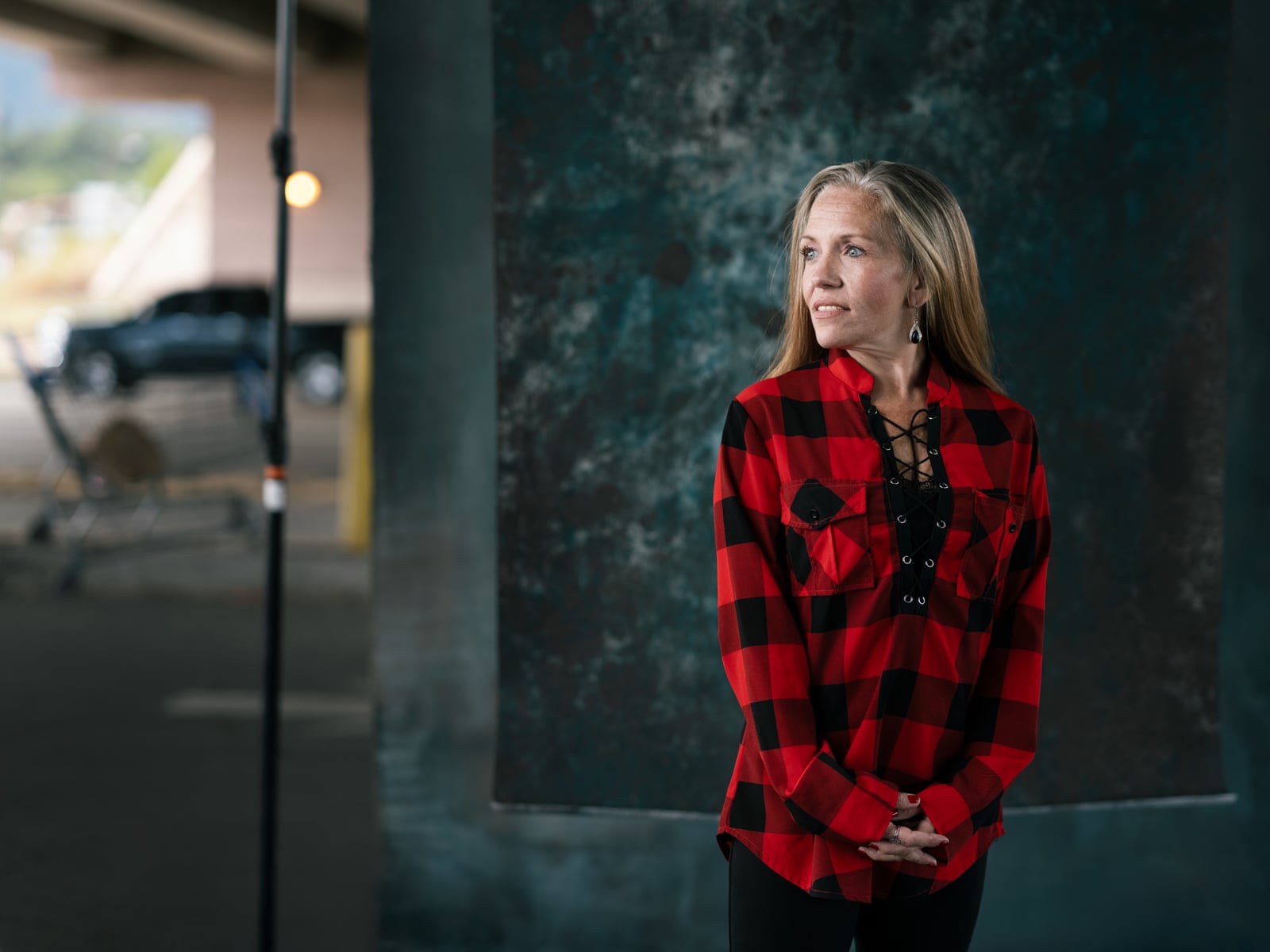
“We also wanted locations that people from Colorado Springs might recognize, so they could see that these weren’t just stock images, but rather, their actual neighbors,” Anderson continues. “But more importantly, I wanted places where my subjects have actually slept or spent time while they were experiencing homelessness. The idea was to show where they were then to contrast where they are now.”
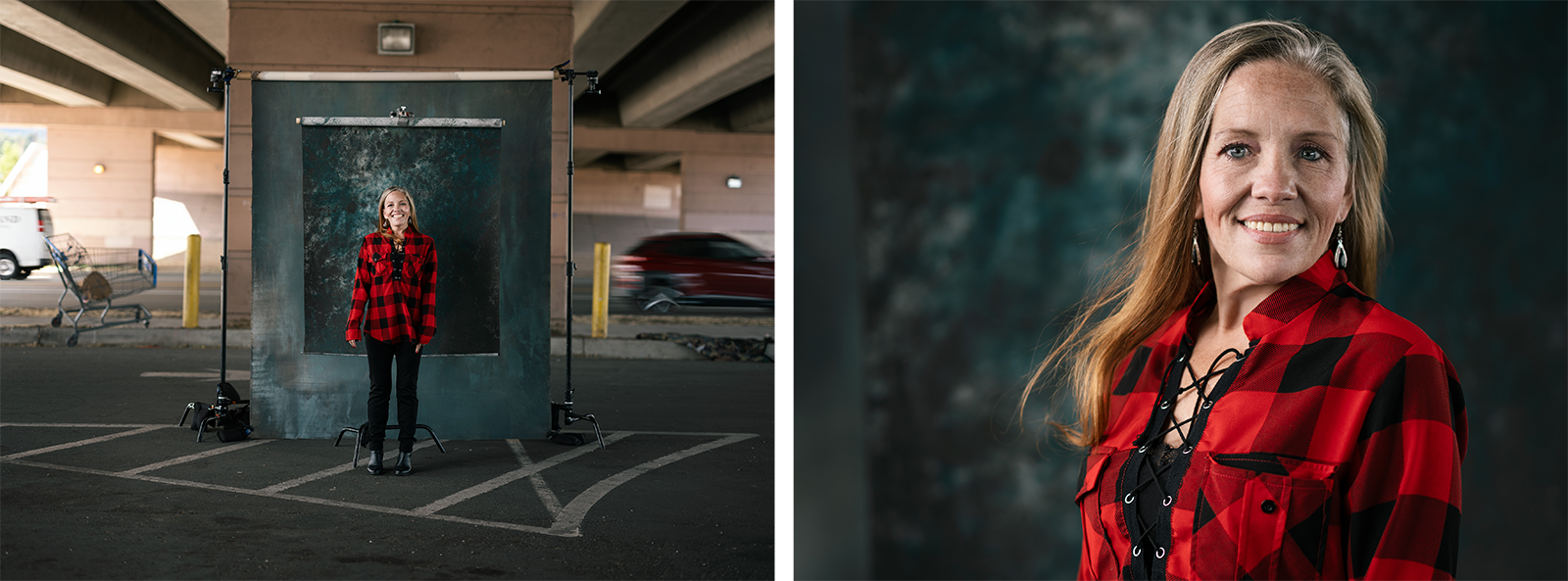
“My visual approach built on that foundation,” Anderson explains. “At each location, I set up painted backdrops from Gravity Backdrops, positioning my subjects in front of them while the environment remained visible around the edges. The effect creates a deliberate separation between subject and setting. I felt this told their story in just one frame, which is always a challenge. The backdrop represents where they’re going. The location behind it represents where they were. It’s a visual way of saying ‘this person has overcome hardship and moved beyond this place.’”
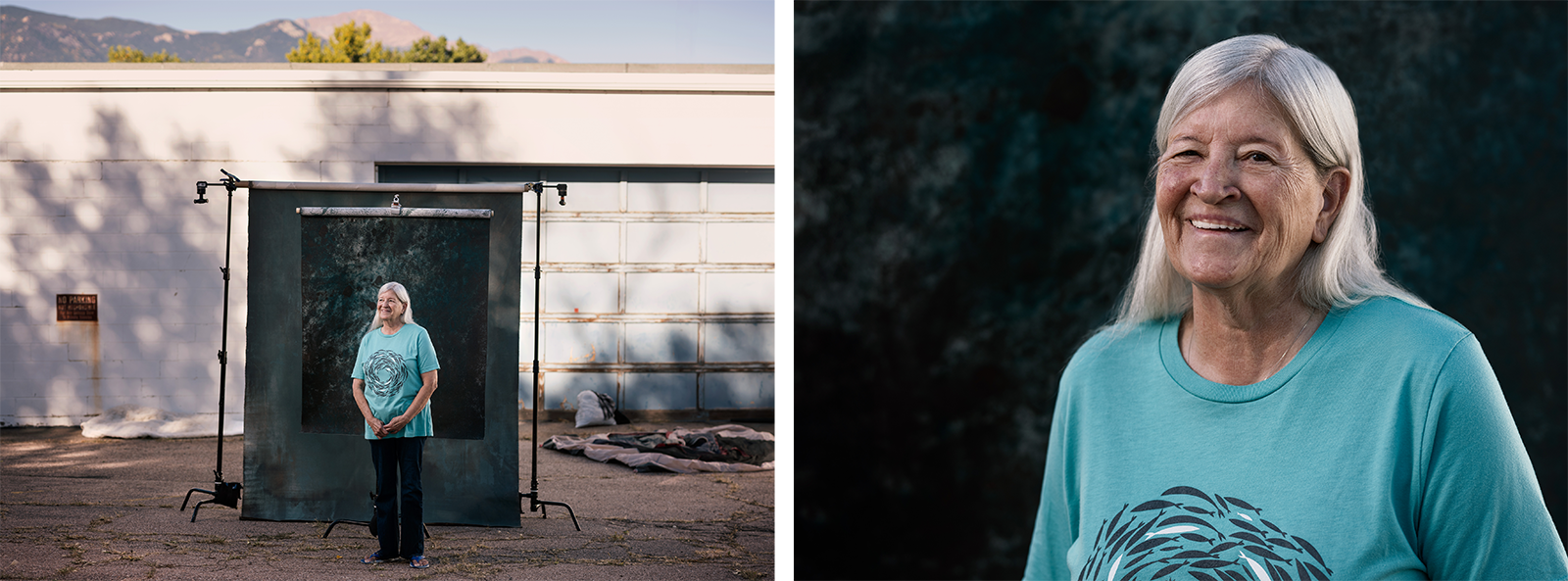
“It’s easy to look at these portraits and see a normal person. But they’ve been through hell and come out the other side. They’re recovering what they lost: family who’d written them off, financial and housing stability they might not have ever known. And now they’re actively trying to spread that hope to others.”
Lives Rebuilt
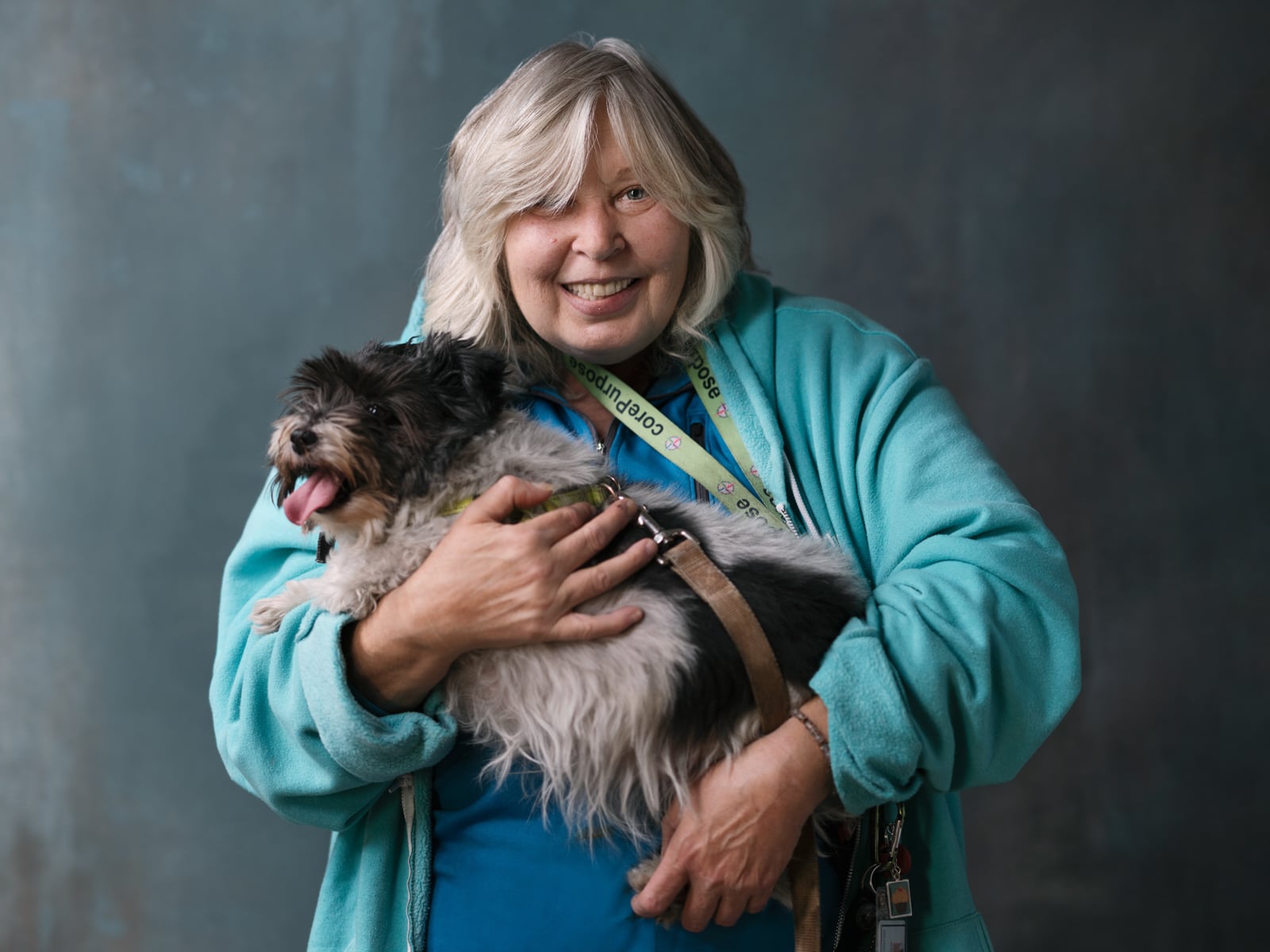
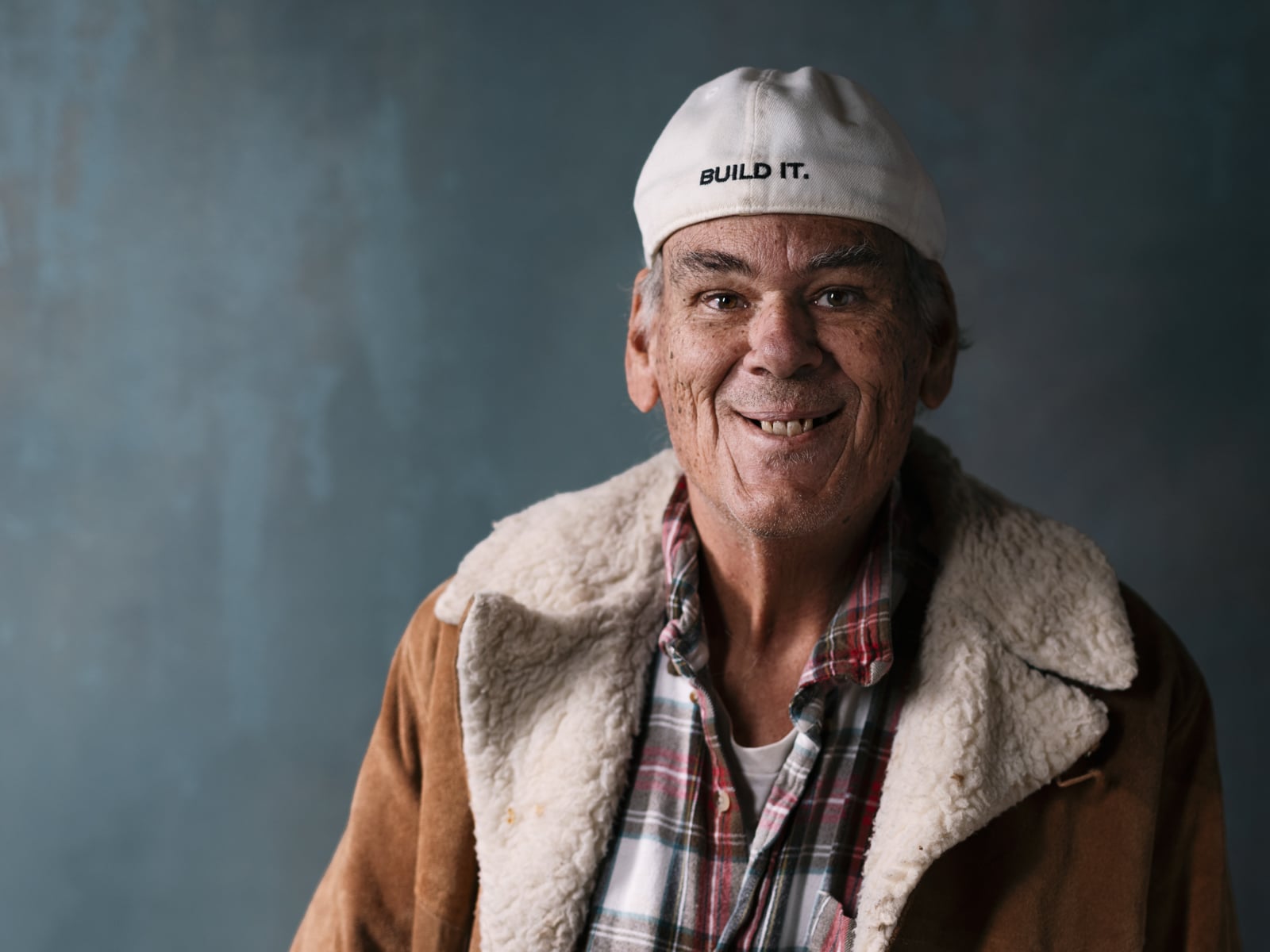
Each portrait in Anderson’s project carries a story of transformation. “Thomas, who was proud of receiving his first electric bill, now works at Springs Rescue Mission, the place that helped him rebuild his life, assisting others in navigating the same journey he was on,” he says.
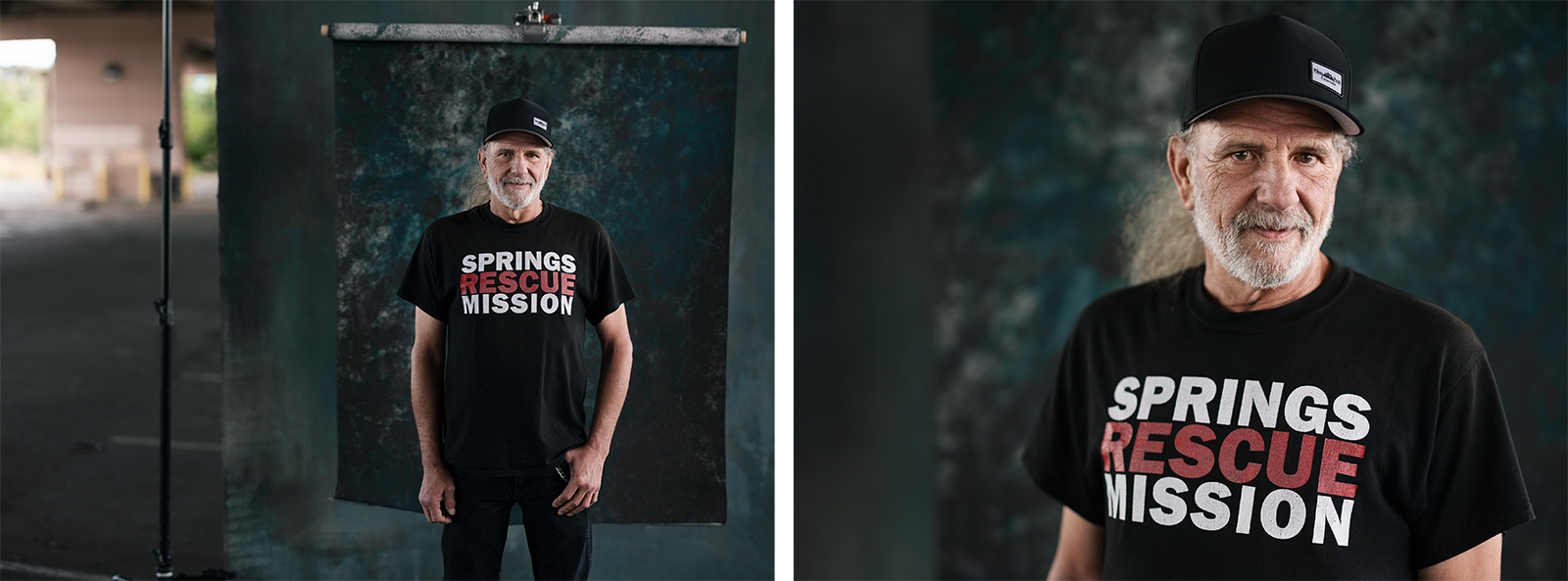
“Thomas’s story hit me hard,” Anderson shares. “He told me he believes he ended up at the Mission for a reason. He could see his arrival at the Mission as fate, but he chooses to see it as purpose. That’s why he stayed to work there: he wanted to help others find what he found.”
Many of the program graduates have returned to work at the Mission, and Anderson sees their impact as uniquely powerful. “Their ability to effectively help others in these situations is stronger because they’ve been there,” he notes. “They can step into someone’s life and offer hope from lived experience. No training can replicate that.”
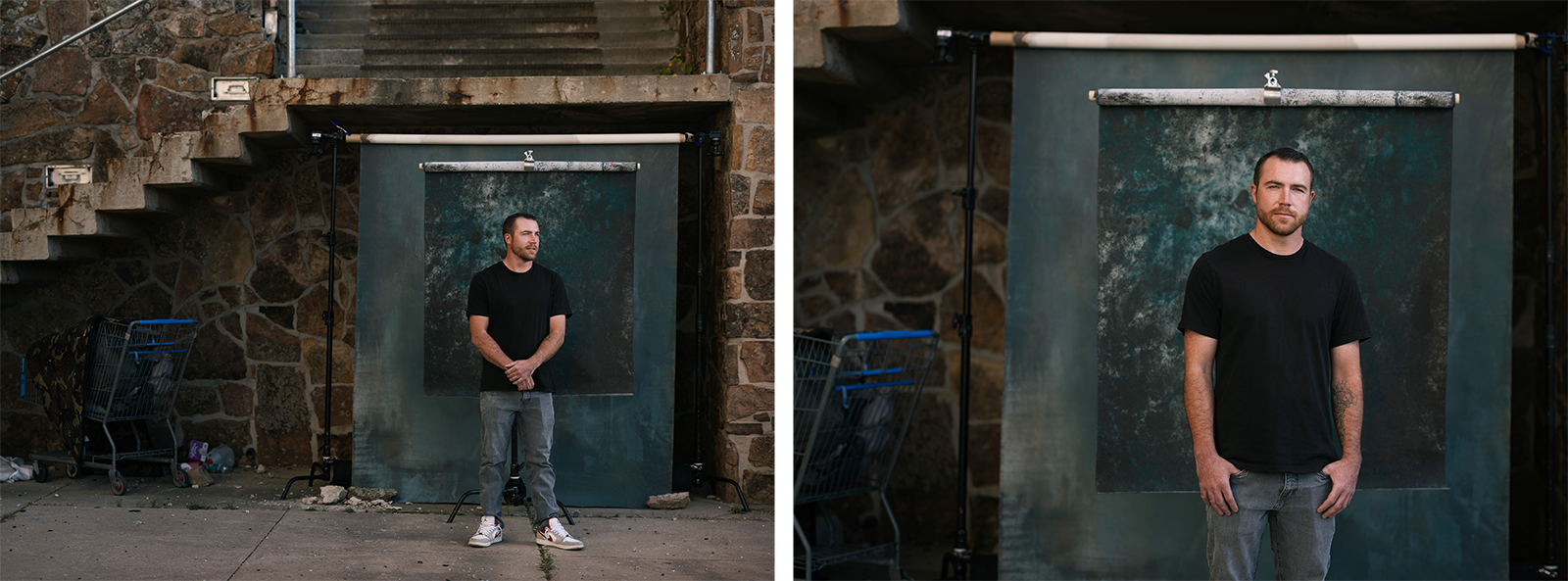
Before entering the program, Cody’s life was spiraling out of control. He’d lost custody of his son to Child Protective Services, been in and out of jail, and overdosed on heroin more times than he could count. “After completing the Mission’s HOPE Program, Cody’s life began to change for the better,” Anderson says.
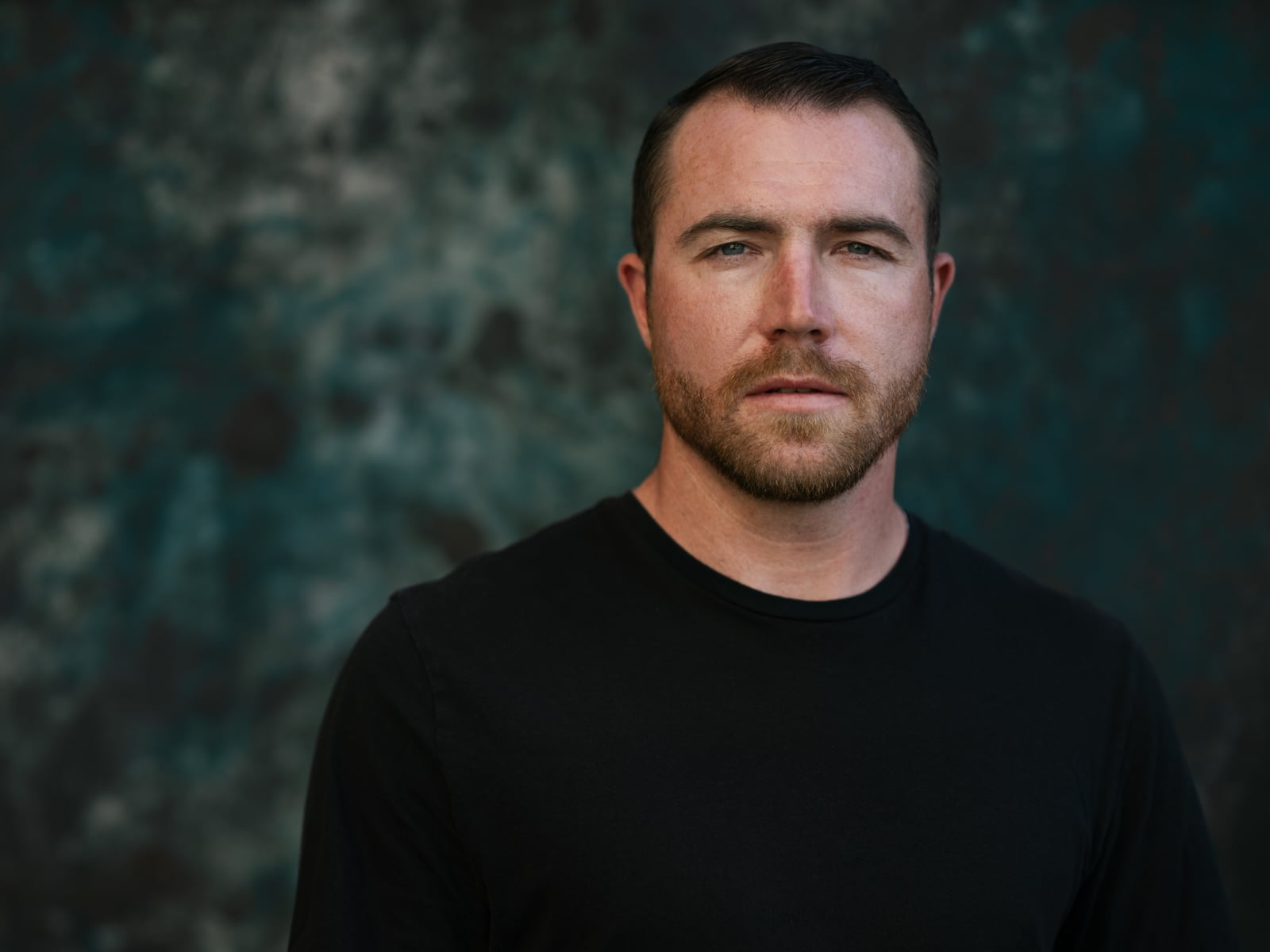
“As a dad myself, Cody’s story hit me differently,” he adds. “He got sober, moved up at his job, and got his son back. I think one thing people on the outside don’t think about is how many other lives are affected by a person’s homelessness. Cody didn’t just change his own life. He’s giving his son a father again. He broke the cycle.”
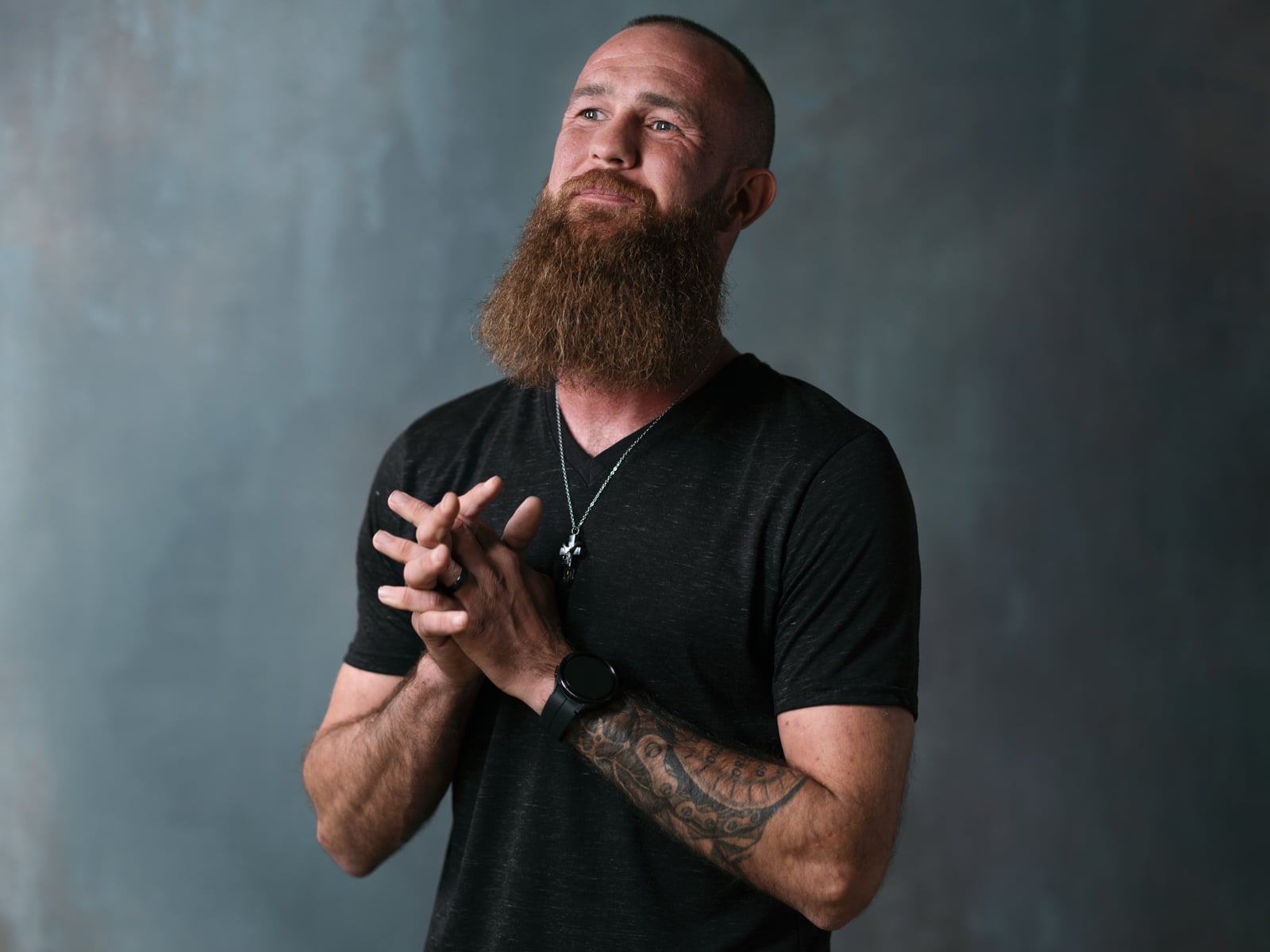
“Another man, Nick, got married to someone else from the program,” Anderson recalls. “They met at the Mission, went through recovery together, and now they’re building a life together. That’s what hope looks like and what I wanted to try to convey with my portraits.”
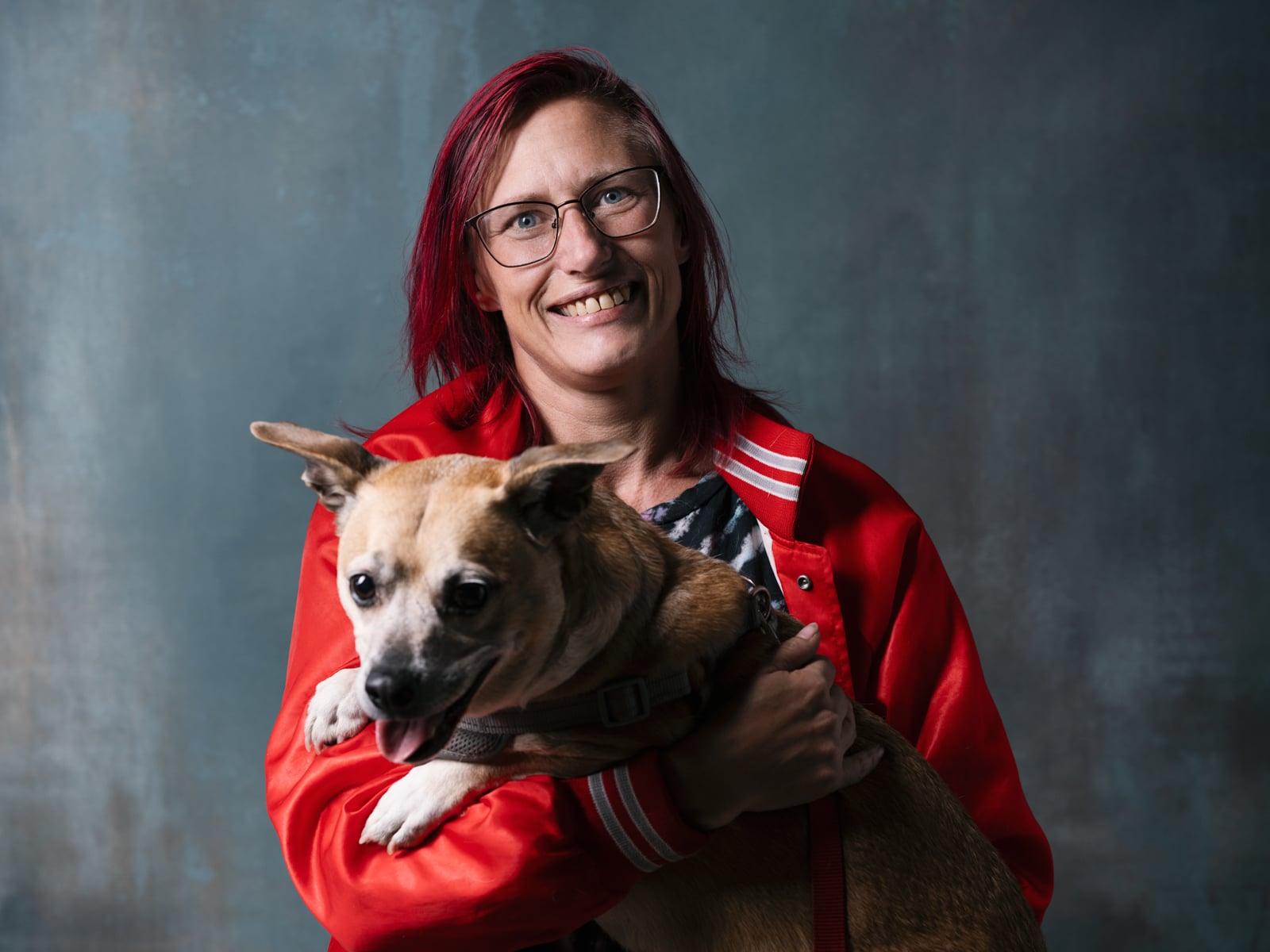
Several subjects brought their dogs to the portrait sessions. Springs Rescue Mission is one of the few shelters in the region with kennels, allowing people to keep their companions while receiving help.
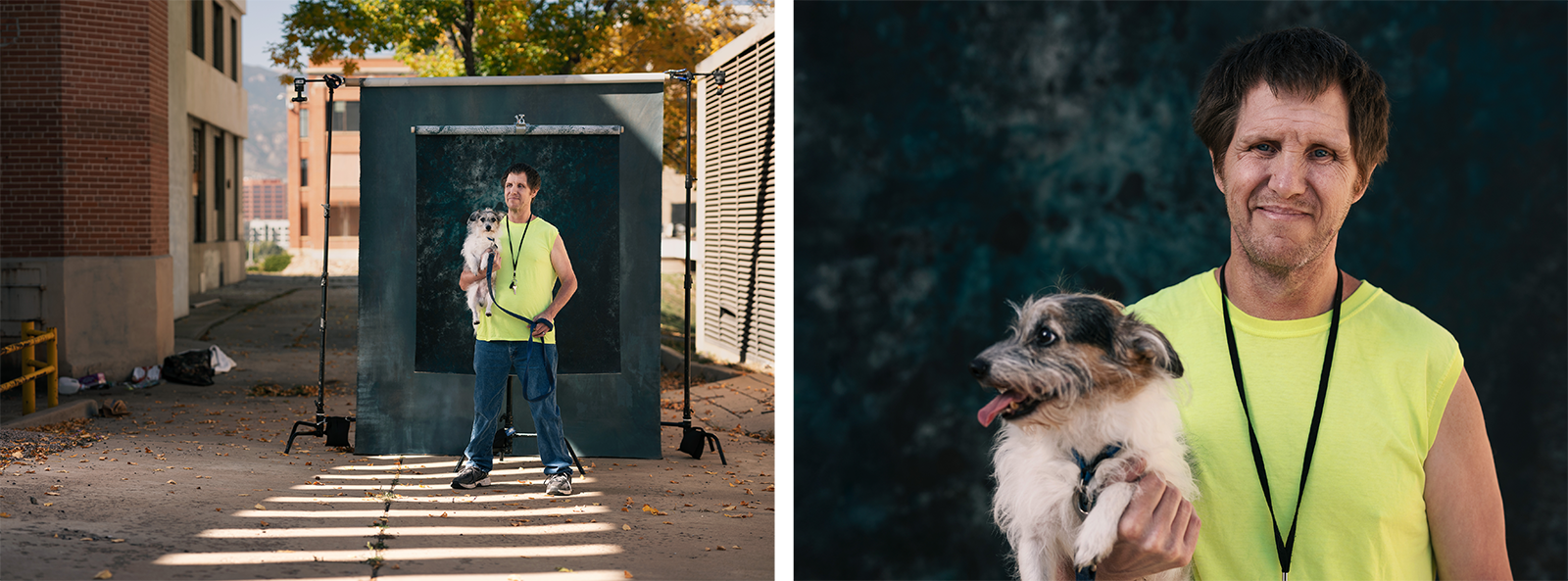
“Those dogs provided protection on the streets,” Anderson observes. “But more than that, they provided love and companionship. When you’re alone and afraid, having a companion, even a four-legged one, helps to keep you going. The Mission understands that connection is critical to people experiencing homelessness. They don’t make people choose between getting help and their dog, and that has helped many people come out stronger on the other side.”
Shooting Across Six Locations
“These stories deserved a professional setup, not a quick snapshot,” Anderson explains. “That meant hauling a full studio setup to six locations across the city. Every location’s setup had multiple lights, C-stands for backgrounds, backdrops, my computer, camera, and props. And since I only had two days to photograph this project, that meant covering three locations across the city each day.”
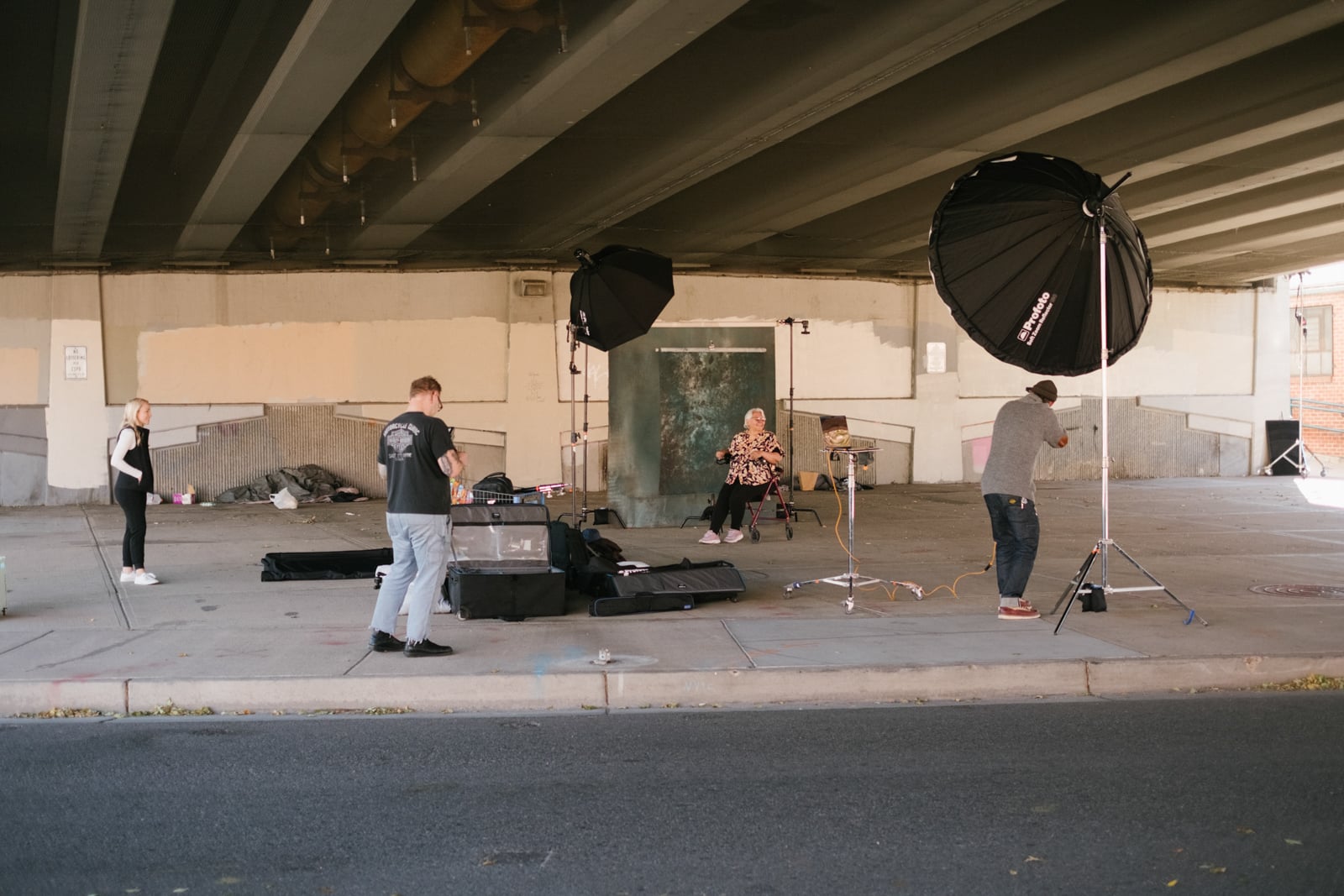
Anderson’s team was small by design: three or four people total, all hauling sandbags, lights, and C-stands through areas that demanded efficiency.
“We needed a small footprint,” Anderson stresses. “We were working in high-traffic areas and underpasses. We had to set up fast, shoot, and break down rapidly to stay out of the way and avoid cars driving by.”
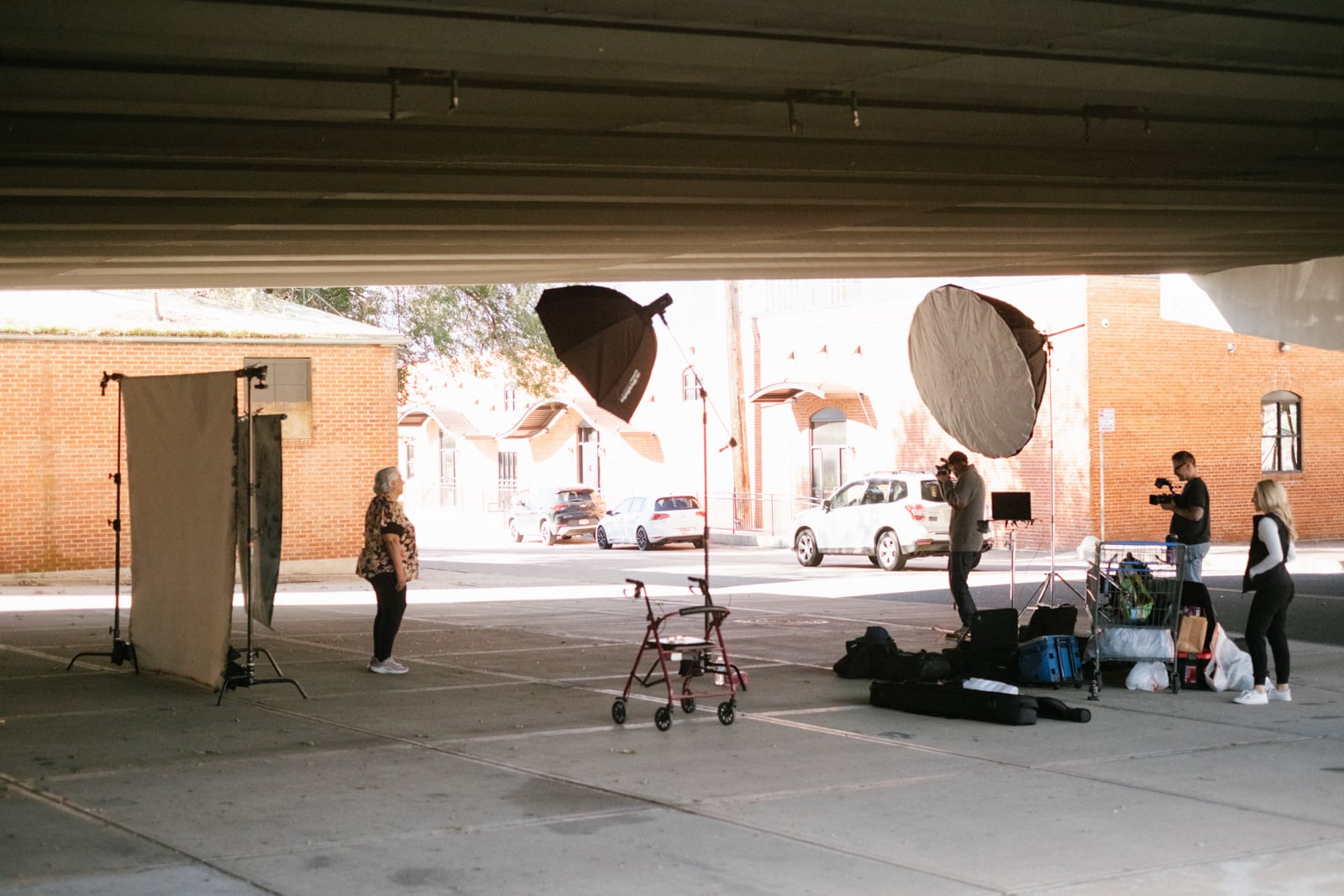
“Under those overpasses, I could feel the traffic above me,” he adds. “Trucks shake the ground, and the engine noise is deafening. It’s loud, it’s gritty, and it reminded me exactly why I chose these spots. This is where my subjects actually lived.”
Tethering to a laptop isn’t optional for Anderson. It’s how he works, regardless of the environment. “If there are three things I will never forget before I leave for a shoot, it’s my camera, my laptop, and a Tether Tools cable. And tethering was critical for this project, even though the locations didn’t make it easy.”
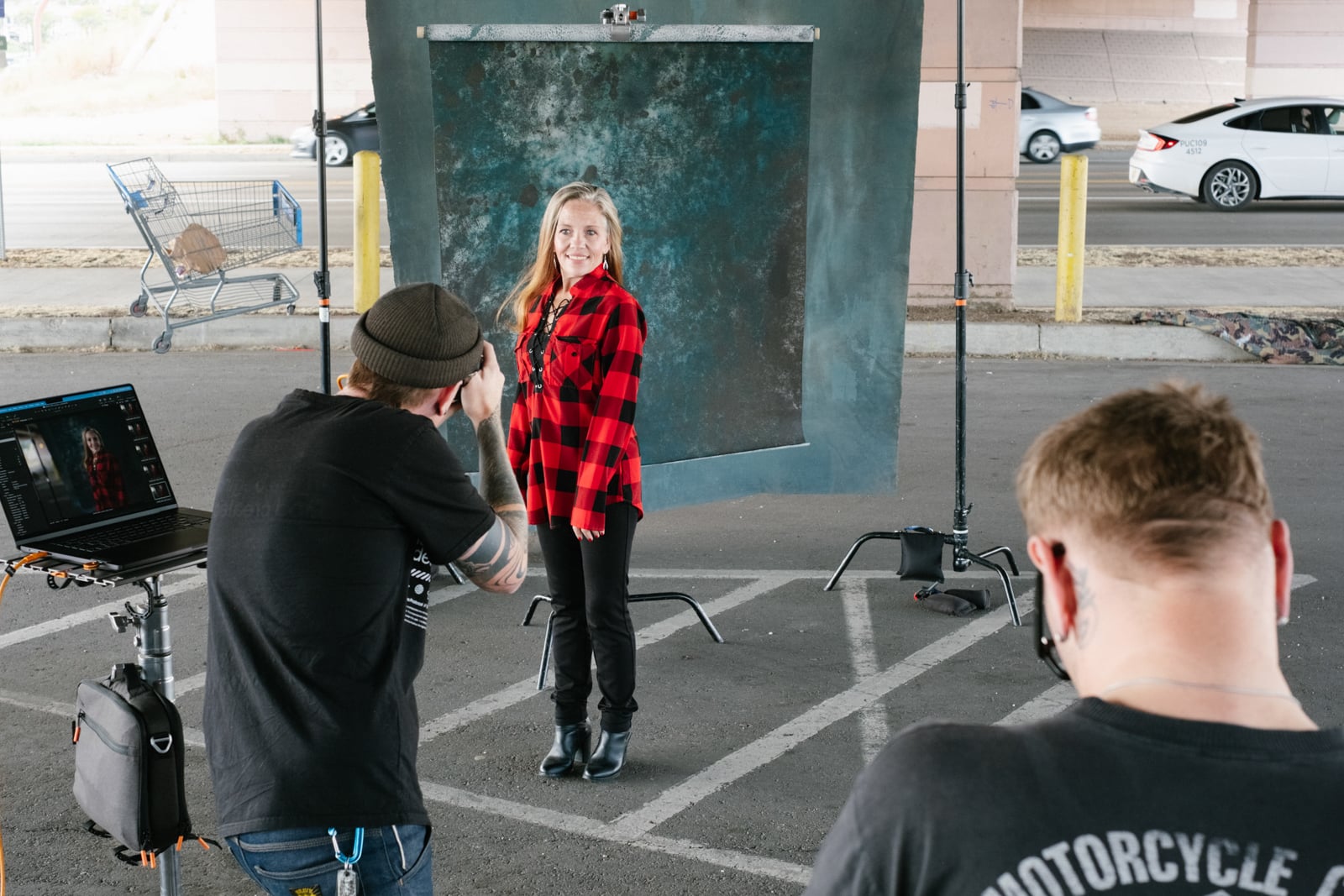
“I am not going to get to do this again,” he adds. “I have the opportunity to capture these images this one time, and that’s it. Relying on making sure shots are winners by looking only at the camera’s LCD screen is risky. I might think it’s in focus when it isn’t as sharp as I would want it. I might think the exposure is good because the LCD screen doesn’t display what the photo will look like online. But when I’m tethered, I can see the image clearly. I see it on screen in real time: lighting, color, sharpness, everything. I can be confident in the fact that I got the shot that I wanted.”
The backup redundancy matters just as much. “Having images on my card, on my computer, and on an external hard drive simultaneously is critical,” Anderson adds. “I get one shot at this. When I walk away, I need to know that my photos are safe.”
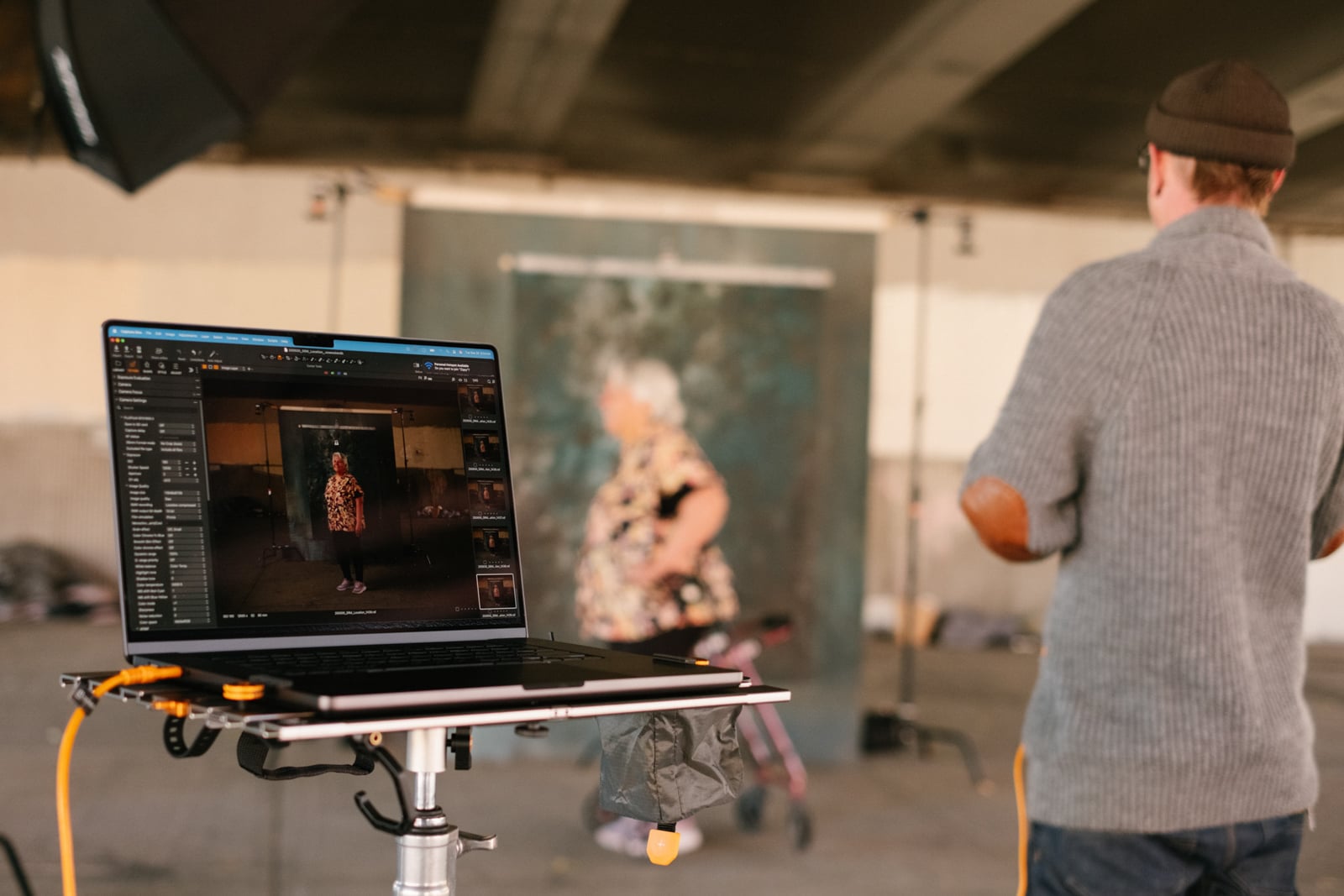
The challenge was maintaining that professional tethered workflow while constantly moving between locations with a skeleton crew. Anderson turned to the Tether Tools AeroTrac Workstation System, a portable laptop mounting platform designed for photographers who need maneuverability and can’t be tied to a desk or cart.
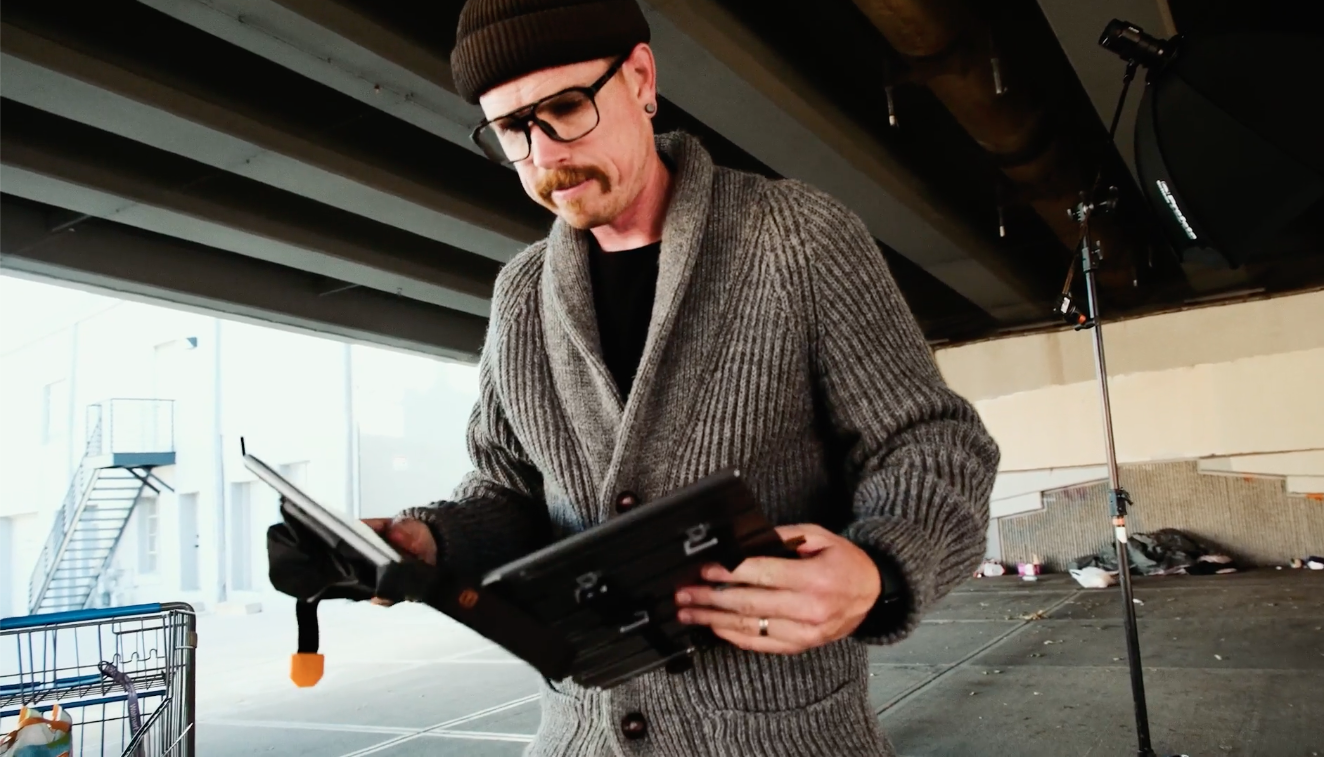
“When I’m packing up and moving three times a day, every piece of gear needs to earn its place,” Anderson says. “The AeroTrac weighs just over 3 pounds and folds down so I can easily carry it. When it’s ready to be set up, I can mount it on a roller stand, a lighting stand, even a C-stand if that’s all I have. It lets me keep my tethered workflow without adding bulk to an already gear-heavy shoot. It has become essential to my workflow, and I honestly can’t imagine being able to shoot as effectively as I did in these locations without it.”
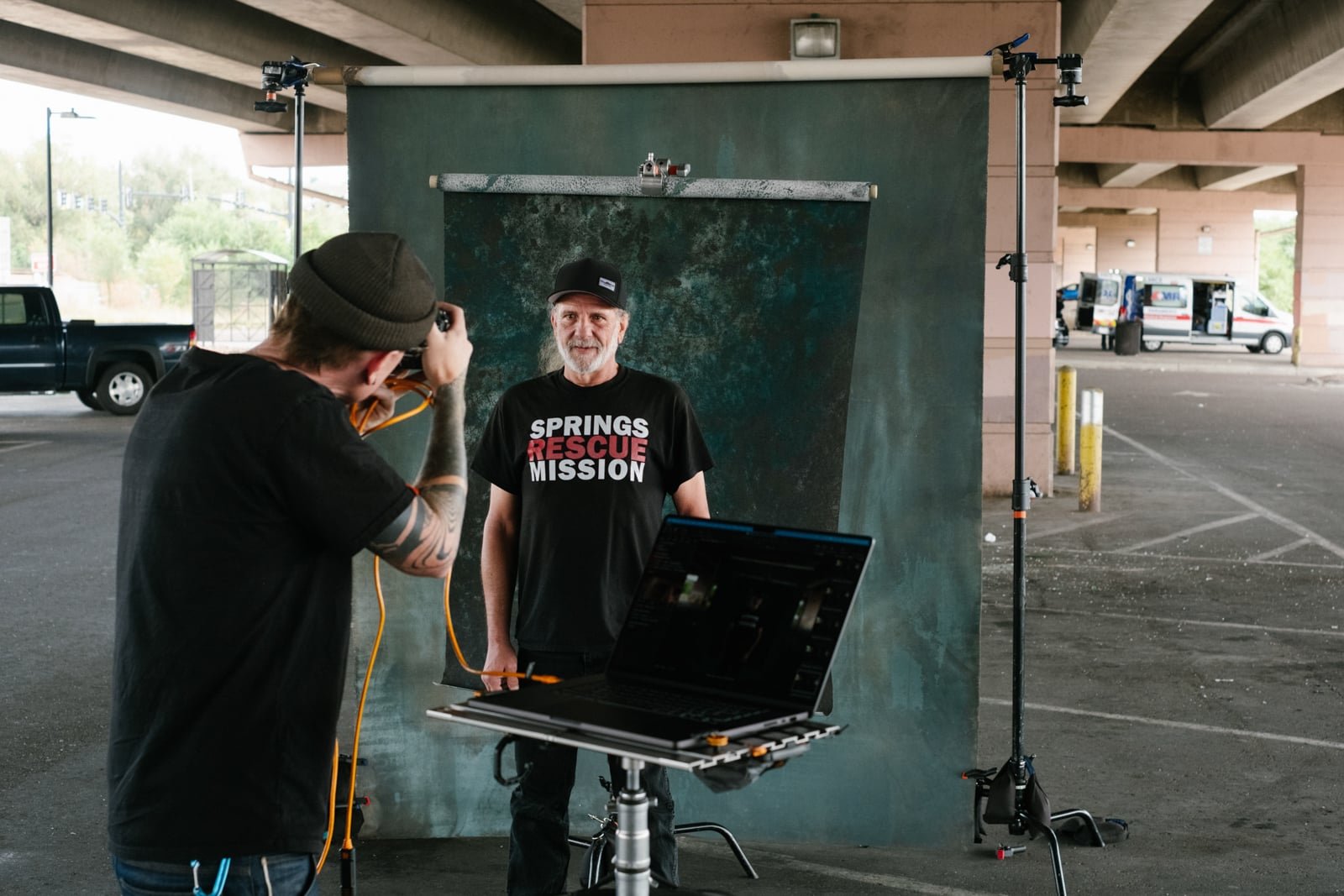
Anderson also found himself using the AeroTrac’s accessories more than he expected. “The little things became super handy,” he recalls. “The cup holder held my coffee in the morning and hard drives in the afternoon. There are magnetic clips and hooks for my tether cable. The bag that comes with it became extra storage. I was dropping lenses in there. I was shocked at how much usage I got out of such a small product and its accessories.”
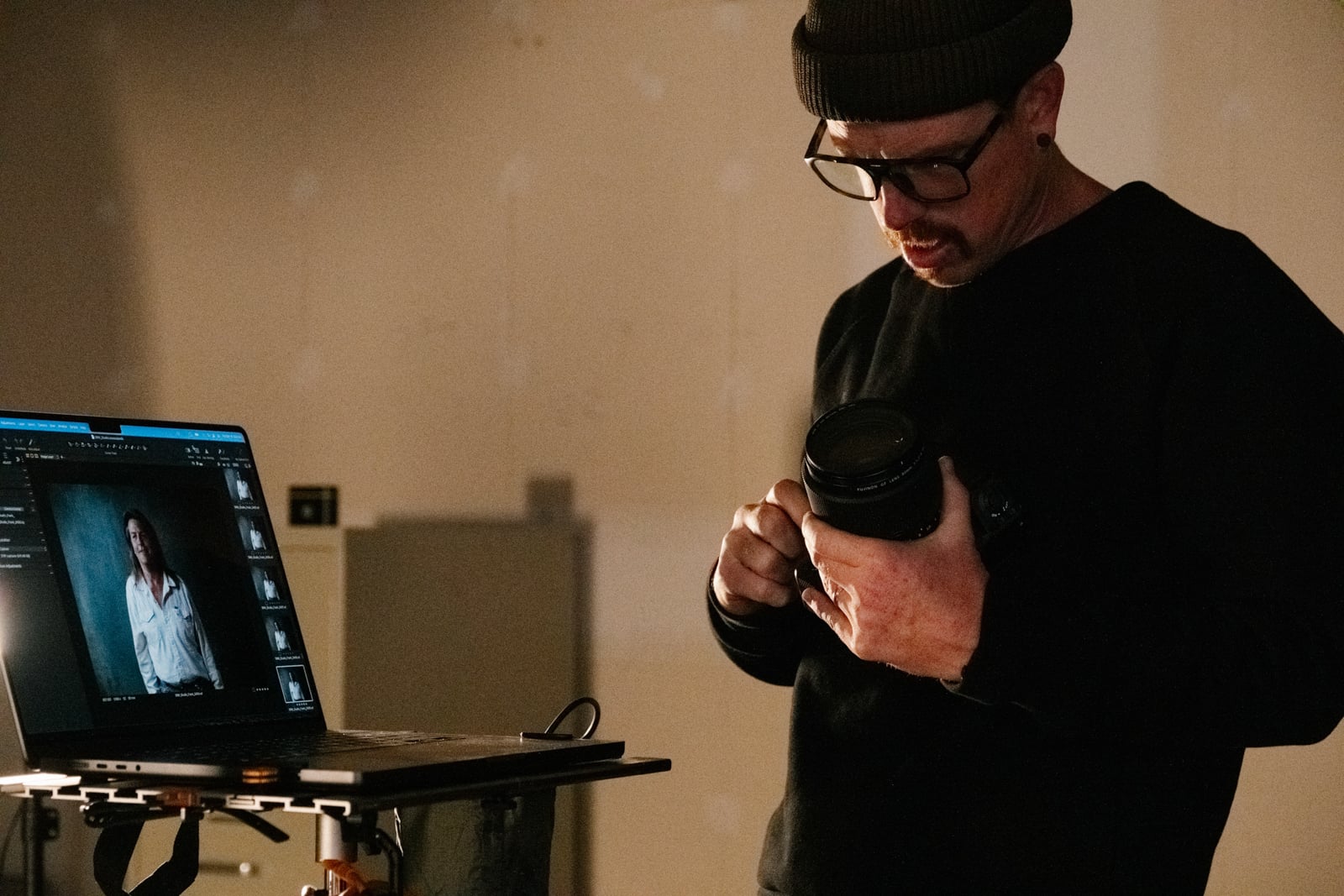
On a recent commercial project, Anderson tested the same setup in a different environment. “I had the AeroTrac on a roller stand, rolling around an industrial warehouse from location to location,” he says. “I’d roll it over into a corner, back up my files, and while those were transferring, I’d be across the room setting up lighting. Then I’d roll it back out and keep shooting while tethered. It stays out of the way until I need it.”
His approach to the AeroTrac Workstation System reflects a broader philosophy about gear.
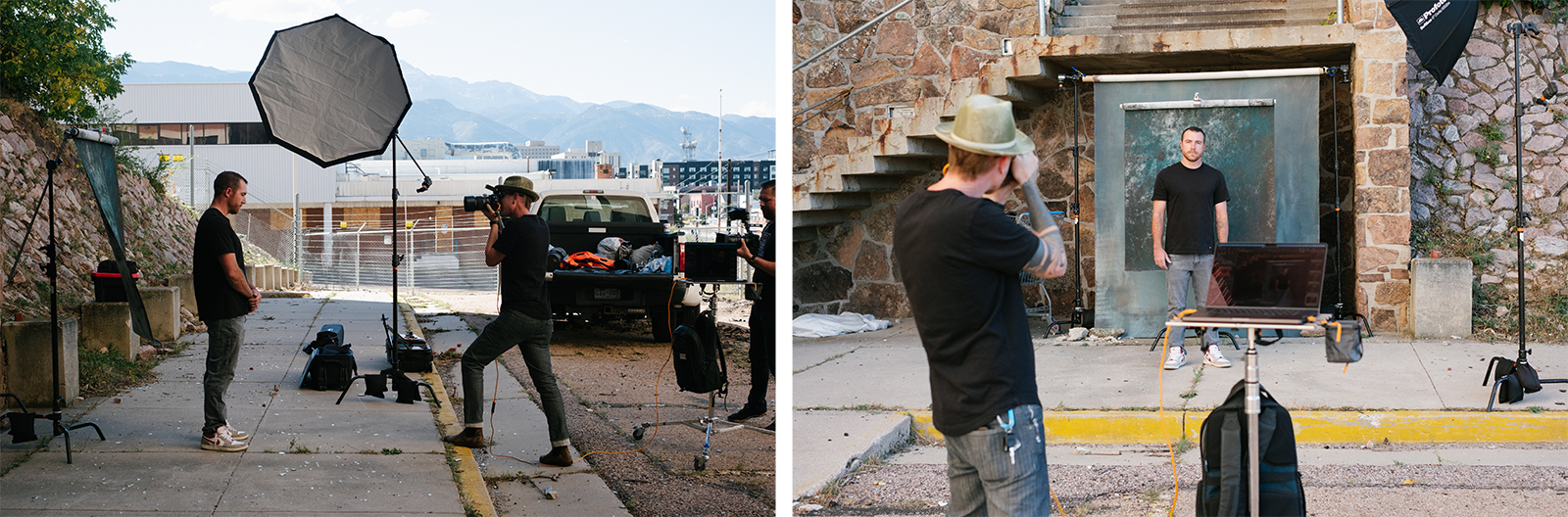
“I don’t ever want tools to be the focus of what I do,” he reflects. “My tools are there to help me create. If they’re doing that, they’re doing a good job. The AeroTrac falls into that category for me. It makes my workflow easier and more efficient, letting me use my energy to be creative.”
Connection Before Camera
“All the fancy gear in the world means nothing if the person in front of the camera doesn’t feel comfortable,” Anderson states. “I learned that lesson during the original Periphery project, and it shaped how I approach every portrait session since.”
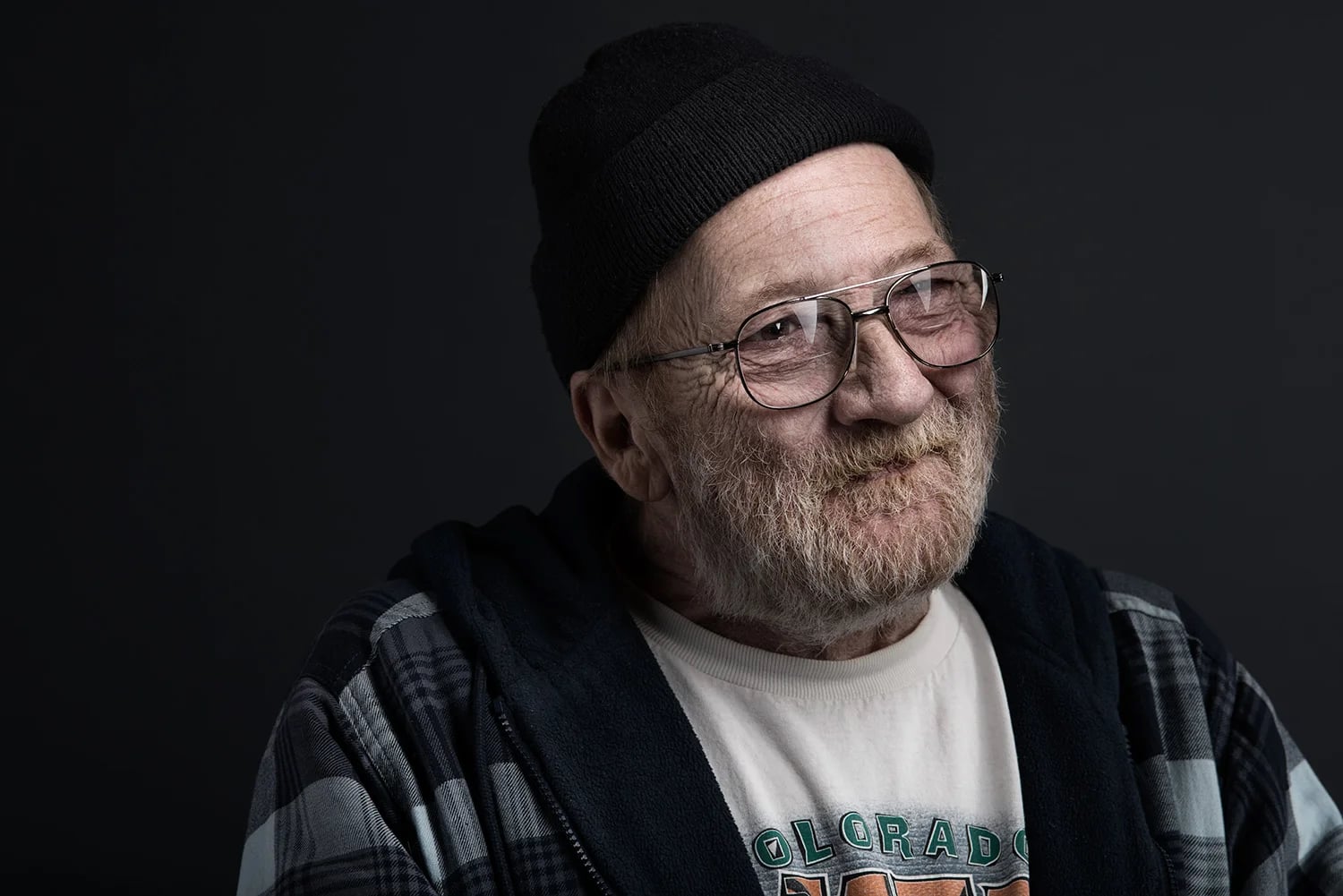
“A decade ago during that initial project, I realized quickly that I couldn’t photograph these subjects the way I photograph paid models in a commercial campaign,” Anderson recalls. “At first, when I looked through my viewfinder, they’d look away. It wasn’t engaging at all. So I stopped putting my face to the camera. I stood next to it, hand on the shutter, and talked to them while I shot. I made sure to make eye contact the whole time, which, I have found, is critical to making my subjects comfortable.”
Anderson describes how the shooting window itself stays brief. He spends 20 or 25 minutes in conversation with his subject first, before having them spend only about five minutes in front of the camera.
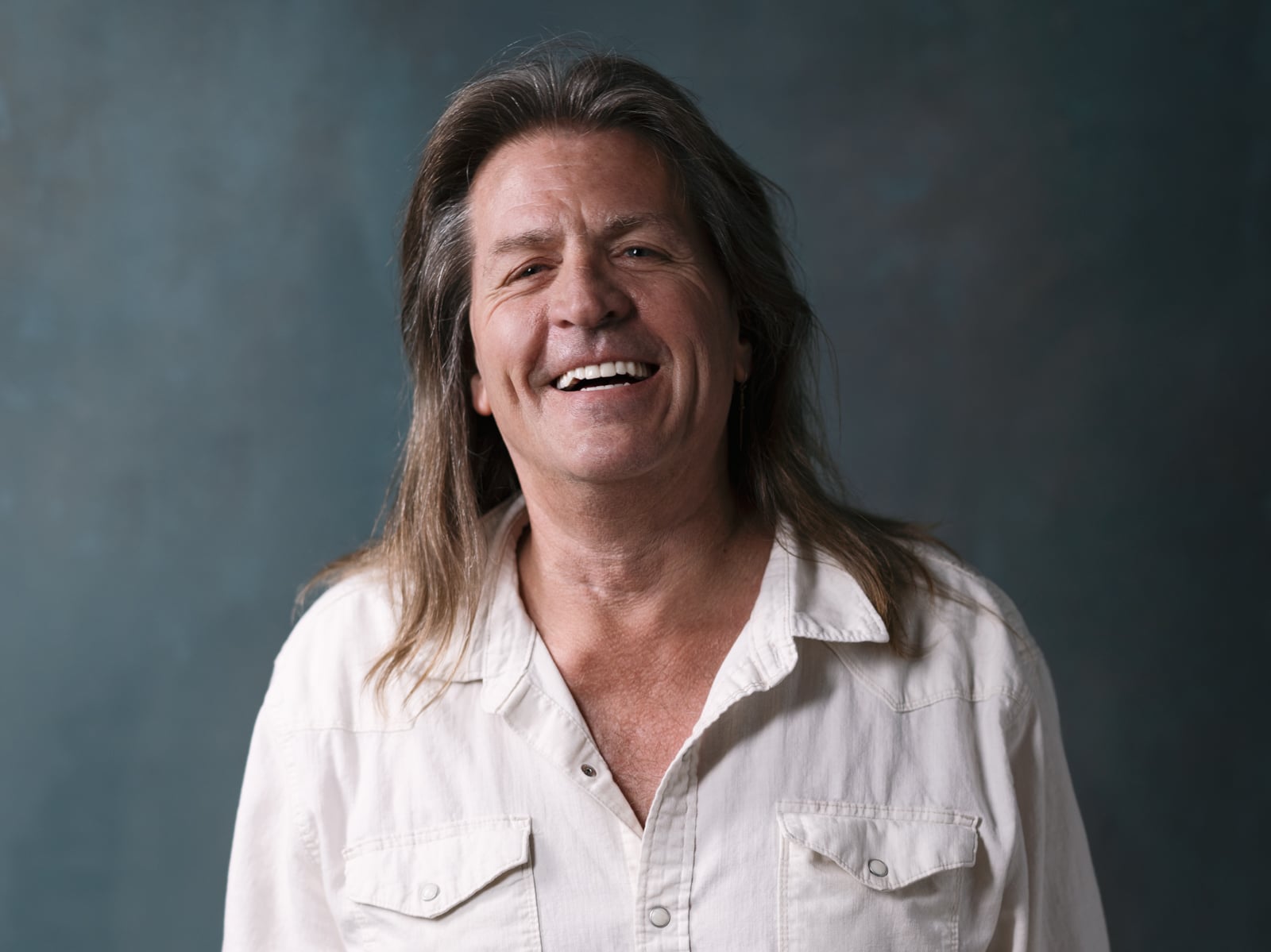
“It’s risky,” Anderson admits. “I definitely missed focus sometimes, or didn’t get the best composition. There’s one portrait that was taken while someone was telling me about their pet raccoons they’d kept while living on the streets. Another came while a subject was reminiscing about Strawberry Shortcake from their childhood. Those unexpected moments, when someone forgets about the camera entirely, are the ones that mean the most to me. What’s in front of me is more important than what’s going on behind the camera. Being present for them is more rewarding for me than getting the technically perfect shot. For these passion projects, and even my commercial work, the personal connection is more important than the photos, but luckily, establishing that connection usually leads to great photos.”
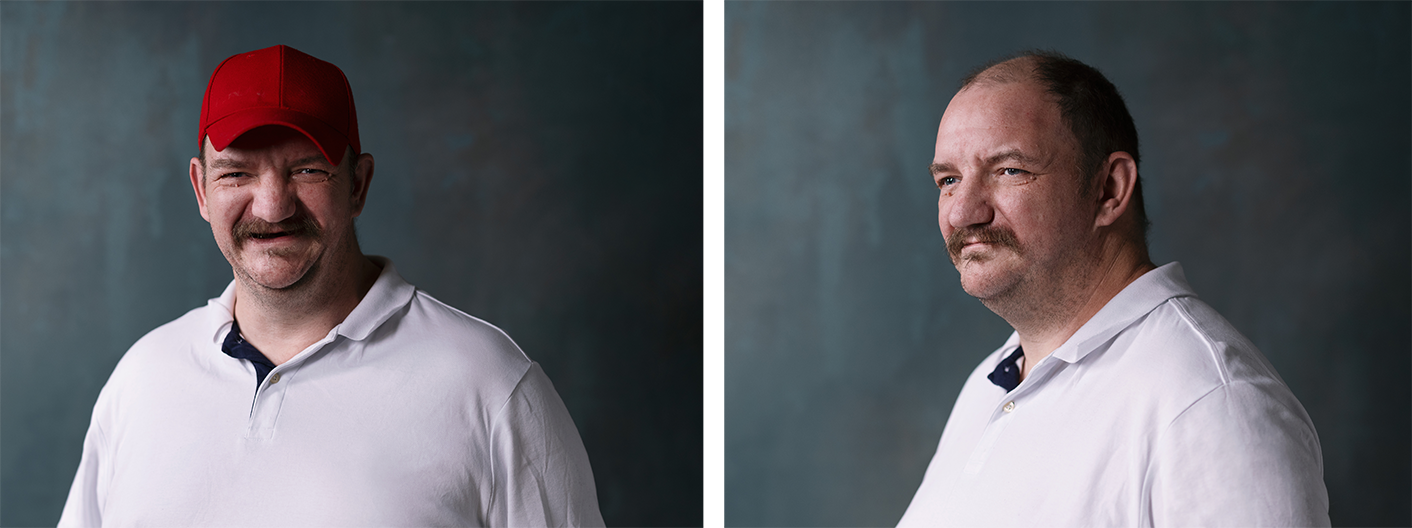
Anderson says that the look and feel of the setup is also crucial to making subjects feel comfortable. “There’s also something meaningful about the professional setup itself,” he observes. “Lights, backdrops, a laptop displaying images in real time. For people who have spent years being overlooked, it communicates that they are important enough for me to put a high level of effort into telling their story. That’s not about the gear. It’s about dignity.”
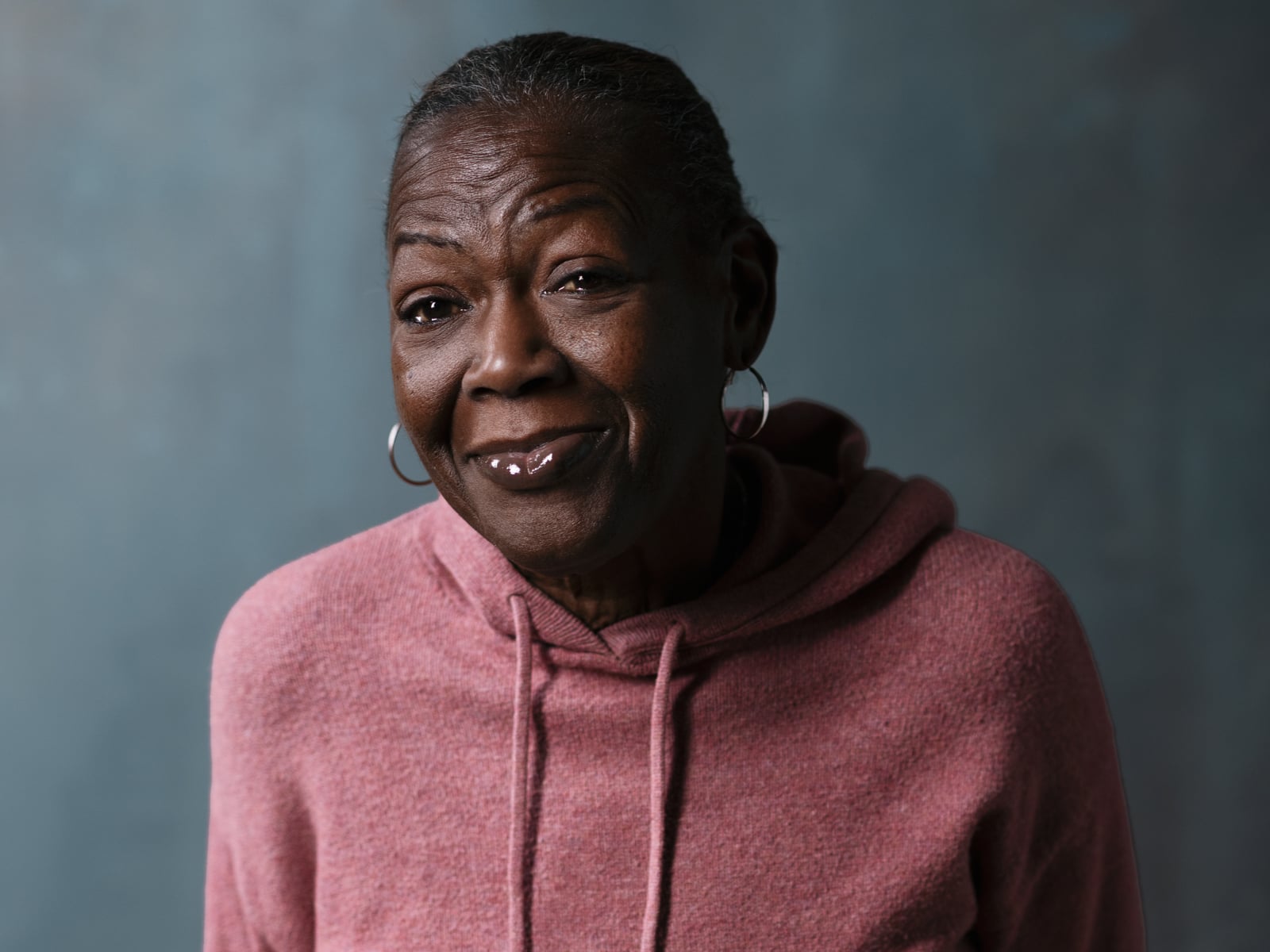
Anderson extends this mindset to everyone he works with, not just the subjects in front of his lens.
“My goal on every set is for every person to feel seen, heard, and loved,” he says. “That’s how I want subjects to remember their time with me. Not as the person who took their photo, but as someone who made people feel valued.”
The Purpose of a Photograph
Anderson sees this project as part of something larger than any single portrait or exhibition. It’s an expression of what he believes photographers are called to do.
“I believe we need to use the skills and talent that we’ve been given to help other people,” Anderson reflects. “Photography is both my skill and my passion. It’s my language and how I see the world. And I believe I have a responsibility to use it for more than just commercial work, as photography is one of the most powerful and effective storytelling forms of art.”
This conviction has shaped his career, from the Periphery project to the present. Photography, he’s found, can reach people in ways other mediums cannot.
“Art reaches across demographics,” he notes. “It’s not one political party or one worldview. It’s an image. It’s storytelling. And storytelling is something we can all get behind. It’s the oldest form of art. It engages everyone.”
The original Periphery images are still being used to help raise awareness for the Springs Rescue Mission in Colorado Springs, ten years after they were created. Anderson hopes this new work will have similar longevity.
“We’re planning a gallery show and possibly a book,” he says. “Any proceeds would benefit the Mission. But honestly, bringing awareness to the problem matters as much as the revenue.”
When asked what success looks like for this project, Anderson doesn’t hesitate.
“If it encourages one person to overcome addiction or get off the street, that’s worth it,” he says. “Or if it inspires someone to lend their time or talents to helping others. That’s worth all the early mornings, all the setup and breakdown, all the long days. One person. That’s enough.”
More from Aaron Anderson can be found on his website, YouTube, and Instagram.
Full disclosure: This article was brought to you by Tether Tools.
Image credits: All photos by Aaron Anderson.



 English (US) ·