
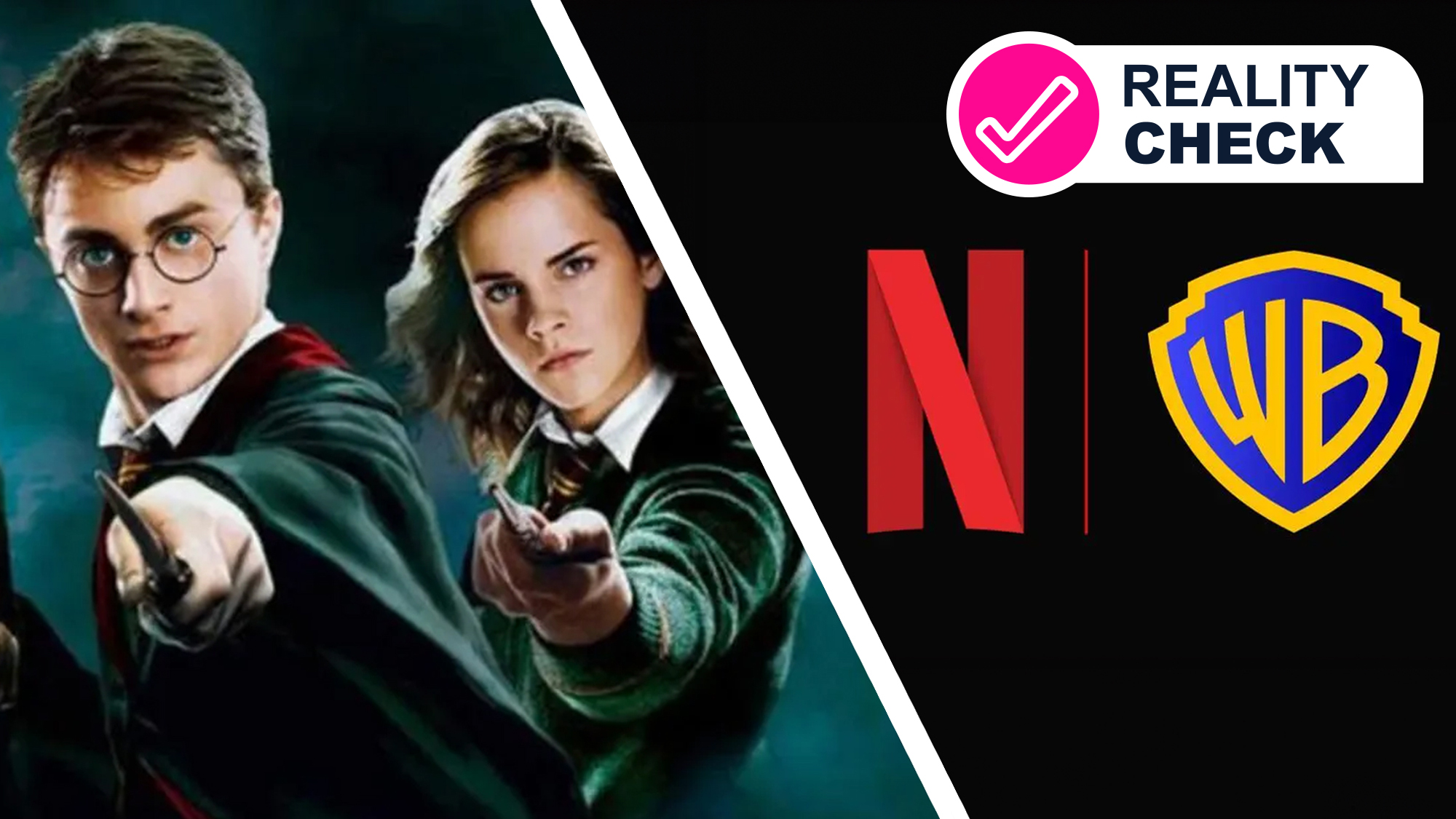
- Netflix has announced a deal to buy Warner Bros. Discovery
- The deal is a massive shake-up for streaming, TV, movies, and theaters
- Experts have predicted price hike,s but also simpler streaming options
The streaming world is still reverberating from the bombshell news that Netflix has agreed a $72 billion deal to buy Warner Bros. Discovery.
The deal is far from complete – competition authorities could still intervene and scupper the merger. But if the deal does go through, as many experts expect, it will be one of the biggest shake-ups in the entertainment industry in decades.
Netflix would get not only the HBO Max streaming service, but also major franchises, including Harry Potter and Game of Thrones. It's massive news not just for streaming, but also for theaters and cinema.
So what does this all mean for the average TV and movie fan? We asked experts for their predictions about the Netflix-Warner Bros. Discovery deal – here are the big questions answered...
Will the deal go through?
Firstly, how likely is it that this deal will go through? Netflix is certainly confident, as it needs to be to convince regulators to rubber-stamp the huge merger.
"We’re highly confident in the regulatory process," Netflix co-CEO Ted Sarandos told analysts. Most analysts think the deal is in the balance, but the consensus is that it's likely to go through after a lengthy process that could involve a few concessions.
"It's very difficult to gauge the likelihood of it going through given both the regulatory and political questions: given the impact that this will potentially have on cinema this will stoke a lot of opposition," Tom Harrington, a TV analyst from Enders Analysis, told TechRadar.
Paolo Pescatore, founder and analyst at PP Foresight, agreed. "In light of the current regulatory environment this will raise eyebrows and concerns. The combined dominant streaming player will be heavily scrutinized," he told us. "We should expect this to wrangle on, given the Paramount Skydance pursuit for WBD [Warner Bros. Discovery]".
The decision ultimately depends on whether regulators would view the new giant as a streaming monopoly, Peter Ingram (Research Manager at Ampere Analysis) told us.
"Focusing on the U.S, Netflix and HBO Max together account for just over a quarter of total streaming subscriptions. Though not an overwhelming stake in the market, it would remain the largest single player at twice the size of its closest rival," he said.
Still, EU Antitrust experts say the deal is unlikely to be blocked. "The European Commission rarely fights these kinds of mergers," Nicolas Petit (a professor of competition law at the European University Institute) told Deadline.
What does it mean for Netflix and HBO Max subscribers?
So, assuming the Netflix-Warner Bros. Discovery deal goes through, what does this mean for existing subscribers?
The short answer is that Netflix subscribers will eventually get access to the HBO Max library – what's less clear is whether HBO Max will continue as a separate streaming service.
In Netflix's announcement of the deal, it said, "by adding the deep film and TV libraries and HBO and HBO Max programming, Netflix members will have even more high-quality titles from which to choose."
The elephant in the room is what that means for pricing. Netflix gave us a codified hint by adding that the move lets it "optimize its plans for consumers, enhancing viewing options and expanding access to content". Experts think this likely means more price hikes.
"Netflix will become more expensive and the overall rise in subscription revenues will be less than any savings on the HBO side, meaning a rise in costs for viewers," Tom Harrington from Enders Analysis told us.
Peter Ingram from Ampere Analysis agreed. "A merging of services may prompt price adjustments, either through premium tiers or a higher price point for the unified offer," he said.
But it may not be bad news on the cost front for everyone. According to a Futuresource Living with Digital consumer survey, 70% of HBO Max subscribers in the US already have access to Netflix. So if you subscribe to both services, or had planned to in the future, a combined offering could ultimately prove cheaper than paying for both separately.
When might this all happen? Netflix says the deal "is expected to close in 12-18 months", so don't expect changes overnight. But that means Netflix subscribers are likely to get access to HBO Max content in late 2026 or early 2027, assuming the merger goes through.
Before then, we'll likely get more hints and details about what exactly will happen to HBO Max. If the Disney+ and Hulu merger is anything to go by, HBO Max subscribers could start getting samples of Netflix content next year – before the two are merged as a single app when the deal closes. However, the regulatory process could still intervene here.
Is this good or bad news?
Despite the prospect of Netflix price rises, analysts think the deal could, on balance, be a good thing for consumers – but bad news for cinemas.
"Ultimately this is great news for consumers as they’ll be able to get far more from one streamer rather than being forced to sign up with multiple providers. There are too many streamers chasing too few dollars," said Paolo Pescatore from PP Foresight.
From a simplicity perspective, Peter Ingram from Ampere Analysis agreed. "If the two services are ultimately integrated, subscribers could gain access to a broader range of content across Netflix’s expansive catalogue combined with Warner Bros.’ Studios’ IP and library," he said. "This would be good for consumers, simplify choice in an increasingly fragmented market and reducing the need for multiple costly streaming subscriptions."
If you've been practicing the art of subscription hopping to keep your streaming bills manageable, there may be some truth to the idea that simplicity is a net win for streaming fans. Then again, at what cost? Fewer options could also be seen as a bad thing for choice.

One thing most industry insiders agree on is that the Netflix-Warner Bros. Discovery merger would be a bad thing for theaters and cinemas.
Calling the merger "an unprecedented threat" to the global cinema business, Michael O'Leary (chief executive of trade organisation Cinema United) told the BBC: "The negative impact of this acquisition will impact theaters from the biggest circuits to one-screen independents in small towns in the United States and around the world," he said.
The European trade body representing cinema exhibitors went further. Laura Houlgatte (CEO of UNIC) told Reuters: "This deal represents a double risk. If a studio disappears, that will inevitably mean that cinemas will have fewer films to screen for their audiences, leading to reduced income, significant cinema closures and job losses in the industry".
"Both in its words and actions, Netflix has time and again made it clear that it does not believe in cinemas and their business model. Netflix has released only a handful of titles in cinemas, usually to chase awards, and only for a very short period, denying cinema operators a fair window of exclusivity," she added.
What has Netflix said? In its statement about the deal, the streaming giant said it "expects to maintain Warner Bros.’ current operations and build on its strengths, including theatrical releases for films", with the word "expects" doing a lot of heavy lifting there.
For now, don't expect much to change. "Right now, you should count on everything that is planned on going to the theater through Warner Bros. will continue to go to the theaters through Warner Brothers," Netflix's co-CEO told analysts.
But it's clear that big changes for streaming and theaters are coming – and exactly what those changes will be is something that will become very clear in 2026.
Follow TechRadar on Google News and add us as a preferred source to get our expert news, reviews, and opinion in your feeds. Make sure to click the Follow button!
And of course you can also follow TechRadar on TikTok for news, reviews, unboxings in video form, and get regular updates from us on WhatsApp too.





 English (US) ·