
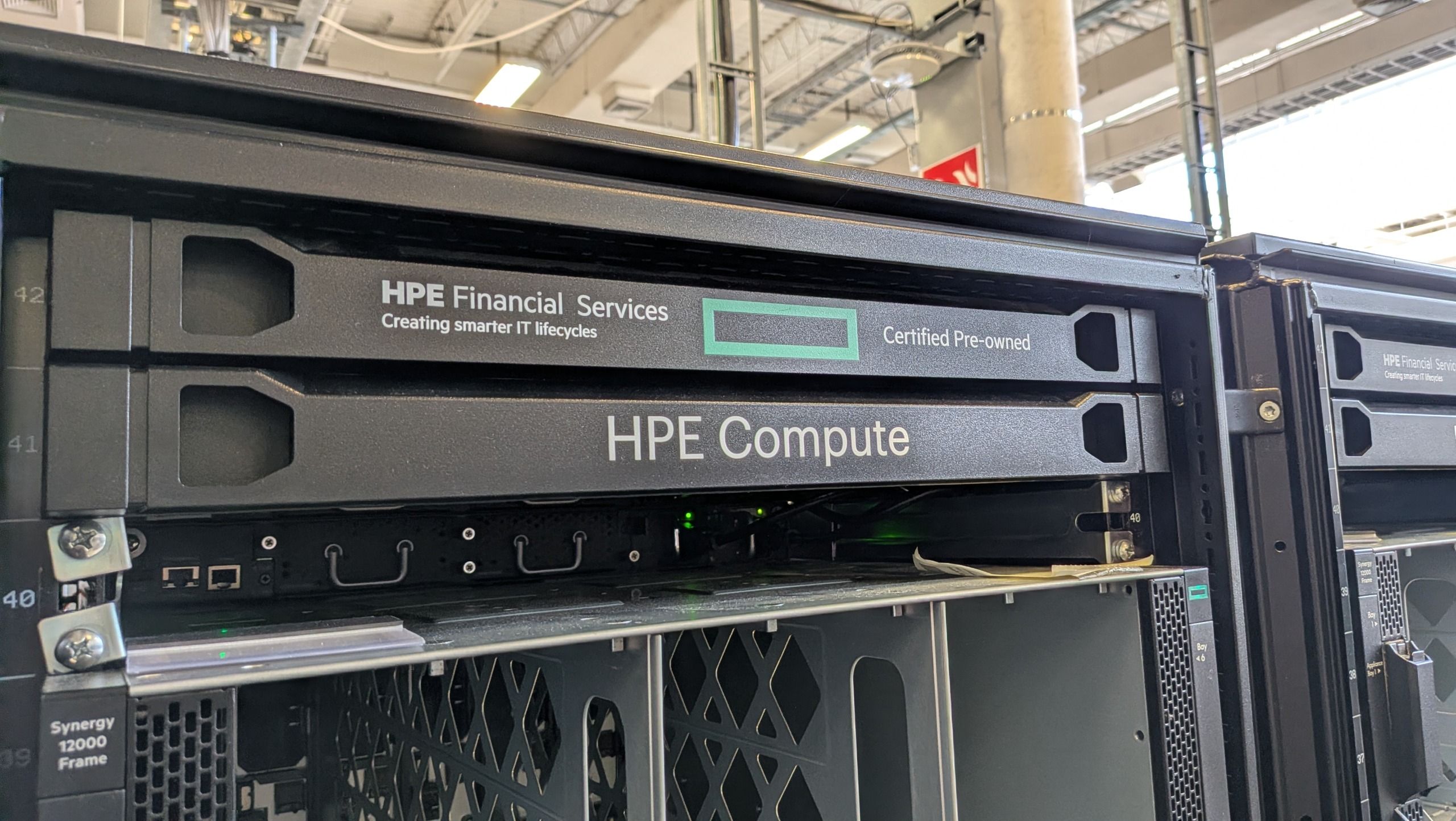
If you’ve ever spotted a laptop or printer with a label that describes it as “reconditioned” or “refurbished” and wondered exactly what that means, read on.
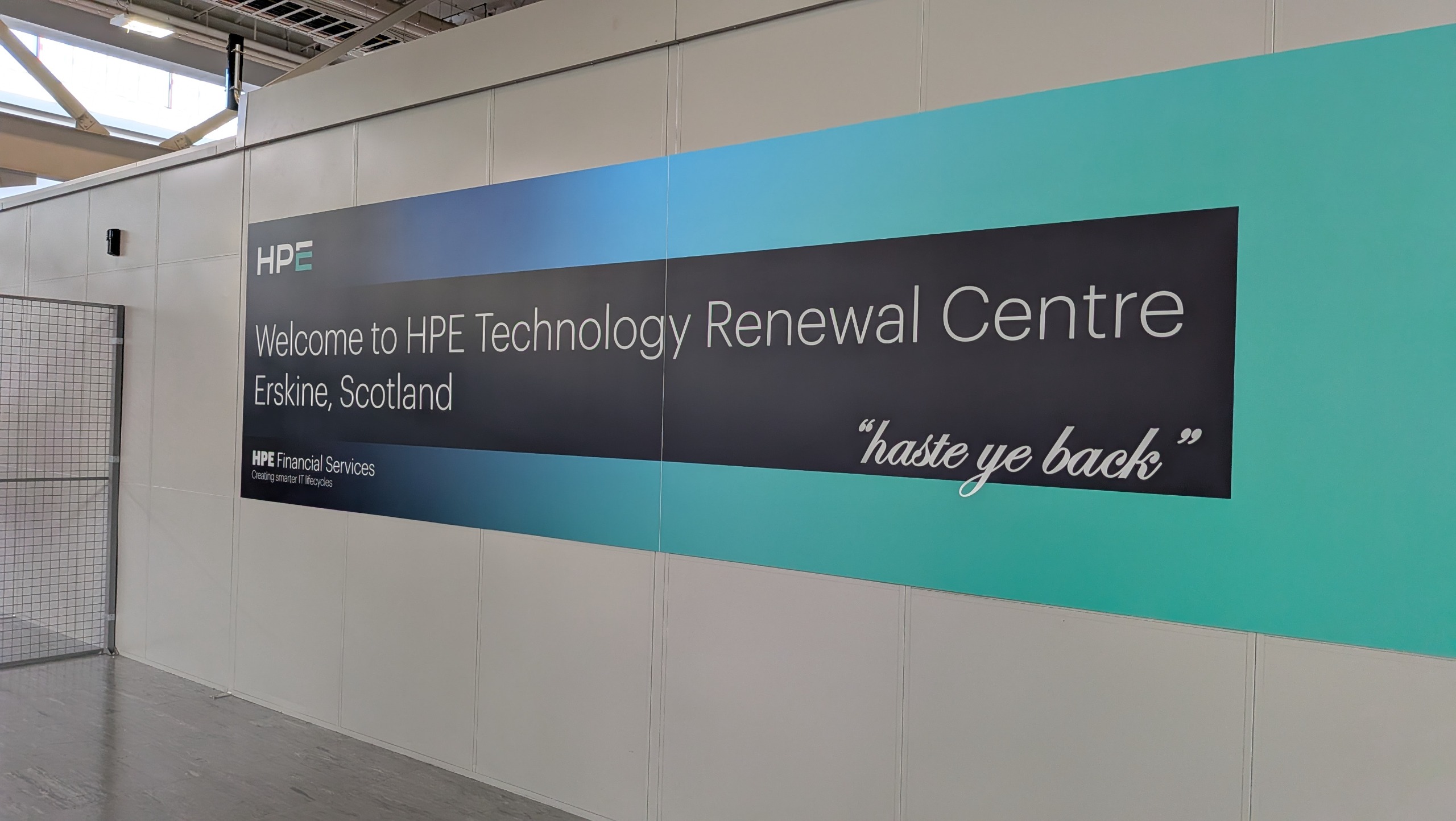
Hidden away a short drive from Glasgow Airport, HPE’s Technology Renewal Centre (TRC) at Erskine is one of the world’s leading e-waste processing facilities.
Initially opened in the late 1980s as part of Scotland’s famed ‘Silicon Glen’, the TRC has gone through a number of rebirths before evolving into what it is today, and TechRadar Pro was lucky enough to be invited on a tour of the facility - here’s what we saw.
Back to life
The 240,000 square foot facility is a huge space, and with the sun shining in on what Jackie Rafferty, TRC Operations Manager and our guide told us was an uncharacteristically nice Scottish October day, TechRadar Pro was part of a pan-European media tour around the TRC.
Since its opening on December 8 1987, when it built 286 computers under the legendary Compaq brand, the site has now been a renewal center since 2011, along with a sister site in Andover Massachusetts.
Its 200+ staff, all of whom have undergone Ministry of Defence-level security clearance, are largely local to the area, with the TRC offering a fantastic employment opportunity, with Rafferty noting how members of the same families are often employed together.
The TRC now plays a key role for HPE’s Financial Services division, offering a more affordable way for customers to make sure they have the latest hardware, and that their older devices don’t end up in landfill.
The company currently provides what it calls HPE 90/9 Advantage, a loan offering where you don’t pay anything for the first 90 days followed by nine months at 1%.
At Erskine, the team is able to process around 150,000 assets a month, with 85% of servers and 97% of workstations and PCs it receives sanitised, tested and processed on site, ready to sell on.
Overall, HPE estimates that 84% of assets processed at Erskine and Andover are refurbished and returned to active use, with the rest responsibly recycled.
These aren’t just HPE assets - in order to maximize the recycling potential, customers are able to send in kit from other vendors - with only over 60% of data center, and close to 70% of workplace assets are HP or HPE branded .
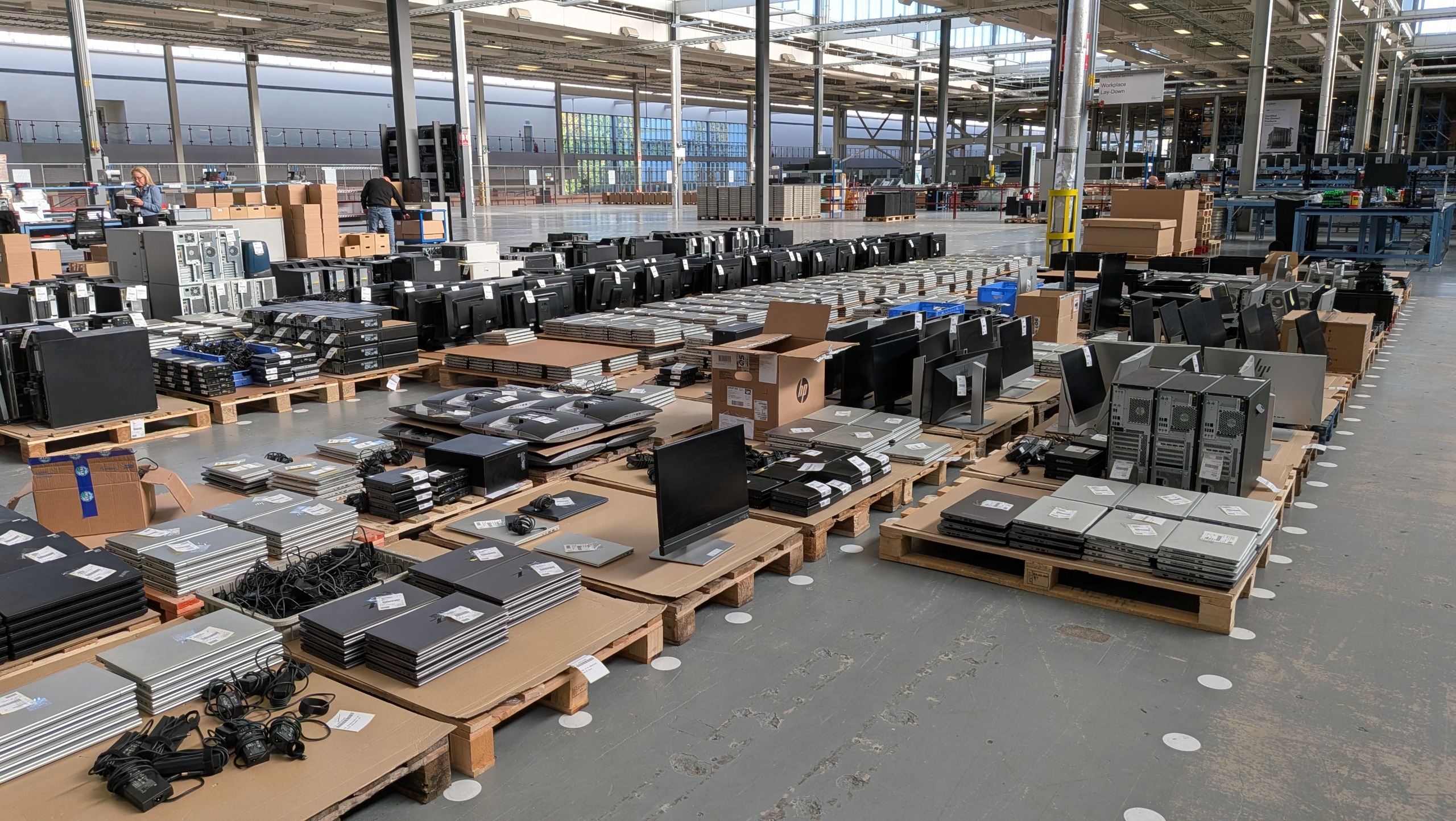
Rafferty's tour took us around every step of the reconditioning process, from inbound deliveries ready to be sanitized, ready for stripping for parts or refurbishment, to rows of shelving containing individual components, all set for their new lease of life - with our guide pointing out assets such as a shipment of reconditioned HPE ProLiant servers set to be shipped out to a customer in France.
The TRC uses a customized version of Microsoft Dynamics 365 that acts as its own ERP system for every component of every asset it receives, allowing the company to track it from end-to-end.
With demand for AI computing forcing companies of all sizes to rethink their technological capabilities, the TRC is increasingly confronted with server racks and other high-end hardware, all of which can still be reconditioned and reused.
We see a huge line of racks full of reconditioned hardware being tested and checked before re-entering the enterprise world, with the hum of fans almost deafening as you get up close.
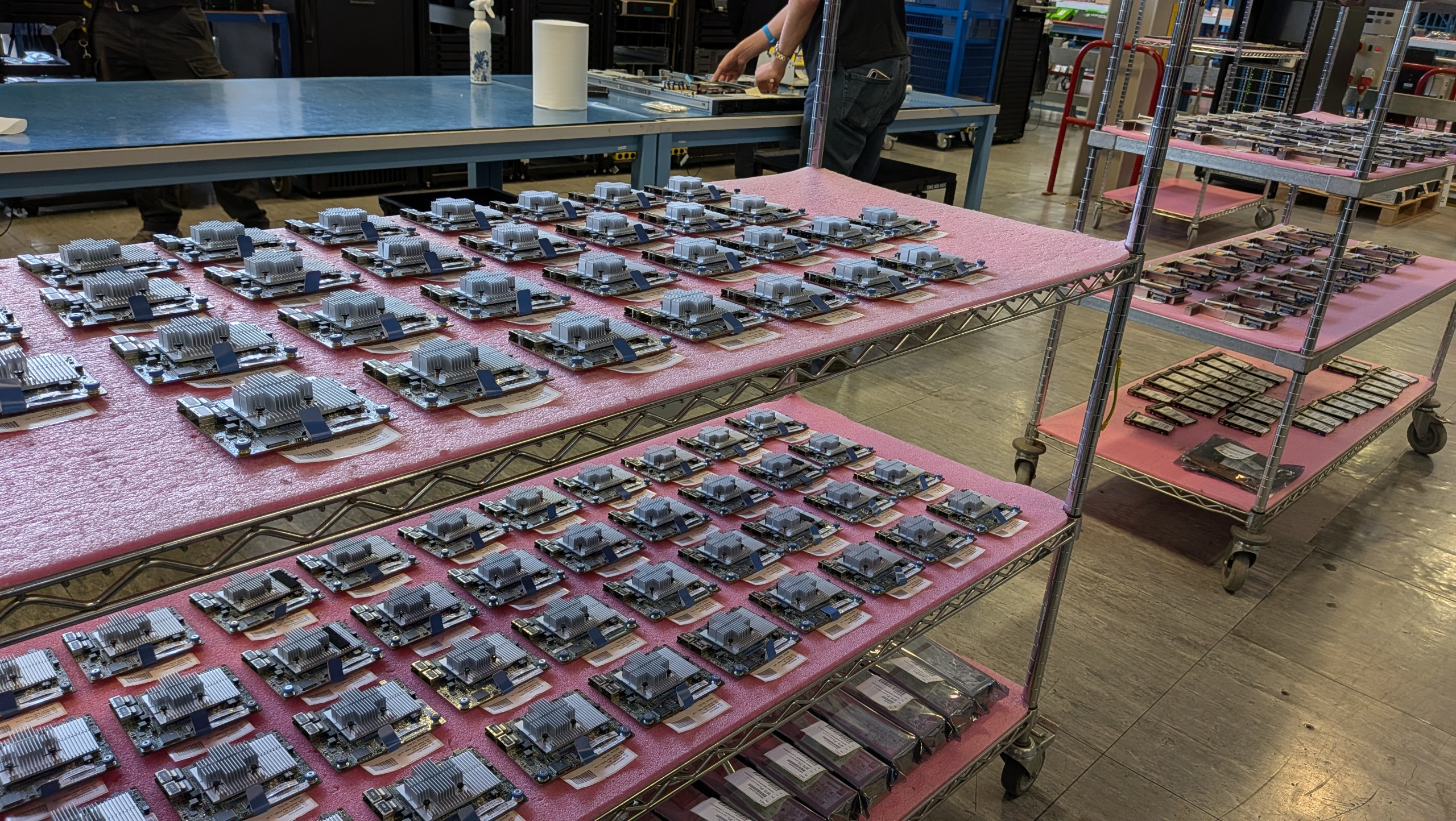
As the process continues, we see rows of laptops and workstations being formatted and wiped, and multiple workbenches stripping out individual components from older devices designated for re-use, with shelves full of kit ready to be re-assigned at a later date.
Once reassembled, newly-created items are put through a series of rigorous tests to ensure they meet HPE's high standards, and that the buyers receive a device able to cope with all their key workloads.
Security is obviously paramount when it comes to pre-owned hardware, and all drives are formatted and rewritten in accordance with the highest standards.
Despite many users or organizations wiping their SSDs before sending the device to HPE, the company uses extra software to ensure the hardware is clean. HPE estimates it has overwritten around 1.6 million drives this way, with 1.7 exabyte of data securely sanitized – the equivalent of watching around 97 million years of HD movies.
Sustainability is unsurprisingly another key watchword, with HPE keen to extol the environmental impacts the TRC has caused.
Along with the sanitization and recycling, we were shown how HPE has even revolutionized the packaging it uses to send out refurbished items, with the exterior made of 100% recycled corrugate, the majority of which comes from reconstituted inbound return packaging, with the interior protective foam is made of a 100% biodegradable starch-based foam replaced polystyrene which can be dissolved in water.
Overall, HPE estimates over 8.4 million kg of e-waste has been prevented from going to landfill, the equivalent of the annual e-waste generated by over a million people.
So it seems the messaging is true - buying pre-loved or second-hand kit really can be as good as the real thing, so long may HPE's efforts continue.

Follow TechRadar on Google News and add us as a preferred source to get our expert news, reviews, and opinion in your feeds.








 English (US) ·