
 2 weeks ago
26
2 weeks ago
26
If you’re looking for a drive in a last-ditch effort and have passed up the WD Green SN3000, you may want to rewind. Despite the rocky reputation this line of SSDs has, we’ve discovered that this one is actually a hidden gem. Some of the results will definitely surprise you as it delivers good performance and power efficiency for its class. Its performance in random read workloads, in particular, might raise some eyebrows. That makes it a dark horse of a bargain if you catch it at the right time.
It’s easy to look at the warranty – only three years and meager endurance rating – and think this isn’t the one for you. Dismissing it out of hand might be a mistake, though. This drive has a reliable proprietary SSD controller from SanDisk, the same one that makes the Blue SN5000, Blue SN51000, and Black SN7100 work so well. It also has the excellent BiCS8 flash of the latter two. This means it’s basically an updated SN5000 with QLC flash within its capacity range.
For the less technical-minded, this is good news because it means you’re not dealing with an underpowered SSD controller with old flash, and while the move is from TLC to QLC – effectively an endurance downgrade – the newer QLC is faster in most cases. The terabytes written (TBW) endurance rating is also sufficient for a budget drive. It’s the perfect drive to pop into a system if you’re not too worried about the details.
WD Green SN3000 Specifications
Swipe to scroll horizontally
Pricing | $114.99 | $204.99 | $406.99 |
Form Factor | M.2 2280 (Single-sided) | M.2 2280 (Single-sided) | M.2 2280 (Single-sided) |
Interface / Protocol | PCIe 4.0 x4 | PCIe 4.0 x4 | PCIe 4.0 x4 |
Controller | Sandisk Proprietary | Sandisk Proprietary | Sandisk Proprietary |
DRAM | N/A (HMB) | N/A (HMB) | N/A (HMB) |
Flash Memory | Sandisk 218-Layer BiCS8 QLC | Sandisk 218-Layer BiCS8 QLC | Sandisk 218-Layer BiCS8 QLC |
Sequential Read | 5,000 MB/s | 5,000 MB/s | 5,000 MB/s |
Sequential Write | 4,100 MB/s | 4,200 MB/s | 4,200 MB/s |
Random Read | N/A | N/A | N/A |
Random Write | N/A | N/A | N/A |
Endurance | 100TBW (0.18 DWPD) | 150TBW (0.14 DWPD) | 250TBW (0.11 DWPD) |
Security | N/A | N/A | N/A |
Part Number | WDS500G4G0E | WDS100T4G0E | WDS200T4G0E |
Warranty | 3-Year | 3-Year | 3-Year |
The WD Green SN3000 – and yes, this is the model name, even though it’s sold by SanDisk – is available at 500GB, 1TB, and 2TB at $114.99, $204.99, and $406.99 from SanDisk’s site. This is pretty expensive, but luckily, it's available at Newegg for $149.99 at 1TB with the ability to get two in a combo deal for $10 off. We are testing it at 1TB and recommend that capacity, and we also think it’s a good value for the price, despite what your first impressions might be of it being a Green drive – these are traditionally ultra-budget drives that don't have a great reputation – and limited performance specifications.
The drive can reach up to 5,000 / 4,200 MB/s in sequential read/write workloads. This puts it into the range of early mid-range PCIe 4.0 budget drives like the WD Black SN770. By today’s standards, this is slow, but it’s more than fast enough for this segment. The manufacturer lists no IOPS rating, but from our CDM testing, we were able to achieve up to 1 million IOPS with a random write workload.
If the drive has a weak point, it’s with the warranty. It’s only covered for three years versus the normal five, and the write endurance is poor with the 1TB model coming in at 150 terabytes of endurance. This is one-quarter the normal and about one-half what we usually see for QLC flash, although the drive writes per day metric (DWPD) is very much in line with expectations for QLC. Most users, and especially budget-minded users, are not going to burn through this many writes, so the shorter three-year warranty is a more critical factor. For more information on how SanDisk tests for the endurance specification, check out its Use Case Impact on an SSD's Lifespan brief.
WD Green SN3000 Software and Accessories
SanDisk offers two downloads for the Green SN3000: the SanDisk Dashboard, which is an all-in-one SSD toolbox like WD’s Dashboard, and Acronis True Image for Sandisk which is backup and cloning software. We’re a fan of WD’s Dashboard and are glad to see this OEM drive supported fully.
WD Green SN3000: A Closer Look
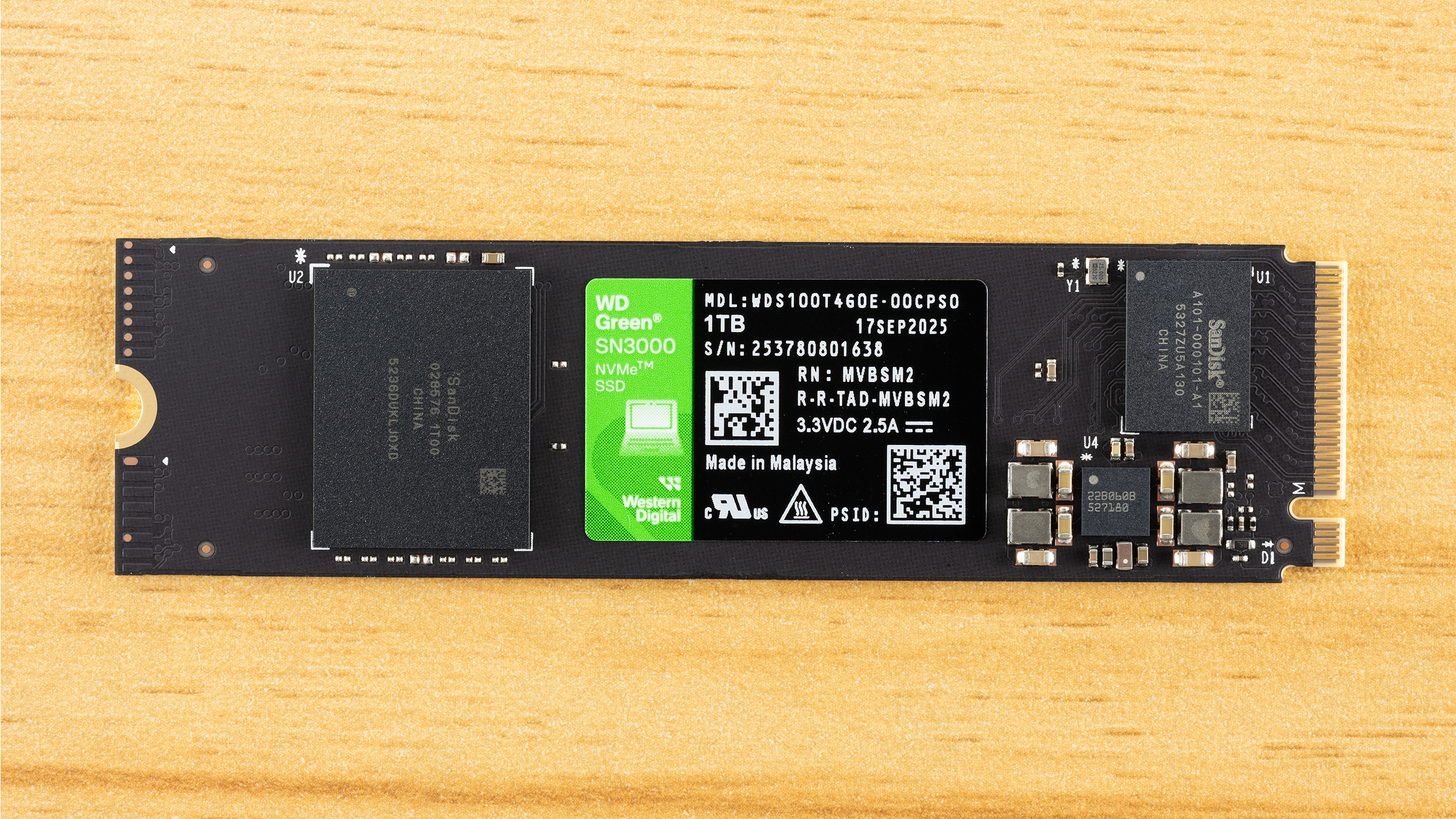
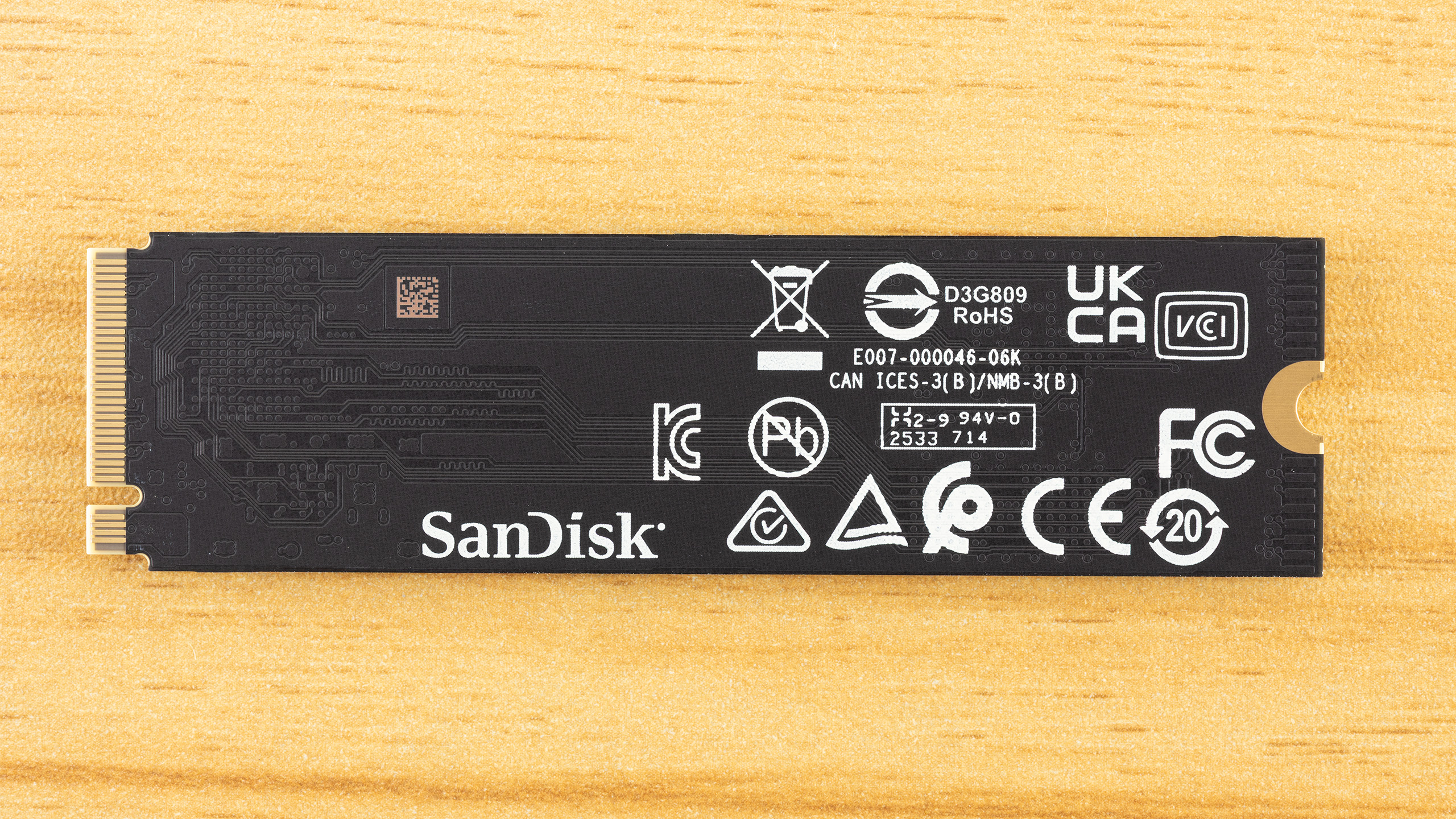
This is a single-sided drive with an SSD controller, a power management chip, and a single NAND flash package. This layout allows for a shorter form factor if necessary. The extra space between the controller and the flash reduces heat buildup and makes the drive a good candidate for thermal padding or a heat spreader, if you so desire. The drive is rated for 3.3V/2.5A, which is above 8W, but it’s designed to pull a maximum of around 5.6W. This is within the expected range for a drive of this class.
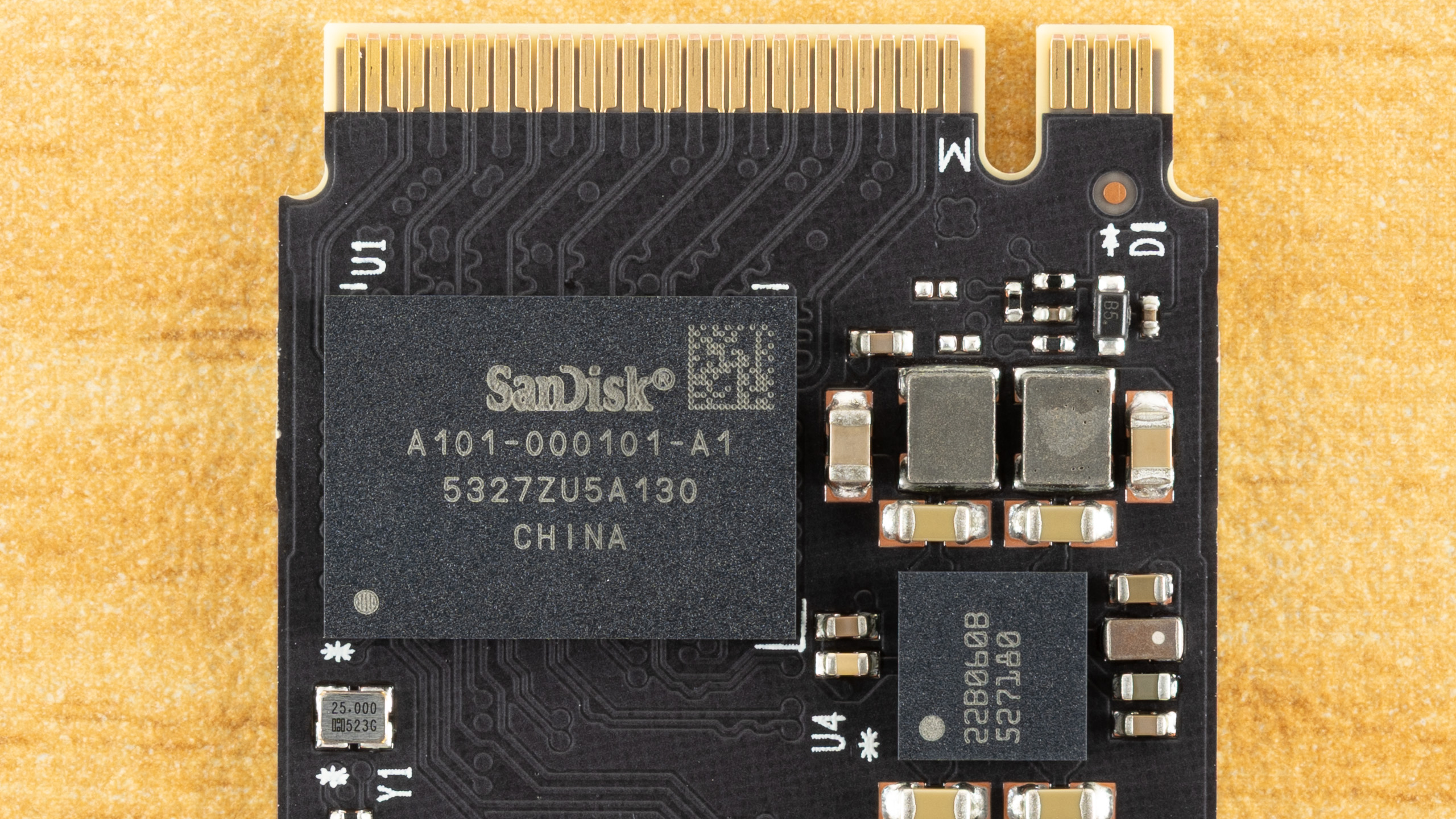
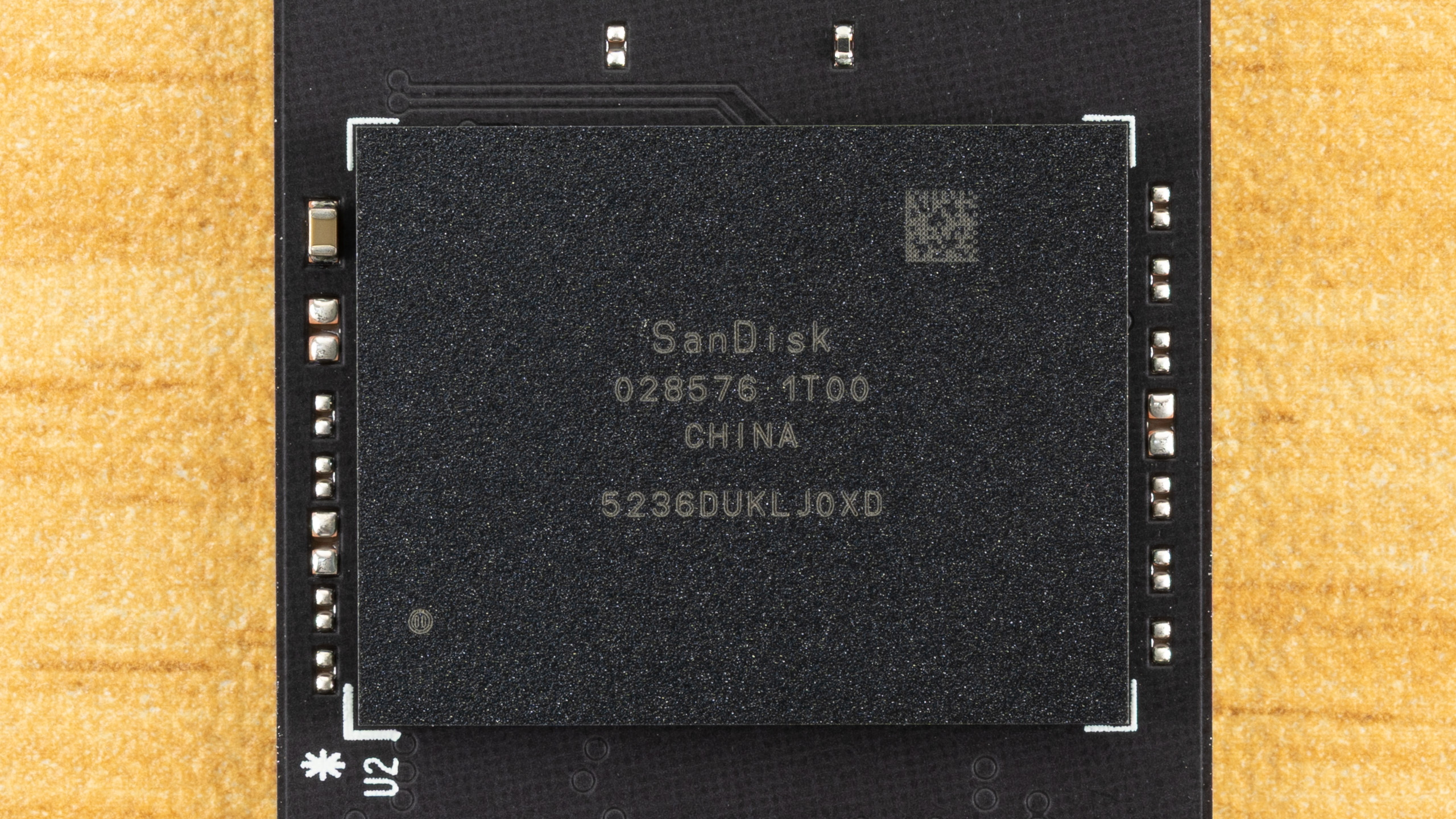
Based on our results, we’re fairly confident this is using SanDisk 218-Layer BiCS8 QLC flash. This means it should be the same as the WD Blue SN5100, or now the SanDisk Optimus 5100, but run at a slower speed. This could involve binning of some sort – lower interface speeds are more generous for the controller and flash – or simply market segmentation, although it wouldn’t be surprising if the flash being used is of lower endurance. This means you can get SN5100 levels of random performance at a lower price point if you’re willing to compromise on the warranty and some sequential bandwidth. The BiCS8 flash has architectural improvements over BiCS6 for superior latency and power efficiency, which elevates this drive above the QLC-based 4TB WD Blue SN5000 and, frankly, it can beat the TLC SKUs of that drive, too, in everything but sustained write performance.
MORE: Best SSDs
MORE: Best External SSDs






 English (US) ·