
 3 weeks ago
33
3 weeks ago
33
As you may be aware, The Dog Stars has not been particularly well received. Reviews have been lukewarm to poor and in its opening weekend, Ridley Scott’s post-apocalyptic thriller came in fifth, after Spider-Man and The Odyssey (both of which have been out for ever), the sixth Insidious movie and a Looney Tunes film that originally wasn’t even going to be released.
Perhaps unexpectedly, people are now casting around looking to assign blame for the failure. In the lead up to the film, Josh Brolin said that he almost left the project due to Scott’s lack of rehearsal time. Perhaps there’s also a prosaic explanation, in that The Dog Stars is such a vague title for a film that audiences didn’t know if they were going to watch a survival thriller, a military movie or a cartoon about some singing puppies. But the most exciting theory concerns the film’s casting. Jacob Elordi plays the lead, but this came about late in the day. When the project was first announced, the role was to be played by Paul Mescal, who at the time was fresh from starring in Scott’s Gladiator II.
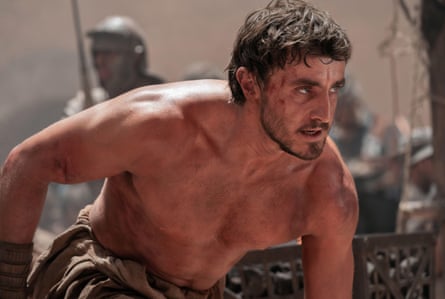
However, the wheels quickly came off. Scott raised doubts in public back in 2024, citing Mescal’s involvement in Sam Mendes’ forthcoming Beatles biopic. This has led to two competing theories, both of which have just been mooted by Puck’s Matthew Belloni. The first is that Mendes, furious that Scott had told the world that Mescal was going to be in the Beatles films, put pressure on the actor to back out of The Dog Stars. But the second is much more juicy. As Belloni writes, “some close to the movie say Scott blamed Mescal for Gladiator II’s underperformance, believing he wasn’t ‘masculine enough’.”
Scott’s representatives quickly denied this, releasing a statement saying that he “loves Paul and was excited to work with him on Dog Stars”. But let’s not allow that to distract us from the deeper truth, which is that this is thinkpiece heaven. Suddenly we’re out of the realms of movie financials and deep into the very definition of masculinity itself. Sure, Mescal is male, and quite muscular – the topless jogs he did during lockdown are perfect evidence of that – but is he “masculine”?
That’s a far knottier question. On one hand, sure he is. This is a guy who looked perfectly comfortable playing the Roman equivalent of a cage fighter in Gladiator II, a marine with PTSD in Carmen and a lunking great oyster farmer in God’s Creatures. Mescal is very good at playing this type of role, physical and sullen and inarticulate. But then again, he doesn’t fit the traditional definition of masculinity either. He is going to play doe-eyed balladeer Paul McCartney in a bunch of films soon, and that will require a level of emotional sensitivity that you wouldn’t find from a more two-dimensional performer. Jason Statham, for example, would be a rubbish Paul McCartney, and I say that as someone who would sell many of his internal organs to watch him star in a film about the Beatles running around punching people.
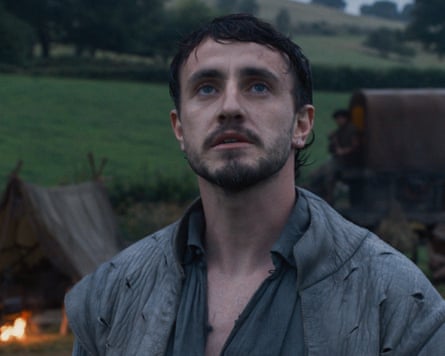
The issue seems to be that what Mescal is best at is finding the shades of grey within masculinity. His characters might be terribly blokey, but they’re also often terribly sad. His depressed dad in Aftersun and his grieving Shakespeare in Hamnet are perfect examples of this. You can see the wounds in his eyes when he’s on screen, and that’s why he’s so magnetic. But Ridley Scott is a couple of years from turning 90, so his idea of masculinity might not be quite as current. This is why he cast Russell Crowe – a man who, to this day, looks as if he opens doors with his forehead – in the first Gladiator film. Crowe’s character might be grieving, but he grieves like a man whose attendance at a funeral will inevitably end in a punch-up in a Wetherspoons car park.
The tricky thing, however, is that Crowe was also far better than Mescal in the role. A lead performance in a Gladiator film requires a lot of thumping and mooing and not much in the way of sad-eyed introspection. Sure, the character might feel things, but his reaction to the feelings should involve chopping someone to shreds with a sword rather than actually reflecting on them like an adult.
Ultimately, though, if this rumoured disagreement holds water, then Scott himself is to blame. After all, he’s the one who wanted a nuanced actor like Mescal to play a blunt instrument. It sounds like, at the end of the day, the wrong tool was chosen for the job. If there’s a lesson here, it’s that modern masculinity isn’t simply a one-note target to hit; it is rich and broad and deep in scope. If there is another, then it is that Ridley Scott urgently needs to hire Jason Statham for Gladiator III, and I will be first in line.






 English (US) ·