Warner Bros.’ 110-Episode Space Opera Remains Light Years Ahead Of Its Time
3 weeks ago
30
Published Aug 23, 2026, 8:00 AM EDT
Dhruv is a Lead Writer in Screen Rant's New TV division. He has been consistently contributing to the website for over two years and has written thousands of articles covering streaming trends, movie/TV analysis, and pop culture breakdowns.
Before Screen Rant, he was a Senior Writer for The Cinemaholic, covering everything from anime to television, from reality TV to movies.
After high school, he was on his way to become a Civil Engineer. However, he soon realized that writing was his true calling. As a result, he took a leap and never looked back.
Some of the most iconic sci-fi space operas came out in the 1990s. Among them, quite a few have struggled to stand the test of time because of their dated visuals or reused tropes. A handful of them, however, were so ahead of their time that they are still as compelling as ever. Falling in the latter category, J. Michael Straczynski's Babylon 5 remains a five-season space opera masterpiece.
Like many shows of its time, Babylon 5 was preceded by a test pilot movie that premiered in February 1993. Only after the movie proved to be successful was the show commissioned by Warner Bros. for production. What started as a rather straightforward sci-fi series about diplomatic conflicts and political tensions surrounding the titular space station in Babylon 5 turned into an ambitious space epic.
In its five-season runtime, the show walked through gripping interconnected stories about war, betrayal, prophecy, and ancient galactic forces while featuring some of the most iconic quotes in the history of television. Like most long-running TV shows, Babylon 5, too, was marred by many a challenge. However, the show experienced far more highs than lows and etched an incredible legacy for itself.
Looking back, it is hard not to see how it was light years ahead of its time and many modern shows can learn from its storytelling approach.
Most sci-fi shows from the '90s followed an episodic format where viewers could tune in at any time and reruns could be done in any order. J. Michael Straczynski, however, defied the norm and wrote Babylon 5 as a five-arc novel for television. He envisioned a five-year story plan for the series that had a concrete beginning and end even before it was filmed.
Out of the show's 100 episodes, he wrote 92 himself, including all installments of seasons 3 and 4. To ensure his pre-planned story was not disrupted by unexpected cast exits, he even built clever "trapdoors." For instance, when Michael O'Hare (Jeffrey Sinclair) departed after season 1, JMS seamlessly swapped him for Bruce Boxleitner (John Sheridan) without breaking the overarching plot arc.
Jeffrey Sinclair's exit, in itself, later became a plot device for an incredible time travel paradox in the show's "War Without End" arc.
Every story and character beat in the series was written with consequences in mind. Several plot developments in season 1 even got perfect payoffs well into the fourth or fifth installment of the show.
Even from a visual standpoint, Babylon 5 was among the few sci-fi shows to CGI exclusively for space battles instead of expensive physical models. The show made incredible use of its limited TV budget and paved the way for modern sci-fi shows to accurately capture complex sci-fi worlds on the small screen.
Many Modern Sci-Fi Shows Can Learn From Babylon 5
MovieStillsDB
While many modern sci-fi shows follow continuous story arcs across seasons, most of them are not expected to last for more than two seasons. In the streaming era, the fates of TV shows have become increasingly unpredictable. Owing to this, cliffhangers are often forcefully added to their closing arcs and creators end up writing their new seasons with the possibility of imminent cancellations.
A rare few showrunners who do plan a long-term arc for a series do not even get to write the natural conclusion of their respective shows.
Interestingly, Babylon 5, too, almost met the same fate. When Prime Time Entertainment Network (PTEN) started collapsing, it seemed like Babylon 5 would be forced to end its run with season 4.
JMS carefully navigated this challenge by trying to compress the show's final two years into one season. This even harmed the show, leading to many viewers and critics feeling that its fourth season was too rushed. Fortunately, for Babylon 5, its final season was picked up by TNT, allowing it to stick a satisfying ending.
Like Babylon 5, most modern shows should be given the opportunity to fully realize the scope of their underlying ideas. Instead of being judged based on shallow metrics and one-dimensional viewership data, sci-fi shows should be allowed to deliver the stories they initially set out to tell instead of running indefinitely.
Babylon 5 Is More Watchable Than Most ‘90s Space Operas
Babylon 5 holds up remarkably well for modern audiences compared to its contemporaries like Star Trek: The Next Generation, Voyager, and Stargate SG-1. The reason being that it was built like a modern streaming binge-watch before streaming even existed. Instead of hitting a reset button after every few episodes, the show featured long-running political conspiracies and earned character growth.
Its CGI, for obvious reasons, can seem dated in quite a few sequences. After all, decades have passed since its release. However, the Warner Bros space opera's macro-storytelling, hard-hitting dialog, and sci-fi ideas surrounding AI, surveillance, and imperialism hold up incredibly well.



 MovieStillsDB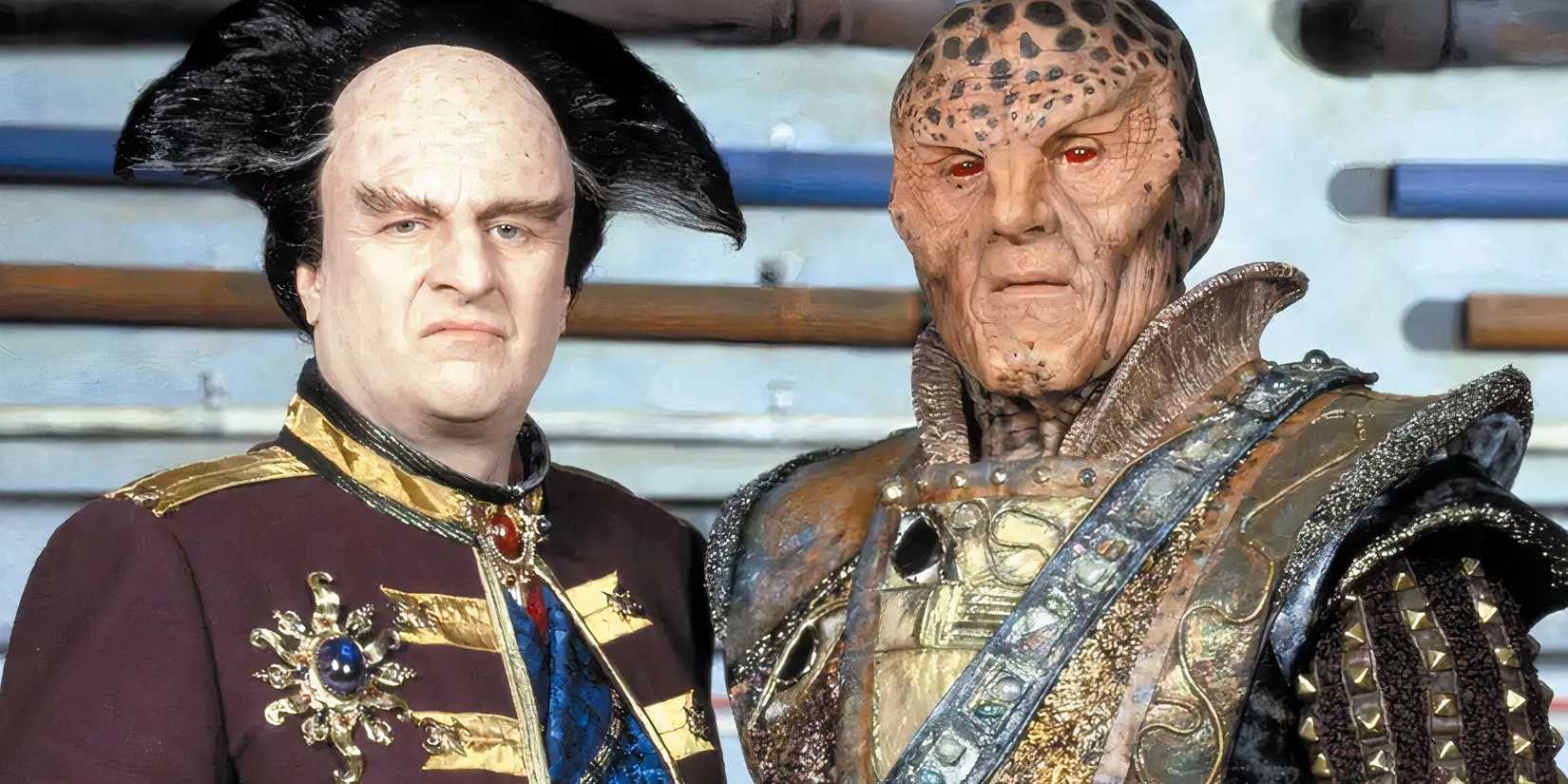





 English (US) ·