
 3 weeks ago
48
3 weeks ago
48
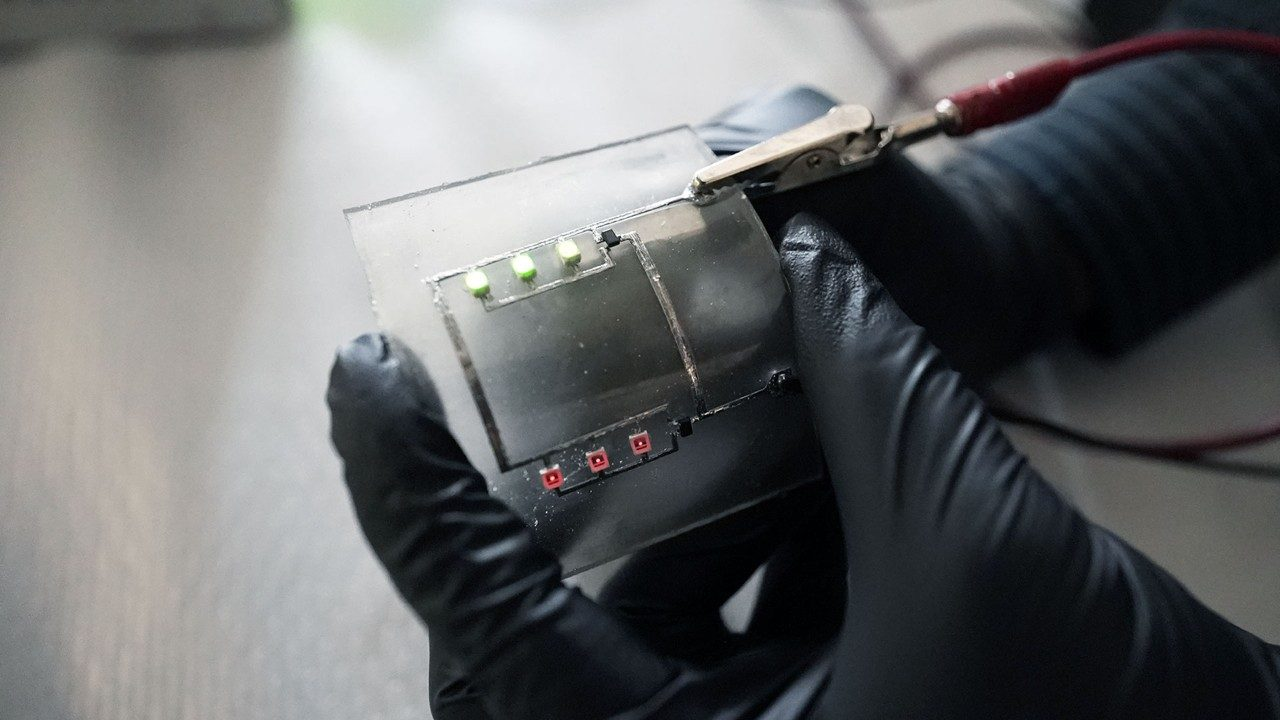
Virginia Tech graduate student Hugh Grennan mixed eutectic gallium-indium (EGaIn) into uncured polydimethylsiloxane (PDMS) silicone in a “3D Printing LIQUID METAL!” video on the 3D Printing Nerd YouTube channel hosted by Joel Telling. He cast a slab of the mixture, pressed a line into it to light an LED, sliced that line with a razor blade to show it still conducted, and then printed the same material on a syringe-fed printer to guide heat rather than electricity.
3D Printing LIQUID METAL! - YouTube
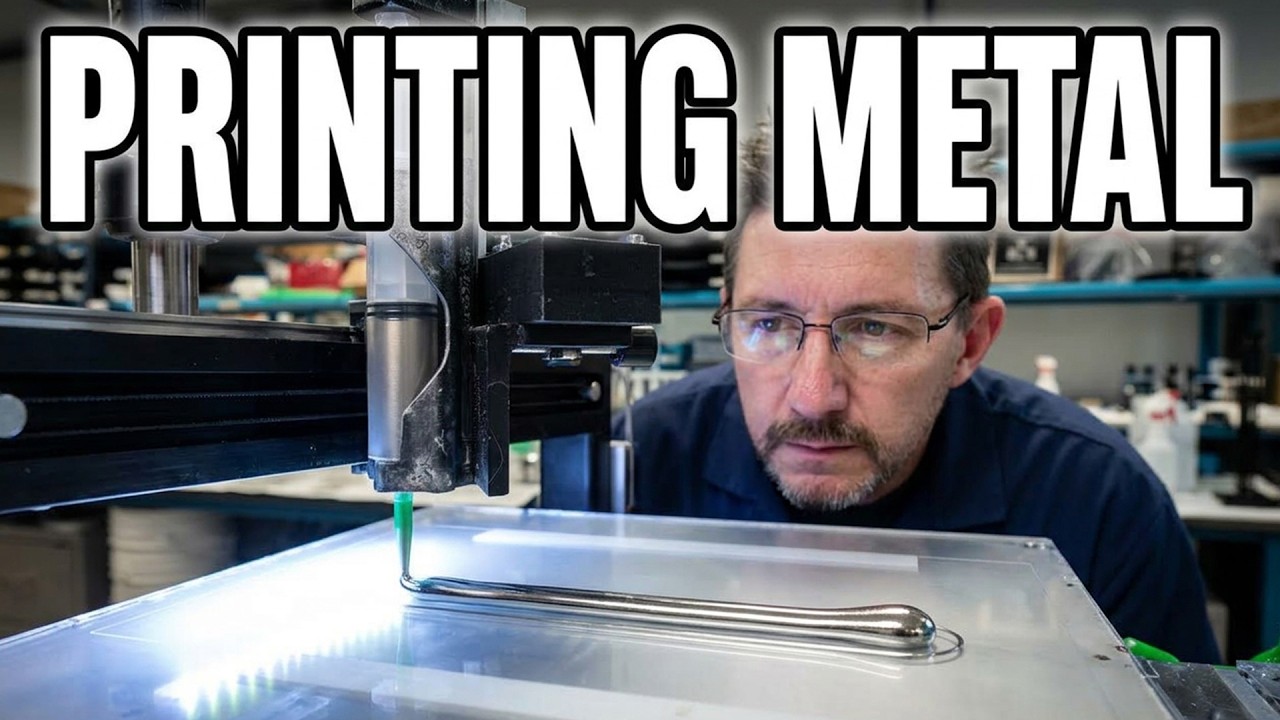
The metal is eutectic gallium-indium, which Grennan described as “about three parts gallium, one part indium” that, once mixed, is “liquid at room temperature.” The lab’s website says the droplets give the composite “soft elasticity” and “extreme toughness,” along with “autonomously self-healing electrical circuits.”
The metal is mixed into the uncured PDMS, which breaks it into separate droplets, each wrapped in a thin gallium oxide skin. About an hour in an oven turns the silicone from a gel into a solid, but the droplets inside stay liquid. The droplets are “on the order of 10 to 100 microns in diameter,” Grennan said in the video. The video was filmed at VT MADE, the university’s “New Center for Advanced Manufacturing,” a group of labs that includes the Soft Materials and Structures Lab where Grennan works.
The printer is a syringe-fed machine built so the lab can load the composite and print straight from the syringe, Grennan said. Droplet shape is determined by a setting that controls the ratio of how fast the composite leaves the nozzle compared to how fast the print bed moves. The proper selection stretches the round droplets into long, thin ones. Stretching the droplets allows heat to travel along the long axis of each, “away from a heat source to a heat sink,” Grennan said. Asked about uses, he pointed to custom heat sinks and stretchable wearable devices.
A 2025 paper in Advanced Functional Materials, co-authored by Michael Bartlett, the associate professor of mechanical engineering who runs the lab, put the printed composite’s thermal conductivity along the droplets’ direction at 9.9 W/mK, about 40 times that of the unfilled silicone. A separate 2024 paper in Additive Manufacturing says that the oxide skin “is found to play a unique and critical role in the reconfiguration and retention of droplet shape.”
For the electrical demo, Grennan pressed a line into the cast slab with an indenter. The pressure forced the droplets to merge into a continuous conductive track, and a small LED lit up. Under a microscope, the track appeared as a solid line with metal squeezed to the surface. He then cut across it with a razor blade, pressed again near the cut, and the LED came back, faintly.
Asked whether cutting raised the resistance, he said “not necessarily,” since cutting or puncturing simply “[reforms] all those pathways and the liquid metal flows” through them. The droplets begin insulated from one another by the silicone and by their own oxide skins. A conductive path here is metal that has flowed together, with a cut, something the path can flow around.
Get Tom's Hardware's best news and in-depth reviews, straight to your inbox.
The video is a demonstration of research by the lab going back multiple years. It shows how the technology works in an understandable way while pointing to multiple applications. “It’s really cool to have this like it’s just a tool in the toolkit,” Grennan said. Liquid metal is already used in some PC hardware as a thermal interface. Nvidia’s GeForce RTX 5090 Founders Edition uses a gallium alloy in place of thermal paste.
The wearables market Grennan pointed to keeps growing, too. Market analysis firm IDC puts worldwide shipments in the first quarter of 2026 at 145.7 million units, up 4.3% from a year earlier. The lab’s newest listed paper covers a stretchable liquid metal and polymer feedstock for 3D printing parts that conduct on their own. If the lab’s papers are a guide, we can expect improved heat spreaders and flexible device wires. Named applications include directed cooling for electric vehicles, robots, and electronics, and practical refinements for wearables.

Follow Tom's Hardware on Google News, or add us as a preferred source, to get our latest news, analysis, & reviews in your feeds.







 English (US) ·